Fertilizing in Winter: When It Helps and Hurts
Should you fertilize in winter? Use a practical soil-and-growth test to avoid runoff, root burn, tender growth, and mistimed feeding.
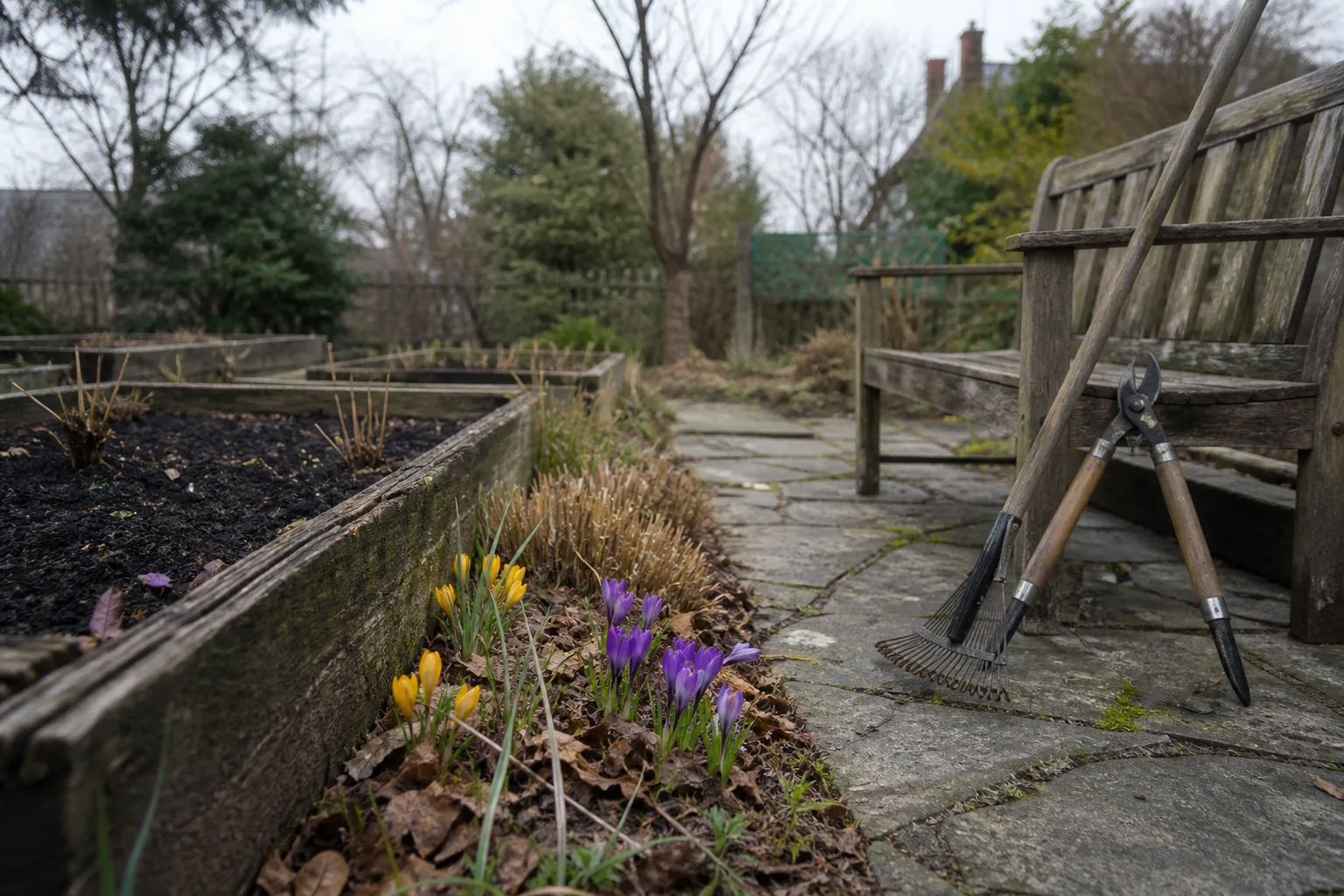
In most cold-winter gardens, spreading fertilizer in the middle of winter is a poor investment. Dormant roots are not demanding a fresh supply of nutrients, frozen soil limits water movement, and thawing rain or snow can carry unused fertilizer away before plants can use it.
That is the general rule—not a universal ban. A cool-season lawn may benefit from a properly timed late-fall feeding, a winter vegetable bed in a frost-free climate may still be growing, and a houseplant under strong light may need food even while snow is on the ground outside. The useful question is not “What month is it?” but “Is this plant actively growing in soil that can accept and hold the nutrients?”
The sections below separate those situations so you can decide what to do with the bag of fertilizer in your shed today.
The short answer: winter fertilizer depends on what is growing
Skip granular or liquid fertilizer for a dormant outdoor plant when the ground is frozen, covered with snow, saturated, or about to receive heavy rain. Waiting is not neglect; it keeps the plant from being pushed into growth at the wrong time and keeps nutrients out of stormwater.
Fertilizing can make sense when all three of these conditions are true: the plant is making meaningful new growth, the root zone is unfrozen and drains normally, and there is a diagnosed need or a crop-specific feeding schedule. “The leaves are still green” alone is not enough. Evergreens can remain green while growing very slowly, and a winter lawn can look pale for seasonal reasons rather than because it is hungry.
Think of winter feeding as a narrow exception. For a dormant perennial in a snowy Zone 5 garden, wait. For leafy greens actively growing in a mild coastal winter, follow their normal crop schedule. For a potted herb under a grow light, feed according to its indoor growth rather than the weather outside. The plant’s current work matters more than the calendar label.
Use a growth-and-soil test instead of the calendar
Before opening the bag, inspect the plant and the soil in that order. Look for new leaves, expanding buds, elongating stems, fresh turf growth, or an actively producing vegetable crop. Then push a trowel into the root zone: if the ground is hard with frost, slick with standing water, or too wet to crumble, postpone the application.
This quick test also prevents a common mistake: treating a symptom as proof of nutrient deficiency. Yellow leaves can come from cold roots, waterlogged soil, poor light, pests, root damage, or natural dormancy. Fertilizer is not a general-purpose rescue treatment, and adding it before identifying the problem can make stressed roots less able to recover.
Frozen, saturated, or snow-covered soil means wait
Plants take up mineral nutrients in water moving through the root zone. When soil is frozen, that pathway is restricted; the roots cannot simply reach into a pile of granules and use it. When soil is saturated, oxygen around the roots is also limited, and adding fertilizer does nothing to fix the underlying drainage problem.
Snow creates a second timing problem. Granules spread over snow may dissolve unevenly as the snow melts, collect in low spots, or run off a hard surface instead of entering the bed. Even if a thaw follows, the fertilizer has spent time exposed to moving water rather than being placed where actively growing roots can use it.
Wait until the soil is workable and the forecast gives the application time to be watered in according to the label without a washout event. That might be a mild winter day in one climate and early spring in another. If the soil is frozen for weeks, the correct “winter application” is often no application at all.
Visible growth changes the decision
A plant that is actively producing leaves, flowers, or edible growth has a different nutrient demand from a plant that has shut down for winter. In a frost-free garden, winter tomatoes, greens, citrus, herbs, and ornamentals may continue growing, but they still need the correct fertilizer for that crop and the amount of light available—not an extra-heavy dose because the season feels unusual.
Indoor plants follow the same logic. A houseplant moved to a dim windowsill often slows down, even if the room is warm. Feeding it on the old summer schedule can leave salts in a small pot while the plant is using less water. By contrast, a leafy herb or tropical plant under a strong grow light and producing new leaves may be able to use a diluted feed.
Practical rule: feed the growth you can observe, not the growth you hope fertilizer will create. If the plant is stalled, first check light, temperature, moisture, roots, pests, and pot drainage. Add fertilizer only when those conditions support uptake.
Why winter fertilizer can backfire
Fertilizer is a concentrated input, not a harmless vitamin. It can be valuable when a plant is growing and the soil lacks a needed nutrient, but an untimely application creates several possible losses at once: the money spent on the product, damage to the root zone, weak growth before frost, and nutrients leaving the property.
The risk is highest with soluble, high-nitrogen products applied to bare or dormant soil. Slow-release materials and mature organic matter behave differently, but “slow release” does not mean “safe on frozen ground,” and “organic” does not mean “impossible to overapply.” Timing, amount, water, and placement still matter.
Runoff and leaching can carry nutrients away
Winter weather often supplies the exact conditions that make an unused nutrient mobile: long periods of rain, snowmelt, saturated ground, and bare hard surfaces. Nitrogen can move below the root zone or into drains and waterways; phosphorus attached to eroding soil can also leave the bed. A plant that was dormant receives no benefit from the nutrient that another ecosystem now has to absorb.
UF/IFAS Extension specifically warns that winter fertilizing and over-irrigation can increase disease and weed pressure in warm-season landscapes, while fertilizer nutrients may run off or leach into water bodies. Its guidance for Central Florida recommends a final lawn application in November and a spring application only after the turf begins greening naturally, which illustrates the difference between planned late-season feeding and repeatedly trying to keep dormant grass green. UF/IFAS Extension’s winter landscape guidance provides the regional details.
Keep granules off sidewalks, driveways, curbs, and storm drains. Do not apply before a major rain or spread on a slope that will shed water. Local fertilizer ordinances may also restrict nitrogen or phosphorus applications during part of the year, so check your city, county, or state rules before using a lawn product.
Late nitrogen can push tender growth
Nitrogen encourages leafy, green growth. That is useful when a plant has light, warmth, water, and a long enough season to mature its new tissue. It is counterproductive when the plant should be slowing down and hardening for cold weather.
Tender shoots produced just before a freeze are more vulnerable than established, hardened growth. A late flush can be killed back, expose the plant to disease, and force it to spend stored energy replacing damaged tissue. Epic Gardening’s fall-fertilization guidance makes the same practical distinction: woody plants and lawns may benefit from a final feeding while preparing for winter, but overfertilizing can create weak growth and the timing should allow that growth to mature before frost. Epic Gardening’s fall fertilization guide offers that seasonal context.
This is why a “winterizer” label is not a timing guarantee. Some products marketed for winter lawns contain substantial nitrogen; whether that is appropriate depends on the turf species, location, application window, and local recommendations. The label name cannot tell you whether your lawn is cool-season or warm-season, dormant or growing, or already supplied with nitrogen.
Concentrated salts can burn roots
Many fertilizers contain soluble salts. If too much accumulates around roots, the soil solution can become more concentrated than the moisture inside root cells. Water then moves away from the roots, and the root tips may dry or become injured instead of taking up more nutrition.
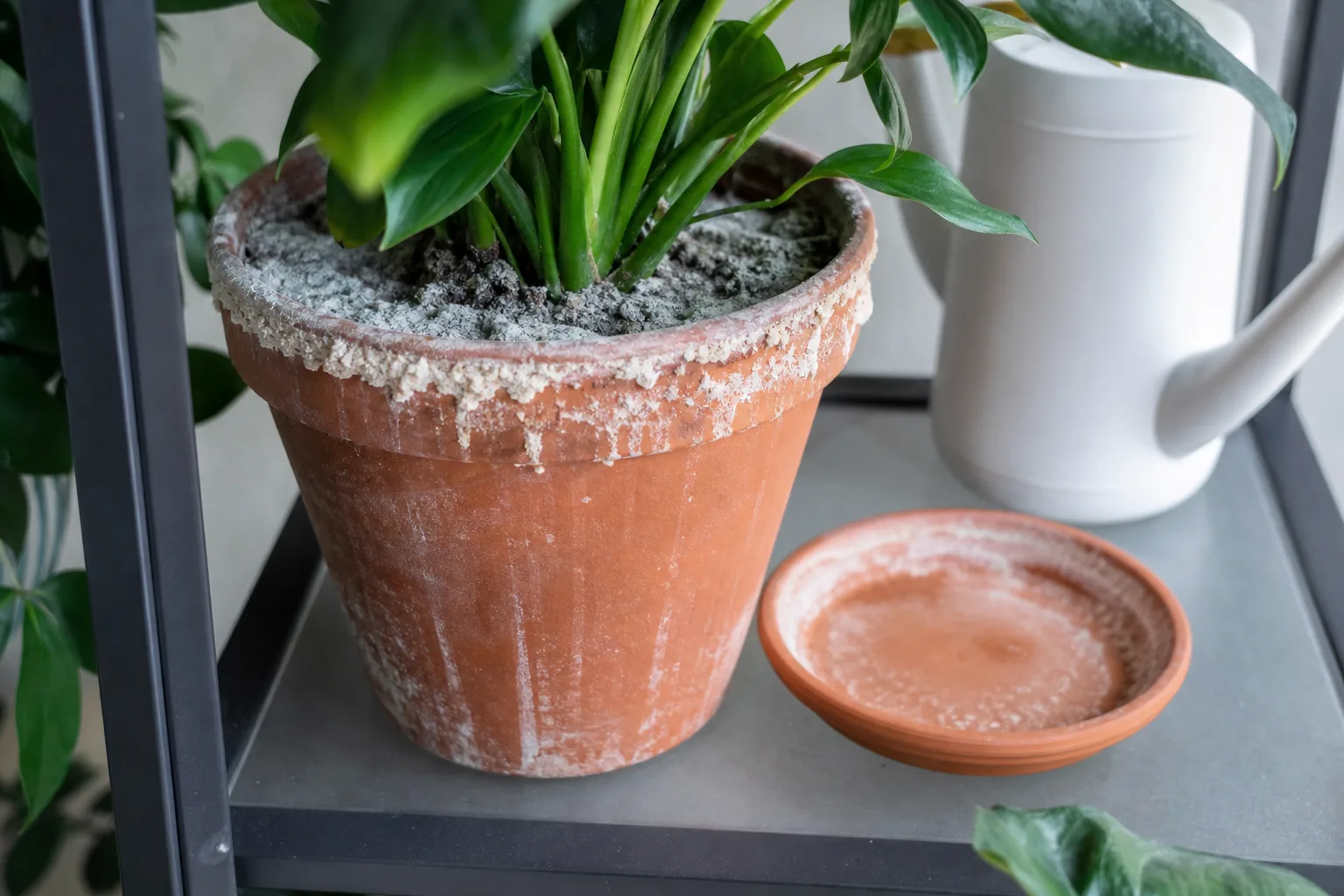
This is especially easy to cause in containers. A small pot has little soil to buffer an error, drainage may be poor in winter, and a plant using less water can leave fertilizer salts behind for a long time. White crust on the soil or pot rim, brown leaf tips, sudden wilt in wet soil, and stalled growth can point to salt accumulation—but they can overlap with other problems, so diagnose before flushing or feeding again.
Avoid fertilizer on a bone-dry root ball, never exceed the package rate, and do not stack a liquid feed on top of controlled-release granules unless the plant’s instructions call for both. For outdoor beds, the most reliable way to reduce salt and nutrient mistakes is to test the soil and apply only what is missing.
Match the decision to the plant and growing setup
The phrase “winter fertilizer” hides several different horticultural situations. A dormant peony, a Kentucky bluegrass lawn, an indoor basil plant, and a winter lettuce bed do not share one feeding calendar. Use the closest category below, then adjust for local frost, soil, and the instructions for the plant.
Dormant perennials, trees, and shrubs
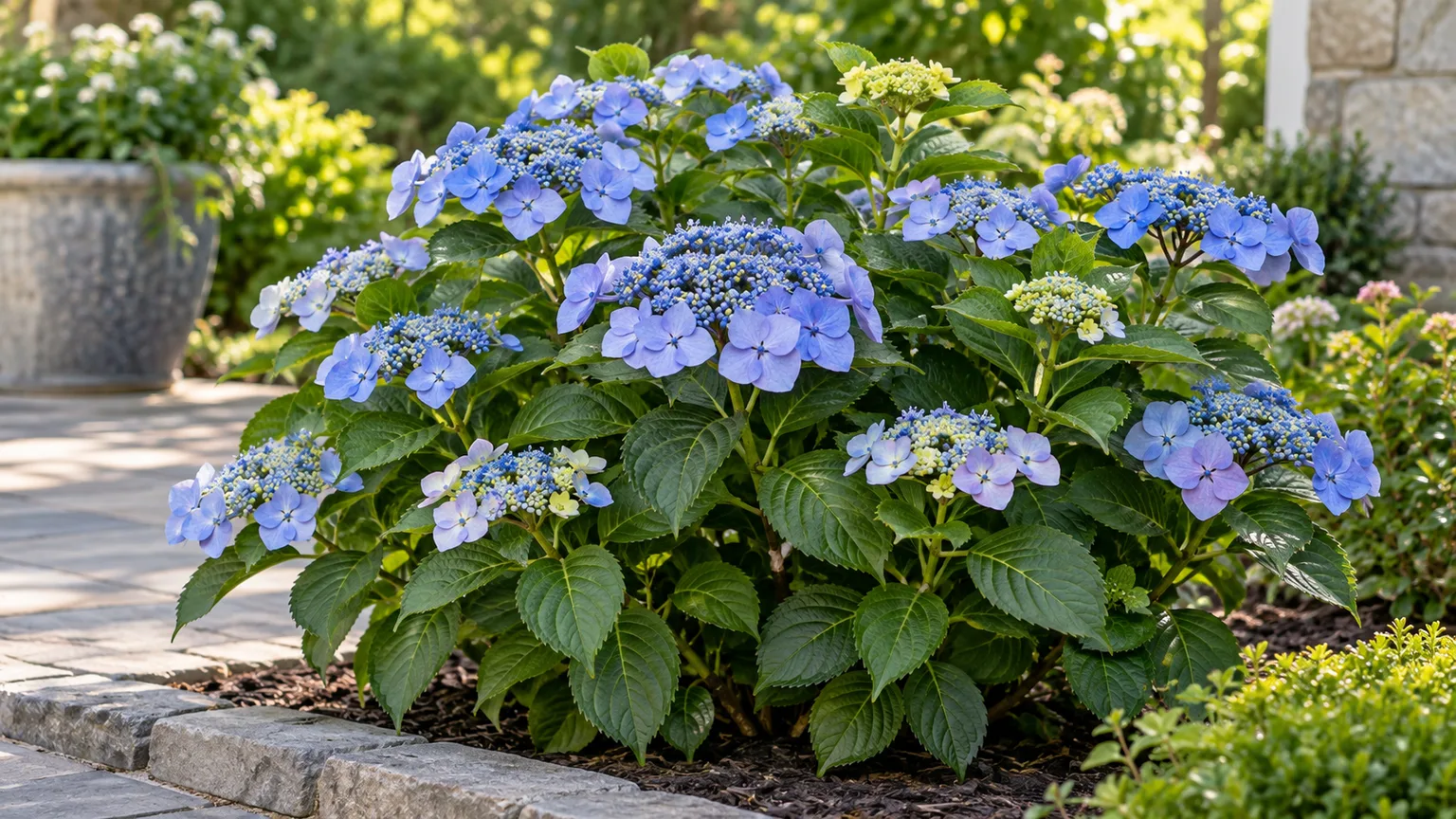
Do not fertilize dormant perennials, deciduous trees, or shrubs simply to “wake them up” early. Their leaves have dropped or their top growth has stopped for a reason, and fertilizer cannot substitute for sunlight and suitable temperatures. Wait until spring growth begins, then use a soil test and the plant’s normal feeding guidance.
Established woody plants are the main reason people confuse late fall with winter. Purdue Extension notes that roots can continue taking up nutrients while soil temperatures remain above 40°F, and that a late-fall application is best made after leaf drop rather than so late that the roots cannot use it. That is a narrow, regional timing cue—not permission to spread fertilizer over frozen soil in January. Purdue’s guidance on fertilizing woody plants explains the distinction.
Newly planted trees and shrubs deserve extra caution. Their first priority is root establishment, even moisture, and protection from extremes. Unless a soil test or a local extension recommendation says otherwise, do not try to compensate for transplant stress with a strong fertilizer dose. Mulch kept a few inches away from the trunk is usually a more useful winter task.
Lawns: the cool-season and warm-season split
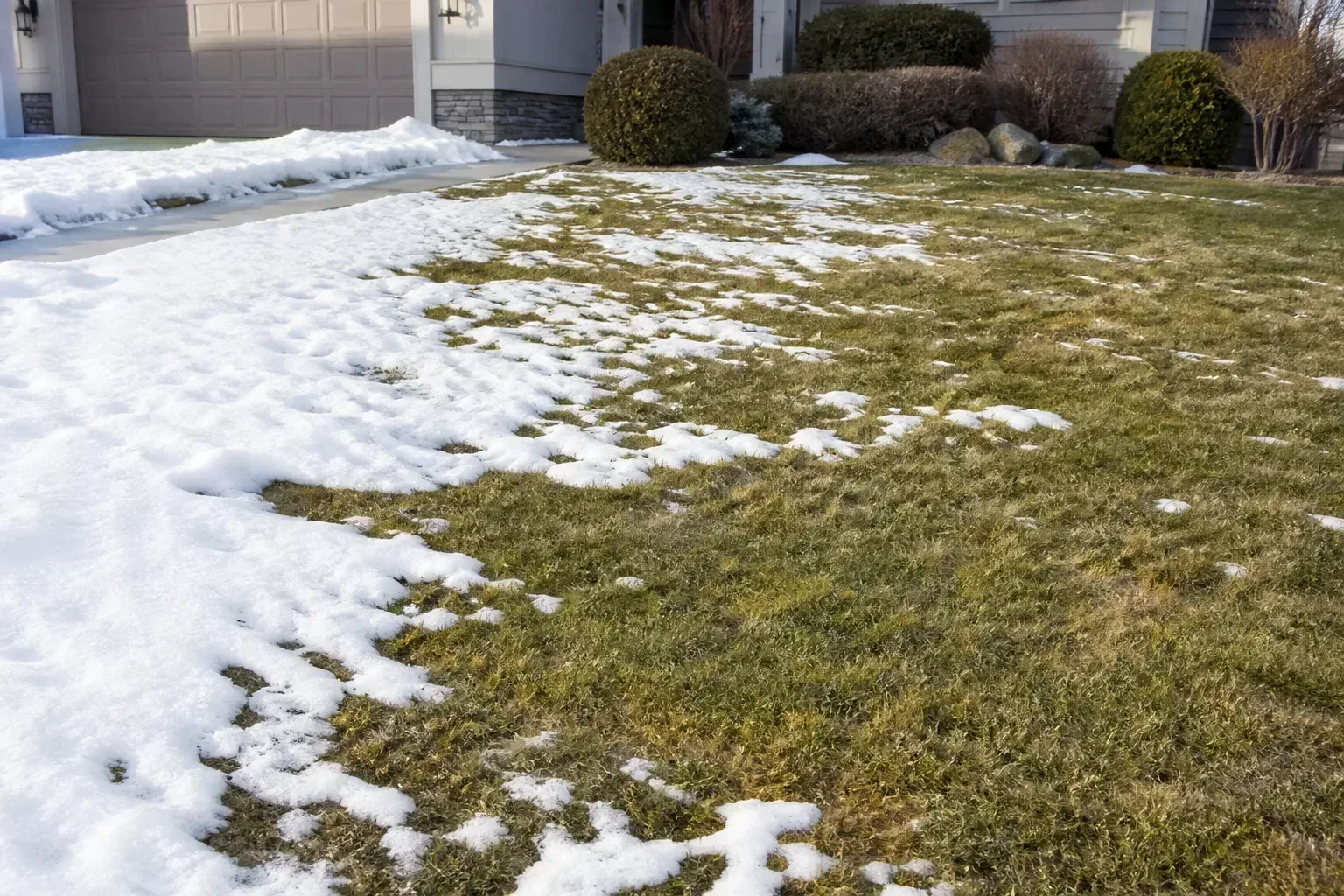
For lawns, identify the grass before deciding. Cool-season grasses such as Kentucky bluegrass, tall or fine fescues, and perennial ryegrass can grow during cool weather and may use a correctly timed late-fall application. In cold climates, that application belongs before the ground freezes and while the turf can still take up nutrients; it is not the same as feeding a fully snow-covered lawn.
Warm-season grasses such as bermudagrass, St. Augustinegrass, zoysiagrass, and centipedegrass generally slow or go dormant as temperatures and daylight fall. Keeping them artificially dark green through winter with high nitrogen can encourage weak top growth while the root system is under seasonal stress. UF/IFAS Extension advises avoiding high-nitrogen “winterizer” products for warm-season turf and waiting for natural spring green-up before the first spring application. UF/IFAS Extension’s updated winter landscape-care guidance includes the rate and timing framework for that region.
Do not use a brown color as your only diagnostic. Seasonal dormancy, shade, cold, mowing too short, compacted soil, disease, and irrigation errors can all change lawn color. A soil test, grass identification, and a local extension calendar are more useful than an impulse application.
Vegetables and empty garden beds
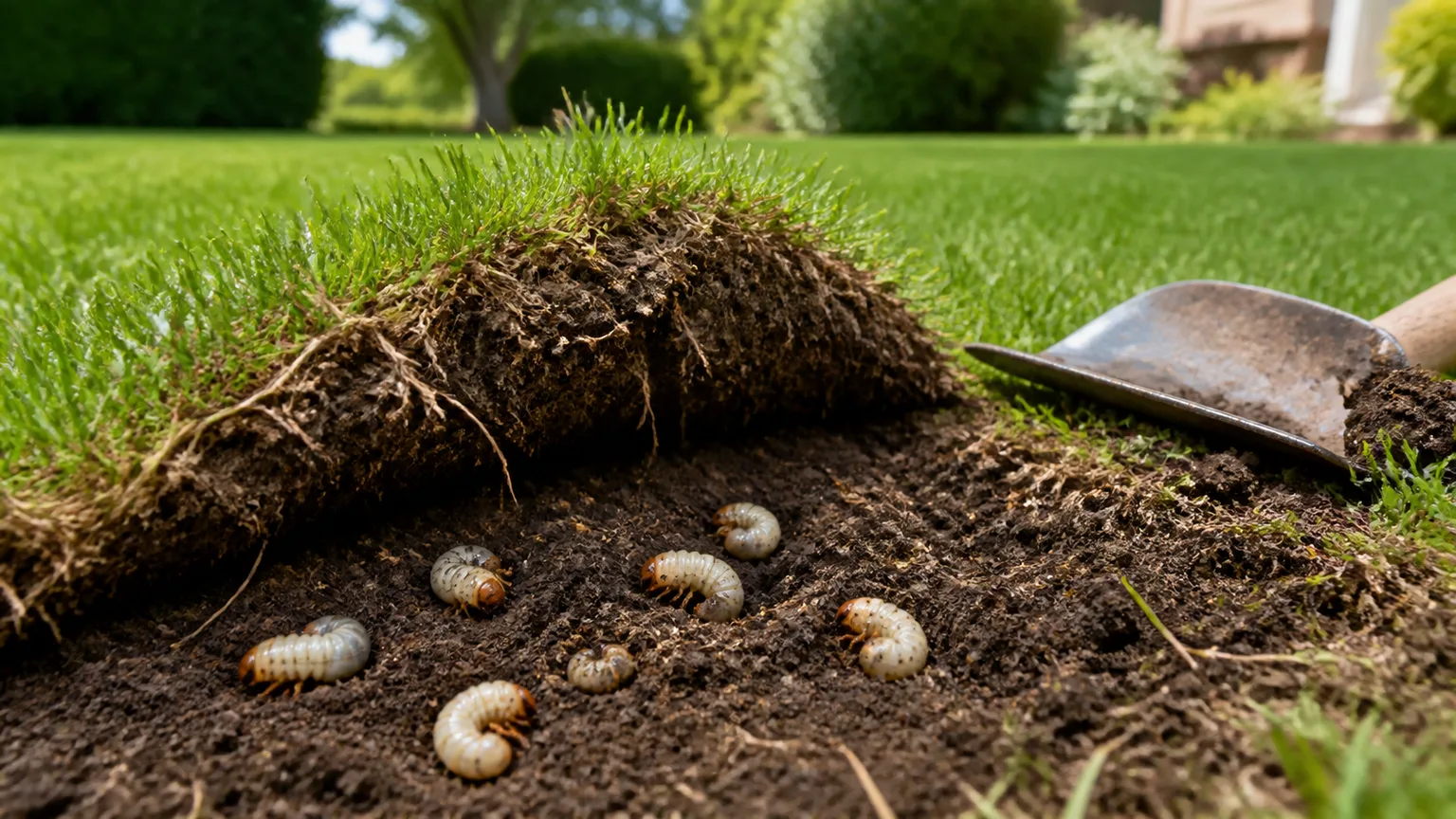
An empty bed in a cold climate usually benefits more from protection and planning than from winter fertilizer. If the season is over, remove diseased plant debris, keep soil covered, and arrange a soil test so you know what to add before planting. Applying nutrients to bare ground months before roots need them gives rain and thaw cycles plenty of time to move them away.
Mature compost is a useful soil-building option when used appropriately, but do not treat it as a fast correction for a measured deficiency. Utah State University Extension describes compost as a long-term nutrient store that improves water-holding capacity, drainage, and soil structure; it also recommends working soil only when it is not too wet to avoid compaction. USU’s winter garden preparation guidance is a helpful reference for that distinction.
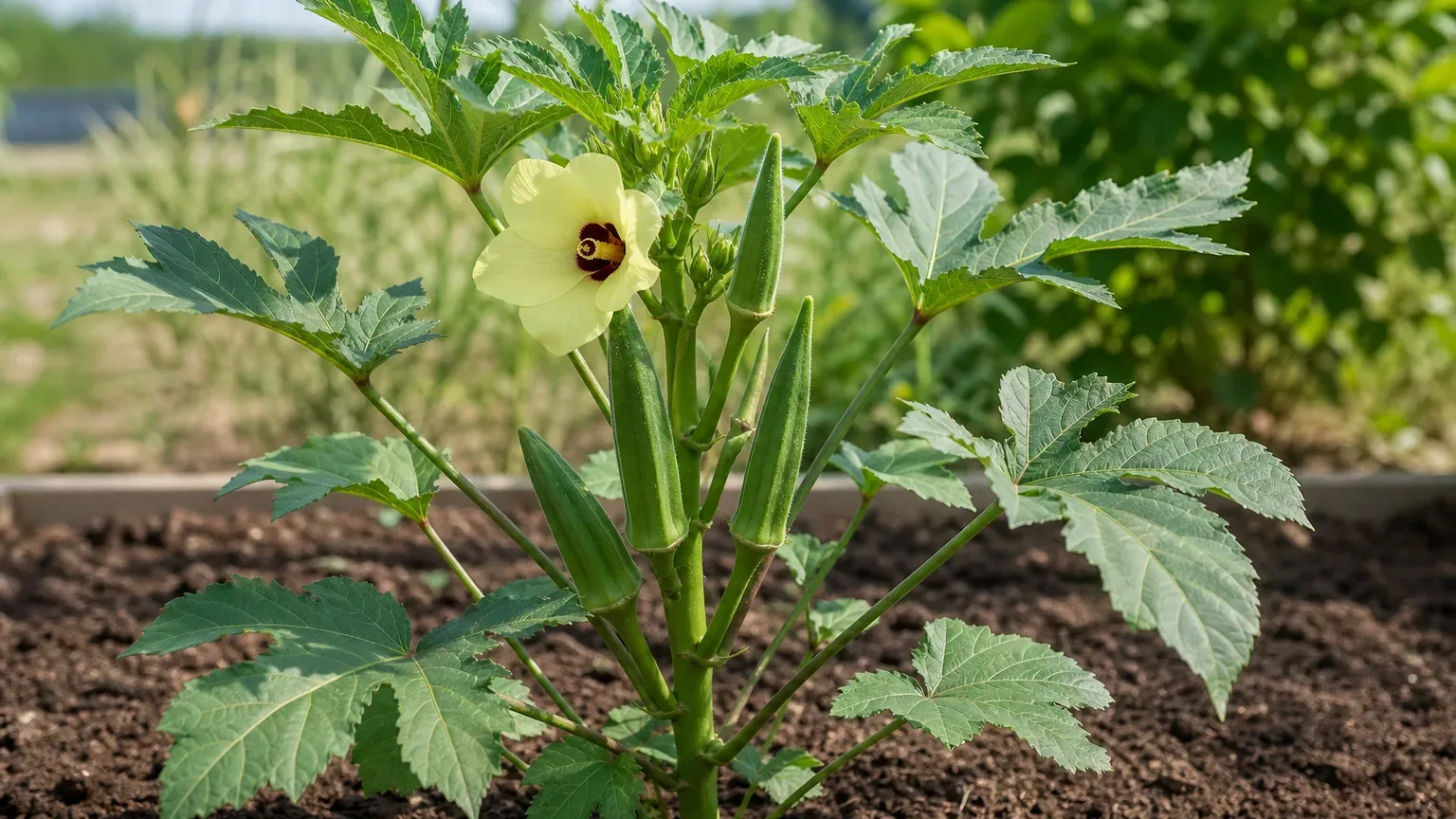
If a winter crop is genuinely growing—kale, spinach, lettuce, peas, or another crop suited to your climate—follow the crop’s feeding schedule and avoid placing fertilizer against stems or edible leaves. A light, soil-test-informed application on workable soil is different from broadcasting a general lawn fertilizer over an inactive vegetable plot.
Containers and houseplants
Outdoor containers are more exposed to temperature swings than plants in the ground. Their roots can chill or freeze quickly, and their potting mix may remain wet after rain. A dormant patio plant should not receive winter fertilizer just because it is in a pot; move it to appropriate shelter, manage moisture, and protect it from frost instead.
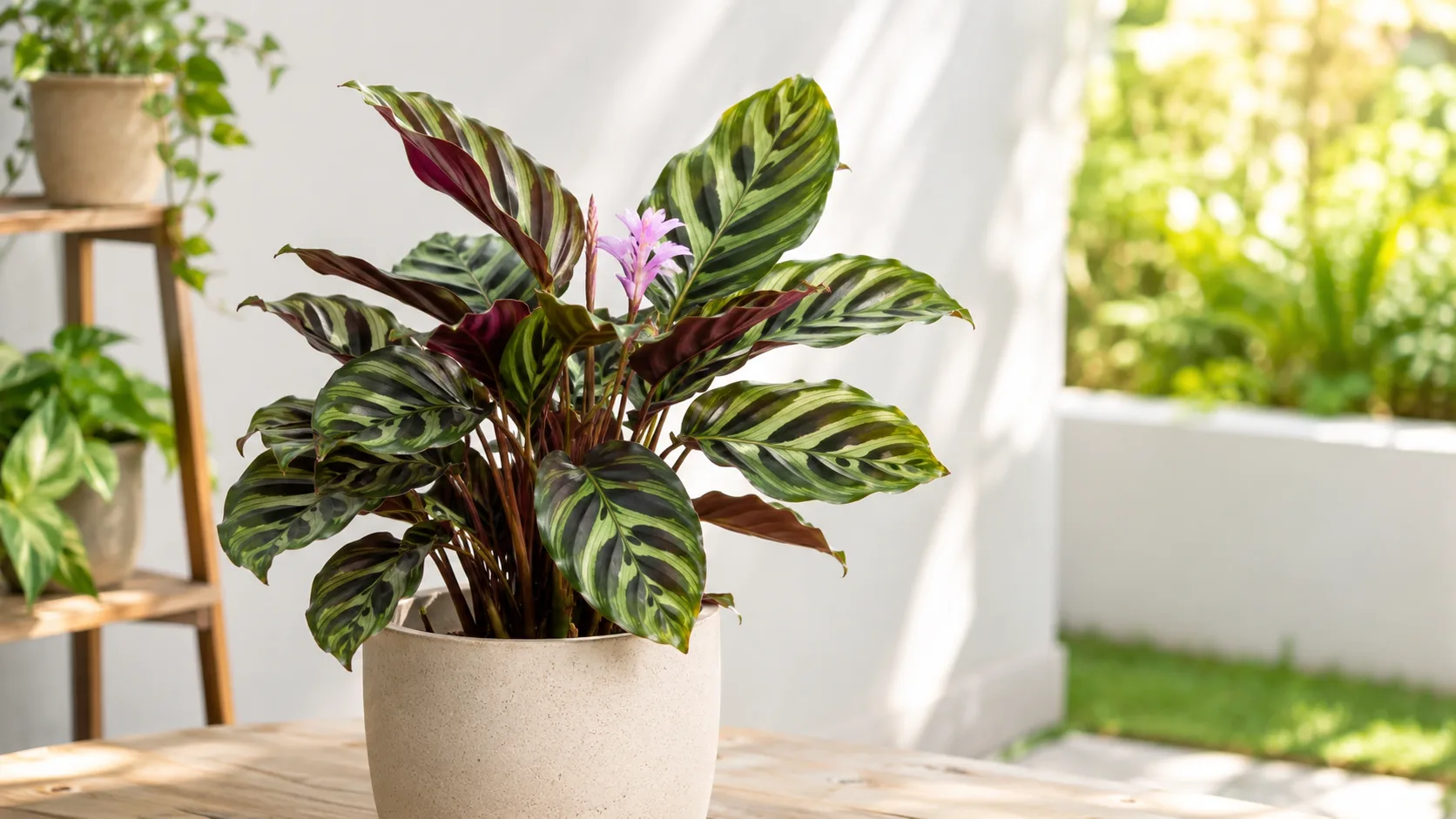
Indoor houseplants need a light-based decision. Reduce or pause feeding for plants in a cool, dim room that are making little or no new growth. If a plant is under a grow light, warm enough for its species, and actively producing leaves or flowers, a diluted fertilizer at the normal indoor interval may be reasonable. Start below the maximum label rate when light is limited, and never feed a stressed, dry, recently repotted, or waterlogged plant as a first response.
The pot makes salt management more important. Use a complete fertilizer appropriate for the plant, apply it to already-moistened mix, let water drain fully, and empty the saucer. A fertilizer-label photo can look inviting, but the N-P-K numbers do not tell you what a particular plant needs or whether its problem is nutrition at all.

Warm-climate winter gardens
In frost-free or nearly frost-free regions, “winter” may be the best growing season for some plants. Cool-season vegetables can be actively producing, citrus may continue growth, and ornamentals may never enter the deep dormancy familiar to northern gardeners. Fertilizer can therefore be appropriate, but only when the plant is growing and the root zone can hold water without becoming saturated.
Even in warm climates, shorter days and cool nights can slow uptake. Reduce frequency if growth slows, pause before a forecast of heavy rain, and use local fertilizer restrictions as part of the plan. The fact that a plant survives outdoors year-round does not mean it wants a year-round dose of the same product.
Use the plant’s new growth as the signal. A winter crop with new leaves and a soil-test-backed need may deserve feeding; a landscape shrub that is merely evergreen but static usually does not. This is also where microclimate matters: a sunny wall, an exposed slope, and a shaded wet bed can have very different root-zone conditions in the same zip code.
When late-fall feeding makes more sense than winter feeding
Late fall is a transition window, not just an earlier version of winter. Some plants can still absorb nutrients after top growth slows, and a carefully timed application may support roots or a cool-season lawn before the ground freezes. The application must be early enough for uptake and late enough to avoid stimulating a flush of tender shoots.
For woody plants, Purdue’s extension guidance places the cue after leaf drop and while the soil remains warm enough for roots to function. For cool-season turf, the cue is active late-season growth and a local recommendation—not a product’s winter-themed packaging. For warm-season turf, the correct final application may be weeks earlier, followed by natural dormancy.
The practical sequence is to identify the plant, check the soil, read the local timing guidance, and count backward from your normal freeze. Epic Gardening recommends allowing several weeks before frost for late-season feeding so new growth can mature. Gardening Know How also emphasizes spring as the broad default for most plants and recommends suspending indoor feeding when winter plants are not actively growing. Gardening Know How’s fertilizer timing overview is useful for comparing plant types.
Do not turn that window into a routine monthly application. One justified late-fall feed is very different from feeding through every winter thaw. If the proper window has passed, waiting for spring is safer than trying to make up for it.
A safe winter-feeding sequence for genuine exceptions
If you have an actively growing winter crop, warm-climate plant, cool-season lawn in its recommended window, or indoor plant under strong light, use this sequence:
- Confirm growth. Look for new leaves, expanding stems, flowers, or productive turf. If the plant is only green but static, keep observing instead of feeding automatically.
- Check the root zone. It should be unfrozen, moist but not waterlogged, and able to drain. Do not apply on snow, ice, standing water, or soil that smears rather than crumbles.
- Test before guessing. A soil test can reveal whether nitrogen, phosphorus, potassium, pH, or another factor is actually limiting. Avoid adding phosphorus unless a test or crop recommendation calls for it.
- Choose a product for the job. The first N-P-K number is nitrogen, the second is phosphate, and the third is potash; these are percentages by weight, not a quality score. Prefer the product and release speed recommended for the crop, and do not assume a “balanced” formula is balanced for every soil.
- Measure the labeled rate. Use the area or container volume stated on the label, weigh granular fertilizer when accuracy matters, and never double a dose because the previous feeding was skipped.
- Place it in the root zone. Keep granules away from trunks, crowns, stems, foliage, and hardscape. For trees and shrubs, spread across the appropriate root zone rather than making a dense ring at the trunk.
- Water only as directed. Water enough to move a soluble product into the root zone when conditions allow, but do not irrigate frozen ground or create runoff. Skip the application if heavy rain is imminent.
- Record the date and amount. A note on your phone prevents accidental repeat feeding when the weather changes or someone else helps with the garden.
This method is deliberately less exciting than “feed now for a jump on spring.” That is the point. Good fertilizing is a measurement and timing task, not a race to make plants look green during an unsuitable season.
What to do instead of winter fertilizer
For dormant gardens, winter can be productive without adding soluble nutrients. The best alternative depends on the condition of the bed, but each option supports spring readiness without trying to override dormancy.
- Get a soil test. Test representative beds rather than guessing from one yellow leaf. Keep the report with your spring planting notes so you can choose nutrients and rates deliberately.
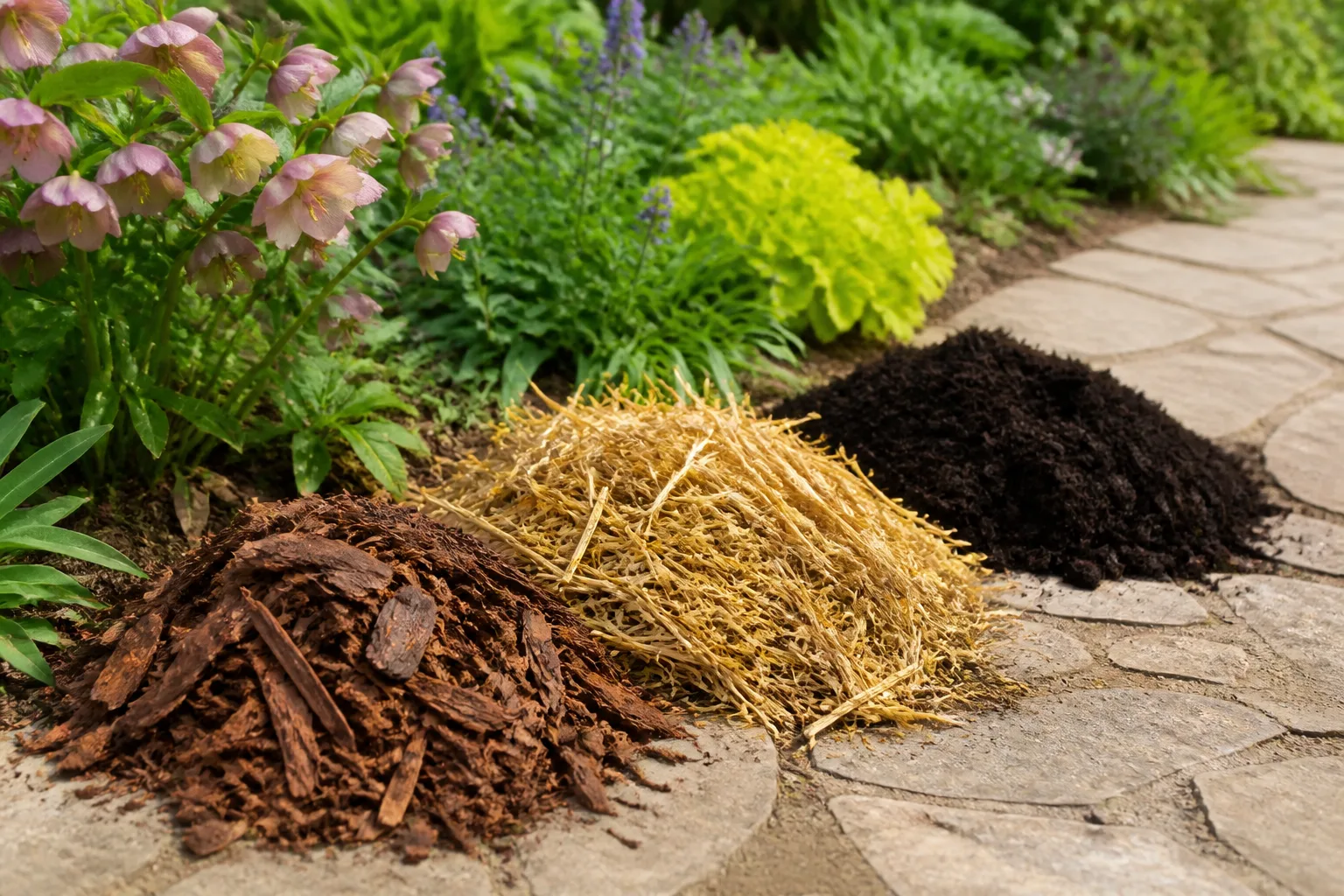
- Add mature compost where it fits. A thin, even layer over an empty bed can add organic matter and slowly release nutrients. Use finished compost, not fresh manure, and avoid burying wet soil or piling material against crowns and trunks.
- Mulch exposed soil. Organic mulch moderates temperature swings, reduces erosion, and helps the bed hold moisture. Keep it a few inches away from woody stems, and do not create a permanently soggy blanket over a poorly drained crown.
- Protect moisture strategically. Evergreens and newly planted trees may need water during a prolonged dry fall or winter thaw, but watering should respond to soil moisture and local conditions—not run on a summer irrigation schedule.
- Clean and cover vegetable beds. Remove diseased debris, leave healthy roots where appropriate, and use a cover crop or protective cover suited to your climate. Soil that is covered and biologically supported is in better shape for spring than soil carrying an unnecessary fertilizer load.
- Plan the first spring feed. Write down the crop, last application, soil-test results, and the first sign of active growth you will watch for. This turns “I should fertilize soon” into a decision you can verify.
Mulch and compost are not interchangeable with fertilizer in every situation. They will not instantly correct a confirmed deficiency in an actively growing crop, and compost quality varies. Their winter advantage is that they improve the soil environment and release resources slowly, which is better aligned with a dormant bed.
Conclusion
Fertilizing in winter is usually a waste of money when the plant is dormant and the soil is frozen, saturated, snow-covered, or close to a heavy runoff event. The unused nutrients can move away, concentrated salts can injure roots, and high nitrogen can push growth that cold weather will damage.
The exceptions are specific: a cool-season lawn in its proper late-fall window, a winter crop that is actively growing, a frost-free landscape with a real nutrient need, or an indoor plant receiving enough light to keep growing. In every case, confirm growth, check the root zone, test before guessing, follow the label, and keep fertilizer off hard surfaces.
If your garden is resting, give it a soil test, mature compost or well-placed mulch, sensible moisture, and a spring plan. Waiting is not missing an opportunity; it is often the most responsible fertilizer decision you can make.