Where to Place Hummingbird Feeders: 8 Smart Tips
Where to place hummingbird feeders for shade, shelter, window safety, easy cleaning, and fewer territorial fights—with practical yard examples.
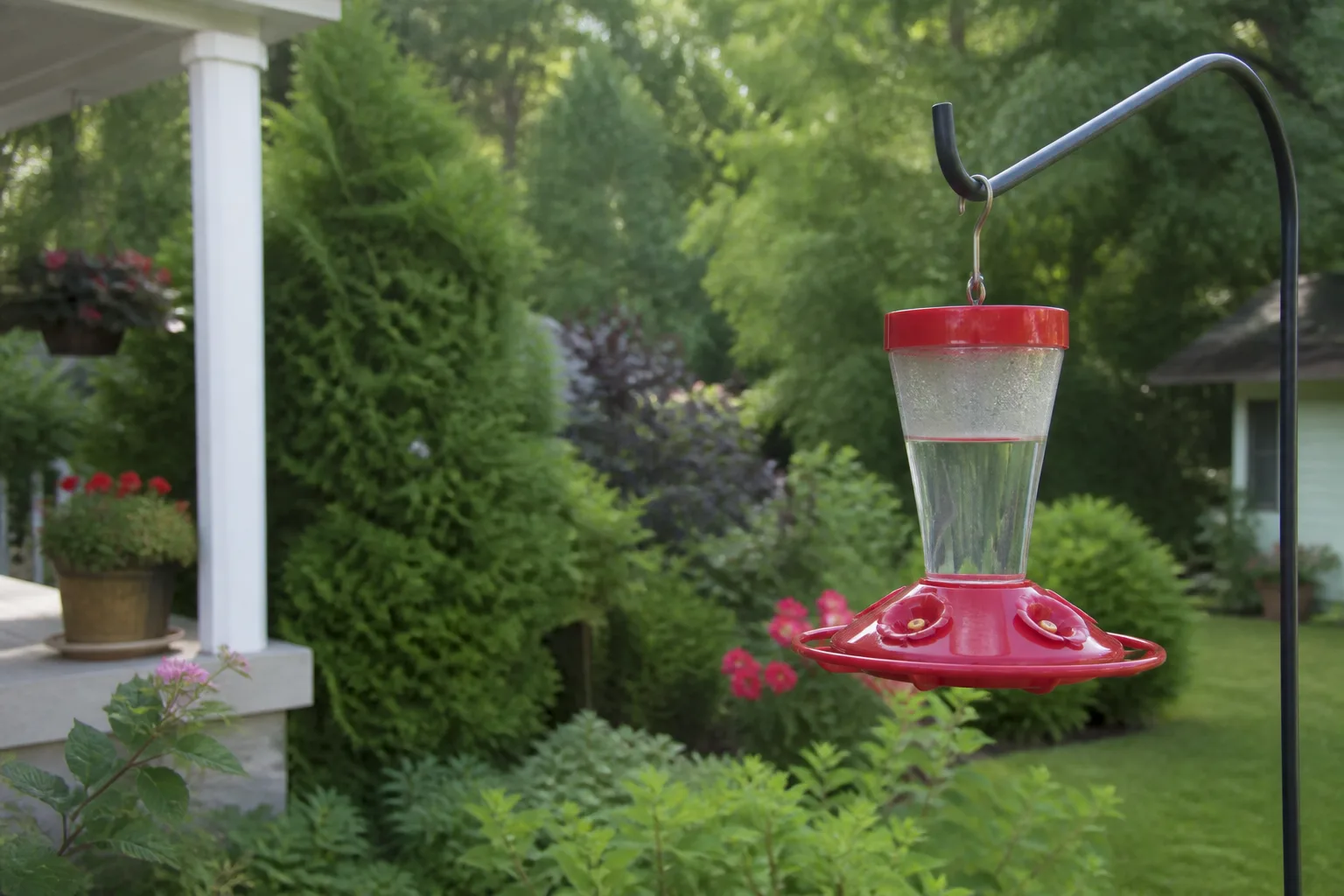
The best place for a hummingbird feeder is visible from an open flight path, shaded during the hottest part of the day, protected from strong wind and rain, safe from cats and glass, and easy for you to reach. That usually means the edge of a flower bed, a sheltered deck or patio, or a hook under an awning—not the deepest part of a shrub and not a sunny, exposed pole in the middle of the lawn.
There is no single magic height or compass direction that works in every yard. The right location is a small compromise between what lets a hummingbird spot, approach, hover, retreat, and rest comfortably and what lets you refill and clean the feeder often enough to keep the nectar safe. Use the eight tips below as a placement test, then watch the site for a few days before deciding whether it needs to move.
The best location balances five things
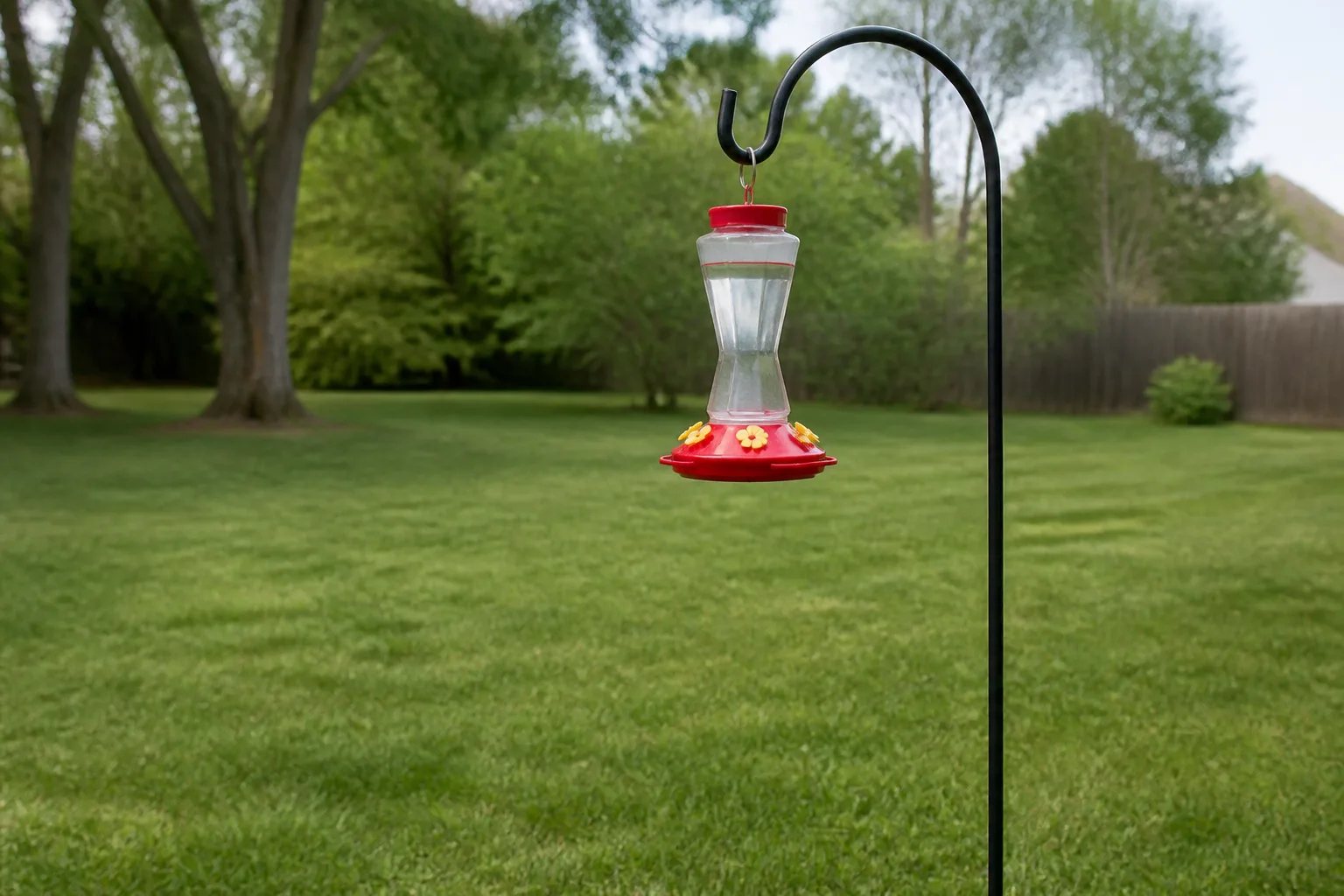
Before hanging the feeder, stand where you plan to put it and look at the space from a hummingbird’s point of view. A good site passes five checks: the feeder is easy to see, the approach is open, nearby cover offers a resting place, the nectar is not baked or soaked, and you can service it without a ladder or obstacle course.
Use a simple placement test before hanging the feeder
Imagine a hummingbird arriving from the garden, fence line, or open sky. Can it see the feeder against a relatively simple background? Can it hover on at least two sides and leave quickly if a larger bird, cat, or person appears? Is there a twig, shrub, or small tree nearby for resting, but not a dense wall of leaves that hides the ports?
Then check the human side of the arrangement. You should be able to take the feeder down, inspect the nectar, wipe drips, and wash the parts while standing securely on the ground. If a location looks beautiful but you would postpone cleaning because it is awkward to reach, it is not a good long-term location.
1. Make the feeder visible but protect it from afternoon heat
Hummingbirds notice color and movement, so a feeder should catch enough daylight to stand out as birds pass. That does not mean it belongs in full sun all day. A feeder that is conspicuous in the morning and shaded from roughly midday onward is usually a better compromise than one that sits in harsh afternoon sun or disappears under a dark canopy.
Heat speeds up nectar spoilage. The International Hummingbird Society recommends shade, especially afternoon shade, and advises changing the mixture more often in very hot conditions. A porch roof, pergola, deciduous tree canopy, or the north or east side of a structure can provide useful protection, but check the actual pattern of sun in your yard rather than assuming a direction guarantees shade.
Deep shade can create a different problem: the feeder may blend into foliage, and you may not notice a cloudy solution or a leaking port. Aim for bright shade or dappled light with a clear visual window, not a hidden feeder. A red feeder part or a small patch of nearby red or orange flowers can help birds notice the station, but red dye in the nectar is unnecessary and should be avoided.
2. Hang it at a reachable, predator-aware height
Hummingbirds feed from flowers at many heights, so there is no universal “correct” feeder height. A feeder can hang from a shepherd’s hook, porch beam, deck rail, wall bracket, or balcony hanger as long as the birds have room to hover and the structure is stable.
The practical lower limit is set by predators and traffic. The International Hummingbird Society recommends hanging feeders at least four feet above the ground to keep them beyond the reach of cats and other predators. Penn State Extension likewise advises placing feeders high and in open areas if outdoor cats are present. Four feet is a useful baseline, not a guarantee: a cat can climb a nearby fence, shrub, rail, or furniture and turn a seemingly elevated feeder into an ambush point.
Choose height by the actual hazards in your yard
Measure from the ground to the lowest part of the feeder, then look for launch points. Move the feeder farther from a bench, stacked pots, railing, low roof, or dense shrub if a predator could use that object to get closer. On a balcony, the railing itself can be a perch for cats or a collision hazard for birds, so keep the feeder on the open side and make sure it cannot swing into glass.
Also consider your own reach. A feeder hung eight or ten feet up may be safe from a cat but unsafe to service if you need to climb a ladder with a full glass reservoir. A slightly lower, well-supported location that you can reach comfortably is often the more responsible choice because cleaning consistency matters more than achieving an impressive height.
3. Add nearby cover without blocking the flight path
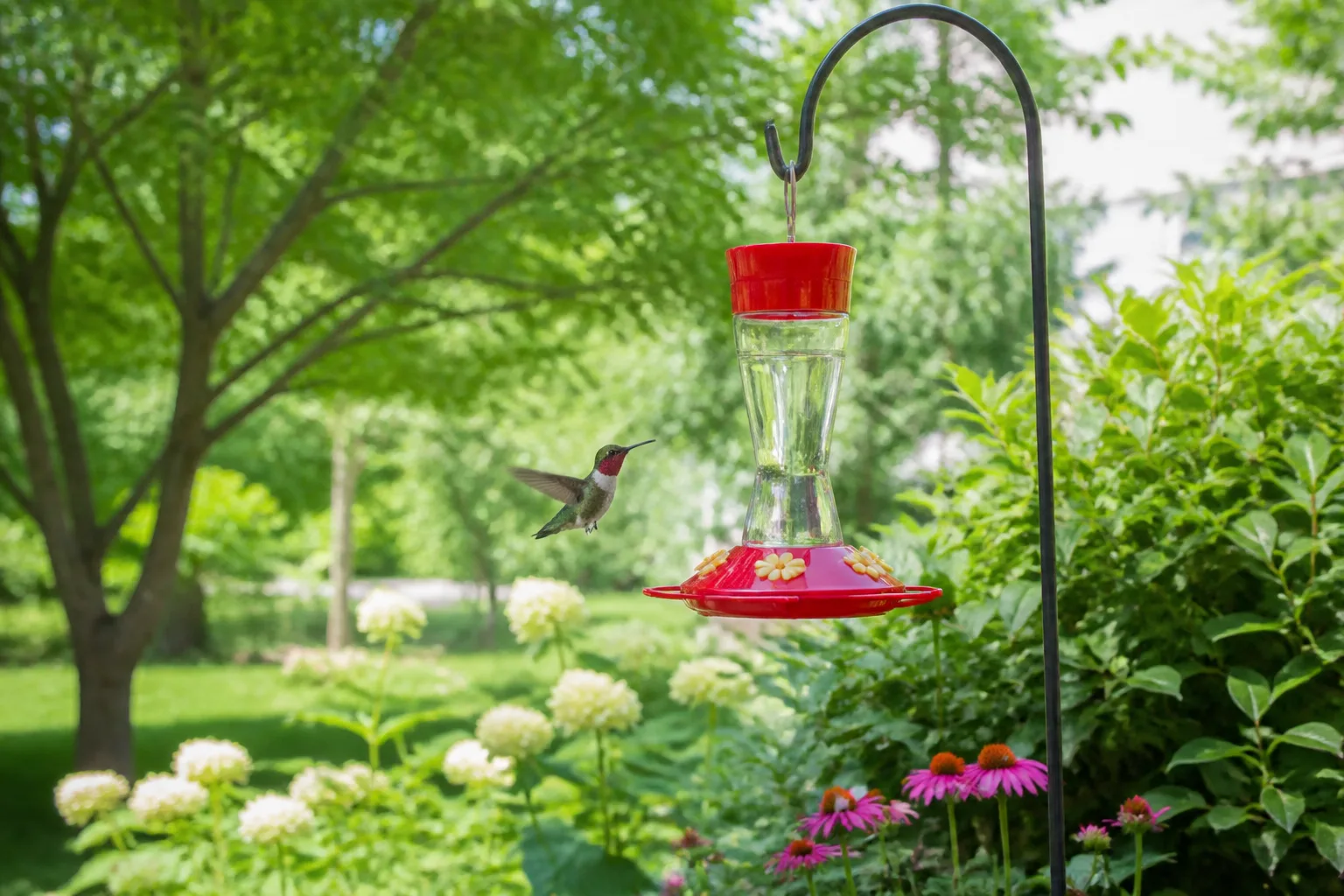
Hummingbirds need more than sugar water. They eat small insects and spiders, rest between feeding flights, and use shrubs and trees for shelter. Penn State Extension’s hummingbird guidance describes breeding-season habitat as a mix of flowering plants with trees and shrubs nearby for shelter and perching, so a feeder beside a living garden is usually more useful than one isolated in a bare, exposed space.
Think of cover as a retreat zone, not a wall. Place the feeder near a small tree, shrub, vine, or flower cluster, but leave an open bubble around the ports. The bird should be able to approach from the front, hover without striking leaves, circle around the feeder, and leave in more than one direction. A branch a few feet away can be valuable; foliage touching the feeder can hide it, catch drips, and give predators a concealed route.
Do not hang a feeder directly beside a nest. A female defending a nest may treat the feeder as part of her territory, and extra activity near the nest can increase stress or conflict. If you discover a nest after installation, leave the nest alone and move the feeder gradually to a quieter nearby site rather than repeatedly working around it.
4. Treat windows as a separate safety decision
Glass is not a neutral backdrop. Birds can see reflected trees and sky or a clear passage through a room but may not recognize the pane as a barrier. A feeder that attracts a hummingbird to a window therefore needs a deliberate glass-safety plan, especially when the window reflects trees, shrubs, or open sky.
Choose the beside-the-window or far-away placement mode
The safest choices are not usually “somewhere in front of the window.” Put the feeder right beside the window, close enough that a bird cannot build a long, high-speed flight toward the glass, or place it well away from the building. The International Hummingbird Society recommends either an adjacent position or at least 25 feet from the window. If you want close views, choose the adjacent mode and keep the feeder to the side of the glass rather than centered in a direct approach line.
If the only attractive spot is farther out, inspect every pane along the likely flight route. Cornell’s Project FeederWatch collision study materials identify windows facing feeders as a feature worth monitoring, and they list exterior screens, repeating film patterns, decals, strings, and consistently closed blinds or curtains as mitigation types. One decorative hawk sticker is not a complete solution: birds can attempt to fly through the uncovered gaps.
For a lasting fix, use an exterior treatment with a closely spaced pattern. The Bird Collision Prevention Alliance recommends patterns on the outside surface and spacing no more than two inches for adhered markers or three to four inches for hanging treatments. Apply the treatment to the window that is closest to the feeder or has a history of strikes, and follow the product’s installation directions. Interior-only decals can be obscured by outdoor reflections.
5. Shield the feeder from wind, rain, and household traffic
Wind makes a feeder swing, spill, and fatigue its hanger. Rain dilutes the nectar, washes debris into the ports, and can leave the reservoir sitting wet for longer than expected. Choose a spot under a porch roof, awning, gazebo, or broad canopy if it still has enough light and open approach space.
Watch the feeder during the windiest part of the day. If it twists so the ports face a wall, bangs a post, or splashes sugar water onto the deck, move it or use a shorter, stronger hanger. A stable hook is also safer for you: a feeder that regularly swings out of reach is harder to remove without spilling.
Keep it out of the path of doors, hoses, lawn equipment, children’s play, and routine foot traffic. Hummingbirds are quick, but a person bumping a feeder can crack a reservoir or leave sticky nectar on a walkway. A little distance from the action is useful; a hidden corner that you forget to inspect is not.
6. Give territorial hummingbirds more than one option
Hummingbirds often defend nectar sources because a natural flower patch produces a limited amount of food. That territorial instinct can make one feeder look “busy” while a dominant bird chases away every other visitor. Birds & Blooms birding editors recommend multiple feeders in different spots, ideally where they cannot all be seen at once; they also cite about 15 feet apart as a useful spacing target when possible.
Start with one feeder if you are learning the routine. Add a second when you see repeated chases, a bird guarding the feeder from a nearby branch, or other hummingbirds hovering and leaving without feeding. Put the second around a corner, behind a screen of shrubs, or on the other side of the house rather than directly beside the first one. Two feeders in the same sightline may simply become one larger territory.
Multiple feeders also make maintenance more forgiving. You can keep one in service while taking the other down to wash, and you can place a smaller feeder in a cooler, more sheltered microclimate for times when the main station is exposed. Do not add more feeders than you can keep filled and clean; extra capacity is not a benefit if every reservoir sits half-full and forgotten.
7. Put the feeder on a maintenance route

The best feeder location is one you pass often enough to notice changes. Hang it where you can see the nectar level from a kitchen, office, patio, or garden path, but not so close to a window that the feeder creates an unmitigated collision risk. A visual check should be part of a normal chore, not a special birding expedition.
Penn State Extension advises selecting a feeder that stores enough nectar for about three to four days and replacing the solution every three to five days, with cleaning before refilling. Birds & Blooms recommends at least every three or four days and more often in hot weather, while the Hummingbird Society advises changing every two to three days and more frequently above 90°F. These intervals differ because temperature, feeder size, shade, cleanliness, and bird traffic all change the spoilage rate.
Use the shortest interval that matches your conditions. In cool, shaded weather with light use, a clean feeder may go several days; during a hot spell, inspect it daily and change it sooner. If nectar is cloudy, stringy, bubbling, or showing mold, take the feeder down immediately, discard the solution, and wash the feeder before refilling. Never top off old nectar with fresh nectar.
Place the feeder close enough to a hose or sink that cleaning is realistic, but far enough from a wall that you can remove it without scraping the ports. A saucer-style feeder with an easy-to-open basin can be a smart choice when accessibility matters more than reservoir size. Fill only what the birds are likely to drink before the next cleaning, which reduces waste and makes freshness easier to judge.
8. Use flowers and habitat as a wayfinding system
A feeder works best as part of a habitat, not as a floating snack dispenser in an empty yard. Penn State Extension recommends placing feeders near conspicuous clusters of hummingbird flowers early in the season so birds can locate them. Bright tubular flowers help catch attention, while shrubs and trees provide perches, shelter, and insect habitat.
You do not need to plant a red garden around the feeder. Hummingbirds visit flowers in many colors, although red, orange, and pink tubular blooms are common visual cues. Choose plants suited to your climate and soil, favor native species where appropriate, and stagger bloom times so natural food is available across the season. Avoid broad pesticide use around the station because hummingbirds eat insects as well as nectar, and chemical exposure can harm the broader garden community.
If you are introducing a feeder to a new yard, put it near flowers or a known hummingbird route at first. Once birds find it, you can move it in small increments toward a better viewing window, a more convenient hook, or a cooler position. Penn State Extension specifically notes that hummingbirds can find a feeder after being attracted to an area and that the feeder can then be moved gradually.
Best spots—and places to avoid
Use this comparison to turn the general rules into a real choice:
| Location | Why it can work | What to check first |
|---|---|---|
| Sheltered patio or deck edge | Easy viewing and service, often protected from rain | Keep open flight space and avoid nearby glass or cat launch points |
| Under an awning or gazebo | Good rain and afternoon-heat protection | Ensure the roof does not hide the feeder from passing birds |
| Edge of a hummingbird garden | Flowers provide a visual cue, cover, and insects | Keep foliage from touching the ports and avoid pesticide drift |
| Near a kitchen or office window | Convenient observation and cleaning reminders | Use the adjacent-or-far-away glass rule and add exterior mitigation when needed |
| Balcony corner | Useful for small-space birding | Stabilize the hook, protect nectar from heat, and keep birds away from sliding-door glass |
| Deep inside dense shrubbery | Feels sheltered | Usually too hidden, cramped for hovering, and difficult to inspect |
| Full-sun shepherd’s hook | Easy to see from the yard | Nectar may spoil quickly and wind can increase swinging |
| Beside a nest or cat route | Convenient for a predator or territorial bird | Move it to a quieter, open position |
Avoid any site where you cannot clean the feeder safely, where falling nectar lands on a busy walkway, or where the feeder hangs over a place a cat can reach. In bear country or areas with other large wildlife, follow local wildlife guidance before leaving sugar-water feeders out; a placement that is safe for a hummingbird may still attract larger animals.
Troubleshoot poor visits by changing one variable at a time
Moving a feeder every few hours makes it impossible to tell what helped. Change one factor, then give the birds time to notice the new location. Hummingbirds may make quick visits that you miss, and a quiet feeder is not automatically an unused feeder.
When birds do not find the feeder
Start with the season and local species. Put feeders out before the first expected arrivals in spring and keep them available while birds are still using them in fall; local migration timing varies by region. Leaving a clean feeder out does not stop migration, because hummingbirds respond to seasonal cues and move when they are ready.
Next, improve visibility without sacrificing shade. Move the feeder from deep foliage to the edge of the cover, add nearby flowers, or shift it a short distance toward a known flight corridor. Check that a roof, wall, or reflective window is not blocking the approach. If the feeder was recently moved, return it partway toward the last successful position and then make smaller changes.
Finally, inspect the nectar and feeder itself. A feeder that smells sour, looks cloudy, leaks, or has sticky ports is less likely to be used. Use plain white sugar and water at the standard four-parts-water-to-one-part-sugar ratio, with no honey, red dye, or other additives. Clean the ports and reservoir before testing the location again.
When ants, bees, leaks, or spoilage appear
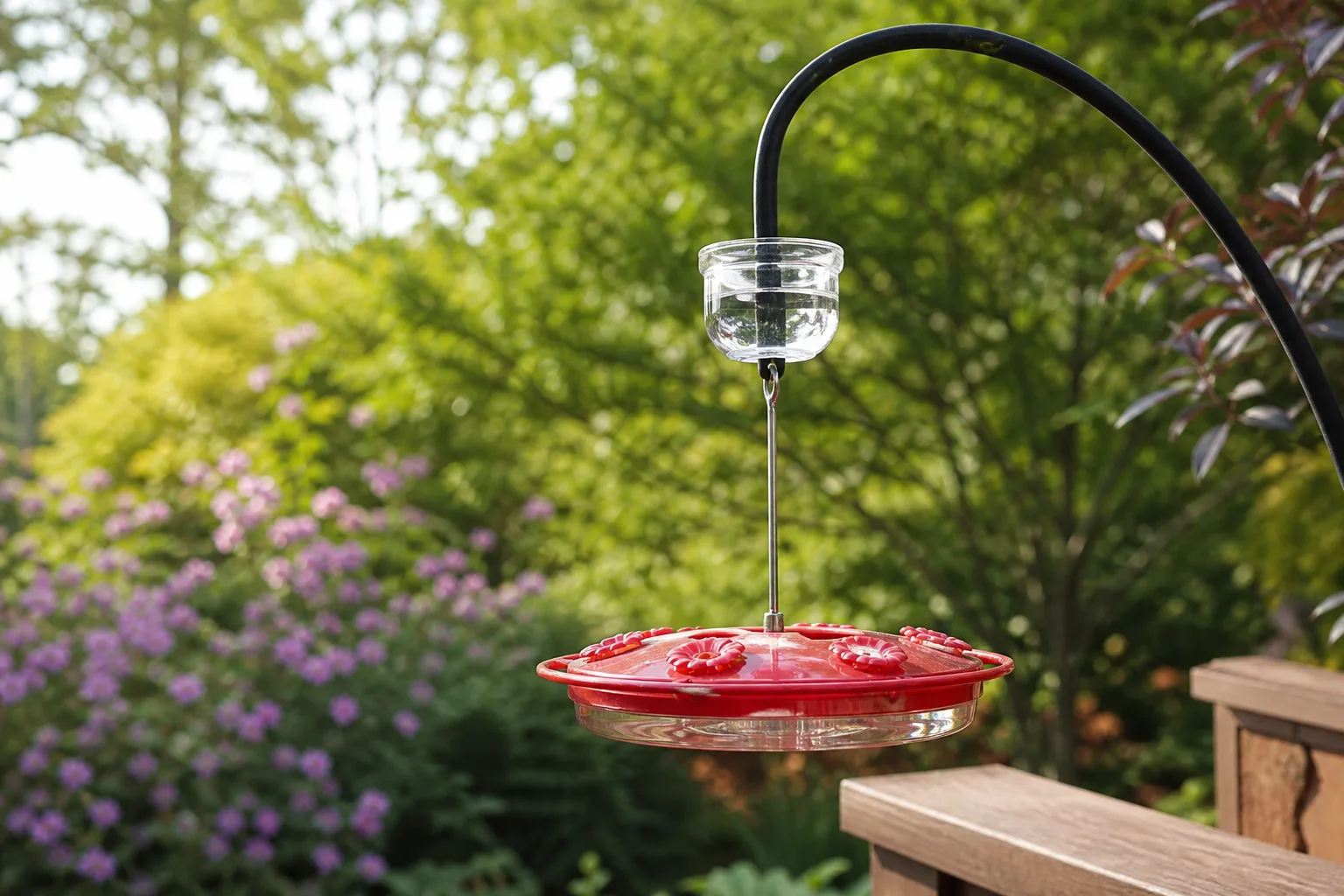
Ants usually follow a sticky route rather than being attracted to an abstract “bad location.” Look for drips at the ports, a cracked reservoir, a loose seal, or a hanger that tilts the feeder. Fix the leak, wipe the outside, and consider an ant moat or a feeder design that keeps the ports above the liquid.
Bees and wasps can be drawn to exposed sugar water, especially where a feeder leaks or sits in bright sun. Birds & Blooms recommends cleaning spills, considering bee guards, and moving the feeder to shade; it also warns against putting petroleum jelly, cooking oil, or pesticides on feeding ports because those substances can harm hummingbirds. Protect pollinators while solving the access problem rather than trying to poison or grease the station.
If nectar spoils quickly, first move the feeder out of afternoon sun and reduce the fill amount. Then tighten the cleaning schedule. Shade slows heating but does not sterilize the feeder, so a shaded reservoir still needs frequent replacement and a thorough wash before fresh nectar goes in.
Adjust placement as seasons and weather change
The best spring location may not be the best midsummer location. Early in the season, a sunny edge near flowering plants may help birds spot the feeder, while the same spot can become dangerously hot in July. A deciduous tree may provide excellent summer shade but drop leaves into the ports in fall, and a porch corner that is calm in May may catch prevailing winds later in the year.
Recheck the station after a heat wave, a storm, a change in plant growth, or a new predator pattern. In hot weather, use a smaller fill and check nectar more often. In windy weather, move the feeder closer to a solid shelter while preserving open approach space. When migrating birds are still visiting, keep the feeder clean and available; the presence of food does not require birds to stay past their natural season.
Conclusion
When deciding where to place a hummingbird feeder, start with the route, not the hook. Choose a spot birds can see from open air, give them nearby cover and a clear escape path, keep the nectar shaded and stable, separate the feeder from cats and risky glass, and put it on a route you can clean every few days.
If the first location is not perfect, move the feeder gradually and observe what changes. A well-placed feeder is not merely attractive; it is a dependable, low-risk station that supports responsible feeding because both the birds and the person caring for it can use it safely.