Dog Vomit Slime Mold: What to Do
Dog vomit slime mold looks alarming but is usually harmless. Learn when to leave it, how to remove it without spreading spores, and what reduces repeats.
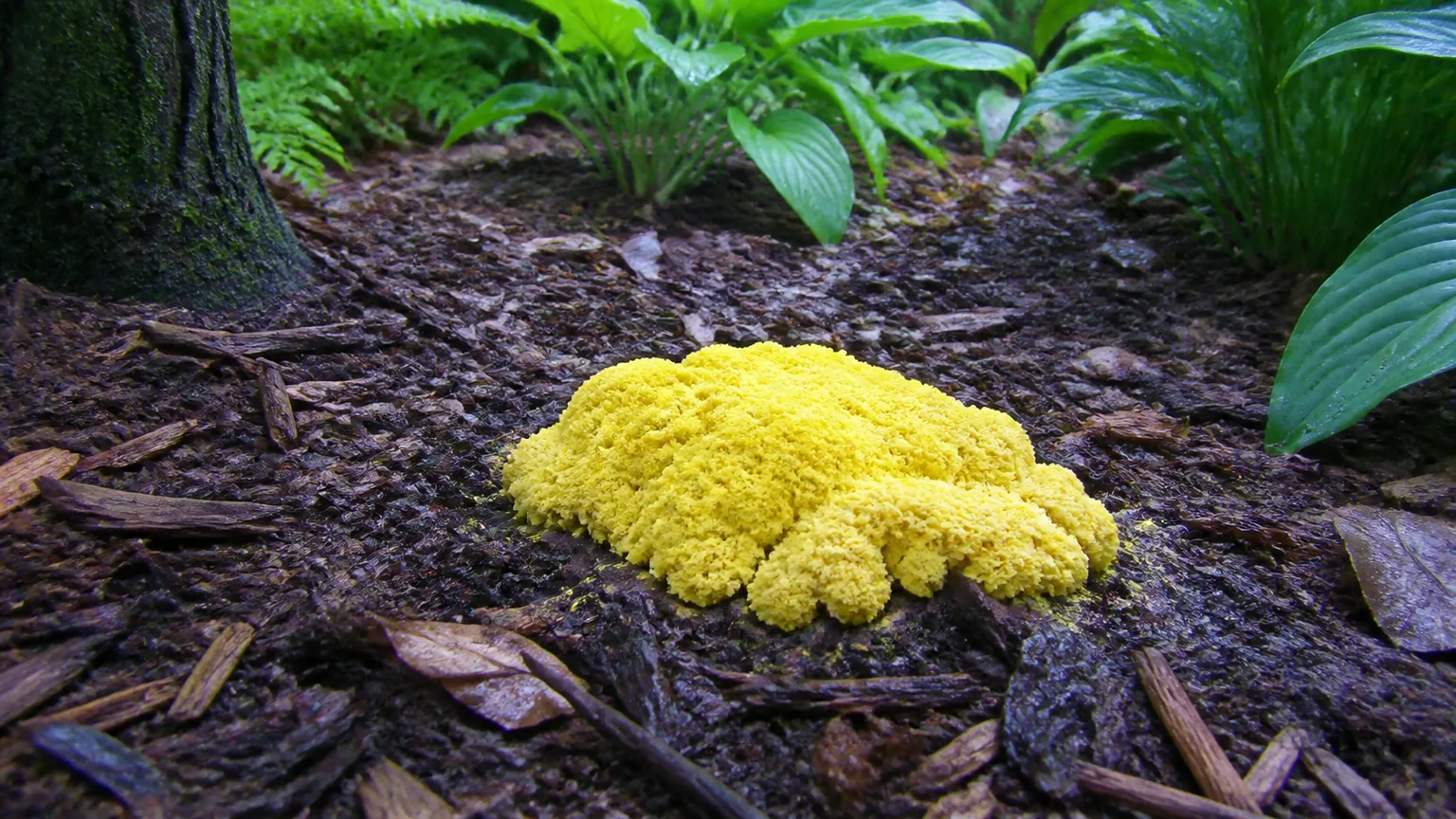
If a bright yellow, foamy blob appears on mulch after rain, you probably do not need a fungicide—or a rescue mission. Dog vomit slime mold (Fuligo septica) is a short-lived decomposer that usually feeds on dead wood and leaf litter, not on living plants.
The best response depends on where it is and what stage it has reached. Leave an isolated patch in an out-of-the-way bed if you can tolerate it, gently lift it if the appearance bothers you or it is covering a seedling, and remove it promptly from places where children or pets may disturb unfamiliar growth. Avoid blasting it with a hose: a wet mass may spread, while a dry one can release a cloud of spores.
The quick answer: leave it, lift it, or change the conditions
Use this triage before you touch the mulch:
| What you see | Best first move | Why |
|---|---|---|
| A small yellow patch on fresh mulch, away from plants and play areas | Leave it for a few days | It is usually harmless and often collapses as it dries. |
| A patch covering a seedling, low-growing plant, or turf | Lift it gently with a garden fork or trowel | A thick layer can temporarily block light and air even though it is not feeding on the plant. |
| A patch beside a path, play space, dog run, or vegetable harvest | Remove it before it dries and keep hands and paws away | The material is not a reason to panic, but unidentified outdoor growth should not be eaten and dry spores can irritate sensitive airways. |
| Repeated growth in a bed that stays wet | Improve drying and watering habits | Surface removal will not change the damp, organic conditions that favor the next episode. |
This is a nuisance-management decision, not a disease emergency. University of Maine Cooperative Extension describes slime molds as amoeba-like organisms that use decaying material and recommends collecting them if they are cosmetically objectionable; it does not recommend a pesticide for management. The University of Maine’s extension fact sheet also notes that slime molds naturally break down when conditions become less favorable.
What dog vomit slime mold actually is
Why it is not a true fungus
Despite the common name “dog vomit fungus,” Fuligo septica is a plasmodial slime mold, not a fungus and not a plant pathogen. In its active stage, many microscopic cells fuse into one spreading, multinucleate mass called a plasmodium. That mass moves over damp organic material and consumes microorganisms and decaying matter.
That distinction explains why the yellow growth can sit on bark chips, leaf litter, a rotting stump, or the edge of a raised bed without infecting the plant beside it. It is using the dead material as a food base. The mulch may be decomposing in exactly the way it was meant to, although the timing and color can be startling.
How the yellow mass becomes a dry spore crust
The stage you notice first is usually soft, bright yellow, and irregular—sometimes foamy or cushion-like. As moisture declines or the food supply is used up, the mass changes color and texture, becoming tan, brown, reddish, gray, or nearly black and powdery. The hardening surface is a spore-bearing structure called an aethalium.
This transformation can be surprisingly fast. In a photo journal from N.C. Cooperative Extension, a fresh yellow growth spread and muted within a day, became more crusty by the third day, and was disintegrating by the fourth. The visible patch may disappear soon after, but spores can remain in the environment and wait for another warm, wet period.
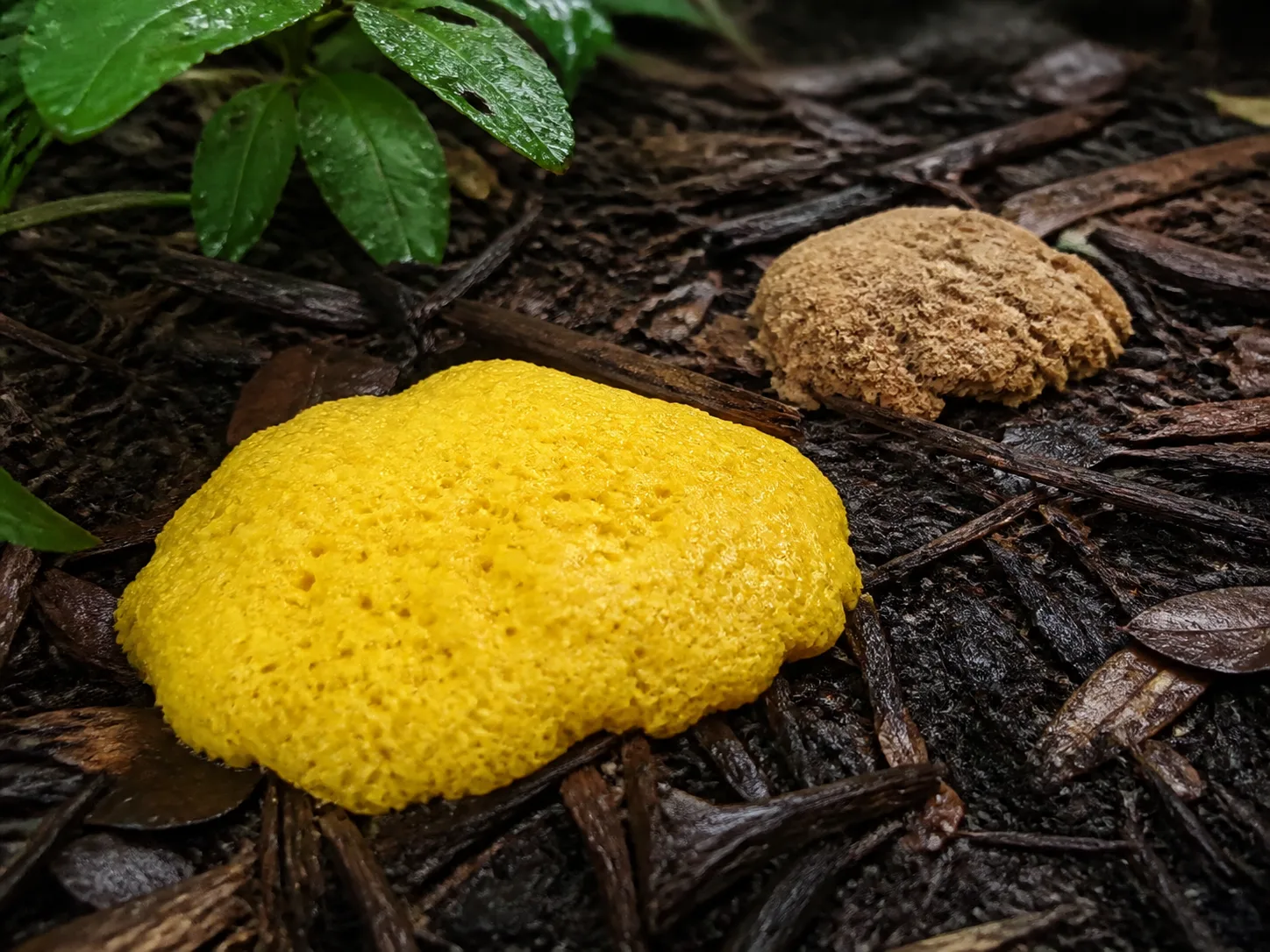
The short visible life is why waiting is a legitimate choice. If the patch is not in anyone’s way, letting it dry avoids unnecessary disturbance and gives a decomposer time to finish its work. If you decide to remove it, timing matters: a soft mass is easier to lift cleanly than a dry crust that breaks into powder.
Why it appears in mulch after rain
Fresh hardwood mulch and decaying material
Freshly spread hardwood mulch is a particularly common setting. It provides moisture-holding surfaces, plenty of dead plant material, and a sheltered layer where spores can germinate. The same conditions can occur in leaf litter, compost edges, rotting logs, tree stumps, and wood-chip paths.
Fresh mulch is not necessarily defective. The organism is part of the decomposition process, and N.C. Cooperative Extension’s photo journal specifically describes the growth on newly spread hardwood mulch as harmless to living plants. Older, drier, more settled mulch may produce fewer conspicuous episodes, but replacing good mulch solely to guarantee that slime mold never returns is usually an expensive overreaction.
Warmth, moisture, shade, and drainage
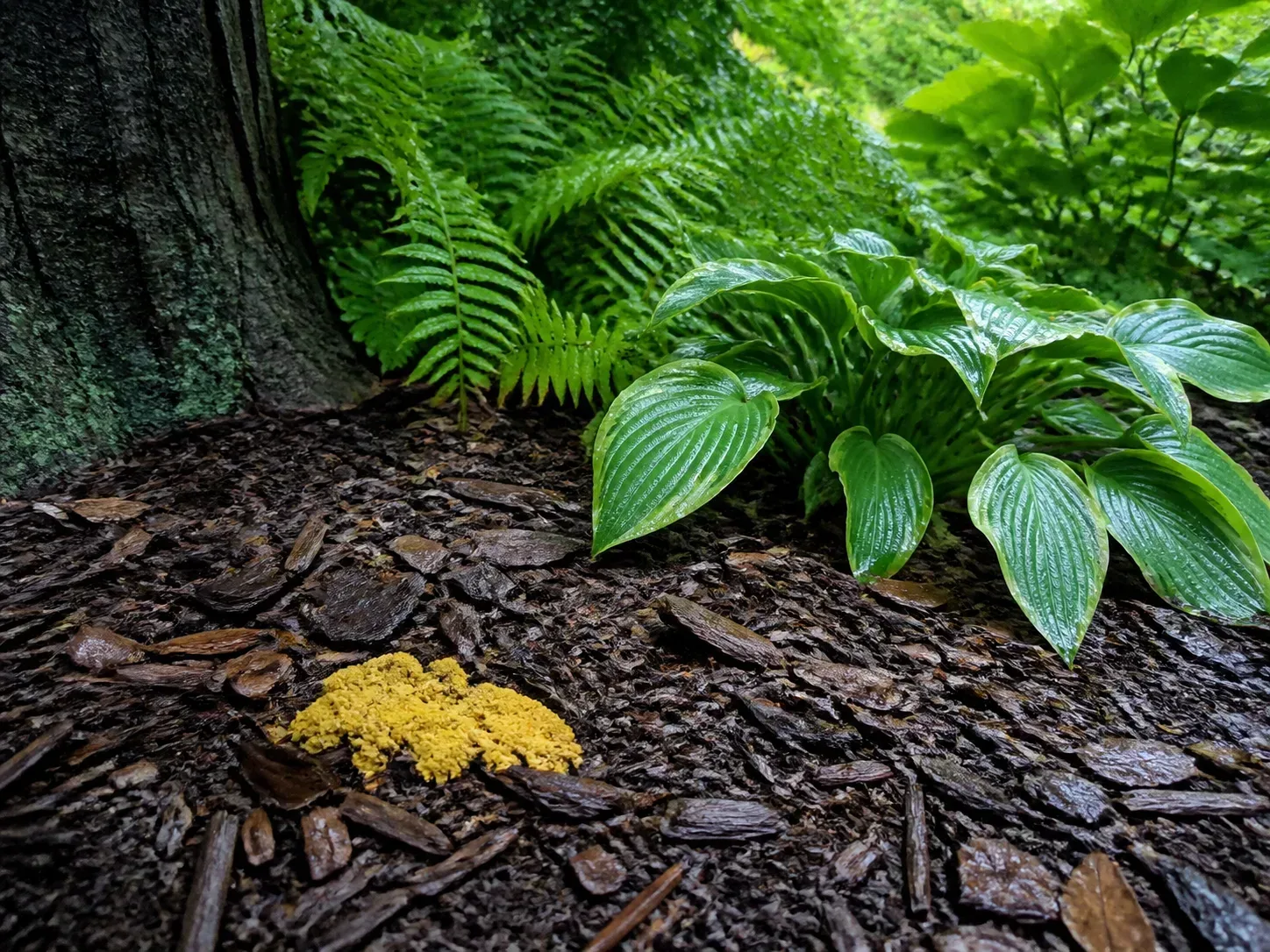
The trigger is usually a combination rather than one single cause: warm weather, recent rain or irrigation, shade that slows evaporation, and organic material that stays damp. A low spot, compacted soil, clogged downspout, thick mulch layer, or irrigation zone that overlaps a bed can keep the surface wet long enough for a new plasmodium to form.
This is why the same yard can have one yellow patch beneath a tree and none in a sunny bed. The spores are widespread; the local moisture and food supply determine whether they become visible. A one-time appearance after an unusually wet week does not prove that your drainage is failing, but repeated growth in the same place is a useful clue to inspect it.
Is it harmful to plants, people, or pets?
For ordinary garden use, dog vomit slime mold is generally harmless to plants, pets, and people. The University of Maine Cooperative Extension says slime molds do not attack living plants, even when they appear on them. They may temporarily cover a small seedling or turf blades and block light, but that effect should end when the mass dries or is removed.
The useful safety distinction is between a known, recognizable slime mold and an unidentified object that merely looks yellow or slimy. Do not let a child or pet eat any wild growth. If a dog has swallowed an unknown mushroom-like object, save a photo and contact a veterinarian; if a person has ingested an unidentified outdoor growth, contact a poison center or emergency service for instructions. Do not taste it to confirm an identification.
Dry, dusty material deserves more care than a soft yellow patch. Disturbing the mature crust can send spores into the air. Most gardeners will not have a problem, but people with asthma, allergies, or other respiratory sensitivities should avoid breathing the dust, wear gloves, keep children away, and choose a calm day for removal. Wash hands and clean tools afterward.
Decide whether removal is worth doing
There is no horticultural prize for eliminating every slime mold. The better question is whether it creates a practical problem:
- Leave it when it is small, isolated, and away from paths, pets, children, seedlings, and edible harvests.
- Lift it when the color is objectionable, the mass is spreading across a plant, or you need a clear surface for gardening work.
- Remove it promptly from a dog run, play area, path edge, or bed where the dry stage will be kicked or brushed into the air.
- Change the site only when episodes repeat because the mulch or soil remains wet. Reducing excess moisture is more useful than repeatedly scraping the same patch.
Do not confuse “harmless” with “permanent.” Leaving it alone is unlikely to damage the bed, but it also does not prevent the next episode. Removing it is reasonable for appearance or access, but it does not sterilize the mulch or remove every dormant spore.
How to remove it without making a bigger mess
Soft yellow growth
Remove the fresh mass before it dries if you want the cleanest cleanup. Put on gloves, slide a garden fork, shovel, or hand trowel under the edge, and lift the upper layer of mulch holding the growth. Keep the tool low and steady rather than mashing or smearing the mass across the bed.
Place the material in a bag if it is near a path or play area. If you are comfortable leaving it in the garden, you can move the lifted clump to an inconspicuous spot where it can finish drying. A cool, calm day is easier to work on than a windy one.
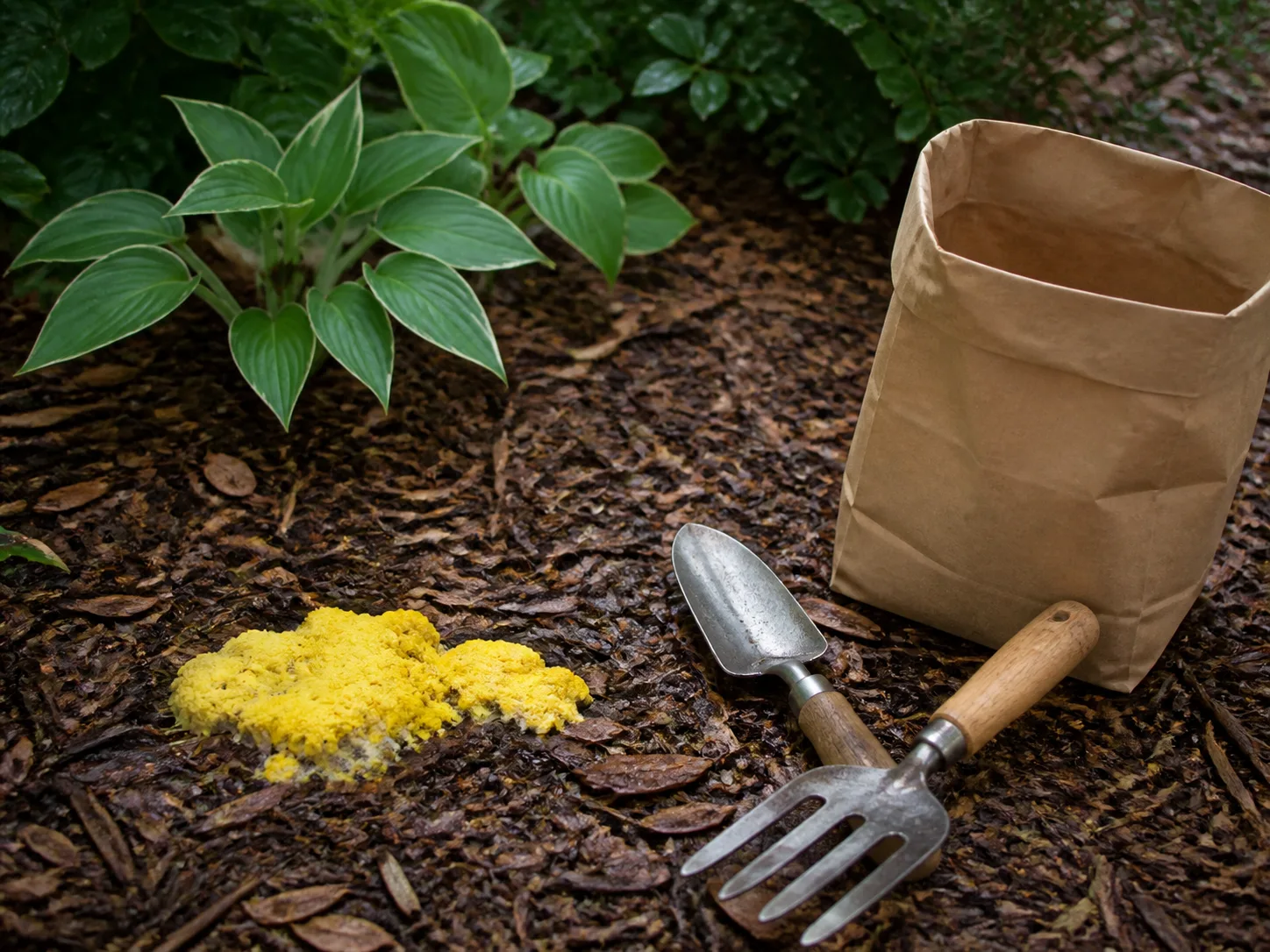
Avoid a strong hose stream. Water may break up the mass, but it also adds the moisture that supports the active stage and can carry fragments or spores into nearby mulch. A gentle rinse of a cleaned tool is different from using a jet of water to disperse the growth.
Dry, powdery growth
Dry crust is the stage most likely to create a spore cloud. Do not rake it aggressively, sweep it with a leaf blower, or spray it across the bed. If the patch is small, use a shovel or fork to lift the top layer of mulch and place it directly into a bag. Work slowly and avoid kneeling or stepping on it.
If the dry crust has already disappeared, there is usually nothing left to treat. You do not need to disinfect the entire garden or replace all the mulch. Brush visible residue from a hard path into a bag rather than blowing it toward a house, seating area, or open window.
The same rule applies to compost. A small amount of soft, plant-free material can be moved into an active compost system, but do not add a dry spore cloud or large contaminated clump to an unfinished pile if you are trying to avoid moving spores around. Bagging is the simplest choice when the growth is beside food crops, a play area, or a sensitive person’s seating space. Composting does not guarantee that the organism will be destroyed; only a properly managed hot compost process reaches the temperatures needed to reduce many unwanted organisms, and home piles vary.
How to reduce repeat appearances
Complete prevention is unrealistic because spores can arrive on air, water, animals, tools, and organic material. Aim to make the favorite microclimate less persistent instead.
Adjust mulch and watering first
Check the bed in the morning after irrigation. If the surface is still saturated late in the day, look for an overlapping sprinkler, a blocked gutter outlet, a low spot, or mulch piled too deeply around a stem. Let the top of the mulch dry between routine waterings when the plants’ needs allow it; do not withhold water from a newly planted bed or wilt-sensitive plant just to prevent a cosmetic growth.
Keep mulch loose rather than packed against a wall, edging, or plant crown. A thinner, well-aerated layer dries more readily than a deep wet pocket. If the same strip under a tree repeatedly supports slime mold, improving drainage or using a less moisture-retentive surface in that narrow area may help more than replacing the entire bed.
There is no good reason to apply a fungicide to a slime mold. It is not a fungal disease of the plant, and the University of Maine Cooperative Extension guidance specifically says no pesticide is recommended for management. Product labels also matter: never use a pesticide off-label for a problem it does not list.
What to do in lawns and around seedlings
Slime molds can appear on turf when grass blades, thatch, or other organic debris stay wet. A light patch usually disappears as the grass dries. If it repeats, inspect irrigation, drainage, shade, and thatch rather than treating the yellow or gray material as a lawn disease. LawnStarter’s lawn-care guide makes the same practical distinction: surface removal improves appearance, while the underlying moisture and organic matter determine whether it returns.
For a seedling, gently lift the growth as soon as you notice it so the leaves are not shaded. Do not dig out healthy soil or pull the seedling unless the plant itself is failing. The temporary covering is the exception that justifies quicker action; it is not evidence that the slime mold has infected the roots.
What else could the yellow growth be?
Color alone is not enough for a species-level identification. Dog vomit slime mold is most convincing when the growth is a low, irregular yellow or orange mass on damp wood mulch, leaf litter, or decaying wood, then changes into a dry cushion or powdery crust over several days. Take a photo at the soft stage and again as it dries if you want help from an extension office.
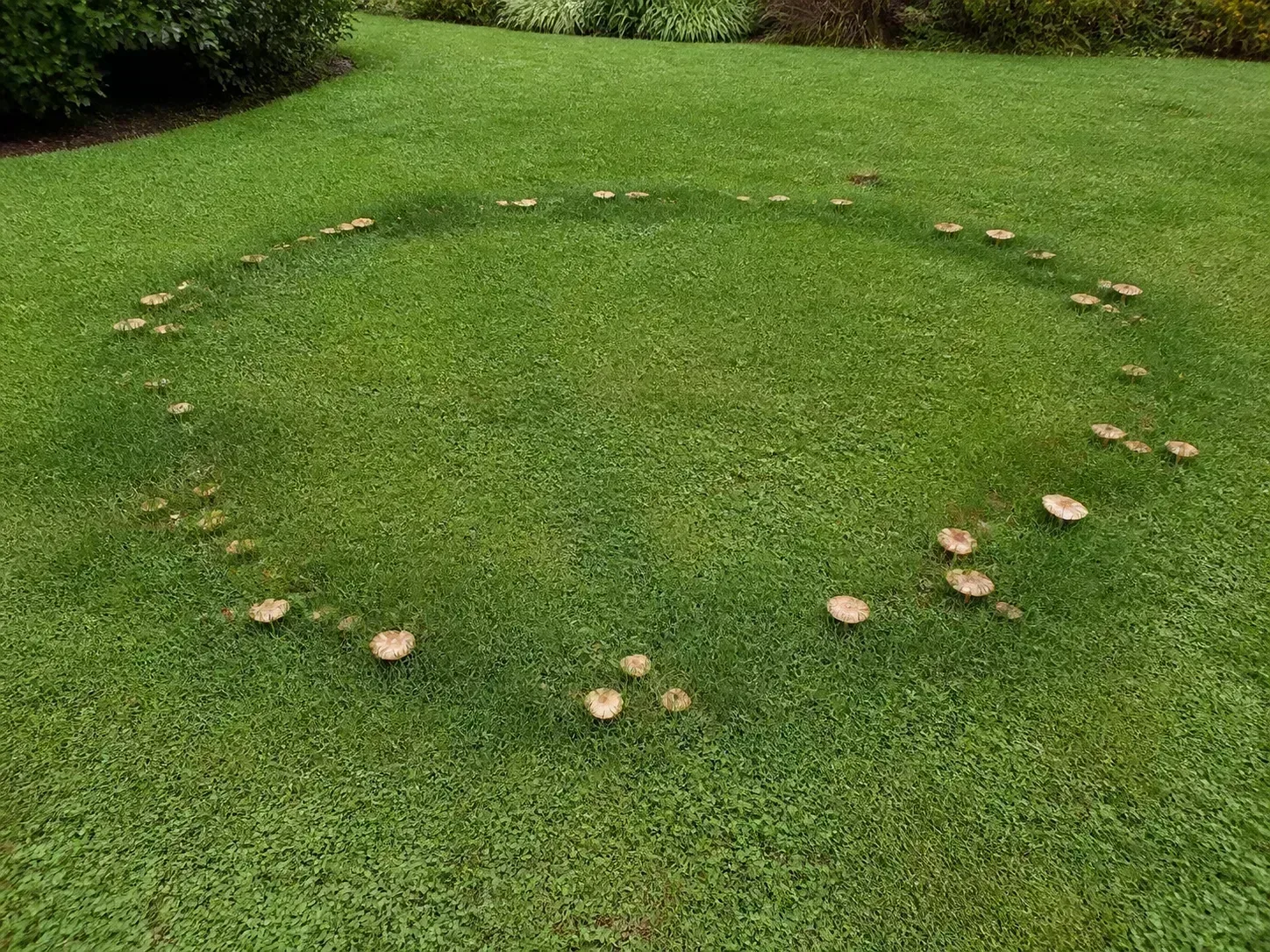
Do not assume that every yellow or orange thing in a bed is Fuligo septica. A growth with a clear cap and stem, gills, pores, a hard stalk, or a different clustered shape is more likely to be a mushroom or another organism. A patch that is firmly attached to living leaves, produces leaf spots, or continues while the surrounding plant declines may point to a separate plant problem. In those cases, identify the organism before applying a product.
The question “is it fungus?” matters less than the question “what is it growing on?” If the material is clearly feeding on dead mulch and vanishes as it dries, management is usually cosmetic. If you need a definitive identification because of ingestion, a valuable plant, or a recurring turf problem, contact a county extension office or plant clinic with photos of the whole site, not just a close-up of the color.
Conclusion
Dog vomit slime mold is an alarming-looking but usually harmless part of decomposition. On mulch, its sudden yellow appearance usually means that spores found a warm, damp pocket of decaying material—not that your plants are sick or that your garden needs a chemical treatment.
Leave an isolated patch if it is out of the way. Lift it gently when it covers a seedling or sits where people and pets will disturb it, and handle the dry stage slowly so you do not create a spore cloud. If it keeps returning, focus on the conditions that last longer than the slime mold itself: wet mulch, excess irrigation, shade, poor drainage, and trapped organic debris.



