Is Raising Chickens Cheaper Than Buying Eggs?
Backyard eggs are not automatically cheaper. Use this cost-per-dozen test to decide whether a flock fits your budget, space, schedule, and local egg prices.
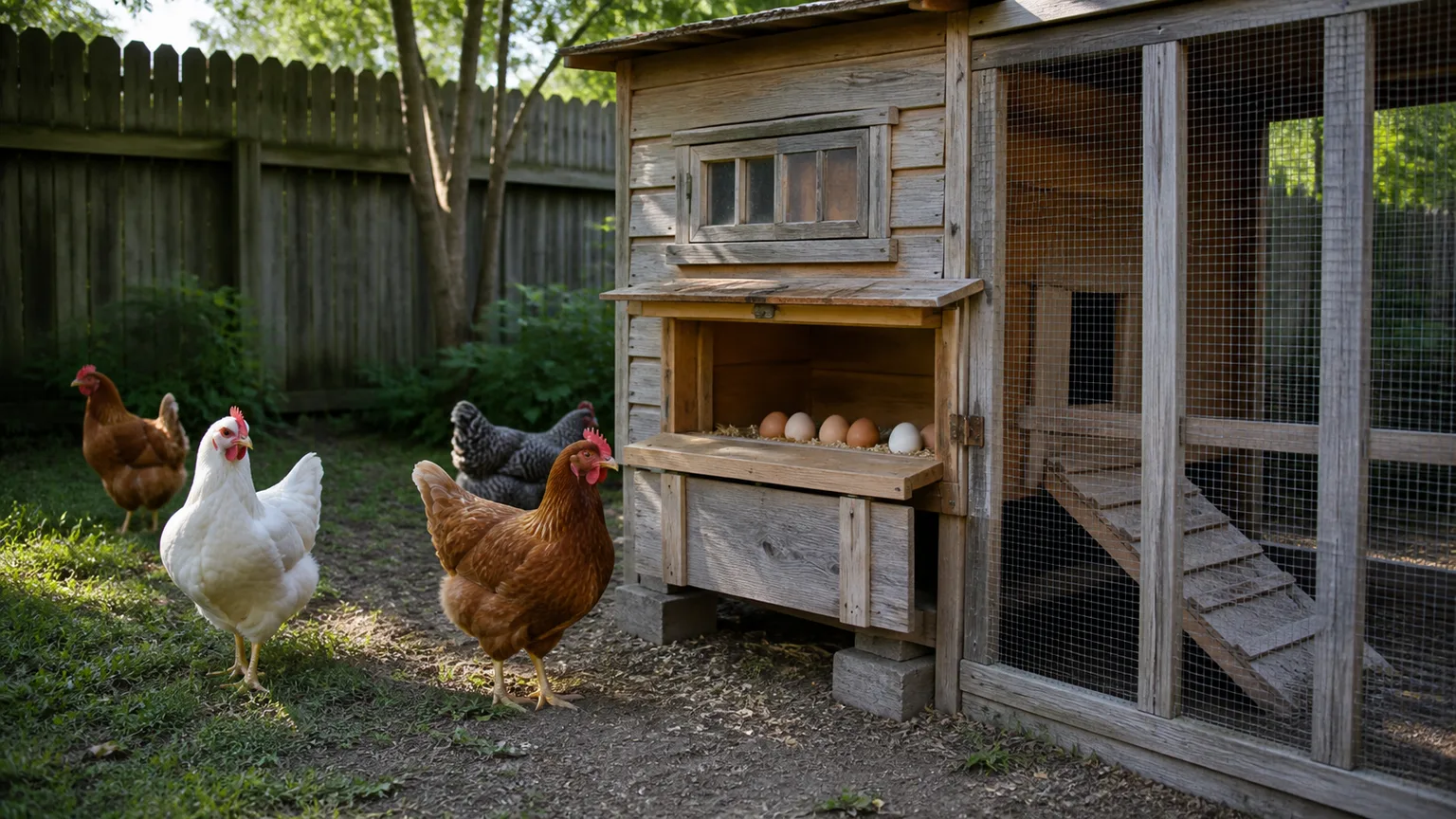
Usually, no—not in the first year. A backyard flock can become competitive with store-bought eggs when you already have suitable space, reuse a safe structure, buy productive hens, and keep recurring costs under control. But a new coop, quality fencing, feed, bedding, health care, and your time can easily cost more than the eggs would have cost at the store.
The useful question is not whether one egg from your yard feels “free.” It is whether your flock’s total annual cost divided by the number of usable dozens beats the price of the eggs you would otherwise buy. That number changes with your local feed price, grocery prices, flock age, climate, and how much infrastructure you need.
The short answer: usually no at first, sometimes over time
Eggs purchased at the store are a variable expense: buy a carton, use it, buy another. Chickens turn that into a long-term commitment. You pay the setup cost before the flock produces a dependable supply, then keep paying for food and care even during a molt, a heat wave, a predator problem, or the months when older hens lay less.
The July 2026 U.S. city-average price for a dozen Grade A large eggs was $2.189, according to the U.S. Bureau of Labor Statistics series published through FRED. That is a useful national benchmark, not a quote for your town or for premium organic, pasture-raised, or farmers-market eggs; the series includes several egg categories and is best used as a price-level reference. See the current BLS/FRED egg-price series.
At that benchmark, a household using two dozen each week would spend about $228 per year on eggs. Four dozen per week would be about $455. If your usual carton costs $6 or $8, a flock has more room to compete—but the same feed and housing costs still apply, and higher-priced eggs are often a sign that you value a production standard that may also require more space or more expensive inputs.
That is why “backyard eggs are cheaper” is not a dependable blanket answer. A flock can be economical as a food-and-lifestyle project, but it is rarely the cheapest way to buy ordinary eggs when every cost is counted.
Run the comparison using cost per dozen
Start with one formula:
Cost per dozen = (startup costs allocated to the period + annual operating costs + the value of your time) ÷ usable dozens of eggs.
You do not need an accounting degree. You need honest inputs. Write down what you will actually spend, then divide by eggs that make it into your kitchen—not the maximum number a breed can produce in a perfect year.
Choose a realistic flock and egg output
Four hens may sound like a small flock, but they can produce more eggs than a small household uses during peak laying. UF/IFAS Extension gives a planning range of about 200–240 eggs, or 17–20 dozen, per hen per year for a small backyard flock. Four productive hens therefore suggest roughly 68–80 dozen in a strong year, but that is not the same as 68–80 dozen in the first year after buying chicks.
The most important adjustment is timing. Chicks need starter and grower feed before they reach laying age, while started pullets cost more upfront but shorten the egg-free period. A household that uses one dozen a week may only need two or three hens on paper, yet local rules, flock social needs, illness, and seasonal output make a slightly larger starting group more practical. A household that uses four dozen a week may need more hens than its yard, budget, or local ordinance allows.
Build your estimate around usable eggs. Subtract cracked eggs, eggs you give away, eggs that arrive during a molt, and the production lost when a hen is sick or dies. A neighbor’s real-world report can be a helpful reality check: L.A. Taco described eight older hens producing roughly two to three dozen eggs a week, while a larger flock in the same story produced close to a dozen eggs a day. Those are observations from individual flocks, not a promise for yours. Read the backyard-flock report.
Separate startup costs from annual costs
Startup costs buy the ability to keep birds safely. They include the hens or chicks, brooder equipment if you start with chicks, the coop and run, fencing, feeders, waterers, nest boxes, and initial bedding. Annual costs keep the project running: feed, bedding, grit or calcium as needed, repairs, health care, replacement birds, disposal, and a sitter or boarding arrangement when you travel.
Do not hide the coop by calling it “one-time.” If you will keep hens for five years, you can allocate the setup cost across five years for a long-term comparison. You should also reserve money for repairs because predators, wet bedding, rust, chewing rodents, and weather are not unusual edge cases; they are normal ownership risks.
Your time belongs in the model too. Daily feeding and water checks, egg collection, cleaning, health observation, repairs, and arranging care during travel all have an opportunity cost. If you spend two hours a week on a flock and value your time at $20 an hour, that is about $2,080 a year before counting the birds. You may gladly choose to spend that time, but “I enjoy it” and “it is free” are different statements.
What a starter flock actually costs
The exact price depends more on what you already own than on the price of a chick. A secure shed beside a fenced yard is a very different financial project from a decorative coop ordered online and installed on bare ground.
Birds: chicks, started pullets, or adult hens
Chicks generally have the lowest purchase price, but they need a brooder, heat, starter feed, careful temperature management, and several months of care before they supply eggs. You also take on the risk that a straight-run group includes males. Hens do not need a rooster to lay eggs; a rooster is only necessary if you want fertilized eggs for hatching.
Started pullets cost more at the beginning, but they can reduce the feed, equipment, and waiting period before laying. Ask for the bird’s age, vaccination history, breed, and recent health information. A bargain bird with an unknown history can become an expensive veterinary or quarantine problem.
Adult laying hens may provide eggs quickly, but age matters. A hen that has already passed her most productive period may eat nearly as much as a younger hen while producing fewer eggs. UF/IFAS specifically warns that, as hens age, feed costs can exceed the financial benefit of their eggs. That is a key hidden cost in any “cheap eggs” calculation.
Coop, run, and equipment
The coop is not simply a box where birds sleep. It has to protect them from weather and predators, stay dry enough to clean, allow ventilation without drafts at the roost, and give you access to eggs and bedding. UF/IFAS uses a minimum of 3 square feet of indoor floor space per bird and suggests 8–10 square feet of outdoor run space per bird as practical planning figures. Local ordinances may require more, and a cramped run can turn bare, muddy, and difficult to manage.
You also need to budget for the parts that are easy to overlook:
- A feeder that discourages spills and rodents
- A waterer that stays clean and does not freeze or overheat in your climate
- Nest boxes, bedding, and a way to reach them without crawling into the coop
- Small-mesh hardware cloth, a covered run, and a secure latch
- An apron or buried barrier to discourage digging predators
- A quarantine or isolation option when a bird is sick or bullied
- Lighting or electrical work only if your climate and management plan truly require it
UF/IFAS recommends a tighter barrier such as hardware cloth for smaller predators and describes burying fencing 12–18 inches in an L-shape around a stationary coop to deter digging. NC State Extension also points small-flock owners toward housing plans and enterprise-budget resources rather than assuming one “chicken palace” price fits every flock. Review NC State’s backyard-flock housing resources.
The cheapest safe coop is often an existing shed or playhouse that can be cleaned, ventilated, reinforced, and connected to a secure run. The cheapest unsafe coop is a light wire frame with gaps, a weak latch, no roof, or a floor predators can tunnel under. Saving money on predator protection can convert a modest setup cost into the cost of replacing an entire flock.
Feed, bedding, water, health, and replacement costs
Feed is the recurring cost most likely to decide the result. UF/IFAS estimates that about 70% of the cost of raising chickens can be attributed to feed, while also cautioning that good nutrition is what supports health and production. Layer feed is formulated for laying-age hens; chicks need starter and grower rations with different protein and calcium needs.
Make a local feed estimate rather than borrowing a number from a different climate or year. Use this simple worksheet:
- Count the hens you expect to feed.
- Use the feed label or your measured flock consumption to estimate pounds per day.
- Multiply by 365.
- Divide by the bag size.
- Multiply by your current price per bag.
- Add a waste margin for spilled, wet, stale, or rodent-contaminated feed.
For example, an illustrative four-hen budget that assumes 0.25 pound per hen per day uses 365 pounds of feed per year, or about 7.3 50-pound bags. At an assumed $25 per bag, feed would be $182.50. That is a math example, not a current national price; replace both assumptions with the numbers from your local feed store.
Bedding, calcium, grit, replacement waterers, fence repairs, parasite treatment, veterinary care, and losses are smaller line items until they are not. A $50 health buffer can look generous before the first injured bird; it can be inadequate after a predator attack or an illness. Treat the buffer as an emergency reserve, not money you are guaranteed to spend.
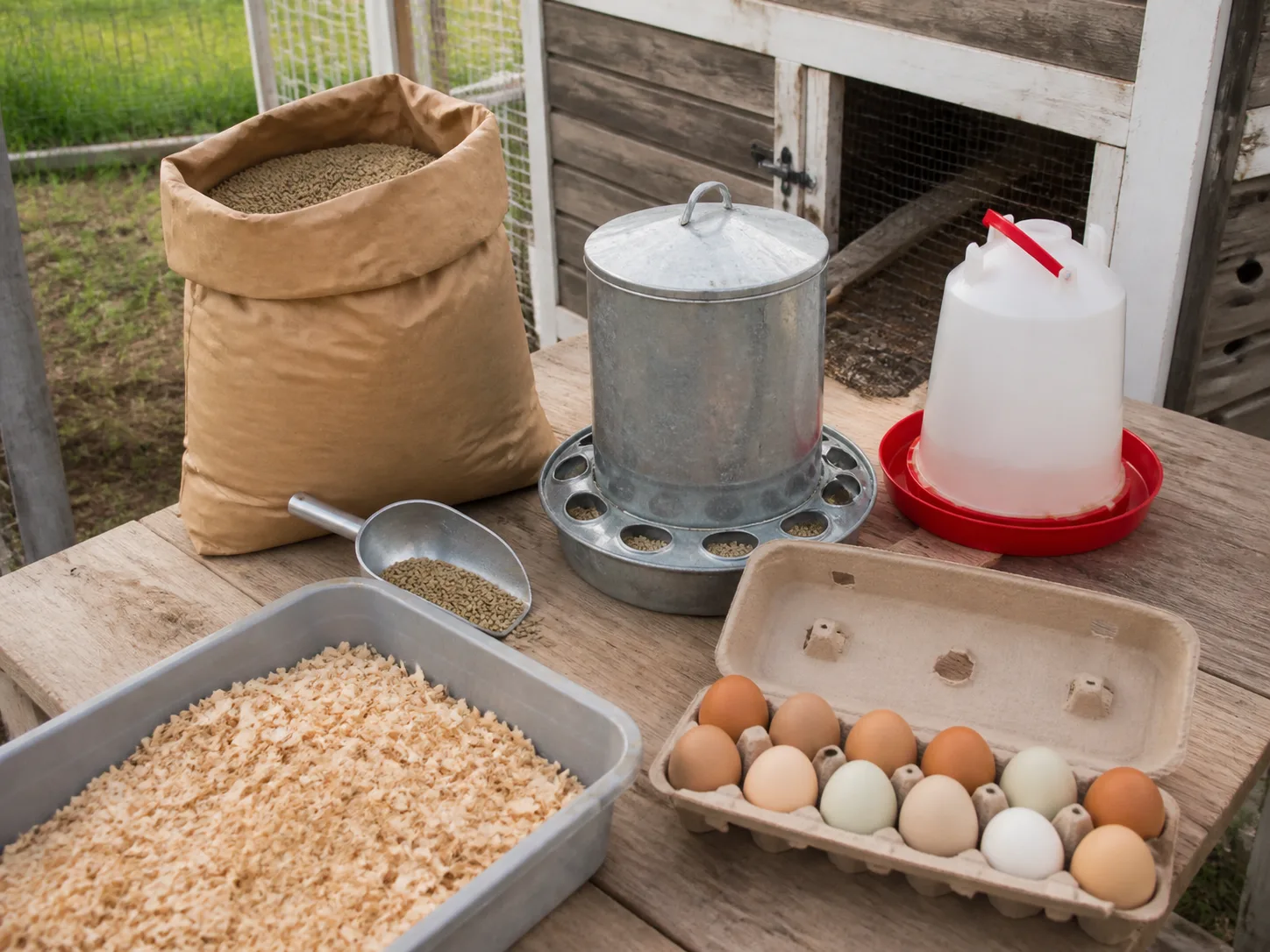
Feed is the cost that keeps coming
It is tempting to assume that chickens will pay for themselves by eating grass, bugs, kitchen scraps, and garden leftovers. They may enjoy those foods, but they do not replace a complete ration. UF/IFAS says foraging meets only a small portion of a bird’s basic nutritional needs and warns that too many scraps can displace the feed that supplies the right balance of protein, minerals, and energy.
This distinction matters financially. A hen that eats less complete feed because she is filling up on low-nutrient treats may lay less, develop poorer shells, or become more vulnerable to heat and disease. You have then saved a little feed while losing the production that was supposed to make the flock economical.
Why scraps and free ranging rarely erase feed costs
Use scraps as a controlled supplement, not as the flock’s business plan. Avoid rotten, salty, sugary, or heavily processed foods, and do not let kitchen waste sit where it attracts rodents. Keep a complete ration available, provide clean water, and remember that free ranging can expose hens to pesticides, toxic plants, parasites, wild birds, and predators.
The same rule applies to manure. Chicken manure can become a useful compost ingredient, but it is not an instant free fertilizer. Raw manure can be too strong for plants, and runoff from a coop or compost area can carry nutrients and pathogens into water. If compost value matters to you, account for it as a modest benefit only after you have a safe place and enough time to manage the material.
An experienced keeper’s perspective is useful here: a long-running personal account from Naturally Unbridled describes using kitchen trimmings and poultry manure as part of a broader hobby-farm system, while also acknowledging that predator protection and frozen water add work. That is a good example of why a flock can make sense as a self-reliance project even when the egg-only arithmetic is unremarkable. Read the keeper’s practical account.
How many eggs will you really get?
The answer is not “one egg per hen per day.” That is a convenient image of a flock at peak production, not a year-round budget. UF/IFAS gives about 200–240 eggs per hen per year for a small backyard flock, but breed, age, condition, day length, heat, stress, illness, and molt all move the result.
Season, age, molt, and breed change output
Pullets do not arrive as tiny egg machines. Chicks need months of growing and correct feed before they start laying. In the UF/IFAS guide, nesting boxes should be ready around 18–20 weeks, and the page notes that a hen’s production changes with age and shorter day length. Molting also causes a natural drop in laying for weeks.
Breed selection can improve the odds, but it cannot guarantee a spreadsheet result. A smaller laying breed may use less feed and space than a large dual-purpose breed, while a calm, hardy bird may be a better choice for your yard than a high-output breed that is difficult to manage. Choose for your climate, local availability, temperament, and ability to source healthy birds—not just a catalog’s best-case egg count.
Do not add artificial light simply to chase an egg target without understanding the welfare and management trade-off. A flock’s winter slowdown is part of the normal production cycle, and buying eggs for a few months may be cheaper than running lights, changing the birds’ routine, or forcing a high-output plan that does not suit your situation.
The break-even math with two example budgets
Here are two transparent models. Both use four hens, 68–80 dozen eggs in a strong full year, $182.50 of illustrative feed, $120 of bedding and small supplies, and a $100 annual health-and-replacement reserve. Neither assigns a dollar value to labor, and neither should be treated as a quote.
| Cost item | Lean reuse setup | New-build setup |
|---|---|---|
| Four started pullets, illustrative | $100 | $100 |
| Coop and run | $250 in repairs and reinforcement | $1,500 new build |
| Feeder, waterer, nest boxes, tools | $75 | $200 |
| Initial bedding and contingency | $100 | $150 |
| Startup total | $525 | $1,950 |
| Annual feed, using the stated example | $182.50 | $182.50 |
| Annual bedding and small supplies | $120 | $120 |
| Health and replacement reserve | $100 | $100 |
| Annual operating total | $402.50 | $402.50 |
A lean setup that reuses what you already have
In the lean model, operating cost alone works out to about $5.03–$5.92 per dozen at 80–68 dozen. If you spread the $525 startup cost over five years, add another $1.31–$1.54 per dozen. That produces an estimated long-term cost of about $6.34–$7.46 per dozen before labor.
That setup can compete with premium eggs in some markets, especially if you use nearly every egg and already own the structure, fencing, and tools. It does not beat a $2–$3 carton simply because the hens are eating weeds in the afternoon.
The first year is worse if the birds are chicks. You pay for feed and care before the egg count rises, and the cost per dozen can be far above the long-term estimate. Started pullets reduce the waiting period but raise startup cost; the correct choice depends on whether your priority is the lowest entry price or the earliest usable harvest.
A new-build setup with no existing infrastructure
The new-build model adds $1,950 upfront. Spread over five years, that is $390 a year, so total annual cost becomes about $792.50 before labor. At 68–80 dozen, the result is roughly $9.91–$11.65 per dozen.
That may still be worthwhile if you want a secure flock, premium-quality eggs, manure for a productive garden, companionship, or more control over how the birds are kept. It is not a convincing grocery-savings project at the benchmark price of $2.189 per dozen. If your goal is strictly the lowest cost per ordinary egg, continuing to shop is the rational choice.
What makes home eggs worthwhile even when they cost more
The financial comparison is real, but it does not capture every reason people keep hens. You can decide how the flock is fed and housed, learn where food comes from, share eggs with neighbors, and build a routine that feels meaningful. A local flock can also give a household a more direct relationship with its food supply when store prices or availability change.
Those benefits should be described honestly. Home eggs are not automatically safer or nutritionally superior simply because they came from the backyard. Hens and their environment can carry harmful germs even when the birds look healthy. CDC guidance says to keep poultry outdoors, wash hands after handling birds or their equipment, keep birds away from food-preparation areas, and take extra precautions around sick or dead birds. Review CDC guidance for backyard flock owners.
You may also value the flock as a pet. That has genuine value, but it should not be smuggled into the cost calculation as if it were egg savings. Think of the decision as buying a small food system and animal-keeping hobby, not installing a free-egg appliance.
Cost-saving choices that do not compromise the flock
The most reliable savings reduce waste or avoid unnecessary purchases. They do not remove feed, shelter, clean water, or protection from the budget.
- Start with the space you can secure. Measure the coop and run before buying birds. Use local ordinance requirements as the minimum legal floor, then increase space if your climate, soil, or flock size calls for it.
- Buy healthy birds from a source that can answer questions. A slightly higher purchase price can be cheaper than replacing weak birds or treating preventable disease.
- Choose started pullets when the waiting period is expensive to you. Choose chicks only if you can provide brooding equipment, time, and appropriate feed.
- Reuse materials selectively. Reclaimed lumber can save money; rotten boards, rusty wire, toxic paint, and gaps under the door can cost more than new materials.
- Prevent feed waste. Keep feed dry, store it in a rodent-resistant container, raise feeders to the right height, and measure what the flock actually consumes.
- Use scraps carefully. Treats can reduce household food waste, but they should not displace the complete ration.
- Track eggs for the first year. Write down eggs collected, feed bought, bedding, health costs, and losses. Your own flock’s data is more useful than a breed advertisement.
- Plan for aging hens before you start. Decide whether you will keep older hens as companions, maintain a mixed-age flock, or replace birds under local and humane rules.
- Build a care plan for travel and emergencies. A flock that requires a paid sitter or emergency repair at the worst possible time is not a zero-maintenance food source.
When buying eggs is the smarter choice
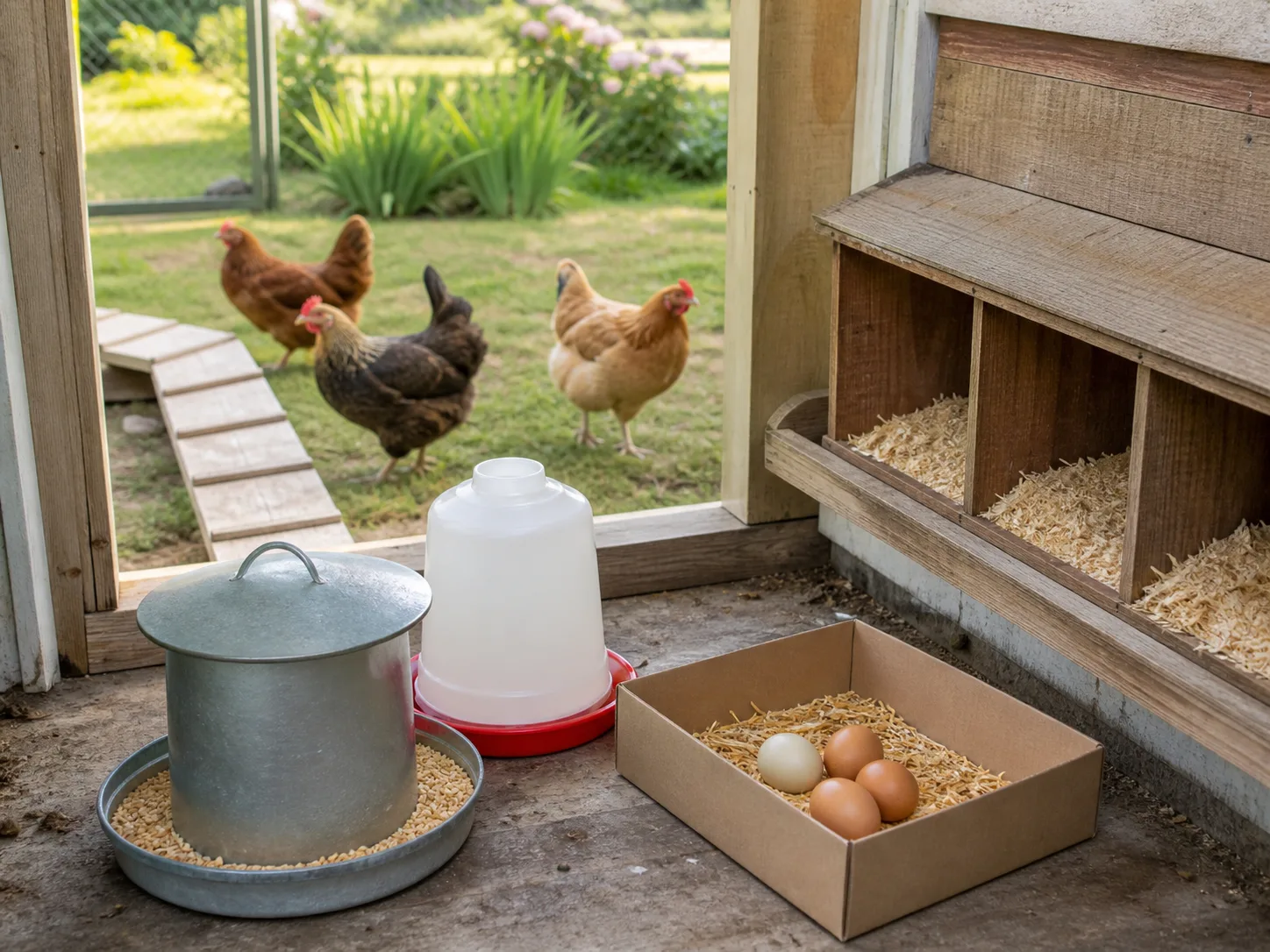
Buy eggs instead of keeping hens if you live somewhere that prohibits poultry, cannot provide a secure outdoor enclosure, travel too often to guarantee daily care, dislike handling manure or injured animals, or would need to finance a large coop for a small amount of egg use. Buying eggs is also the better choice if you want a predictable monthly budget and do not want to manage production swings.
Starting a flock is especially hard to justify when your household uses fewer eggs than the hens are likely to produce. Surplus eggs are not automatically a saving if you give them away, let them spoil, or spend extra money on containers and transport. Selling eggs can help offset costs, but sales rules, labeling, refrigeration, and local regulations vary; do not assume a backyard flock is a legal food business without checking first.
If you still want the experience, begin with a written budget and a waiting period. Price the coop materials, fencing, birds, feed, bedding, and a health reserve. Then compare the total with one year of your actual egg purchases. If the project only works when you assume perfect laying, free labor, no repairs, no losses, and expensive grocery eggs, the honest answer is that you are buying a hobby—not reducing the bill.
Conclusion
Raising chickens can lower the cost of premium or hard-to-source eggs over time, but it is not automatically cheaper than buying ordinary eggs. The biggest mistake is comparing a carton price with a hen and ignoring the coop, run, feed, waiting period, seasonal production, old hens, health risks, repairs, and your time.
Use cost per dozen as your decision rule. If you already have safe infrastructure, use most of the eggs, can buy healthy productive birds, and enjoy the daily work, a small flock may be a worthwhile food system even when it is only price-competitive with premium eggs. If you need a new coop and want the lowest possible cost for basic eggs, the grocery store will usually win.
The best reason to keep hens is a combination of practical value and personal value: fresh eggs, control over care, useful manure managed safely, companionship, and the satisfaction of producing some of your own food. Go in with that honest expectation, and the flock can be a good decision even when the spreadsheet refuses to call it cheap.



