Mother of Thousands Care & Growing Guide
Grow mother of thousands indoors with bright light, gritty soil, and sparse watering—plus plantlet propagation, toxicity warnings, and spread control.
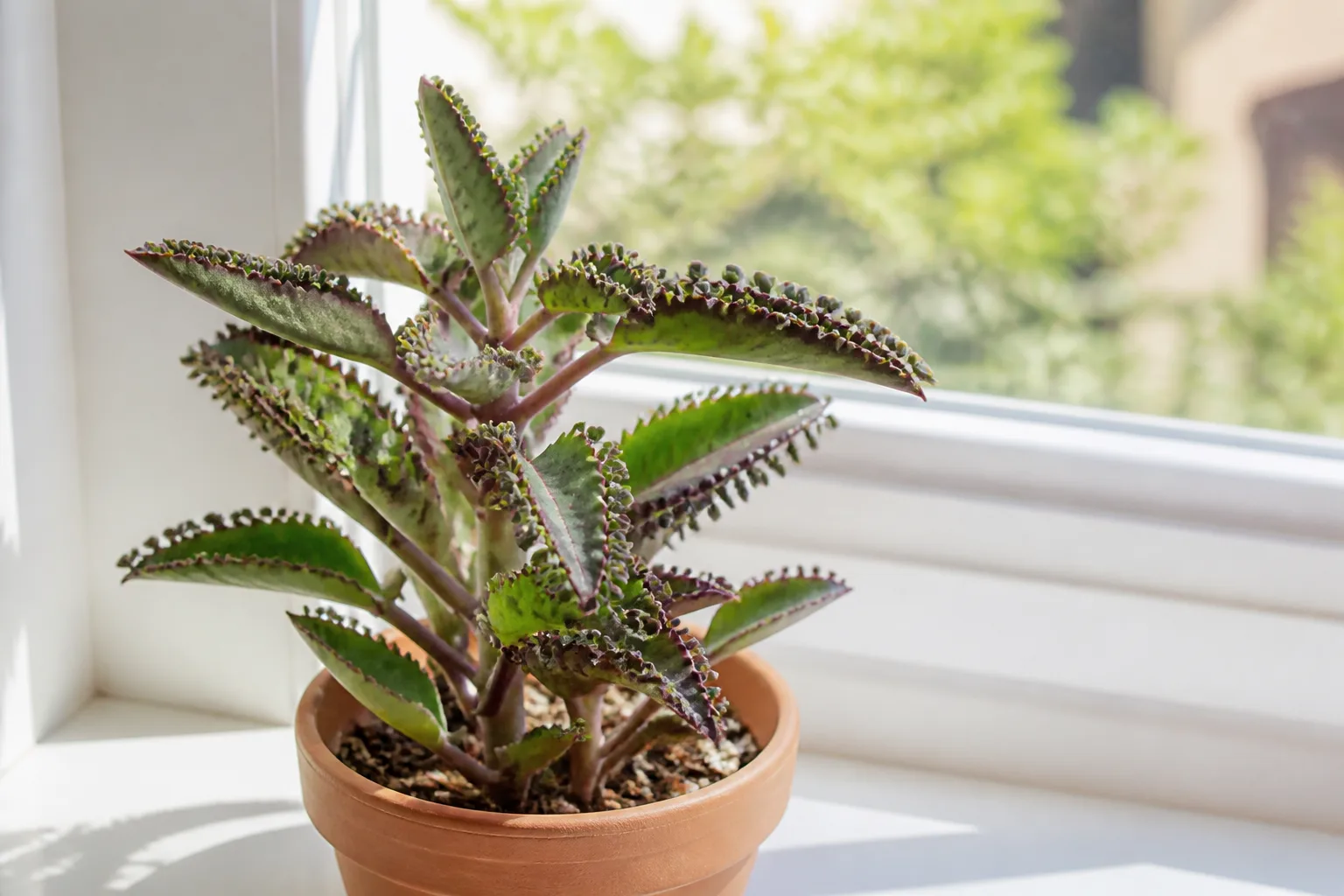
Mother of thousands looks like a normal succulent until you notice the miniature plants riding along every leaf edge—ready to drop, root, and colonize the next open inch of soil. That reproductive trick makes Kalanchoe daigremontiana one of the easiest succulents to share and one of the hardest to keep contained if you treat it like a passive windowsill decoration. The same plantlets that delight beginners can carpet neighboring pots, patio cracks, and garden beds in frost-free climates.
Botanically, mother of thousands belongs to Crassulaceae, the stonecrop family shared with jade plants and echeverias. It is native to dry shrublands in southwest Madagascar, where upright stems carry opposite, lance-shaped leaves up to about 8 inches long with coarsely toothed margins. NC State Extension describes the species as erect or decumbent, winter hardy in USDA zones 9a through 11b, and easy to propagate from the bulbils that form in notches along each leaf. (NC State Extension) For broader genus context and comparison species, the Kalanchoe plant hub links light, watering, soil, and propagation pages when you need depth beyond this one species.
Common names pile up fast: devil’s backbone, chandelier plant, maternity plant, Mexican hat plant, and alligator plant all refer to the same growth habit or leaf shape. Do not confuse this species with mother of millions (Kalanchoe delagoensis), which produces far more cylindrical plantlets along narrower leaves—a distinction that matters when you are trying to identify an escapee in the yard.
What Mother of Thousands Actually Is
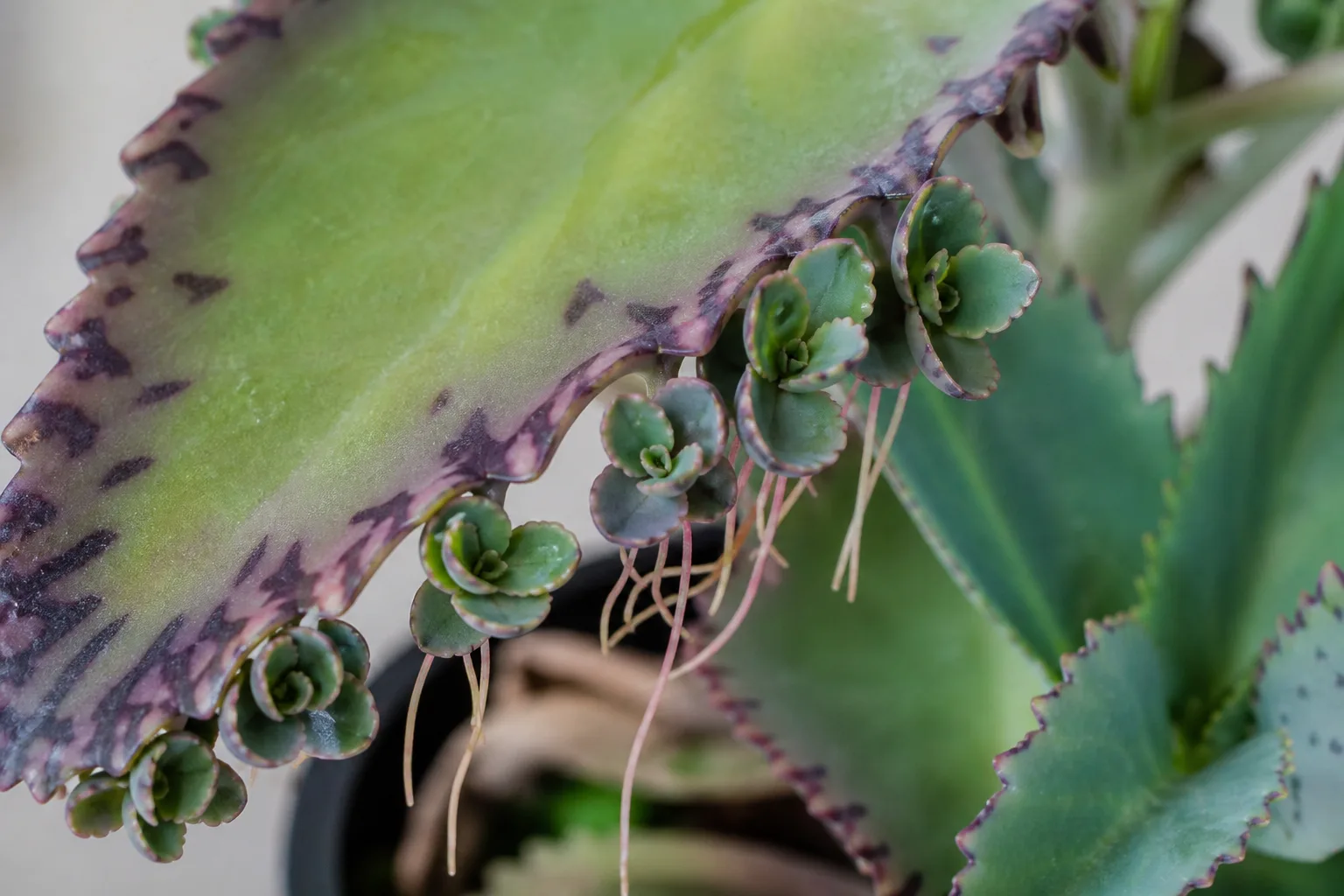
Mother of thousands is a viviparous succulent: tiny plantlets develop roots and leaves while still attached to the parent leaf, then detach when mature. NC State notes the genus name Kalanchoe comes from Chinese words meaning “that which falls and grows,” a direct reference to species like K. daigremontiana whose offspring drop and root where they land. (NC State Extension — Kalanchoe) That is not metaphorical marketing—it is how the plant spreads in nature and in your living room.
Unlike florist Kalanchoe blossfeldiana, which people buy for winter flower clusters, mother of thousands is grown primarily for foliage architecture and propagules. Houseplants rarely bloom; outdoor specimens in warm climates may flower in late winter to early spring with pendulous pink-to-lavender bells. Here is the lifecycle detail many care sheets bury: mother of thousands is monocarpic. NC State Extension states that after flowering, the parent plant dies. (NC State Extension) You are not failing when an old specimen blooms and collapses—you are watching the natural end of that stem. Plan ahead by keeping propagated plantlets so the lineage continues.
Stems are usually unbranched, brownish, and can reach about 3 feet tall with a spread of 1–2 feet in ideal conditions. Leaves show green to pinkish-green or purplish-green tones, often with purple blotches on undersides. Wear gloves when handling heavily if your skin reacts to succulents; NC State lists contact dermatitis as a handling risk alongside ingestion toxicity. (NC State Extension)
Mother of Thousands Quick Reference
| Factor | Indoor target | Outdoor notes (zones 9a–11b) |
|---|---|---|
| Light | Bright indirect; some morning direct sun | Full sun to partial shade; avoid harsh midday |
| Water | Soak when dry; less in winter | Same—dry cycles between deep watering |
| Soil | Fast-draining cactus/succulent mix | Sandy or loamy, excellent drainage |
| Temperature | 65–75°F ideal; protect below ~50°F | Frost kills; not frost-tolerant |
| Humidity | Low; avoid steamy bathrooms | Dry air is fine |
| Fertilizer | Light spring/summer only; skip in winter | Optional; never force on stressed plants |
| Pets/kids | Toxic if ingested | Same—bufodienolides affect heart rhythm |
| Spread | Contain in pots; remove stray plantlets | Can become invasive if left unchecked |
| Lifespan | Years via plantlets; parent stem monocarpic | Parent dies after bloom; offspring replace it |
Use the table as a checkpoint before you change light or water. Most “sudden decline” stories trace back to wet soil, dark corners, or a heater blasting dry heat onto leaves—not mysterious succulent moods.
Light Requirements for Compact Growth
Mother of thousands wants bright light for most of the day. Indoors, that usually means a south- or west-facing window with a sheer curtain, or an east window with gentle morning sun. NC State recommends bright indirect sunlight or partial shade and warns that prolonged direct midday sun can scorch leaves. (NC State Extension) Pale bleached patches on the window-facing side mean you jumped from a dim shelf to harsh afternoon glass too fast.
Indoor Window Placement
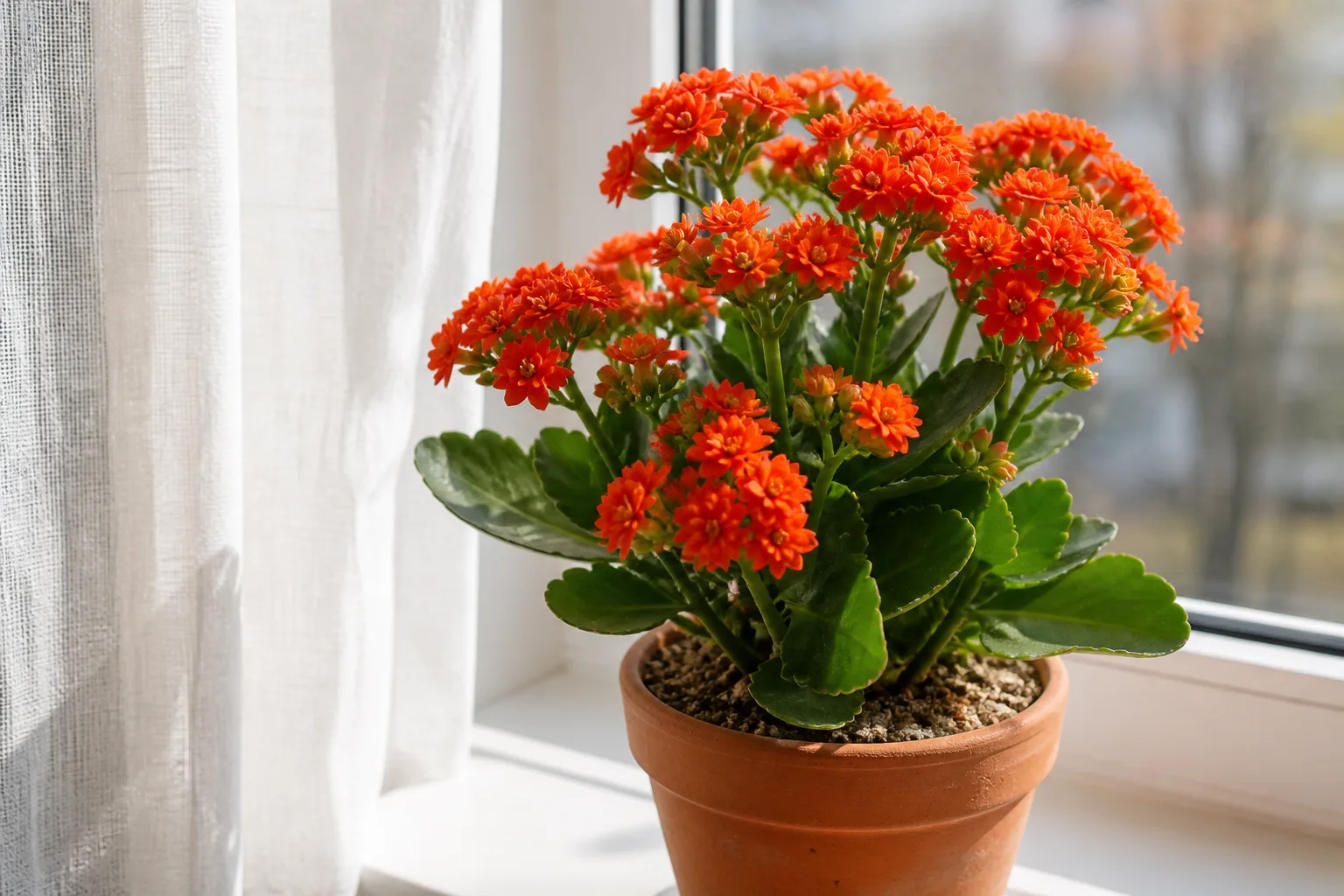
Place the pot so leaves receive several hours of indirect brightness without baking all afternoon. If stems stretch and leaves shrink—leggy growth—the plant is telling you it needs more photons, not more fertilizer. A full-spectrum grow light 6–12 inches above the foliage for 10–12 hours daily can rescue specimens stuck in office desks or north-facing rooms. Move gradually: increase light over a week when shifting from shade to a bright sill so existing leaves do not crisp overnight.
Outdoor Sun and Scorch Risk
In frost-free gardens, mother of thousands tolerates full sun (six or more hours) in NC State’s cultural notes, but afternoon shade helps in hot-summer regions where leaf scorch shows up as tan, papery patches along margins. (NC State Extension) Patio pots are safer than open ground if you are worried about plantlets escaping into beds. For general succulent light acclimation when summering houseplants outside, see our indoor succulent care guide.
Soil, Pots, and Drainage
Standing water kills this plant faster than drought. Use a cactus or succulent potting mix amended with extra perlite or coarse grit so water exits in seconds, not days. NC State specifies sandy or loamy outdoor soil with good drainage and recommends cactus mix for containers. (NC State Extension) A workable indoor blend mirrors what extension services suggest for other succulents: roughly 60% fast-draining base and 40% perlite, or half peat-based mix and half perlite if you are propagating plantlets.
The pot must have a drainage hole. Terracotta helps because clay pulls moisture from the root zone and gives you earlier feedback when soil has dried. Plastic retains water longer—fine if you water less, risky if you water on habit. Never add a layer of pebbles at the bottom thinking it improves drainage; that creates a perched water table above the pebbles while roots sit wet. Match particle size throughout the column.
Avoid heavy all-purpose potting soil straight from a multipurpose bag. If water pools on the surface when you irrigate, the mix is too fine or compacted. Repot into fresh gritty soil rather than sprinkling sand on top—fine sand in peat-heavy mixes often makes drainage worse.
Watering Without Rotting the Stem
Mother of thousands is drought tolerant once established, but it is not as drought-indifferent as some desert cacti. NC State says to water sparingly, let soil dry between waterings, and reduce moisture during dormancy. (NC State Extension) The practical rule indoors: when the top 2 inches of mix feel dry and a skewer pulled from the drainage hole comes out clean, soak the entire root ball until water runs free, then empty the saucer within 30 minutes.
Iowa State University Extension recommends checking soil moisture before watering succulents rather than following a calendar—wet the whole root zone when dry, never leave pots sitting in full saucers. (Yard and Garden) South Dakota State University echoes the same soak-and-drain pattern for indoor succulents. (SDSU Extension) For many bright indoor setups, that translates to every two to three weeks in spring and summer, and less often in winter when light is low.
Underwatering shows as thin, wrinkled leaves that feel soft instead of plump. Overwatering shows as yellow lower leaves, blackening at the soil line, and stems that feel hollow or mushy. If rot has started, stop watering, let the mix dry, and inspect roots—you may need to cut back to healthy tissue and reroot, similar to saving overwatered succulents in our how to repot succulents walkthrough.
Reduce watering when you are keeping the plant cool and dim in winter. Extra moisture combined with cool nights raises rot risk faster than underwatering ever will.
Temperature, Humidity, and Hardiness Zones
NC State lists preferred temperatures around 65 to 75°F for mother of thousands and hardiness in zones 9a through 11b. (NC State Extension) Bring pots indoors before nights drop below about 50°F if you summered them outside in cooler zones. Frost is not a near-miss event—it kills tissue outright.
Indoors, avoid placing pots directly against radiators or heat vents. Forced hot air desiccates leaf edges faster than roots can compensate, producing crispy margins that look like sunburn. Average home humidity is fine; this is not a bathroom orchid. High humidity without airflow can encourage powdery mildew on crowded plantlet mats.
If you live north of zone 9, treat mother of thousands as a houseplant year-round or a seasonal patio accent only. The growing kalanchoe guide covers broader genus temperature habits when you are juggling multiple Kalanchoe species on one shelf.
Fertilizer—When Less Is More
Mother of thousands can live years without heavy feeding. If growth looks pale and you have already ruled out low light, apply a balanced liquid fertilizer at quarter to half strength once monthly during active spring and summer growth. Skip fertilizer in winter, on newly repotted plants, and on any specimen showing rot or pest stress—feeding sick succulents pushes soft growth that pests love.
More fertilizer does not produce more plantlets; light and stable moisture do. Overfeeding can distort growth without improving the architectural look you bought the plant for.
Containing Spread and Invasive Risk
The same propagation superpower that makes mother of thousands fun also makes it ecologically aggressive where winters are mild. NC State’s distribution notes include introduced populations across the southern United States, Caribbean islands, and many other warm regions. (NC State Extension) Spruce-level warnings are not alarmist: escaped plantlets root in cracks, shared pot saucers, and neighboring beds.
Containment practices that actually work:
- Grow in pots with drainage holes, not open garden soil, unless you are in a climate where you accept perpetual removal duty.
- Place a wide saucer or tray under pots and sweep fallen plantlets weekly before they root in gravel or deck seams.
- Never compost trimmings or spilled plantlets—bag and trash them.
- Inspect shared windowsills where multiple pots touch; plantlets hop between containers overnight.
- In warm climates, remove volunteers from beds and paths as soon as you spot rooted babies.
If you want prolific succulent propagation without landscape risk, keep mother of thousands as a single-species pot away from community planters and pet zones.
Mother of Thousands vs Similar Kalanchoe Species
Retail labels often say “kalanchoe” without species, which sends buyers down the wrong watering path. Use this comparison before you copy care from a florist kalanchoe gift plant.
| Plant | Key look | Plantlets? | Bloom / lifecycle notes |
|---|---|---|---|
| K. daigremontiana (mother of thousands) | Broad, triangular leaves; purple leaf undersides | Many along leaf notches | Monocarpic; pink-lavender bells; parent dies after bloom |
| K. delagoensis (mother of millions) | Narrower, cylindrical leaves; silvery-green | Extremely numerous along margins | Similar spread risk; often more aggressive in warm climates |
| K. fedtschenkoi (lavender scallops) | Blue-green leaves with pink margins | Fewer plantlets | Colorful foliage; bell flowers on mature plants |
| K. blossfeldiana (florist kalanchoe) | Thick scalloped leaves; winter flower clusters | No margin plantlets | Short-day rebloomer; different watering rhythm |
Hybrids exist—‘Pink Butterflies’ (K. daigremontiana × K. delagoensis) produces pink plantlets lacking chlorophyll; NC State notes those plantlets die because they cannot photosynthesize. (NC State Extension) Treat it as a foliage curiosity, not a sustainable propagation source.
Pruning, Cleanup, and Plantlet Management
Mother of thousands does not need shaping cuts for health. Pruning means removing dead flower stalks after bloom, snapping off dried leaves, and deciding which plantlets to keep. If fallen plantlets carpet the soil surface, they are not harmful to the parent—they are future competitors for the same pot volume.
Remove plantlets when you want a cleaner look or when babies are colonizing the mother pot faster than you can repot. Gently detach mature plantlets that release with light pressure; if you have to wrench, wait another week. Toss immature bulbils into the trash if you are trying to slow spread, not into open compost.
Propagating from Leaf Plantlets
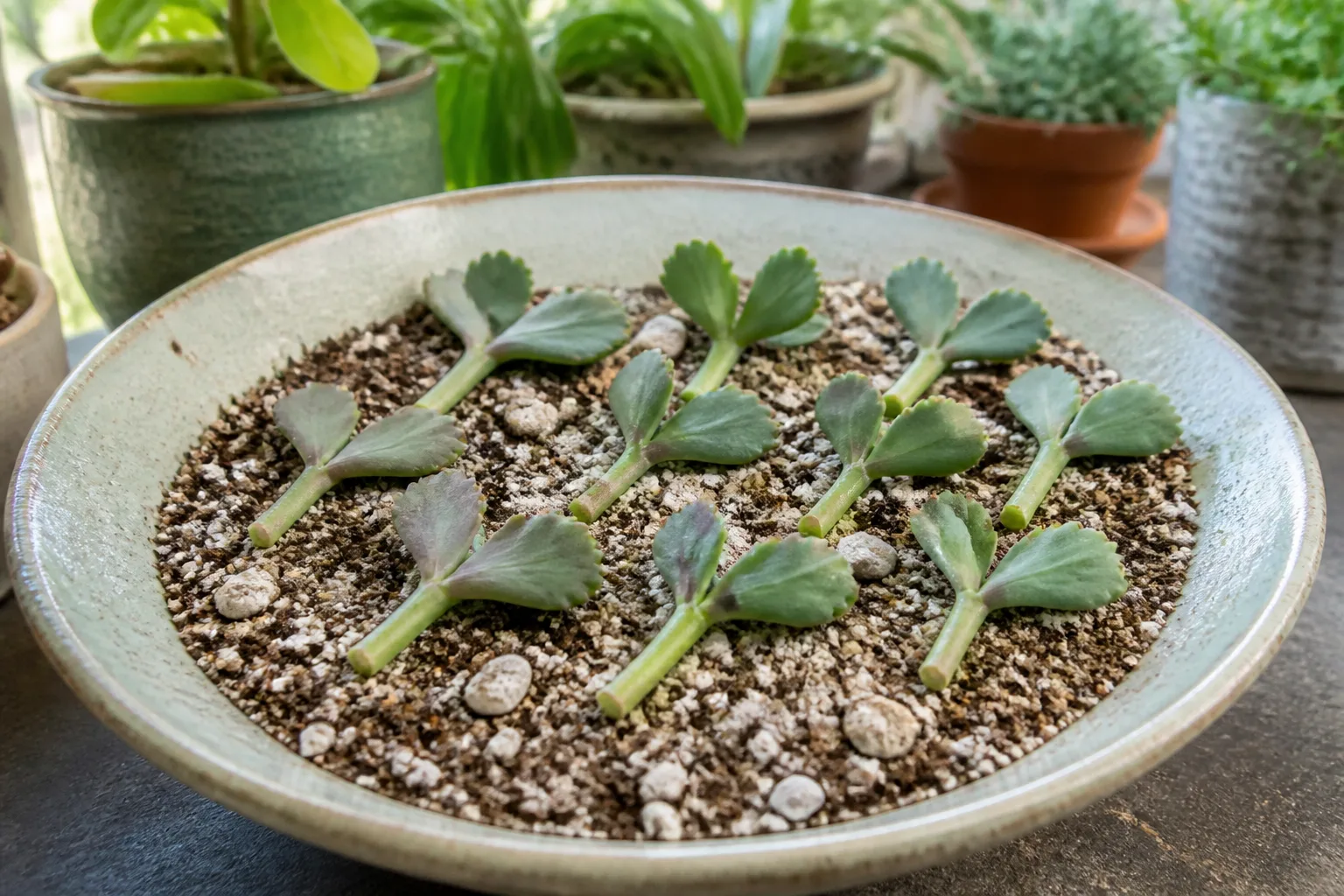
Propagation is almost embarrassingly easy—harvest plantlets, not seeds. NC State recommends propagating in spring by collecting tiny plantlets from leaf margins and planting them in well-drained soil. (NC State Extension) Mature plantlets already carry tiny roots; immature ones root quickly once they touch damp mix.
Step-by-step that works indoors:
- Choose plantlets with visible root nubs and at least tiny leaves—skip pale, unrooted specks.
- Lay them on moist gritty mix in a shallow tray or small pot; do not bury deep.
- Place in bright indirect light; avoid sealed bags that rot succulent starts.
- Mist lightly only if the surface dries completely in the first week; then shift to normal soak-when-dry watering as roots anchor.
- Transplant clusters into individual small pots once they resist a gentle tug.
Fall and early winter are fine indoors under lights, but spring gives faster establishment. You can also let plantlets drop naturally into a dedicated propagation tray beneath the parent pot—then lift the tray when carpeted.
Potting and Repotting
Repot when roots circle the drainage hole, the pot topples from top-heavy growth, or plantlets have turned the surface into a second lawn. Choose a pot only one size up—an extra inch of diameter is enough. Fresh gritty mix, gentle handling of brittle stems, and a week of subdued light after repotting reduce stress.
The more common repotting trigger is plantlet overcrowding, not root bound parents. Scrape off rooted babies from the soil surface, pot them separately or discard, then top-dress with fresh mix if the parent has sunk low in the pot. Our how to repot succulents guide covers grit ratios and root inspection when rot is suspected.
Overwintering Indoors and Outdoors
North of zone 9, move pots inside before nights hit 50°F. Acclimate gradually when bringing outdoor plants in—check leaf undersides for hitchhiking pests. Indoors, give bright light and reduce watering to match shorter days.
In zones 9a–11b, plants can stay outside in well-drained beds or containers if frost is rare. Still avoid waterlogged winter soil. Do not park pots against heated walls where warm dry air mimics desert summer while roots sit cool and wet.
Pests, Diseases, and Common Symptoms
NC State lists mealybugs, aphids, and spider mites as the main insect issues, plus root rot from overwatering, powdery mildew, and rust. (NC State Extension) Mealybugs love the leaf notches where plantlets form—inspect those seams first with a loupe.
Mealybugs: White cottony clusters along stems and leaf axils. Isolate, dab with isopropyl alcohol on a cotton swab for light infestations, or rinse with a steady stream of water followed by drying the plant in bright airflow. Repeat weekly until clear.
Aphids: Soft-bodied insects on new growth and flower stalks. Insecticidal soap works if you rinse residue and keep the plant out of direct sun for 48 hours after treatment.
Spider mites: Fine webbing and stippled leaves in dry, hot conditions. Increase airflow, rinse foliage, and treat repeat offenders before webbing spreads to neighboring succulents.
Root rot: Mushy base, black soil smell. Stop watering, unpot, cut brown roots, dust cuts with cinnamon or let callus, reroot in dry mix.
Bloom Cycle and What Happens After Flowers
Outdoor plants in warm climates may bloom in late winter or early spring with pendulous tubular pink-to-lavender flowers about three-quarters of an inch long. Houseplants bloom rarely—do not judge your care skills by flower absence indoors.
When bloom finishes, the flowering stem dies because the plant is monocarpic. NC State is explicit: after flowering, the plant will die. (NC State Extension) That is different from K. blossfeldiana, which can rebloom after short-day treatment. Here, survival strategy is plantlet offspring, not the same stem reblooming next year.
After flowers fade, remove the spent stalk if it lingers, keep watering on the dry side, and lean on propagated plantlets to replace the parent. If a young plant blooms while still small, it may signal stress—sometimes excess heat, root constriction, or inconsistent care forced a premature terminal flowering. Save plantlets before the parent collapses.
Troubleshooting Limp Leaves and Slow Growth
Limp, soft leaves usually mean overwatering or cold wet soil—not always underwatering. Check moisture deep in the pot before adding water. If soil is soggy, dry it out and inspect roots.
Wrinkled, thin leaves on dry soil mean underwatering or root loss from past rot. Soak once, then fix the watering rhythm.
Slow growth in summer with pale leaves often means insufficient light—move closer to the window or add a grow light before you fertilize.
Plantlets not rooting may be immature, too wet, or sitting on bone-dry mix in dark corners. Mature bulbils on damp gritty soil in bright indirect light root fastest.
Leaf scorch after a move: afternoon sun through glass without acclimation. Shift to bright indirect until damaged leaves age out.
Conclusion
Mother of thousands rewards growers who respect three rules: bright light without midday scorch, gritty soil that dries between soakings, and conscious containment of plantlets so your collection does not become a monoculture. It punishes the opposite—dim shelves, peat-heavy mix, and saucers that never empty.
Treat toxicity seriously for pets and kids; ASPCA lists Kalanchoe species as toxic to dogs and cats with bufodienolides that can affect heart rhythm, alongside vomiting and diarrhea. (ASPCA) Wear gloves if your skin reacts to succulent sap. Plan for the monocarpic bloom by keeping propagated plantlets before an old stem flowers itself out.
Used thoughtfully, mother of thousands is a sculptural, nearly self-propagating houseplant that teaches real succulent discipline. Used carelessly in warm gardens, it becomes a maintenance debt. Keep it in pots where spread is visible, link outward to the Kalanchoe hub when you want species-by-topic depth, and you get a plant that stays interesting long after the first tray of babies roots.



