How to Grow and Care for Kalanchoe
Grow kalanchoe indoors with the right light, sparse watering, gritty soil, and a short-day schedule that brings back those colorful winter blooms.
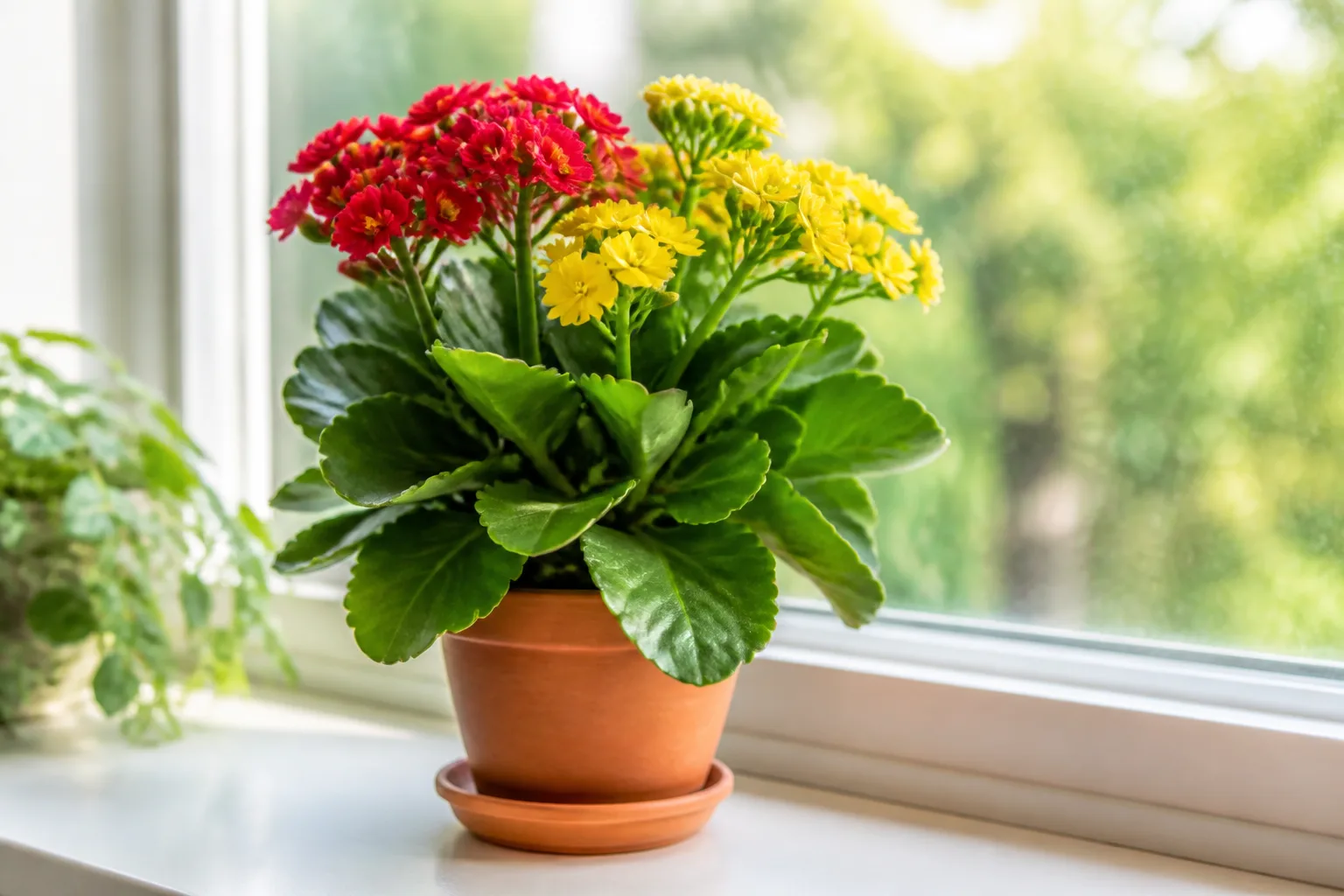
A kalanchoe in full bloom looks like someone tucked a bouquet into a tiny succulent pot—clusters of red, pink, orange, yellow, or white flowers hovering above thick, scalloped leaves. That gift-shop polish is real, but the plant behind it is a drought-tolerant succulent from Madagascar, not a thirsty flowering annual. Treat it like a succulent that happens to bloom, and a Kalanchoe can stay compact, colorful, and alive for years. Treat it like a tropical foliage plant that wants constant moisture, and you get leggy stems, mushy bases, and a pot you quietly throw away after the flowers fade.
The most popular species, Kalanchoe blossfeldiana—sold as Flaming Katy, florist kalanchoe, or Christmas kalanchoe—was introduced to cultivation in the 1930s and bred heavily for long-lasting flower clusters. Clemson Cooperative Extension describes it as a durable flowering potted plant that needs very little maintenance when light, soil, and watering stay in balance. (Clemson HGIC) The trick most buyers miss is that reblooming depends on short-day physiology, the same long-night trigger poinsettias use—not on dumping bloom booster on a plant sitting in a dim hallway.
Kalanchoe Quick Reference
Use this table as a sanity check before you change anything. If your plant looks off, compare the symptom column to the section farther down rather than guessing with more water.
| Factor | Indoor target | Notes |
|---|---|---|
| Light | Bright indirect; some morning direct sun | Leggy stems = too dim |
| Water | Soak when dry; never on a calendar | Wet cold soil = rot risk |
| Soil | Fast-draining cactus/succulent mix | 40–50% perlite or grit is fine |
| Temperature | 50–70°F days; cooler nights help blooms | Above 80°F at night can delay flowers |
| Fertilizer | Monthly in spring/summer; skip in winter | High phosphorus only if blooms are weak |
| Rebloom trigger | 14+ hours of darkness nightly for ~6 weeks | Natural Oct–Mar photoperiod works |
| Pets | Toxic to cats and dogs | Bufodienolides affect heart rhythm |
| Outdoor zones | USDA 10–12 year-round | Bring in before frost |
For deeper species-specific schedules, the Kalanchoe plant hub breaks care into light, watering, soil, fertilizer, repotting, propagation, and pruning pages you can jump to when one factor—not the whole plant—needs attention.
What Makes Kalanchoe Different From Other Houseplants
Kalanchoe belongs to Crassulaceae, the stonecrop family that includes jade plants and echeverias. Leaves and stems store water, which is why the plant survives missed waterings better than ferns or peace lilies. That storage system also means roots suffocate quickly when soil stays wet. The standard succulent rule applies: water deeply, then let the mix dry before the next drink. Iowa State University Extension recommends the same soak-and-drain pattern for indoor succulents generally—wet the entire root zone, let excess water leave the pot, and never leave the pot sitting in a full saucer. (Yard and Garden)
Flowering kalanchoes are short-day plants. They initiate buds when nights are long relative to day length, not when you fertilize harder. Clemson HGIC notes that natural day lengths between October 1 and March 1 in most of North America already supply the 14- to 16-hour night period buds need. (Clemson HGIC) If you keep a kalanchoe in a lit living room all evening, you may accidentally prevent rebloom even while the plant looks otherwise healthy.
Gift plants are often force-bloomed in greenhouses under controlled light and temperature. When you bring one home, it is finishing a bloom cycle it started under professional conditions. Expect the first display to wind down; your job is to transition the plant into steady succulent care and set up the next long-night period rather than chasing perpetual flowers with extra water.
Light Requirements for Healthy Leaves and Blooms
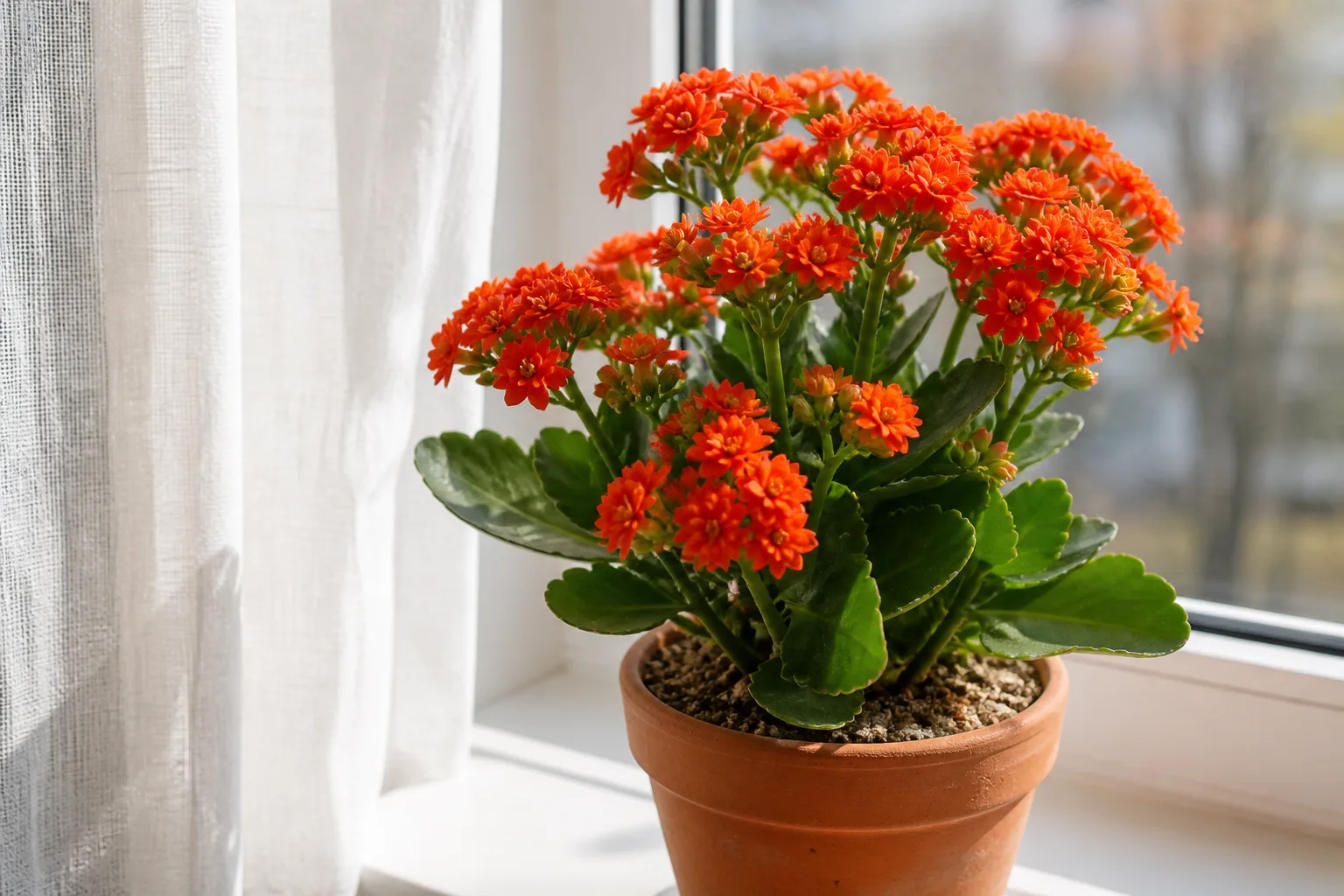
Indoors, kalanchoe wants bright light for most of the day. A south- or west-facing window filtered by a sheer curtain is a common sweet spot: enough intensity to keep leaves glossy and compact, without blasting the plant with hot afternoon sun that can scorch foliage. Clemson HGIC says kalanchoe tolerates bright indoor light well but becomes spindly in low light. (Clemson HGIC) Spindly growth—long bare stems with small leaves spaced far apart—is your clearest signal to move the pot closer to the window or add a grow light.
A few hours of gentle direct sun in the morning often improves flower potential, especially in winter when daylight is short. Harsh midday sun through a closed window can still burn leaves, so watch for bleached or crispy patches on the side facing the glass. If you move a plant from a dim shelf to a bright window, shift it gradually over a week so leaves acclimate.
Outdoor kalanchoes in warm climates can take full sun with afternoon shade, particularly in hot-summer regions. Plants grown outside in zones 10–12 often grow faster and bloom more freely than indoor specimens because light intensity is higher. If you summer a houseplant outdoors, start it in bright shade and increase sun exposure slowly so tender greenhouse leaves do not scorch on the first sunny afternoon.
Watering Kalanchoe Without Causing Root Rot
The single fastest way to kill kalanchoe is watering while the soil is still damp. Let the potting mix dry noticeably between waterings. For many indoor setups, that means every two to three weeks in bright active growth, and less often in winter when light is low and the plant is not pushing new leaves. There is no universal calendar—poke your finger into the drainage hole area or use a dry skewer. If it comes out clean and dry, water; if soil clings wet, wait.
When you do water, soak the entire root ball until water runs from the drainage hole, then empty the saucer after 15–30 minutes. Light surface sprinkles keep only the top inch moist while roots deeper in the pot stay dry, which encourages shallow rooting and makes underwatering signs look confusing. South Dakota State University Extension emphasizes checking soil moisture before watering succulents rather than following a fixed schedule. (SDSU Extension)
Reduce watering during the rebloom manipulation period when you are withholding fertilizer and keeping nights long. The plant is not in active growth then, and extra moisture combined with cooler temperatures raises rot risk. Resume normal watering once you see visible flower buds above the foliage.
Signs you are underwatering include wrinkled, thin leaves that feel soft instead of plump. Signs of overwatering include yellowing lower leaves, blackening at the soil line, and stems that feel hollow or mushy. If rot has started, stop watering, let the mix dry, and inspect roots—sometimes you need to cut back to healthy tissue and reroot, similar to saving overwatered succulents described in our indoor succulent care guide.
Soil, Pots, and Drainage
Kalanchoe needs porous, fast-draining soil, not standard peat-heavy houseplant mix straight from a multipurpose bag. Clemson HGIC recommends roughly 60% peat moss and 40% perlite for potted kalanchoe, or 50% peat and 50% perlite for propagation. (Clemson HGIC) A commercial cactus and succulent blend amended with extra perlite or coarse grit works well if you prefer fewer ingredients to measure.
The pot must have a drainage hole. Terracotta is helpful because the clay pulls moisture from the soil and gives you earlier warning when the mix has dried. Plastic pots retain water longer—fine if you adjust watering downward, risky if you water on habit. Do not plant kalanchoe in a decorative pot without drainage unless you use it as a cachepot and lift the inner pot to drain after every watering.
Particle size matters as much as ingredients. Fine, water-retentive mixes used for tropical foliage stay wet too long for succulent roots. If water pools on the surface when you irrigate, the mix is either too compacted or too peat-heavy. Repot into fresh gritty soil rather than adding sand to bad soil—sand in fine mixes often makes drainage worse, not better.
Temperature, Humidity, and Placement
Ideal indoor temperatures sit around 50–70°F during the day with cooler nights in the 45–65°F range when you are trying to prolong flower life. Clemson HGIC notes that cool night temperatures extend bloom duration. (Clemson HGIC) Daytime highs above 80°F during the long-night period can cause heat delay, inhibiting flower bud formation even when nights are dark enough. If your plant sits near a heater or in a hot sunroom during late fall, rebloom may fail for temperature reasons rather than light.
Kalanchoe is not fussy about humidity. Average household humidity is fine. Do not mist for moisture—wet leaves do not hydrate roots, and stagnant humidity around crowded foliage can encourage powdery mildew. A pebble tray adds little value for this succulent compared to tropical plants; focus on light and dry soil cycles instead.
Rotate the pot a quarter turn every few weeks so growth stays even. If one side leans toward the window, rotation prevents a lopsided silhouette and helps all sides receive light. Keep the plant away from cold drafts from poorly sealed winter windows, which can damage tender flower buds overnight.
Fertilizing for Foliage and Flowers
Feed only during active growth, roughly spring through early fall when the plant is producing new leaves. A balanced houseplant fertilizer at half strength once a month is enough—kalanchoe is not a heavy feeder. Clemson HGIC recommends monthly feeding for actively growing indoor plants. (Clemson HGIC) Skip fertilizer entirely in winter unless the plant is under strong supplemental light and visibly growing.
If flowers were sparse last cycle despite good light, a bloom-boosting fertilizer higher in phosphorus may help the next round. Do not rely on fertilizer to force blooms on a plant that never received adequate long nights; phosphorus supports bud development after the plant has already committed to flowering, not before.
Outdoor landscape kalanchoes in warm zones often need only one light feeding in spring. Indoor specimens in small pots exhaust nutrients faster because you leach minerals each time water runs through drainage holes. If leaves look pale while light and watering are correct, a gentle summer feeding is reasonable. If leaves are dark green but floppy, the problem is usually water or light, not hunger.
Popular Kalanchoe Types and How They Differ
The genus contains more than 100 species. Most care guides focus on K. blossfeldiana because it dominates florist shelves, but other kalanchoes share the family’s succulent habits while differing in size, leaf shape, and bloom style. Grouping them all under one watering schedule causes mistakes—paddle plants and mother-of-thousands can tower over a windowsill flaming Katy.
Kalanchoe blossfeldiana (Flaming Katy)
This is the classic florist kalanchoe: scalloped green leaves, dense flower clusters held above foliage, mature size typically 6–18 inches tall and wide. Blooms last weeks because each cluster contains many small four-petaled flowers; double-flowered cultivars pack even more petals per head. Colors span red, magenta, pink, orange, yellow, and white. This species is the short-day bloomer most readers own, and the rebloom instructions in this guide target it first.
Other common kalanchoe species
Paddle plant (Kalanchoe luciae) grows from a central stem with flat, rounded leaves that redden at the margins in cool bright light. It can exceed two feet indoors and is grown more for foliage architecture than for the small pale flowers it produces. Mother of thousands (K. daigremontiana) and chandelier plant (K. delagoensis) reproduce from plantlets along leaf margins and can become aggressive spreaders outdoors in warm zones—interesting propagation demos, poor choices for tight mixed planters unless you commit to thinning.
Panda plant (K. tomentosa) and felt plant (K. beharensis) are grown for fuzzy or velvety leaves rather than showy blooms. Missouri Botanical Garden notes that K. beharensis can reach substantial size in ideal outdoor conditions in zones 9–11. (Missouri Botanical Garden) Chocolate soldier kalanchoe stays compact with brown-edged fuzzy leaves—water and light like other succulents, but expect different growth rates and repotting timelines than a blossfeldiana gift plant.
How to Get Kalanchoe to Bloom and Rebloom
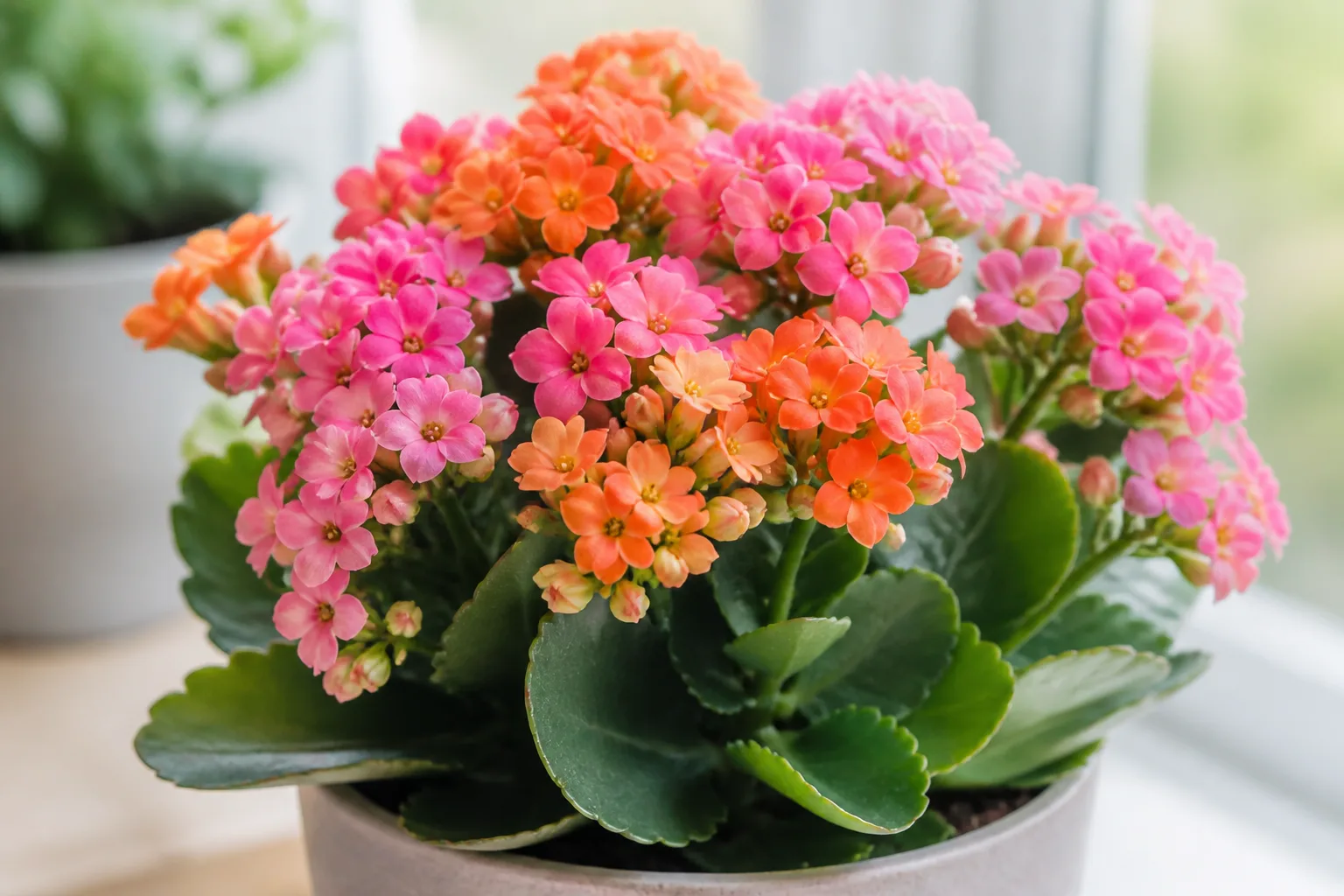
A kalanchoe that bloomed beautifully in January and then quit is not broken—it finished a cycle. Rebloom requires returning to long nights after the plant has rested, rebuilt leaves, and spent summer in bright conditions. Skipping that rest phase and hiding the plant in a closet immediately after flowers fade often yields weak buds or none at all.
Short-day flowering explained
Kalanchoe initiates flower buds when it senses nights longer than about 14 hours for roughly six weeks. Between October 1 and March 1, natural outdoor photoperiod in much of North America already provides that window. (Clemson HGIC) Indoors, artificial light after sunset—kitchen LEDs, living-room lamps, TV glare—can shorten the effective night and block bud set.
Once buds are large enough to see above the foliage, day length no longer matters; you can return the plant to normal lighting. Plants started on natural short days in early October often flower around January, about 12 weeks from the beginning of consistent long nights. Temperatures above 80°F during the night period can still cancel bud development (heat delay), so hot sunrooms and heating vents matter as much as curtains.
To force rebloom outside the natural calendar, place the plant in a dark closet or covered box from late afternoon until morning, giving it bright light only during the day. Maintain the routine daily for six weeks without skipping nights. Reduce water and withhold fertilizer during manipulation. When buds appear, resume normal care.
After flowers fade, deadhead spent clusters so the plant does not pour energy into seed development. A healthy specimen in bright summer light can cycle again if you repeat the long-night treatment in fall. Some growers enjoy year-round color by staggering multiple plants on different schedules—one honest limitation is that a single stressed gift plant may need a full growing season to recover before it reblooms well.
Pruning, Pinching, and Deadheading
Pinch or cut back leggy stems after flowering to restore a bushy shape. Use clean scissors and remove just above a leaf pair so new shoots branch from the cut. Pruning in late winter or early spring—after bloom and before strong summer growth—keeps the plant compact. Remove dead flower stalks down to the first healthy leaves.
Watch new growth for aphids, which congregate on tender young leaves and undersides. Clemson HGIC lists aphids, mealybugs, and brown scale as the most common kalanchoe pests indoors. (Clemson HGIC) Aphids can be wiped off by hand or dislodged with a gentle water spray away from furniture. Mealybugs look like white cotton patches in leaf joints—dab them with rubbing alcohol on a cotton swab rather than spraying oil on a succulent you cannot easily rinse.
Deadheading is not optional if you want repeat flowers. Snip faded clusters when petals brown and drop. The plant redirects energy to roots and new leaves instead of holding dry heads for months.
Propagating Kalanchoe From Cuttings and Offsets
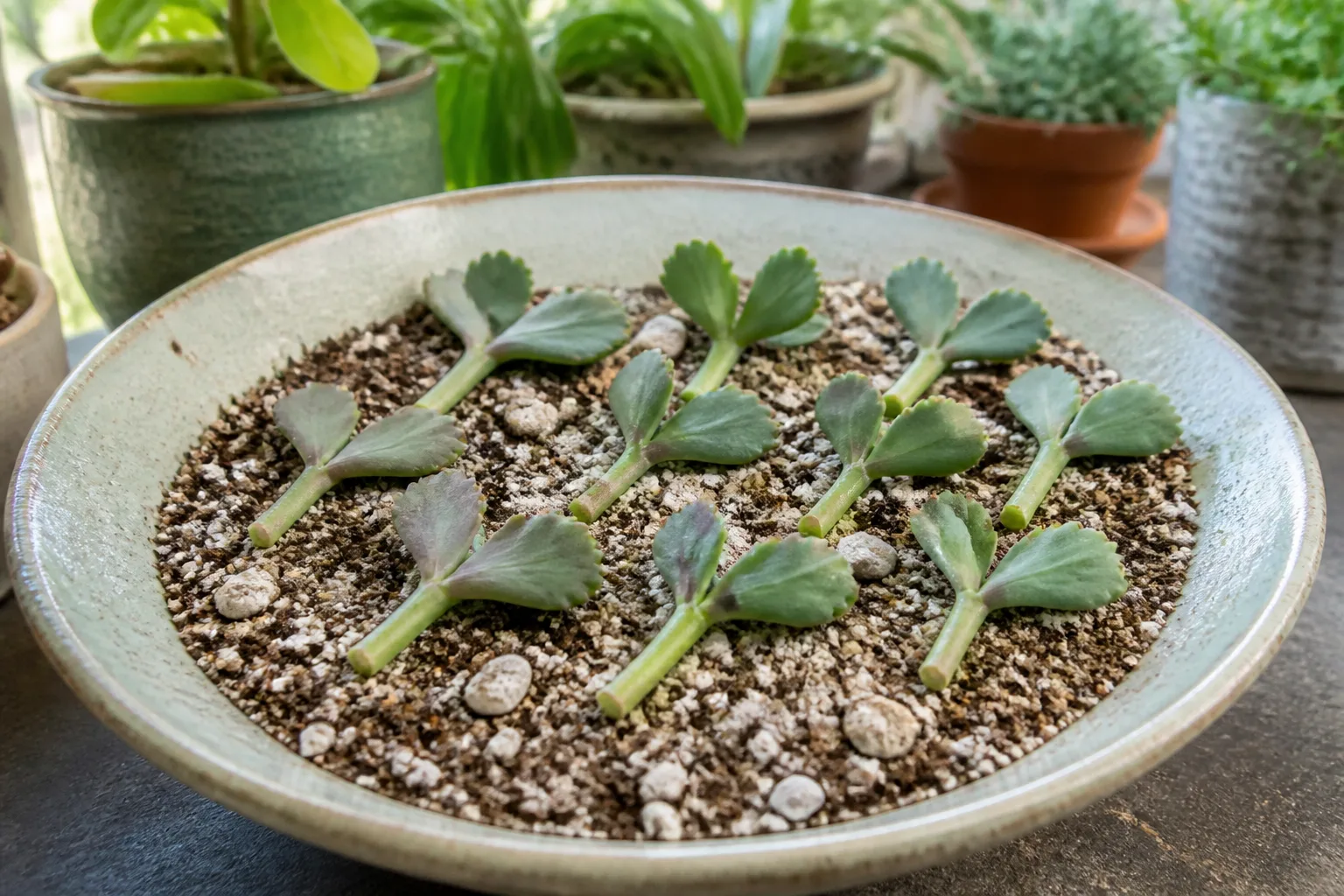
Propagation is straightforward and matches general succulent stem-cutting logic covered in our propagate succulents guide. Take 2- to 3-inch terminal cuttings with two pairs of leaves in spring or early summer. Use vegetative shoots, not flower stalks, for best rooting success. (Clemson HGIC)
Remove the lower leaves, then let the cutting callus for several days until the cut end dries and seals. Skipping callusing on succulent cuts invites rot in moist soil. No rooting hormone is required, though it can speed establishment for slow-rooting species.
Plant calloused cuttings in the same gritty mix you use for mature plants. Bright indirect light and a loosely closed plastic bag can hold humidity while roots form, but do not seal wet cuttings in darkness. Roots typically develop in 14 to 21 days, after which you treat the new plant like a mature kalanchoe.
Offsets that sprout at the base can be removed at the joint, calloused, and potted separately. Leaving offsets attached diverts energy from the mother plant but can create a fuller display if space is not a concern.
Repotting Kalanchoe
Repot after flowering finishes in fall, or in spring when active growth resumes—avoid repotting mid-bloom unless the plant is clearly root-bound and suffering. Choose a pot only one inch larger in diameter if roots fill the current container. If roots still have room, refresh the top inch of soil instead of upsizing, which slows drying and raises rot risk.
Kalanchoe dislikes being root-bound for long periods, but it also rots in oversized pots where wet soil surrounds a small root mass. Terracotta with a drainage hole remains the safest default. After repotting, wait a few days before watering if you disturbed roots, then resume soak-and-dry watering once the plant settles.
If you shift to a slightly larger pot, expect the soil to stay wet longer—adjust watering downward for the first month while roots explore the new volume.
Growing Kalanchoe Outdoors vs Indoors
In USDA zones 10–12, kalanchoe can live outdoors year-round in well-drained soil and bright light. In zone 9 and cooler, treat it as a houseplant or seasonal patio plant brought inside before nights drop below about 55°F. Frost at 32°F can kill tissue; repeated cold exposure below 50°F damages blooms and leaves.
To summer a houseplant outdoors, wait until night temperatures stay above 60°F, then acclimate in bright shade for several days before increasing sun exposure. Reverse the process in late summer—bring plants inside before cool nights return. Outdoor summer growth is often faster; prune back tall shoots in fall if the plant became leggy in brighter outdoor light.
Landscape use in warm climates works best in rock gardens, succulent borders, and containers with sharp drainage. Mixed succulent bowls with sedums and small aloes can showcase flaming Katy colors on a patio. Avoid planting blossfeldiana in heavy clay without amendment—it needs the same fast drainage indoors and out.
Pet Toxicity and Household Safety
Kalanchoe is toxic to cats and dogs. The ASPCA lists bufodienolides as the toxic principle across Kalanchoe species, with clinical signs including vomiting, diarrhea, and abnormal heart rhythm in severe cases. (ASPCA) All parts of the plant are problematic if chewed, including fallen petals and leaves knocked off the pot.
Humans may experience nausea and vomiting if plant material is ingested, though serious human poisoning is uncommon. Still, keep plants off low coffee tables if toddlers explore with their mouths. The greater risk in most homes is curious cats batting flowers off windowsills.
If you need non-toxic color for pet-heavy homes, browse pet-safe houseplants and verify each species on the ASPCA list before buying. Do not assume “succulent” means safe—many popular succulents, including kalanchoe, are not pet friendly.
Common Kalanchoe Problems and Fixes
Leggy stems and small pale leaves mean insufficient light. Move closer to the window or add a grow light for 10–12 hours daily. Prune back long shoots after improving light so new growth stays tight. Stretched tissue will not shrink; only new leaves will look right.
Soft, mushy stems or black bases indicate overwatering or poor drainage. Stop watering, unpot, and cut away rotten roots and stem tissue with clean tools. Let cuts dry, then repot remaining healthy sections into fresh dry mix. If the stem is hollow halfway up, take a firm cutting above the rot and reroot it.
Wilting in heat happens when temperatures spike above about 80°F combined with direct sun stress. Move the plant to cooler bright shade and verify soil is not waterlogged—wilting from heat looks similar to wilting from rot but the stem stays firm.
Drab or burned leaves reflect light imbalance. Too little light dulls the glossy green; too much direct midday sun bleaches or scorches foliage. Adjust placement and acclimate gradually.
No blooms despite healthy leaves usually means the plant did not experience long enough nights or suffered heat delay during the bud-initiation window. Start a six-week closet routine in fall or eliminate evening room light. Confirm the plant spent summer in adequate brightness first—weak plants do not bloom well.
Powdery mildew can appear as fine webbing or yellow mottling on kalanchoe leaves. Clemson HGIC notes it may be easy to miss on succulent foliage. (Clemson HGIC) Improve airflow, avoid crowding plants, and treat with potassium bicarbonate products labeled for ornamentals if needed. Persistent humidity without airflow is the usual trigger indoors.
Conclusion
Kalanchoe rewards growers who respect its two identities: showy short-day bloomer and drought-tolerant succulent. Place it in bright light, water only when the mix is dry, use gritty soil in a pot with drainage, and feed lightly during active growth. When flowers finish, prune, give the plant a bright summer, then supply long nights in fall if you want another round of color.
The difference between a disposable gift plant and a perennial windowsill favorite is rarely a secret fertilizer—it is light intensity, dry soil cycles, and a dark enough night when buds are forming. Keep pets away from chewed leaves, watch for mealybugs on fresh growth, and use the Kalanchoe hub when you want species-specific depth on watering checks, repotting timing, or propagation without rereading an entire general guide. With that foundation, flaming Katy can keep surprising you with winter color for years.