How to Use Orange Peels in the Garden
Learn how to use orange peels in the garden: compost them safely, chop and balance them, bury small amounts, and avoid unreliable pest-control claims.

Yes, orange peels can be useful in the garden—but the most reliable use is as a small ingredient in a balanced compost pile, not as a layer of raw fertilizer or a magic pest barrier. Chop or tear the peels, mix them with dry leaves or shredded cardboard, bury fresh scraps inside the pile, and wait for finished compost before spreading the result around plants.
That distinction matters because a fresh orange peel is still a food scrap. It contains moisture, tough rind, and aromatic oils, so it can take longer to disappear and can attract scavengers when left exposed. Citrus oils are interesting in controlled research, but a few loose rinds in a flower bed do not deliver a measured pesticide or disinfectant dose.
The best use for orange peels is compost
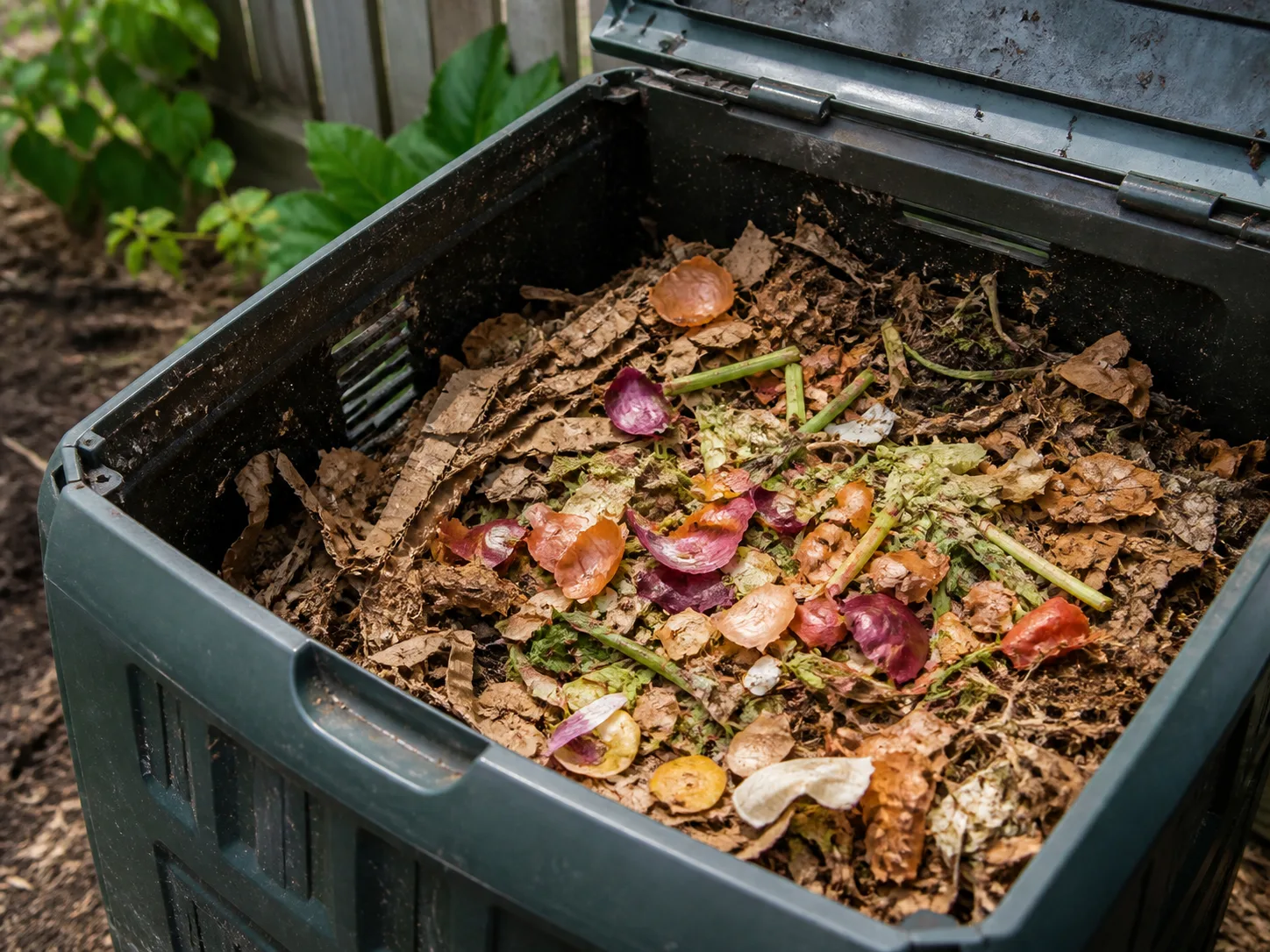
Put orange peels in a traditional backyard compost pile, enclosed compost bin, or municipal organics stream. Composting turns food scraps into organic matter that can improve soil structure and contribute some nutrients after the material has decomposed; it does not turn the fresh peel into instant plant food.
Washington State University Extension describes home compost as a soil amendment made from yard debris and food scraps in its backyard-composting guide. Its guidance also makes the useful distinction between the ingredients and the finished product: the microbes, fungi, insects, and other decomposers do the work over time, and the remaining material becomes easier to work into soil. Orange peel is one ingredient in that process, not a stand-alone fertilizer.
It helps to think of the peel in three stages:
- Fresh peel: A wet food scrap with oils and a strong smell. It belongs inside a managed compost system, not spread around a plant as a treatment.
- Active compost ingredient: A piece of rind being broken down by microbes and other decomposers. It may still be recognizable, and it can temporarily affect the pile’s moisture and texture.
- Finished compost: A dark, crumbly, earthy-smelling amendment made from many ingredients. This is the stage that makes sense for improving garden soil.
The phrase “orange peels are good for plants” is therefore incomplete. The peel can contribute to a useful process, but the garden benefit comes after the process has had time to work.
Why orange peels take longer to break down
Orange rinds are thicker and more waxy than many soft kitchen scraps. The peel also contains oil-filled structures that help create its strong scent. That combination means a whole rind can remain recognizable after softer fruit and vegetable scraps have disappeared.
The solution is surface area. Smaller pieces give microorganisms more edges to work on and distribute the peel through the pile instead of leaving one large, water-resistant piece in a cool pocket. Epic Gardening’s practical citrus-composting guidance likewise recommends cutting peels smaller and, when useful, drying them before adding them to the pile.
Do not interpret slow breakdown as proof that citrus cannot be composted. It simply means orange peels reward preparation and a little patience. In a slow pile, you may still find bits of rind when the rest looks finished; return those pieces to the next batch rather than treating them as a failure.
How citrus fits into a balanced compost pile
The pile needs a workable mix of wetter, energy-rich materials and dry, porous brown materials such as fallen leaves, shredded cardboard, or straw. Washington State University Extension gives a rough starting point of about two parts bulking agent to one part energy material by volume for a fast pile. You do not need to weigh each orange peel, but you should avoid dropping a large bowl of wet scraps into an already soggy bin.
After adding peels, cover them with a generous handful or two of dry material and mix the layers together. The browns absorb excess moisture and help keep air spaces open. If the pile smells sour or rotten, the problem is usually the pile’s overall moisture and oxygen balance—not that one orange peel has “poisoned” the compost.
The finished compost is what belongs around plants. It should look dark and crumbly, smell earthy rather than sour, and stop heating when you turn it. A few identifiable rind pieces are not dangerous in an outdoor bed, but if the compost is hot, slimy, or strongly ammonia-like, let it cure longer and correct the pile before using it in containers or around seedlings.
You do not have to run a hot pile to reuse orange peels. A hot pile breaks down faster because it has enough volume, air, moisture, and energy for heat-loving microbes; a smaller cold pile can still work, but it may take months or longer. Choose the method you can maintain. An occasionally turned pile with a secure lid is more useful than an ambitious hot pile that dries out or becomes a wet heap.
How to prepare orange peels before they go outside
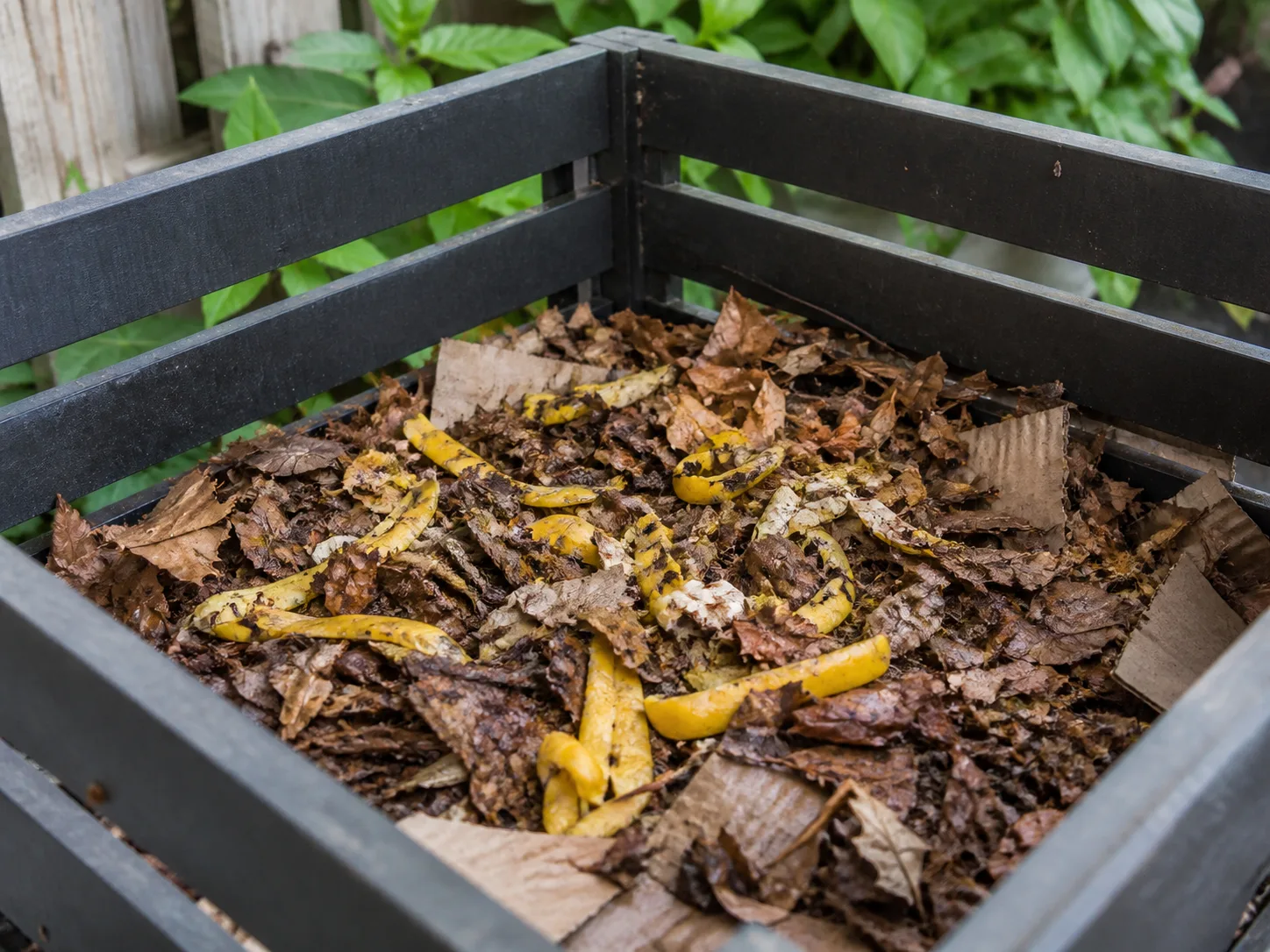
Use this short preparation sequence whenever you have a few peels:
- Remove stickers and obvious packaging. Do not put produce labels, plastic nets, or rubber bands in the pile.
- Cut or tear the peel into pieces about an inch or smaller. Smaller is helpful, but you do not need to turn the rind into zest.
- Add it to the center of the pile. Open a pocket in the material rather than leaving food scraps on the surface.
- Cover it with dry browns. Add leaves, shredded plain cardboard, or another dry, porous material.
- Check the pile, not the calendar. It should be moist but not dripping, and it should have enough air to avoid a rotten smell.
Chop or tear the peel into small pieces
A knife, kitchen scissors, or your hands are enough. If you are already saving peels in a countertop caddy, cut them before the caddy goes outside. For thick-skinned oranges or grapefruit, a rough chop makes a noticeable difference; for thin mandarin peels, tearing them is usually sufficient.
Drying is optional, not a requirement. Letting a small batch air-dry can reduce surface moisture and make it easier to crumble, especially when your pile is already wet. Do not bake peels just to compost them, and do not store damp scraps for long enough to ferment in a warm, sealed container. A covered caddy emptied regularly is the simpler choice.
Add dry browns and keep fresh scraps covered
The easiest habit is to keep a bag or lidded bin of dry leaves, shredded cardboard, or untreated straw beside the compost bin. Each time you add food scraps, cover them with browns. This reduces exposed food smells, improves the carbon-rich structure of the pile, and gives the rind more contact with material that will absorb moisture.
If flies or larger animals are already visiting, stop scattering peels on top and stop adding uncovered food scraps until the problem is fixed. A tight-fitting lid, a pest-resistant bin, or a municipal organics program may be a better fit than an open pile. Food waste is attractive to flies, rats, and raccoons regardless of whether it smells pleasantly citrusy to you.
A no-bin option: bury a small amount in garden soil
If you do not compost, you can bury a small amount of chopped orange peel in an established in-ground bed. Make a narrow hole or trench away from plant stems, mix in a few small pieces, cover them completely with soil, and water normally. This is a slow decomposition method, not a quick feeding treatment.
Use this option only for a modest quantity. Do not bury a thick layer of peels beside a newly planted seedling, pack them into a container, or place them where pets and wildlife can dig them up. Raw citrus can sit in a compacted root zone for a long time, and repeated additions in one spot can create a wet, food-rich pocket.
Composting is usually the better choice because it lets you control the mix, moisture, aeration, and curing time. Direct burial makes sense when you have a few scraps, healthy open soil, and no ongoing wildlife problem. If raccoons, rats, or neighborhood pets already investigate your beds, use a lidded compost system or a local food-scrap collection service instead.
Worm bins deserve a separate decision because they are small, enclosed ecosystems rather than miniature outdoor compost piles. Worms need a moist, aerated bedding environment and a steady supply of suitable food; a sudden load of acidic, oily citrus can make a small bin less comfortable even when the same peel would be fine in a larger traditional pile. If you are trying to protect an established worm population, reserve orange peels for the regular compost bin and feed the worm bin the materials listed in its care guidance.
| Your setup | Best orange-peel option | Why |
|---|---|---|
| Traditional compost pile or bin | Chop, mix, and cover | The pile can balance moisture and carbon while the peel breaks down. |
| Worm bin or vermicomposter | Skip citrus or use only the system’s tested guidance | A small worm bin can be upset by acidic scraps and concentrated oils. |
| No compost bin, few peels, open in-ground bed | Bury a small amount deeply and cover fully | The soil can host decomposers, but the process is slow and less controlled. |
| Wildlife or rodent pressure | Use an enclosed bin or municipal organics | Exposed food scraps are a bigger problem than their smell is a solution. |
Do orange peels repel garden pests?
Treat orange peels as an unreliable scent experiment, not pest control. A fresh rind may briefly make an area smell citrusy, but scent strength fades, rainfall removes compounds, and a peel does not provide a consistent concentration over a known area.
What citrus-oil research actually shows
Researchers are interested in citrus plants because compounds such as limonene, citral, citronellol, and alpha-pinene can have insect-repellent or insecticidal activity under particular conditions. A 2024 review in the Journal of Toxicology, available through Europe PMC’s record of the citrus-repellent research, emphasizes that the plant’s chemistry varies and that extraction method and dose affect the result.
That is an important boundary. The studies and formulations discussed in the review use identified compounds, extracts, or essential oils—not a handful of orange peels dropped beside a tomato plant. A kitchen peel has an unknown amount of oil, and the amount reaching an insect changes as the rind dries, gets wet, or decomposes.
There is a similar issue with claims that orange peel disinfects garden tools. A 2024 study in BioResources on extracted orange-peel essential oil reported that the oil was rich in D-limonene and inhibited E. coli and S. aureus in laboratory testing. That is useful evidence about an extracted oil under test conditions, not proof that rubbing a fresh peel or wiping with peel water disinfects pruners.
Why scattered peels are a poor pest-control plan
Do not rely on orange peels to manage aphids, mosquitoes, ants, slugs, cats, deer, or any other recurring garden pest. Even if a particular insect dislikes citrus odor for a short time, the effect is too variable to replace identification, sanitation, physical barriers, traps, or a product used according to its label.
Scattered peels can also create the opposite problem. Washington State University Extension notes that fruit and vegetable wastes attract flies, rats, and raccoons and recommends burying fresh scraps within a pile. In other words, the strongest dependable garden lesson is not “citrus keeps animals away”; it is “food scraps should not be left exposed.”
If you want to test whether a small amount of zest changes activity around a non-edible ornamental area, treat it as a short observation, keep it away from pets and wildlife, and remove it when it dries or begins to mold. Do not apply concentrated citrus oil to leaves, soil, or beneficial insects without a product label and a clear reason. “Natural” describes an origin, not a guaranteed safety profile.
Orange-peel uses to skip
Do not treat peel water as fertilizer
Soaking orange peels in a jar of water does not create a measured fertilizer. The resulting liquid can contain an unpredictable mix of sugars, acids, soluble compounds, and small amounts of oil; it has no reliable nutrient analysis or application rate for your plant.
Pouring a fresh, sweet-smelling peel soak into a pot can encourage microbial growth on the soil surface, leave an odor, or simply add soluble material the plant did not need. The same problem applies to “orange peel tea” used as a cure for yellow leaves or weak growth: it replaces diagnosis with an untested input.
If you want to reuse the peel in liquid form, put it in a managed composting or municipal organics system rather than pouring the soak around roots. For a plant that needs nutrients, use a soil test where appropriate and a fertilizer with a stated analysis and directions.
Do not use orange peels as tool disinfectant
Orange peel is not a substitute for cleaning and disinfecting pruners, knives, seed trays, or propagation equipment. The extracted-oil research is not a household recipe, and antimicrobial activity in a lab does not tell you whether a fresh peel has made the tool safe for the next plant.
Clean soil and sap from tools first, then use a suitable disinfectant or product directions for the job. This is especially important when you are moving between plants with suspected disease. Compost the used peel after the kitchen, but keep the tool-cleaning step separate.
Common mistakes and simple fixes
Mistake: Adding a large amount of citrus at once. A pile made mostly of wet kitchen scraps can become dense, sour, and short of air. Add peels in proportion to the rest of the pile and bring the dry browns back into the mix.
Mistake: Leaving whole rinds on the surface. Whole orange halves dry into tough pieces, while fresh scraps advertise themselves to flies and animals. Chop them, place them in the center, and cover them.
Mistake: Putting citrus into a small worm bin without checking its rules. Traditional compost and vermicompost are not the same system. Epic Gardening’s citrus guidance advises against using large amounts in wormeries because acidity can stress worms; a cautious gardener should keep citrus out of a small worm bin unless the system’s instructions specifically allow it in limited amounts.
Mistake: Expecting peel to acidify soil or feed a plant immediately. A few peels are not a reliable way to change a bed’s pH, and raw scraps do not provide a controlled nutrient dose. If soil acidity matters, test the soil and amend it for the measured need.
Mistake: Using compost before it is finished. If the pile is still hot, slimy, sour-smelling, or full of recognizable fresh scraps, let it cure. Washington State University Extension notes that uncured compost can harm some plants, especially when used in potting mix or for seed starting.
Mistake: Treating a bad smell as proof the recipe failed. A rotten odor usually points to too much moisture, too little air, or too many dense wet scraps. Mix in dry, porous material, turn the pile, and protect it from heavy rain. If the bin still attracts animals, improve the lid or change the disposal method.
A practical orange-peel routine you can repeat
- Collect peels in a covered kitchen caddy. Empty it often enough that scraps do not ferment or grow mold indoors.
- Chop the peels. Aim for pieces around an inch or smaller, especially for thick orange rinds.
- Add them to a traditional compost pile. Put the peels inside the pile, not on top of it.
- Cover with dry browns. Mix in leaves, shredded cardboard, or straw so the pile stays porous and balanced.
- Manage moisture and air. The material should feel damp, not waterlogged. Turn a hot pile regularly; a cold pile can take longer and needs less intervention.
- Let the compost cure. Wait until it is dark, crumbly, earthy-smelling, and no longer heats when turned. Return stubborn rind pieces to the next batch.
- Use the finished compost sensibly. WSU Extension suggests mixing about 1 to 3 inches into soil before establishing a new bed and smaller amounts—about 1/2 to 1 inch per year—in established gardens. Keep the material screened and mature if you plan to use it for seed starting or potting mix.
This routine gives you the real benefit of orange peels: they become part of a broader compost system that improves soil over time. It also avoids the common traps of raw-peel fertilizer, unmeasured peel water, and scent-based pest promises.
Conclusion
The most useful way to use orange peels in the garden is to compost them. Chop or tear them, mix them into a balanced pile with dry browns, bury fresh scraps under the surface, and wait for finished compost before applying it to soil. You can bury a few chopped peels directly in an established bed when conditions are right, but do not treat raw rinds as instant fertilizer.
Orange peels may smell strong and their oils are scientifically interesting, yet loose peels are not a dependable pesticide, animal repellent, peel-water fertilizer, or tool disinfectant. Reuse them as a compost ingredient, keep food scraps contained, and let the decomposition process—not the citrus scent—do the garden work.



