Linnea Bast's Philadelphia Plant Tour Guide
See how Linnea Bast built a self-watering plant wall, inherited a 40-year philodendron, and keeps 140+ specimens alive — with practical takeaways from Episode 9.
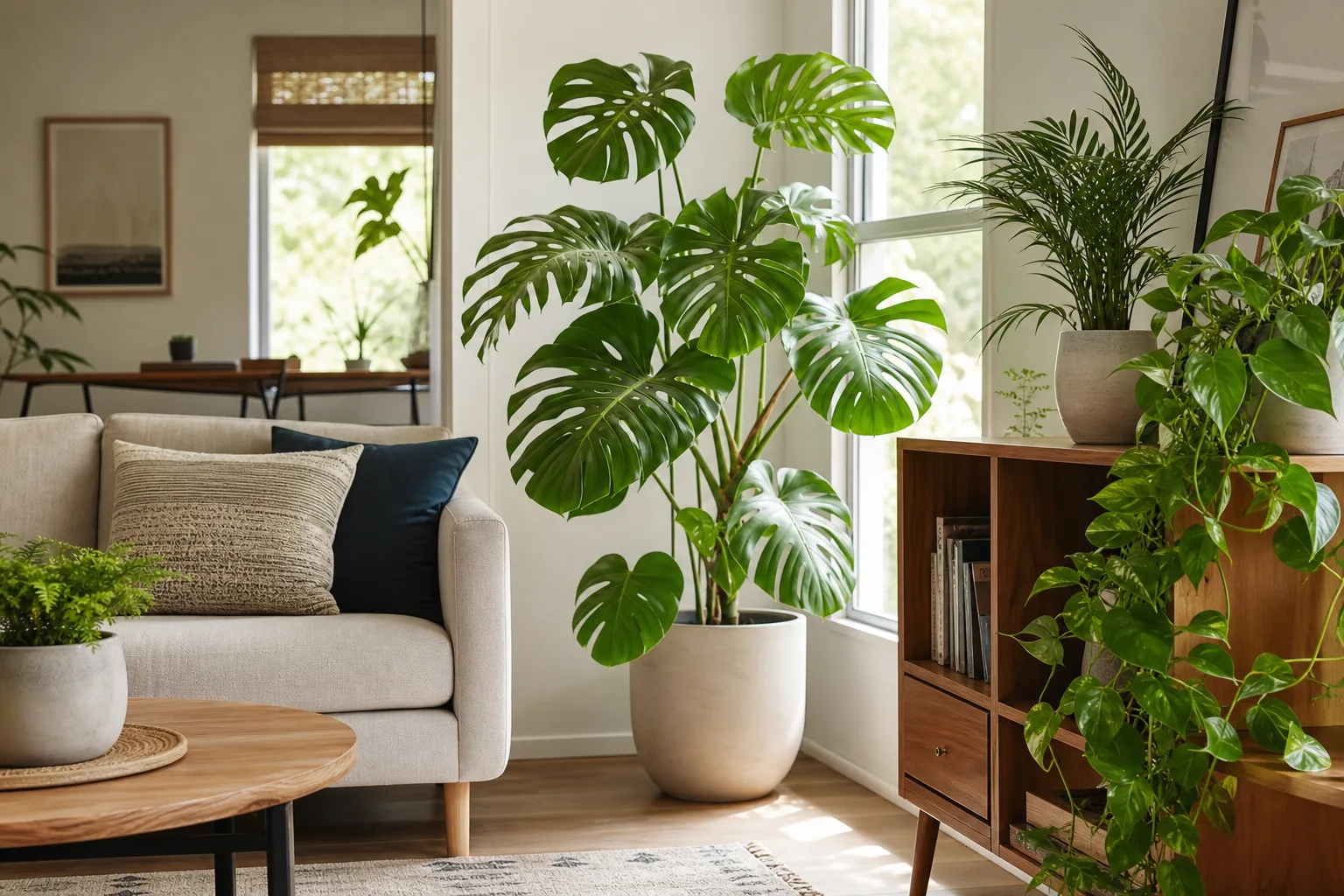
Step into Linnea Bast’s Philadelphia design studio and the room reads less like a showroom and more like a living habitat. Dark wood surfaces frame more than 140 houseplants — floor pots, shelves, trailing vines, and a self-watering vertical garden that functions as both sculpture and infrastructure. Linnea documents the collection as @linneabotanicals on Instagram, and Episode 9 of In the Weeds With Plant People follows her through that space at plant height: the irrigation wall that ate her budget, heirlooms that outlive their original owners, hurricane-scattered air plants packed into a carry-on, and the Boston fern that still earns a skeptical side-eye.
This page treats the tour the way a working designer or serious collector would — not as background viewing, but as a case study in biophilic workspace design, vertical-garden maintenance, heirloom plant stewardship, and the slow discipline required to keep triple-digit collections alive without turning your studio into a propagation hospital.
Meet Linnea Bast and her Philadelphia design studio
Linnea is a biophilic designer based in Philadelphia — someone who plans interiors around our instinctive pull toward living systems, not around a single statement fiddle-leaf fig in a corner. Her studio proves the difference between decor that includes plants and architecture that assumes them: greenery is grouped by light and humidity, vertical surfaces carry weight-bearing irrigation, and almost every specimen has a story that is not “I saw it trending.”
Even her first name ties back to botany. She was named after the children’s book Linnea in Monet’s Garden, which itself nods to Carl Linnaeus, the taxonomist who formalized how we name plants today. That is not trivia — it explains why her collection skews toward botanical detail (leaf margins, texture, venation) rather than generic “green blob” staging.
Childhood gardens, her grandmother, and a name rooted in botany
Linnea credits her grandmother as the emotional engine behind the collection. Childhood visits to gardens taught her to notice small changes — a new unfurling leaf, the way light hits velvety philodendron surfaces, the shift in scent after rain on soil. That habit matters at scale: collectors who last do not water on autopilot; they read plants daily the way a designer reads a room.
Her most expensive plant, a variegated Monstera Albo, belonged to that grandmother. Linnea did not initially know she was holding a cultivar that collectors pay serious money for — which is a useful reminder that sentimental plants and market-rare plants often overlap. The care goal is the same either way: keep the parent healthy, propagate a backup before stress, and never let Instagram price chatter outrun your brightest, most stable room.
What biophilic design looks like when you live with 140 plants
Biophilic design connects built spaces to nature through light, materials, airflow, and — most accessibly for renters and studio owners — living plants. Research summarized by outlets like Garden UK links grouped indoor greenery to lower stress, better focus, and improved mood, especially when placement is deliberate rather than random.
Linnea’s studio hits the core biophilic moves without requiring a renovation budget:
- Visual greenery at multiple heights — floor pots, shelves, and the vertical wall create layered sightlines.
- Natural materials — dark wood contrasts make chlorophyll read sharper; the palette feels forest-adjacent.
- Microclimates instead of one-size care — humidity lovers cluster away from heat vents; succulents and trailing specimens sit where air moves.
MasterClass describes biophilic design as more than “open windows and buy houseplants” — it is about sensory connection (MasterClass biophilic design overview). Linnea’s studio demonstrates that at collector scale: you feel the density, see texture variation, and notice how irrigation hum changes the room’s rhythm.
Grouping plants for microclimates and visual calm
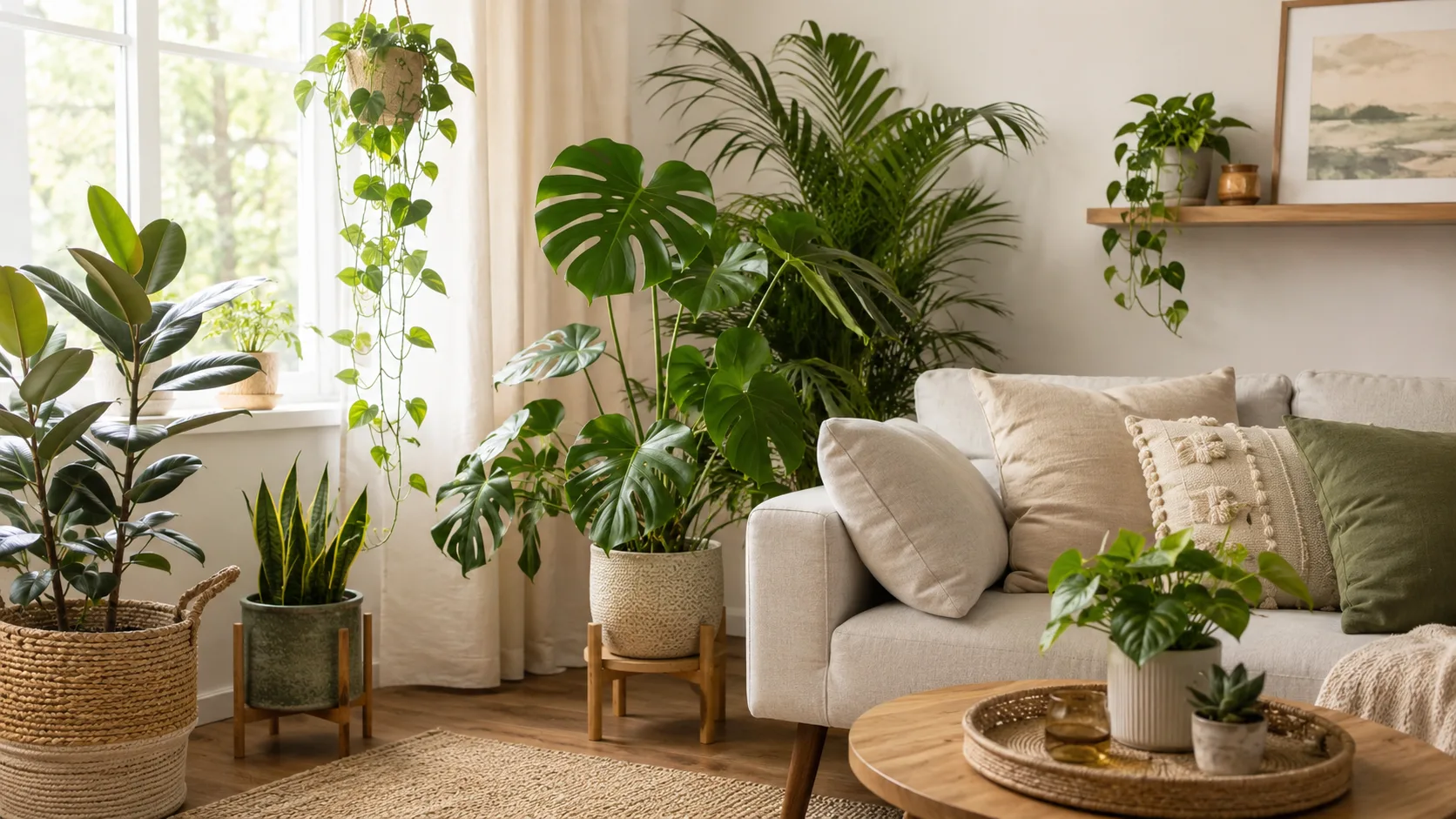
Random single pots on every flat surface create visual noise without horticultural benefit. Grouping — as Garden UK emphasizes — builds shared humidity and makes maintenance faster because you water one zone at a time.
Copyable rules from Linnea’s layout logic:
- Bright indirect band near windows: variegated rubber tree, Monstera Albo, string of bananas upper hooks.
- Stable humidity pocket away from HVAC: Boston fern, Baby’s Tears, philodendron heirlooms.
- Vertical system for species that tolerate consistent drip moisture: small-leaved trailers, pothos-class vines, compact ferns.
At 140 plants, grouping is not aesthetics alone — it is time management. Linnea’s answer to “do plants make you a better person?” — that they teach her to appreciate small details — only works if the collection remains observable. Chaos hides decline until it is expensive.
The self-watering vertical garden — her biggest plant investment
The tour’s first wow moment is Linnea’s vertical garden, which she identifies as her biggest plant expense. It is not a faux panel — it is a living wall fed by a tank, pump, and drip-line irrigation system that moves water upward and distributes it across planted cells. That infrastructure separates hobby walls from designer-grade installations.
Vertical gardens suspend plants on a panel with integrated hydration (Barbulian No Design vertical garden guide). Benefits include space efficiency, noise softening, and temperature moderation on the wall surface — relevant in a studio where every square foot earns its keep.
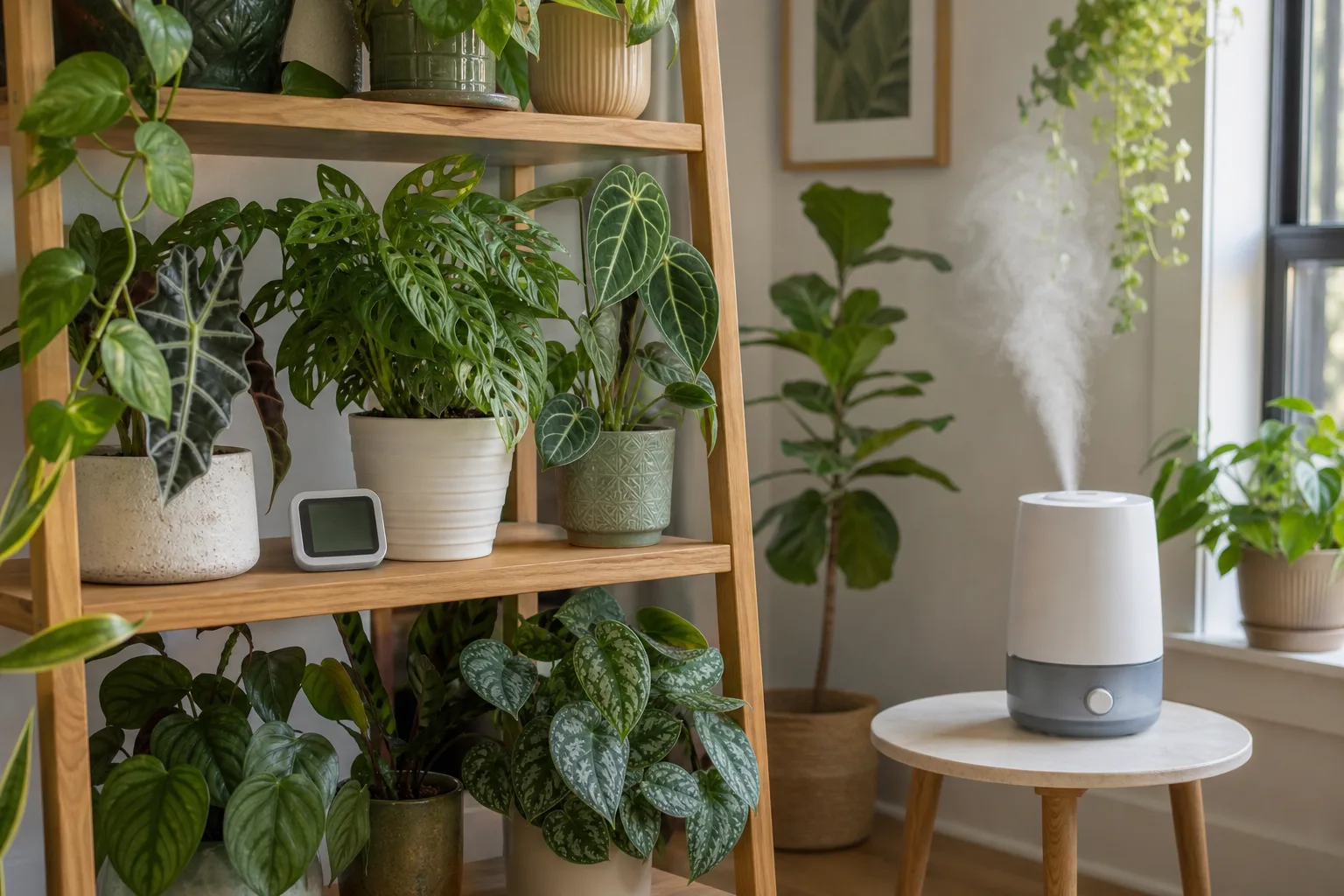
How pump-and-drip irrigation keeps a living wall alive
Manual watering a wall with a watering can is performance art, not maintenance. Linnea’s self-watering setup follows the standard commercial pattern:
- Reservoir tank at the base holds water (and sometimes diluted fertilizer).
- Pump pushes water to the top manifold on a timer or switch cycle.
- Drip lines or emitters release water slowly down through each planting pocket.
- Drainage returns excess to the tank or a catch tray — critical to avoid anaerobic root zones.
Drip irrigation is the same class of system Barbulian No Design recommends for travelers and busy studios: predictable moisture, less foliar splashing, fewer fungal spots on crowded leaves. The trade-off is dependency on equipment. When the pump clogs or a line kinks, an entire zone dries while pots on the floor still look fine — silent failure is the main risk.
Maintenance checks that prevent silent wall failure
Treat a plant wall like HVAC: monthly inspection, not “set and forget.”
- Flush lines every few months to prevent algae and mineral crust.
- Test pump flow before vacation — backup battery timers fail more often than plants die in a week.
- Match species to drip frequency — succulents and ferns on the same line without zoning guarantees casualties.
- Reach every pocket — if a top row requires a ladder, you will skip it by October.
- Log fertilizer lightly — concentrated drip fertigation burns roots faster than top-watering.
If you are renting or just starting, a freestanding vertical planter with manual top-down watering teaches the same design lesson at lower cost. Linnea’s wall makes sense because plants are core business identity, not weekend hobby — the investment amortizes across client work and daily studio use.
Standout plants from the Episode 9 tour
Episode tours move fast. Slowing them by species exposes whether your home can replicate their success — light, humidity, and time budget — not just their Instagram angle.
String of bananas — the long-trailing conversation piece
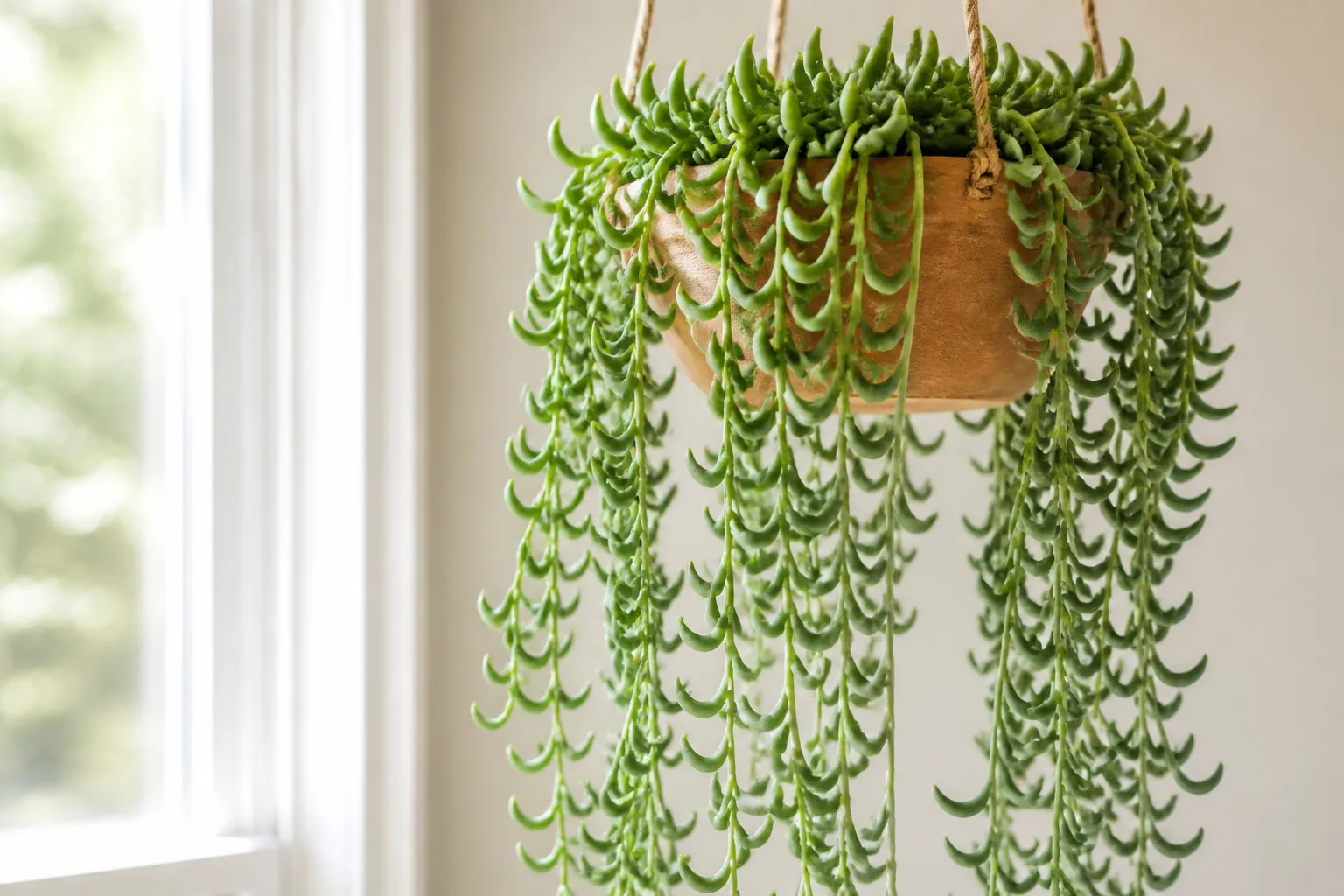
Linnea’s most unique-looking plant in the episode is a string of bananas (Senecio radicans) — a succulent with banana-shaped leaves along trailing stems that can reach several feet indoors when light and drainage cooperate. “You just don’t see a lot of plants that look like this,” she notes — accurate, because the silhouette reads graphic from across a room.
Care basics from succulent references including Gardening Know How:
- Bright indirect light — a south or west window with sheer filter; weak light stretches internodes and thins leaves.
- Sharp drainage — cactus mix or amended potting soil; never let the crown sit wet.
- Water deeply, then dry — soak until drainage runs, then wait until the top inch feels dry; winter stretches longer.
- Hang high, inspect low — pests hide where stems meet the pot lip.
Long trailers are commitment plants: repotting requires detangling, and one knocked stem can strip meters of growth. Place hooks where the vine can descend without crossing walkways.
Variegated rubber tree — margins, midribs, and indoor scale
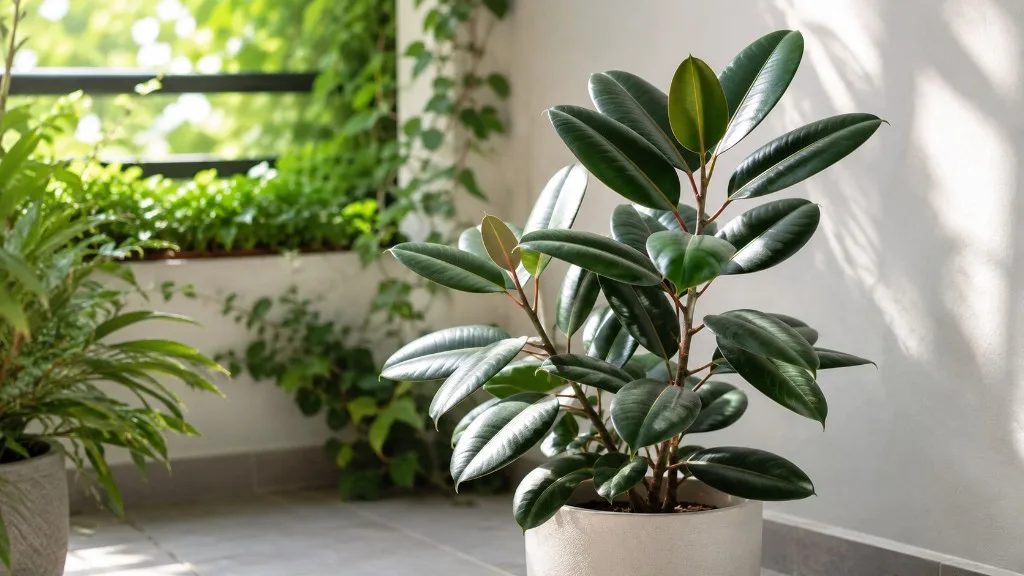
Linnea’s variegated rubber tree (Ficus elastica cultivar) is the plant she says she would “be reborn as” — drawn to cream margins and strong midribs. In the wild, rubber trees can exceed 50 feet; indoors they become upright sculptural trunks with broad leaves.
NC State Extension notes rubber plants want partial shade or bright indirect light, medium humidity, temperatures above 55°F, and regular watering without overwatering, with reduced water during winter dormancy (NC State Ficus elastica). Variegated forms need more light than solid green to keep white sectors from reverting or browning.
Practical studio tips:
- Wipe leaves monthly — dust blocks photosynthesis on broad surfaces.
- Avoid moving once happy — rubber plants sulk after relocations; draft and AC blasts cause drop.
- Accept bottom leaf yellowing — older lower leaves shed naturally; panic watering makes it worse.
Ophelia the philodendron — a 40-year wedding-present heirloom
Ophelia is Linnea’s Philodendron bipennifolium — a horsehead-leaved climber her parents received as a wedding present over 40 years ago. Heirloom houseplants teach skills impulse buys never do: long-term repotting, support management, and propagation backup before a move or pest outbreak.
Large philodendrons want warmth, bright indirect light, consistent moisture without soggy media, and a sturdy moss pole or trellis as leaves enlarge. At four decades old, root mass is substantial — plan spring repotting only when roots circle heavily, and prune aeration holes if soil compacts.
Heirloom protocol every collector should steal:
- Take a cutting or air-layer when the plant is healthy, not when it is recovering.
- Photograph venation and petiole color — helps ID if labels fade across generations.
- Quarantine new acquisitions — one mite infestation at 140 plants is a part-time job.
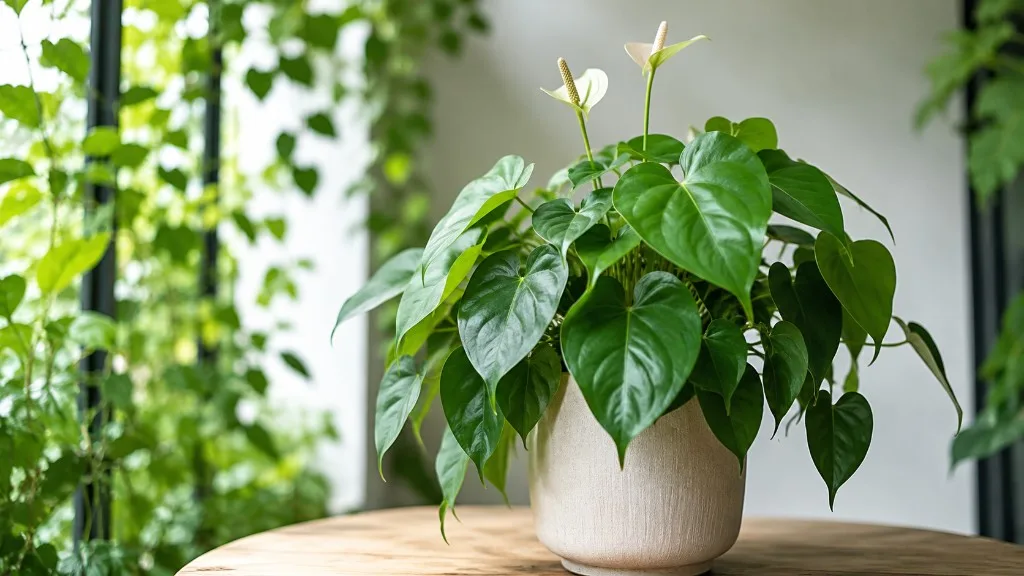
Grandma’s variegated Monstera Albo — rarity without the hype
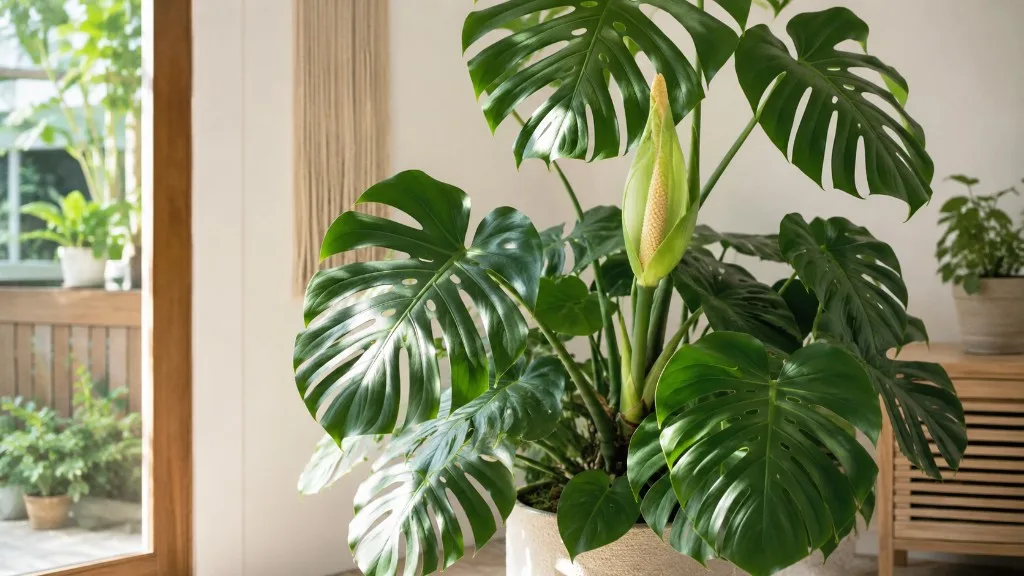
The Monstera Albo from Linnea’s grandmother is the emotional and financial anchor of the collection. Variegated Monstera deliciosa carries unstable white sectors that need brighter indirect light than solid-green monsteras (NC State Monstera deliciosa). RHS lists Monstera deliciosa ‘Variegata’ as a named variegated form requiring support and warm conditions (RHS plant details).
Market pricing swings wildly — unrooted cuttings often land in the low hundreds of dollars, while specimen plants with stable variegation climb higher depending on node count and seller reputation. Linnea inherited hers, which is the best-case scenario: no shipping stress, established root system, and decades of acclimation to the family home before studio transfer.
Care priorities over price tags:
- Light first — insufficient brightness reverts variegation or browns white tissue.
- Support early — heavy split leaves snap stems without a moss pole or plank.
- Humidity with airflow — stagnant humid corners invite fungal spots on white sectors.
- Backup propagation when the plant pushes healthy growth — variegated tissue is harder to replace than a pothos trim.
Building a collection beyond the nursery aisle
Linnea’s collection is not “everything from one cart.” That diversity is how large collections stay interesting — and how they survive budget reality.
Hurricane-rescued air plants and travel-safe propagation
After a hurricane knocked air plants (Tillandsia) from a tree onto her sister’s patio, Linnea gathered them, packed them in a carry-on, and flew home. Air plants survive travel when dry, ventilated, and cushioned — never sealed wet in plastic.
Post-rescue care:
- Soak 20–30 minutes weekly in room-temperature water, then dry upside down so water does not sit in the base.
- Bright indirect light — direct sun through glass scorches leaves quickly.
- Mount on wood or wire with airflow around the base — terrariums without circulation rot centers.
The lesson is not “wait for hurricanes.” It is that opportunistic collecting — trades, rescues, divisions — scales collections faster than retail alone, provided you quarantine newcomers two to three weeks away from heirlooms like Ophelia and the Albo.
Personality plants and the one that still fights back
Every experienced collector has a plant that matches their temperament and one that refuses cooperation no matter how much attention it gets.
Tradescantia fluminensis variegata — wild growth as a mirror
Linnea says she looks most like her variegated inch plant (Tradescantia fluminensis variegata) — “wild and crazy” trailing growth with cream-striped leaves that root at every node. Tradescantia is forgiving (bright indirect light, even moisture, quick recovery from pruning) and propagates from any stem segment, which makes it ideal for sharing with friends and filling gaps on shelves.
Treat tradescantia as the canary plant for irregular watering: limp stems mean dry; mushy bases mean rot. Trim leggy stems to keep the wild look intentional instead of chaotic.
Boston fern brown spots — humidity, water, and honest troubleshooting
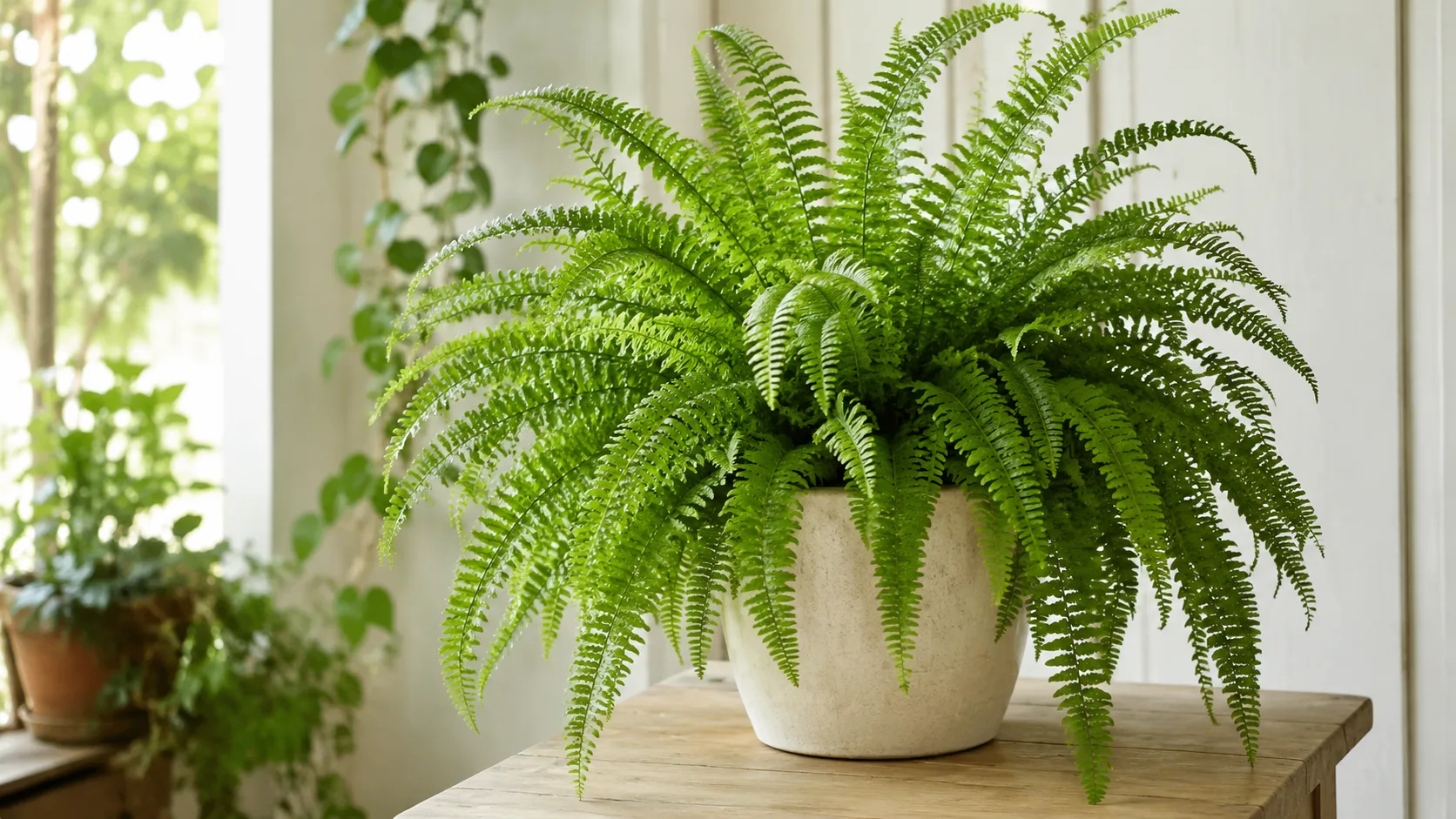
Linnea’s trouble plant is a Boston fern (Nephrolepis exaltata) — “I look at this plant differently and it just gets brown spots.” That frustration is common. Boston ferns want bright indirect light, 60–70°F, high humidity, and consistently moist soil that never dries completely (NC State Boston fern). They punish dry air, inconsistent watering, and hard tap water with crisped frond tips and spreading brown patches.
Decision checklist before you give up:
- Humidity — aim 50%+; group with Baby’s Tears, use a humidifier, or pebble trays with pots above water line.
- Water quality — flush monthly; salt buildup browns tips; let chlorinated water sit overnight if needed.
- Light — too much direct sun bleaches fronds; too little weakens growth.
- Pests — inspect undersides for scale and mealybugs masquerading as “mysterious spots.”
- Repot only when roots demand it — ferns dislike unnecessary root disturbance.
Sometimes the honest fix is accepting a fern as a seasonal plant in dry heating-season apartments and reviving it in humid summer months — not failure, just climate math.
Texture, detail, and why plants change how you see a room
Linnea’s favorite quality is texture, and she points to Baby’s Tears (Soleirolia soleirolii) as a top example — tiny leaves that read like living moss at shelf edges and terrarium rims. Texture-forward planting is why biophilic rooms feel calmer than flat green walls: the eye travels slowly.
Design takeaways you can apply without 140 plants:
- Mix leaf sizes — broad monstera beside fine fern fronds.
- Repeat pot materials — Linnea’s dark wood studio benefits from consistent ceramic or terracotta rather than random sale pots.
- Leave negative space — even dense collections need one resting surface so the brain parses depth.
- Schedule slow looking — Linnea’s “appreciate the little things” line is horticulturally sound: daily 60-second scans catch pests and drought before they scale.
Conclusion
Linnea Bast’s Philadelphia studio is more than a high plant count — it is a working argument for biophilic design done seriously: infrastructure where infrastructure belongs (the self-watering wall), heirlooms treated as irreplaceable (Ophelia, the Albo), and honest attention to the plants that still struggle (Boston fern). Episode 9 rewards viewers who pause on how the wall waters, why variegated rubber trees need brighter rooms, and what hurricane-rescued air plants teach about opportunistic collecting.
You do not need 140 plants to apply the lesson. Start with one grouped microclimate, one trailing showpiece, and one maintenance ritual — weekly wall or shelf checks — before scaling. The goal is not to replicate Linnea’s square footage; it is to build a space where noticing a new leaf feels worth stopping work for — because that attention, kept consistent, is what keeps large collections alive.