How to Grow and Care for Indian Hawthorn
Learn how to grow Indian hawthorn in sun and well-drained soil, choose a disease-resistant cultivar, water it as it establishes, and prune after flowering.
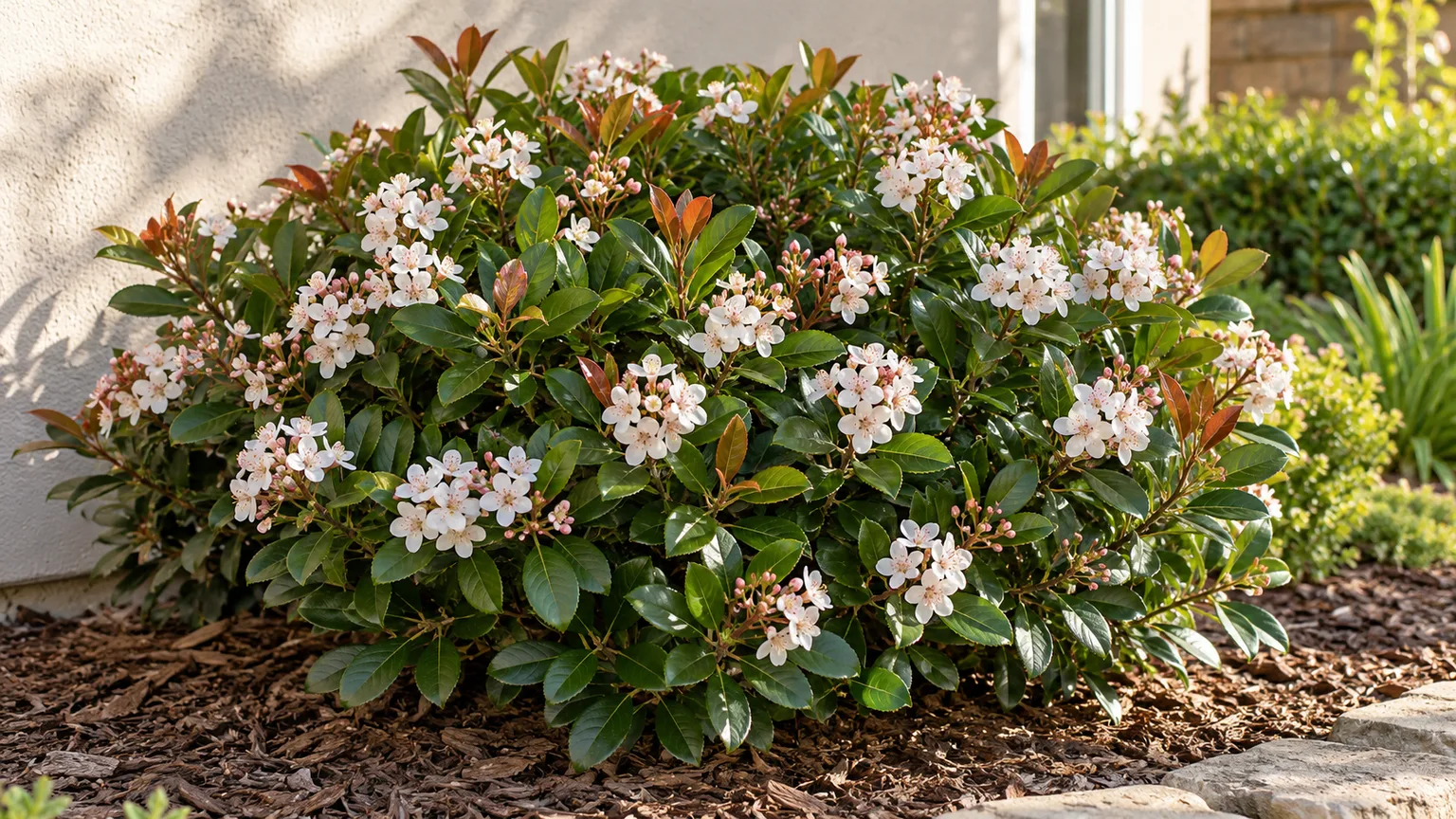
Indian hawthorn is a compact evergreen shrub with glossy leaves and clusters of white or pink spring flowers. It can suit a sunny foundation bed, a low informal hedge, or a large patio container, especially in warm regions, but its reputation as an easy-care plant depends on one detail: the site must drain well and let air move through the canopy. A damp, crowded planting can turn a dependable shrub into a recurring leaf-spot problem.
The name can also be confusing. The plant sold as Indian hawthorn may be the species Rhaphiolepis indica or a related hybrid, and mature size, flower color, cold tolerance, and disease resistance differ among cultivars. Before planting, confirm the nursery label and make the site fit the particular plant you bought.
Is Indian Hawthorn Right for Your Site?
Indian hawthorn is a broadleaf evergreen in the rose family, native to southern China and parts of Southeast Asia. It usually forms a dense, rounded shrub rather than a small tree; many standard forms reach roughly 4 to 6 feet tall and wide, while selected compact cultivars stay shorter. Its slow, compact habit makes it useful where a clipped hedge would require repeated shaping, but the plant still needs enough room for air to circulate.
It is best suited to warm gardens. North Carolina State Extension lists it for USDA hardiness zones 8 through 10 and notes that cold injury can occur during unusually harsh winters. A protected wall, sheltered courtyard, or container that can be moved to a protected location may improve the odds near the cool edge of its range, but these measures do not make a tender cultivar reliably hardy in a colder climate. Check the cultivar tag and local extension advice before planting a row that you expect to last for years.
UF/IFAS describes Indian hawthorn as drought- and salt-tolerant, making it a candidate for coastal landscapes, but those traits do not cancel the need for establishment watering and well-drained soil. Its evergreen leaves, flowers, and dark fruit offer several seasons of interest. North Carolina State Extension and UF/IFAS Gardening Solutions describe its climate range and landscape uses.
Check the Plant Label Before You Buy
Ask whether the plant is Rhaphiolepis indica, a named cultivar of that species, or a hybrid such as Rhaphiolepis × delacourii. NC State Extension notes that plants may be sold under the species name even though the nursery stock is a hybrid between R. indica and R. umbellata. That distinction matters because two shrubs sold under similar common names may not mature at the same height, flower at the same time, or respond equally well to local leaf-spot pressure.
Look for the cultivar name, expected mature height and width, flower color, and any disease-resistance information on the tag. If the label gives only “Indian hawthorn,” ask the nursery for the cultivar and use the plant’s actual mature width when planning a hedge. Photographs online can help identify a general flower and leaf type, but they cannot confirm a cultivar when several selections look alike.
Give It Sun and a Warm, Suitable Climate
Choose a site in full sun for the best flowering and a more open, vigorous canopy. A practical target is at least six hours of direct sun, with more light helpful in humid climates where foliage stays wet after rain. Indian hawthorn tolerates light shade, but a shaded shrub may bloom less, stretch toward light, and dry more slowly after rain. Those conditions also make leaf-spot disease harder to manage.
In very hot regions, light afternoon shade may ease heat stress, but persistent shade usually means fewer flowers and a looser shrub. Shelter it from drying winter winds without trapping it in a damp corner.
Cold hardiness is cultivar- and site-sensitive. Extension references commonly place Indian hawthorn in zones 8 to 10, while the RHS advises growing the species outdoors against a warm, sheltered wall in mild areas and under glass in cooler climates. Treat that difference as a reminder to use local conditions rather than one absolute temperature claim: winter lows, wind exposure, drainage, and the plant’s exact identity all affect survival. In a marginal location, try one plant first instead of installing an entire hedge. The RHS plant profile gives a useful example of the shelter this plant needs in cooler regions.
Prioritize Drainage Over a Perfect Soil Recipe
Indian hawthorn grows in a range of soil textures and tolerates acidic, neutral, or alkaline conditions, but the soil must drain. The roots need oxygen as well as water; saturated soil deprives them of air and creates conditions for decline. Do not use a fixed pH target or add lime simply because the shrub is called a hawthorn. Test the soil before making a pH correction, and correct only a measured problem.
Check drainage before digging a planting hole. After a soaking rain, look for standing water or a spot that remains slick and saturated long after nearby ground has drained. If water sits there, choose a different location, improve drainage across a broad bed, or plant on a raised mound. A pocket of amended soil surrounded by dense clay can act like a bowl, so mixing a small amount of compost into the hole is not a cure for a wet site.
Where the soil drains well but is compacted or low in organic matter, loosen the bed broadly and mix in modest organic matter before planting. Keep the planting area consistent with the surrounding grade so rainwater can move away from the crown. The RHS lists chalk, clay, loam, and sand as possible soil types, while still specifying moist but well-drained conditions; that is a useful distinction between soil texture and drainage.
Plant at the Right Depth and Space for Mature Size
Plant in a mild stretch of weather when you can keep the root ball evenly moist, rather than during peak heat, drought, or a cold snap. In warm-winter areas, early fall can give roots time to settle before heat returns; in colder parts of the suitable range, spring planting gives the shrub a longer growing season before winter. If the plant is root-bound in its nursery pot, gently loosen circling outer roots so they grow into the bed instead of continuing around the root ball.
Set the top of the root ball level with, or just slightly above, the surrounding soil. Backfill with the site soil, firm it gently to remove large air pockets, and water slowly so the root ball and nearby soil become moist together. Avoid burying the trunk flare or piling mulch over the crown. A two- to three-inch mulch layer can reduce rapid moisture swings, but leave an open ring around the stems.
Plan spacing from the cultivar’s expected mature width, not from how small the nursery plants look today. UF/IFAS recommends at least 18 inches between plants to promote air circulation, but that is a minimum reference, not a universal hedge measurement for every form. If a cultivar matures 4 to 6 feet wide, planting it 18 inches from its neighbor will create a tightly interlocked row that shades inner leaves and holds moisture. For a formal-looking border, choose a compact cultivar and calculate center-to-center distance from its tag; for an informal screen, leave enough room for each shrub’s natural mound.
Keep mature branches clear of windows, gutters, and walkways; a shrub squeezed against a wall is harder to maintain and ventilate.
Water by Establishment Stage, Not a Calendar
During the first growing season, water deeply enough to moisten the nursery root ball and the surrounding soil, then let the surface begin to dry before watering again. The interval depends on rainfall, temperature, wind, soil texture, and container size, so a fixed weekly schedule can leave one plant thirsty and another waterlogged. Check the soil near the root ball with your finger or a trowel; if it is still damp several inches down, wait.
Check more often in hot or windy weather, and water slowly at the base. Nursery media can dry at a different rate from surrounding soil, so check the root ball itself rather than assuming the whole bed has the same moisture.
Once established, Indian hawthorn has useful drought tolerance, but drought tolerant does not mean no-water. A mature shrub may need supplemental water during a long hot, dry spell, especially in sandy soil or beside pavement that reflects heat. Water the root zone deeply, then allow it to drain; frequent shallow splashes encourage shallow roots and keep the foliage wet. Containers dry faster and need more frequent checks than shrubs in the ground.
Feed Lightly and Mulch Without Crowding the Stems
Indian hawthorn is not a plant that needs a heavy feeding routine to flower. If it is growing steadily in reasonably fertile soil, start with no fertilizer and observe the new growth. If a soil test indicates a deficiency, or the shrub shows consistently weak growth after you have ruled out poor drainage, inadequate light, root damage, or disease, choose a balanced product and follow its label rather than guessing at a dose.
For a garden-grown shrub that does need feeding, apply fertilizer in spring while growth is beginning and keep granules off the stems and foliage. Avoid late-season nitrogen in areas with winter cold because a flush of soft growth may not harden before freezing weather. RHS gives more frequent liquid feeding guidance for plants grown under glass; that greenhouse routine should not be transferred automatically to an established outdoor shrub.
Mulch helps buffer soil moisture and temperature, but too much mulch against the stems can keep the crown damp and hide problems. Maintain a shallow, even layer over the root zone and replenish it as it decomposes. If the ground stays wet beneath the mulch, pull it back and reassess drainage and irrigation instead of adding another layer.
Understand the Flower, Foliage, and Fruit Cycle
The evergreen leaves are leathery and glossy, often emerging with a bronze or reddish cast before maturing to deep green. That temporary color on young growth is normal and should not be confused with cold damage or a disease spot. In spring or early summer, depending on climate, clusters of small, fragrant white or pink flowers appear at branch tips. A University of North Florida Botanical Garden profile notes that local plants in its Jacksonville landscape flower in late February and early March, while the RHS describes spring to early summer flowering in its cooler British climate; season shifts with geography.
Dark blue-black fruits follow the flowers and may persist into winter. Birds and small mammals can use the fruit, so consider whether you want fruit-bearing plants near paths or hard surfaces where fallen berries would be untidy. Some cultivars are selected for low fertility and produce few fruits; this can reduce seed production but also changes the shrub’s wildlife value. Do not assume every cultivar has the same fruit display just because its label uses the same common name.
If a shrub has healthy foliage but flowers sparsely, first check the amount of direct sun and whether it was pruned before bloom. A recently planted shrub may also put energy into roots before it makes a showy flower crop. Avoid using fertilizer as the first fix: more nitrogen will not compensate for insufficient light or flower buds removed at the wrong time.
Prune After Bloom and Keep the Natural Mound
Most Indian hawthorn needs little routine pruning because it naturally forms a rounded, dense shrub. If the plant is in the right place, a few selective cuts each year may be enough to remove damaged branches, open a crowded center, or correct a stem that is growing across a path. A hedge can be kept tidier with light shaping, but frequent shearing sacrifices flowers and creates a dense outer shell that blocks light and airflow from the interior.
For size or shape, wait until flowering has finished. Indian hawthorn flowers on older growth, and pruning after bloom gives the shrub more time to produce the stems that will carry its next flowers. Gardening Know How and Plant Addicts both recommend post-flowering pruning for shaping; Plant Addicts also notes that next season’s flower buds develop on previous-season growth. If you prune in late summer or fall, you may remove buds and stimulate tender growth that has little time to mature before cold weather.
Use sharp hand pruners for individual stems instead of trimming the whole plant into a tight box. Make a heading cut just above a healthy outward-facing bud when shortening a branch, or thin an entire branch back to its point of origin when the center is crowded. Avoid leaving long stubs, cutting flush against the trunk, or removing a large share of the canopy in one session. If the shrub is badly overgrown, correct it over more than one season unless an arborist or local extension specialist recommends a different approach for the plant’s condition.
Make Cleanup Cuts Promptly
Dead, broken, or clearly diseased stems can be removed as soon as you notice them; you do not need to wait for the bloom window to clear a safety or disease issue. Cut below the damaged section to healthy wood, and if discoloration continues through the cut, keep going until the wood looks sound. Dispose of diseased leaves and branches rather than leaving them under the shrub.
When you suspect a spreading disease, clean pruner blades between cuts and after the job. A household disinfectant or rubbing alcohol can be used according to its label, with tools wiped and dried afterward. Make the least number of cuts needed to remove affected material, then improve sunlight and airflow; pruning alone will not fix a shrub planted in permanently damp shade.
Choose a Cultivar for Size and Disease Pressure
Cultivar choice is often more important than a generic care tip. A compact selection can fit a low border without repeated shearing, while a larger form may suit a screen; a cultivar with documented resistance can be a better choice in a humid region where leaf spot recurs. Ask the nursery for the exact cultivar name and its expected mature dimensions, and verify whether the plant is a species form or hybrid before buying several.
A few examples illustrate the range, but availability and performance vary by region:
| Selection | Useful trait to confirm | Planning note |
|---|---|---|
| ’Clara’ | White flowers; NC State lists moderate leaf-spot resistance | Allow room for its rounded mature form |
| ’Snow White’ | Dwarf form; NC State lists good leaf-spot resistance | Useful where a lower shrub is wanted |
| ’Springtime’ | Compact habit, about 3 feet in the NC State profile | Confirm local size and bloom timing |
| ’Ballerina’ | Prostrate dwarf form in the NC State profile | Better for a low, spreading effect than a vertical screen |
| ’Cosmic White’ or ‘Cosmic Pink’ | UF/IFAS lists low fertility and few fruits | A fit if fruit set or seed production is not your priority |
Disease resistance is relative, not immunity. A resistant cultivar can still develop leaf spots when crowded, shaded, or repeatedly wetted, and a less resistant shrub may remain healthy in a sunny, airy site. If you have lost several Indian hawthorns to recurring defoliation, do not replace them with an unnamed plant from the same batch; ask for a cultivar with local performance information and inspect the leaves before purchase. NC State Extension’s cultivar notes and UF/IFAS’s Indian hawthorn profile can help narrow the choice.
Grow Indian Hawthorn in a Container With a Winter Plan
A container makes sense when your winter is too cold for dependable in-ground growing or when you need to control the shrub’s size. Use a substantial pot with several unobstructed drainage holes, a free-draining container mix, and a sunny outdoor position. A small pot dries rapidly and can restrict roots, so choose a container with room for several seasons of growth and repot before roots form a dense circling mass.
Container soil should stay evenly moist during active growth but never remain saturated. Check it more often during heat and wind, and water until excess drains from the bottom; empty any outer saucer so the roots do not sit in water. A potted shrub can need water even when the garden bed beside it is still moist. In hot climates, light afternoon shade can reduce pot heat if the shrub still receives enough direct sun to flower.
Plan overwintering before the first freeze. In a region outside the shrub’s reliable outdoor range, move the pot to a bright, protected, cool location or a suitable greenhouse rather than leaving the root ball exposed to repeated hard freezes. Reduce watering when the plant is growing slowly, but do not let the container dry to dust. In a sheltered zone 8 location, a pot may still need more protection than an in-ground plant because its roots have less insulation.
Prevent and Diagnose Leaf Spot
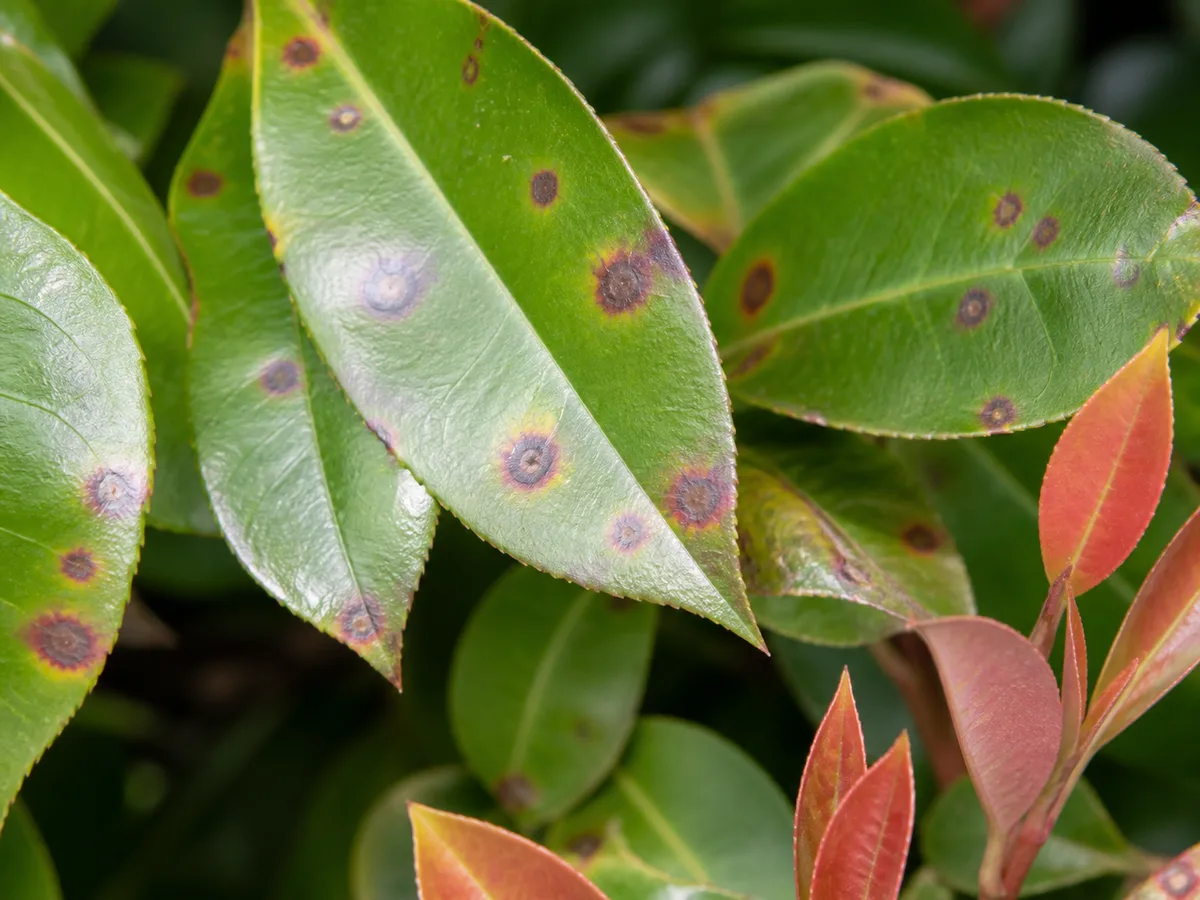
Leaf spot is the main disease issue gardeners need to plan around. NC State Extension identifies Entomosporium leaf spot, caused by the fungus Entomosporium mespili, as a common problem; small red spots can appear on both leaf surfaces, enlarge, and contribute to leaf drop. The risk increases when the canopy stays wet, air movement is poor, or plants are growing in shade during rainy, humid weather. Similar symptoms on another shrub can have a different cause, so look at the pattern and growing conditions before treating.
Start with prevention: plant in sun, give shrubs room for mature growth, and water at soil level rather than using overhead sprinklers. Remove fallen diseased leaves and avoid pushing growth with excess fertilizer. UF/IFAS recommends spacing plants for airflow, and NC State Extension likewise emphasizes good air circulation, full sun, and drip irrigation as ways to limit leaf-spot pressure.
If spots are already present, compare new leaves with older ones and note whether the shrub is losing foliage. Bronzy young leaves are normal; round reddish or brown lesions that spread across mature leaves are more consistent with leaf spot. A few old damaged leaves do not automatically mean the entire plant is dying, but repeated defoliation calls for a closer diagnosis and a change in site conditions. Photograph both sides of affected leaves and ask a local extension office to confirm the problem before choosing a treatment.
What Entomosporium Leaf Spot Looks Like
Early lesions tend to be small and red, purple, or brown, often with darker margins; several can merge into larger damaged areas. The plant may shed spotted leaves, especially after prolonged wet weather. The disease is easier to manage when you interrupt the cycle early by keeping foliage dry and clearing leaf litter, rather than waiting until the shrub has thinned substantially.
Do not respond by aggressively shearing the whole shrub while it is wet or by applying a fungicide on a guess. Pruning a saturated canopy can spread contaminated material, and a fungicide may not correct the underlying shade, crowding, or irrigation pattern. If disease returns each spring or fall, inspect the irrigation system, remove nearby growth that blocks airflow where practical, and consider replacing a highly susceptible plant with a resistant cultivar.
Use a fungicide only if an extension diagnosis supports it and the product label lists the plant and disease. Follow the label; spraying cannot reverse existing damage or compensate for a persistently wet, crowded site.
Check for Pests, Cold Injury, and Poor Drainage
Aphids and scale insects may feed on foliage or stems; scale can produce sticky honeydew that supports dark sooty mold. Inspect leaf undersides and woody stems before blaming a fungal leaf spot, since pest signs and circular lesions call for different responses. Avoid routine broad-spectrum spraying, which can affect beneficial insects and may not reach armored scale effectively; get the pest identified and consult extension guidance before applying an insecticide or horticultural oil. NC State Extension lists aphids and scale among the shrub’s common insect problems, and UF/IFAS also notes scale and sooty mold.
Winter injury often appears after a cold spell as browned or blackened foliage, split or damaged stems, or dieback on the exposed side of the plant. Wait until new growth begins before removing wood that may still be alive; scratch a small area of bark to check for green tissue underneath. Protect a container from severe cold and shelter outdoor shrubs from drying winds, but do not wrap foliage so tightly that it stays wet.
If leaves yellow broadly or the plant wilts despite damp soil, check drainage before adding water or fertilizer. Root stress, prolonged saturation, heat, and a transplant that has not established can all look like “thirst” from a distance. Feel the soil at root depth, inspect the crown, and change one condition at a time so you can tell whether the shrub improves.
Propagate From Semi-Ripe Cuttings
Semi-ripe cuttings are the most reliable home method when you want a new plant that matches a named cultivar. Select a healthy, non-flowering shoot that has begun to firm but is still flexible, and take several cuttings because not every one will root. The Royal Horticultural Society lists semi-ripe cuttings as a propagation method for Rhaphiolepis indica; follow a local propagation calendar because the best stage arrives at different times in different climates.
Use a clean cutting tool and a small pot filled with a sterile, free-draining propagation medium. Remove leaves from the lower part of each cutting, insert it into the medium, and keep the mix lightly moist rather than waterlogged. Bright indirect light and steady humidity reduce stress while roots form; once a cutting resists a gentle tug and begins making new growth, acclimate it gradually before moving it into stronger sun.
Seed is less predictable if the goal is to reproduce a cultivar exactly. A seedling may differ in size, flower color, fruiting, or disease resistance from its parent, so buy or root a named cultivar when those traits matter. Keep new plants sheltered while young, then move them outdoors in mild weather and establish them with the same careful watering and drainage used for nursery shrubs. The RHS propagation notes support semi-ripe cuttings as the practical starting point.
Conclusion
Choose a warm, sunny, well-drained site with room for the mature shrub, then water by soil moisture while it establishes. Feed only when the soil or the plant’s growth gives you a reason; a routine spray or heavy pruning cannot make up for the wrong site.
Before planting, confirm the cultivar, mature width, and local cold tolerance. Shape it after flowering, and treat recurring leaf spots as a signal to improve airflow, irrigation, or cultivar choice.