Is Coal Ash Good for Plants? A Safety-First Guide
Coal ash can change soil pH and carry contaminants. Learn how to identify it, protect food gardens, test soil, and choose safer amendments.
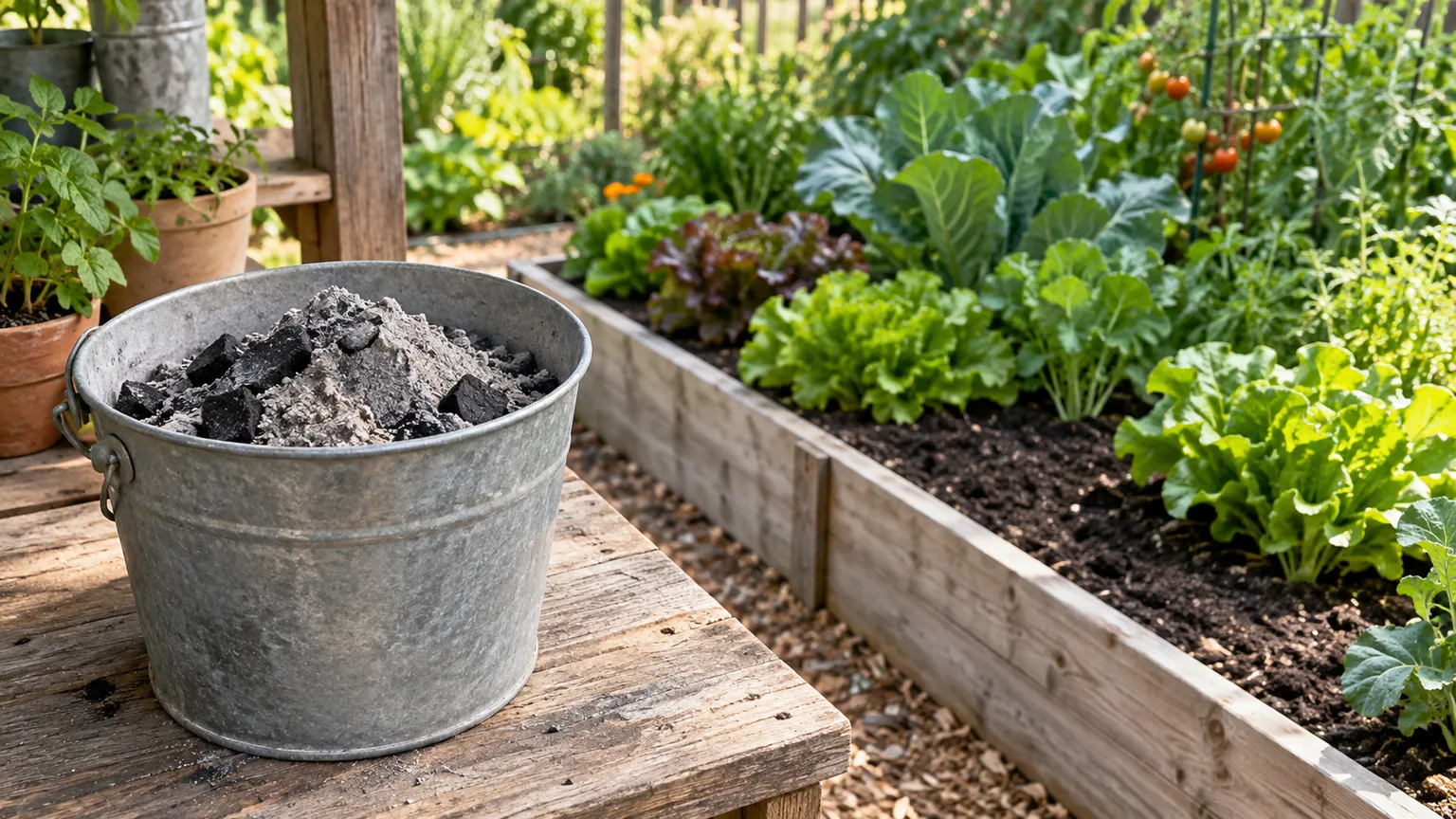
If the ash came from burning coal, do not spread it on garden soil. Coal ash is not the same material as clean fireplace wood ash, and a gray color or high pH cannot tell you whether it contains contaminants that should stay out of a food garden.
The safest home-gardening decision is to keep coal ash out of beds, pots, compost, lawns, and tree rings. The U.S. Environmental Protection Agency’s Coal Ash Rule addresses coal combustion residuals as a regulated waste stream because coal ash can contain contaminants associated with serious health effects. That is a very different starting point from the extension guidance written for known, clean wood ash.
The Short Answer: Keep Coal Ash Out of Routine Garden Use
Coal ash is not a dependable fertilizer for a home garden. It may contain calcium, iron, magnesium, or other mineral components, but those possible nutrients do not outweigh the uncertainty about what else is present, how much is present, or how the material will behave after rain and repeated applications.
The practical answer is especially firm for a vegetable or herb bed: do not use coal ash as a soil amendment unless a qualified environmental or soil professional has evaluated the specific material and site. A routine garden soil test is useful, but a basic pH-and-nutrients test alone is not a clearance certificate for coal ash.
Coal combustion residues vary with the coal source, combustion process, pollution-control equipment, and the way the ash was collected. Industrial terminology includes fly ash, bottom ash, boiler slag, and other coal-combustion residuals. Household coal stoves may produce a mixture of fine powder, clinkers, and unburned pieces, but the lack of a uniform product label makes guessing even less useful.
This is why “it is natural” or “plants need minerals” is not a sufficient safety argument. Garden soil is an exposed growing medium. People touch it, children play near it, pets dig in it, rain moves through it, and edible crops can contact or take up elements from it. Avoiding an avoidable contaminant is a better use of a gardener’s time than trying to rescue a free input.
Coal Ash, Wood Ash, and Charcoal Ash Are Not Interchangeable
The word ash describes a residue, not a single product. What was burned determines what the residue might contain, and that source matters more than whether the ash looks fine, white, gray, or black.
| Material | What was burned | Useful property that may be present | Home-garden decision |
|---|---|---|---|
| Coal ash | Mined coal | Mineral content and alkalinity may vary | Keep out of soil and compost unless a qualified professional directs a site-specific use |
| Clean wood ash | Known, untreated natural wood | Often supplies calcium and potassium and raises pH | Consider only after a soil test and only within local extension guidance |
| Charcoal or briquette ash | Charcoal, often with binders or other manufacturing ingredients | Chemistry is not the same as fireplace ash | Do not treat it as clean wood ash; follow the product and local waste guidance |
| Unknown or mixed ash | Trash, painted wood, treated wood, coal, or mixed fuel | Cannot be inferred from appearance | Keep out of the garden |
What Changes Between the Materials
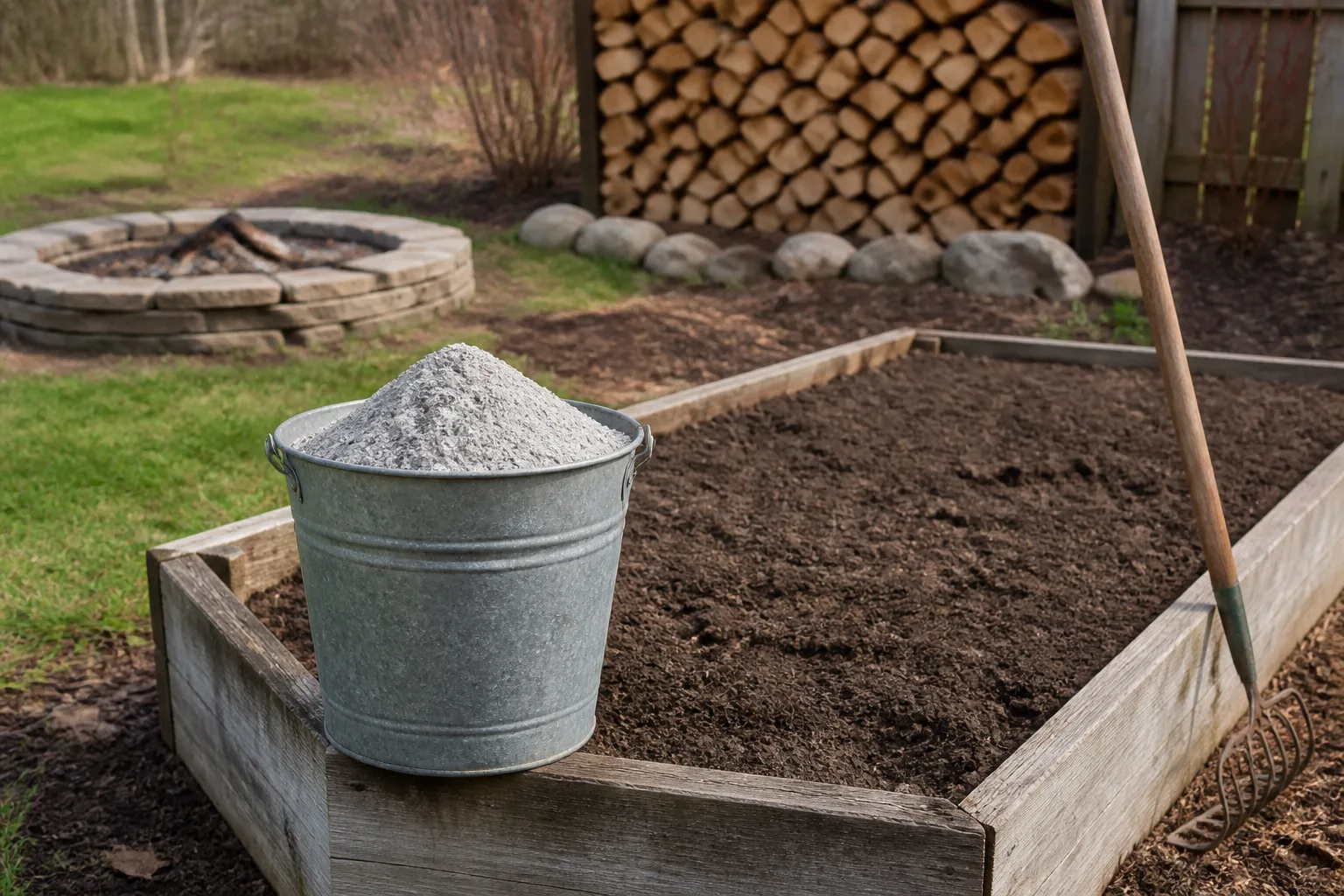
Clean wood ash gets a more useful recommendation because its source can be controlled: untreated wood burned without trash, plastics, painted boards, or treated lumber. Even then, wood ash is alkaline, its nutrient content changes with the wood and burn conditions, and it is easy to overapply. UNH Extension’s guide to wood ash describes wood ash as an agricultural amendment that can add nutrients and raise soil pH; that guidance should not be transferred to coal ash.
Charcoal ash causes a common naming error. A grill residue may come from lump charcoal made from wood, charcoal briquettes, lighter fluid, or a blend of manufactured ingredients. That does not make it equivalent to dry ash from a clean woodstove. If you cannot identify exactly what was burned and whether the residue contains additives, do not add it to soil where food, children, or pets are involved.
Ash from painted, stained, pressure-treated, glued, or demolished wood is also not clean wood ash. Nor is residue from burned household waste. A good rule is simple: if the fuel was not known and untreated, the ash belongs in the waste-disposal conversation, not in the garden-amendment conversation.
Why pH Is Not a Safety Test
Ash can change soil acidity, but pH answers only one narrow question: how acidic or alkaline the soil solution is at the time of testing. It does not identify arsenic, lead, mercury, cadmium, selenium, chromium, or other contaminants.
That distinction matters because a contaminated soil can have a perfectly ordinary pH. Conversely, soil can have a safe metals result and still be harmed by too much alkaline material. Treat pH as a plant-availability and amendment question, not as a contamination screen.
Alkalinity Helps Only When Soil Actually Needs It
Most garden plants prefer a particular pH range, and the right target depends on the crop. Many vegetables perform well in mildly acidic to near-neutral soil, while blueberries, azaleas, rhododendrons, and some other plants need more acidic conditions. Raising pH just because ash is available can make a suitable bed less suitable.
High pH can alter nutrient availability and make some nutrients harder for roots to access. It can also change how metals interact with soil particles, so a pH change is not a universal “lock up the bad stuff” solution. The relationship between pH, soil type, organic matter, and metal availability is complicated enough that a home test strip cannot settle it.
For clean wood ash, UNH Extension’s managing-wood-ashes guidance gives a conservative annual amount for most lawns and garden areas and warns against using it around acid-loving plants. That number is a wood-ash guideline, not a safe application rate for coal ash. There is no responsible universal handful-per-square-foot recipe for an unidentified coal residue.
Soluble Salts Can Stress Roots
Salinity is a separate problem from pH. Dissolved salts increase the soil’s electrical conductivity, often shortened to EC. When the salt concentration around roots becomes too high, plants have a harder time taking up water even when the bed looks moist. Seeds may germinate poorly, young roots may be injured, and leaf margins can scorch.
Fine ash can release soluble compounds quickly after watering or rain. Repeated light sprinkling may look harmless while gradually adding salts and alkaline material to the same root zone. Gardening Know How’s wood-ash overview describes the lye and salt concern with larger amounts of wood ash; the lesson for coal ash is more cautious because the source material brings an additional contaminant question.
Do not try to solve suspected ash salinity with a homemade flush, vinegar, or a heavy watering schedule. Water can move dissolved material deeper into soil or toward a drain, ditch, pond, or groundwater. Test first, keep runoff out of waterways, and get site-specific direction if a large amount was applied.
Contaminants and Exposure Pathways Matter More in Food Gardens
Coal ash can contain trace elements such as arsenic, lead, mercury, cadmium, selenium, and chromium. The exact profile is not predictable from a photograph or a pH reading. The EPA’s coal-ash materials and a PubMed-indexed review of heavy metals in soil, plants, and the human food chain both support treating heavy-metal contamination as a soil, plant, water, and human-exposure issue rather than as a simple fertilizer question.
The risk is not limited to eating a tomato grown in the bed. Dry particles can become airborne when swept, shoveled, tilled, or blown. Soil dust can be swallowed from dirty hands or paws. Ash can contact eyes or skin, and rain can carry soluble material away from the original application area. Roots, leafy surfaces, and soil stuck to harvested produce create different routes of exposure.
Edible Crops Need the Strictest Standard
Do not plant, harvest, or eat from a visibly ash-affected bed until the material and soil have been evaluated. This is particularly important for leafy greens and root crops, which have close contact with soil, but it is not a reason to assume fruiting crops are automatically protected. Uptake depends on the element, concentration, soil chemistry, plant species, and growing conditions.
If a child’s play area, a pet run, or a water-well area is involved, treat the situation as an environmental-health question, not just a gardening experiment. A state or county extension office can help identify the appropriate soil laboratory; a local environmental-health or solid-waste office can advise on cleanup and disposal. For a large pile, repeated dumping, a coal-burning property, or ash near a drain or stream, seek professional direction before moving it.
What to Do If Coal Ash Is Already in the Bed
Do not panic, but do stop treating the ash as a fertilizer. The next action depends on how much was used, whether it is still visible, what was burned, where it landed, and whether food has already been grown there.
Stop Adding It and Document the Source
Write down what was burned, roughly how much ash was used, when it was applied, whether it was mixed into the soil, and which beds or containers received it. Photograph the area before making changes. If the ash came from a stove, ask what fuel was used and whether coal was mixed with wood or household waste.
Keep children and pets away from loose ash. Avoid dry sweeping, leaf-blowing, or aggressive tilling that can turn settled particles into dust. Do not mix the ash into compost, move it to another bed, or spread it thinly over the lawn to make the original pile disappear. Those actions change the location of the material without answering the safety question.
If a small visible amount is on a hard surface, use the local solid-waste authority’s instructions for handling it. If it is in soil, do not improvise a “detox” treatment. A professional may recommend different sampling or removal steps depending on the amount and the site, and the wrong cleanup can increase dust or runoff.
Test Before Planting or Eating From the Area
A laboratory soil test is the next sensible step for an affected bed. Tell the lab that coal ash may be present; do not order only a standard fertility test and assume the report covers contaminants. Ask which metals panel is appropriate, whether the lab measures EC or soluble salts, how many samples are needed, and how to avoid cross-contamination while sampling.
Until the results are interpreted, keep the area out of food production. If edible crops have already been harvested, do not assume washing removes all possible exposure because contamination can involve plant tissue as well as surface soil. Ask your extension or environmental-health contact how to handle the specific history rather than relying on a generic internet cleanup recipe.
How to Request a Useful Soil Test
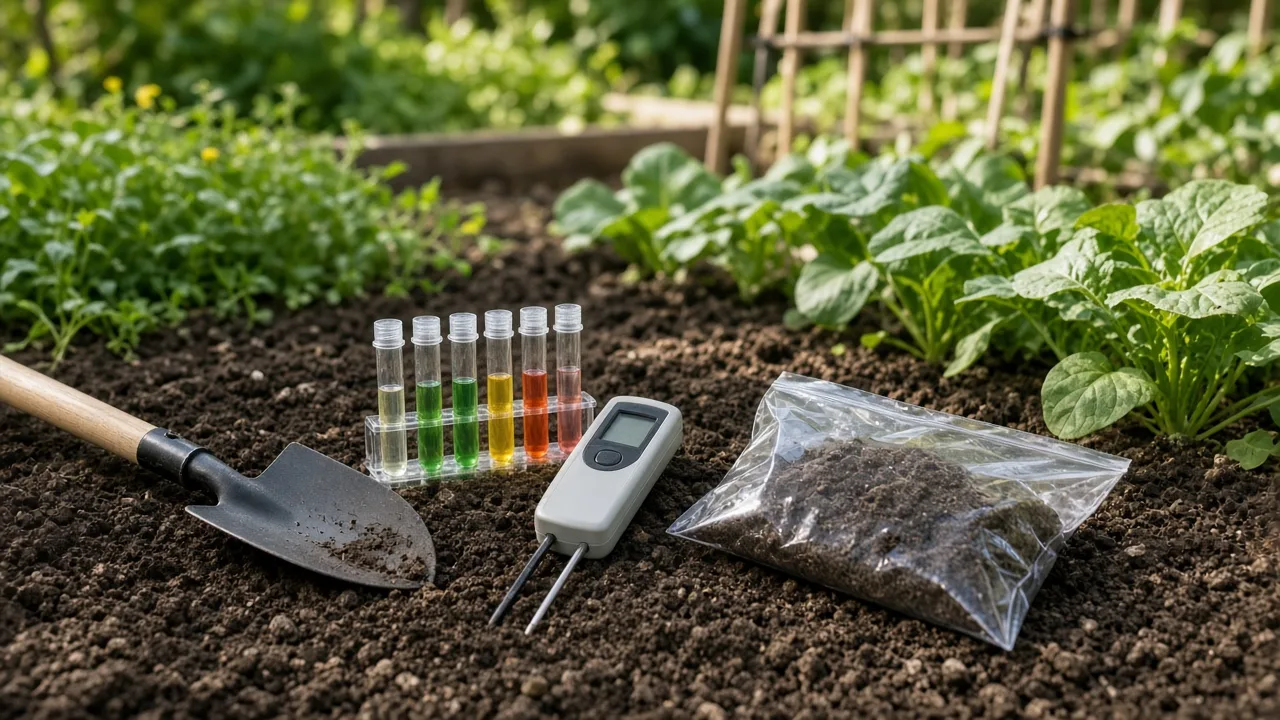
The sampling plan should match the event. Do not blend an ash-affected patch with a clean part of the yard just to produce an average number. Ask for separate samples from each distinct area: the visibly affected bed, the likely runoff edge, and a nearby comparison area if the lab or extension office recommends one.
Penn State Extension’s soil-testing guidance explains that a soil test can measure pH, organic matter, and plant-available nutrients, and that garden samples are commonly collected from 6 to 8 inches deep across multiple random locations. For a suspected contamination event, follow the laboratory’s instructions instead of blindly applying a standard sampling pattern. Surface ash, shallow soil, and deeper soil may answer different questions.
When you contact the lab, ask for a report that can address:
- pH and buffer information, to show whether acidity or alkalinity needs correction.
- Plant-available nutrients, including phosphorus, potassium, calcium, and magnesium, so you do not add an amendment the soil already has enough of.
- Electrical conductivity or soluble salts, when the lab offers it, to check for salt stress.
- A metals panel, selected with the lab or extension office. Ask specifically about arsenic and lead, and whether cadmium, mercury, selenium, chromium, or other elements should be included for the fuel and site history.
A clean result from one small sample does not automatically certify a whole property. Soil is uneven, ash may have been dumped in a concentrated spot, and water movement can create a plume or edge. If the amount is large or the site has a history of coal storage or combustion, a qualified environmental professional may be more appropriate than a mail-in garden kit.
Safer Amendments for the Problem You Actually Have
Ash is often proposed because a gardener is trying to solve one of three problems: acidic soil, low nutrients, or poor structure. Those problems have more predictable tools. Fixing the diagnosis first is safer than choosing an amendment by what is already sitting beside the stove.
Low pH: Use a Tested Liming Material
If a soil report says the bed is too acidic, use an agricultural liming material at the rate recommended for that soil and crop. Lime is manufactured and labeled for that job, while ash varies by source and has no dependable neutralizing value from one household batch to the next.
Do not add lime and ash together. Both can raise pH, and applying them without a test makes it difficult to know which one changed the soil. Recheck according to the lab or extension recommendation; soil chemistry changes over time rather than instantly after a handful is scattered.
If the bed is planted with blueberries, azaleas, rhododendrons, or another acid-loving crop, do not raise pH just because a test result is “low” compared with a general vegetable target. Interpret the result for the plant you are growing.
Poor Structure: Use Finished Compost
Coal ash is not compost and does not build organic matter. If soil is compacted, sandy, droughty, or slow to drain, finished compost, leaf mold, aged organic matter, mulch, and better irrigation habits are the tools that address structure and water-holding capacity.
Compost works by adding stable organic material and supporting soil life; it is not a way to neutralize coal ash. Do not hide ash in the compost pile, and do not assume that microbes make metals disappear. The Garden Planner’s practical wood-ash guidance notes that even clean wood ash should be added to compost sparingly because its alkalinity can affect compost organisms. Coal ash deserves a stricter no.
Low Nutrients: Fertilize From Test Results
If the soil is genuinely short of a nutrient, use a labeled fertilizer or amendment that supplies that nutrient in a known form and amount. A complete fertilizer is not automatically better; excess phosphorus or potassium can create a new imbalance and may move off-site with runoff.
Match the input to the crop, soil test, and season. Organic fertilizers can be useful, but “organic” does not mean free of all risks or appropriate at any dose. Finished compost, aged manure from a trusted source, a single-nutrient amendment, or a balanced product may each fit different results. What matters is a measured need and a controlled application.
Can Coal Ash Go in Compost or Around Trees?
No. Composting coal ash does not turn unknown minerals into clean organic matter, and placing it around an ornamental tree does not remove exposure, runoff, or root-contact concerns. Tree rings, shrub borders, lawns, and empty beds are still part of the home environment, especially where children and pets play.
Do not use coal ash as a slug barrier, deodorizer, mulch ingredient, potting-mix additive, driveway-edge treatment, or fill material. The same dust and dissolved-salt problems remain, and moving the ash to a less visible spot can make later identification harder.
Clean wood ash is a separate case, not an exception that rescues coal ash. Extension sources and established gardening publications describe limited wood-ash use after soil testing, with clear warnings about acid-loving plants, excess alkalinity, salts, and application rates. Use those directions only when the fuel source is known and clean.
Common Mistakes and a Simple Decision Rule
The most common mistakes are all shortcuts around identification or testing:
- Using color as proof. White or gray ash can come from different fuels and burn conditions.
- Calling charcoal coal. A barbecue residue is not automatically clean fireplace ash, and coal ash is not charcoal ash.
- Treating pH as a contaminant test. A pH number cannot detect arsenic or lead.
- Adding a little every week. Small applications accumulate, especially in one root zone.
- Putting it in compost. Compost can dilute a material without making it safe.
- Planting food while waiting. A healthy-looking crop does not prove that the soil is suitable for eating.
- Trying vinegar or excess water. These can create new chemistry or move contaminants without removing them.
- Spreading it on the lawn. A larger area is still an exposed soil surface, not a disposal system.
Use this decision rule: coal or unknown fuel means do not use it; clean, untreated wood means test the soil and follow extension guidance; a known soil problem means choose the labeled amendment designed for that problem. If the ash is already in the ground, pause food production, document the site, and ask a qualified soil or environmental professional what testing and cleanup fit the scale.
Conclusion
Coal ash is not a garden fertilizer worth guessing about. Its possible mineral benefits are outweighed by variable chemistry, soluble salts, pH effects, dust, runoff, and the possibility of contaminants such as arsenic, lead, mercury, cadmium, selenium, or chromium.
Keep coal ash and unknown mixed ash out of soil and compost. Separate it from clean wood ash and charcoal residue, test any affected soil with the right laboratory panel, and use agricultural lime, finished compost, or a labeled fertilizer only when the soil report shows that specific amendment is needed. That approach protects the garden’s productivity and the people, pets, water, and food connected to it.