Is It Too Late to Prune Tomatoes? What to Cut
Learn how to prune tomatoes late in the season without sacrificing fruit: compare plant type, frost timing, foliage, flowers, and healthy growth.
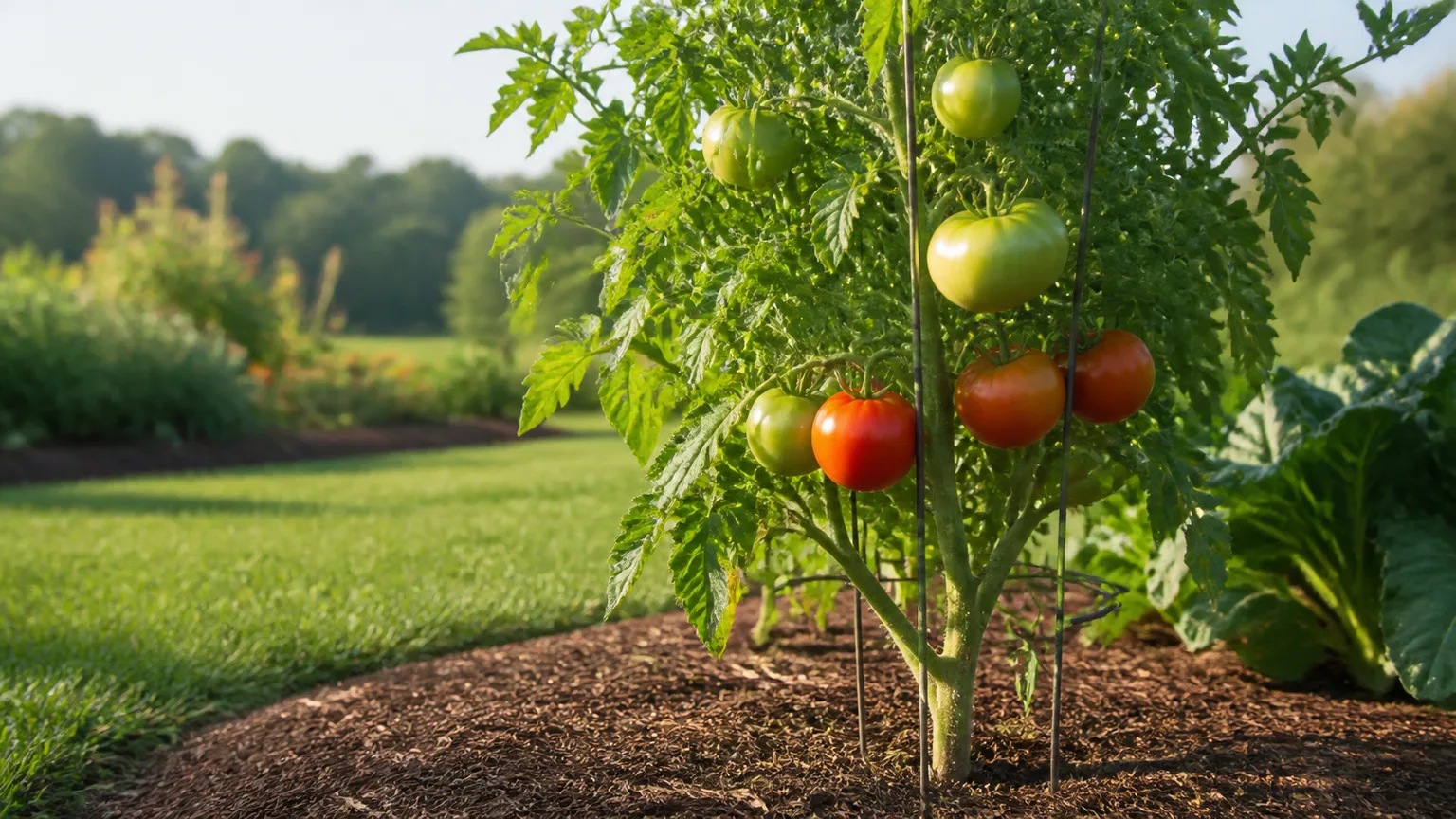
The short answer: late pruning can still help
It is not automatically too late to prune tomato plants late in the season, but the goal changes. Early in summer, pruning may help you train a vigorous plant and manage its canopy. As the first frost approaches, the useful work is usually narrower: remove diseased or soil-touching foliage, stop the plant from investing in brand-new flowers, and keep an indeterminate vine manageable without stripping the leaves that protect ripening fruit.
The wrong late cut can cost you tomatoes. Removing a fruit-bearing branch from a determinate plant, exposing mature fruit to hot sun, or taking a large amount of green foliage from a drought-stressed plant creates a problem that pruning cannot fix. A better question than “Is it too late?” is: what will this specific cut help the plant do before weather ends the season?
Use a local forecast rather than a date on the calendar. A September garden with six warm weeks left has a different decision window from one facing a cold snap in ten days. Then look at the fruit: full-sized green tomatoes are plausible candidates for finishing; new blossoms and pea-sized fruit often are not.
Make the decision with four checks
Before you cut, assess four things: the variety’s growth habit, the expected first frost, the fruit already set, and the plant’s health. This takes less time than repairing a pruning mistake and gives you a much clearer answer than trying to follow a blanket rule from a video or social post.
If you do not know the variety, look for the plant tag, seed packet, order confirmation, or a cultivar search from the seller. “Bush,” “determinate,” “indeterminate,” and “semi-determinate” are not marketing filler; they tell you whether a side shoot may become a meaningful fruit-bearing stem.
For a quick decision, put the plant into one of three lanes. A healthy indeterminate vine with several weeks left can receive selective sucker removal, flower pinching, and perhaps topping. A healthy determinate or semi-determinate plant gets only sanitary cleanup and support. A plant facing an imminent frost, extensive disease, or severe stress gets the least cutting of all: remove only material that threatens the crop, then focus on picking and protecting fruit.
This is deliberately less dramatic than an all-at-once pruning rule. Tomato plants do not have a visible energy meter, and a late-season plant may be balancing ripe fruit, green fruit, flowers, and recovery from heat at the same time. A small, well-chosen cut is easier to justify than removing a third of the canopy because it sounds decisive.
Identify your tomato’s growth habit
Determinate tomatoes reach a genetically limited size and tend to set much of their crop in a concentrated period. Indeterminate tomatoes keep extending and producing new trusses until cold kills the plant. Washington State University Extension describes the same practical difference: determinate varieties ripen much of their crop together, while indeterminate varieties continue through the season until frost (WSU Extension).
That distinction changes late-season pruning. A determinate plant can benefit from sanitary cleanup and better airflow, but aggressive sucker removal may remove stems that would carry fruit. An indeterminate plant gives you more latitude to remove late suckers or top the growing tips because it will otherwise continue making new growth that has little chance of maturing.
Semi-determinate varieties sit between those two habits, so be conservative when the label is unclear. Gardening Know How notes that these plants are more compact than indeterminate types but can keep producing over a longer period than typical bush tomatoes (Gardening Know How). Treat them closer to determinate plants unless you know the cultivar’s growth pattern.
Use the forecast and fruit stage, not the calendar
The calendar does not know your garden’s weather. Count back from the local average first frost, then check the short-range forecast for a real cold event. Also compare the fruit on the plant with the cultivar’s days-to-maturity information. A firm, full-sized green tomato may still color before frost; a fresh blossom has a much longer road ahead.
If you have several weeks of favorable weather, a light structural prune on an indeterminate vine can still make sense. If a freeze is days away, a large pruning session is mostly unnecessary stress. Put your energy into harvest, protection, and getting ripe or mature-green fruit indoors instead.
When late-season pruning is worth doing
Late pruning is most useful when it solves a specific problem that still matters this season: leaves are touching the soil, a disease is spreading, the interior has become an unmanageable tangle, or an indeterminate plant is still pouring energy into flowers and tips that will never finish. The goal is not to make the plant look tidier. It is to improve the odds for the fruit that already has a reasonable chance.
Think in small passes. Make a few purposeful cuts, step back, and look at what remains. You should be able to name the benefit of every cut: cleaner foliage, less leaf-to-leaf crowding, a controlled vine, or fewer hopeless flowers. If you cannot, leave it.
Remove disease risks and low, crowded growth
Start with leaves that are yellowing from the bottom, clearly diseased, damaged beyond recovery, or resting on the soil. N.C. Cooperative Extension recommends removing the lower 6 to 12 inches of tomato leaves to reduce the chance that soil-borne disease splashes onto foliage, while also warning gardeners not to remove leaves that shade the fruit (N.C. Cooperative Extension). The exact height depends on the plant and planting method, so use the soil line and splash zone rather than measuring with a ruler.
Then remove a small number of nonproductive shoots that are blocking airflow or lying in a humid knot. University of Georgia Cooperative Extension advises taking off drooping limbs close to the soil and removing damaged or diseased branches, but it also cautions against taking too much foliage because tomato fruit prefers shade and can sunscald when abruptly exposed (UGA Extension).
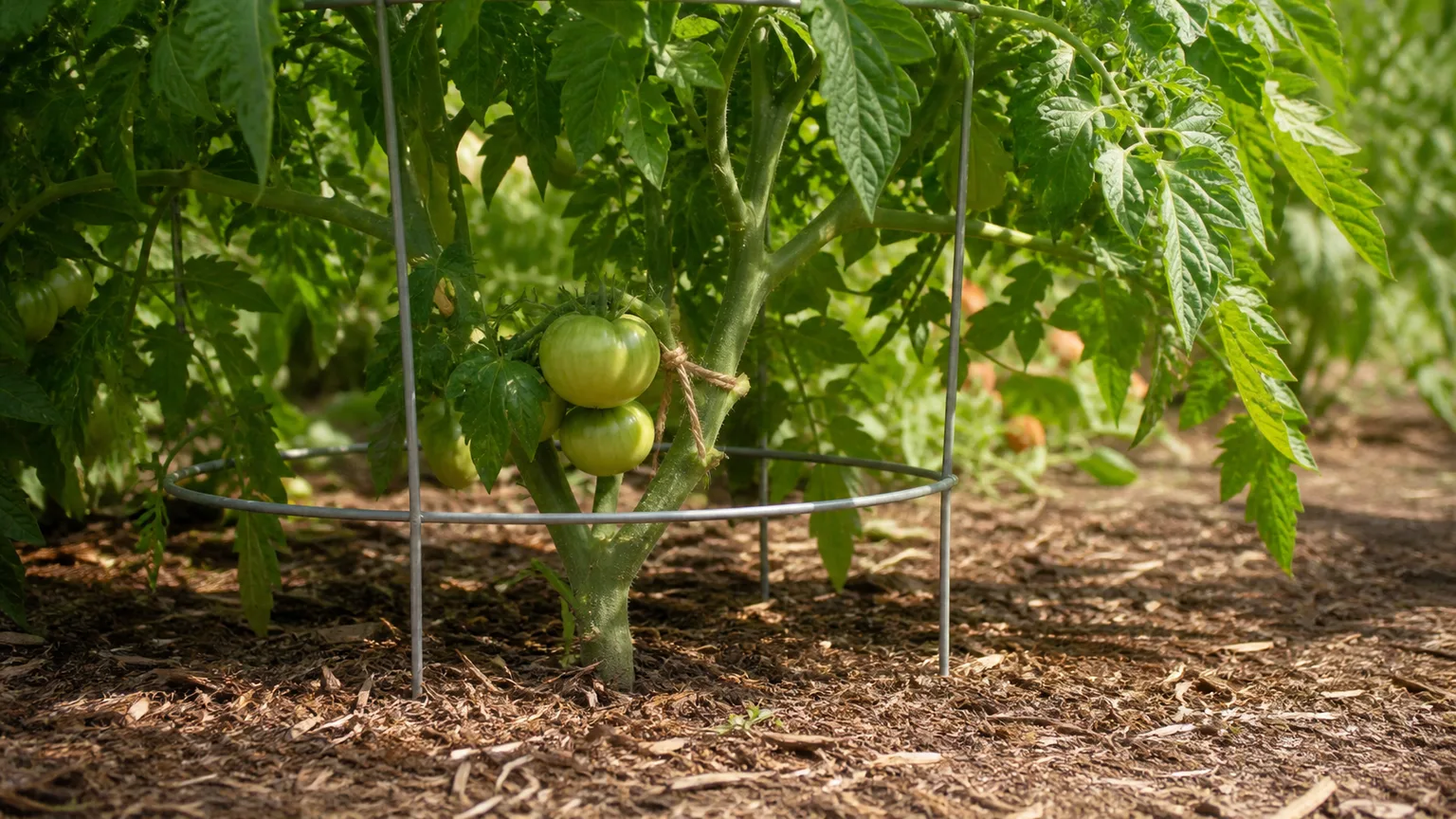
Bag or discard diseased material away from the bed. Do not leave it under the plant as mulch, and do not move from a visibly diseased plant to a healthy one without cleaning your tools. Late blight and other serious disease symptoms deserve identification and a local extension recommendation, not just more pruning.
Top an indeterminate plant only when it has time to respond
Topping means removing the soft growing tip of an indeterminate main stem. It can be sensible late in the season when the vine is still racing upward, new flowers are forming, and you have enough time for the plant to redirect attention to fruit that is already established. It is not a magic ripening switch, and it is not the first step for every tomato plant.
Choose a point above the highest fruit truss you expect to finish, leaving several healthy leaves above that cluster. Those leaves help feed and shade the fruit. Do not top back into a bare stem or remove so much canopy that the exposed fruit suddenly sits in full afternoon sun.
Practical garden guidance from Epic Gardening makes the same seasonal distinction: topping young tomato plants is not useful, while late-season topping can be useful when the remaining fruit needs to finish before autumn frost (Epic Gardening). The important limitation is timing. If frost is imminent, harvest planning is more reliable than asking a freshly cut plant to change course.
When to put the pruners down
Sometimes the best late-season pruning choice is almost no pruning. A plant with a modest canopy, healthy fruit, and no ground contact may need only support and harvest checks. Do not let the desire to “help” turn into a late makeover.
Pause whenever the plant is wilted from heat or drought, suffering from a disease you have not identified, or carrying ripening fruit that would be suddenly exposed. Water and support a heat-stressed plant first. Diagnose a suspicious disease before cutting through the entire row.
Protect determinate and semi-determinate fruiting stems
Avoid hard pruning determinate tomatoes after fruit set. A determinate plant has a finite framework, and branches or suckers above the first flower cluster can carry future fruit. N.C. Cooperative Extension explains that determinate plants generally need less pruning than indeterminate vines; airflow cleanup can help, but it is less essential than it is for an indeterminate type (N.C. Cooperative Extension).
You can still remove dead leaves, diseased tissue, and foliage touching soil. What you should not do is turn a productive bush into a stripped framework in hopes of speeding ripening. More sunshine on the fruit is not automatically better. Leaves buffer fruit from intense sun, and a sudden bare side of the plant can develop pale, leathery sunscald patches.
Do not add stress to a struggling plant
Do not heavily prune a plant during drought, after a heat wave, or while it is already losing leaves rapidly. Pruning creates wounds and reduces photosynthetic area. When a plant is short on water or actively declining, that extra stress rarely improves the final harvest.
First check moisture at root depth, restore support if stems are bending, and remove only tissue that is clearly dead, diseased, or on the soil. If a plant has extensive spotting, browning, or rapid collapse, take clear photos and ask a local extension office for diagnosis. Removing every marked leaf can leave too little canopy while failing to stop the cause.
A conservative late-season cleanup sequence
For a healthy tomato plant with several weeks before frost, use a short, repeatable sequence instead of a single aggressive session. Work from the ground upward and stop as soon as you have solved the immediate problem.
- Remove leaves lying on soil and any clearly dead or diseased material.
- Check ties, cage openings, or trellis clips so heavy fruiting stems are supported before you remove nearby growth.
- For an indeterminate plant, remove a few late suckers that are crowding the center or will not develop useful fruit in time.
- Pinch new flowers and tiny, obviously immature fruit only when the forecast window makes their harvest unrealistic.
- Consider topping one or two runaway indeterminate leaders only after the earlier steps.
This sequence preserves a healthy canopy while giving the remaining fruit the plant’s attention. It also prevents a common mistake: cutting first and realizing afterward that the stem was carrying fruit or holding up a heavy truss.
Deal with flowers, tiny fruit, and suckers deliberately
New flowers do not have the same value as fruit that is already full-sized and green. When the season is truly closing, pinching fresh blossoms and very tiny fruit on an indeterminate plant is a reasonable way to stop investing in a harvest that is unlikely to mature outdoors. It is a judgment call, not a requirement; a warm protected garden may still have time.
Suckers need the same care. A sucker is the leafy shoot in the angle between a leaf stem and a main stem. On an indeterminate vine trained to one or two leaders, late suckers can be removed when small. On a determinate plant, do not assume every sucker is expendable; it may become a fruiting stem. UGA Extension emphasizes that how vigorously you prune depends on the tomato type (UGA Extension).
If a shoot has a flowering truss, pause before removing it. Ask whether it is crowded, diseased, unsupported, or too late to produce fruit. If the answer is no, it may be better left alone.
Preserve shade around ripening fruit
Tomatoes need light to grow, but the fruit does not need to sit fully exposed to intense sun. Leaves are the plant’s solar panels and its umbrellas. Late in the season, there is rarely a reason to remove healthy leaves simply to make green fruit more visible.
Keep a few healthy leaves above and around each ripening cluster. If you need airflow, remove the leaf or shoot that is actually congesting the center, not every leaf on the sunny side. A gradual approach lets you improve circulation without changing the fruit’s microclimate overnight.
How to make every cut safer
Tomato pruning is a small wound-management job. Make clean cuts, reduce the chance of spreading disease, and avoid putting a large branch under tension just before you cut it. These details matter more late in the season, when plants are often stressed by humidity, cool nights, or heavy fruit.
Wait for dry foliage and clean the tools
Prune after dew, rain, or overhead irrigation has dried. Wet foliage makes it easier to move pathogens from leaf to leaf and makes it harder to see which tissue is truly unhealthy. Use sharp, clean snips for thin shoots and small leaves rather than tearing them off.
Clean blades before starting and between plants, especially if you encounter disease. UGA Extension specifically recommends disinfecting clippers with alcohol between tomato plants and removing clippings from the site (UGA Extension). That simple habit is far more useful than sterilizing every few seconds on a healthy, isolated plant, but it becomes essential when you move through a row with suspicious symptoms.
Support heavy vines before cutting. Look at what each stem is supporting before you snip. A crowded branch can be holding a heavy fruit cluster, tying two parts of a cage together, or balancing a vine that has already leaned under its crop. Secure the fruiting stem to a cage or stake with a soft tie first, then make your cleanup cut.
Do not yank a large sucker sideways to remove it. Bigger wounds are harder on the plant and can split a main stem. If a sucker is too large to pinch out cleanly, use sharp pruners and cut close to its origin without nicking the main stem.
Take no more than the plant needs in one visit. If the canopy is exceptionally dense, improve the worst congestion, then reassess after several dry days rather than continuing until every stem is visible. The fruit still needs leaves to supply sugars, and the plant needs time to respond to a change in light and airflow. Staging the work also makes it easier to spot whether a yellowing problem is spreading, improving, or simply part of normal late-season aging.
What pruning can and cannot do for ripening
Late pruning can reduce wasted new growth and improve a plant’s air movement. It cannot override low temperatures, a severely diseased plant, or fruit that is simply too immature when frost arrives. The most useful strategy is to combine modest pruning with a realistic harvest plan.
Continue to pick tomatoes as they color; regular harvesting reduces weight on the vine and lets you inspect what remains. If a cold night is likely, harvest fruit that is beginning to color and full-sized mature-green fruit before damage. Very small, hard, dark-green fruit is less likely to develop good flavor indoors, so use it for green-tomato recipes rather than expecting it to behave like a nearly ripe tomato.
Make a frost plan for green tomatoes
When a frost threatens, do not wait for a late prune to solve everything. Pick sound fruit before the freeze, keep it dry, and set it in a single layer at room temperature out of direct sun. Check it regularly and remove any fruit that softens or develops decay. Paper bags can slow moisture loss and contain ethylene, but do not seal wet fruit in an airtight container.
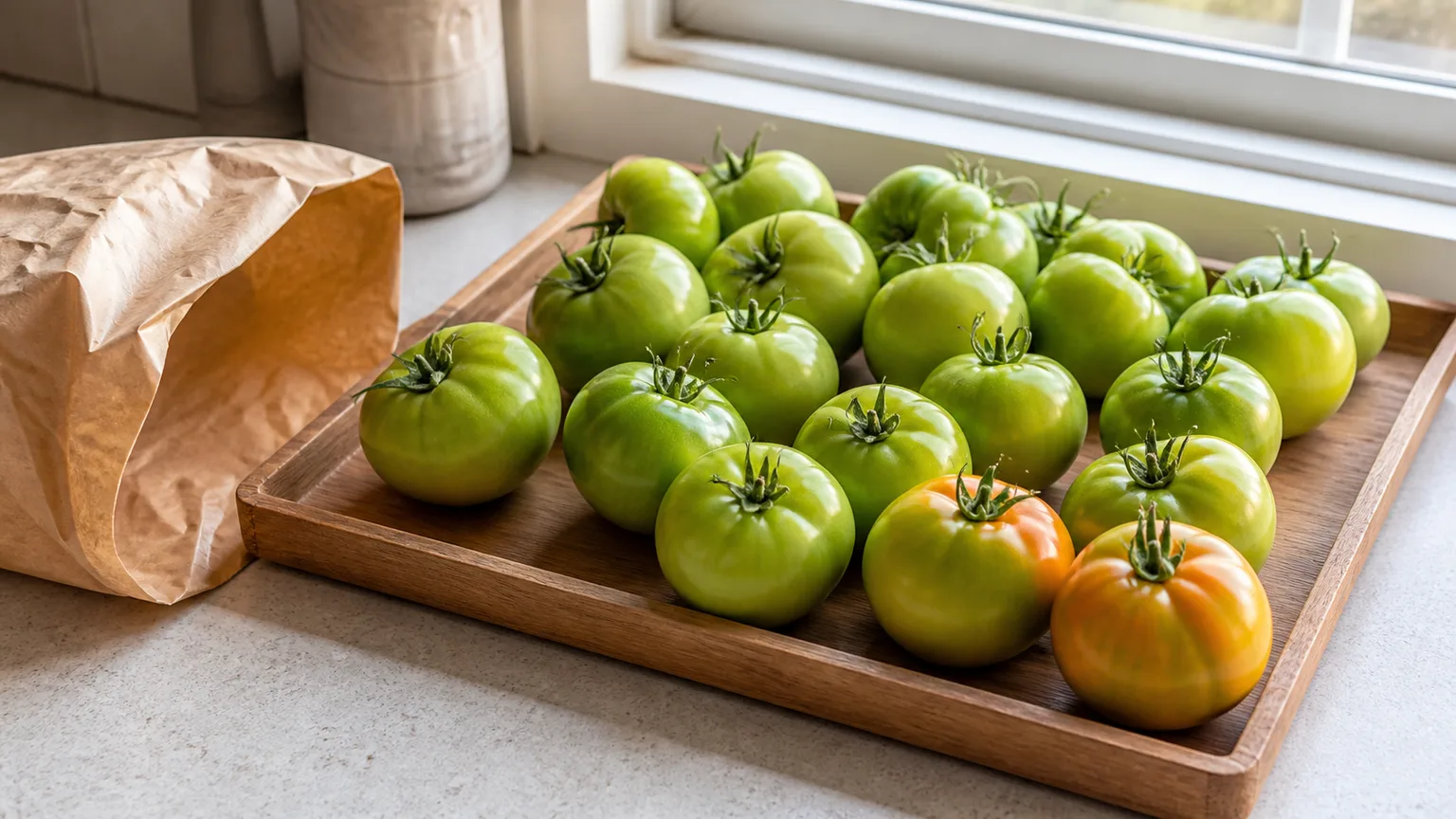
You can also bring in a healthy, heavily loaded container plant for a short protected spell if you have adequate light and no pests. Pulling whole plants to hang indoors is sometimes suggested, but it takes space, can bring in insects, and is less dependable than harvesting mature fruit. Choose it only when the plant is healthy and you have a cool, sheltered location where fruit can finish without rotting.
Sort harvested tomatoes by maturity rather than piling all of them together. Fruit showing a pale green-to-whitish cast, a glossy surface, or its first blush of color is more likely to ripen well indoors than a small, dense, dark-green tomato. Keep nearly ripe fruit on the counter, check mature-green fruit every few days, and use the least mature fruit promptly in cooking. This avoids losing a whole bowl to one unnoticed soft tomato.
Common late-season tomato pruning mistakes
The most common mistake is treating all tomatoes like indeterminate vines. The second is treating every late-season problem as a pruning problem. Avoid these predictable setbacks:
- Removing healthy canopy to chase faster ripening. This can expose fruit to sunscald and reduce the leaves that feed it.
- Hard-pruning a determinate or semi-determinate plant. You may remove productive stems with no time to replace them.
- Topping every plant at the same date. A local frost forecast and fruit stage are more useful than a universal calendar rule.
- Pruning wet foliage or using dirty tools. Both choices can spread disease through a plant or row.
- Leaving clippings at the base. Diseased debris should leave the growing area.
- Removing leaves without checking support. Heavy fruit clusters can bend or split when their neighboring structure disappears.
- Waiting for frost to decide about green fruit. Pick mature fruit ahead of a freeze rather than expecting a last-minute cut to ripen it.
Conclusion
Late-season tomato pruning is worthwhile when it is light, specific, and tied to a real remaining harvest window. Remove disease risks and ground-contact foliage, protect fruiting stems on determinate plants, and reserve late topping for vigorous indeterminate vines that still have time to direct energy into existing fruit.
If frost is close, shift from pruning to harvesting. A clean, supported plant with enough shade over its fruit has a better chance of finishing strong than a heavily stripped vine. Let the forecast, variety, and size of the fruit guide your next cut.



