25 Japanese Maple Varieties With Great Foliage
Compare 25 Japanese maple cultivars by leaf color, size, form, and zone—plus how to match the right tree to your sun, space, and climate.
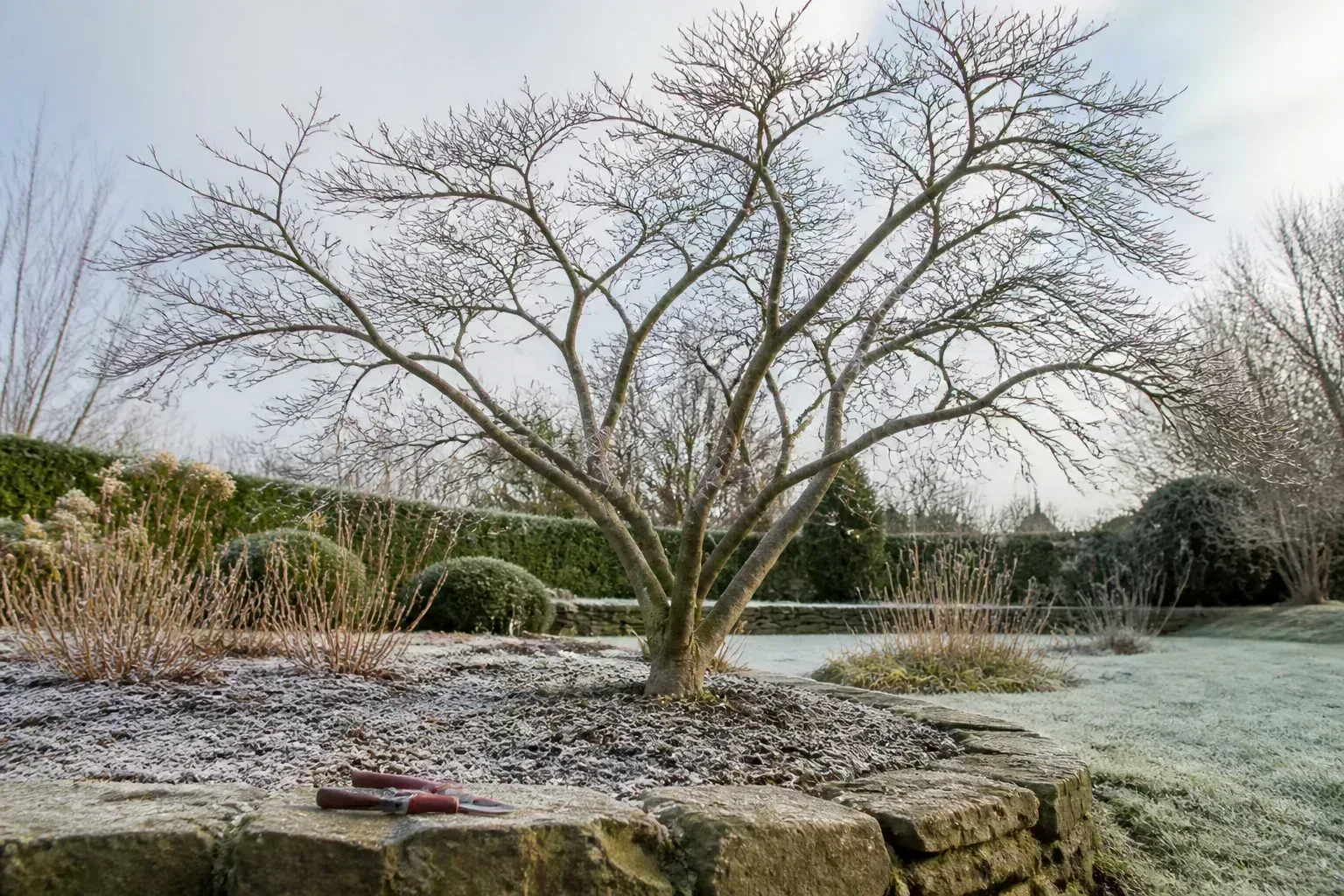
More than a thousand named Japanese maple cultivars exist, which sounds exciting until you stand in a nursery aisle trying to tell ‘Bloodgood’ from ‘Emperor 1’ while both tags say “red, 15 feet, zones 5–8.” The foliage is why you are here—spring pinks, summer burgundy, October fire, winter coral bark—but the cultivar you take home has to fit your sun pattern, mature size, and hardiness margin, not just the photo on the pot.
This guide covers 25 Japanese maple varieties gardeners actually find at specialty nurseries and good garden centers, grouped by how you will use them: upright red anchors, weeping laceleaf focal points, gold and orange fall stars, bark for winter, variegated conversation pieces, and compact forms for pots and courtyards. Every entry includes practical placement notes so you are not guessing from a generic zone bullet repeated 25 times.
How to Choose the Right Japanese Maple
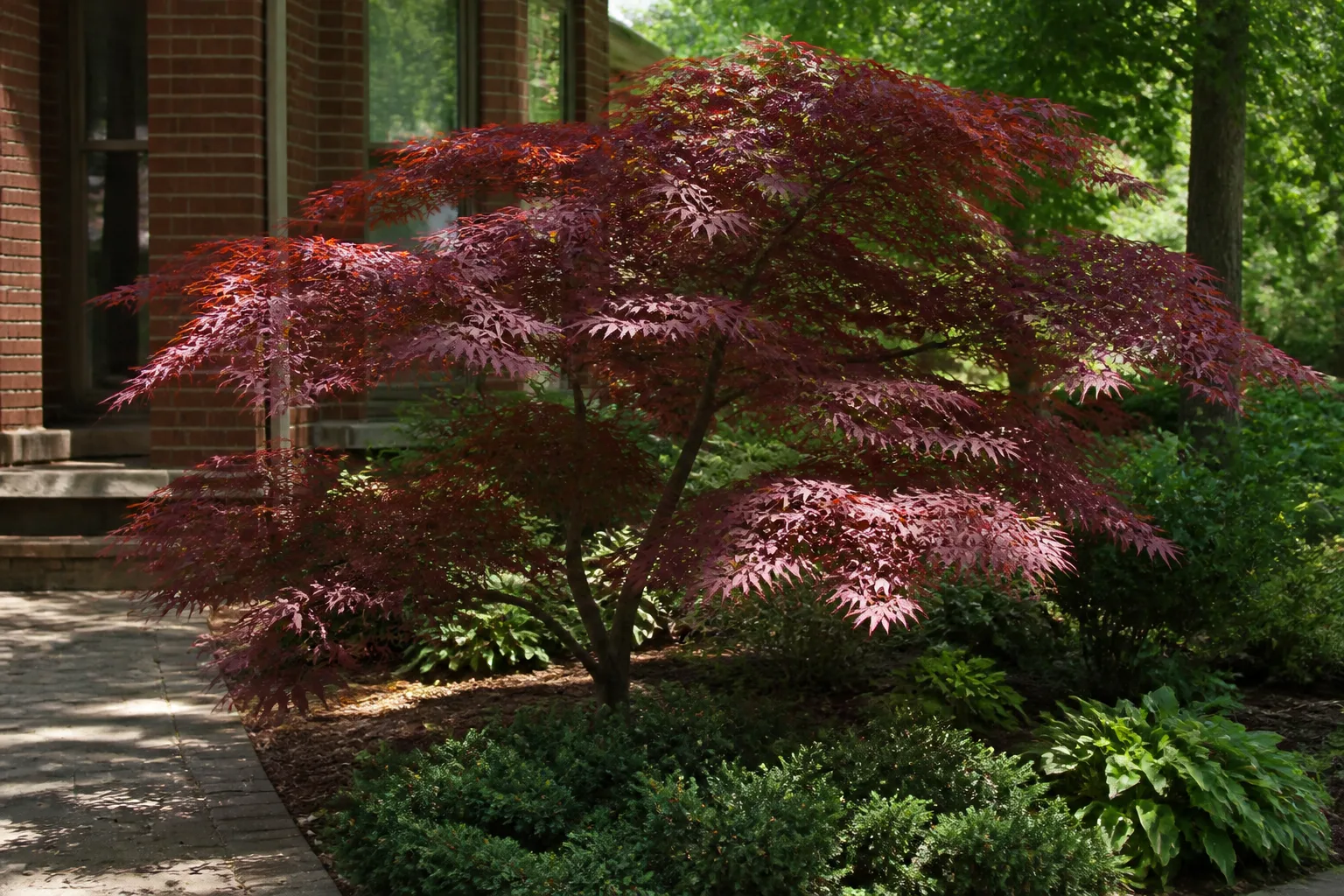
Start with three filters—species group, mature form, and daily sun—before you chase a cultivar name. Japanese maples are slow investments; a laceleaf planted under a power line or a variegated tree baked by western afternoon sun will look wrong for decades.
Acer palmatum, dissectum, shirasawanum, and japonicum
Most cultivars on this list are Acer palmatum, the classic Japanese maple with five- to nine-lobed palmate leaves. When you see dissectum in the name—‘Crimson Queen’, ‘Viridis’, ‘Filigree’—you are looking at laceleaf types with deeply cut, feathery foliage and weeping or mounding habits. They read as waterfalls in the landscape and need room for their spread, not just their height.
Acer shirasawanum (full moon maple) includes ‘Aureum’ (‘Full Moon’) and ‘Autumn Moon’. Leaves are broader and more rounded than typical A. palmatum, often with showy spring color that matures to chartreuse. Acer japonicum (full moon maple’s close cousin) appears here as ‘Green Cascade’—rounded, fern-like leaves, excellent cold tolerance but less happy in hot southern summers. Acer pictum ‘Usugumo’ is a rare painted-leaf batwing type for collectors who accept slow growth and careful siting.
NC State Extension notes that most cultivars are grafted, which means the rootstock and scion can have different vigor—buy from reputable sources and keep the graft union mulched, not buried under lawn grass.
Size, sun, and zone decision rules
Hardiness: Acer palmatum is generally USDA zones 5–8, with some cultivars stretching to zone 9 in cool coastal climates or zone 4 for selected shirasawanum like ‘Autumn Moon’. Zone 5 gardeners should avoid early-leafing cultivars in frost pockets; late spring freezes can burn tender new growth after a warm spell.
Sun: The safe default in most of the U.S. is morning sun with afternoon shade, especially for variegated and laceleaf types. The RHS is explicit: red- and purple-leaved cultivars need some sun to develop rich color, but variegated maples need partial shade to prevent scorch. Green-leaved forms tolerate more sun yet still prefer dappled light in hot climates. NC State Extension warns that excess sun, wind, or drought causes leaf scorch—brown crispy margins that no amount of fertilizer fixes.
Size: Catalog heights are optimistic. Laceleaf weepers spread wider than they are tall; upright reds like ‘Bloodgood’ become broad rounded trees to 15–20 feet. Measure your bed, then subtract 3 feet from the foundation and any walkway.
Invasive note: Japanese maple self-seeds in favorable conditions. The Mid-Atlantic Pest Council lists it as invasive in Virginia and Washington, D.C., per NC State. That does not mean you cannot grow it—it means avoid planting near woodlines where seedlings escape, and remove volunteer saplings if you are in those regions.
For broader maple context—including species beyond Japanese types—see our guide to maple species for North American yards.
Best Red and Purple Upright Cultivars
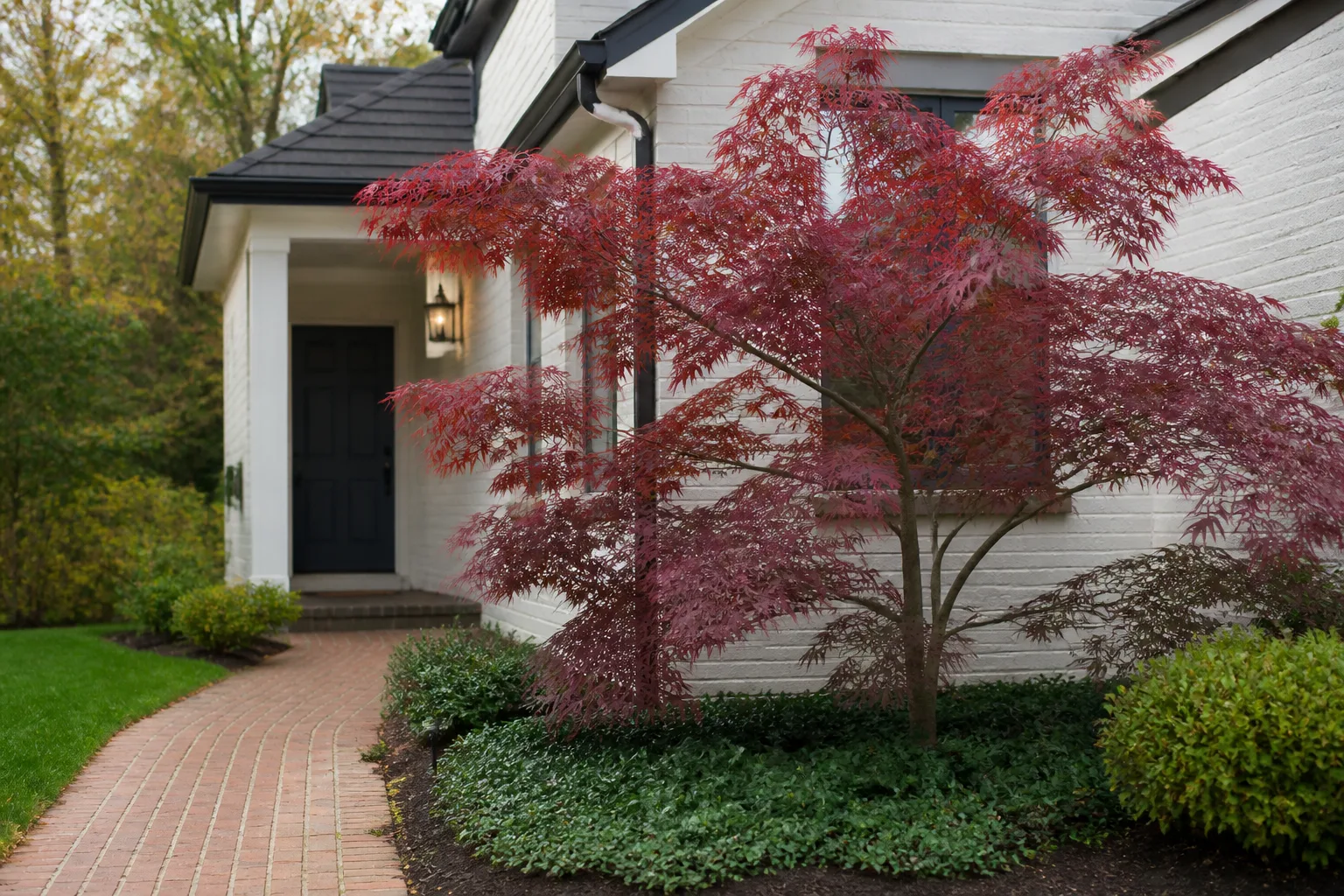
Upright red Japanese maples anchor front yards, frame entries, and hold color from spring through summer when sited correctly. These are the cultivars people mean when they say “Japanese maple” without a qualifier.
‘Bloodgood’ vs. ‘Emperor 1’ — which to buy
‘Bloodgood’ (Acer palmatum ‘Bloodgood’, often sold as A. palmatum Atropurpureum Group ‘Bloodgood’) is the benchmark upright red: 15–20 feet tall and wide, deep burgundy summer foliage, crimson fall, zones 5–8. In full sun the leaves can green slightly by midsummer—that is normal, not a defect. It is widely available, which keeps prices reasonable and replacement trees easy to find.
‘Emperor 1’ or ‘Wolff’ (A. palmatum ‘Wolff’) was selected to address two Bloodgood complaints: later spring leaf-out (helpful where late frosts are common) and better red retention in heat. It grows 10–15 feet, more upright than broad, with dark red foliage and scarlet fall color, zones 5–9. Choose Emperor 1 if you are in a warmer zone or a frost-prone microclimate; choose Bloodgood if you want a larger, classic rounded silhouette and easy sourcing.
| Cultivar | Habit | Typical size | Best for | Watch for |
|---|---|---|---|---|
| ’Bloodgood’ | Rounded upright | 15–20 ft | Foundation anchor, first red maple | Summer greening in hot sun |
| ’Emperor 1’ | Upright | 10–15 ft | Frost pockets, warmer zones | Narrower crown than Bloodgood |
Both pair well with understory shade perennials and look strongest where you can view the layered branching from the lawn or patio.
Laceleaf and Weeping Maples
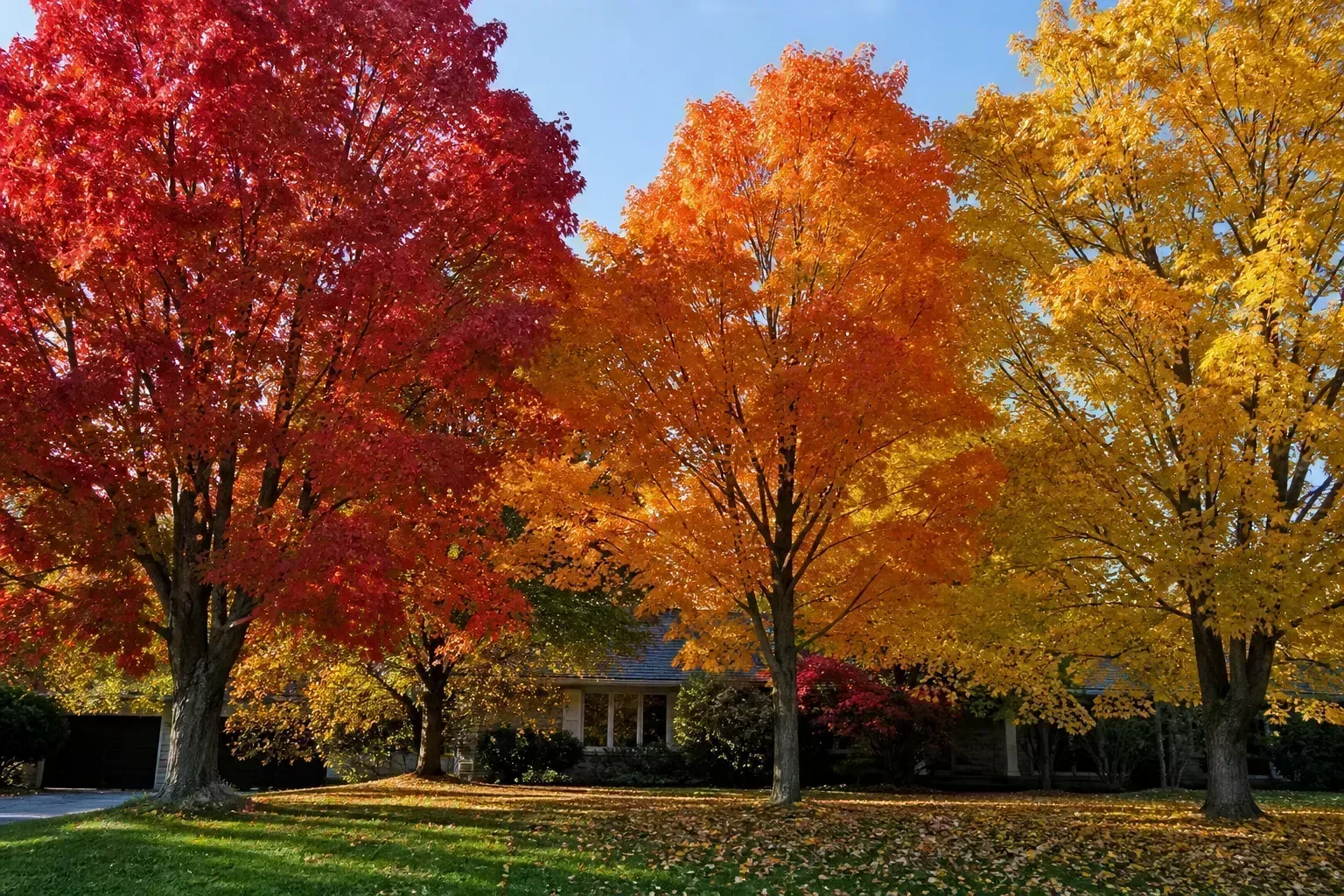
Laceleaf Japanese maples (A. palmatum dissectum and related) are the sculptural weepers and mounds that make Japanese gardens recognizable. They are slower than upright types and need protected sites—not windy hilltops or reflective south-facing walls.
Red weeping: ‘Crimson Queen’, ‘Red Dragon’, and ‘Garnet’
‘Crimson Queen’ (A. palmatum dissectum ‘Crimson Queen’) is the standard red laceleaf weeper: 8–10 feet tall, 10–12 feet wide, deep red summer leaves, fall mixes of yellow, red, purple, and bronze. Plant it on a berm or at the top of a short retaining wall so the cascading branches read from below.
‘Red Dragon’ (A. palmatum dissectum ‘Red Dragon’) is more compact—6–8 feet—with an upright-pendulous habit that mounds rather than puddles on the ground. Foliage stays reddish-purple through summer and turns bright crimson in fall. Excellent container specimen if you can keep soil evenly moist.
‘Garnet’ (A. palmatum dissectum ‘Garnet’) pushes 9–12 feet wide with reddish-orange leaves that hold through summer, briefly greenish in late summer, then bright red in fall. Give it the widest bed of the three; trying to shoehorn Garnet into a 4-foot strip ends in annual pruning battles.
Green laceleaf: ‘Viridis’, ‘Filigree’, and upright ‘Seiryu’
Not every laceleaf is red. ‘Viridis’ (A. palmatum ‘Viridis’) weeps with vivid green dissected leaves turning gold and crimson in fall, 6–10 feet (trainable shorter), zones 5–8. It tolerates dappled sun and makes a softer fountain shape than red weepers.
‘Filigree’ (A. palmatum dissectum ‘Filigree’) is smaller—4–6 feet—with green lace leaves and golden fall color, branches cascading to the ground in a perfect mound. Ideal near a path where you want texture without dark foliage.
‘Seiryu’ (A. palmatum ‘Seiryu’) breaks the weeping rule: it is the only upright green dissectum widely sold, meaning lacy leaves on a 10–20 foot vase-shaped tree. Spring and summer foliage is bright green; fall is gold and red. It grows faster than most laceleafs but scorches in harsh afternoon sun—give it eastern exposure or high shade.
Gold, Chartreuse, and Fiery Fall Maples
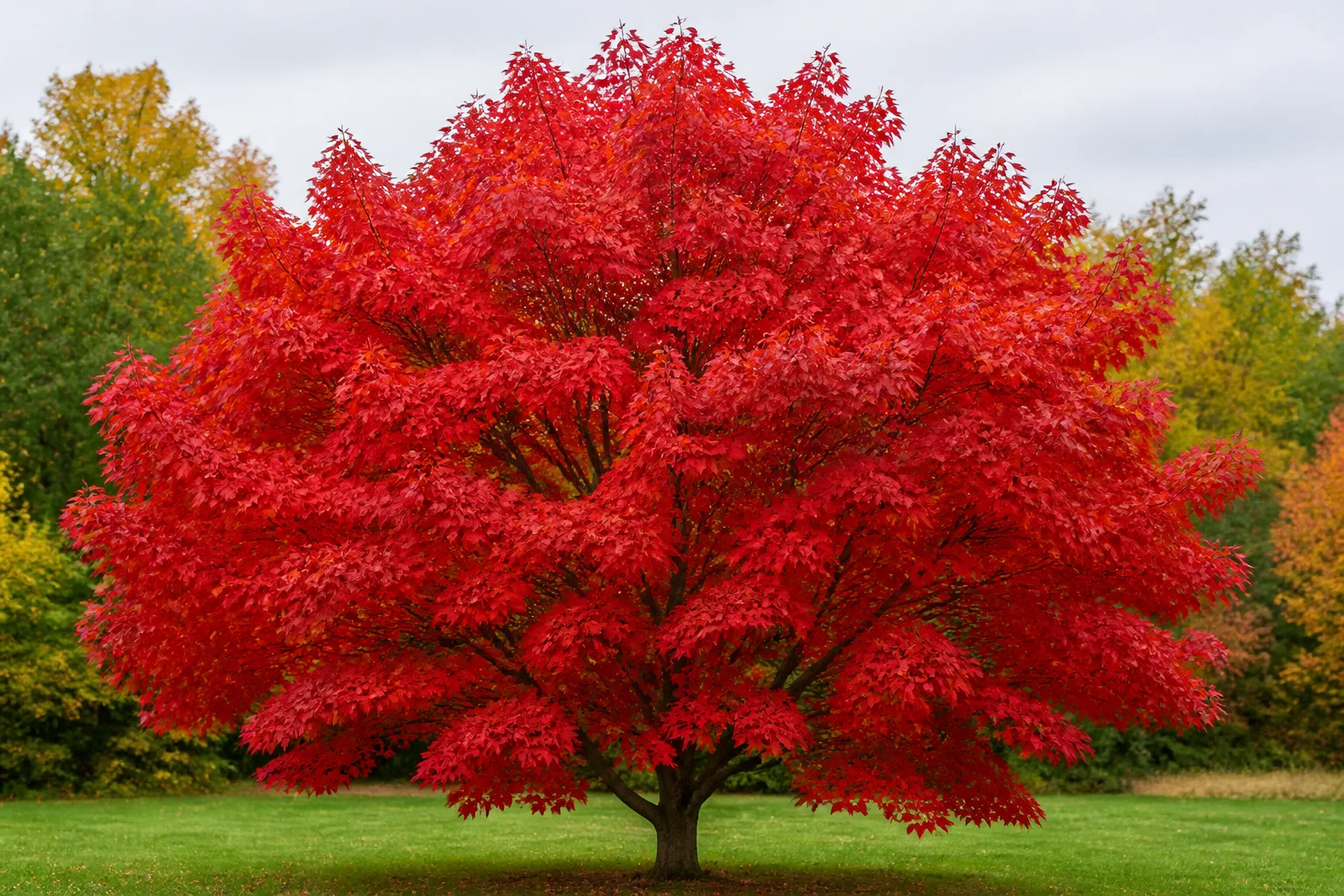
If your goal is a tree that glows in October—or carries chartreuse all summer—these cultivars outperform generic red labels.
‘Full Moon’, ‘Autumn Moon’, ‘Hogyoku’, and ‘Osakazuki’
‘Full Moon’ / ‘Aureum’ (Acer shirasawanum ‘Aureum’) opens with showy yellow leaves, matures to yellow-green, then orange-red in fall, 16–20 feet, zones 5–7. It is not a heat-loving southern tree; give it cool roots and afternoon shade in zone 7.
‘Autumn Moon’ (A. shirasawanum ‘Autumn Moon’) is prized for zone 4 hardiness in the lower end of Japanese maple range, with yellow-orange spring foliage brightening to chartreuse in summer and brilliant reddish-orange fall, 6–10 feet. One of the best choices for northern gardeners who want gold tones without gambling on tender grafts.
‘Hogyoku’ (A. palmatum ‘Hogyoku’), the “golden jewel,” is the cultivar to remember when someone asks for pumpkin-orange fall color rather than red. Summer leaves are green with yellow-orange undertones; autumn is unmistakably orange. It tolerates more sun than many laceleafs (15–18 feet, zones 5–9) but still needs consistent moisture—mulch heavily if you site it in open sun.
‘Osakazuki’ (A. palmatum ‘Osakazuki’) is the fall-color heavyweight among upright greens: seven-lobed leaves turn intense orange-red in autumn, often outperforming red cultivars in brightness. It can reach 25 feet with a rounded habit, tolerates sun better than laceleafs, and adapts to clay or sandy soils once established. If fall is your only season that matters, start here.
Coral Bark and Winter-Interest Cultivars
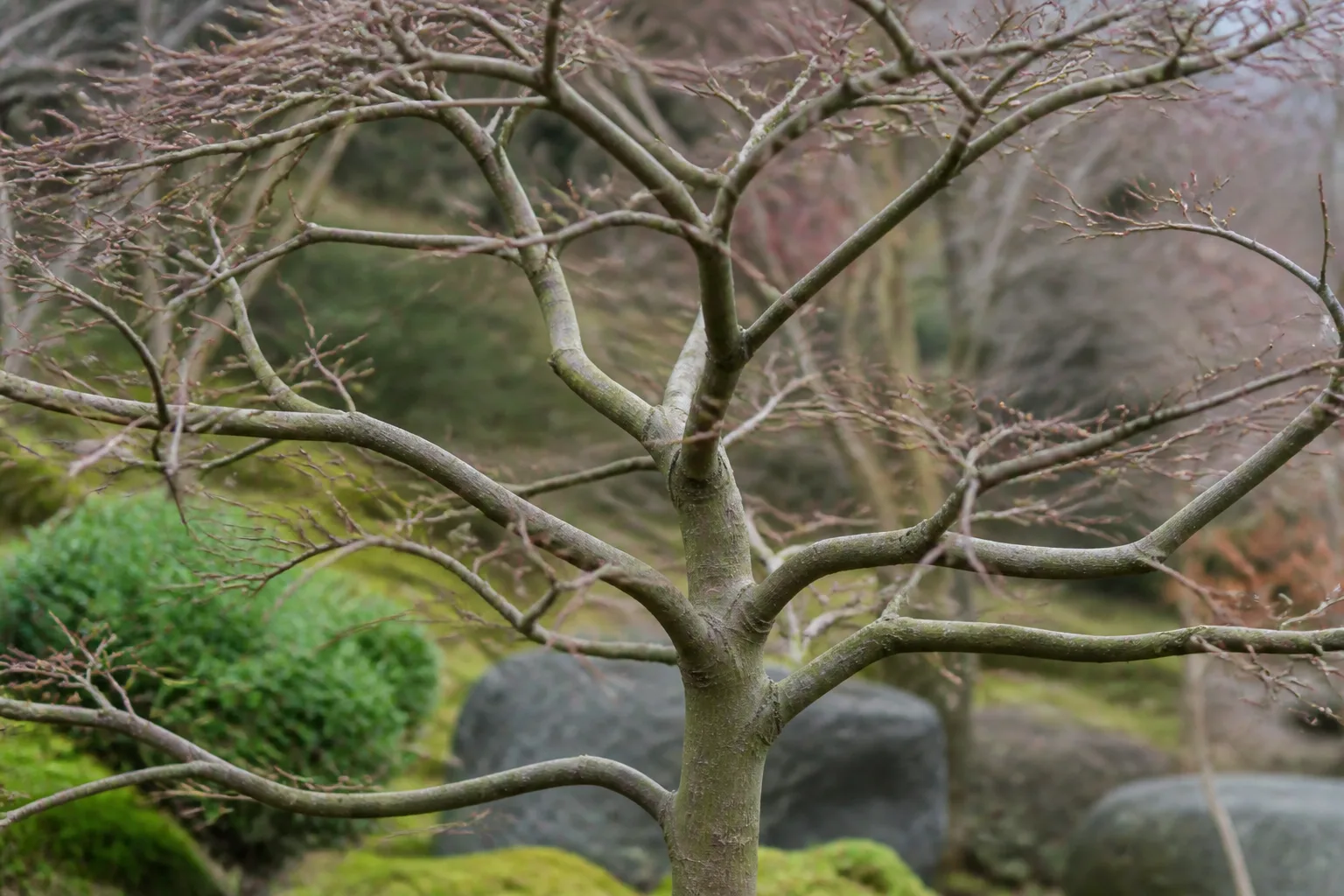
Japanese maples earn their keep in winter when bark and branch color carry the garden.
‘Sango-kaku’ and ‘Beni-Kawa’
Coral bark maple (A. palmatum ‘Sango-kaku’) is famous for coral-pink young stems that intensify after leaf drop. Leaves emerge yellow-green, deepen to gold in fall. It is slow to 20–25 feet but looks striking at 8 feet if you plant it where winter sun hits the bark—against a dark evergreen backdrop or viewed from a kitchen window.
‘Beni-kawa’ (A. palmatum ‘Beni-kawa’) offers red winter bark on a 12–15 foot tree with green spring leaves aging to yellow-gold. It is slow for the first decade—often under 7 feet at ten years—so patience is part of the design. Both bark maples benefit from sheltered sites; harsh wind desiccates twigs and fades stem color.
For structural pruning that keeps coral stems visible, see when to prune Japanese maple in winter.
Variegated and Ghost-Leaf Selections
Variegated Japanese maples are showstoppers in spring and liabilities in the wrong microclimate. They need bright shade or gentle morning light; afternoon sun bleaches white sections to crisp brown.
‘Butterfly’, ‘Peaches and Cream’, ‘First Ghost’, ‘Geisha Gone Wild’, ‘Higasayama’, and ‘Usugumo’
‘Butterfly’ (A. palmatum ‘Butterfly’) is the most common white-margined cultivar: green centers, white edges, twisted leaves, irregular shrubby habit 7–12 feet, zones 6–8. Fall turns white zones magenta or red. Classic bonsai candidate because every leaf looks different.
‘Peaches and Cream’ (A. palmatum ‘Peaches and Cream’) is dense and shrubby, sometimes wider than tall, with creamy-white leaves veined dark green, yellow fall, 8–10 feet, zones 5b–8. Slow-growing and long-lived—plan on decades, not quick fill.
‘First Ghost’ (A. palmatum ‘First Ghost’) opens cream-white with red tips and bold green veins, then greens for summer with yellow-orange fall, 7–12 feet depending on training. The spring ghost effect is the reason to grow it; summer is comparatively plain.
‘Geisha Gone Wild’ (A. palmatum ‘Geisha Gone Wild’) is a hardier, larger sport of ‘Geisha’: hot pink spring leaves fading to green with white and pink flecks, spectacular orange fall, 5–7 feet in ten years. Treat it like jewelry—one per garden, sited where you pass daily in April.
‘Higasayama’ (A. palmatum ‘Higasayama’) is the spring variegation star: pink, cream, and green patches on new leaves, orange-red fall, 10–18 feet, faster than most variegated types. Dappled light preserves spring color; full sun washes it out by June.
‘Usugumo’ (Acer pictum ‘Usugumo’) is rare: soft pink spring leaves with green and cream mottling, never topping 7 feet, zones 5–9. For collectors and small courtyards—not a first Japanese maple unless you enjoy fussy plants.
Dwarf, Strap-Leaf, and Textural Forms
Small gardens, rock gardens, and containers need cultivars that stay visually interesting without outgrowing the space in five years.
‘Coonara Pygmy’, ‘Koto Ito Komachi’, ‘Lion’s Mane’, ‘Green Cascade’, and ‘Scolopendrifolium’
‘Coonara Pygmy’ (A. palmatum ‘Coonara Pygmy’) is a true dwarf to 3–6 feet, developed from a witch’s-broom mutation. Spring leaves are bright green, summer yellowish, fall deep pink-red, zones 6–9. Perfect for a large container or foreground bed.
‘Koto Ito Komachi’ (A. palmatum ‘Koto Ito Komachi’) has thread-like leaves on a 4–6 foot rounded upright tree—feels weeping though it is not dissectum. Needs moist soil in sun; leaves shrivel when dry. Natural bonsai proportions without wiring.
‘Lion’s Mane’ (A. palmatum ‘Shishigashira’) bears crinkled, glossy green leaves that look sculpted, turning yellow-orange-red in fall, 8–12 feet (often shorter), zones 6–9. Texture reads from across the yard—use it where you want structure without flower color.
‘Green Cascade’ (Acer japonicum ‘Green Cascade’) is a full moon maple with rounded palmate leaves, yellow and red fall, 10–20 feet, zones 5–7. More cold-tolerant than many A. palmatum but dislikes hot southern summers. Prefers dappled shade; scorches in full sun.
‘Scolopendrifolium’ (A. palmatum ‘Scolopendrifolium’, also sold as ‘Shinobuga Oka’ or ‘Linearilobum’) has narrow strap-like green lobes with red stems and samaras, 12–15 feet, slow, long-lived. The linear leaf shape contrasts beautifully with broad palmate neighbors.
Care Basics That Protect Leaf Color
Buying the right cultivar is half the job; siting and water do the rest.
Planting window: Set out container-grown trees from fall through early spring when soil is workable. The RHS recommends October–March planting so roots establish before summer heat. Dig a hole three times the root ball width, plant with the trunk flare slightly above grade, and do not bury the graft.
Soil and mulch: Japanese maples want acidic, well-drained, organic-rich soil. Amend with compost at planting, then mulch 2–3 inches annually in spring—keep mulch off the trunk. Shallow roots mean lawn grass competing against the trunk is a bad idea; use a wood-chip ring instead.
Water: First-year trees need consistent moisture, especially after spring planting. Laceleafs in containers may need daily checks in July. Leaf scorch from drought looks like fertilizer deficiency but is fixed with water and shade, not nitrogen.
Feeding: Established in-ground trees often need no fertilizer if soil is healthy. Container plants benefit from a single spring granular feed. Avoid late-season nitrogen that pushes soft growth into frost—see fertilizing Japanese maples in winter for timing details.
Pruning: Remove dead wood anytime; structural cuts belong in dormancy. Over-thinning variegated cultivars reduces the spring show. Follow species-appropriate timing in our winter pruning guide.
Pests and problems: Aphids, scale, and leaf spot occur but rarely kill healthy trees. Anthracnose and frost damage show as distorted spring leaves—improve air flow and avoid nitrogen pushes after damage. Deer are mildly resistant per NC State, not immune.
Conclusion
The best Japanese maple for your yard is not the one with the prettiest nursery photo—it is the one whose form, mature size, and sun tolerance match the bed you actually have. Upright reds like ‘Bloodgood’ and ‘Emperor 1’ anchor larger spaces; laceleaf weepers like ‘Crimson Queen’ and ‘Viridis’ sculpt smaller gardens; ‘Osakazuki’ and ‘Hogyoku’ own autumn; ‘Sango-kaku’ and ‘Beni-kawa’ repay you in winter; variegated ghosts like ‘Butterfly’ and ‘Higasayama’ reward careful siting.
Shortlist two or three names, then visit a local nursery in spring and fall to see the same cultivar in both seasons—summer red and October orange are not the same plant experience. Plant with afternoon protection, mulch the roots, and let slow growth be a feature. A Japanese maple that still looks better at year fifteen than year three is the one you chose with your eyes open.