16 Perennials to Plant in Fall for Last-Minute Color
Need fall color fast? Choose from 16 perennials, learn the six-week frost rule, and plant, water, mulch, and protect them for a stronger return next spring.
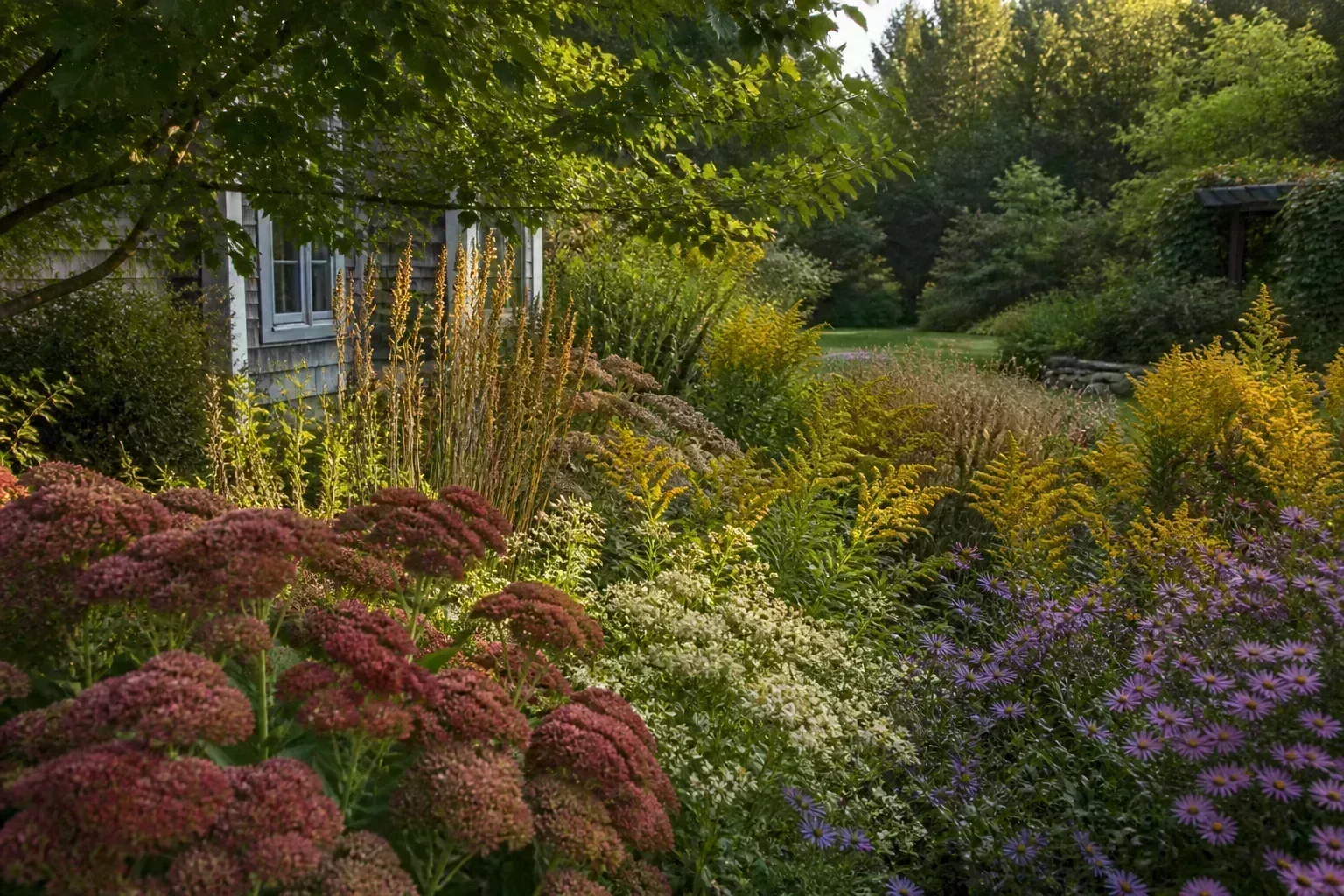
Yes, you can still plant perennials late in the season—but “right now” is only a good planting window while the soil is workable and your plant has enough mild weather to make root contact. A flowering pot can give you color within days; a small perennial division or bare-root plant may spend the rest of the season building roots and wait until next year to flower.
The most useful rule is not a month on the calendar. Count back from your average first hard frost, choose a healthy container plant suited to your site, and then give the root zone steady moisture without forcing soft new growth. The result is a fall garden that looks finished now and has a reasonable chance of looking better next year.
Can You Still Plant Perennials This Late? Use the Frost-Countdown Rule
For most container-grown hardy perennials, aim for at least six weeks before your area’s average first hard frost. Penn State Extension uses that kind of lead time for a new root system to establish, and recommends checking newly planted perennials for water before winter while using mulch to reduce freeze-thaw heaving. That is a planning rule, not a guarantee: a long, mild autumn gives roots more opportunity than a sudden early freeze.
Use your local frost history and the plant label together. A zone tells you about long-term winter minimums, but it does not tell you whether a nursery pot bought this weekend has enough time to root, whether a low pocket collects cold air, or whether your soil will be saturated by fall rain. In a mild-winter climate, fall can be an excellent root-establishment season; Oregon State University Extension describes a mid-September-to-mid-November window for Oregon, which shows why a national “last day to plant” is misleading.
| Time before the average first hard frost | Best decision |
|---|---|
| Six weeks or more | Plant healthy flowering containers or established perennials in the ground; water deeply and mulch once the soil cools. |
| Three to five weeks | Choose compact, healthy pots, avoid rootbound stock, and treat immediate flowers as the main reward. Protect the crown carefully. |
| Less than three weeks | Plant only tough, locally hardy specimens in a protected, well-drained site; use a container for reliable short-term color. |
| Frozen, waterlogged, or digging-difficult soil | Wait for spring unless the plant is a truly hardy dormant transplant and local guidance supports the timing. |
Instant Color and Next-Year Color Are Different Jobs
Buy a container-grown plant with buds, open flowers, and healthy foliage when you need a visible change this fall. Look for a root ball that holds together but is not a solid mat of circling roots; Penn State Extension warns that pot-bound plants can stay dry because water runs around the outside of the root mass instead of soaking through it. Loosen the outer roots before planting, and reject a pot with sour, stagnant mix or a crown that is already collapsing.
If your real goal is a strong perennial clump next year, a smaller, less-flowering plant can be a better value. It will put more energy into roots than a plant carrying a heavy display, but it may not provide the immediate photograph you have in mind. Divisions, bare-root plants, and late seed starts are usually establishment projects, not instant fall color.
Mums deserve one extra buying check. Choose a labeled garden mum or hardy mum for outdoor planting; florist mums are primarily sold for temporary display and may not have dependable winter survival in your area. Even garden mums vary by cultivar and local conditions, so read the tag, plant early when possible, and consider a newly planted mum’s first winter a test of both timing and protection.
How to Choose a Fall-Ready Perennial
Start with the bed, not the flower color. A plant that matches your light and drainage can use the remaining mild weeks to root; a plant in the wrong soil may decline before it ever reaches winter. Costa Farms’ late-season plant guide makes the same essential caveat across its list: bloom time, mature size, and hardiness vary by species, cultivar, climate, and growing conditions.
Then match the plant’s mature size to the gap you are trying to fill. A three-foot Joe-Pye weed in front of a path is a collision waiting to happen, while a low yarrow or blanket flower may disappear behind a shrub. Late-season color is more convincing when it has layers: a low edging plant, a middle-height mound, and one airy or upright plant behind it.
Match Light, Drainage, and Moisture Before You Match Color
Use this quick site filter:
- Sunny and dry: Start with sedum, goldenrod, yarrow, blanket flower, Russian sage, or a dry-site anise hyssop. These plants still need regular watering while newly planted; drought tolerance begins after roots settle.
- Sunny and evenly moist: Try asters, helenium, coreopsis, coneflower, garden phlox, or Joe-Pye weed. “Moist” should mean water is available, not that the crown sits in a puddle.
- Part shade and moisture-retentive soil: Choose Japanese anemone or toad lily, with good drainage underneath. Shade reduces drying, but soggy roots are still a problem.
- A container or front entry that must look good this week: Use a garden mum, sedum, or Nippon daisy in a pot with a drainage hole. Containers dry and freeze faster than beds, so the maintenance burden is higher.
If the nursery tag lists only a broad name such as “aster” or “mum,” ask for the cultivar or scientific name. “Fall perennial” is not one uniform behavior: some selections bloom in late summer, some peak in October, and some are hardy only in a narrower range than the common name suggests.
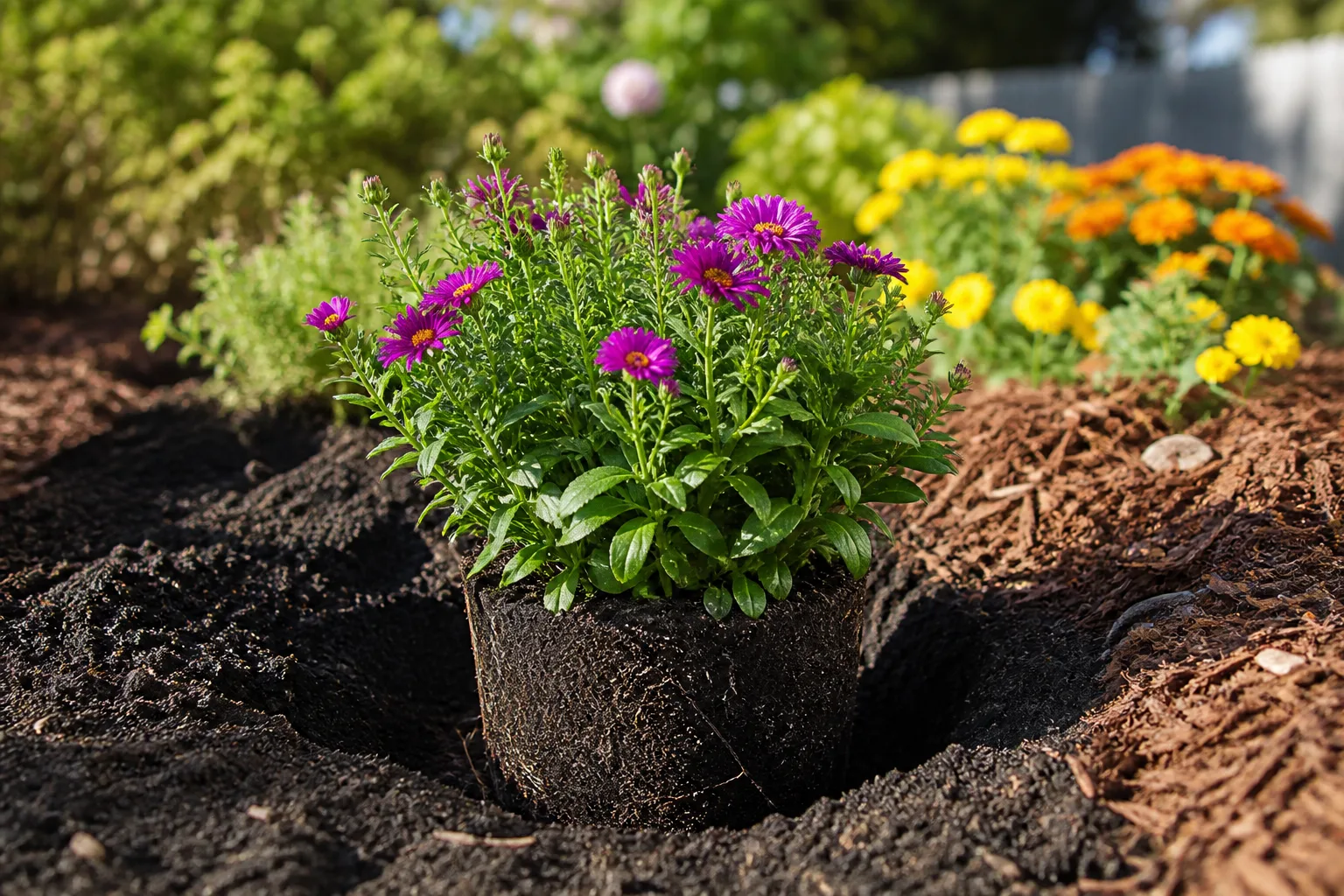
16 Perennials for Last-Minute Fall Color
The list below is arranged by the job each plant can do. The first group offers the best odds of flowers or strong color before frost when you buy established pots. The second group is for sunny beds where structure and pollinator value matter as much as a single flush of blooms. The final group fills shade, moisture, and late-season texture gaps.
The Fastest Route to Flowers Before Frost
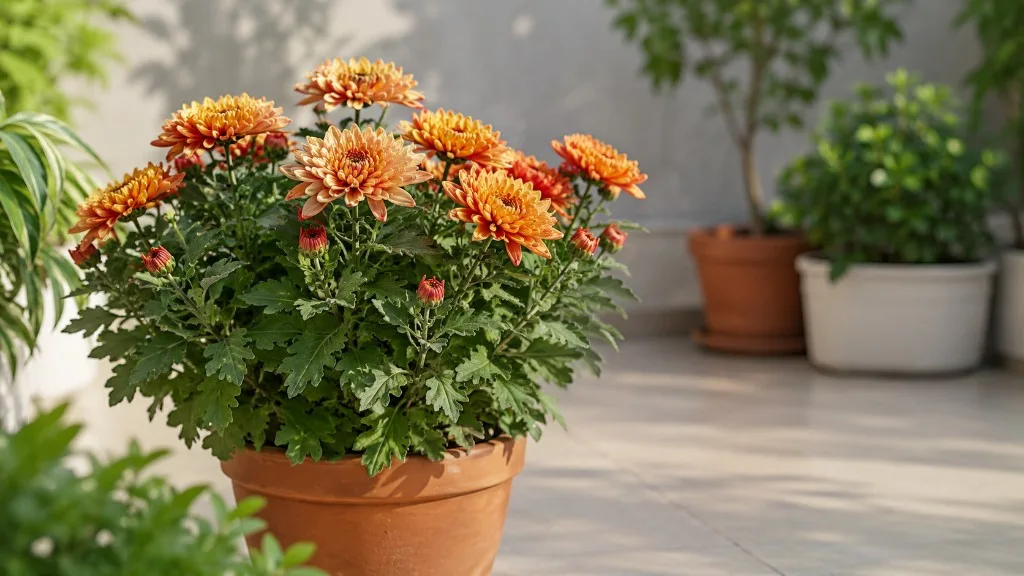
1. Garden mums (Chrysanthemum × morifolium). For the fastest burst of color, few plants are more dependable than a healthy garden mum already showing buds. Orange, yellow, bronze, red, pink, and white cultivars can brighten a bed or container immediately, but the flowers are a seasonal display unless the plant is genuinely hardy and gets time to root. Give mums full sun, drainage, and consistent moisture; do not bury the crown or leave the container sitting in a saucer of water.
2. Autumn stonecrop sedum (Hylotelephium). Upright sedums bring both flowers and a sturdy silhouette. Their fleshy leaves help them handle dry spells after establishment, while pink flower heads often deepen to copper, red, or rusty tones as autumn advances. Place them in full sun and free-draining soil, and do not improve a sandy, lean bed by making it rich and wet. Autumn Joy sedum is a useful example of the upright stonecrop form; compact cultivars work well in containers.
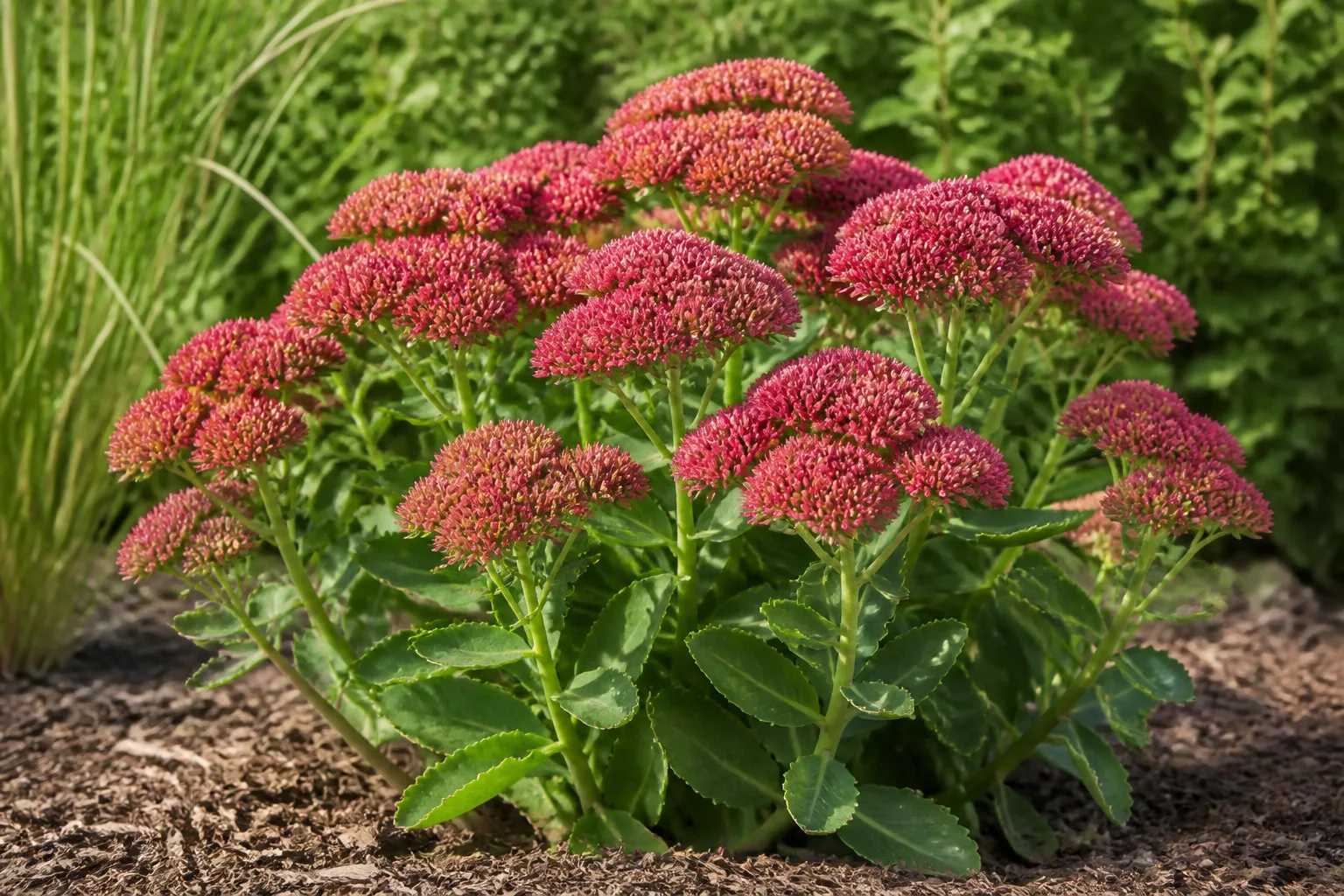
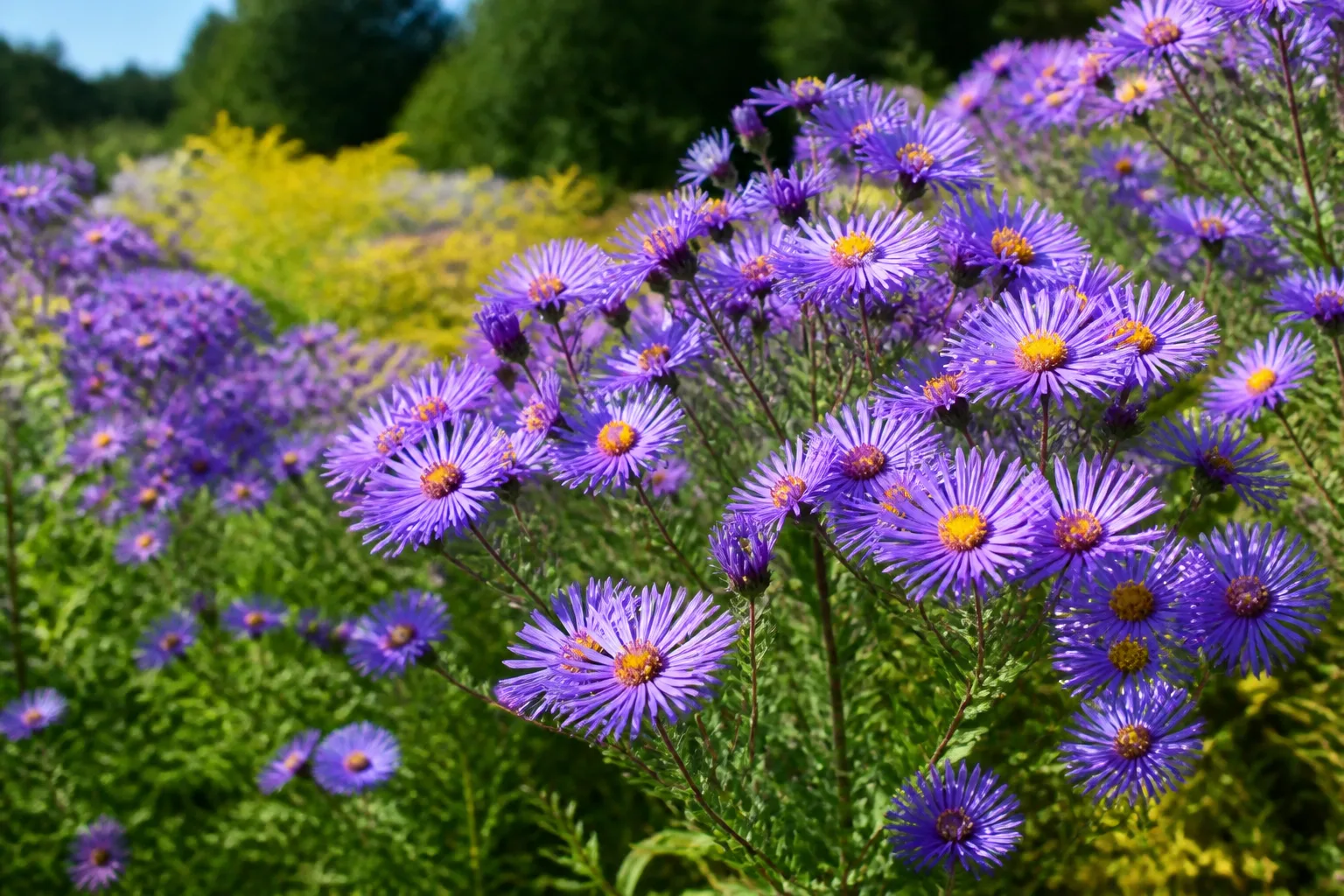
3. Fall asters (Symphyotrichum spp.). Asters are the bridge between summer and frost: clouds of blue, purple, pink, or white daisies open when many early perennials are fading. Choose a budding plant with sturdy stems, full sun, and room for air to move around it. Asters appreciate more even moisture than sedum, so they are better companions in a moderately fertile bed than in a bone-dry rock garden. Do not shear a newly planted aster in fall; remove diseased leaves, support top-heavy stems, and let healthy growth help shield the crown.
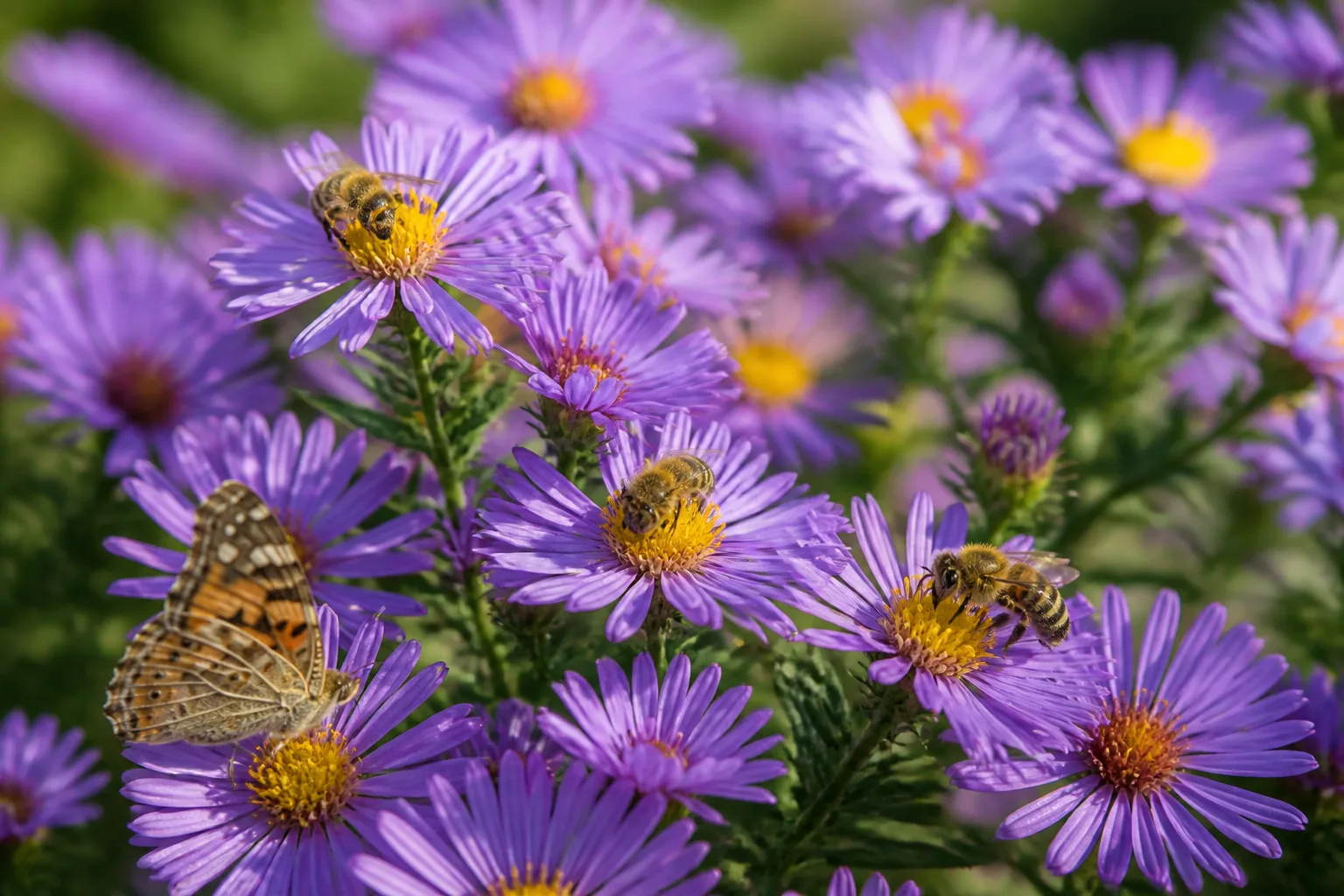
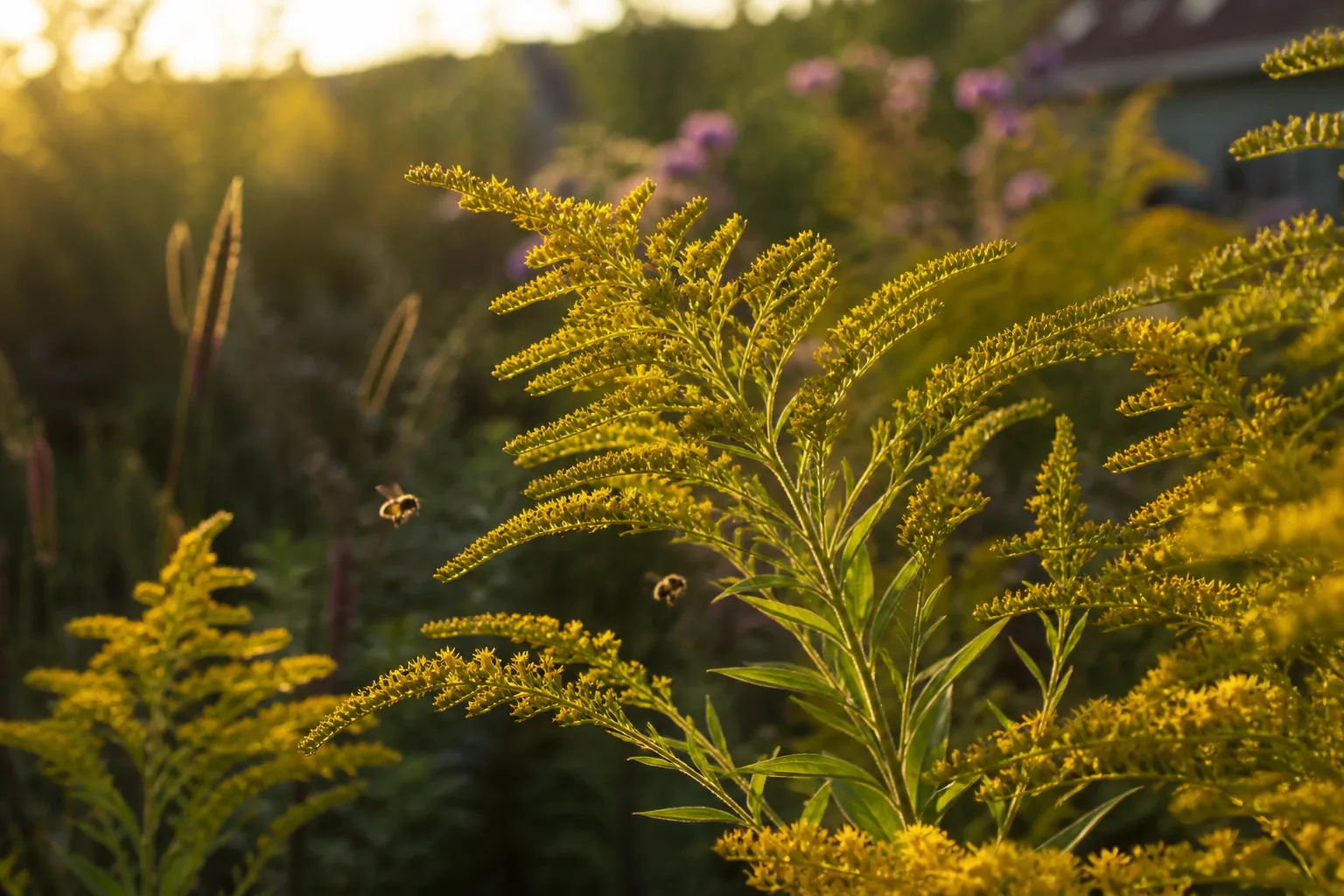
4. Goldenrod (Solidago spp.). Goldenrod supplies a bright yellow finish and a valuable late nectar source. Modern compact cultivars are easier to fit into a home border than a tall wild stand, but the label still matters because species and cultivars differ in height and spread. Give it sun and drainage, water while it establishes, and do not reject it because of hay fever: goldenrod is commonly blamed for symptoms caused by wind-pollinated ragweed blooming at the same time. Use a compact selection if the bed is small.
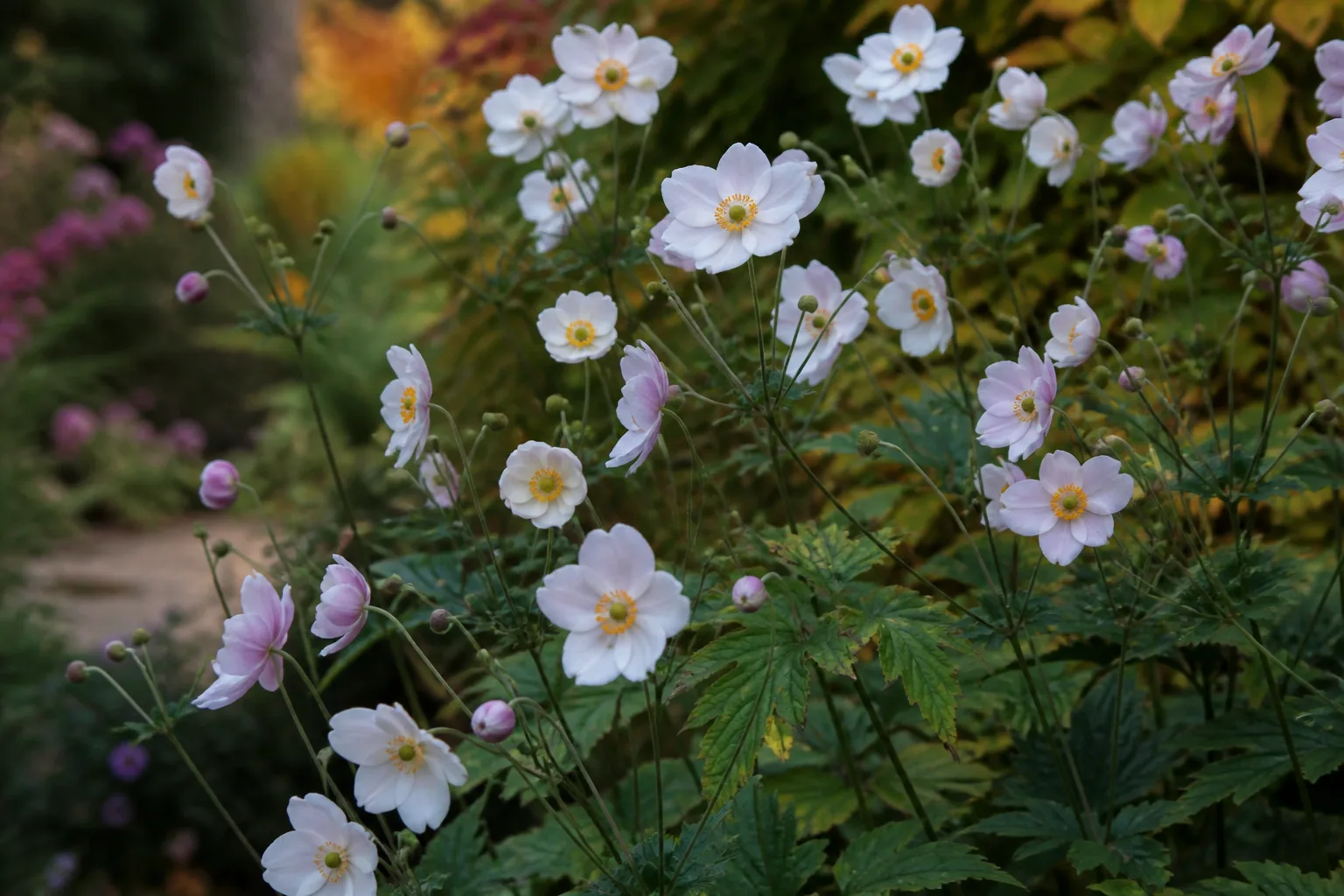
5. Japanese anemone (Anemone hupehensis and hybrids). Tall pink or white flowers make Japanese anemone one of the best choices for a partly shaded back border. It prefers rich, cool soil that holds moisture without staying saturated, and it often takes a season to look settled. Plant a flowering container carefully, keep it watered, and give it space: underground runners can carry the plant into nearby perennials. Growing anemone flowers is especially helpful if you are deciding between a fall-blooming plant and a spring-corm type.
6. Helenium, or sneezeweed (Helenium autumnale and hybrids). Helenium brings hot colors—yellow, orange, red, and bicolors—to the part of the border that needs warmth. It prefers full sun and consistent moisture, although it does not want stagnant drainage. Choose a compact cultivar for the front or middle of the bed, and buy one with open flowers if this year’s display matters. Helenium earns its common name from its bloom season, not because it causes hay fever; wind-pollinated ragweed is the more likely culprit.
7. Toad lily (Tricyrtis spp.). Toad lily is the answer for a shady spot that feels abandoned in fall. Its orchid-like, spotted flowers open along arching stems, often from late summer into early fall, and its foliage can add interest before and after bloom. The University of Wisconsin Horticulture profile recommends part to full shade, moist soil rich in organic matter, and shelter from early frosts; it also notes that species and hybrids differ in hardiness. Keep the crown evenly moist, avoid a waterlogged pocket, and inspect young growth for slugs.
8. Nippon daisy or Montauk daisy (Nipponanthemum nipponicum). This late white daisy is a good “buy it in bloom” plant for full sun and well-drained soil. Its foliage and flowers can hold through light frost, making it useful when summer color has gone flat. Treat the plant as a container-grown perennial only if the tag’s hardiness fits your winter; an exposed pot has colder roots than a plant in the ground. It becomes a strong late-season anchor rather than a subtle filler, so leave room for its mature height and width.
Long-Season Workhorses for Sunny Beds
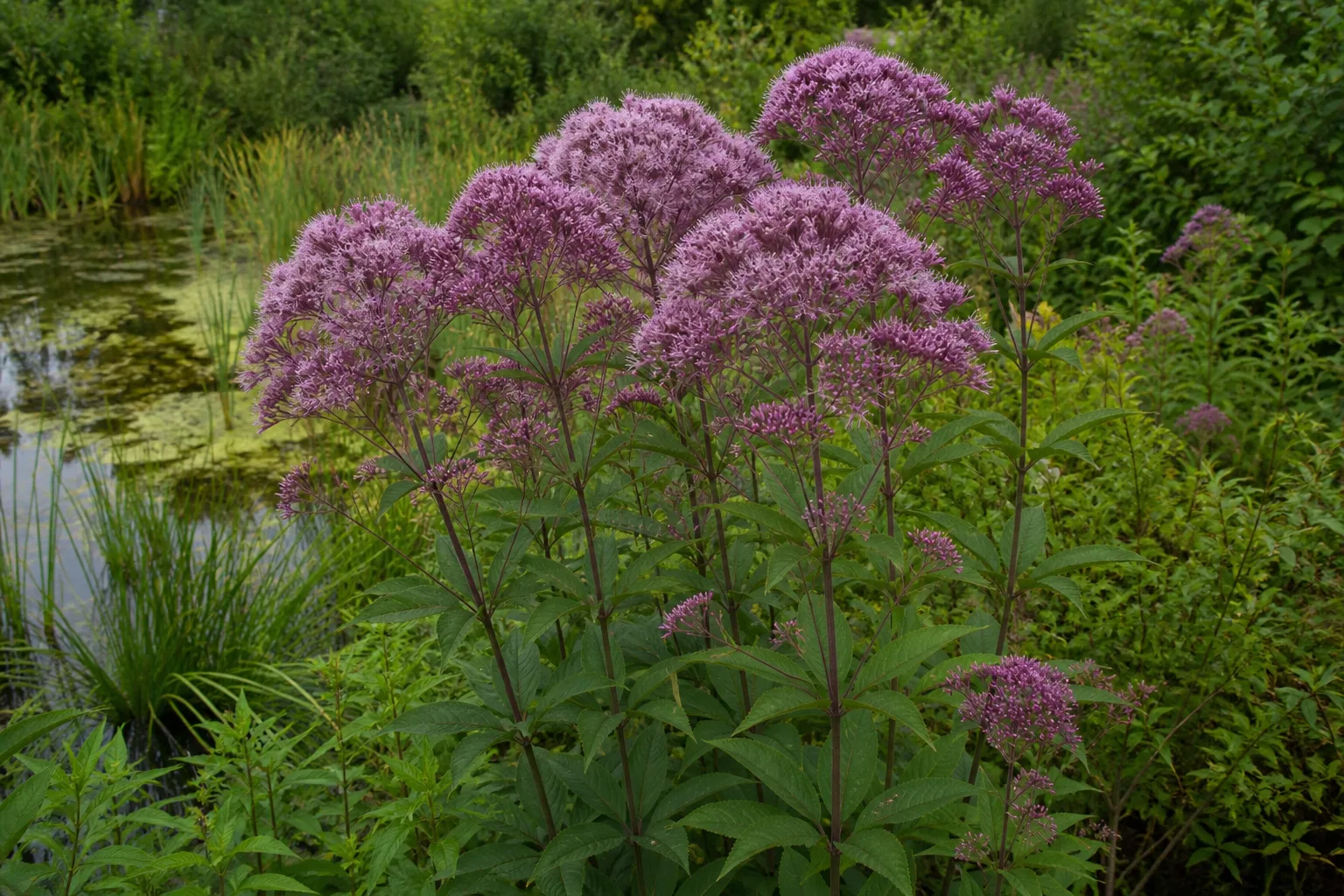
9. Joe-Pye weed (Eutrochium spp.). Joe-Pye weed is a large, useful native perennial for a sunny or lightly shaded site with rich, consistently moist soil. Mauve flower clusters rise above strong stems and attract bees and butterflies when the garden needs late nectar. Standard forms can become enormous, so check the mature height before placing one beside a walkway or window. Compact cultivars make the same color easier to use in an ordinary border, but even compact plants need water while new roots explore the soil.
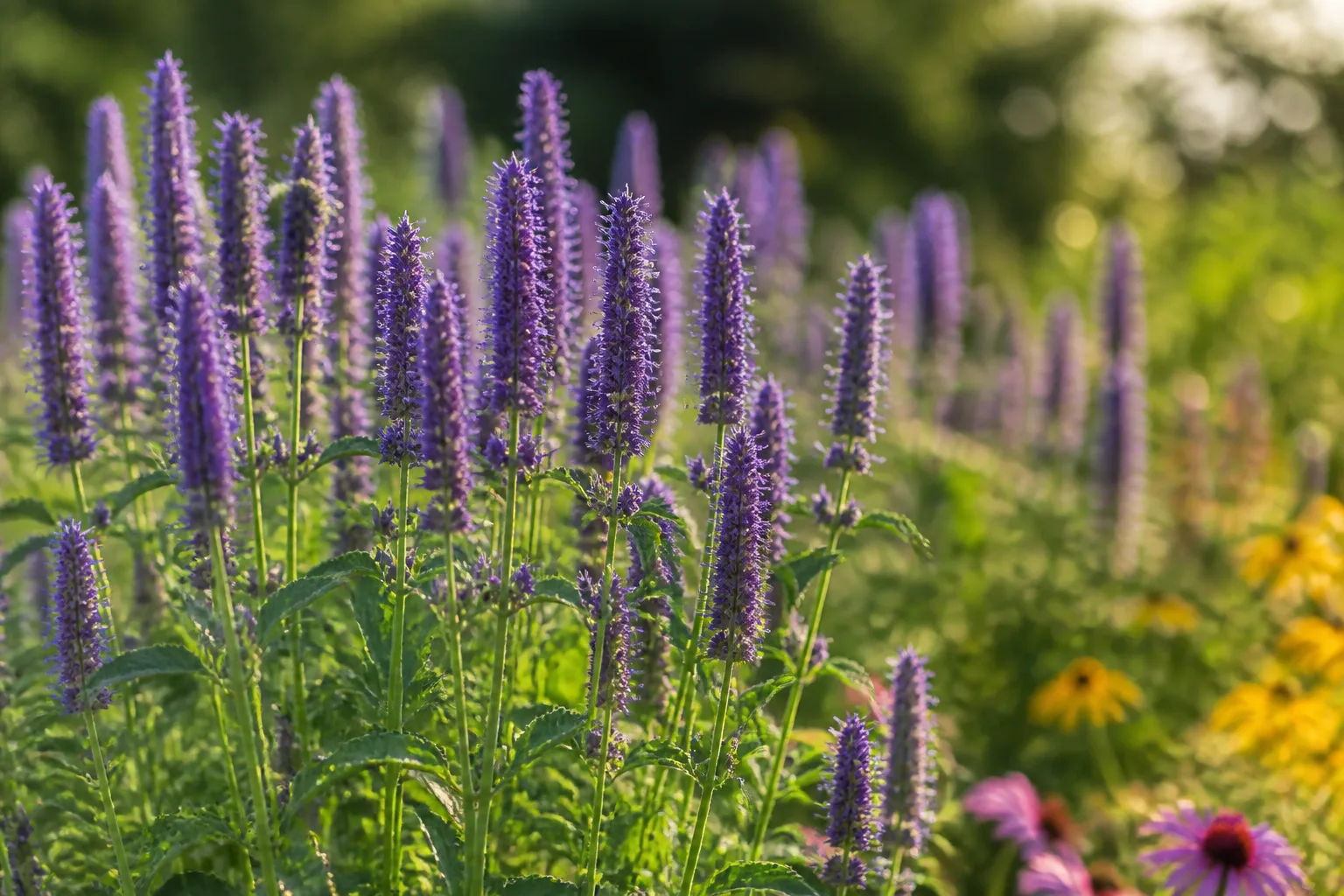
10. Anise hyssop or hummingbird mint (Agastache spp.). Agastache provides upright spikes, aromatic foliage, and a long pollinator season. It is a strong choice for full sun and sharply drained soil, especially where winter wet is a bigger threat than summer drought. Hardiness varies widely among species and cultivars, so “agastache” alone is not enough information for a cold-climate purchase. Water a new plant deeply, then avoid keeping its crown wet; a small mound or raised edge can make the difference in heavy soil.
11. Russian sage (Salvia yangii, still widely sold as Russian sage). The lavender-blue haze of Russian sage adds a cool counterpoint to yellow goldenrod and warm blanket flower. It wants full sun and lean, well-drained soil, and it becomes more drought tolerant once established. A late-planted specimen may survive in a cold zone but still be less reliable than one planted in spring, especially if the site is windy and the roots are shallow. Give it space, skip late high-nitrogen feeding, and leave major cutting-back for spring.
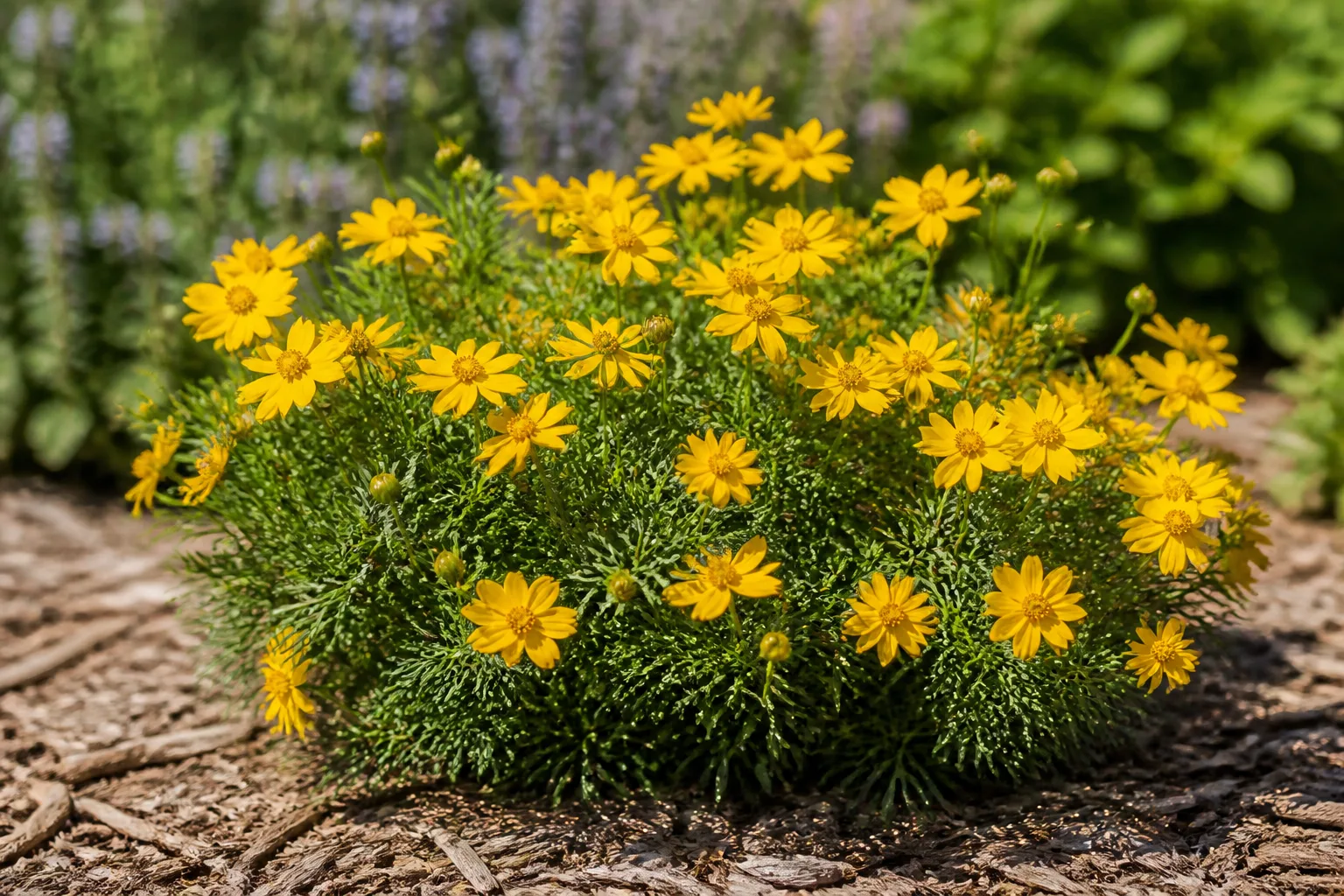
12. Coreopsis (Coreopsis spp.). Coreopsis is useful when the bed needs cheerful yellow, gold, orange, red, or bicolor flowers that can bridge summer into fall. Many cultivars bloom for a long season and respond to removing spent flowers, but not every coreopsis has the same height or frost timing. Choose a compact, budded plant for a small gap, give it full sun and drainage, and water consistently until it roots. Once established, many selections tolerate heat and dry weather better than a fresh nursery pot will.
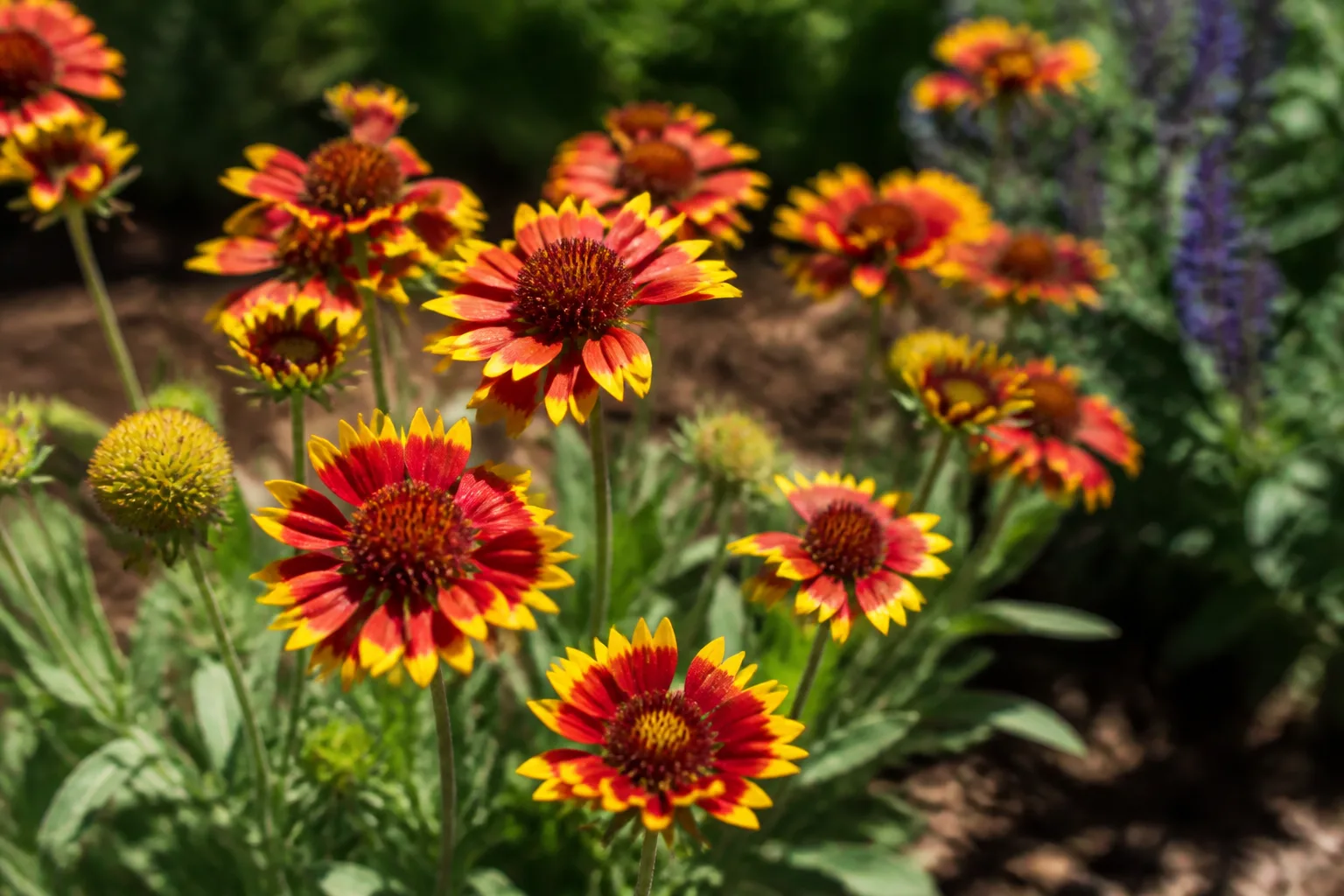
13. Blanket flower (Gaillardia spp.). Blanket flower brings red, orange, yellow, and burgundy tones to a hot, dry border. Its best insurance is a sunny position with lean, well-drained soil; overwatering and rich fertilizer can produce a lush plant that is less durable than the tag promised. Buy a flowering container if you need immediate color, remove only the oldest spent heads, and do not mistake a short-lived plant in heavy winter soil for a failure of all blanket flowers. Cultivar hardiness and drainage are decisive.
Shade and Support Plants for a Fuller Finish
14. Yarrow (Achillea millefolium and hybrids). Yarrow’s flat flower clusters make a calm landing place between round sedum heads and daisy-shaped asters. It prefers full sun and well-drained soil, and its ferny foliage remains useful even when flowering slows. New plants need water despite their eventual drought tolerance. Leave a few umbels for seed and winter texture, but remove diseased or collapsed material. Yarrow can spread, especially in favorable soil, so plant it where a widening clump is welcome rather than in a narrow line beside a lawn.
15. Reblooming coneflower (Echinacea spp.). Coneflower is often thought of as a summer plant, but long-blooming and reblooming selections can keep a sunny bed colorful into fall, especially when purchased with buds. Give it full sun, good drainage, and space for the clump to return. Deadhead a portion for more flowers, but leave some browned cones standing: they add winter structure and can offer seed to birds. A late plant may spend this season settling in, so choose a well-rooted container if this year’s show matters.
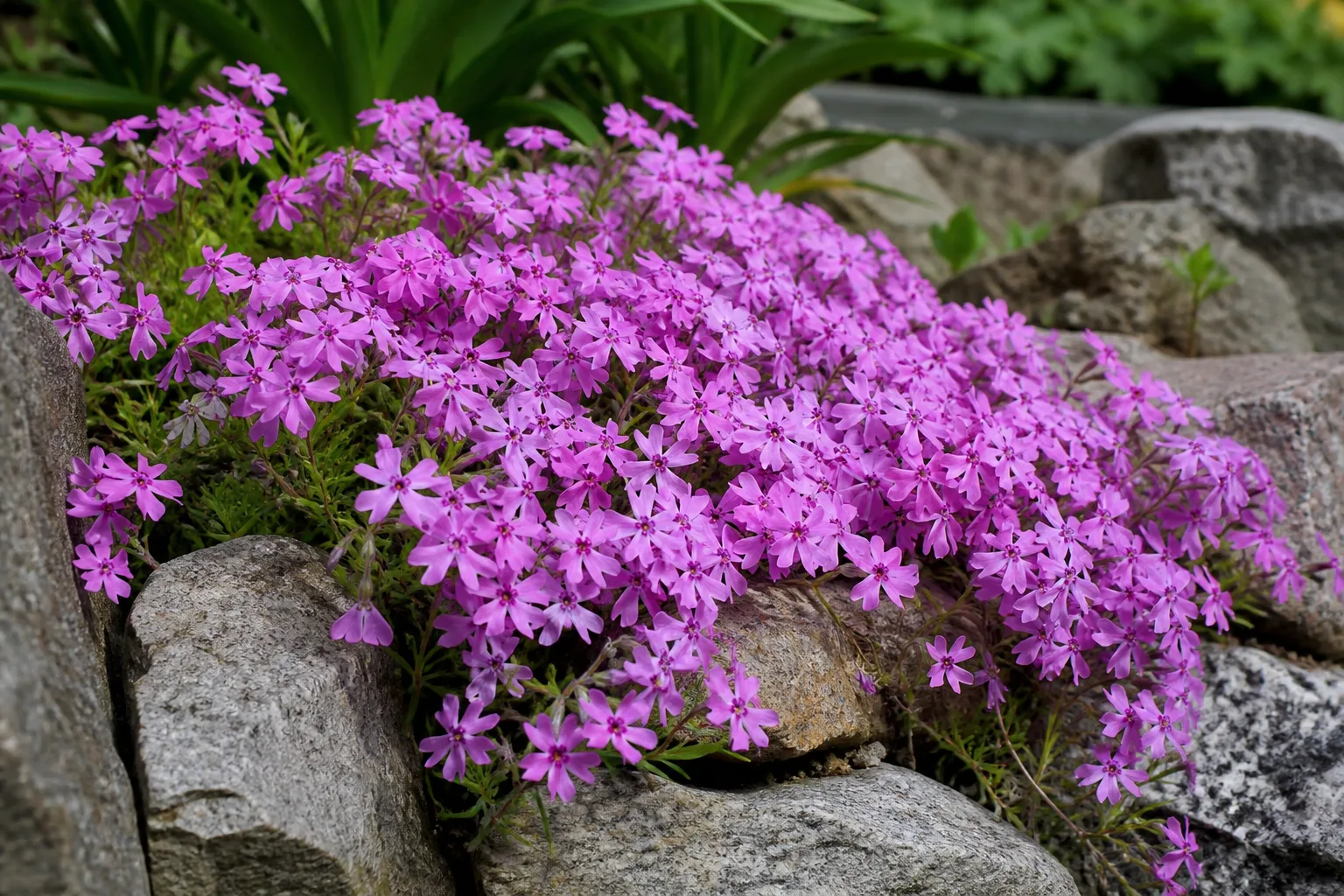
16. Garden phlox (Phlox paniculata). Garden phlox is the choice when you want fragrant pink, white, purple, or red flower clusters and a fuller middle-to-back layer. Its main display is usually late summer rather than deep autumn, so buy it in flower if you are filling a visible gap now. Provide sun to part shade, even moisture, and enough spacing for airflow; crowded, damp foliage is more likely to develop mildew. A new late-season transplant does not need a hard haircut—remove spent clusters and wait for spring cleanup.
How to Plant a Perennial in Late Summer or Fall
Late-season planting is mostly a root-contact exercise. You are not trying to make a newly moved plant produce a second flush of tender growth; you are trying to eliminate air pockets, keep the root ball from drying, and give the crown a stable place to enter dormancy.
A Six-Step Planting Sequence for Stressed-Season Roots
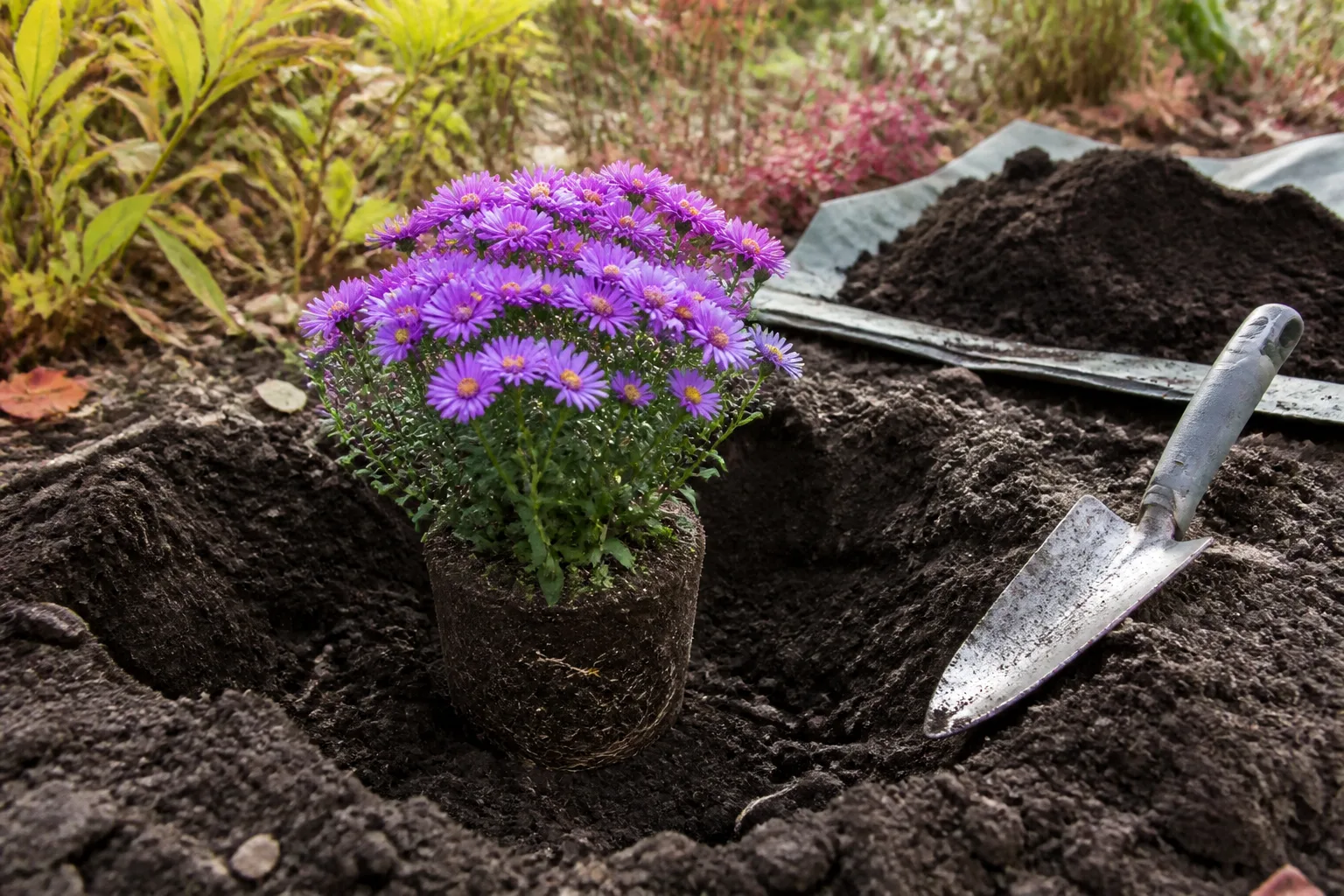
- Water the pot before you dig. A hydrated root ball is less likely to crumble, and the first drink after planting can move through the soil rather than bouncing off a dry plug.
- Choose the site by mature needs. Check sun, drainage, moisture, mature width, and height. Do not put a dry-site sedum beside a plant that needs constant moisture simply because their flowers look good together.
- Dig a broad, not excessively deep, hole. Set the crown at the same level it occupied in the container. Deep planting is especially risky in cool, wet fall soil because the crown may stay damp.
- Loosen circling roots. If roots are circling the outside, tease them apart or make a few shallow vertical cuts through the outer mat. Do not shred a small root ball just to make it look loose.
- Backfill with the soil you removed. Mix in compost only when the native soil genuinely needs organic matter; do not create a rich pocket that holds water around a plant adapted to lean drainage.
- Soak, settle, and label. Water slowly until the surrounding soil is fully settled, then label the plant and record the planting date. A label prevents spring mistakes when a late-planted perennial has gone dormant.
Penn State Extension’s general perennial guidance emphasizes well-drained soil, immediate watering, and regular checks while new plants establish. Use the “about one inch per week” rule only as a rough baseline for established plants; a fresh transplant may need more frequent checks during a warm, windy spell and less when fall rain has saturated the bed.
Aftercare Until Frost
The weeks after planting determine whether a pretty nursery purchase becomes a perennial or a dried-out root ball. Walk the bed every few days at first, check moisture below the surface, and look for leaves wilting in the morning rather than relying on a fixed calendar schedule.
Water, Mulch, Feeding, and Deadheading
Water deeply enough to moisten the whole root ball and the surrounding soil, then let excess drain. Frequent surface sprinkles encourage shallow roots and can keep foliage wet overnight; a slow soak at the base is more useful. Containers need even closer attention because wind and sun can dry them quickly, but the answer is still drainage rather than keeping the pot permanently wet.
Use a light mulch layer while the soil is still warm, then add winter protection after growth slows and the ground begins to cool. Two to three inches of shredded leaves, pine straw, or fine bark can moderate moisture and temperature, but keep mulch off the crown and stems. Heavy mulch applied too early can trap moisture and shelter rodents; no mulch at all leaves a new shallow root system more exposed to freeze-thaw lifting.
Do not fertilize a late transplant with a high-nitrogen product to “help it catch up.” The top growth you force may be soft and poorly hardened when cold arrives. Penn State’s perennial care guidance notes that overfertilization can create excessive soft growth and fewer flowers; unless a soil test or local recommendation says otherwise, prioritize root contact, water, and drainage now and reassess feeding in spring.
Deadhead only when it improves the display or extends flowering. Remove spent mum, coreopsis, helenium, and phlox clusters if buds remain, but do not shear the entire bed for a clean photograph. Healthy aster flowers support late insects, and sedum, coneflower, and yarrow seedheads can provide structure after petals fade.
What to Leave Standing for Winter
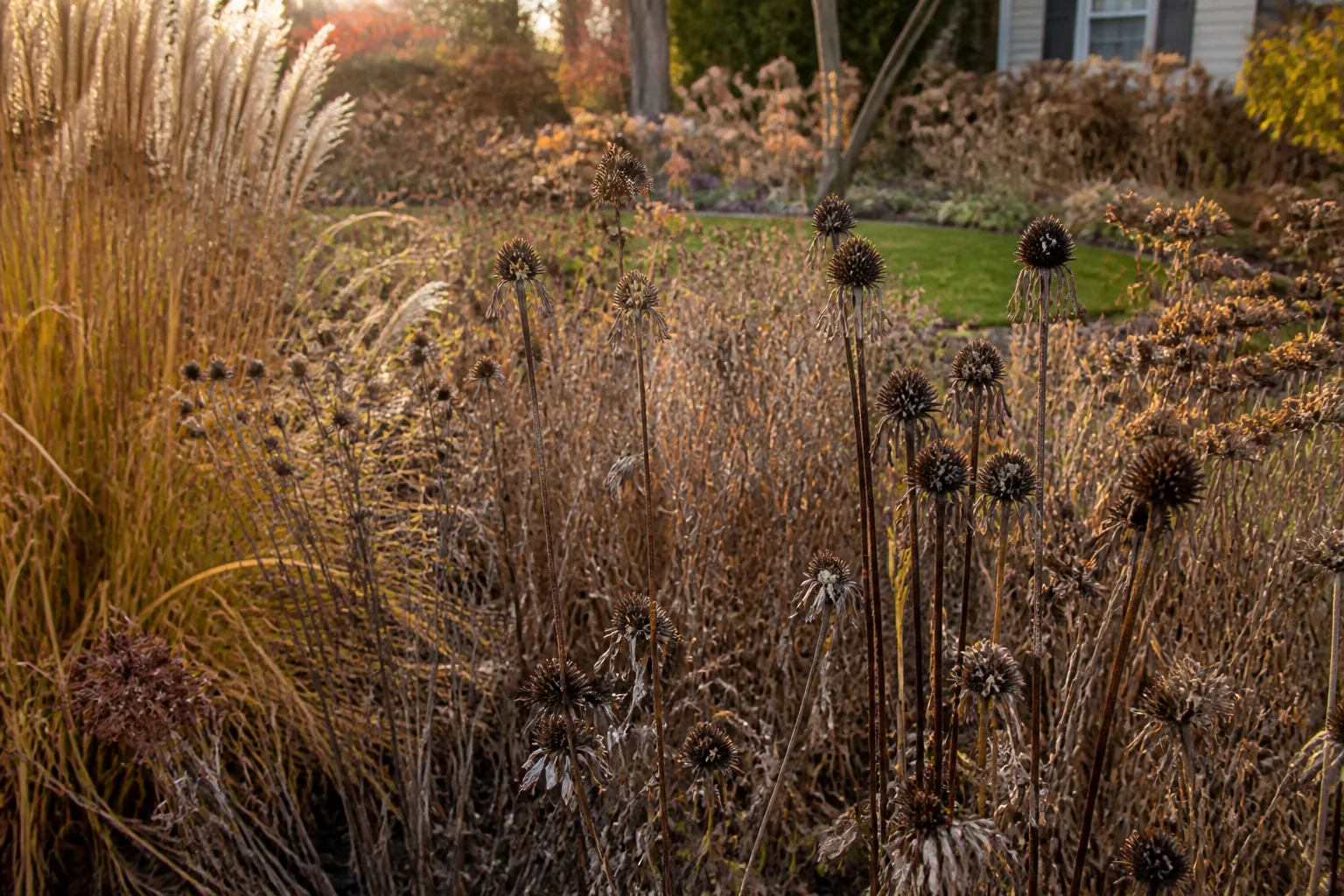
Leave healthy stems standing when they offer a clear benefit: coneflower cones for birds, sedum heads for winter shape, aster stems that help mark the planting, or tall grasses that slow wind across a new bed. Cut back foliage promptly when it is diseased, slimy, or collapsing onto the crown, and remove that material from the bed if the disease is obvious.
Penn State Extension’s pollinator guidance explains why a perfectly bare winter garden is not always the healthiest one: stems, leaf litter, and seedheads provide overwintering places for insects while late flowers extend food availability. A practical compromise is to clean the path, remove diseased debris, and leave the healthy architecture until late winter or early spring.
Build a Fall Palette Instead of a Random Plant Collection
A fall border looks intentional when its plants share conditions and repeat a few shapes. Start with one structural plant, one airy flower, and one low or mounding plant; then repeat the trio rather than buying one of everything. The sedum-and-aster pairing is a useful example because broad sedum heads contrast with loose daisy sprays, while both enjoy sun and drainage. Gardening Know How’s practical pairing guide also warns that sedum prefers drier conditions than many asters, so a moderately fertile, free-draining compromise is better than a soggy bed.
Three Combinations That Solve Common Garden Gaps
- The classic sunny border: Place asters behind sedum, repeat goldenrod for yellow, and add a few garden mums at the front where their color is visible. Use this only in a bed that drains; do not plant the sedum in the wettest corner.
- The dry, hot edge: Combine Russian sage, yarrow, blanket flower, and anise hyssop. Their blue, gold, red, and purple tones create a long transition without demanding constant moisture after establishment. Keep the group away from downspouts.
- The cool shade pocket: Layer Japanese anemone with toad lily and a non-flowering foliage perennial already in the bed. Keep the soil evenly moist but not saturated, give tall anemones room to spread, and site toad lily where its small spotted flowers can be seen up close.
When an Annual or a Spring Planting Is the Better Choice
If your first hard frost is less than three weeks away, a perennial planted in the ground may be a poor purchase when your only goal is a full display before winter. Use a well-drained container for mums or another flowering perennial, move it to shelter during hard freezes, and treat the display as seasonal unless the label and local climate support overwintering. You will get a more honest result than burying a stressed plant in cold, saturated soil.
Waiting is also sensible when the only available plants are rootbound, diseased, wilted from neglect, or clearly mismatched to your site. A sale price does not compensate for a plant that cannot take up water. If you have a bare-root spring bloomer, a seed packet, or a small division with no buds, plant it for establishment only when the timing and drainage are favorable; do not count it as your last-minute color solution.
The best late-season purchase is the one that solves the right problem. Buy a flowering mum for a front-door container, a sedum for a dry sunny edge, a toad lily for a shady path, or an aster for a pollinator-rich border. If none of those conditions match your garden, improve the site or wait for spring rather than making the plant fight the calendar.
Conclusion
Late-season perennial planting works when you match the plant’s promise to the time left before hard frost. Choose a flowering container for immediate color, a well-rooted hardy plant for next year’s structure, and a site that fits its light, drainage, and moisture needs. Plant at the right depth, soak the root zone, skip late high-nitrogen feeding, mulch once the soil cools, and leave healthy seedheads standing.
The safest shortlist is simple: garden mums, sedum, asters, goldenrod, and helenium for sun; Japanese anemone and toad lily for moist shade; and yarrow, blanket flower, Russian sage, or anise hyssop for a dry border. A little restraint now—especially around watering, fertilizer, and fall cleanup—gives the garden a better finish this year and a stronger start next spring.



