33 Types of Peperomia You Can Grow at Home
Compare 33 peperomia types by leaf shape, growth habit, light needs, and rarity. ID charts, pet-safe notes, and links to species care.
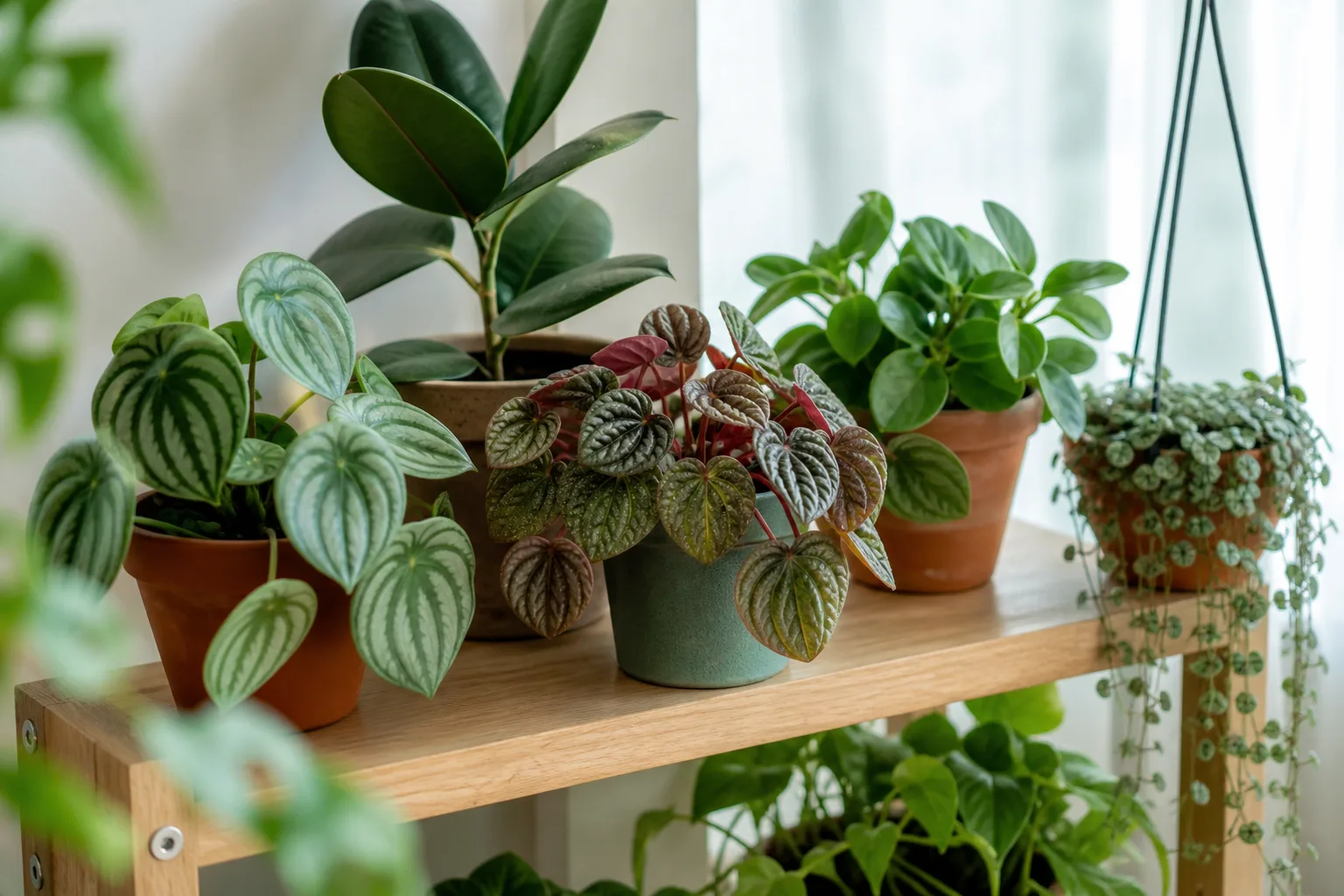
Peperomia plants pack an entire design catalog into one genus—coin-round leaves, rippled hearts, turtle-shell trails, and glossy upright stems that look like miniature rubber trees. Botanists recognize more than 1,000 species in Peperomia, all in the pepper family (Piperaceae), native to tropical and subtropical Americas with a few African species mixed in. Home growers usually meet 20 to 35 types at retail; this guide covers 33 peperomia varieties worth growing indoors, from grocery-store baby rubber plants to collector perciliata cultivars that sell out in minutes.
The care mistake that kills more peperomias than pests is treating them like thirsty ferns. Most store types are semi-succulents with small root systems that want dry cycles, snug pots, and bright filtered light—not constant moisture. For genus-wide watering, soil, and troubleshooting, start with our peperomia care guide; the peperomia hub links species-specific light, watering, and propagation pages when you know which type you own.
What Makes Peperomia Such a Flexible Houseplant Genus
Peperomias share a few traits that explain why nurseries stock so many unrelated-looking plants under one label. NC State Extension describes the genus as compact, slow-growing foliage plants with thick leaves, rarely exceeding 12 inches indoors for most cultivated species. (NC State Extension) Many species grow as epiphytes in nature, rooting into bark pockets rather than deep soil, which is why they rot in oversized decorative pots filled with heavy peat.
Common names blur together—radiator plant, baby rubber plant, emerald ripple—but growth habit splits the genus into useful shopping categories. Upright bushy types (Peperomia obtusifolia, P. polybotrya) suit desks and mantels. Mounding ripple cultivars (P. caperata and hybrids) stay under 8 inches and tolerate lower light than variegated trailing types. Vining and trailing species (P. prostrata, P. rotundifolia, P. serpens) need hanging baskets or high shelves so stems can cascade without sitting on wet soil.
Unlike many trendy houseplants, peperomias are non-toxic to cats and dogs according to ASPCA listings for Peperomia spp. (ASPCA) That makes them a strong pick for pet-friendly collections—though you should still prevent chewing because any plant material can upset stomachs.
How to Identify Your Peperomia Type Before You Buy
Nursery tags are unreliable. Wholesale growers reuse generic “peperomia assorted” labels, and the same cultivar arrives under three Latin names. Identification starts with what you can see in the pot.
Upright Bushy vs Trailing vs Rosette Growth Habits
Run through this order every time you are shopping or trying to name a plant you already own:
- Thick upright stems with large glossy leaves → likely Peperomia obtusifolia (baby rubber plant) or P. polybotrya (raindrop peperomia).
- Short mounding plant with deeply ridged heart-shaped leaves → Peperomia caperata ripple group or a named cultivar like Rosso or Frost.
- Thin trailing stems with small round or oval leaves → P. prostrata (string of turtles), P. rotundifolia (trailing jade), P. serpens, P. quadrangularis, or P. japonica.
- Peapod-shaped leaves on upright stems → Peperomia ferreyrae (pincushion / happy bean).
- Folded taco-shaped succulent leaves → Peperomia dolabriformis (prayer pepper).
- Large aroid-like leaves with silver veining → Peperomia maculosa (spotted peperomia)—often mislabeled as a philodendron.
If two pots look similar, check leaf attachment. Watermelon types (P. argyreia, P. verschaffeltii) show silvery stripes perpendicular to the leaf center; parallel peperomia (P. puteolata) adds horizontal banding that P. quadrangularis lacks.
Leaf Texture Clues That Narrow the Species
Texture eliminates half the confusion before you read a Latin name:
| Texture | Likely species / group | Quick tell |
|---|---|---|
| Glossy, thick, rubbery | P. obtusifolia, P. orba | Leaves feel waxy; stems stiff |
| Deeply corrugated / rippled | P. caperata cultivars | Ridges run leaf to leaf |
| Silvery watermelon stripes | P. argyreia, P. verschaffeltii | Teardrop leaves; mini is smaller |
| Turtle-shell pattern on tiny leaves | P. prostrata | Leaves under ½ inch on pink stems |
| Fuzzy / felted surface | P. incana | Fine white hairs on heart-shaped leaves |
| Metallic dark sheen | P. metallica | Almost black-green with red leaf undersides |
When labels disagree, trust leaf shape and growth direction over the cultivar name printed in small type.
Shared Care Rules for Every Peperomia on This List
Every type below shares a baseline. Species-specific pages matter for fine-tuning, but if you get these rows right, most peperomias survive boring office winters.
| Factor | Indoor target | Notes |
|---|---|---|
| Light | Bright indirect for most types | Trailing and variegated types need more than ripple caperata |
| Water | Top 1–2 in. dry before soaking | Thick-leaf upright types dry slower than thin trailers |
| Soil | Chunky, fast-draining mix | Orchid bark + perlite beats straight peat |
| Pot size | Snug; +1–2 in. when repotting | Oversized pot = hidden rot trap |
| Temperature | 65–75°F ideal; avoid below 50°F | Cold windowsills damage fleshy leaves |
| Humidity | Average room fine | Humidifier beats daily misting |
| Fertilizer | Half-strength monthly spring–summer | Skip in dim winter rooms |
| Pests | Mealybugs, spider mites, fungus gnats | Inspect leaf axils on trailers |
Missouri Botanical Garden notes that Peperomia obtusifolia wants soils to almost dry on top before rewartering and bright indirect light without harsh afternoon sun. (Missouri Botanical Garden) RHS guidance for the genus recommends loose, free-draining compost similar to orchid mixes because roots expect air as much as moisture. (RHS)
First action when any peperomia looks sad: stick a finger deep in the soil. Soft stems and yellow lower leaves almost always mean wet mix, not “needs a drink.” University of Arkansas Extension emphasizes that peperomias prefer being slightly root-bound and grow slowly—patience beats repotting into a huge cachepot. (University of Arkansas Extension)
Watch for ring spot, a viral disease that causes tan rings and puckered leaves. Illinois Extension notes there is no cure—remove affected growth, sterilize tools, and discard severely infected plants rather than propagating from them.
When you bring a new peperomia home, quarantine it for two weeks away from other plants. Mealybugs and spider mites hitchhike on trailing types especially, and catching them early saves the rest of your collection. Wipe leaf axils with a damp cloth during the quarantine window and inspect the soil surface for fungus gnats—a sign the nursery kept the mix too wet.
Pet Safety: Are Peperomias Toxic to Cats and Dogs?
Yes—peperomias are among the safer houseplant choices for pet owners. ASPCA lists Peperomia species as non-toxic to both cats and dogs. (ASPCA) No cultivar on this list changes that status; Rosso, watermelon, and string of turtles are equally safe on the toxicity chart.
Chewing any plant can still cause mild vomiting or drooling, so use stable pots on shelves and pick up fallen leaves. For broader pet-safe options, see our pet-safe houseplants guide and non-toxic plants for cats. Call ASPCA Poison Control at (888) 426-4435 if a pet eats a large amount and acts ill.
Upright Peperomias for Desks and Shelves
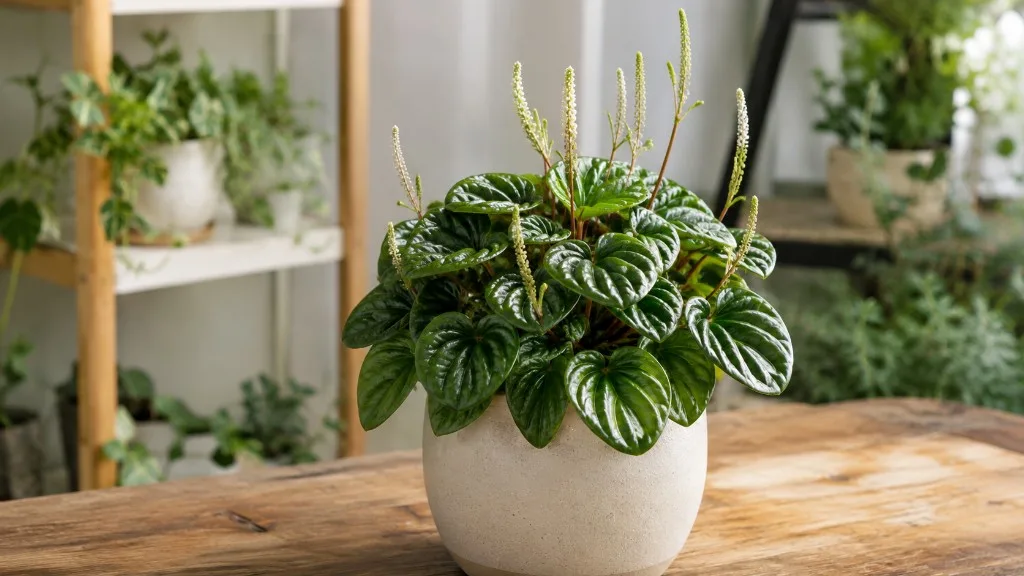
Upright types anchor a room without demanding floor space. They tolerate missed waterings better than ferns and rarely outgrow a bookshelf within a year.
Baby Rubber Plant, Pixie Lime, Raindrop, and Pincushion
Baby rubber plant (Peperomia obtusifolia) — The default peperomia at big-box stores: upright stems, round glossy leaves to 4 inches, dark green or variegated cream/gold. Mature size 12 in. tall × 6 in. wide. Tolerates moderate low light better than trailing types. See our baby rubber plant growing guide for cultivar specifics.
Peperomia Pixie Lime (Peperomia orba) — Compact teardrop leaves in lime green; stays 6 in. tall. A dwarf alternative when baby rubber plant feels too large for a desk terrarium.
Raindrop peperomia (Peperomia polybotrya) — Flat, glossy heart-shaped leaves pointed at the tip—often confused with Chinese money plant (Pilea peperomioides), but peperomia leaves are thicker and the plant stays smaller (12–15 in.). Our raindrop peperomia care guide covers flowering and humidity.
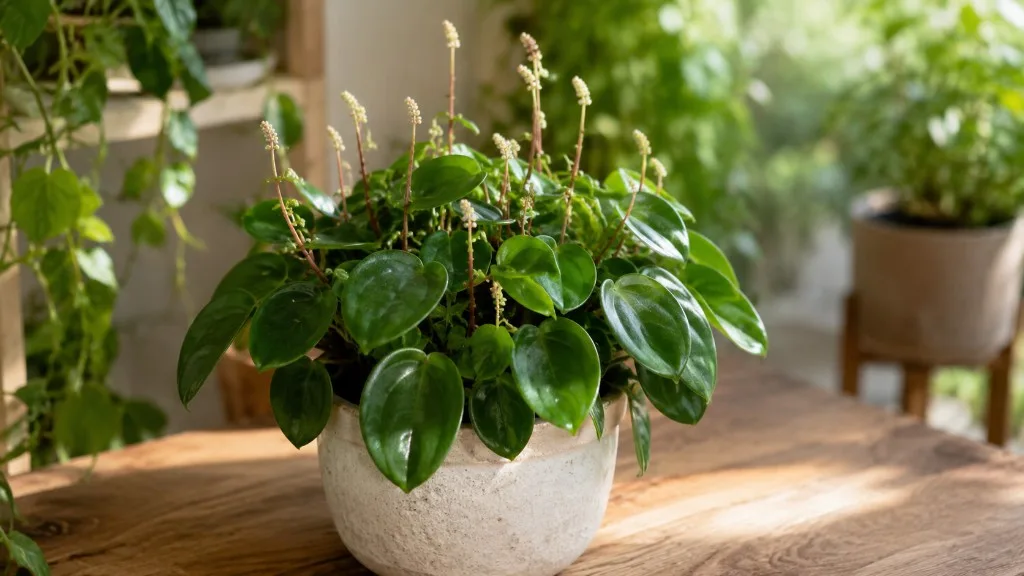
Pincushion peperomia (Peperomia ferreyrae) — Peapod-shaped leaves on upright stems; semi-succulent. Also sold as happy bean. Needs bright indirect light and infrequent water—treat it closer to a succulent than to ripple peperomia.
Peperomia Hope (Peperomia tetraphylla ‘Hope’) — Hybrid look-alike with round leaves in whorls of three or four along thick stems; trails as it matures (12 in. long). Not a true upright, but often sold in small pots before stems lengthen. See the Peperomia Hope hub for watering detail.
Ripple Peperomia and Its Best Cultivars
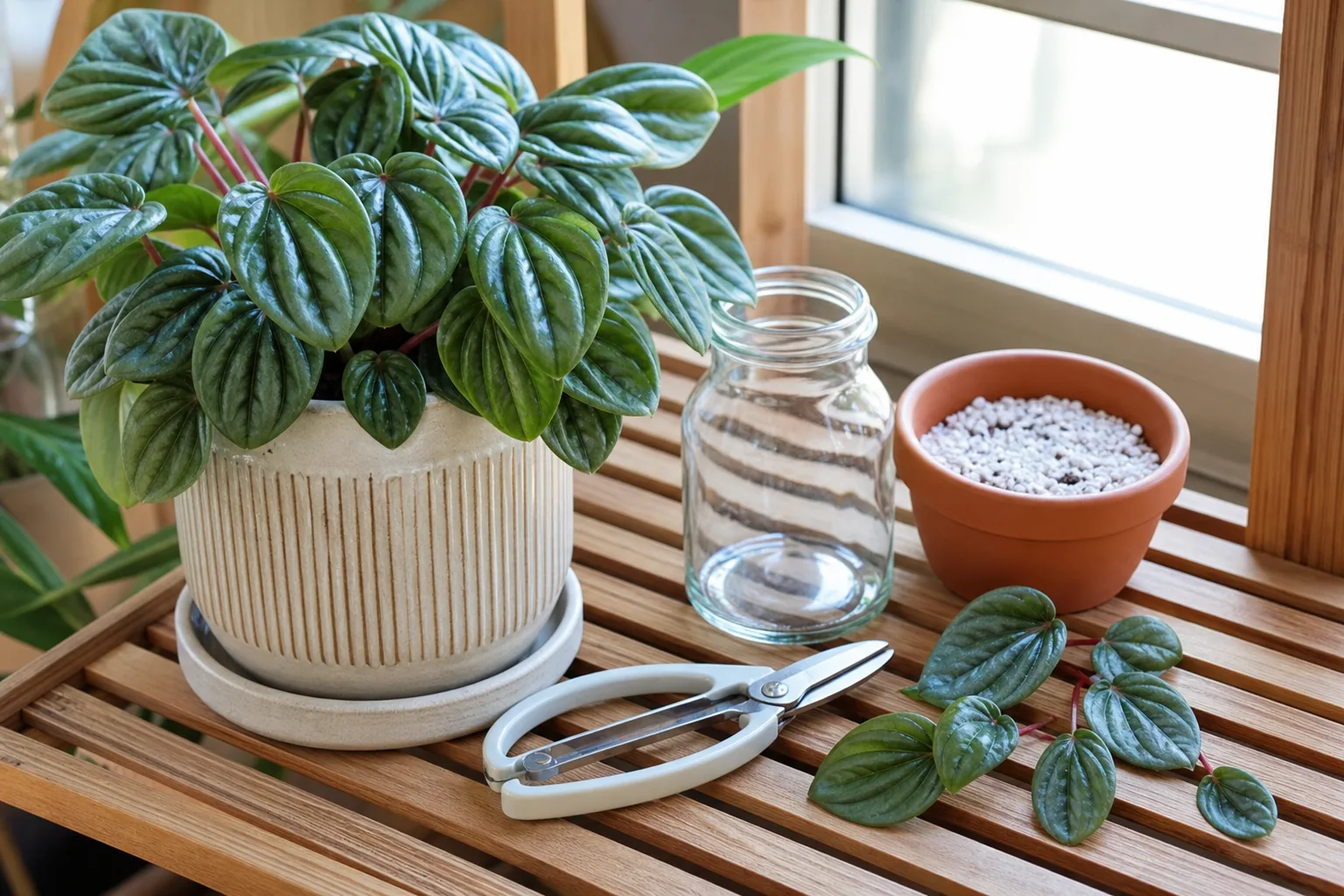
Peperomia caperata is the ripple group parent—deeply ridged heart-shaped leaves, mounding habit, rarely above 8 inches. Dozens of cultivars exist; these are the ones you will actually find without joining a auction group.
Classic Ripple, Silver, Frost, and Variegated Forms
Ripple peperomia (Peperomia caperata) — Dark green corrugated leaves; tolerates bright indirect to moderate low light. Baseline for the cultivar family. Full care in our ripple peperomia guide.
Silver ripple (P. caperata ‘Silver’) — Silvery-green ridged foliage; needs slightly brighter light than the species to hold color.
Peperomia Frost (P. caperata ‘Frost’) — Smaller, less rounded leaves with shimmery silver-green tone; popular in mixed dish gardens.
Variegated ripple (P. caperata ‘Variegata’) — Green leaves edged in cream and yellow; brighter light required or variegation reverts.
Rosso, Mendoza, Luna Red, and Abricos
Peperomia Rosso (P. caperata ‘Rosso’) — Longer, pointier leaves with burgundy undersides; one of the most distinctive caperata cultivars.
Peperomia Mendoza — Hybrid between ‘Theresa’ and ‘Rosso’: silvery tops, burgundy undersides, intermediate leaf shape.
Luna Red (P. caperata ‘Luna Red’) — Purplish-red foliage; holds color best in bright filtered light. Received the RHS Award of Garden Merit.
Peperomia Abricos (P. caperata ‘Abricos’) — Dark green leaves with pink, red, and orange margins; collector favorite, often pricey and slow to propagate.
Watermelon Peperomias: Full-Size and Mini
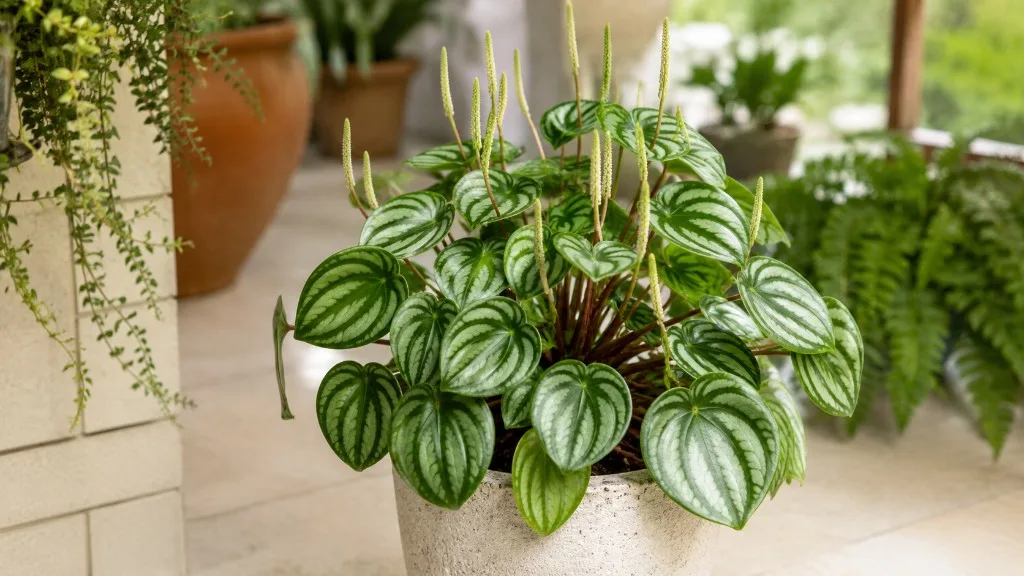
Watermelon peperomias are the striped showpieces of the genus—same pattern language, two different species.
Watermelon peperomia (Peperomia argyreia) — Wide teardrop leaves with silver and green bands like melon rind; 6–12 in. tall and wide. Needs bright indirect light and dry cycles between waterings. Our watermelon peperomia care guide covers the leaf-drop panic every new owner hits.
Mini watermelon peperomia (Peperomia verschaffeltii) — Smaller, thinner pointed leaves on a compact plant (6–8 in.). Same stripe idea, tighter package. Do not confuse with Peperomia griseoargentea (ivy leaf), which has silvery overall color without bold watermelon banding.
Ivy leaf peperomia (Peperomia griseoargentea) — Silvery-green heart leaves with deep veining; 6–8 in. clumping habit. Also an RHS Award of Garden Merit winner. Often mis-sold near watermelon types—check for all-over silver sheen vs bold stripes.
Trailing Peperomias for Hanging Baskets
Trailing species need excellent drainage, bright light, and pots where stems can hang freely. Wet soil on a saucer while vines pool on the counter is a common rot setup.
String of Turtles, Trailing Jade, Hope, and Vining Peperomia
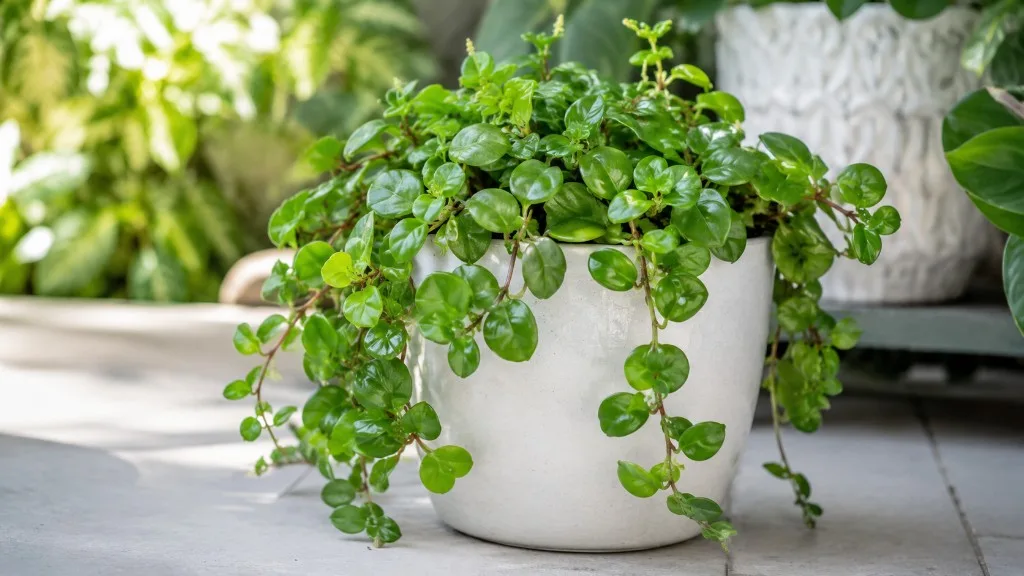
String of turtles (Peperomia prostrata) — Tiny round leaves with dark and light green turtle-shell pattern on pinkish stems; trails 12 in.+. Needs bright indirect light—dim rooms produce plain green stretchy growth. See the string of turtles hub for species care.
Trailing jade (Peperomia rotundifolia) — Small round green leaves on thin trailing stems; also called jade necklace or round leaf peperomia. More tolerant of moderate light than string of turtles.
Vining peperomia (Peperomia serpens) — Heart-shaped green leaves on long vines; variegated form (P. serpens ‘Variegata’) adds cream edges. Trails 12–24 in.
Cupid peperomia (Peperomia nitida) — Heart-shaped leaves on long vines; looks like a miniature philodendron until you feel the thicker peperomia leaf. Regular and variegated forms exist.
Beetle, Parallel, Cupid, and Peperomia Japonica
Beetle peperomia (Peperomia quadrangularis) — Oval leaves with lime-green stripes on dark green; vining to 12–24 in. Easier to find than parallel peperomia.
Parallel peperomia (Peperomia puteolata) — Pointed leaves with vertical and horizontal light veining; distinguish from P. quadrangularis, which lacks horizontal bands. Can reach 15–20 in. long.
Peperomia Japonica (Peperomia japonica) — Button-like round leaves on thin vines; excellent terrarium spiller or dish-garden trailer. Tolerates lower light than string of turtles.
Rare and Collector Peperomias Worth the Hunt
These types rarely sit in big-box aisles. They reward patient growers with textures you will not get from a standard ripple pot.
Piccolo Banda, Perciliata, White Cloud, and Ivy Leaf
Piccolo Banda (Peperomia albovittata) — Light green leaves with deep brown-green ridged veins and reddish stems; tricolor look. Netherlands-bred cultivar that took off with collectors.
Peperomia perciliata (Peperomia perciliata) — Tiny heart leaves on reddish stems; low creeping habit (2 in. tall, 8 in. wide). Standard green form is uncommon; variegated types even more so.
Variegated peperomia perciliata (P. perciliata ‘Variegata’) — Pale green leaves with white edges; trailing. Needs bright light to keep variegation.
White Cloud (P. perciliata ‘White Cloud’) — Yellow-green base with creamy white variegation; rarer than standard variegata. Same creeping habit as other perciliata forms.
Felted Pepperface, Spotted, Metallic, Trinervis, Prayer Pepper, and Red Twist
Felted pepperface (Peperomia incana) — The only fuzzy peperomia on this list; heart-shaped leaves covered in fine white hairs. Upright to 12 in.; interesting texture contrast in collections.
Spotted peperomia (Peperomia maculosa) — Large glossy leaves (6–12 in. long) with silver veining and spotted petioles; looks like a small aroid. Needs space—mature plants reach 2 ft. wide.
Metallic peperomia (Peperomia metallica) — Dark green to almost black leaves with metallic sheen and red undersides; stays compact (6–8 in.) unless grown in very bright humid conditions.
Peperomia trinervis (Peperomia trinervis) — Almond-shaped dark green leaves with shimmery silver veins and burgundy-tinted new growth; upright then slightly sprawling.
Prayer pepper (Peperomia dolabriformis) — Folded taco-shaped succulent leaves with a translucent dark stripe; native to Peru. Also nicknamed taco plant. Bright indirect light; water only when leaves feel slightly soft.
Red Twist peperomia (Peperomia verticillata) — Also sold as Red Log: dark green leaves with burgundy undersides and red stems; upright until stems tip with weight (12 in.). Tolerates moderate low light better than variegated trailers.
Quick Pick Chart: Best Peperomia for Your Room
| Your situation | Best types | Why |
|---|---|---|
| First houseplant / chronic overwaterer | Baby rubber plant, ripple caperata, Pixie Lime | Thick leaves and forgiving of missed waterings |
| Low light office desk | Ripple caperata, Rosso, Red Twist, obtusifolia | Hold color better than variegated trailers |
| Bright window shelf | Watermelon peperomia, Rosso, Luna Red, Raindrop | Stripes and red tones need luminance |
| Hanging basket | String of turtles, trailing jade, beetle peperomia | Built to cascade; need drainage |
| Pet household | Any peperomia on this list | ASPCA non-toxic; still prevent chewing |
| Terrarium / dish garden | Peperomia Japonica, Pixie Lime, prostrata | Stay small; tolerate shared pots |
| Collector / rare hunt | Abricos, perciliata, Piccolo Banda, maculosa | Unique color or texture; slower and pricier |
| Wants flowers indoors | Raindrop peperomia, polybotrya | Spike blooms possible in bright conditions |
Shopping tip: Buy the leaf shape and growth habit you want, not the trendiest cultivar name on Instagram. A healthy baby rubber plant beats a stressed string of turtles shipped cross-country and parked in a dark corner.
Conclusion
Peperomia is one houseplant genus where variety actually changes how you display the plant—not just leaf paint on the same vine. The 33 types here span upright glossies, ripple cultivars, watermelon stripes, fuzzy rarities, and trailing turtle shells, all united by dry cycles between waterings, fast drainage, and snug pots.
Start with an ID pass: upright vs mounding ripple vs trailer, then stripe pattern, then mature size. Link to our peperomia care guide when you are ready to repot or fix yellow leaves, and use how to propagate peperomia when you want backups of a favorite cultivar. Once you know which silhouette fits your room, the right peperomia is the one whose leaves you will still enjoy when the plant is two years older and twice as wide.