How to Grow and Care for Peperomia Plants
Grow peperomia indoors with bright indirect light, fast-draining soil, and species-smart watering that avoids the oversized-pot rot trap.
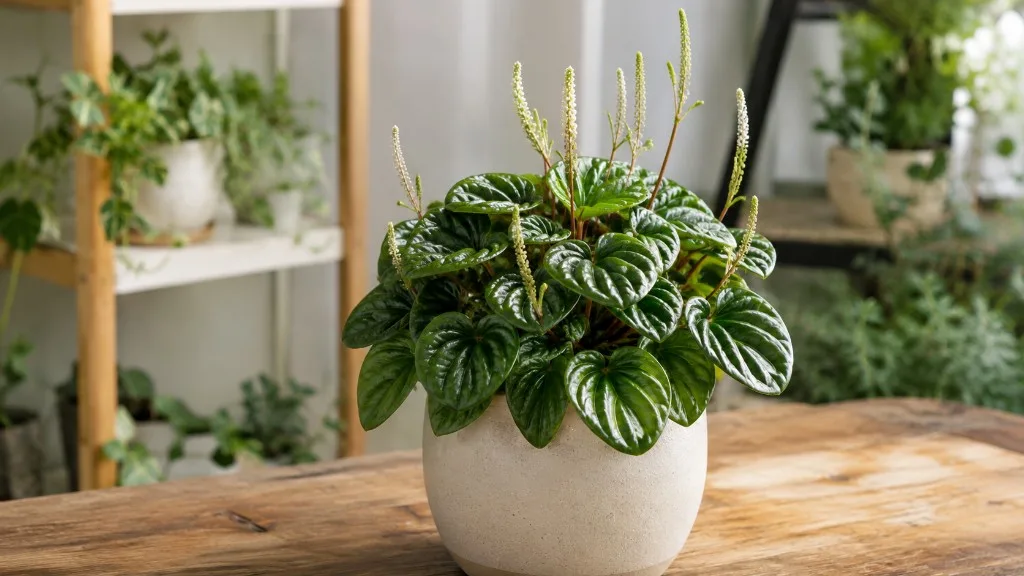
Peperomia plants look like someone miniaturized a tropical forest—thick, glossy leaves in stripes, ripples, or coin-round pads, often packed into a pot smaller than your morning mug. They belong to Piperaceae, the pepper family, with more than 1,000 species native to Mexico, Central America, South America, and the Caribbean. NC State Extension notes that most cultivated peperomias stay compact, rarely exceeding 12 inches indoors, which makes them ideal desk and shelf plants. (NC State Extension) The care mistake that kills more peperomias than pests is treating them like thirsty ferns instead of semi-succulents with tiny root systems that want dry cycles and tight pots.
If you already own a striped watermelon peperomia or a trailing Hope cultivar, the genus-wide rules here apply—but watering cadence shifts with leaf thickness and pot volume. Use the Peperomia plant hub when you want species-specific pages on light, watering, soil, and propagation without rereading an entire general guide.
Peperomia Quick Reference
Use this table before you change anything. Most peperomia problems trace back to one row going wrong—usually water paired with an oversized pot.
| Factor | Indoor target | Notes |
|---|---|---|
| Light | Bright indirect; gentle morning sun OK | Leggy stems = too dim |
| Water | Top 1–2 in. dry before soaking | Thick-leaf types dry slower |
| Soil | Chunky, fast-draining mix | Orchid bark + perlite works |
| Pot size | Snug; only +1–2 in. when repotting | Oversized pot = rot trap |
| Temperature | 65–75°F ideal; avoid below 50°F | Frost kills outdoor plants |
| Humidity | Average room fine | Misting does not fix dry air |
| Fertilizer | Half-strength monthly in spring–summer | Skip in low-light winter |
| Pets | Non-toxic to cats and dogs | ASPCA lists as safe |
| Outdoor zones | USDA 10–12 year-round | Bring in before frost |
| Lifespan | Many years in stable care | Slow growers; patience pays |
For deeper schedules on individual cultivars, jump to the watermelon peperomia care guide or the raindrop peperomia care guide once you know which species you are growing.
Thick Leaves, Tiny Roots: The Care Keystone
Peperomias are semi-succulents, not desert cacti. Fleshy leaves store water, which is why they tolerate missed waterings better than calatheas or ferns. Missouri Botanical Garden describes Peperomia obtusifolia as an epiphytic perennial with succulent-like foliage that needs well-drained media and moderate moisture—not constant wetness. (Missouri Botanical Garden) That storage system only works when roots can breathe between drinks.
The second half of the keystone is root volume. Peperomia roots are small relative to the leaf display. University of Arkansas Extension emphasizes that peperomias prefer being slightly root-bound and grow slowly in containers. (University of Arkansas Extension) When you drop a 4-inch plant into a 10-inch decorative pot “to give it room,” the extra soil holds moisture for weeks while roots sit in cold, wet mix. That oversized-pot trap is the hidden cause of yellow leaves, stem collapse, and the “I only watered once a week” confession that still ends in rot.
Many species grow as epiphytes in nature, anchoring into bark pockets rather than deep soil. RHS guidance for peperomia recommends a loose, free-draining compost similar to orchid mixes because roots expect air as much as moisture. (RHS) Think “orchid with thicker leaves,” not “mini peace lily,” and your watering hand will finally match what the plant wants.
Light Requirements for Healthy Foliage
Indoors, peperomia wants medium to bright indirect light for most of the day. An east-facing window or a few feet back from a west- or south-facing window is a common sweet spot. NC State Extension lists partial sun to shade outdoors, which translates indoors to bright filtered light—not a dark hallway. (NC State Extension) Insufficient light produces leggy stems, smaller new leaves, and washed-out patterns on variegated types.
A few hours of gentle direct morning sun often improves color on ripple peperomias and red undersides on P. caperata ‘Rosso’. Harsh midday sun through glass can scorch leaves, leaving bleached patches that will not revert green. If you move a plant from a dim shelf to a bright sill, shift it gradually over a week so leaves acclimate.
Use this light placement decision table when foliage looks dull but you are unsure whether to move the pot:
| Symptom | Likely cause | First action |
|---|---|---|
| Long gaps between leaves on stems | Too little light | Move closer to window or add grow light |
| Bleached, crispy patches on leaf tops | Too much direct sun | Filter with sheer curtain; pull back from glass |
| New leaves small; old leaves hold color | Borderline light | Increase brightness slightly; rotate pot weekly |
| Plant leaning hard toward window | One-sided light | Rotate a quarter turn every few days |
Trailing types like Peperomia Hope often need slightly brighter conditions than upright baby rubber plants because layered stems shade lower leaves. If lower leaves drop while top growth looks fine, light may be reaching only the upper canopy.
Soil and Potting Mix That Drains Fast
Peperomia needs chunky, acidic-to-neutral mix that drains in seconds, not days. RHS recommends adding orchid bark or perlite to standard houseplant compost so water moves through quickly. (RHS) A practical indoor blend is equal parts houseplant potting mix and perlite, or orchid bark mixed with a little peat-based mix for trailing cultivars that you water more often.
Avoid straight multipurpose soil from a sealed bag unless you amend heavily. Fine, peat-heavy mixes stay wet around peperomia roots and encourage Pythium-style rot that shows up as soft stems at the soil line. Terracotta pots help because clay pulls moisture from the mix and gives you an earlier signal that the root zone has dried.
Every pot needs a drainage hole. Cachepots are fine only if you lift the inner pot to drain after every watering. Gravel layers at the bottom do not fix bad soil—they just shorten the usable root zone. If water pools on the surface when you irrigate, the mix is too compacted; repot into fresh chunky media rather than adding sand to wet soil.
How to Water Peperomia Without Causing Rot
The fastest way to kill peperomia is watering on a calendar while the mix is still damp. Allow the top 1–2 inches of soil to dry before soaking the root ball until water runs from the drainage hole. NC State Extension notes that peperomias are drought tolerant and should not sit in saturated soil. (NC State Extension) Empty the saucer after 15–30 minutes so the pot never reabsorbs standing water.
Species and pot size change timing, which generic guides skip. Thick-leaf upright types like P. obtusifolia store more water and may need water every two to three weeks in a 4-inch terracotta pot during bright summer growth. Thin-leaf or heavily variegated watermelon peperomia in the same room may need water weekly because transpiration is higher and variegation reduces chlorophyll. Trailing stems in hanging baskets dry faster on the edges than the center—check moisture near the drainage hole, not only the top surface.
| Plant type | Pot material | Typical indoor interval* | Stop watering when |
|---|---|---|---|
| Upright obtusifolia / caperata | Terracotta 4–6 in. | 10–21 days | Top 2 in. dry; pot feels light |
| Watermelon / raindrop peperomia | Plastic or ceramic 4–5 in. | 7–14 days | Top 1.5 in. dry; slight leaf softness |
| Trailing Hope / prostrata | Hanging basket | 5–10 days | Top inch dry; basket light |
| Any peperomia after repot to oversized pot | Any | Do not use table—check daily | Mix wet >2 weeks = danger |
*Intervals assume bright indirect light and 65–75°F. Low winter light stretches all timelines.
Water at the base of the plant in the morning when possible so splashed leaves dry quickly. Wet foliage in cool, stagnant air invites fungal spotting—not because peperomia hates humidity, but because leaf wetness ≠ healthy roots. If stems feel mushy or smell sour, stop watering, unpot, trim rotten roots, and repot into dry mix in a smaller pot if needed.
Temperature, Humidity, and Indoor Placement
Peperomias prefer warm indoor temperatures between about 65°F and 75°F during active growth. Missouri Botanical Garden lists P. obtusifolia as hardy in USDA zones 10–12 outdoors; indoors, protect plants from cold drafts below 50°F, which can cause sudden leaf drop. (Missouri Botanical Garden) Keep pots away from blasting heat vents that desiccate leaf edges overnight.
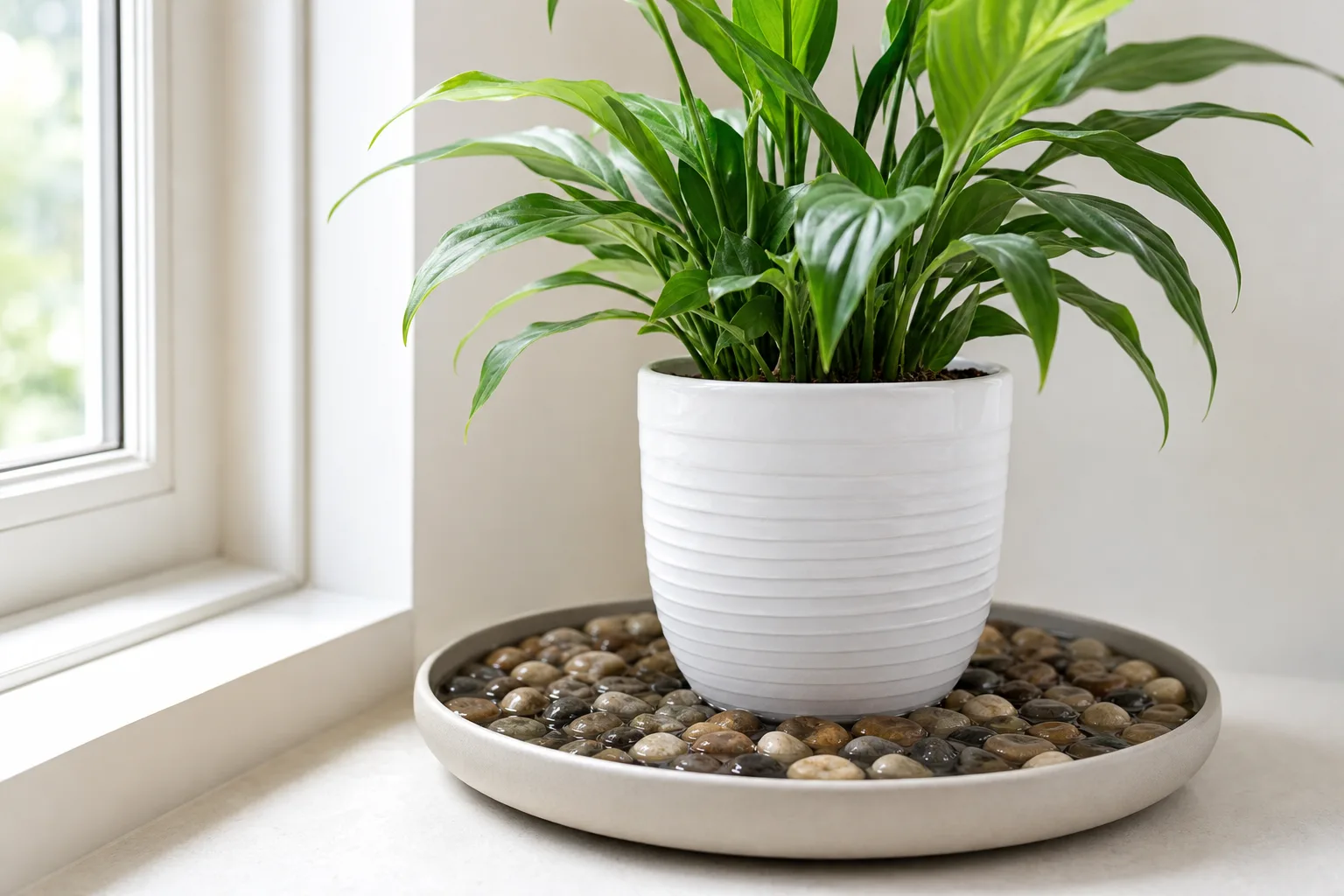
Average household humidity is enough for most peperomias. They are not rainforest floor plants like nerve plants, despite what misting advice implies. Brief misting raises humidity for minutes, not hours, and wet leaves in dim corners encourage spotting. If your home runs very dry in winter, a small humidifier near the plant—or grouping pots on a tray of pebbles with water below pot level—helps more than a spray bottle.
| Method | Effect on peperomia | Recommendation |
|---|---|---|
| Hand misting | Surface moisture; minimal RH change | Skip as primary strategy |
| Pebble tray | Localized bump near foliage | OK as supplement |
| Humidifier | Stable 40–50% RH | Best for dry winter homes |
| Bathroom placement | Higher humidity if bright enough | Good if window light is adequate |
Rotate the pot every week or two so growth stays even. Raindrop peperomia with heavy coin leaves can topple in lightweight plastic pots—place a heavier cachepot or top-dress with pebbles for stability without blocking drainage.
Fertilizer and Active-Growth Feeding
Peperomias are light feeders. RHS suggests applying a balanced liquid fertilizer at half the label rate once a month during spring and summer when new leaves appear. (RHS) Skip fertilizer in fall and winter unless the plant sits under strong grow lights and is visibly producing leaves.
Over-fertilizing causes crispy leaf tips and salt buildup in small root zones. If you repotted into fresh mix within the last year, you may not need any supplemental food the first summer. Flush the pot occasionally by watering until excess runs clear if white crust appears on the soil surface.
Organic slow-release pellets can work in larger upright pots, but use half the recommended dose—peperomia roots occupy a fraction of the soil volume. When in doubt, withhold fertilizer and fix light and watering first; pale leaves from true deficiency are less common than pale leaves from rot stress.
Popular Peperomia Types Worth Growing
The genus spans upright bushes, ripple-textured rosettes, and trailing chains—often sold under cultivar names that change by nursery. Grouping them by growth habit beats memorizing every species, because habit tells you how fast the pot dries and how often to prune.
Upright Favorites: Obtusifolia, Caperata, and Watermelon
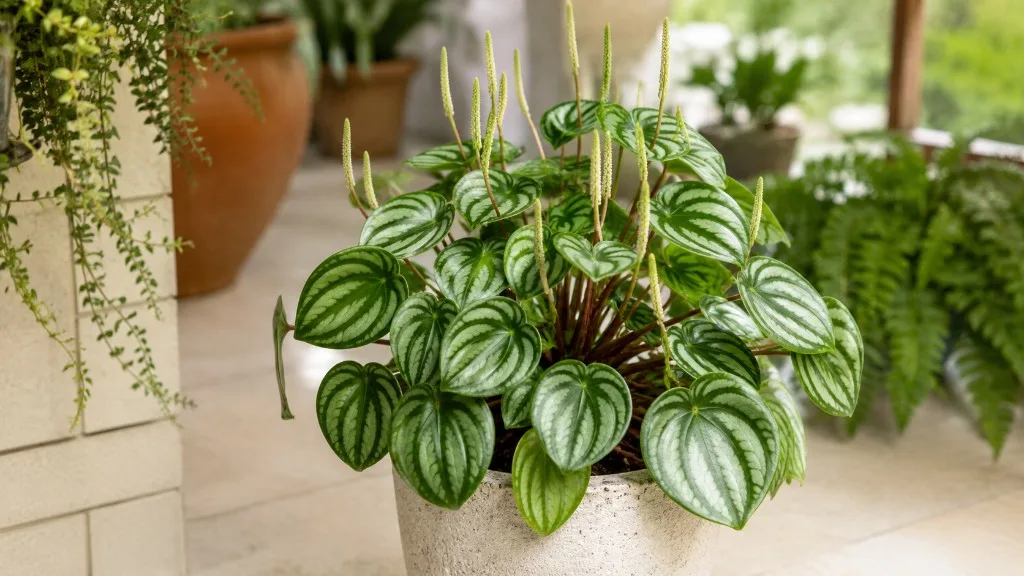
Peperomia obtusifolia (baby rubber plant) is the deep-green workhorse: blunt, glossy leaves on thick stems, often variegated with cream or gold. It tolerates slightly lower light than striped types but will still stretch if kept in a dim corner. Missouri Botanical Garden notes mature size around 6–12 inches tall and wide indoors. (Missouri Botanical Garden)
Peperomia caperata (ripple peperomia) carries deeply furrowed leaves in green, silver, or red-backed cultivars like ‘Rosso’. It wants slightly brighter light to keep tight rosettes and strong leaf texture. Peperomia argyreia (watermelon peperomia) shows round silver-and-green bands; it is slightly less forgiving of soggy soil than obtusifolia. See the dedicated watermelon peperomia page for pattern-specific troubleshooting.
Trailing Types: Hope, Prostrata, and Friends
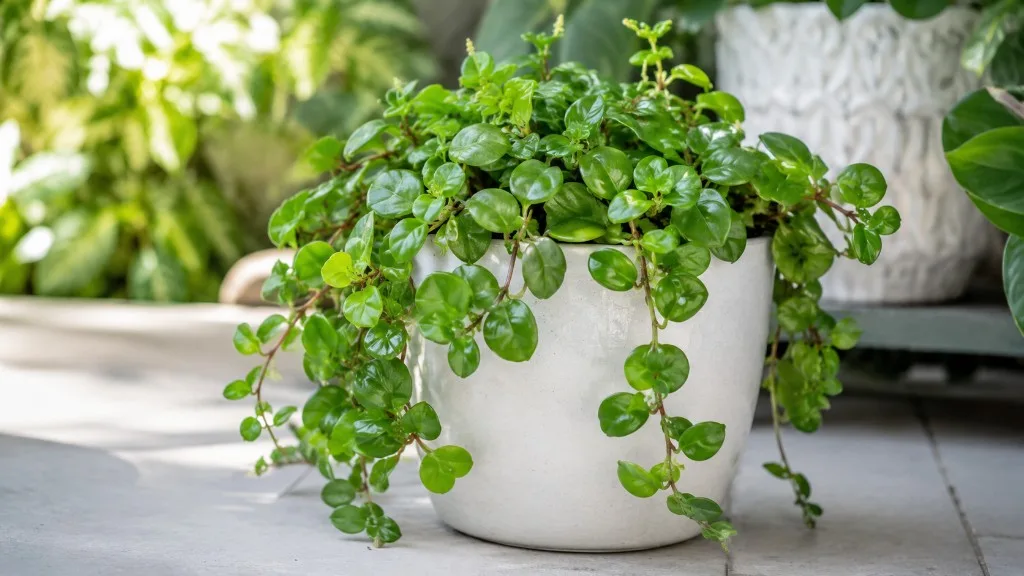
Peperomia ‘Hope’ (P. tetraphylla hybrid) strings round, succulent-like leaves along cascading stems—excellent in hanging baskets or elevated shelves. Check the Peperomia Hope hub for trailing-specific watering because outer stems dry before the soil center.
Peperomia prostrata (string of turtles) and Peperomia rotundifolia (trailing jade) need brighter light than upright types to keep tight leaf spacing; leggy internodes mean move closer to the window. Peperomia polybotrya (raindrop peperomia) is often grown upright but shares the faster drying profile of thinner petioles—link to the raindrop peperomia hub when glossy coin leaves start dropping.
Pruning for Fuller Growth
Peperomias respond well to light pruning in early spring before strong growth begins. Pinch or snip stems just above a leaf node to encourage branching; leggy gift plants often need one corrective cut rather than a full chop. Use clean scissors or pruners and remove no more than one-third of live stems at once so the plant can recover without shock.
Remove yellowed, spotted, or ring-spot-distorted leaves as you see them—do not compost diseased tissue if ring spot is suspected. Flower spikes can be snipped at the base if you prefer a foliage-only look; they are harmless but divert a small amount of energy from leaves.
Dead stems at the soil line usually indicate past rot; cut back to firm tissue or propagate healthy tops if the base is compromised. Pruning is also your best source of propagation material, covered next.
Propagating Peperomia at Home
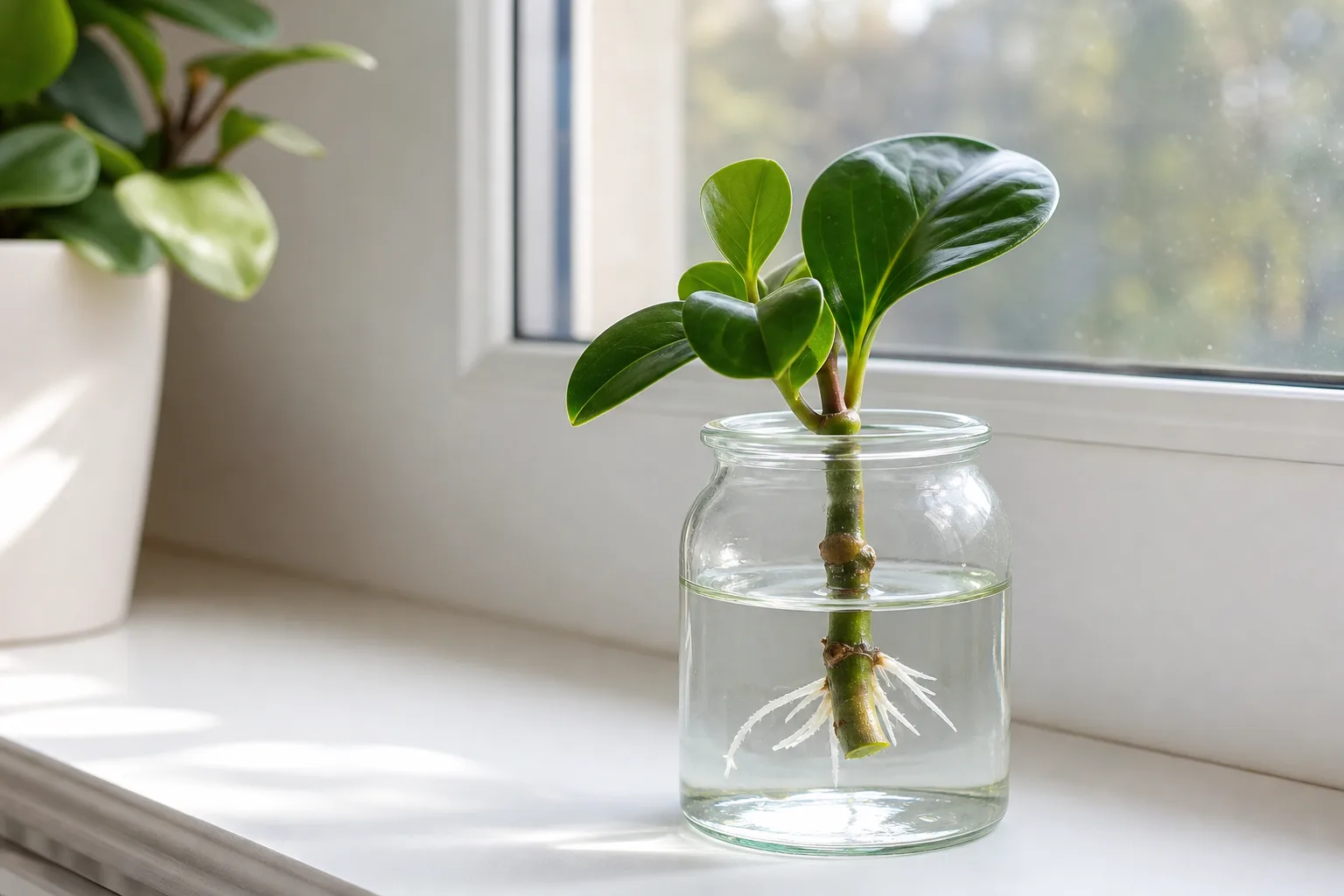
Peperomias propagate easily from leaf or stem cuttings, best taken in spring or early summer when growth is active. University of Arkansas Extension notes that leaf cuttings with petioles and stem sections both root readily in moist, well-drained media. (University of Arkansas Extension) For step-by-step photos and timing, follow our full propagate peperomia guide.
For stem cuttings, remove a 2–3 inch tip with two to three leaves, let the cut air-dry for a few hours, then insert into damp chunky mix. Bright indirect light and a loosely closed clear bag can hold humidity while roots form in two to four weeks. For leaf cuttings, include about an inch of petiole buried vertically or horizontally depending on species—watermelon types often root from petiole inserts.
Never let propagation mix stay soggy. Cuttings rot faster than mature plants because they lack stored leaf water. Once new growth appears, treat the youngster like a mature plant with dry cycles—many beginners kill freshly rooted peperomias with kindness watering.
Repotting and Root-Bound Habits
Peperomias happily live years in the same pot while roots lightly circle the root ball. Repot only when roots emerge from drainage holes or water runs straight through without absorbing—usually every two to three years for slow growers. Choose a container only one to two inches wider in diameter; jumping from a 4-inch to an 8-inch pot recreates the oversized-pot rot trap even if your watering skills improved.
Repot in spring when possible, using fresh chunky mix. Tease circling roots gently; trim black or mushy sections with sterile scissors. Wait a few days before the first deep watering if you heavily disturbed roots, then resume soak-and-dry cycles once the plant settles.
If the plant looks tight but healthy, refresh the top inch of mix instead of upsizing—especially for caperata rosettes that prefer snug quarters. After repotting, expect soil to stay wet longer; adjust watering downward for the first month while roots explore new edges.
Pests and Disease Troubleshooting
Peperomias are relatively pest-resistant but not immune. Mealybugs appear as white cottony clusters in leaf axils; dab with rubbing alcohol on a swab and repeat weekly until clear. Spider mites cause stippling and fine webbing under leaves—rinse foliage in the shower and improve humidity if air is extremely dry. Whiteflies may flutter when you brush stems; insecticidal soap on all surfaces, repeated per label, is the first chemical step.
Inspect new purchases two weeks in quarantine before placing them near collections. Pests spread fastest on crowded plant shelves with poor airflow.
Yellow Leaves, Curling, and Leaf Drop
Use this symptom triage table before reaching for fertilizer or mist:
| Symptom | Most common cause | First action |
|---|---|---|
| Yellow lower leaves; soft stem base | Overwatering / oversized pot | Stop water; check roots; downsize pot if needed |
| Leaves curl inward; soil dry and light pot | Underwatering | Soak until drainage; adjust schedule |
| Leaf drop after move to dim room | Insufficient light | Increase brightness within a week |
| Brown crispy tips only | Low humidity + underwatering combo | Water thoroughly; add humidifier if air is dry |
| Ring-shaped tan spots; distorted new leaves | Ring spot virus | Remove leaves; isolate; discard if spreading |
Ring spot (Peperomia ring spot virus) shows as concentric tan rings or puckered, distorted foliage. Illinois Extension explains that the virus spreads through infected plants and contaminated tools; there is no cure, and affected plants should be discarded if distortion continues after removing spotted leaves. (Illinois Extension) Do not propagate from ring-spot material—healthy-looking cuttings can still carry the virus.
Yellow leaves from overwatering often start at the base while top leaves stay firm. Curling from underwatering usually pairs with slightly soft, dull leaves and bone-dry mix. Leaf drop after repotting can be transient shock if you kept the same pot size and dry cycles; drop that continues for weeks usually means rot has started—inspect immediately.
Flowers, Pet Safety, and Realistic Expectations
Peperomia flowers are easy to miss: thin, greenish-white or brown spikes that look like mouse tails rather than showy blooms. They appear occasionally in spring or summer on well-lit plants. Snip spikes if you prefer a cleaner silhouette; leaving them does not harm the plant.
The ASPCA lists Peperomia spp. as non-toxic to cats and dogs, which makes the genus a strong choice for pet-heavy homes. (ASPCA) Non-toxic does not mean edible—ingestion can still cause mild stomach upset in pets or curious toddlers. Keep pots stable so dogs cannot knock them over.
You may see claims that peperomias purify indoor air because NASA chamber studies showed certain foliage plants removed volatile compounds in sealed lab conditions. Real rooms have ventilation, furniture, and far more air volume than a test chamber. Peperomias are worth growing for low-maintenance beauty and pet safety, not as a replacement for fresh air exchange. Enjoy them as living décor; do not expect measurable air-quality miracles on a windowsill.
With realistic expectations—compact size, occasional spikes, decades-long potential in stable care—a well-chosen peperomia becomes the plant you recommend to beginners who forget to water. Match light, chunky soil, and dry cycles to the species in your hand, and the genus stops feeling mysteriously fragile.
Conclusion
Peperomia rewards growers who respect thick leaves and tiny roots: bright indirect light, fast-draining mix, and watering only after the top inch or two dries—adjusted for upright versus trailing types and for pot size. Avoid the oversized-pot trap, skip misting as a humidity strategy, and treat ring spot as a discard-or-isolate disease rather than a fertilizer problem.
When you want species depth, use the Peperomia hub, the watermelon peperomia care guide, and the propagate peperomia walkthrough without hunting through generic houseplant advice. Get those three pillars right and radiator plants stay compact, patterned, and quietly dependable for years.