Peace Lily Brown Leaf Tips: 8 Causes and Fixes
Brown peace lily tips usually mean water, humidity, or salt stress—not one mystery disease. Learn eight common causes, how to tell them apart, and what to fix first.
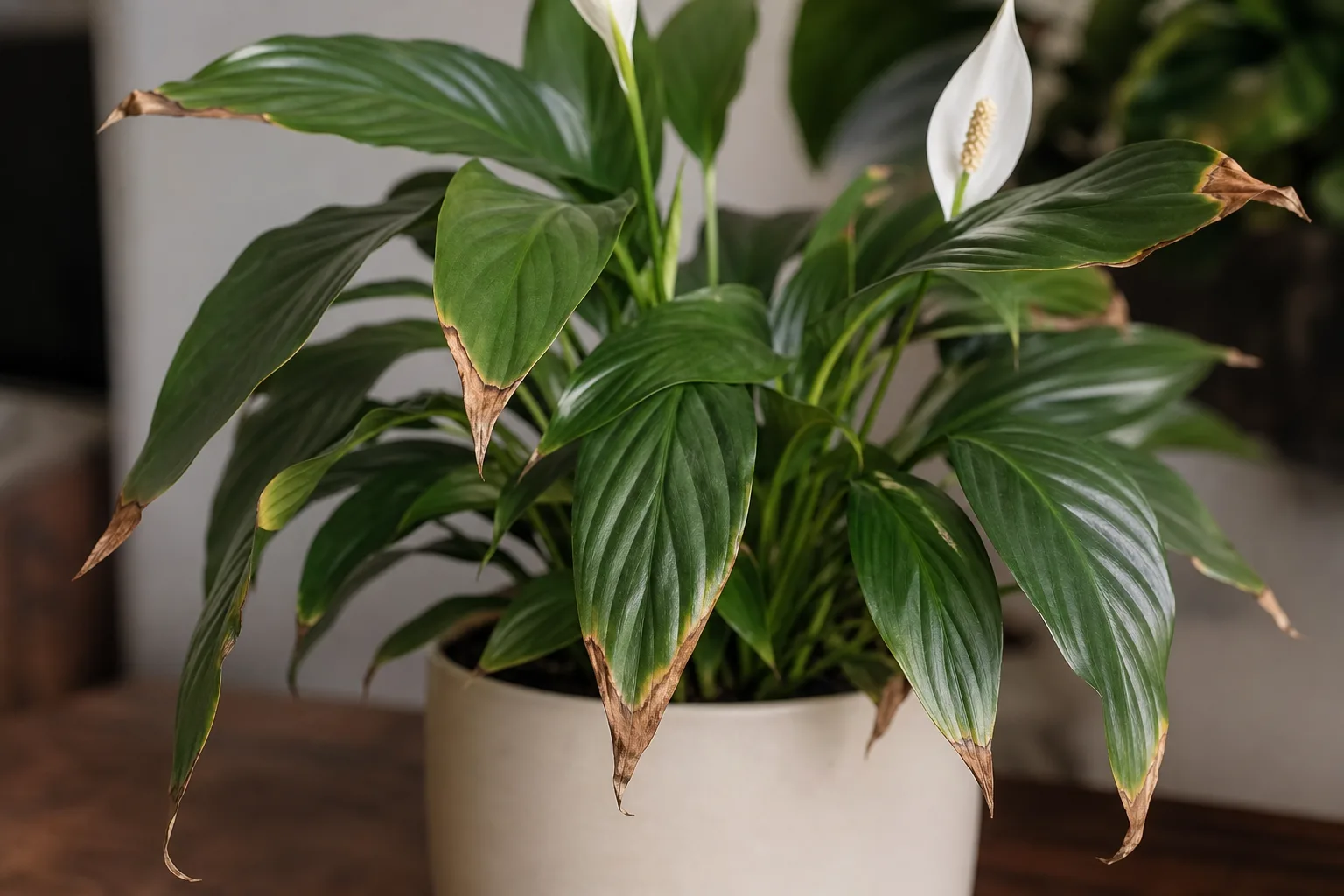
Crispy brown tips on a peace lily (Spathiphyllum) look alarming, but they rarely mean your plant is doomed. They usually signal a stack of indoor stresses—water rhythm, water chemistry, dry air, salt buildup, or light and temperature swings—that hit the leaf margin first. The fix starts with reading the leaf pattern and the soil together, not guessing from one brown tip.
This guide walks through eight common causes, how to tell them apart in minutes, and the first low-risk action for each. For species-specific deep dives on watering rhythm, fluoride, humidity, and root rescue, use the Peace Lily hub and the dedicated brown tips problem page after you identify your pattern.
Start With a 60-Second Leaf and Soil Check
Before you repot, fertilize, or strip half the plant, run a quick snapshot. Stick your finger into the mix to the first knuckle, note whether the pot feels light or heavy, and look at where browning started—tips only, one sun-facing patch, or several leaves yellowing at once.
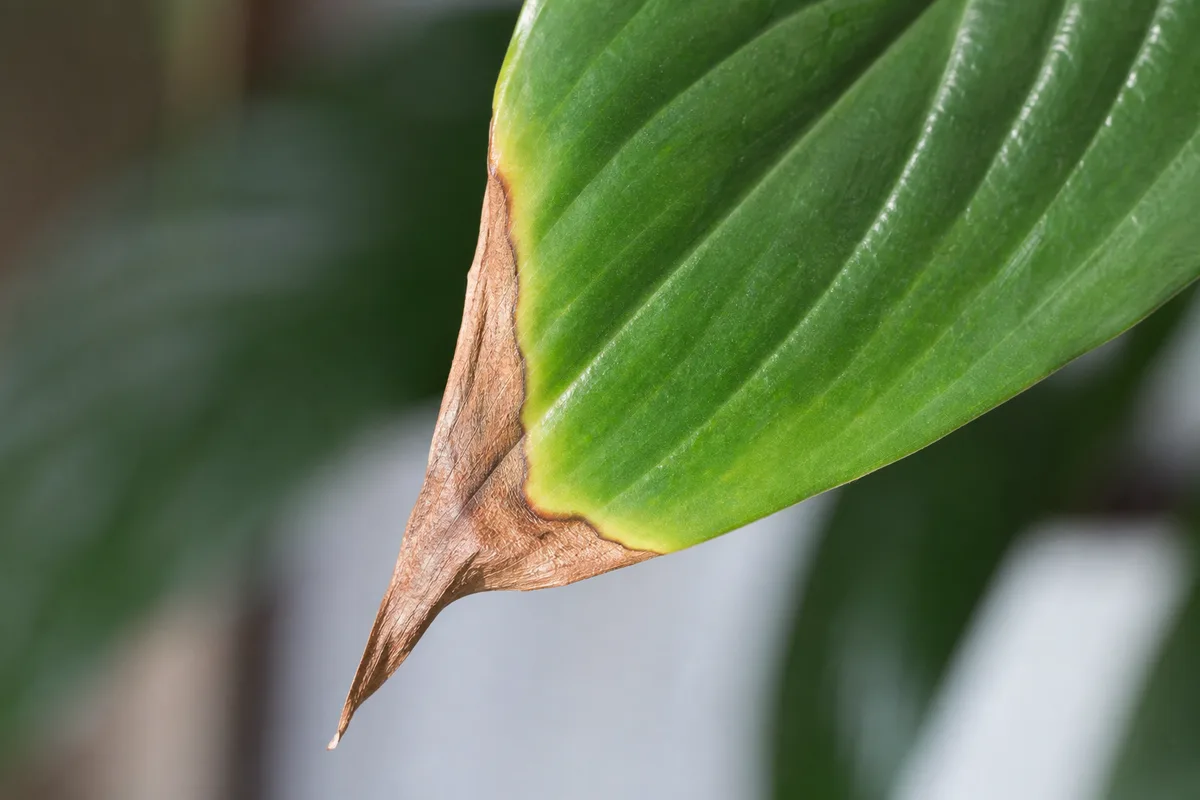 Photograph one affected leaf and the soil surface. If the soil smells sour, stays wet three days after watering, or the plant wilts on wet mix, treat that as root stress and jump to cause 1 before trimming more foliage.
Four Questions That Narrow the Cause Fast
1. Is the top inch of soil wet or dry right now? Wet soil plus wilt often points to overwatering or poor drainage—not thirst. Bone-dry mix plus dramatic droop that perks up within hours after a soak points to underwatering.
2. Did browning start at tips only or as broad patches? Narrow crispy tips and margins usually track water quality, humidity, or salts. Bleached or tan patches on the window side suggest sun or heat scorch.
3. Is damage spreading to new leaves? Cosmetic edge burn on older leaves while new growth stays clean is less urgent. Fresh leaves emerging with brown margins means the current environment is still wrong—keep diagnosing.
4. What changed in the last two weeks? New heater season, a move to a brighter window, a fertilizer splash, or switching back to straight tap water after summer rain-barrel watering—all are common tip-burn triggers on peace lilies.
Why Peace Lily Tips Brown Before the Rest of the Leaf
Peace lily leaves are wide, glossy, and built for humid tropical understory conditions (Missouri Botanical Garden). Indoors, the outer margin and tip are the last tissue to receive water and the first place minerals concentrate as water evaporates from the edge. That physiology is why fluoride, fertilizer salts, dry air, and moisture swings show up as tip and margin necrosis before the whole blade collapses.
Iowa State Extension notes that brown leaf tips and edges on houseplants commonly trace to low humidity, inconsistent watering, water quality, or salt buildup—often more than one at a time (Iowa State Extension). Winter heating can stack every trigger at once, which is why a peace lily that looked fine in October may tip-burn by January even though your watering calendar never changed.
1. Overwatering and Root Stress
Overwatering is the first suspect when brown tips appear alongside yellowing leaves, soft stems, or wilt on wet soil. Peace lilies prefer evenly moist but aerated mix—not a permanently soggy root zone (Clemson HGIC). When roots sit in stale water, they lose function, and leaf edges brown as the plant cannot move water and minerals normally.
The classic mistake is watering on a fixed weekly schedule while the pot stays wet in low light or cool rooms. Empty saucers after every drink, and never let the pot stand in runoff overnight.
Signs Overwatering Is Browning Your Peace Lily
Check the top 2.5 cm (1 inch) of mix: if it feels wet for days while leaves yellow and tips brown, pause watering and inspect drainage holes. A sour smell from the soil or mushy roots when you tip the plant out of the pot confirms advanced stress—route to root rot and overwatering guides before adding more water.
Overwatering and underwatering both cause droop, which confuses many owners. The split test is soil moisture: wet wilt means roots are struggling; dry wilt that recovers after a thorough soak means thirst (RHS).
2. Underwatering and Severe Dry-Downs
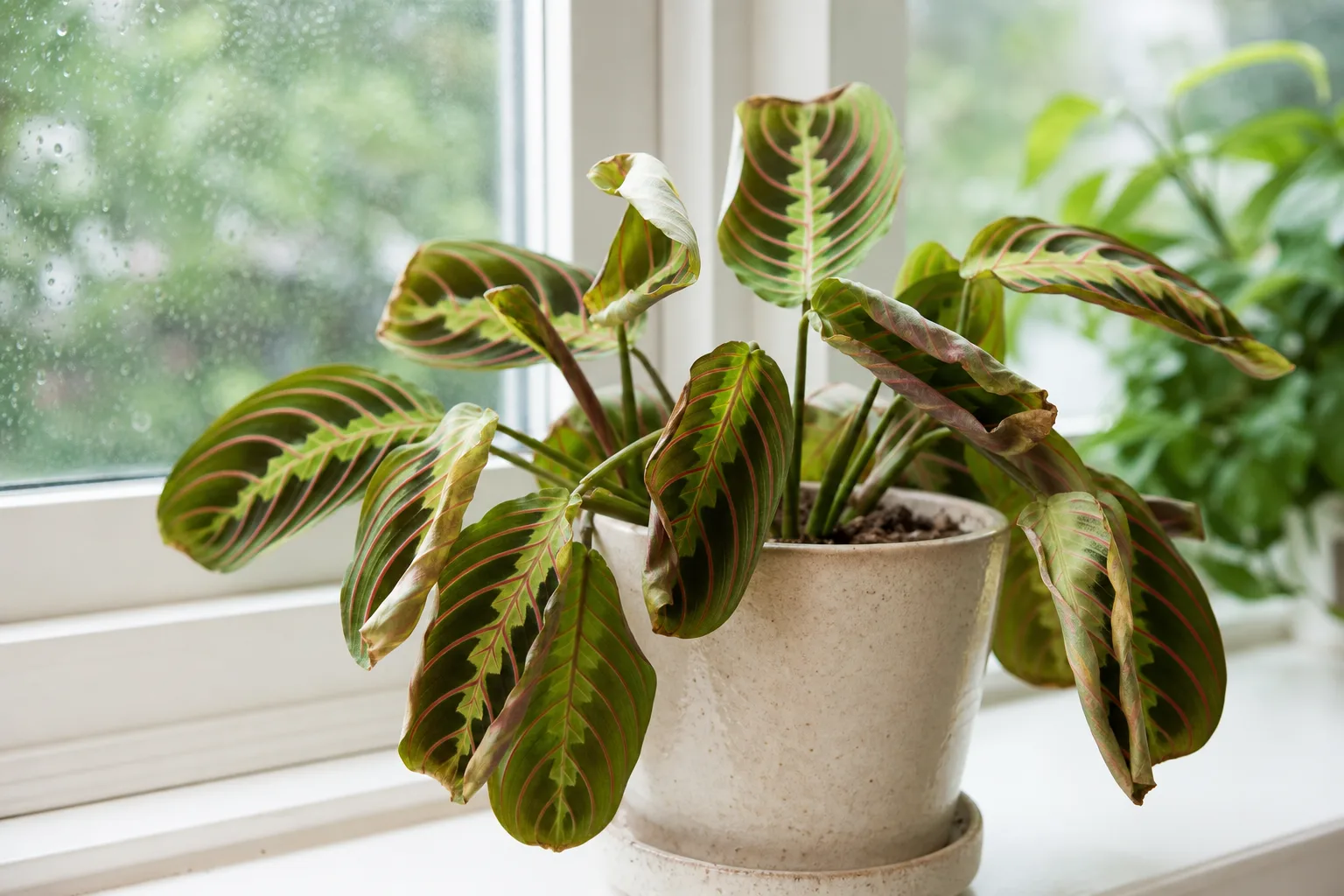
Peace lilies are famous for dramatic droop when dry, then a visible perk-up after watering (UF/IFAS Gardening Solutions). If you repeatedly let the pot dry to dust between drinks, leaf tips can crisp even after the plant stands upright again. Severe dry-down damages margin tissue; the center may stay green while tips turn tan and papery.
Underwatering browning often follows a vacation, a forgotten office plant, or a root-bound pot that dries out in hours. Yellowing may appear before tips brown on the oldest leaves. Fix by watering when the top inch begins to dry, soaking until excess runs from drainage holes, then emptying the saucer (University of Minnesota Extension).
Do not interpret every droop as thirst. If the soil is already wet, more water deepens root stress. See underwatering when the pot is light and dry; see overwatering when it is heavy and wet.
3. Poor Drainage and Root-Bound Pots
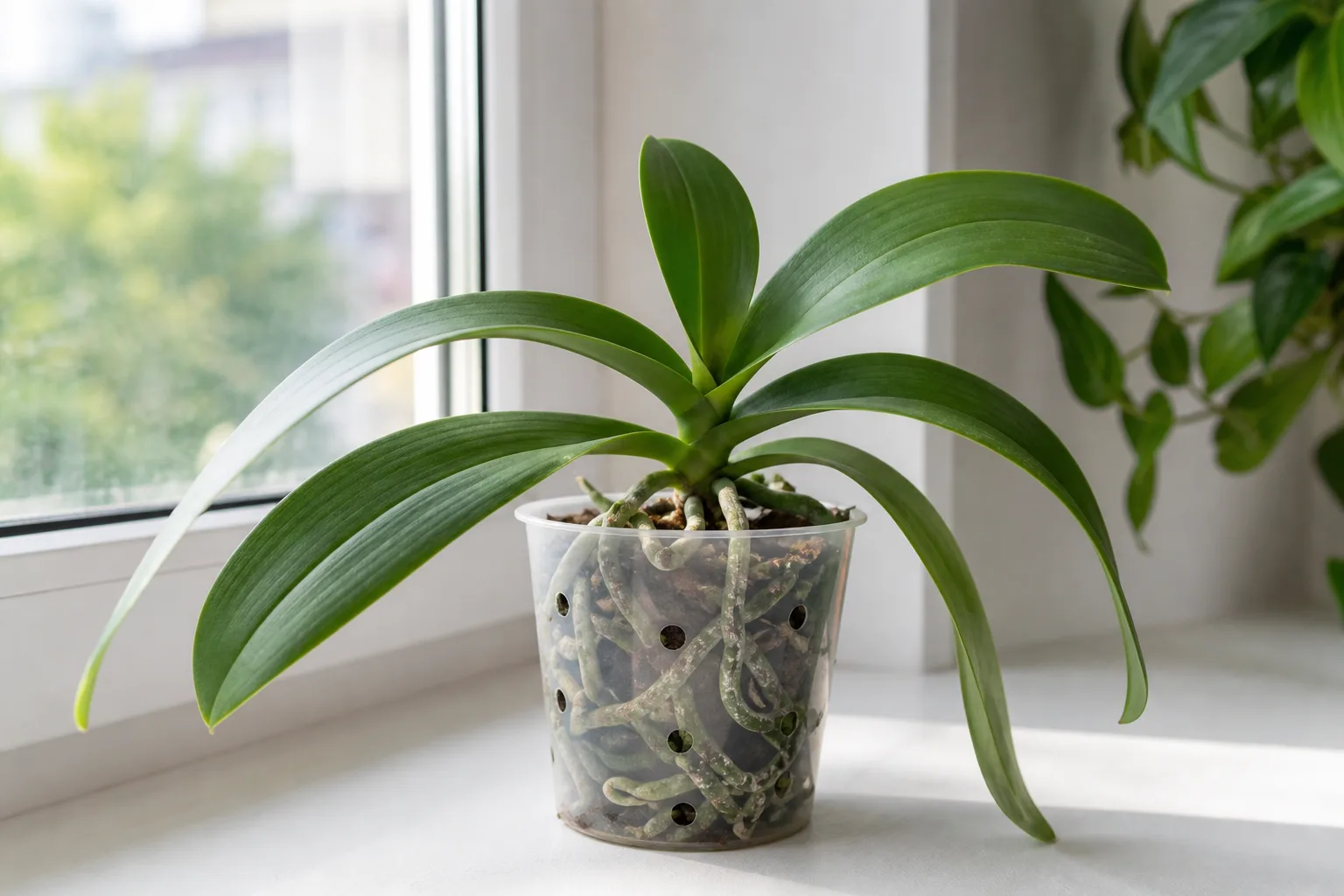
Even correct watering fails when water cannot leave the pot. Blocked drainage holes, dense peat that stays wet at the bottom, or a root-bound plant with more root than soil can all produce brown tips from chronic root stress. Clemson Extension warns that standing water in saucers invites root problems on peace lilies (Clemson HGIC).
Signs include water running straight through the pot without moistening the center, roots circling the surface, or roots poking from drain holes. When the top inch is dry but the bottom stays soggy, you have a layering problem—often old compacted mix or a pot too large for the root ball.
Repot into a container one size larger with fresh, well-draining houseplant mix and confirmed open holes. Trim only mushy roots; firm white roots can stay. Hold fertilizer for four to six weeks after repotting while the plant settles. Full repot timing and mix ratios live on peace lily repotting.
4. Tap Water, Fluoride, and Mineral Buildup
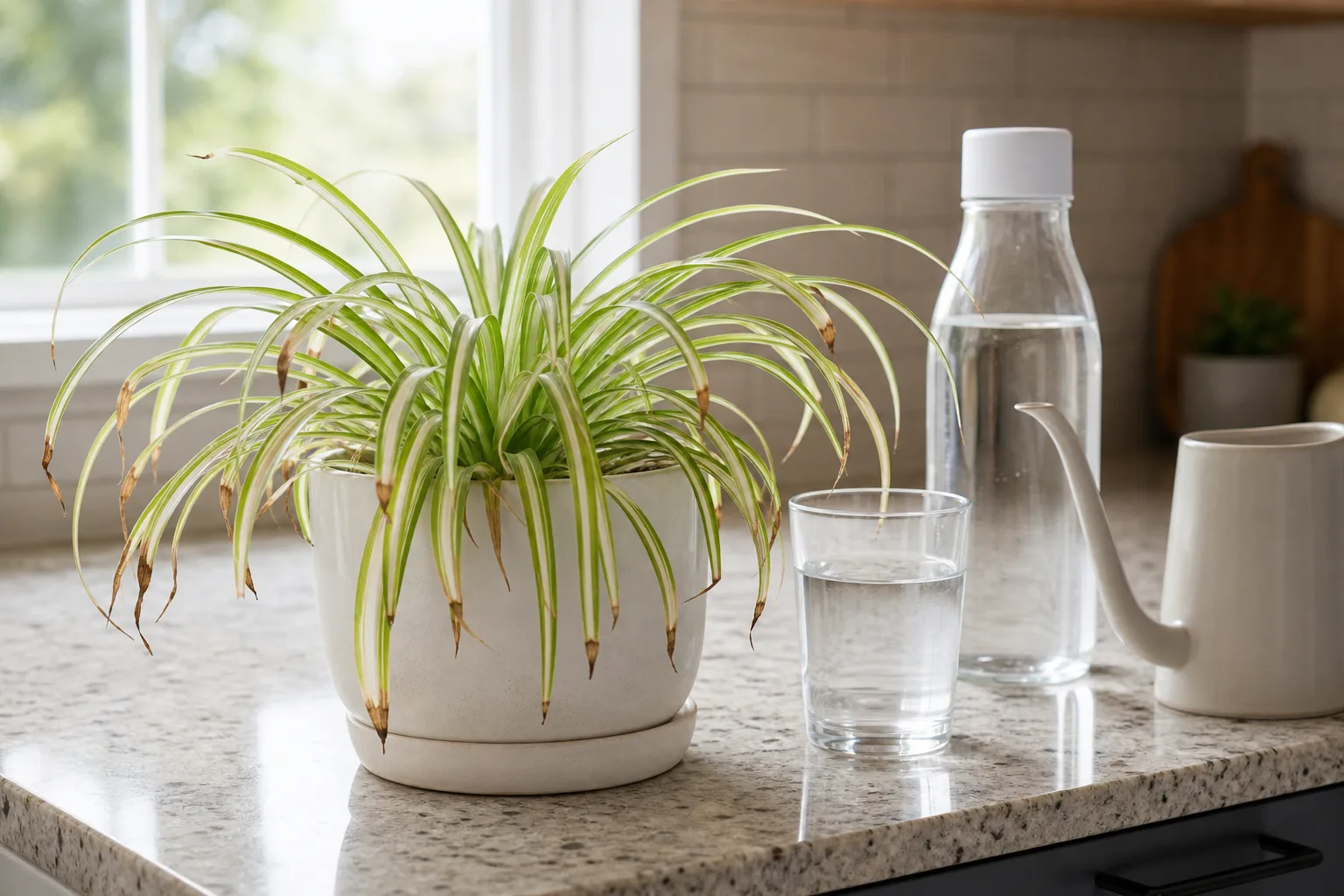
Peace lily ranks among fluoride-sensitive houseplants (eXtension Ask Extension). Many municipalities add fluoride to tap water; over time, peace lily leaf tips and margins can turn brown and crispy while the leaf center stays green. Chlorine in tap water is a separate issue—much of it dissipates if water sits open overnight, but fluoride does not evaporate that way (Michigan State University Extension).
Softened water adds sodium and is also hard on margins. The practical fix for persistent tip burn on otherwise well-watered plants is switching to rainwater, distilled, or reverse-osmosis water for every watering for four to six weeks and judging whether new leaves emerge cleaner. Old brown tips will not turn green again.
Why Leaving Tap Water Out Is Not Enough
Letting tap water sit 24–48 hours helps chlorine off-gas, which can help some sensitive plants, but it is not a reliable fluoride fix where municipal fluoride is high. If tips keep spreading after dechlorination alone, move to low-mineral water and consider flushing the pot with clean water until runoff runs clear to leach accumulated salts (University of Maryland Extension). For a broader water-quality overview across houseplants, see brown tips on houseplants.
5. Low Humidity and Dry Indoor Air
Peace lilies evolved in consistently humid rainforest air. Normal heated indoor air in winter often sits well below what tropical foliage prefers. Brown edges and tips on several leaves—especially near HVAC vents, radiators, or drafty windows—often track dry air (RHS).
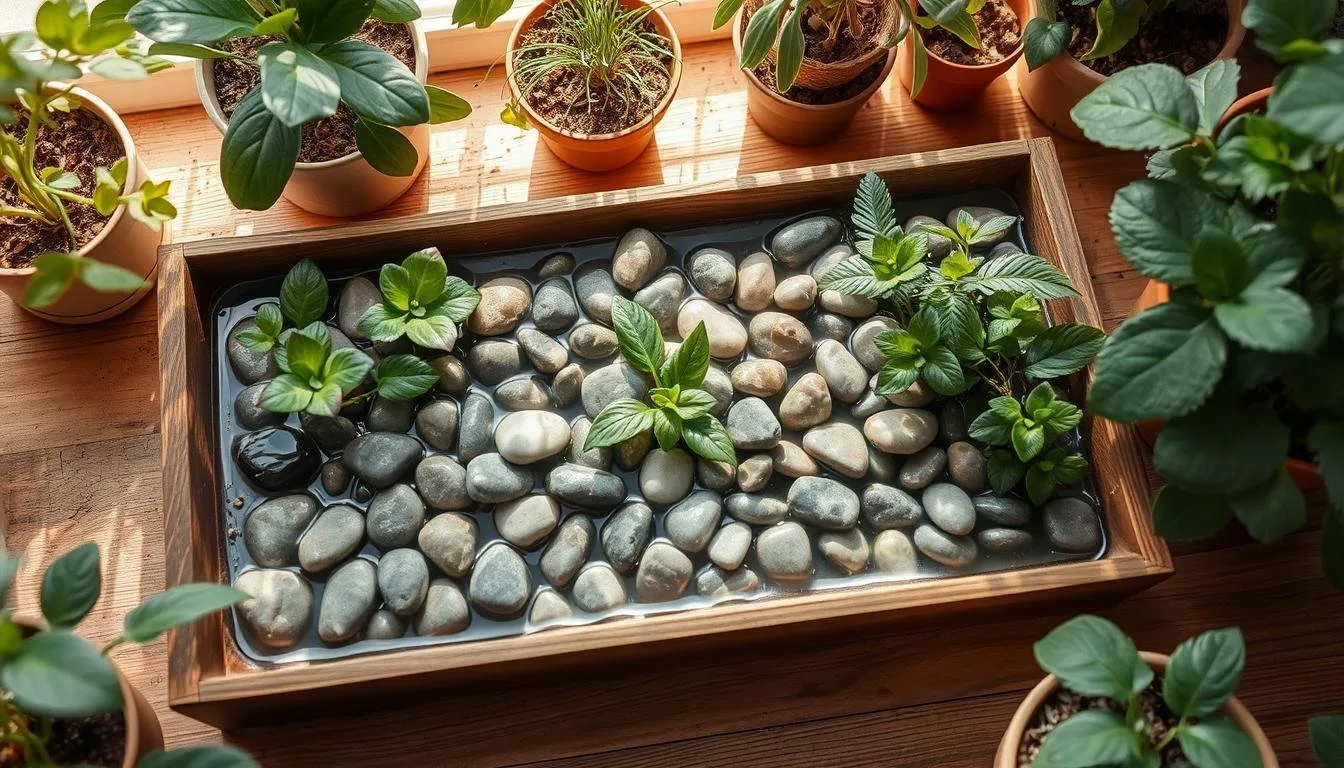
Place a hygrometer beside the foliage, not in a hallway, for two to three days. Many peace lilies do best around 40–60% relative humidity at leaf level; below 30%, margin browning risk climbs sharply in winter (University of Nebraska-Lincoln Extension). Misting alone raises humidity briefly and rarely fixes chronic tip burn; a humidifier, grouping plants, or a proper pebble tray with the pot above the waterline works better.
 Move the plant off forced-air paths before you buy hardware. If RH is adequate but tips still crisp, return to water quality and fertilizer salts—humidity is not the only winter trigger. Deep humidity tactics sit on low humidity on peace lily.
6. Too Much Fertilizer or Salt Crust
Peace lilies are moderate feeders, not hungry monsters. Too much fertilizer, too often, or undiluted liquid feed can burn leaf margins and tips as salts accumulate in the mix (Missouri Botanical Garden). White crust on the soil surface or pot rim after feeding is a visual clue.
Feed lightly during active growth—often every six to eight weeks at half the label strength—and skip fertilizer on stressed plants until watering and light are stable (NC State Extension). If you recently fed heavily and tips browned within days, flush the pot with low-mineral water until runoff is clear, empty the saucer, and pause feeding for one to two months.
Coffee grounds sprinkled on indoor peace lily soil are a common bad tip online. Outdoors, microbes break grounds down; indoors they break down slowly and can mold on the surface without fixing tip burn. Stick to balanced houseplant fertilizer at low dose—or none until the plant recovers.
7. Direct Sun and Heat Exposure
Peace lilies tolerate lower light better than many houseplants, but they scorch in direct sun (Clemson HGIC). Too much direct exposure through south- or west-facing glass produces broad tan or bleached patches on the exposed side of leaves, not just narrow tip necrosis. Hot glass radiating heat onto leaves adds margin burn even when watering is perfect.
The fix is bright indirect light—near a window with a sheer curtain, or a few feet back from an unfiltered pane (RHS). Rotate the pot weekly for even growth after you move it.
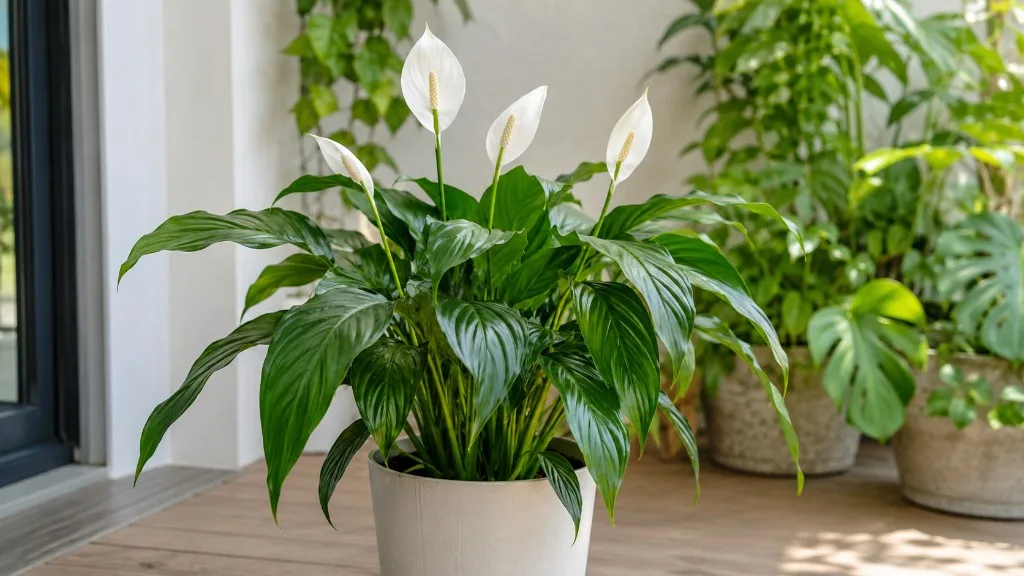 If only one side of a leaf shows damage, sun is a stronger suspect than fluoride. Placement diagrams and grow-light notes live on peace lily light.
8. Cold Drafts and Temperature Swings
Peace lilies prefer stable room warmth, roughly 18–27°C (65–80°F) (Missouri Botanical Garden). Cold drafts from doors, leaky windows, or air-conditioning blasts stress leaf margins fast. Leaves touching cold window glass overnight can brown at the contact point even when the room thermometer reads fine.
Avoid placing pots in the direct path of heating and cooling vents. Sudden 20°F swings between day and night—common near drafty sills—produce tip burn that looks like water stress but returns after you fix watering. Move the plant to a stable microclimate and watch whether new leaves stay clean for two to three weeks before changing water type or repotting again.
When Brown Tips Are Normal Aging
Not every brown edge is a crisis. Older lower leaves naturally senesce—tips brown, the leaf yellows, then you remove it at the base when fully spent. If only one older leaf at a time shows tip burn while new growth stays glossy and firm, you may be seeing normal aging, not environmental failure.
Spent spathes (the white modified leaves around the flower spike) also turn green, then tan or brown as they age. That color shift is normal bloom aging, not automatic proof of root rot. Worry when multiple new leaves brown at once, when yellowing spreads up the plant, or when wilt persists on wet soil.
Should You Trim Brown Peace Lily Leaves?
Yes—for appearance, and only after you start the corrective fix. Snip dead brown tissue with clean scissors, following the natural curve of the leaf so the cut looks tapered rather than blunt. Trimmed tips do not regreen; judge recovery by whether the next one or two emerging leaves have clean margins.
Remove a fully brown or yellow leaf at the base instead of leaving a stub. Do not strip more than one-third of the foliage at once unless you are clearing confirmed rot or pest damage. If brown tips come with yellow leaves on wet soil, fix roots before aggressive pruning.
A Peace Lily Watering Routine That Prevents Tip Burn
Calendar watering is why peace lilies tip-burn in winter. Replace the calendar with a soil check: poke the top inch; water when it begins to dry, not on a fixed Tuesday. Carry the pot to a sink, run water through until it exits drainage holes, then let excess drain fully before returning the plant to its saucer (University of Minnesota Extension).
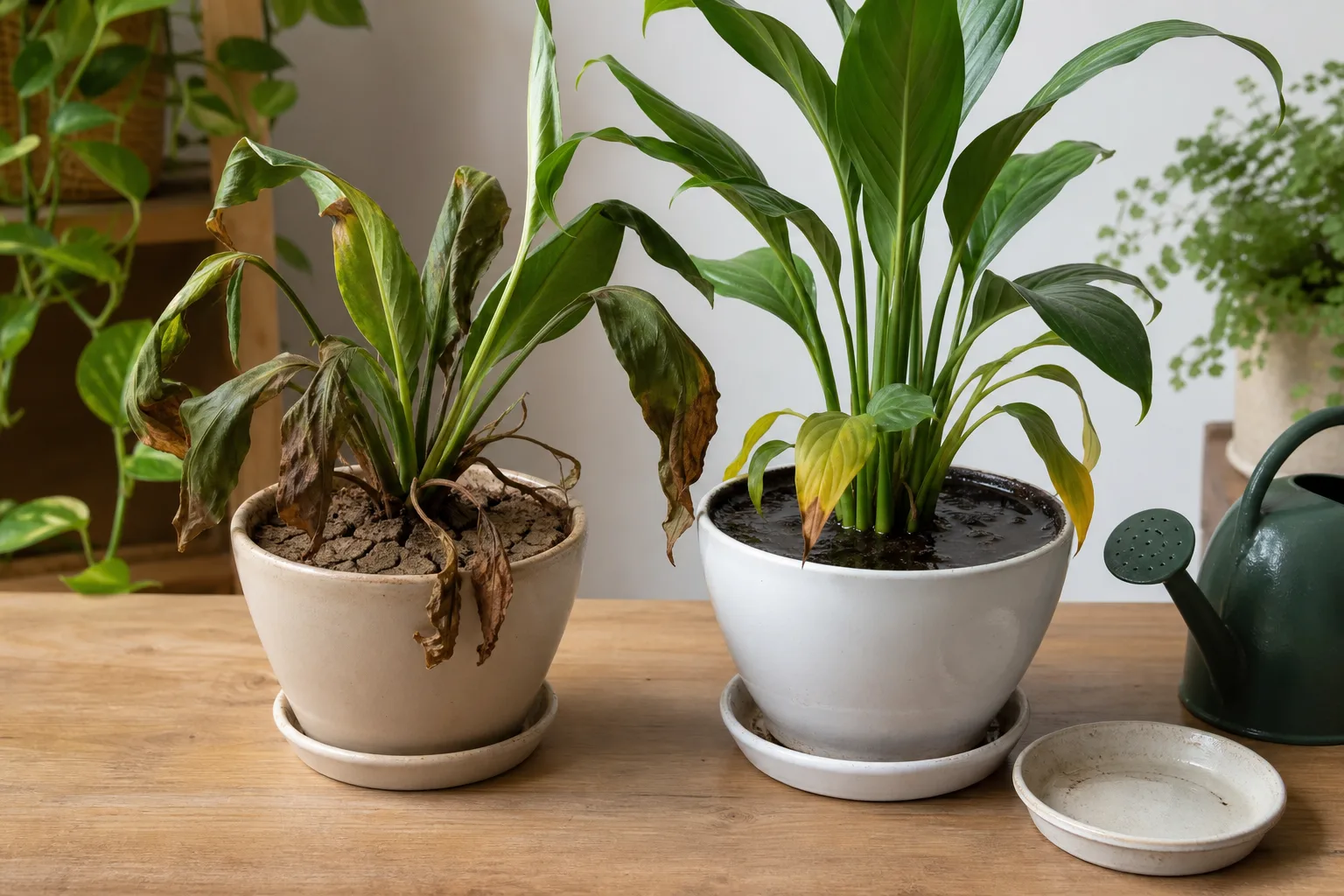 Use low-mineral water if your municipality fluoridates heavily. Group humidity fixes with watering fixes in dry months rather than chasing one variable. Baseline rhythm, droop interpretation, and vacation holds are expanded on peace lily watering and the peace lily care guide.
Conclusion
Brown leaf tips on a peace lily are a margin stress signal, not a single disease name. Start with soil moisture and leaf pattern, match one of eight causes—overwatering, underwatering, poor drainage, tap-water minerals, dry air, fertilizer salts, direct sun, or cold drafts—and apply the first low-risk fix for that cause. Damaged tips stay brown, but new leaves can emerge clean within a few weeks once conditions stabilize.
Escalate to root inspection when tips brown alongside yellowing on wet soil, sour smell, or wilt that does not recover after a proper drink. For fluoride-specific workflows, humidity targets, and step-by-step rescue pages, keep the Peace Lily hub bookmarked alongside this guide.