How to Grow Peperomia Obtusifolia Indoors
Grow Peperomia obtusifolia with bright indirect light, a dry-down watering rhythm, chunky soil, and simple stem-cut propagation—plus fixes for yellow leaves.
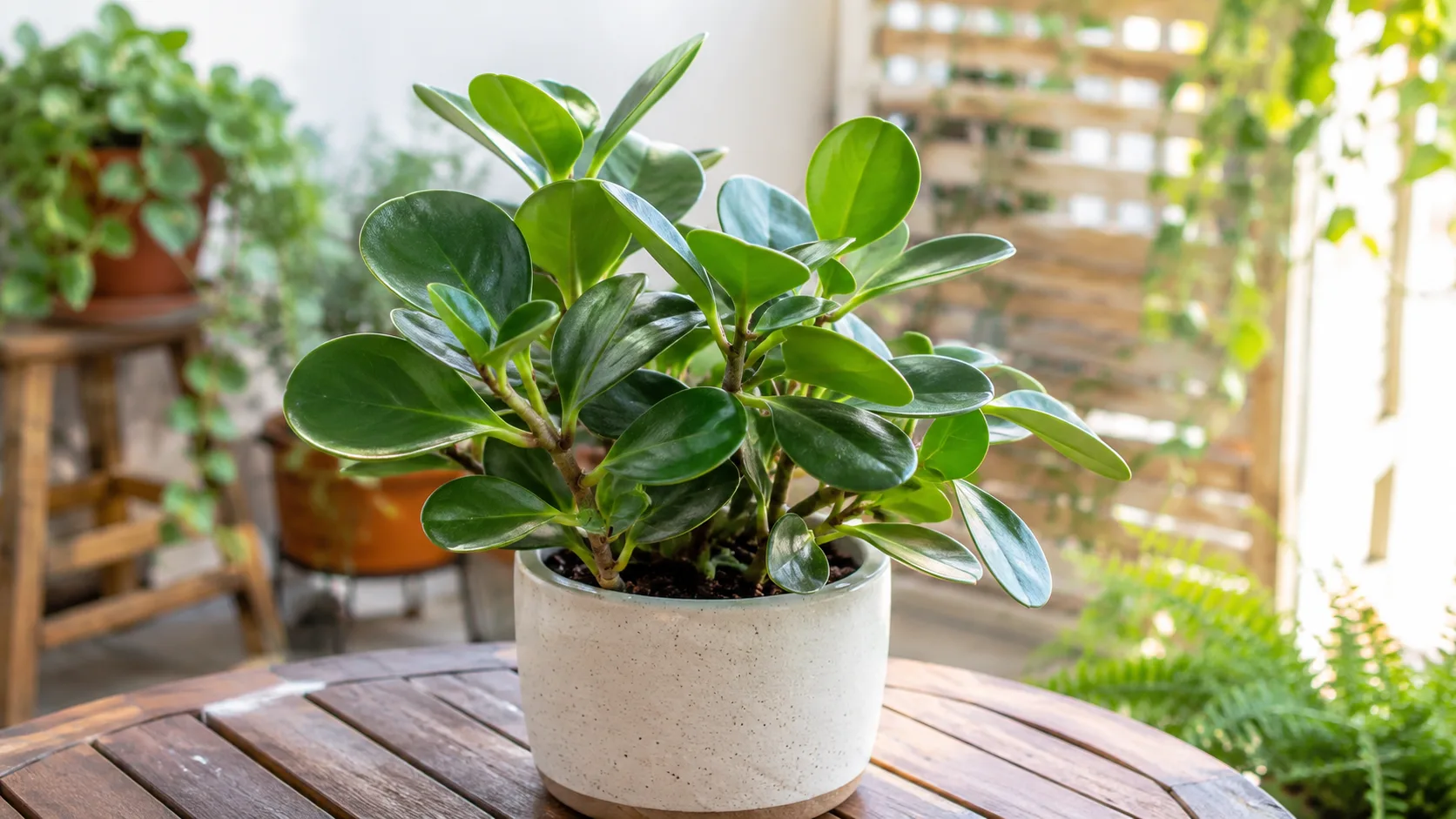
Peperomia obtusifolia—sold as baby rubber plant, pepper face, or American rubber plant—is one of those compact houseplants that looks polished even when you forget it exists for a week. Thick, glossy, spoon-shaped leaves store water like a succulent, yet the plant still wants humidity and bright indirect light to look its best. Get the balance wrong and you get yellow lower leaves, mushy stems, or a leggy silhouette stretching toward the window. Get it right and a single pot can stay bushy for years, produce easy stem-cut babies for friends, and never trigger a pet emergency.
Peperomia Obtusifolia Quick Reference
Use this table before you change light, soil, or watering. If something already looks off, jump to the troubleshooting section instead of stacking fixes.
| Factor | Indoor target | Notes |
|---|---|---|
| Light | Bright indirect; gentle morning sun OK | Variegated forms need more intensity |
| Water | When top 1–2 inches of mix are dry | Leaves store moisture—rot beats drought |
| Soil | Chunky, well-draining potting mix | 25–30% perlite or similar |
| Temperature | 65–75°F ideal; avoid below 50°F | Cold drafts brown leaf tips |
| Humidity | 40–60%; higher in dry winters | Pebble tray or bathroom placement helps |
| Fertilizer | Monthly at half strength in spring–summer | Skip in fall and winter |
| Size | 6–24 inches tall and wide | Slow to moderate growth |
| Repotting | Every 2–4 years | One pot size up only |
| Pets | Non-toxic to cats and dogs (ASPCA) | Chewing can still upset stomachs |
| Outdoor zones | USDA 10a–12b | Frost-free, shaded patio only |
For species-specific schedules broken into separate pages, the Baby Rubber Plant hub links light, watering, soil, propagation, and problem guides when one factor—not the whole plant—needs attention.
What Makes the Baby Rubber Plant Different
Peperomia obtusifolia is a tropical evergreen shrub in Piperaceae, the pepper family, native from Florida through Central and South America. NC State Extension describes it as erect and bushy with glossy cupped obovate leaves, distinct branched stems, and petioles often tinged pink or red. (NC State Extension) It is commonly sold as a desktop or shelf plant because it tolerates the lower light of offices better than many flowering houseplants—for several months—especially solid-green forms.
What trips up new growers is treating obtusifolia like a thirsty tropical foliage plant. The roots are small and epiphytic in nature: they absorb moisture from bark and leaf litter in the wild, not from soggy ground. Indoors that translates to a simple rule—dry soil beats wet soil every time. The plant stores water in leaves and stems, so it survives short dry spells but collapses quickly when roots sit in waterlogged mix.
Not the Same as a True Rubber Plant
The common name baby rubber plant invites confusion with Ficus elastica, the true rubber tree. They are unrelated. Ficus wants more water volume, larger pots, and different pruning. Obtusifolia stays under two feet, rarely needs repotting, and fails from overwatering far more often than underwatering. NC State lists Ficus elastica as a look-alike species people confuse with obtusifolia—if your “rubber plant” has milky sap when cut and much larger leaves, you are growing a ficus, not a peperomia.
ASPCA lists baby rubber plant (Peperomia obtusifolia) as non-toxic to dogs and cats. (ASPCA) That makes obtusifolia a strong pick for pet-friendly collections, though nibbling any plant can still cause mild stomach upset.
Light Requirements for Healthy Foliage
Indoors, obtusifolia performs best in bright indirect light—think an east-facing window or a south- or west-facing window filtered by a sheer curtain. NC State notes the plant prefers bright indirect light and that too-strong direct sun burns leaves. (NC State Extension) A few hours of gentle morning sun often speeds growth without scorching the thick foliage.
Place the pot one to three feet from the glass, not pressed against hot afternoon sun. If leaves bleach, curl, or develop crispy patches on the window side, pull the plant back or add filtering. Leggy stems with wide gaps between leaves mean the spot is too dim—move closer to the window or add a grow light for 10–12 hours daily.
Variegated vs Solid-Green Cultivars
Solid-green obtusifolia tolerates lower light longer than heavily variegated selections, which is why it survives dim offices when cream-splashed forms would fade. Variegated cultivars—including ‘Variegata’, ‘Gold Tip’, and ‘Alba’—need brighter indirect light to hold their pattern. Without enough intensity, cream sections revert toward green and growth slows.
The trade-off is sensitivity: variegated leaves burn faster in direct sun. Aim for the brightest spot that never receives harsh midday rays. If variegation fades after a winter in a dark corner, gradual relocation over a week usually restores color without shock.
Soil and Potting Mix That Drains Fast
Obtusifolia wants loose, fertile, fast-draining mix, not dense garden soil. NC State flags intolerance of wet soil as a primary failure mode. (NC State Extension) A practical indoor blend:
- 70% peat-free or all-purpose potting mix
- 30% perlite, pumice, or coarse sand
Because roots stay compact, a snug pot helps prevent water from lingering in unused soil. Always use a container with a drainage hole; cache pots without holes are fine only if you lift the nursery pot to drain after every watering.
For deeper mix ratios and repotting signs, see the Baby Rubber Plant soil guide.
Watering Without Root Rot
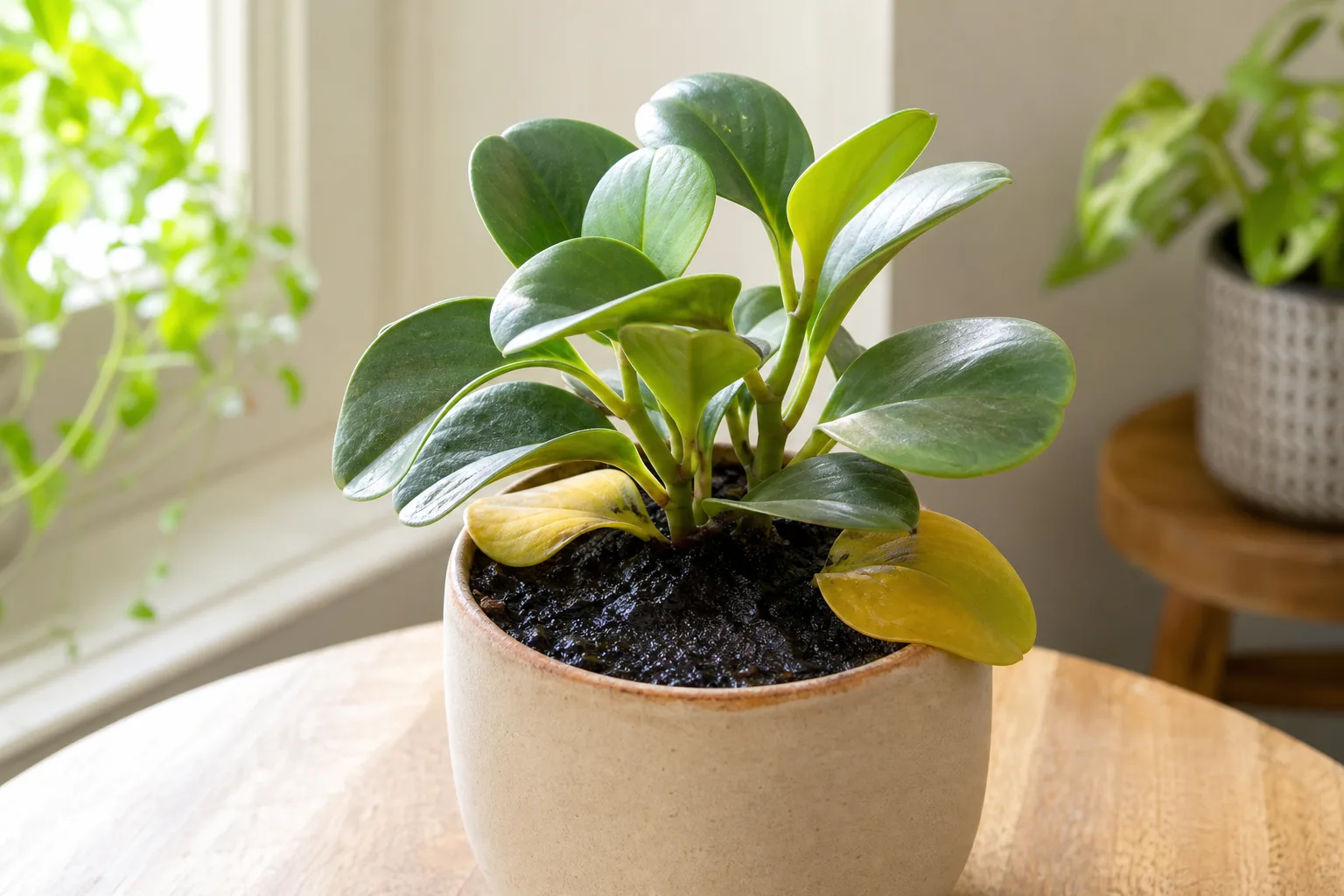
Overwatering—not underwatering—is the number-one obtusifolia killer. NC State lists overwatering as the big problem behind yellow leaves and root rot, with mealybugs and spider mites as secondary issues. (NC State Extension)
Water when the top 1–2 inches of mix feel dry, not on a fixed calendar. Stick your finger in, or lift the pot: a light pot usually means dry soil. Then:
- Water thoroughly until excess runs from the drainage hole.
- Empty the saucer within 30 minutes so roots are not sitting in runoff.
- Wait until the top layer dries again before the next drink.
In bright active growth, that might mean every 7–10 days in summer and every 14–21 days in winter when light and evaporation drop. Ohio Tropics notes obtusifolia’s succulent-like leaves store water and recommends letting the plant go dry between waterings rather than keeping soil constantly moist. (Ohio Tropics)
If several lower leaves yellow while soil stays damp, stop watering, check drainage, and read the overwatering guide before the roots turn mushy.
Temperature, Humidity, and Where to Place It
Obtusifolia thrives at 65–75°F and handles average home humidity, though it looks glossier at 40–60% relative humidity. NC State says it prefers medium to low relative humidity indoors but also notes intolerance of very drafty sites. (NC State Extension)
Keep pots away from cold windows, heat vents, and air-conditioner blasts. Temperatures below 50°F brown leaf tips and can trigger leaf drop. A steamy bathroom with bright filtered light is an excellent placement—as long as the window is not freezing at night.
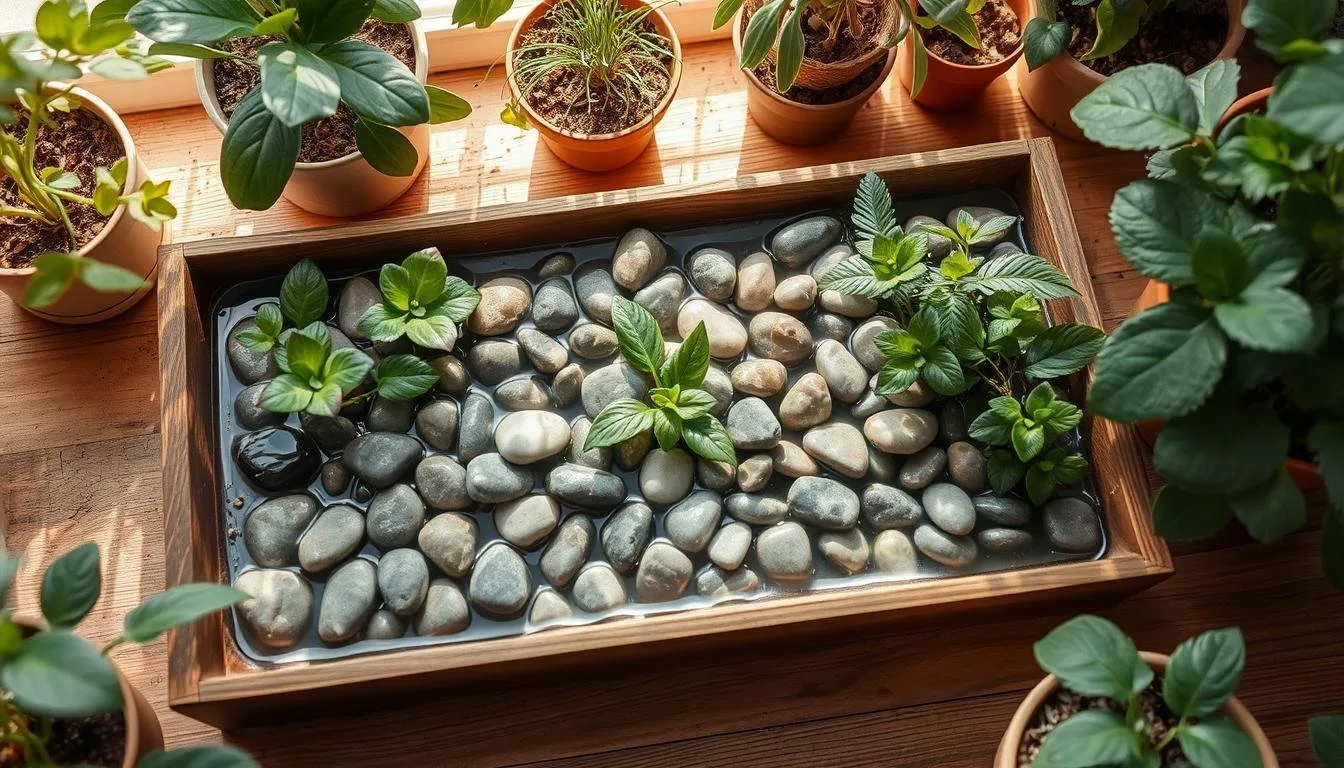
If winter air is dry, a pebble tray (pot elevated above water, not sitting in it) or grouping with other plants raises local humidity without misting leaves daily. Joy Us garden, growing obtusifolia in low-desert humidity, reports success with occasional foliage rinsing and humidity trays rather than constant misting. (Joy Us garden)
Fertilizing During the Growing Season
Obtusifolia is not a heavy feeder. Small epiphytic roots burn easily when fertilizer salts accumulate. Feed monthly from spring through early fall with a balanced liquid houseplant fertilizer diluted to half the label strength. Skip fertilizer in late fall and winter when growth slows.
Do not fertilize a stressed plant—one that is bone dry, soaking wet, or dropping leaves after a move. Brown spots on leaves after feeding often mean salt buildup; flush the pot with plain water and reduce concentration next time.
Popular Cultivars Worth Growing
Nurseries sell many obtusifolia selections. NC State Extension lists these common cultivars: (NC State Extension)
- ‘Variegata’ — glossy green leaves with cream margins; needs brighter light
- ‘Alba’ — young stems tinged red with creamy white variegation that greens with age
- ‘Gold Tip’ — marbled leaves with gold toward the tips
- ‘Minima’ — compact habit with dense small green foliage
- ‘Obtipan Green’ — short, clumping emerald leaves
- ‘USA’ — patchy multi-shade variegation
Care is identical across cultivars except for light intensity on variegated forms. When buying, match the plant to your window: solid green for moderate light, variegated only if you have a bright spot.
Pruning for a Bushier Shape
Obtusifolia grows with a naturally bushy habit but can send out long bare stems in low light. Pinch or cut stem tips just above a leaf node in spring or summer to encourage branching. Remove yellowed or damaged leaves at the base so energy goes to healthy growth.
Those lanky stems are also perfect propagation material—pruning and propagation go hand in hand. Wipe blades with rubbing alcohol between cuts if you recently treated pests.
Propagating Peperomia Obtusifolia
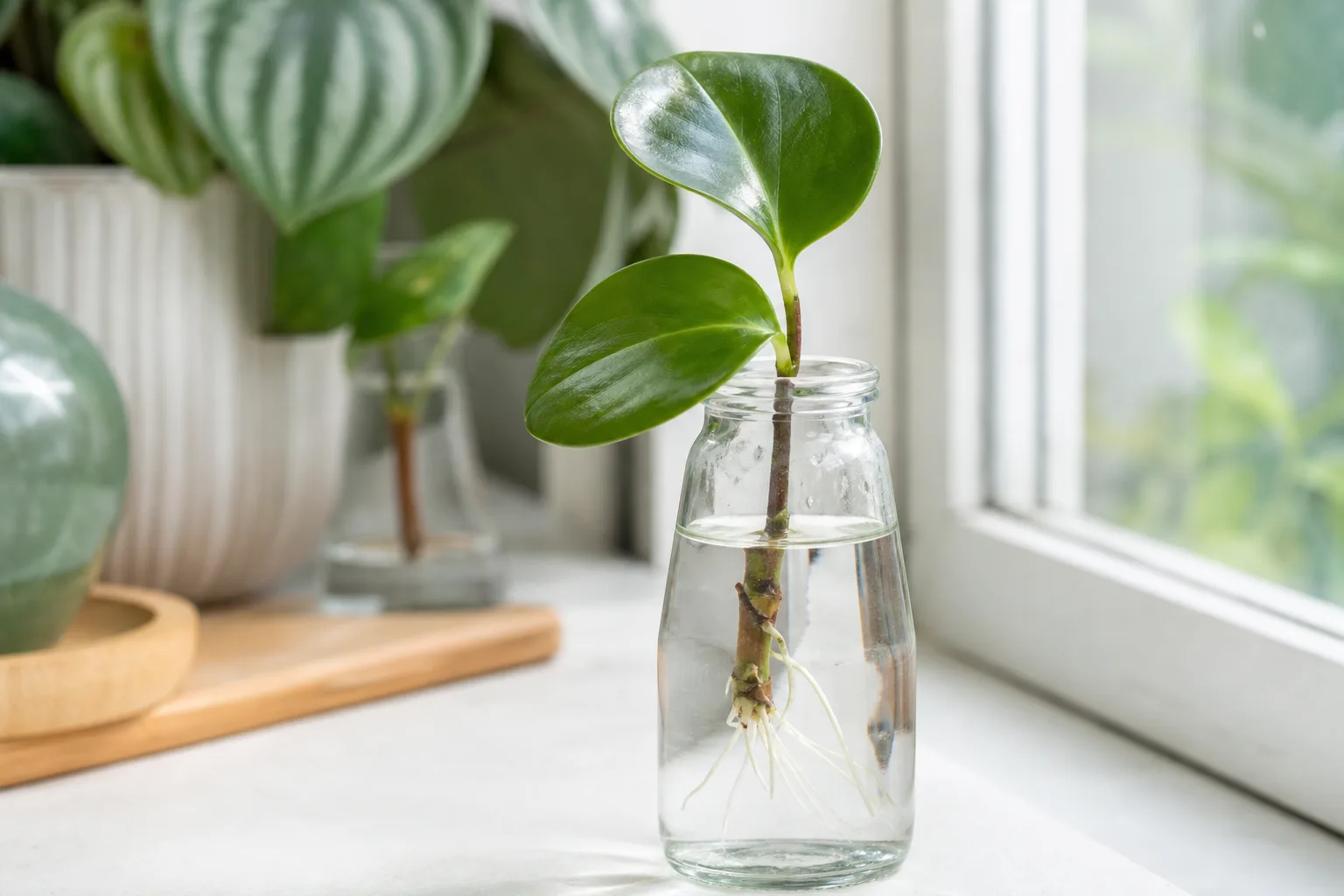
Propagation is straightforward and works best in warm months when the parent plant is actively growing. Stem tip cuttings succeed more often than single-leaf cuts for beginners.
Stem cutting in soil:
- Cut a 3–4 inch healthy stem with at least one node and one or two leaves.
- Remove the lowest leaf so the node is exposed.
- Optional: dip the cut end in rooting hormone.
- Plant in a small 4-inch pot of moist, chunky mix; bury the node, keep leaves above soil.
- Place in bright indirect light at 65°F or warmer.
- Keep mix lightly moist—not wet—until new growth appears in 3–6 weeks.
- Move to a permanent pot one size up once roots hold the soil when you tug gently.
Water propagation also works: suspend the cutting so the node sits above water, change water weekly, and pot up when roots reach an inch long. Joy Us garden notes obtusifolia is among the peperomias that root readily in water. (Joy Us garden)
Division at repotting is a third option when a pot holds multiple stems with separate root clusters. For a full propagation walkthrough, see the Baby Rubber Plant propagation guide.
Repotting on a Slow Schedule
Because roots stay small, obtusifolia does not need frequent repotting. Every two to four years—or when roots circle the drainage holes and water runs straight through—is enough. Repot in spring before the main growing push.
Choose a pot only one size larger (about 2 inches wider). Oversized pots hold excess wet soil around small root systems and invite rot—the same failure mode NC State warns about with wet soil. (NC State Extension) Refresh the top inch of mix annually if you are not upsizing.
Troubleshooting Common Problems
Most obtusifolia problems trace back to water, light, or temperature. Work through this order before reaching for fertilizer or pest sprays.
| Symptom | Most likely cause | First fix |
|---|---|---|
| Lower leaves yellow, soil wet | Overwatering / poor drainage | Dry out; check holes; repot if mushy roots |
| Soft drooping stems | Overwatering or cold draft | Reduce water; warm location |
| Crispy brown tips | Cold air or direct sun | Move away from window chill or harsh rays |
| Leggy sparse growth | Too little light | Brighter indirect spot or grow light |
| Sudden leaf drop | Temperature swing | Stable 65–75°F; no heat/AC blasts |
| Wrinkled slightly soft leaves | Underwatering | Soak pot; resume dry-down schedule |
Yellow Leaves, Drooping, and Leaf Drop
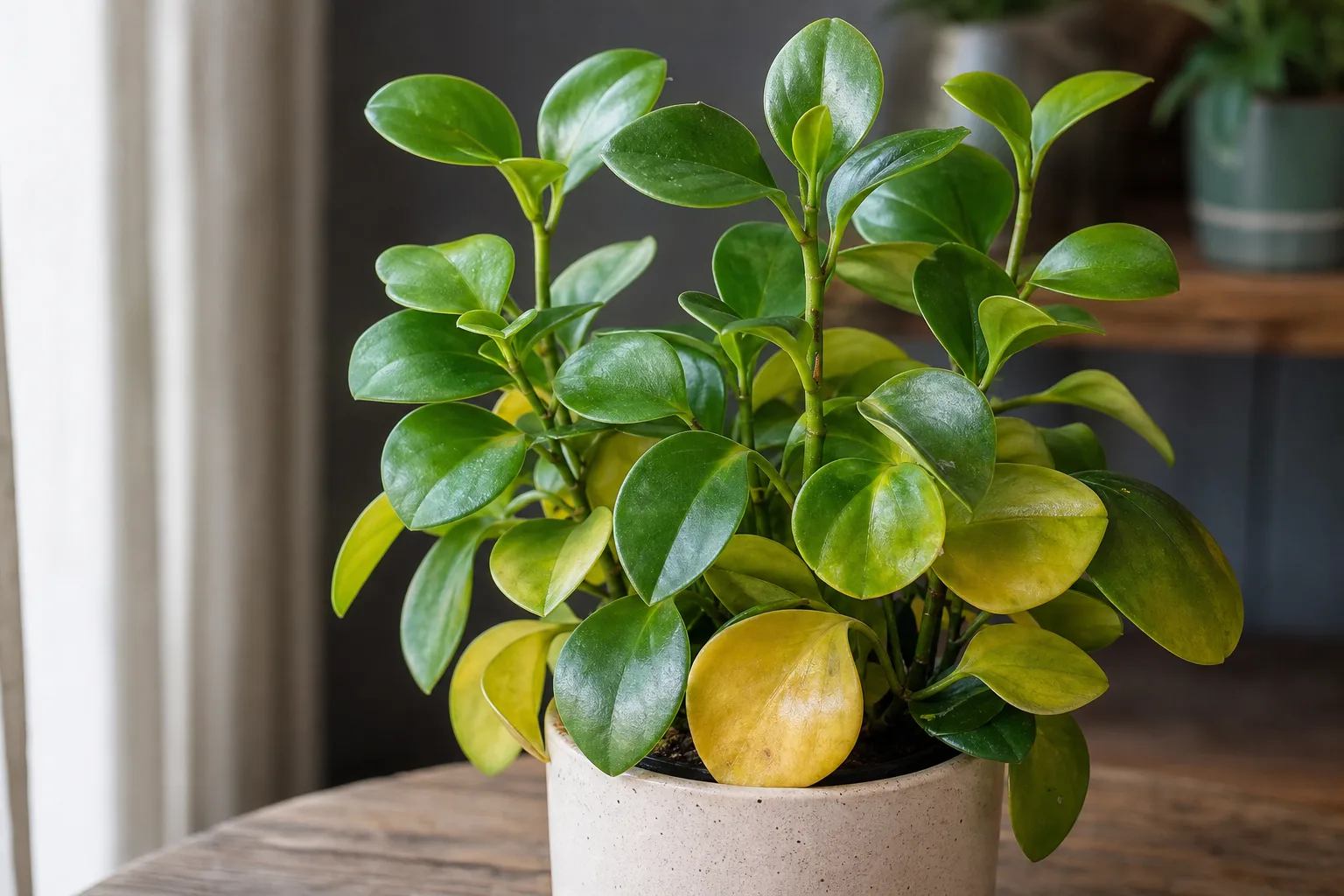
Yellow leaves on obtusifolia usually mean roots have been too wet for too long. Confirm with your finger: if the top two inches are damp while lower leaves fade, skip the next two waterings and ensure the saucer stays empty. Persistent yellowing with sour-smelling soil points to root rot—trim black roots, repot into fresh mix, and withhold fertilizer until new growth appears.
Drooping splits two ways. Soft, mushy stems with wet soil = overwatering. Firm leaves on dry soil = underwatering—soak thoroughly once, then return to the dry-down rhythm. Drooping under direct sun often means scorch; filter the window.
Leaf drop after a move is common—obtusifolia reacts to environmental change before it reacts to slow neglect. Hold watering steady and avoid fertilizing until it settles. If drop continues with cold drafts, relocate away from the glass in winter.
See also the dedicated yellow leaves guide and not enough light page for cultivar-specific photos and fixes.
Pests and How to Treat Them
NC State lists mealybugs, spider mites, and whiteflies as the main pests to monitor. (NC State Extension) Inspect leaf axils and undersides weekly—peperomias have tight joints where mealybugs hide.
First response: rinse foliage in the sink, isolate the plant, and wipe visible insects with a cotton swab dipped in rubbing alcohol. Repeat every few days. For persistent infestations, insecticidal soap applied to all leaf surfaces (including undersides) at label rates is usually enough on obtusifolia’s thick leaves.
Avoid heavy oil sprays on stressed or sun-scorched plants. Detailed treatment steps live on the Baby Rubber Plant mealybugs page.
Growing Outdoors vs Indoors
Most growers keep obtusifolia as a houseplant. Outdoors, it survives year-round in USDA zones 10a–12b—think frost-free parts of Florida, southern California, and similar climates. NC State lists hardiness through zone 12 and native range including Florida and the Caribbean. (NC State Extension)
In warm regions, grow it in dappled shade on a patio where temperatures stay above 50°F. Bring pots inside before cool nights in marginal zones. Never expose obtusifolia to frost—it kills foliage quickly.
Indoors remains the safer default for most of North America: stable temperature, controlled watering, and no pest pressure from garden beds.
What about the flowers? Obtusifolia produces upright cream-colored spikes of tiny blooms. They are ornamental but not showy. You can leave them, or pinch them off if you prefer energy directed to foliage—either choice is fine.
Conclusion
Peperomia obtusifolia rewards a light touch: bright indirect light, chunky soil, and watering only when the top of the mix dries. Solid-green forms forgive dimmer corners; variegated cultivars need more intensity to keep their pattern. Small roots mean small pots and infrequent repotting, while stem cuttings make propagation almost too easy.
If leaves yellow, check water before anything else. If growth stretches, add light. Keep temperatures above 50°F, and you have a pet-safe, low-drama plant that can look full and glossy for a decade or more. When you want deeper single-topic help, the Baby Rubber Plant care cluster breaks watering, light, soil, and propagation into focused pages—but the rhythm on this guide is enough to keep most pots thriving without another search.