Guest Room Coffee Station Setup Guide
Learn how to build a guest room coffee station that feels thoughtful, works at 6 a.m., and gives guests coffee, tea, snacks, and privacy without clutter.
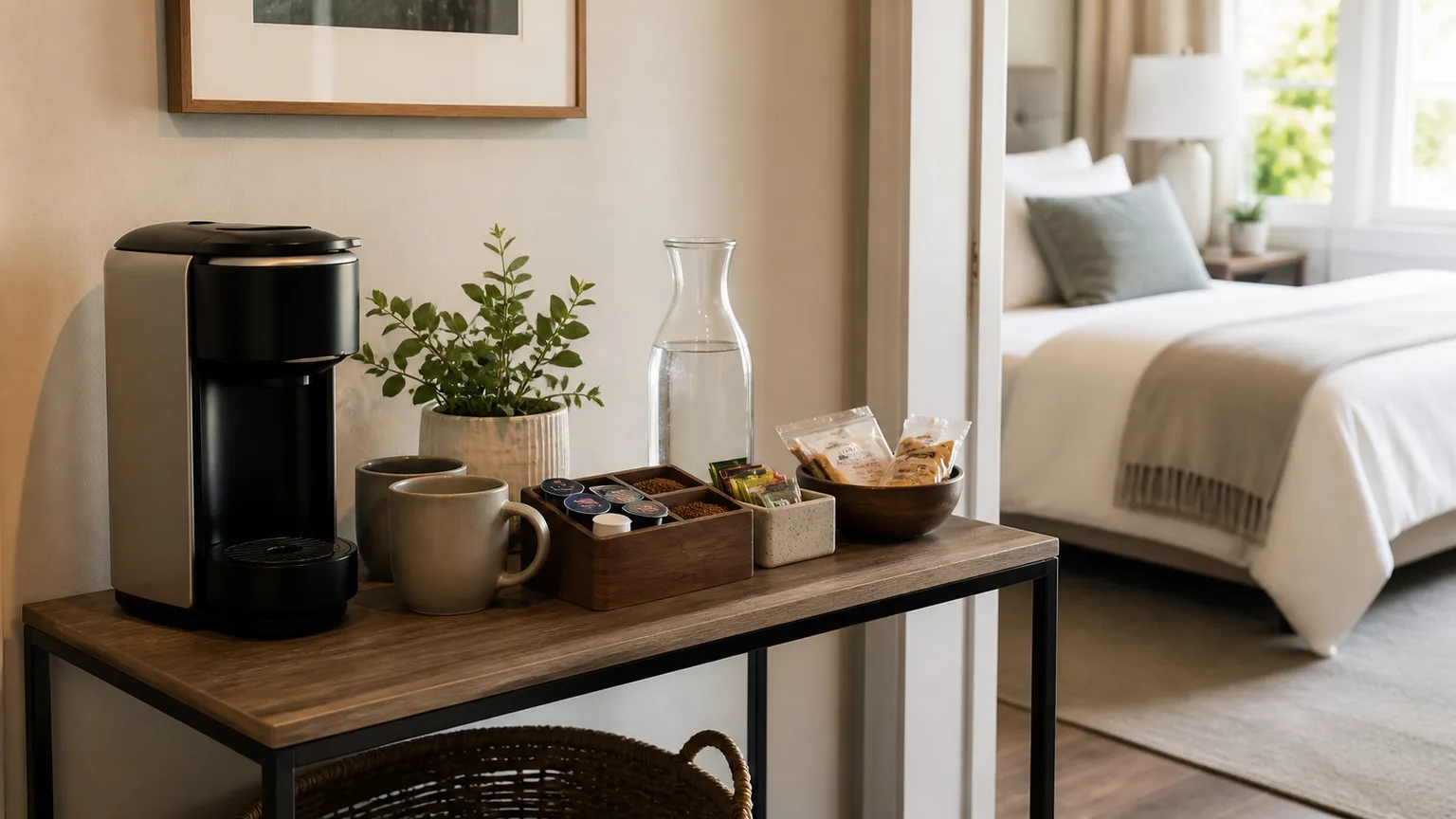
The most useful guest-room upgrade is not the prettiest basket or the fanciest coffee. It is a small, self-serve station that lets someone make a drink when they want one, at the strength they prefer, without walking through your house or asking where anything lives.
That is especially valuable when guests sleep on another floor, wake earlier than you do, have children in tow, or simply feel awkward opening someone else’s cabinets at 6 a.m. A thoughtful guest room coffee station removes that friction. The coffee maker matters, but the layout, instructions, safety check, and restocking plan matter just as much.
Why a self-serve station feels more welcoming
Hospitality is partly about comfort and partly about permission. A guest may technically be allowed to use the kitchen, but still hesitate to turn on lights, make noise, search for a mug, or consume the last of your coffee. A station placed where it is easy to find quietly communicates: this is for you; you do not need to ask.
The best setup also protects different schedules. Early risers can make one cup before the household wakes, night owls can work or snack without a trip downstairs, and hosts do not have to perform breakfast on demand. Real Simple’s guest-room guidance makes a similar practical case for surfaces, lighting, water, charging, and supplies that help visitors settle in without intruding. (Real Simple’s guest-room ideas)
Think of the station as a tiny service area, not a decorative display. If the tray looks beautiful but a guest cannot tell which container holds decaf, where to discard a used pod, or how to fill the machine, it is decoration that creates work. The goal is a calm, obvious sequence from mug to drink to cleanup.
Choose the location before the equipment
Start with the route a real guest would take. A wet bar outside the bedroom is ideal because it usually has a counter, water access, and somewhere to store supplies. A hallway console can work when the machine’s reservoir is easy to fill and the surface is stable. A kitchen station may be the safest choice when there is no suitable outlet upstairs or when the host wants to supervise young children.
The location should answer five questions before you buy anything: Can a guest reach it without waking people? Is the surface level and sturdy? Is there a nearby wall outlet? Can the reservoir be removed and refilled without bumping the machine? Is there enough room for a mug, a spill, and a small trash or used-pod plan?
Do not place a brewer on a narrow bedside table, under a low shelf, directly beside bedding, or where its cord crosses a walkway. A machine that technically fits can still be inconvenient if the lid hits a cabinet, the mug sits at the edge, or the host has to move three containers every time the reservoir comes out.
Check clearance, power, and traffic
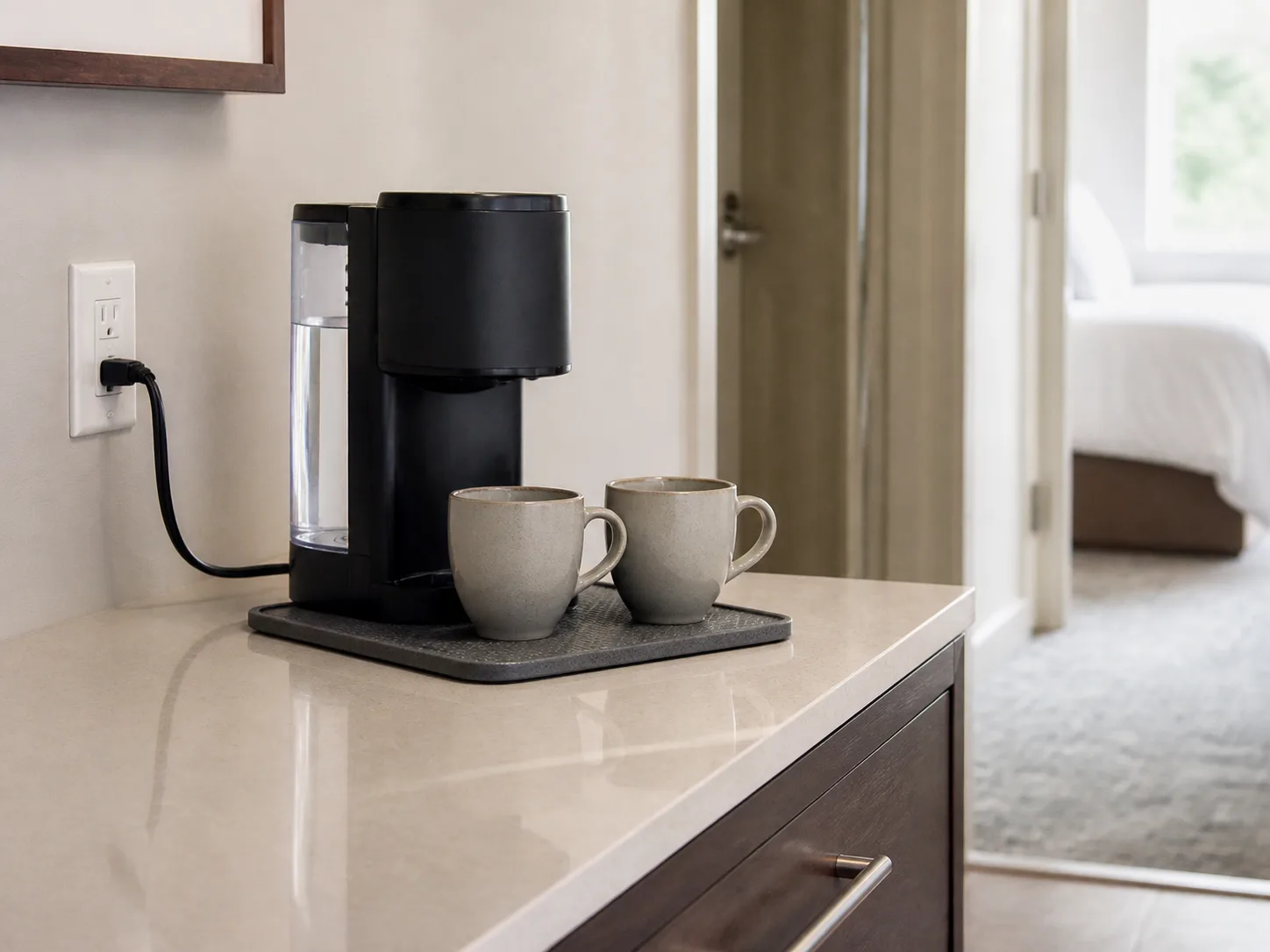
Measure the full working footprint, not just the appliance width. You need space above the machine for its lid or pod compartment, space in front for the cup, and side or rear access for the water reservoir. Leave enough open counter that a guest can set down a hot mug without balancing it on a stack of books or a tray rim.
Power deserves the same attention. Use a permanent wall outlet whenever possible, keep the cord away from water and the edge of the counter, and avoid a loose extension-cord setup in a guest room. The U.S. Fire Administration identifies unattended equipment as the leading contributing factor in nonconfined home cooking fires and includes a specific warning not to use extension cords for kitchen appliances. (U.S. Fire Administration cooking-fire guidance)
That does not mean a coffee maker belongs only in a kitchen, but it does mean the host should treat it as a hot, powered appliance. Keep paper napkins, snack wrappers, curtains, and loose fabric away from the machine, and choose a placement where a child cannot pull a hot mug down. If there is no safe outlet and stable surface upstairs, the right answer is a kitchen station with clear permission—not a risky workaround.
Match the coffee maker to guest habits
The “best” coffee maker for overnight guests is the one they can use half-awake without a tutorial. A compact footprint helps, but intuitive controls, an easy water routine, and a cleanup process that does not require special knowledge are more important than a premium finish.
Single-serve versus drip brewer versus kettle
| Setup | Best for | Main advantage | Main trade-off |
|---|---|---|---|
| Single-serve brewer | Guests with different schedules or tastes | One fresh cup with little waste | Pods create waste; grounds require a little more cleanup |
| Small drip brewer | Couples or guests who drink several cups together | Familiar, efficient for multiple servings | A pot can sit too long, and strength is less individual |
| Electric kettle | Tea drinkers, instant coffee, and rooms without a safe coffee-maker setup | Quiet, flexible, and useful beyond coffee | Guests must handle more steps; it does not brew coffee by itself |
| Kitchen-only station | Homes with limited safe space upstairs | Simplest water, outlet, and cleaning access | Guests must leave the room and may feel intrusive |
Single-serve is usually the most forgiving choice for a mixed group. One person may want decaf, another may want a strong cup, and a third may only want tea. A small brewer lets each guest choose without making a full pot that goes stale or leaving a carafe to wash.
There are good reasons not to use one. If the room has no safe outlet, if the guests are young children who should not operate a hot appliance, or if everyone gathers in the kitchen anyway, a kettle and a clearly stocked kitchen shelf may be better. A French press or pour-over can be lovely for coffee enthusiasts, but it is a poor default when the visitor may be unfamiliar with your gear.
Features that remove questions
Prioritize a removable water reservoir, clear cup-size controls, a visible brew-strength setting, parts that can be rinsed without disassembly, and a cup rest that accommodates the mugs you actually provide. An automatic shutoff is useful, but it does not make an unattended appliance safe; guests still need a stable surface and a simple instruction to stay nearby while brewing.
Also consider the sound. A grinder can be surprisingly loud in a quiet house, while a pod or pre-ground single-serve machine is usually easier on sleeping guests. If you want to offer whole beans, keep a small amount of pre-ground coffee available so the station does not force a noisy early-morning ritual.
Why the Hamilton Beach FlexBrew 49925 is a useful example
The Hamilton Beach FlexBrew Advanced 4-in-1 Coffee Maker, model 49925, is a good example of the feature mix that makes a guest brewer flexible without becoming a full coffee bar. The manufacturer’s page lists pod and ground-coffee brewing, hot and iced coffee, regular or bold strength for hot coffee, a 45-ounce removable reservoir, and selectable hot sizes from 8 to 14 ounces. (Hamilton Beach’s official 49925 specifications)
The official dimensions—12.8 inches high, 5.5 inches wide, and 10.7 inches deep—make the width useful when counter space is tight, but the height and depth still need to be measured against the actual station. A narrow footprint does not remove the need for lid clearance or room to pull out the reservoir.
What it does well in a guest setup
Its strongest guest-room advantage is preference coverage. A visitor can use a pod for the lowest-effort cup or bring their preferred ground coffee, choose a familiar mug size, and make hot or iced coffee without your having to stock a separate brewer. The cup rest can be removed for a taller travel mug, which is handy when guests leave early for a drive or airport run.
The five-serving capacity described by the manufacturer also reduces a common hosting annoyance: refilling the tank after every cup. That is helpful for a group, but it should not be confused with unlimited capacity. If several adults are drinking coffee across a long morning, leave a pitcher or a clearly marked refill plan nearby rather than assuming the initial fill will last.
The touchscreen is another potential advantage because guests can see the size and strength choices. Even so, a screen does not replace a test run. Controls that feel obvious to the owner can feel ambiguous to someone who has never seen the machine, especially when a guest is trying to keep the kitchen quiet.
Where it falls short
This model is not automatically the right answer for every guest room. It still needs water, electricity, counter depth, cleanup, and a safe place to discard used pods or grounds. I would not choose it for a cramped nightstand, a room without a nearby outlet, or a home where young children could reach the brewing area.
Its flexibility can also become choice overload. Four brewing modes, multiple sizes, two coffee inputs, and hot-or-iced options are useful only when the supplies and instructions are organized. If you provide the machine, offer one default pod, one decaf option, a small container of grounds, and a card that explains the two or three choices guests are most likely to use.
Finally, product specifications are not the same as a recommendation for your floor plan. Confirm the current manual, cleanable parts, electrical requirements, and warranty details before buying. The manufacturer’s use-and-care materials are the final authority for operation and cleaning; this guide is about making the surrounding hospitality setup work.
Build a no-questions-asked brewing setup
Once the location and brewer are chosen, set the station up as if you are a guest arriving after a long trip. Put the items in the order they will be used, make the first cup possible without opening a cabinet, and make the cleanup destination visible.
Arrange everything in brew order
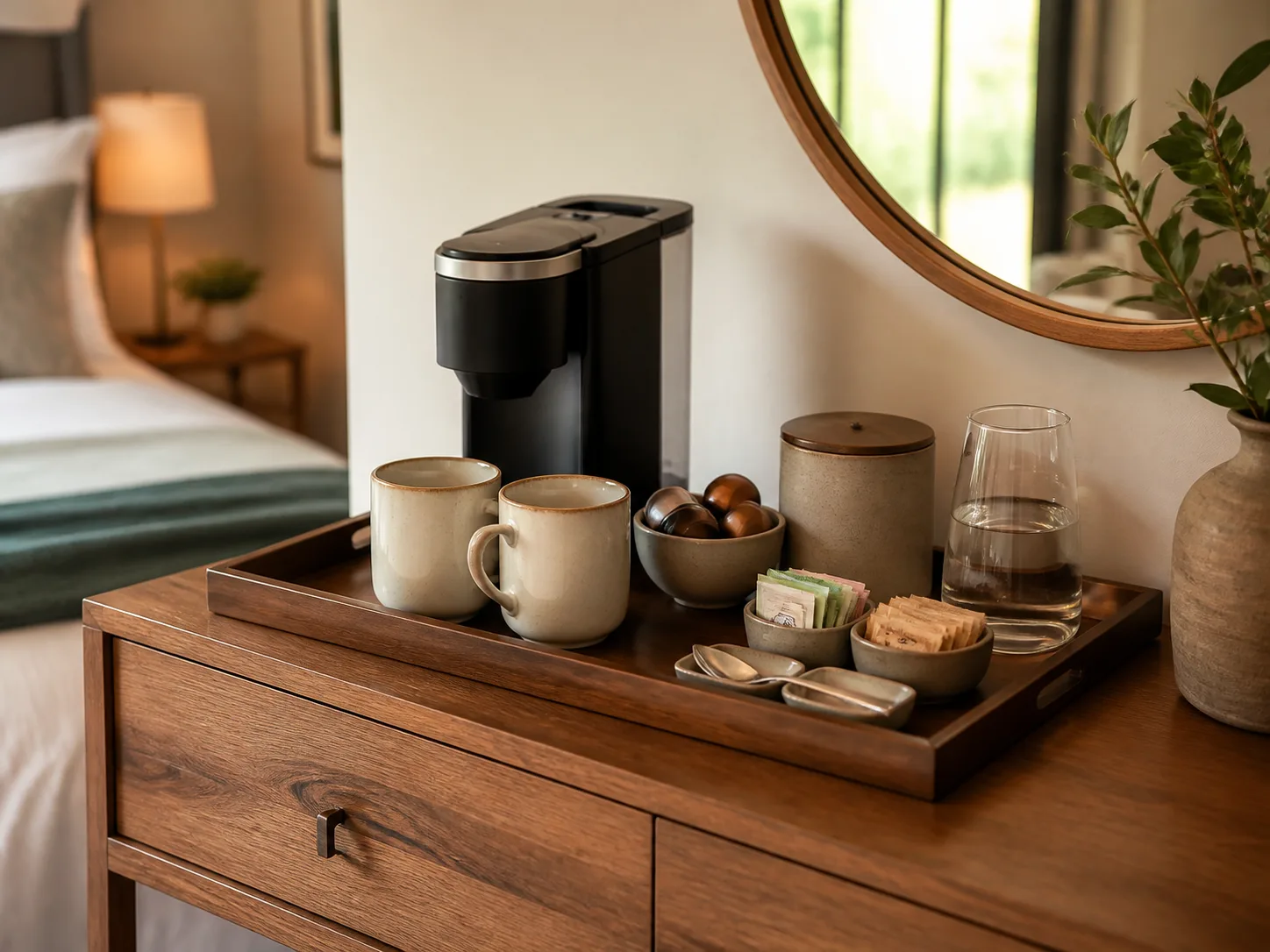
Place mugs first, then coffee choices, then the brewer, then water and add-ins—or reverse that order if your machine’s reservoir must be filled before a cup is selected. The arrangement matters less than consistency: a guest should be able to scan left to right or front to back and understand the sequence without moving objects.
Keep the items guests use every day on the tray and store backups in one labeled drawer or basket below. A station looks more polished when it is not overloaded with six kinds of syrup, but it feels more generous when the guest can see that extra pods, tea, napkins, or sweeteners are available.
Use a shallow tray with a small rim if the surface allows it. The tray creates a visual boundary, catches minor drips, and lets you move the setup for cleaning. It is not a substitute for a heat-safe surface or a stable appliance base, and it should never force the machine to sit at the edge.
Write a tiny instruction card
The card should be short enough to read before the first sip. Include the water step, which brew option is the default, how to choose ground coffee or a pod, the mug-size limit, and where to put used pods or grounds. Add a note such as “Please ask if you need more supplies” so guests do not ration coffee because they are worried about taking too much.
Do not print a full manual and call that hospitality. A one-minute card is useful; a page of warnings and every possible setting is intimidating. If the brewer has a confusing first-use step, do one test cup yourself and write down only the sequence that worked.
If children or mobility-limited guests may use the station, adjust the setup rather than relying on a note. Put hot liquids out of reach of toddlers, choose a counter that can be approached without twisting, and keep a lower, lighter mug available. Accessibility is part of making the station feel welcoming, not an optional extra.
Stock coffee and add-ins without clutter
Variety is kind when it is curated. Too little choice forces a guest to ask for a preference; too much choice makes a small station look like a convenience store. For most overnight visits, start with a regular medium roast, a decaf, one bolder option, and a few tea bags. If you know the guest’s preferences, personalize the mix instead of adding more categories.
Coffee grounds stay fresher and look tidier in an opaque, airtight container, but label the roast and whether it is decaf. Pods are easiest when the box or caddy makes the available choices visible. Do not decant anything that needs allergen or ingredient information into an unlabeled container, and keep original packaging nearby when it carries useful dietary details.
Offer choice without decision fatigue
Think in three layers. The first layer is the default: a familiar coffee, a comfortable mug, and a simple brew size. The second is the accommodation: decaf, tea, a non-dairy creamer, or ground coffee. The third is the optional treat: a local roast, honey, chocolate, or one flavored syrup.
This layered approach works better than displaying every possible sweetener and flavor. A named home-hosting source, Bits & Bangles, similarly recommends a logical use order, visible backups, and a setup that guests can operate without a verbal explanation. (Bits & Bangles’ coffee-bar setup)
For perishable milk, use small refrigerated portions or tell guests where the milk is stored. Do not leave dairy or plant milk sitting on the station overnight unless the product label and room conditions make that safe. If you offer individual creamers, check expiration dates between visits and discard anything that has been opened or warmed.
Add snacks, water, and noncoffee options
A coffee station becomes much more useful when it covers the small needs that make guests hesitate to go downstairs. Add a sealed water bottle or covered carafe, individually packaged snacks such as granola bars or crackers, tissues, napkins, and a small wastebasket or used-pod container. Choose snacks with clear labels when allergies are possible, and offer at least one low-sugar or savory option rather than making every extra a sweet.
Tea matters because not every guest drinks coffee. A kettle can be added when the outlet and counter can support it safely, but do not plug multiple high-wattage heating appliances into one improvised setup. If the space is small, tea bags, room-temperature water, and a promise that the kitchen kettle is available may be enough.
The visual layer should stay restrained. A matching tin, a washable tray, or a small plant can make the station feel intentional; a pile of decorative jars can make it harder to wipe down. Real Simple’s recommendations for a guest room—practical surfaces, a nearby charger, multiple lighting options, water, towels, and basics—are a useful reminder that comfort is built from access, not ornament. (Real Simple guest-room checklist ideas)
Handle safety and cleaning between stays
Before guests arrive, check that the appliance sits flat, the cord is intact, the outlet is reachable, and the brewing area is separated from paper, curtains, bedding, and clutter. Fill the reservoir with fresh water, run the machine according to its use-and-care guide, wipe the exterior and cup rest, and make sure the provided mugs fit below the spout without splashing.
The U.S. Fire Administration’s advice is written for cooking fires, not specifically for guest-room coffee stations, so apply it proportionally: keep an eye on a powered heating appliance, do not create a dangerous cord arrangement, and make sure guests know where the station is and how to stop using it if something smells hot or behaves unexpectedly. Never ask guests to troubleshoot a leak, frayed cord, electrical smell, or repeated overflow.
Between stays, empty used pods and grounds, wash or rinse removable pieces according to the manufacturer’s guidance, wipe any coffee film from the counter, and check the water reservoir for stale water. Restock the consumables only after the surface is dry. A station that is easy to clean will stay guest-ready; a station that requires a full teardown will eventually become sticky, stale, and embarrassing.
Give the setup a small reset checklist: brewer clean, reservoir empty or freshly filled, mugs clean, coffee choices present, decaf present, tea present, snacks sealed, waste plan visible, instruction card readable, and outlet area clear. If your household or rental has a check-in clean, make this a named task instead of assuming it will happen.
Test the station like a guest
The final quality check is to use the station under realistic conditions. Try it at the end of a long day or before breakfast, without opening the cabinets where you normally store supplies. Can you find the mugs immediately? Can you tell which coffee is decaf? Can you brew without moving the machine? Can you dispose of the pod or grounds without asking?
Then test the failure points. Remove and replace the reservoir. Try the smallest and largest mug you provide. Check whether the lid has enough clearance. Wipe a small spill and see whether the tray or counter can actually be cleaned. Stand in the hallway and listen while the machine brews. These are ordinary details, but they are exactly where a polished-looking station fails.
Ask a trusted friend to make a cup while you stay out of the room. Do not explain the setup first. Watch where they pause, what they pick up, and which question they ask. Every hesitation is a design note: move that item, label that container, simplify that option, or replace the machine if the basic operation is still unclear.
The test also tells you whether the station belongs upstairs at all. If refilling water is awkward, cleanup is noisy, the cord is unsafe, or guests still need to visit the kitchen for every missing item, relocate it. Privacy is the point, but safety and maintenance set the boundary.
Conclusion
A guest room coffee station works when it gives visitors something more valuable than coffee: the freedom to keep their own rhythm. Put it in a quiet, safe location; choose a brewer that matches the people who will use it; offer a small, legible selection; add water and snacks; and leave instructions that remove embarrassment rather than adding homework.
The Hamilton Beach FlexBrew 49925 is one useful example because it is compact and accepts both pods and grounds, but the larger lesson is transferable. A modest brewer on a stable surface with a clean mug, decaf, tea, a snack, and an obvious reset plan will make guests feel more comfortable than an expensive machine hidden behind a wall of options.



