How to Grow and Care for Monkey Flowers
Learn how to grow monkey flowers in wet or dry sites, with practical tips for light, soil, watering, pruning, propagation, pests, and blooms.
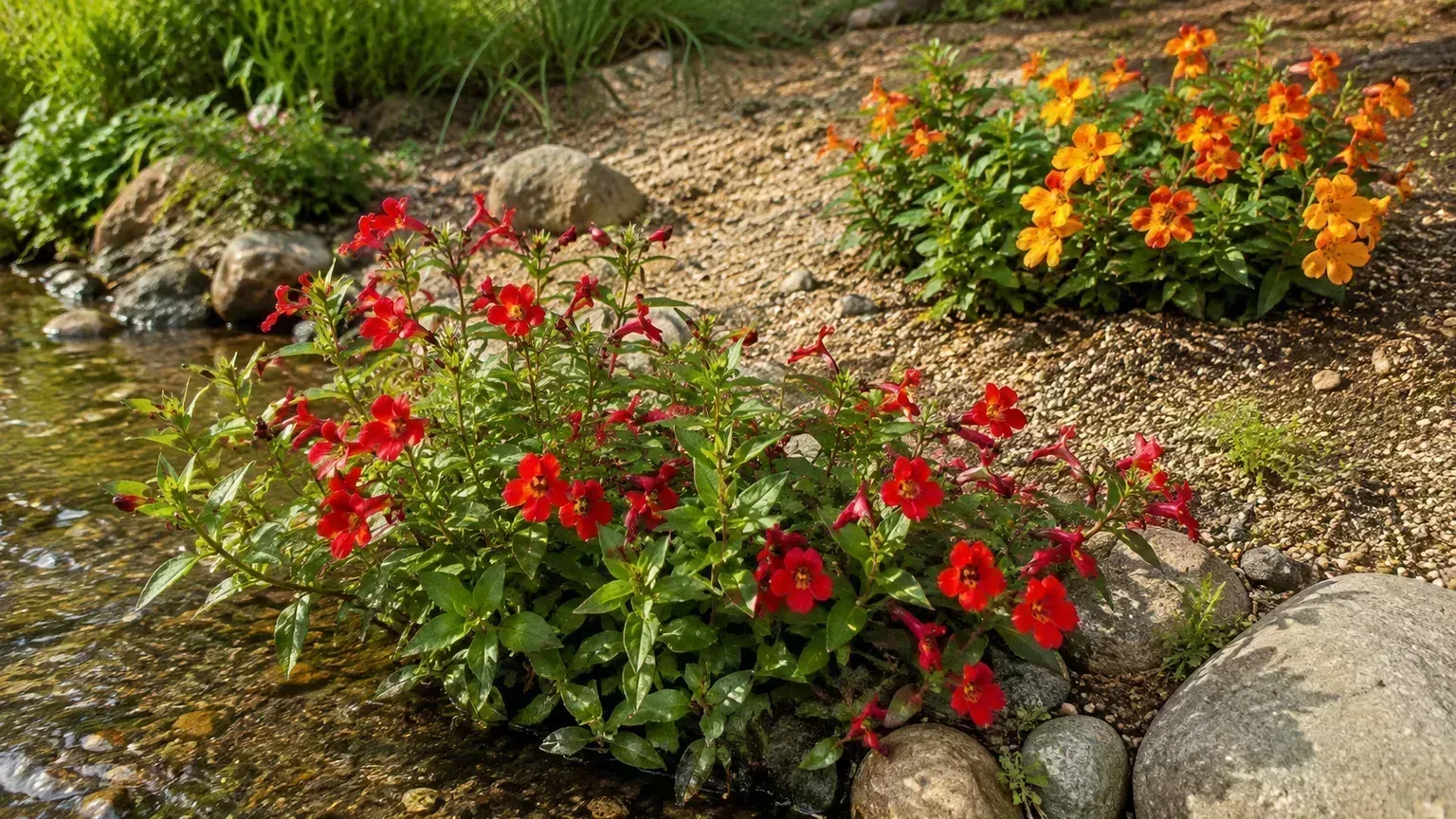
Monkey flowers are a group of colorful plants rather than one single garden species. You may see them labeled as Mimulus, Erythranthe, or Diplacus, and that changing name can make care instructions seem more confusing than they need to be. The most useful distinction is not the label alone: it is whether your plant evolved for wet soil, a dry summer landscape, or a cool season as an annual hybrid.
Wet-loving monkey flowers, including scarlet monkey flower and square-stemmed monkey flower, grow naturally near streams, springs, ponds, and wet meadows. They need moisture that does not disappear immediately. Sticky or bush monkey flower is adapted to drier slopes and open scrub, so its roots need drainage and its foliage may suffer if the soil stays wet. Annual hybrids generally produce their best display with rich soil, regular water, and cool conditions.
Once you match the plant to the site, monkey flower care is straightforward. Give it the right light, keep the root zone appropriate for its type, remove spent flowers, and watch for the difference between drought stress and waterlogged roots. The flowers can attract hummingbirds, bees, butterflies, or other pollinators, so thoughtful placement makes this group useful as well as ornamental. Research from the University of Connecticut on monkey flower pollinators also shows why color, pattern, and flower-tube shape can matter: different monkey flowers tend to suit different visitors.
Monkey Flower Care at a Glance
- Light: Use full sun to partial shade according to species. Wetland types often appreciate morning sun or dappled light, while dry-site types need strong light and airflow.
- Soil: Choose rich, moisture-retentive soil for wet species; choose sharply drained, often sandy or rocky soil for Diplacus and other dry-site forms.
- Water: Keep new plants evenly moist. After establishment, water wetland plants regularly and let drought-adapted plants dry somewhat between deep waterings.
- Temperature: Annual hybrids bloom best during cool weather and can decline in intense heat.
- Pruning: Remove faded flowers during the season and cut back tired growth after blooming or in late winter.
- Feeding: Improve poor soil with compost, but avoid heavy nitrogen that produces leaves at the expense of flowers.
- Propagation: Use stem cuttings, division where appropriate, or seed. Surface-sown seed often needs light to germinate.
The First Decision: Wet-Site or Dry-Site Monkey Flower?
Before planting, read the nursery label and look at the plant’s growth habit. A low, woody, gray- or sticky-leaved shrub is likely to have very different needs from an upright herbaceous plant with soft green stems. If the label gives a scientific name, use it as the strongest clue. Mimulus and Erythranthe names are common for moisture-loving kinds, while many western shrubby forms are now placed in Diplacus.
The distinction matters because “water regularly” can save one monkey flower and slowly rot another. When you are unsure, feel the soil several inches below the surface and observe the plant’s natural form. A plant that stays leafy through a dry summer usually still wants a well-drained root zone; a plant that grows among reeds, sedges, or streamside grasses may need moisture almost continuously.
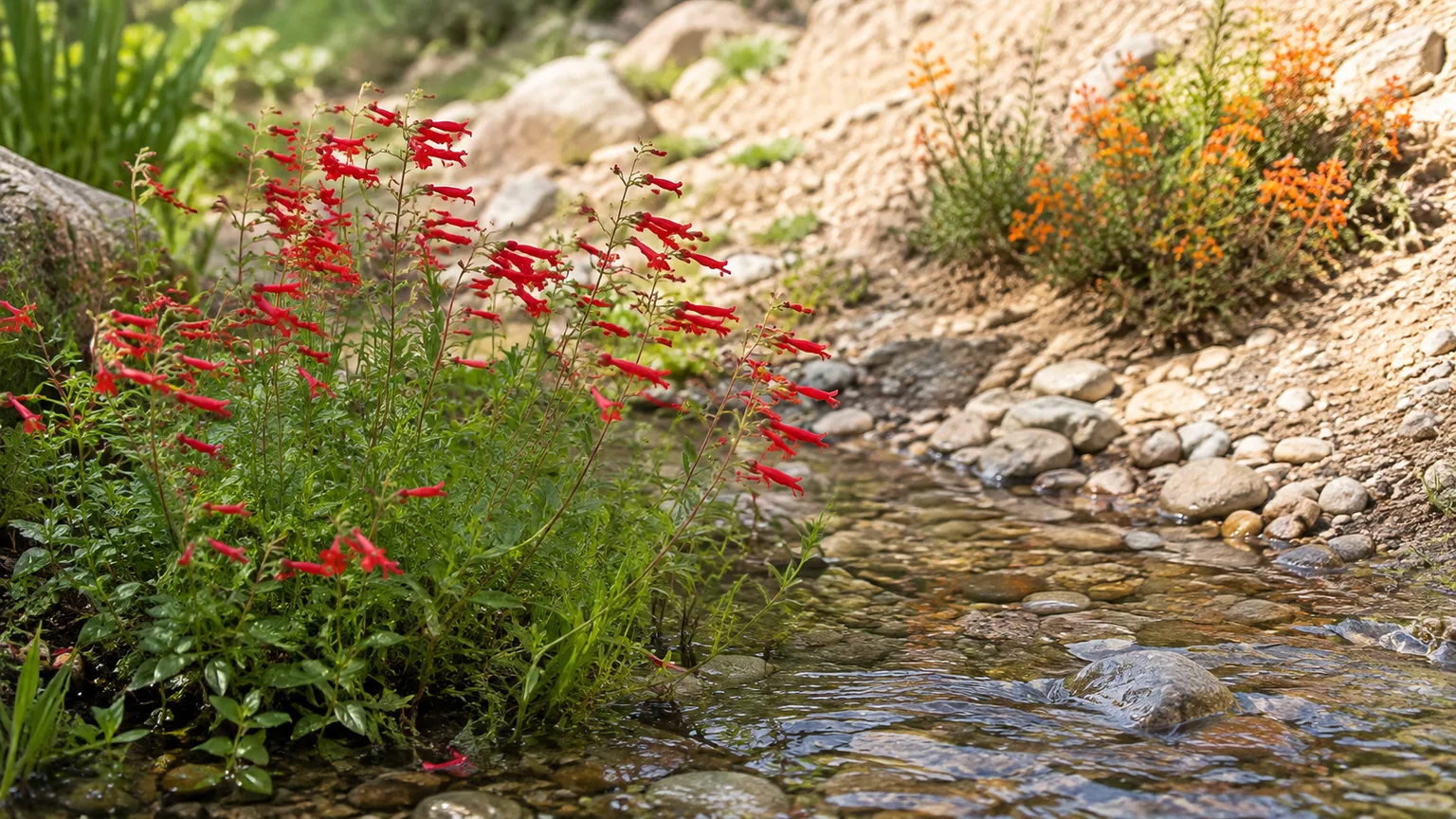
Wet-soil monkey flowers
Scarlet monkey flower, often sold as Erythranthe cardinalis, has brilliant red, tubular flowers and a naturally moist-habitat character. A Gardeners’ World profile of Erythranthe cardinalis ‘Red Dragon’ describes it as a moisture-loving perennial for conditions ranging from ordinary moist soil to boggy ground. Square-stemmed monkey flower, Mimulus ringens, is an upright perennial suited to wet meadows, pond margins, and stream banks; NC State Extension’s plant profile for Mimulus ringens is a useful reference for that wetland habit. These plants can take sun when their roots remain cool and moist, but partial shade is often a safer choice in hot climates.
Plant a wet-soil type where irrigation or natural runoff can reach it without leaving the entire garden saturated. A low spot, rain garden edge, bog garden, or the moist side of a pond can work well. For a drainage project, a rain garden calculator can help you think through how much runoff the planting area may receive before you choose plants.
Do not place a moisture-loving monkey flower on a dry raised bed and try to compensate with a quick daily sprinkle. Shallow watering evaporates, encourages weak roots, and creates a cycle of wilt and recovery. A consistently moist bed with organic matter is more reliable.
Dry-site monkey flowers
Sticky monkey flower, commonly known as Diplacus aurantiacus, is a woody or semi-woody western native with tubular flowers in shades of orange, yellow, red, or pink depending on the form. Practical dry-garden guidance from Fine Gardening also places sticky monkey flower and related forms in the group that can handle drier conditions once established. It suits a sunny, open position with drainage that is fast enough for the soil to dry between substantial waterings. Its foliage may become sparse or its plant may partially rest during a severe dry season; that can be a survival strategy rather than an immediate sign of failure.
For this group, amend heavy clay carefully rather than creating a small pocket of loose soil surrounded by dense, wet ground. A broad planting area, a slope, a raised mound, or a gravelly bed is usually more useful than a deep hole filled with potting mix. Space plants so air can move around them, and keep mulch away from woody crowns.
Annual hybrids
Annual monkey flower hybrids, sometimes sold under Mimulus × hybridus, are grown for their cheerful, often multicolored flowers. NC State Extension’s Mimulus × hybridus profile notes the value of moist, well-drained soil, regular water, and cooler conditions for this annual type. They are especially useful in containers, window boxes, hanging baskets, and cool-season beds. These plants prefer fertile, well-drained soil that stays evenly moist, but they do not appreciate a waterlogged pot or a hot root zone.
Use a container with drainage holes and a light potting mix. In a garden bed, give them morning sun and afternoon shade if summers are hot. A thin layer of mulch can reduce temperature swings, but do not bury the crowns. Treat annual hybrids as seasonal performers: deadhead often, protect them from drying out, and expect flowering to slow when nights and days become very hot.
Choose and Prepare the Growing Site
Site selection determines more of the result than fertilizer does. Watch the area for a day before planting and note when it receives direct sun, where rain collects, and how quickly the soil dries after watering. Also consider the mature width. A monkey flower that looks compact in a nursery pot may spread or arch once it is established.
Set the light level
Light and water work together. Full sun can produce abundant flowers, but only if the roots have enough moisture for that species. Wetland monkey flowers can handle bright light beside water, while a plant in an ordinary garden bed may wilt in hot afternoon sun if its root zone dries rapidly. In very warm regions, filtered light or morning sun can extend the bloom period.
Dry-site monkey flowers usually need at least several hours of strong sun to maintain a compact, flower-filled shape. Shade can lead to lanky growth, fewer blooms, and foliage that stays damp too long after irrigation. Annual hybrids are more flexible and often perform well in partial shade, especially when the goal is to protect them from summer heat.
Build the right soil
For moisture-loving species, work compost into the upper soil if the bed is poor or sandy. The goal is not a stagnant puddle but a root zone that holds water long enough for roots to use it. If planting beside a pond or stream, confirm that the location will not be scoured by fast-moving water.
For dry-site forms, prioritize drainage over fertility. Loosen compacted soil across the whole planting area, mix in mineral material where appropriate, and avoid saucers that trap water around containers. Never assume that a layer of gravel at the bottom of a pot fixes poor drainage; a correctly sized drainage hole and a suitable mix are more effective.
Watering Monkey Flowers Through the Seasons
Water deeply enough to moisten the active root zone, then adjust the interval to the species and weather. A surface that looks dry is not always a problem, and a damp surface does not prove that the roots are receiving oxygen. Push a finger or a small trowel into the soil before watering. For containers, lift the pot occasionally so you learn how it feels when it needs water.
Water new plants consistently
During the first growing season, check new monkey flowers several times each week. Water when the root ball is beginning to dry, rather than waiting for leaves to collapse. Apply water slowly at the soil line so it spreads through the root ball and surrounding soil. A hose left running briefly in one spot can wash soil away and still leave the deeper root area dry.
Wet-soil species should not be allowed to dry hard while they are establishing. Dry-site species also need regular deep watering at first, even though they will later tolerate longer dry periods. The transition is gradual: allow a little more drying between waterings only after you see fresh growth and the roots have had time to move beyond the original nursery pot.
Adjust water for established plants
For a mature wetland monkey flower, water whenever the upper soil is losing its steady moisture, particularly during flowering and hot weather. A drip line or soaker hose can keep the root zone stable without wetting the foliage. In a naturally wet site, irrigation may be unnecessary except during an unusual drought.
For a mature sticky or bush monkey flower, give a thorough drink during prolonged dry weather, then wait for the soil to drain and dry moderately. Frequent light watering is the most common mistake with drought-adapted forms. It creates wet-dry swings near the surface while leaving deeper roots underused. Reduce irrigation in cool weather and during the plant’s natural summer rest, but do not let a container-grown plant become bone dry for long.
Yellowing leaves can have opposite causes. On a wet-site species, yellowing with limp stems and sour-smelling soil can point to poor drainage or root stress. On a dry-site species, yellowing and leaf drop during a heat wave may reflect drought or seasonal dormancy. Check the roots and soil before changing the watering schedule.
How to Plant Monkey Flowers
Plant in spring or fall when temperatures are moderate, following the timing that suits your climate and the plant’s type. Water the nursery pot first, then slide the plant out without pulling on the stems. Gently loosen circling roots and set the crown at the same level it occupied in the pot. Planting too deeply is especially risky for soft-stemmed plants and plants in heavy soil.
Backfill with the soil you removed, press lightly to eliminate large air pockets, and water slowly. For wet-site plants, make sure the final grade directs moisture toward the planting area without burying the crown. For dry-site plants, the crown should remain above any spot where irrigation collects. Space plants for their mature width and leave a little room around the stems for air circulation.
Container monkey flowers need a different check. The pot should be only modestly larger than the root ball, with a free drainage hole. A huge container stays wet longer than a small root system can use. Place it where you can reach it easily because annual hybrids often need more frequent checks than in-ground plants.
Fertilizing and Mulching
Monkey flowers generally do not need an aggressive feeding program. Add a small amount of finished compost when preparing poor soil, or apply a balanced, slow-release fertilizer according to the product label in spring. Annual hybrids in containers may need occasional light feeding because repeated watering leaches nutrients, but use a dilute product rather than repeated heavy doses.
Too much nitrogen can produce lush foliage with fewer flowers and softer growth that attracts pests. Stop routine feeding in late summer for woody forms and avoid pushing new growth just before a cold period. For wetland plants, keep fertilizer away from ponds and streams so excess nutrients do not enter the water.
Use a thin organic mulch to moderate soil temperature and reduce evaporation. Keep mulch a few inches away from the crown and woody stems. In a dry-site bed, gravel mulch may be more appropriate because it preserves an open, airy crown and does not hold constant moisture against the plant.
Pruning for More Flowers and Better Shape
Pinch or shear lightly after a flush of flowers if the plant becomes floppy. Removing spent blooms prevents the plant from putting all its energy into seed production and keeps the display tidy. Do not cut deeply into old woody stems unless you know the plant regrows from that framework.
After the main flowering period, cut back tired herbaceous growth and remove damaged stems. Many gardeners prefer to leave some seed heads for birds or self-sowing, so wait until late winter if that suits the garden. For evergreen or semi-evergreen shrub forms, remove dead tips and shape selectively rather than giving the whole plant a severe haircut.
Always use clean, sharp pruners. If you see a soft, discolored stem, cut below the damaged section and discard the cutting instead of adding it to home compost. Pruning will not correct a site mismatch: a dry-site monkey flower in saturated soil may need relocation, not more trimming.
Propagating Monkey Flowers
Propagation method depends on the plant. Stem cuttings preserve the traits of a named cultivar, while seed can produce variation and may need a period of cold and light to germinate. Division is useful for clumping or rhizomatous perennial forms when the plant has several healthy growing points.
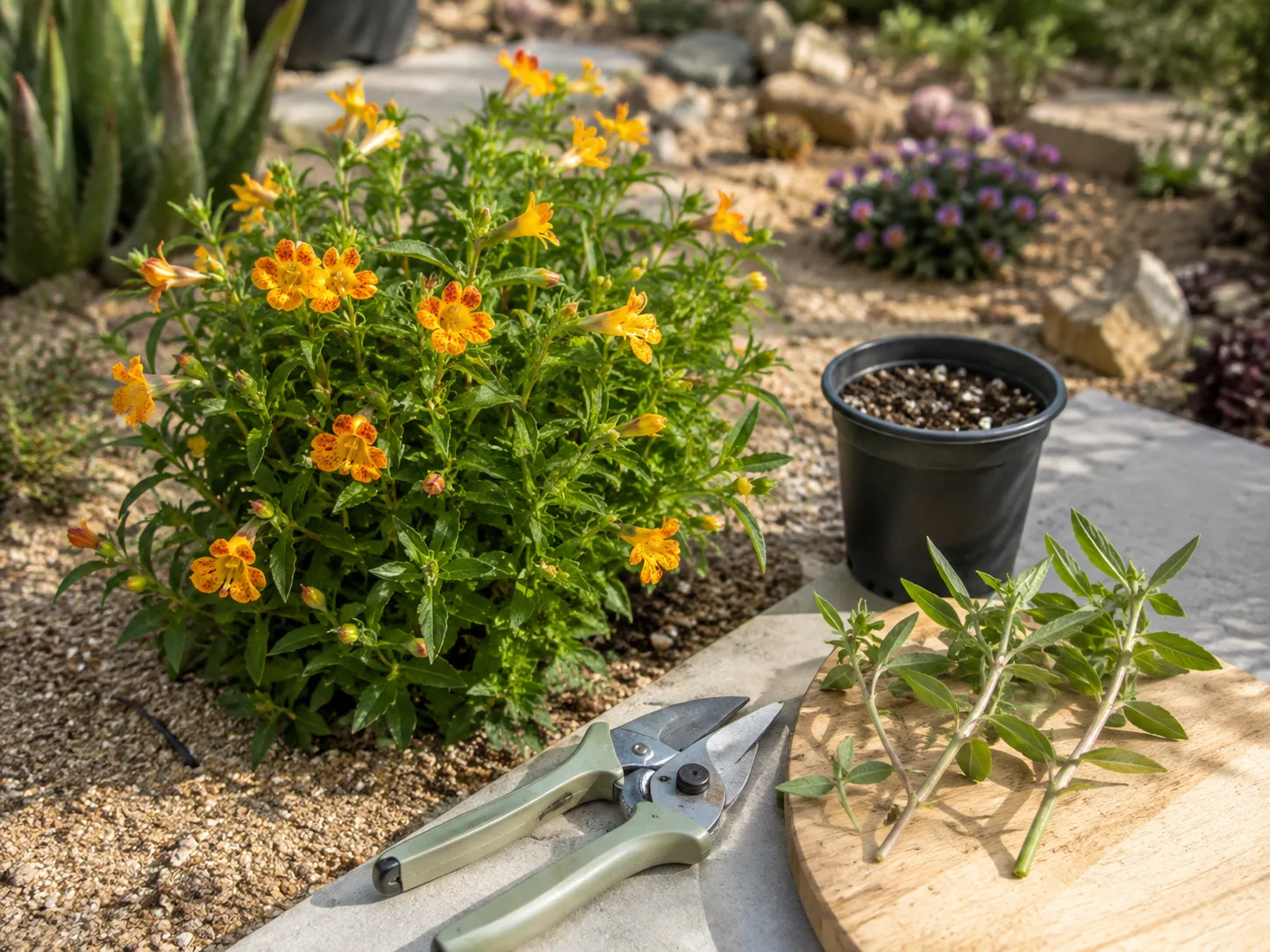
Root stem cuttings
Take cuttings in late spring or early summer from healthy, non-flowering shoots. Cut a section several inches long just below a node, remove the lower leaves, and place the base in a clean, lightly moist propagation mix. Keep the container in bright indirect light with humidity around the leaves, but provide ventilation so the cutting does not stay wet and stagnant.
Check for roots after a few weeks by giving the cutting a gentle tug. Once it resists and begins making new growth, gradually acclimate it to normal air and brighter light. Pot it up when the root system holds the mix together, then keep the young plant evenly watered while it establishes.
Divide or sow seed
Divide an established rhizomatous monkey flower in spring or early fall. Lift the clump, separate sections that each have roots and healthy shoots, and replant them immediately at the original depth. Water well while the divisions recover. Avoid dividing a small woody shrub; cuttings are usually less disruptive.
To sow seed, scatter it on the surface of a fine, moist mix and press it in without covering deeply. Many monkey flower seeds are tiny and need light to germinate. A short period of cold, moist stratification can improve germination for some species. Follow the seed supplier’s instructions when they differ, and keep the tray from drying out during the germination window.
Seedlings are delicate. Thin them once they can be handled, transplant them after they develop several true leaves, and harden them off before moving them into full outdoor conditions. In a mixed planting, label seedlings because young plants may not reveal whether they will become wetland perennials, annual hybrids, or woody shrubs.
Pests, Diseases, and Common Problems
Monkey flowers can be affected by gall makers, mealybugs, thrips, and true bugs, as well as leaf spot, powdery mildew, and rust. The UC Integrated Pest Management monkey flower guide lists these pests and diseases while emphasizing that monkey flower species vary widely in water and site needs. Start with inspection rather than a blanket spray. Look under leaves, examine distorted shoots, and check whether spots are spreading after overhead irrigation.
Improve airflow by spacing plants correctly and removing crowded or damaged foliage. Water at the soil line in the morning, especially for annual hybrids and wet-site plants in humid climates. If a plant has repeated disease despite good spacing, move it to a site with more suitable light and drainage. Remove badly infected leaves and clean pruners between plants.
A few symptoms deserve a soil check first:
- Wilting in wet soil: Suspect damaged roots, poor drainage, or heat stress at the root zone. Pause irrigation and improve drainage rather than watering more.
- Wilting in dry soil: Water deeply and check again later. If the plant recovers quickly, increase the interval or volume as needed.
- Lots of leaves but few flowers: Reduce excess nitrogen, increase appropriate light, and deadhead regularly.
- Brown leaf edges: Check for drought, salt buildup in a container, hot reflected light, or fertilizer concentrated near roots.
- Blackened or collapsing stems: Remove the affected growth and assess whether the crown is too wet or planted too deeply.
- Flowers fading quickly: Annual hybrids may be reacting to heat, while wetland forms may need steadier moisture during bloom.
Choose pesticides only when you can identify the pest and the treatment is labeled for the plant and problem. Beneficial insects and pollinators visit monkey flowers, so avoid spraying open flowers and use the least disruptive option available. A healthy plant in the right site usually needs less intervention than a stressed plant being kept in the wrong conditions.
Conclusion: Match Care to the Species
The best monkey flower care begins with a simple question: what kind of habitat does this plant expect? Give scarlet and square-stemmed monkey flowers reliable moisture, place sticky or bush monkey flowers in sun and fast-draining soil, and treat annual hybrids as cool-season plants that need even water and protection from heat. From there, deep watering, modest feeding, timely deadheading, and careful pruning will keep the plants productive.
Observe the soil as closely as the leaves. A monkey flower that is slightly dry can often recover from a thoughtful drink, but roots that remain saturated may decline before the foliage gives a clear warning. By matching the species to the site and adjusting care through the seasons, you can enjoy the tubular blooms while providing useful habitat for hummingbirds, bees, and butterflies.