Kentucky Bluegrass Care: Planting, Mowing, and Watering
Learn when to plant Kentucky bluegrass, how high to mow, how to water and fertilize it, and when another cool-season grass is a better fit.

Kentucky bluegrass (Poa pratensis) makes a beautiful lawn when the site matches its needs. It forms a fine, dense, dark green turf, tolerates cold winters, and can repair small injuries because underground rhizomes send up new shoots. Those advantages come with a cost: it is usually thirstier and more maintenance-intensive than homeowners expect, especially during hot, dry summers.
The best way to care for Kentucky bluegrass is to manage it as a cool-season turfgrass with a strong spring-and-fall growth cycle. Plant or overseed in the cool shoulder seasons, keep the root zone evenly supplied with water while it establishes, mow high enough to protect the crown, and do not respond to summer browning with automatic daily irrigation. First decide whether your lawn has enough sun, suitable soil, and reliable water. That decision matters more than any fertilizer brand.
Is Kentucky bluegrass right for your lawn?
Kentucky bluegrass is a strong candidate for a sunny northern lawn that gets regular foot traffic and has irrigation available during dry weather. Its rhizomes knit plants into a uniform sod, so it can recover from play, pets, and moderate wear better than many bunch-forming grasses. The soft texture is pleasant around paths and recreation areas, and its cold tolerance helps it survive winters that damage less hardy turf.
It is a poor fit for deep shade, chronically hot climates, or a lawn you want to maintain with very little water. Shallow roots can leave it vulnerable when the surface dries, while intense heat can push it into dormancy or expose it to disease and insect pressure. If the site is shaded by mature trees, compacted, poorly drained, or difficult to irrigate, changing the grass choice may solve more problems than adding more products.
Strengths that make it worth growing
Its main advantage is the combination of cold hardiness, attractive texture, and rhizomatous recovery. A healthy stand can close small bare areas over time instead of remaining as isolated clumps. That does not mean it repairs every injury quickly; recovery depends on moisture, fertility, temperature, and the size of the damaged area.
Kentucky bluegrass also handles regular traffic when the soil is not wet and the turf is actively growing. A play area or path can work well if traffic is rotated and compacted soil is relieved. The grass is not a license to walk on saturated ground, however, because traffic in wet soil destroys pore space and creates a problem the grass cannot outgrow.
Limits that change the decision
The trade-off is high input for high appearance. Kentucky bluegrass generally needs more consistent moisture than tall fescue and is less forgiving of summer heat and drought. It also germinates slowly, so a newly seeded lawn needs a longer period of careful, shallow moisture and weed management before it looks established.
Some regional cautions matter. Research indexed by the National Center for Biotechnology Information documents Kentucky bluegrass invasion concerns in parts of the Northern Great Plains. Check local extension advice before planting near natural areas, and never let a lawn escape into prairie or other habitat.
What Kentucky bluegrass is and how it spreads
Kentucky bluegrass is a perennial, cool-season grass in the Poaceae family. It grows most actively in moderate temperatures, typically producing its strongest flushes in spring and fall rather than during midsummer. The blue-green color is a useful identification clue, but shade, nutrition, cultivar, and mowing height can all change how blue the turf looks.
Rhizomes are the key to its behavior. These horizontal underground stems produce new roots and shoots, allowing a mature lawn to fill small gaps and form a dense surface. Rhizomes do not remove the need for seed in large bare areas, and they do not make the grass shade tolerant. A plant can spread vigorously and still thin out beneath a tree where light is inadequate.
Choose seed, sod, or a grass blend
Seed costs less and gives you access to cultivars selected for local disease, color, or traffic performance. It also requires patience: Kentucky bluegrass can take roughly two to four weeks to germinate under suitable conditions, sometimes longer when the soil is cool or moisture fluctuates. Seed is the better choice when you can prepare the soil carefully and protect the area from traffic during establishment.
Sod gives immediate soil coverage and reduces erosion while the lawn roots in. It costs more, still needs careful soil preparation, and can fail if seams dry out during the first weeks. Lay sod on a moist, firm seedbed, stagger the joints, press out air pockets, and water immediately. “Instant lawn” describes appearance, not established roots.
A blend can be the most practical answer when the site has mixed conditions. Kentucky bluegrass contributes color and rhizomatous recovery, while tall fescue or fine fescue can improve heat, drought, or shade performance depending on the blend and region. Choose a blend based on the hardest part of the site—not only on the grass that looks best in a catalog.
Prepare the site before planting
Start with a soil test rather than guessing at lime or fertilizer. Test results can identify pH, phosphorus, potassium, and organic matter issues, while a visual inspection reveals compaction, standing water, grade problems, and shade. Kentucky bluegrass prefers fertile, well-drained soil; adding fertilizer to compacted clay does not solve poor air and water movement.
Remove construction debris, smooth the grade, and correct drainage before seeding. Loosen compacted soil with appropriate cultivation, then create a firm seedbed: the surface should hold a footprint lightly without collapsing into a deep rut. A fluffy bed leaves seed too deep; a hard crust blocks roots and emerging shoots.
For an existing lawn, mow a little shorter than usual, remove excess debris, relieve compaction when conditions are suitable, and ensure seed can contact soil. Do not bury seed under a thick layer of thatch or top-dress so heavily that young shoots cannot reach light.
Plant Kentucky bluegrass at the right time
Fall seeding
Fall is usually the best window in northern regions because soil remains warm enough for germination while air temperatures moderate. September is a useful starting point in many northern locations, but local frost dates and weather matter more than a fixed date. Aim to give seedlings several weeks of growth before hard freezes and avoid seeding into a forecast of prolonged heat.
Spread seed evenly in two crossing directions, use the rate on the seed label, and press or roll it for contact without burying it deeply. Keep the surface consistently damp with light irrigation until seedlings emerge, then gradually move toward deeper, less frequent watering as roots develop. The most common failure is allowing the seedbed to dry for a day and then trying to compensate with a flood.
Spring seeding
Spring can work when fall was missed, but it carries a tighter schedule. Young Kentucky bluegrass may still be immature when summer heat arrives, and spring weeds can compete aggressively. Seed as soon as soil and weather permit, avoid working wet soil, and plan how you will protect the new lawn through the first hot spell.
Do not seed too close to an application of a pre-emergent herbicide unless the product label specifically permits it. The same barrier that blocks crabgrass can also block desirable grass seed. Read the label for the exact product and timing rather than relying on a general rule.
Water new Kentucky bluegrass without washing it away
Newly seeded areas need frequent, light watering because the top layer must stay damp while roots are shallow. Use a gentle spray that does not move seed, and inspect the surface rather than watering by the clock. As seedlings root, extend the interval and wet the soil more deeply. This encourages roots to explore instead of remaining at the constantly damp surface.

For established turf, water thoroughly enough to moisten the root zone, then allow the surface to dry somewhat before watering again. The correct interval depends on rainfall, soil texture, mowing height, sun, wind, and root depth. Place shallow straight-sided cans around the irrigation area to measure output, and use a screwdriver or soil probe to check whether moisture reached below the surface.
Water early in the day when possible, repair overspray, and divide irrigation into cycles if runoff begins. A lawn that produces puddles is not receiving a better drink; it is losing water and potentially washing soil and nutrients away. During drought, follow local watering restrictions and accept that Kentucky bluegrass may turn dormant rather than trying to keep it vividly green at any cost.
Mow for density without scalping
Mow often enough that you remove no more than the top third of the blade at one time. This rule reduces shock and keeps clippings small enough to return nutrients when the lawn is dry and healthy. Keep mower blades sharp; a torn blade tip loses water faster and gives the lawn a pale, ragged appearance.

| Season or condition | Practical mowing target |
|---|---|
| Spring and fall growth | About 2.5 to 3 inches |
| Hot summer weather | About 3 to 3.5 inches |
| Newly seeded lawn | Wait until it is tall enough to mow safely, then remove only a small amount |
| Drought or dormancy | Mow only when growth resumes; never scalp brown turf |
These ranges align with guidance from Iowa State University Extension, but the right setting is also the one that leaves enough leaf area for the site’s light and water conditions. Raise the deck in heat and drought to shade the crown and reduce stress. Avoid mowing wet soil, especially when the lawn is already compacted.
Feed according to growth, not the calendar alone
Kentucky bluegrass uses nutrients most actively during spring recovery and fall growth. A soil test should guide phosphorus and potassium decisions; routine phosphorus applications are not automatically helpful and may be restricted where runoff threatens water quality. Nitrogen needs vary with cultivar, soil, clipping return, irrigation, and desired appearance.
Fall feeding can support root and rhizome development, while excessive spring nitrogen can create a flush of soft growth that needs more mowing and may be more vulnerable to stress. Apply only a labeled rate, keep granules off sidewalks and driveways, and water according to the product label. Never use fertilizer to compensate for shade, poor drainage, or a damaged root system.
Manage shade, heat, and summer dormancy
Kentucky bluegrass needs ample sun. If a formerly sunny lawn is thinning as trees mature, prune only where it is safe and appropriate, increase mowing height, reduce traffic, and consider a shade-tolerant blend. Do not keep adding seed of the same grass to a site that cannot supply enough light.
Summer stress requires triage. Check whether the soil is actually dry, whether irrigation is reaching the root zone, whether compacted soil is shedding water, and whether pests are lifting the sod. If the crowns are alive and the grass is uniformly tan during drought, dormancy may be a survival response. Pulling it up or applying extra fertilizer at that stage can make recovery harder.
Repair thin spots and overseed in fall
Small thin areas can often be repaired by correcting the cause first. Remove leaves, loosen the surface, seed into soil contact, and keep the area moist. If water runs off, improve the seedbed rather than increasing spray duration. If pets repeatedly use one route, redirect traffic while the seedlings establish.
Fall overseeding is usually more successful than summer repair. Mow, rake out loose debris, relieve compaction if the soil is workable, distribute seed in two directions, and keep the surface damp. If the entire lawn is declining, overseeding alone is a cosmetic pause; test soil, inspect drainage, and reassess whether the grass is appropriate for the site.
Prevent weeds, pests, and thatch from taking over
Dense turf is the first line of defense against weeds, but density comes from light, roots, mowing, and moisture—not just herbicide. Mow high enough to shade soil, avoid bare compacted pathways, and remove weeds before they seed. Use any pesticide only for an identified problem and according to its current label and local rules.
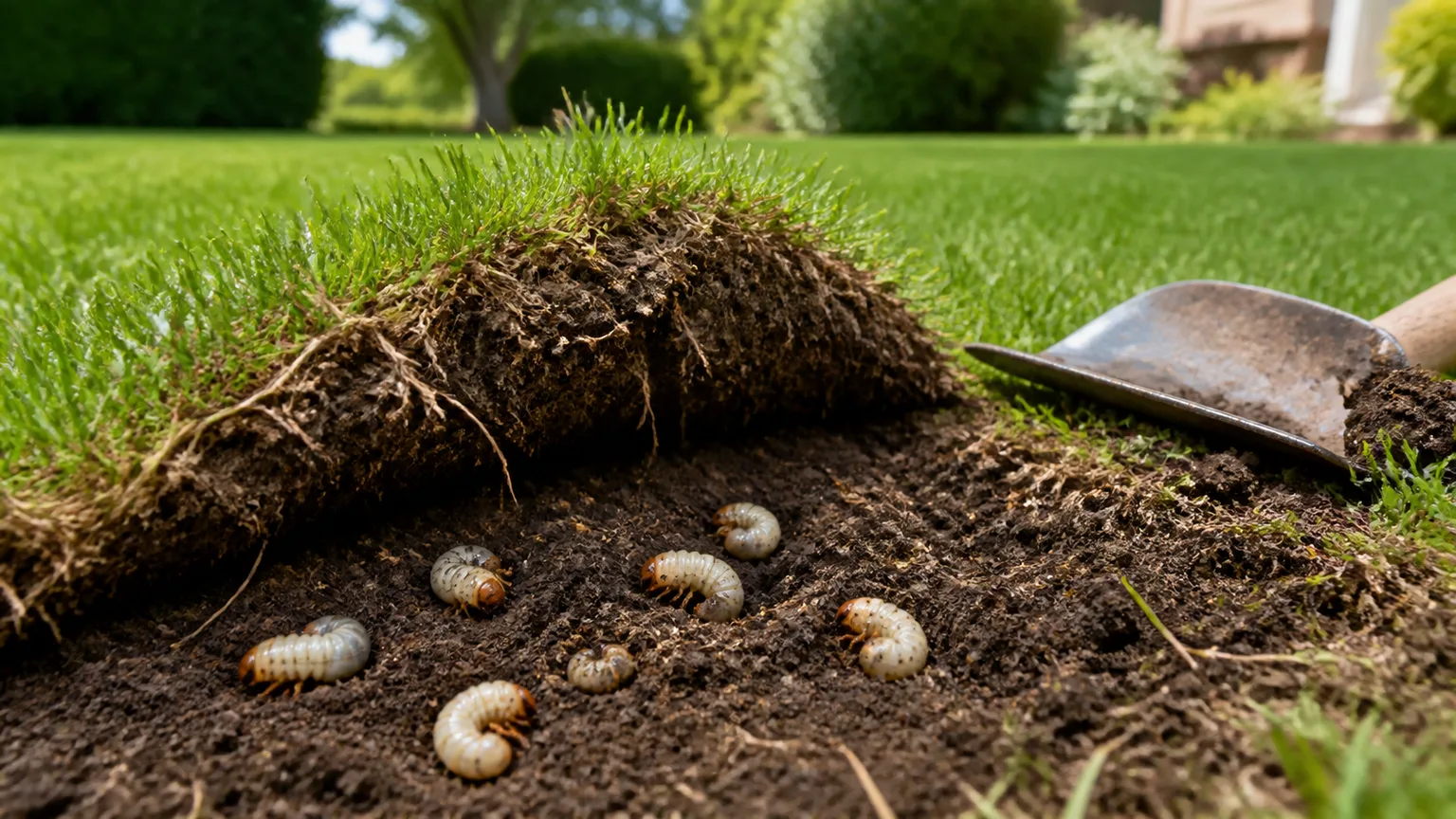
Common Kentucky bluegrass concerns include white grubs and chinch bugs, but brown turf is not proof of either. Check the pattern, tug the sod, inspect the crown and thatch, and compare the damaged area with irrigation coverage. A thick thatch layer can interfere with water infiltration and encourage shallow rooting; a thin layer is normal. Dethatch or core-aerate only when the lawn and soil conditions call for it, not as an annual ritual.
Diagnose brown or patchy Kentucky bluegrass
Start with the pattern. Uniform browning across an entire sunny area during heat often points to drought stress or dormancy. Narrow strips near pavement suggest reflected heat or deicing salt. Circular or irregular patches may indicate uneven irrigation, compaction, disease, insects, pet traffic, or soil problems.
Next, inspect the root zone. Is the soil dry several inches down, saturated, or hard enough to resist a probe? Does the grass pull up easily? Are crowns firm and pale, or dark and decayed? Is the damage limited to shaded turf? These observations narrow the diagnosis far better than applying a general “lawn fix.”
If watering does not improve wilted green blades after the root zone is moistened, look for compaction, broken irrigation, or pests. If dormant turf does not green up after temperatures moderate and moisture returns, reseed a small test area in fall before committing to a full renovation.
Kentucky bluegrass versus tall fescue
Kentucky bluegrass is usually the better choice when cold tolerance, fine texture, and rhizomatous recovery matter most and the lawn can be irrigated. Tall fescue is often a better fit when deeper roots, heat tolerance, or lower summer water demand matter more. Fine fescues can help in shade, while perennial ryegrass can improve quick establishment in some blends but brings its own limitations.
There is no universal winner. Compare the sun exposure, summer heat, rainfall, irrigation access, soil, traffic, and willingness to accept dormancy. A locally recommended blend can outperform a single-species lawn because it spreads risk across grasses with different strengths.
A simple seasonal care calendar
Early spring: Inspect winter damage, wait until soil is workable, test soil if fertility is uncertain, and begin mowing as growth requires. Avoid heavy traffic on wet ground.
Late spring: Mow consistently, watch irrigation coverage, and control weeds based on identification and label timing. Do not force lush growth with excess nitrogen before heat arrives.
Summer: Raise mowing height, water deeply when needed, check for runoff and pests, and allow reasonable dormancy during drought. Follow local restrictions and protect the crown from scalping.
Early fall: Seed or sod new areas, overseed thin patches, feed based on soil and growth needs, and use the cooler weather for renovation work.
Late fall and winter: Keep heavy leaf layers off the turf, continue mowing while growth continues, finish before the ground freezes, and avoid walking on frozen or saturated grass.
Conclusion
Kentucky bluegrass rewards the right site with a dense, soft, cold-hardy lawn that can recover from ordinary wear. It is not a low-water, deep-shade, or set-it-and-forget-it grass. Choose it when you have enough sun, a workable seedbed, patience during germination, and a realistic plan for summer moisture.
Plant in the cool season, measure irrigation instead of guessing, mow high enough to protect the crown, feed from soil and growth information, and investigate brown patches before treating them. When heat, shade, or water limits make those basics unrealistic, a locally adapted blend or another cool-season grass is not a compromise—it is the better lawn decision.