17 Lavender Landscaping Ideas for Spring
Try 17 lavender landscaping ideas for paths, gravel beds, containers, slopes, and pollinator borders—plus the variety and drainage choices that make them last.
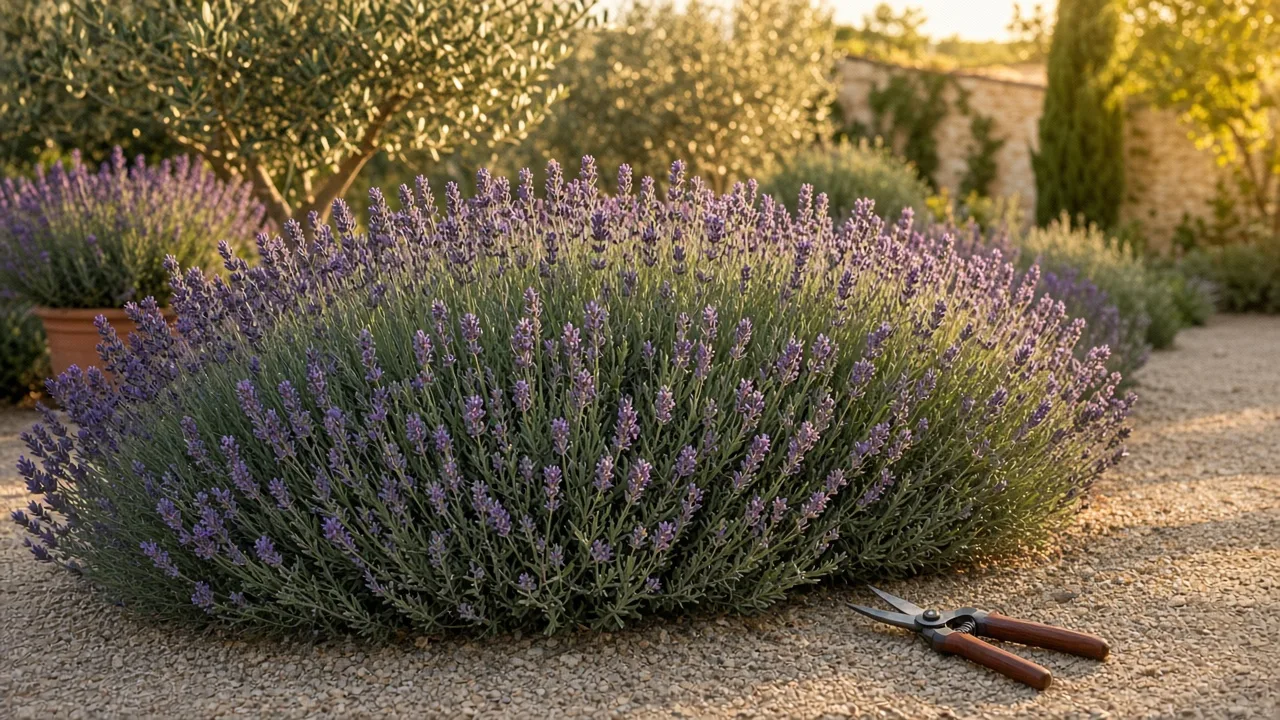
Lavender earns its place in a landscape three ways at once: fragrant flowers, silvery foliage, and a shape that can read either relaxed or architectural. The trick is to design around what the plant actually wants. Lavender is not a universal “low-maintenance” filler; it is a sun-loving Mediterranean shrub that rewards sharp drainage and becomes unhappy when its roots stay cold and wet.
The RHS growing guide for lavender recommends a sunny position, free-draining soil, and spring planting, while the Missouri Botanical Garden’s English lavender profile lists full sun, dry-to-medium water, and well-drained alkaline soil. Use the ideas below as a menu, but choose only the ones that fit your site.
How to make lavender work before choosing an idea
Start with sun, drainage, and mature size
Give lavender at least six hours of direct sun, with more afternoon light if your climate is humid or cool. A spot that looks bright in March can sit under a tree’s full canopy by June, so watch the actual bed for a day before committing to a mass planting. Shade usually means fewer flowers, looser growth, and slower drying after rain.
Drainage matters just as much as light. If a handful of soil stays slick after a storm, plant on a 20–30 cm mound, use a raised bed, or choose a large container rather than hoping gravel sprinkled into a planting hole will transform heavy clay. The RHS specifically warns against cold, damp soil and recommends a raised position where roots would otherwise stay wet.
Finally, measure the mature width, not the nursery pot. A compact English lavender may suit a narrow edge; a lavandin such as ‘Grosso’ can make a more substantial hedge but needs room to breathe. A useful rule is to leave enough space that neighboring plants will not press into the lavender’s center when both reach full size.
17 lavender landscaping ideas
1–2. Edge a pathway or frame steps
1. Create a fragrant pathway edge. Plant a single repeated row along one or both sides of a walk so the silvery mounds act as a visual handrail. English lavender is especially effective here because its compact habit supports a tidy rhythm, and the scent sits at nose height as people pass. Keep the plants far enough from the walking surface that stems will not flop under foot traffic, and use a crisp gravel, stone, or metal edge to separate the shrubs from the path.
2. Mark steps or a change in level. Lavender can make a short flight of steps feel intentional, especially where a retaining wall or sunny bank needs softening. Use pairs or small repeated groups at the ends of steps rather than planting directly where runoff will wash soil onto the crowns. Check mature width carefully: a plant that spills onto a tread becomes a trip hazard and loses its rounded form.
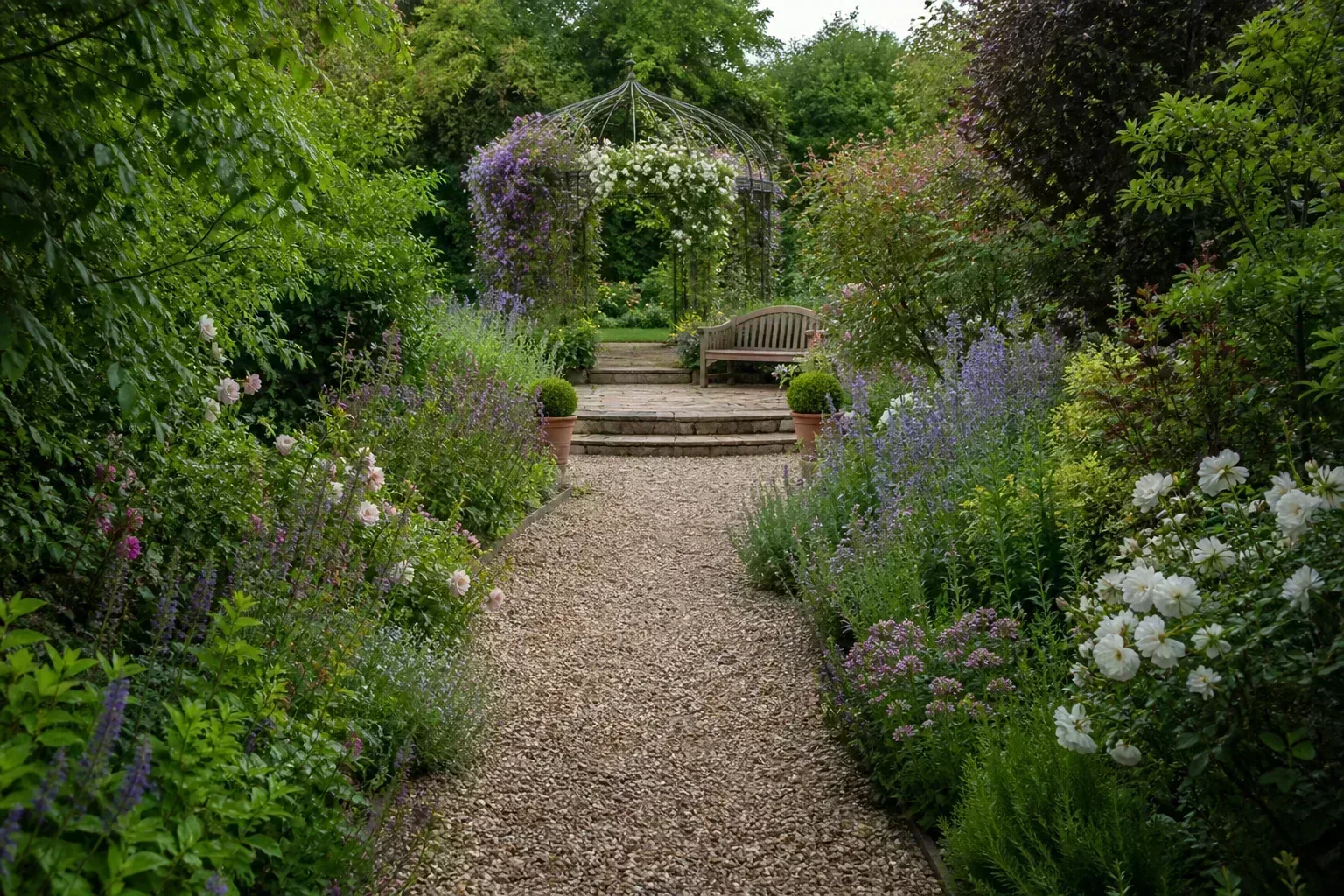
A gravel path with repeated planting shows how lavender can guide movement without blocking the route.
3–4. Build a gravel garden or dry-stone border
3. Make a gravel garden. A gravel bed is one of the most natural partners for lavender because it echoes the plant’s preference for a dry surface and keeps the base visually uncluttered. Prepare the soil underneath first; a decorative stone layer cannot rescue a compacted, waterlogged subsoil. Combine lavender with thyme, rosemary, salvias, sedums, or other plants that tolerate the same sun and lean conditions rather than mixing it into a bed that needs frequent irrigation.
4. Soften a dry-stone wall or rock border. Tuck lavender near, not inside, the hottest crevices of a low wall or rock garden. The stones can provide heat and structure, but reflected heat may dry a young plant quickly, so water deeply during establishment and monitor the first summer. A low-growing cultivar can soften the hard edge while keeping the wall’s drainage intact.
This is a better use of “drought tolerant” than treating lavender as a no-water plant from day one. Once established in the ground, it can handle dry periods, but a spring-planted root ball still needs consistent moisture while it sends roots into the surrounding soil.
5–6. Shape a low hedge or front-yard focal bed
5. Plant a low lavender hedge. A lavender hedge can divide a front garden from the path, outline a kitchen garden, or make a small seating area feel enclosed. For a dense effect, space smaller plants roughly 30–45 cm apart, adjusting for the cultivar’s mature width; for a looser, healthier rhythm, give each plant more room and accept visible gaps in the first season. Do not shear it like boxwood. Clip lightly into green growth after flowering so the plants stay leafy from the base.
6. Build a front-yard focal bed. Repeat lavender in a broad crescent, oval, or rectangular bed instead of placing one lonely plant in the middle of a lawn. The repeated color gives the eye a destination, while gravel or a restrained edging keeps the bed from reading as a random purple patch. Add one taller evergreen or a small structural shrub behind it if you need year-round height, but leave air around the lavender for sunlight and circulation.
7–8. Build a pollinator border or herb-garden pairing
7. Mix lavender into a pollinator border. Lavender flowers are attractive to bees and butterflies, but a wildlife border works best as a sequence of blooms rather than a single plant repeated everywhere. Pair lavender with open, nectar-rich flowers such as salvia, catmint, yarrow, echinacea, or native plants suited to your region. Keep the lavender in the driest, sunniest front or upper edge of the bed and place thirstier plants where irrigation can be managed separately.
The RHS plant guide for lavender describes the genus as attractive to bees, butterflies, and other pollinators. That supports planting lavender for forage, not the stronger promise that it will solve every pest problem. A flowering plant can welcome beneficial insects without acting as a reliable insecticide.
8. Pair it with Mediterranean herbs. A sunny herb garden can make lavender feel purposeful rather than decorative. Rosemary, thyme, sage, and oregano share the general preference for sun and drainage, and their different leaf shapes make the gray-green lavender foliage stand out. Put culinary herbs where you can reach them easily, then reserve the outer edge for lavender so harvesting does not constantly disturb the shrub.
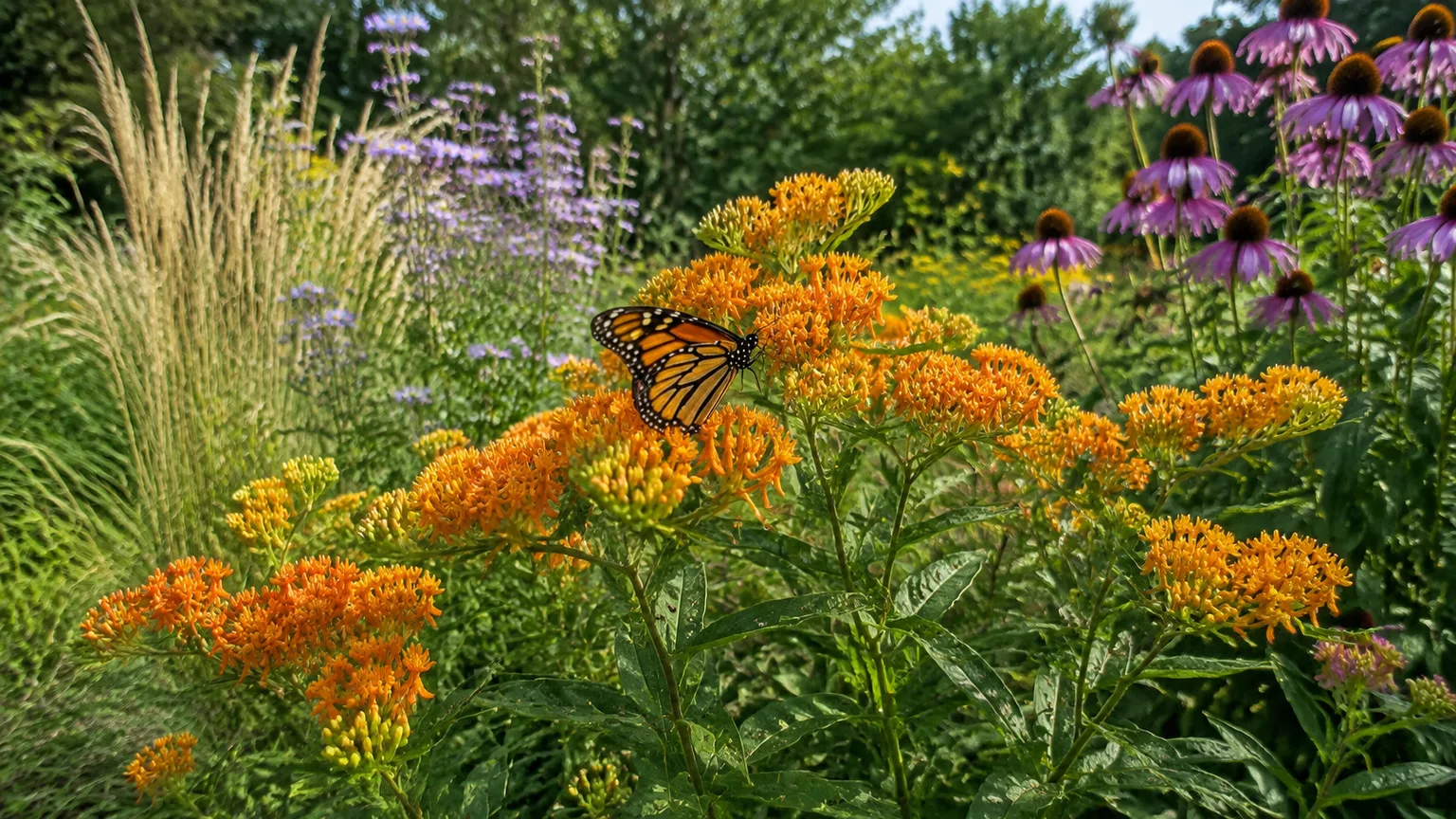
Use lavender as one layer in a pollinator planting, not the entire food supply.
9–10. Use gravel as the surface or lavender in containers
9. Use gravel as a surface treatment. Lavender is sometimes described as a “mulch alternative,” but the plant itself is not mulch. It does not reliably suppress weeds across open soil, and its root zone should not be buried under a thick, moisture-holding organic layer. Use a thin, permeable gravel surface around—not against—the crown when it suits your climate and design; leave a small air gap around the stems and weed the bed while plants fill out.
In humid or winter-wet regions, stone can keep the surface drier than a heavy organic mulch, but it also reflects heat and can make a bed hotter. The Missouri Botanical Garden notes that rock may be preferable to organic mulch for English lavender in a humid setting, while still emphasizing well-drained soil. Treat that as a site-specific choice, not a universal rule.
10. Make a mobile container display. A large terracotta pot of lavender can anchor a patio, balcony, driveway, or rental garden where you cannot change the soil. Choose a container with a drainage hole, a fast-draining mix, and enough volume that the root ball does not dry out every afternoon. Containers need more summer watering than in-ground plants, and in cold climates their roots are more exposed to winter damage, so the mobile feature is useful only if you can also move or protect it.
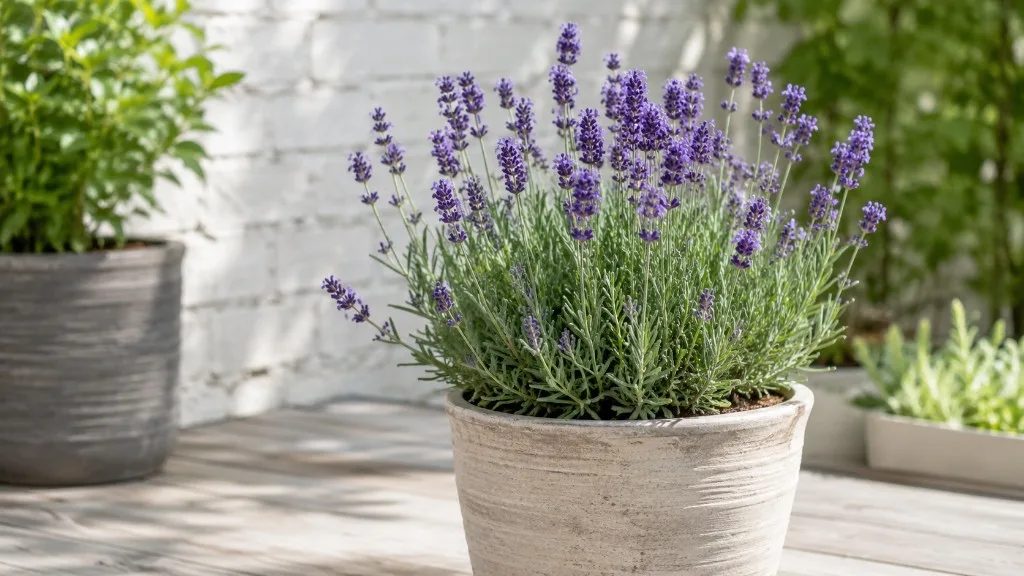
A container makes lavender a flexible focal point, but it also makes drainage and summer watering your responsibility.
11–12. Dress a window box or a sunny slope
11. Fill a window box or balcony rail planter. Lavender can give a small outdoor space fragrance and evergreen structure without needing a full bed. Choose a compact type, provide a long planter with drainage, and avoid placing it where roof runoff dumps water into the box. Leave room around the plant for air movement, and remember that a shallow box can dry faster than a deep pot.
12. Accent a sunny slope or bank. On a dry, well-drained slope, lavender can repeat across the contour to make the grade feel planted rather than exposed. It may help hold the surface once established, but it should not be sold as a complete erosion-control system; intense runoff can move soil around young plants long before their roots fill the bank. Use terraces, wattles, stones, or locally appropriate deep-rooted plants when erosion is the real engineering problem, and put lavender on the stable, driest sections.
13–14. Set the expectation for a vegetable edge or seating area
13. Edge a vegetable or herb garden. Lavender can frame a productive bed and bring flowers near an area people visit often. Keep it outside the main irrigated root zone, because vegetables generally need more regular moisture than lavender, and avoid crowding the crop rows. The design benefit is clear separation and pollinator forage; the claim that lavender will reliably deter every vegetable pest is not.
14. Create a fragrant seating-area edge. Place lavender beside a bench, patio, or outdoor dining area where the scent can be enjoyed, but do not put the plants where chairs, dogs, or constant foot traffic will crush them. A low row along the sunny side of a seating zone can make the space feel enclosed without building a wall. If the patio is shaded by a pergola for much of the day, use containers that can be moved into the light rather than forcing lavender into the shade.
15–17. Layer bloom color, foliage, and seasonal rhythm
15. Combine lavender flower colors. Purple is the default, but cultivars also offer pink, white, and different blue-violet tones. Repeat one main color for a calm formal effect, then use a small number of contrasting plants rather than turning the bed into a collection. Check that the cultivars share the same climate and drainage needs before designing by color.
16. Use foliage contrast when flowers are gone. Lavender’s narrow gray-green leaves look deliberate beside broad green leaves, fine grasses, dark evergreens, or the needle-like texture of rosemary. This matters because the bed has to work beyond peak bloom. Place the most silver-leaved plants where afternoon light can catch them, and use darker foliage behind them for contrast.
17. Stagger height and bloom timing. Put compact English lavender at the front, taller lavandin behind, and later-blooming perennials farther back so the bed develops in layers. This is more dependable than expecting one lavender type to provide nonstop color. Leave open pockets for bulbs or spring annuals if you want the bed to look finished before lavender reaches its main flowering period.
Choose lavender varieties by climate and job
English lavender and lavandin
English lavender, or Lavandula angustifolia, is the safest starting point for a durable border in climates where it is hardy. ‘Munstead’ and ‘Hidcote’ are familiar compact choices, while ‘SuperBlue’ is listed by the Missouri Botanical Garden at roughly 0.75–1 foot tall and wide with full-sun, dry-to-medium water needs. Labels and local availability still matter more than a famous cultivar name.
Lavandin, usually Lavandula × intermedia, tends to be larger and later flowering, making it useful for a hedge, back row, or cut-flower planting. BBC Gardeners’ World’s lavender guide notes that lavandin hybrids can be more robust and larger than English types, with ‘Grosso’ a popular choice. Give them room; a hedge of oversized plants planted on compact spacing will soon look congested.
French and Spanish lavender
French and Spanish lavenders, including L. dentata and L. stoechas, can be excellent in warm, sheltered gardens and containers. They are not interchangeable with hardy English lavender in a cold, wet winter. The RHS guidance describes these types as less hardy and often better suited to containers or frost-free protection, while tender plants may be short-lived if left exposed.
That difference changes the design. Use a tender type as a seasonal patio focal point if you are unsure of winter survival; use English lavender or a suitable lavandin for a permanent hedge only after checking the plant’s hardiness and your site’s winter moisture. A label that says “lavender” is not enough information for a landscape plan.
Match mature size to the site
Choose the plant after deciding the job. Small English cultivars suit window boxes, path edges, and low hedges; medium mounds work in front-of-border repetitions; large lavandins belong where they can form a visible mass without swallowing neighboring plants. If you want a tight geometric effect, buy plants with a naturally compact habit instead of planning to force a sprawling one into shape with repeated shearing.
Plant and maintain the design after spring
Water, prune, and replace with restraint
Plant in spring after the soil begins to warm, keeping the crown at the same depth as it was in the pot. Water thoroughly after planting and keep the root zone moderately supplied during the establishment period; then lengthen the interval as roots move outward. The Savvy Gardening planting guide makes the same practical distinction between newly planted lavender and established plants that can tolerate longer dry periods.
Do not fertilize heavily to chase fast growth. Excessively lush, soft growth is a poor match for a plant selected for lean, dry conditions, and it can make the design more prone to flopping. Weed around young plants so they do not have to compete for water, but do not pile compost or mulch against the woody base.
Prune after flowering by removing spent stalks and shaping the green, leafy portion. Avoid cutting deep into old bare wood; English lavender often will not regenerate from it. Epic Gardening’s lavender guide also emphasizes keeping cuts in green growth and treating overwatering as a common route to root problems.
Finally, accept that lavender is not immortal. Even well-managed plants eventually become woody or misshapen. Replace one tired section of a hedge or repeat bed rather than giving the entire planting a severe haircut that exposes old stems. If a site repeatedly kills lavender despite better watering, the honest fix is to change the drainage, move the plant, or choose a different species—not to add another idea on top of the same failed conditions.
Conclusion
The best lavender landscaping idea is the one that matches the plant to a real job: guiding a path, softening stone, framing a sunny bed, filling a container, feeding pollinators, or giving a dry slope a repeated rhythm. Start with full sun and drainage, choose a cultivar that fits your winter and mature-size limits, and treat first-season watering as establishment rather than proof that lavender is not drought tolerant.
That foundation makes the design flexible. You can borrow the romance of a cottage border, the clarity of a formal hedge, or the restraint of a gravel garden without copying a landscape that could never work in your yard.