30 Small Front Yard Landscaping Ideas That Work
Make a small front yard feel welcoming with 30 workable landscaping ideas. Learn how to plan paths, choose plants, reduce lawn, and manage rain without crowding the entry.
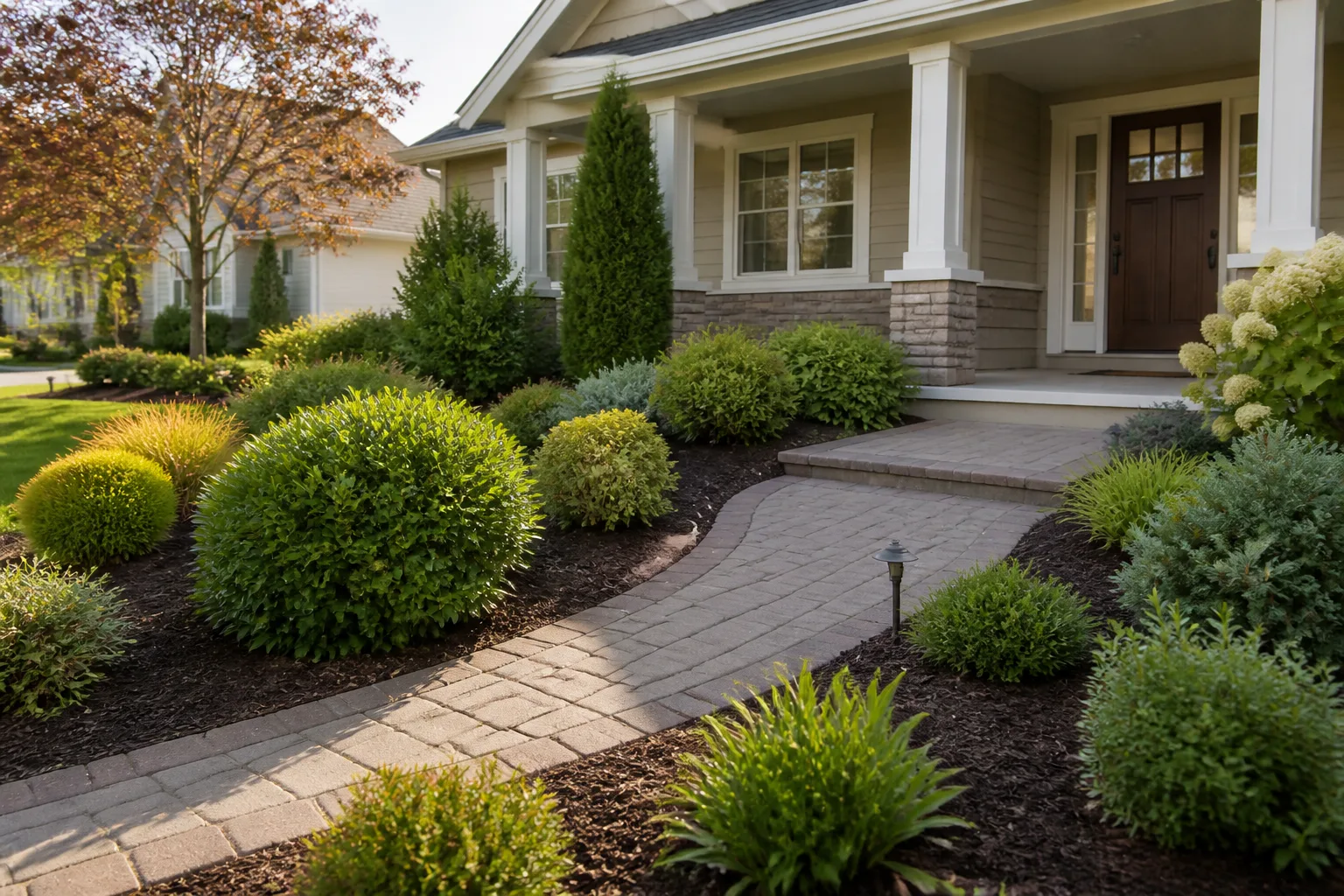
A small front yard can feel like a puzzle: the walkway, driveway, windows, utility boxes, and foundation all compete for the same few feet. The answer is rarely to squeeze in more plants. A better design gives each part a job, keeps the route to the door easy to read, and uses plants that can live comfortably at their mature size.
Start by looking at the yard from the street and from the front door. Notice where people naturally walk, how water moves after rain, and which parts get sun or shade. Then choose one focal point and repeat a short list of shapes or materials. The ideas below cover narrow strips, small lawns, paved entries, slopes, and front yards with little privacy, so you can borrow the parts that match your property rather than copy a whole look.
Read the lot before you draw a bed
A sketch on paper can prevent a surprisingly expensive mistake. Measure the house frontage, property line, existing walk, driveway, and the widest path that people actually use. Mark doors and windows, downspouts, tree trunks, utility boxes, and any public sidewalk or parking area. Photograph the yard at different times of day; the sun that reaches the porch in spring may disappear under a tree canopy in summer.
1. Map the real walking routes. Watch where household members, delivery drivers, and visitors approach the door. If everyone cuts across the corner of a narrow path, move the path or widen its landing instead of scolding people with edging. A route that follows the natural approach stays usable and protects plants from foot traffic.
2. Draw the light and water zones. Label full-sun, part-shade, and shade areas, then note where roof runoff lands and where water puddles. Soil texture and drainage can change across a tiny lot, particularly beside concrete. Group plants with similar water needs, and do not assume that a sunny curb bed shares conditions with a shaded foundation bed.
3. Measure the mature plant, not the nursery pot. Write down the expected height and spread on the plant tag before buying. A compact shrub can still grow wider than a window well; an ornamental tree can eventually cover a path or reach overhead wires. Place plants with room for their natural shape so pruning does not become a yearly battle.
4. Make one simple plan that includes the house. Use the siding, brick, roof, steps, and door as part of the color palette. A cream house might suit dark green foliage and a restrained flower color; a brick façade may already supply much of the yard’s warmth. Repeating one path material and two or three plant colors usually looks calmer than collecting unrelated accents.
Make the front door easy to reach and see
The approach to the front door is the yard’s most important piece of hardscape. It should be obvious in daylight, safe in rain and winter, and generous enough for the number of people who use it. A winding path can add length and visual interest, but a decorative curve that makes a short trip awkward will quickly be ignored.
Let the path do one clear job
5. Run a simple walk from sidewalk to steps. A straight route can be the cleanest answer for a narrow lot or modern home. Use a material that suits the house, set the path at a comfortable width for daily traffic, and keep plants from leaning into it. Before pouring or laying a permanent surface, sketch the width with a garden hose and walk it carrying groceries.
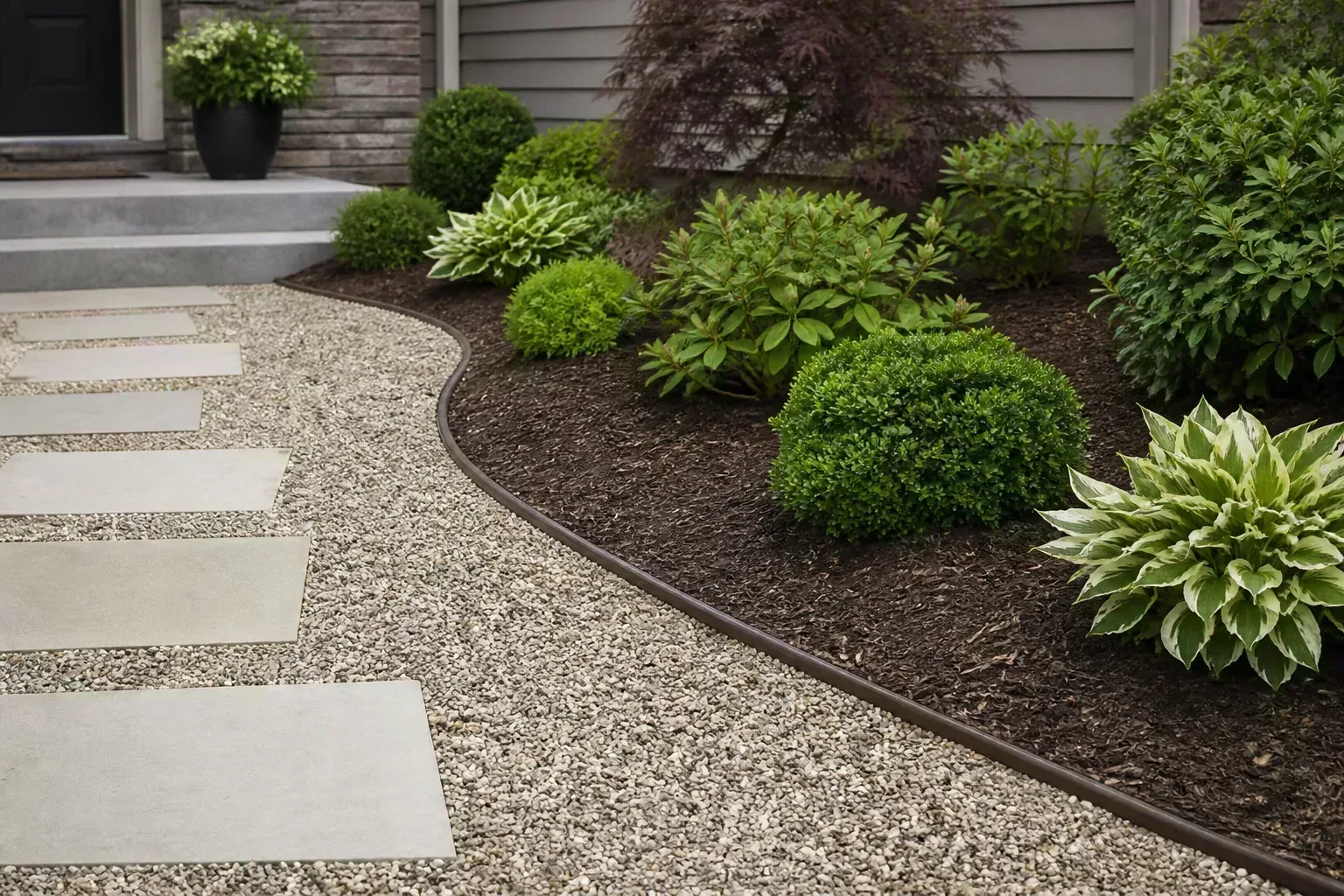
6. Use a gentle bend to soften a boxy layout. A shallow curve can guide the eye toward the door and create a planting pocket on the outside of the turn. Keep the curve broad enough to feel natural; tight S-shapes waste space and make mowing or snow removal harder. A curve should work around an existing tree, not cut through its root zone.
Make the entrance feel intentional
7. Add a landing where the walk meets the steps. A small, level arrival area gives people room to pause, open the door, set down a bag, or wait out of the rain. It can be a single wider paving bay rather than a full patio. Preserve a clear swing for the door and do not let a planter, railing, or shrub narrow the approach.
8. Use one large container as a movable accent. A substantial pot beside the entry creates a focal point and is easier to manage than a row of tiny pots. Choose a container with a drainage hole and a plant suited to the amount of sun the doorway receives. In frost-prone areas, use a frost-resistant pot and lift it slightly so drainage can escape.
Choose a few plants with year-round shape
Front beds are viewed from indoors and from the street, often all year. A small space benefits from a hierarchy: one main anchor, a low repeating layer, and seasonal flowers as accents. Too many specimen plants create a patchwork; too few plants of the wrong size create a row of shrubs that soon hides windows.
Give one small tree room to mature
9. Make a compact ornamental tree the focal point. A serviceberry, redbud, dogwood, or Japanese maple may suit a small site in some regions, but none is universal. Compare mature canopy and root-space needs, local climate, soil, and overhead clearance before choosing. Set the tree slightly off-center so it frames rather than blocks the entrance and windows.
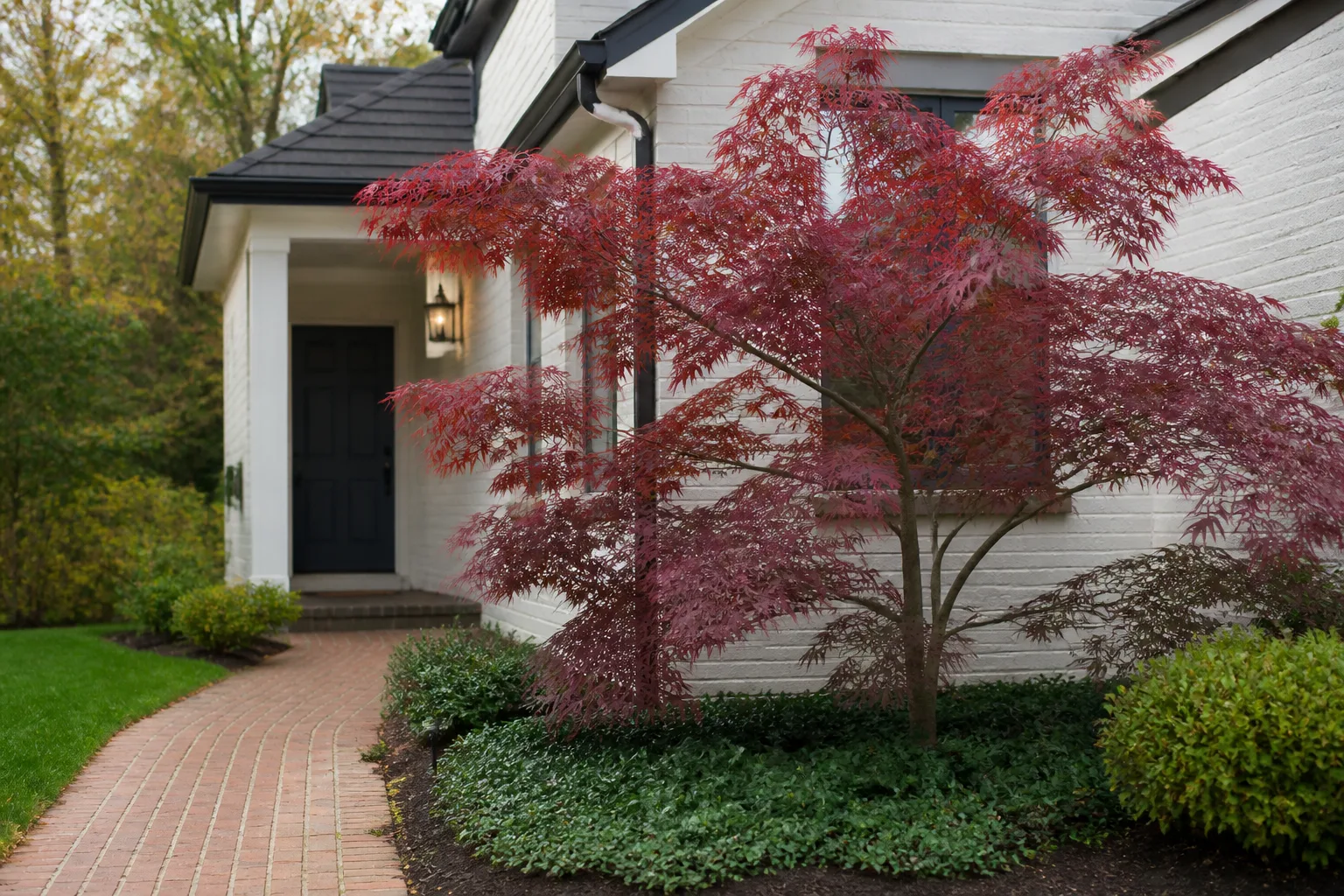
10. Work with a mature tree already on the lot. Keep the tree as the anchor and build a loose bed beneath its canopy with shade-tolerant ground cover, spring bulbs, or foliage plants that suit your region. Avoid piling soil against the trunk, cutting major roots, or installing a tight ring of pavers. Tree roots need air and water, and the area under a canopy can be drier than it looks.
Layer shrubs, grasses, and ground cover
11. Use an evergreen shape for winter structure. One or two small, slow-growing evergreens can hold the design together after perennials die back. Place them where their full spread will not cover windows, block a sightline, or require shearing to stay within the bed. Check local pest and disease issues before buying a hedge plant simply because it is evergreen.
12. Mass a few ornamental grasses for movement. A compact native or regionally adapted grass can soften the edge of a walk and catch light without needing frequent deadheading. Use repeated clumps rather than a single grass in every gap, and confirm its mature height so it does not obscure the door or street visibility. Cut back only when your selected grass and climate call for it.
Let the planting style fit the site
A “native garden” is not one universal recipe, and a formal border is not automatically high maintenance. Plant performance depends on climate, soil, exposure, water, and how much care you want to provide. The UF/IFAS Extension guide to creating a native landscape makes the useful point that even small gardens can use native shrubs and wildflowers, provided you match them to the conditions of the yard.
Repeat regionally adapted plants
13. Create a small pollinator bed in repeated groups. Choose several plants that flower in sequence and provide different heights, rather than expecting one plant to feed insects for the whole season. Use species recommended for your ecoregion, and leave enough room for them to reach mature size. A repeat of three or five clumps reads as a design choice and is easier to weed than a mixed collection of single plants.
14. Turn a narrow strip into a tidy mini-meadow. A meadow effect can work along a side edge or beneath windows when you use a limited palette and define its boundary with a mown strip, low edging, or a clear path. Choose plants that stand upright and do not flop across the sidewalk. A naturalistic planting still needs an establishment plan and occasional cutting back; it is not a no-maintenance field.

Separate sunny and shady palettes
15. Keep a sunny foundation bed low and layered. Combine a few compact shrubs with perennials, grasses, and ground cover that tolerate the actual heat beside the house. South- and west-facing walls may be much hotter and drier than the weather report suggests. Keep plants below windows and away from vents; access for painting, siding repairs, and pest inspections is part of the design.
16. Make a shade garden with foliage, not a struggle for blooms. Ferns, heuchera, native sedges, and other shade-adapted plants can supply texture when flowers are scarce. Under large trees, choose species that tolerate root competition and avoid deep digging. If you want spring color, use bulbs suited to your climate, then let their foliage die back naturally before cutting it.
Keep lawn where it has a job
A lawn is useful when someone plays on it, walks through it, or needs an open surface. In a front yard used mainly for arrival, an awkward strip of turf may demand more mowing and edging than it returns. The best decision is often to keep one easy-to-mow rectangle and reduce the rest gradually, learning what replacement planting needs before removing every square foot.
Save a usable patch of turf
17. Keep one simple lawn panel for play or pets. A small, accessible patch is easier to mow when its edge is broad and uncomplicated. Choose turf suited to your region and light rather than trying to make a sun-loving grass survive under a mature tree. Keep the panel large enough for its intended use; a decorative sliver can be more work than a functional lawn.
18. Use a narrow lawn ribbon to connect separate planting beds. A clean strip between the walk and foundation can visually link the house to the street and provide a little green without taking over the yard. Keep the edges straight or gently curved and wide enough for your mower. Thin ribbons too narrow for equipment become a repetitive trimming chore.
Replace difficult grass thoughtfully
19. Widen a bed where grass repeatedly fails. Dry shade, steep slopes, tree roots, or runoff can make turf unreliable. Extend a planted bed into that area and cover exposed soil with mulch while plants fill in. The EPA’s WaterSense home landscaping guidance recommends maintaining healthy topsoil and mulching planted areas to help retain moisture and make water available to plants.
20. Use a ground cover only where its limits fit. Creeping thyme, sedum, clover, or a low native ground cover may reduce mowing in some sites, but they differ in traffic tolerance, water needs, and whether they attract bees when flowering. Test a small area first. Keep a reliably firm surface at the front steps and along delivery routes, where loose or soft cover can become slippery or worn.
Mix paving with planted and porous space
Hardscape can make a tiny yard more useful, but every extra paved area gives rain less soil to soak into and can increase summer heat. Plan the minimum surface needed for walking, parking, or sitting, then let beds, gravel pockets, or ground cover do the rest. The RHS front-garden design guidance encourages homeowners to balance paving with planting and permeable ground.
Keep hardscape narrow and permeable
21. Pave only the door-to-street route and necessary parking. If you need a driveway, define the tire tracks rather than turning the entire front lot into a single slab. Leave planted pockets where they will not be crushed by wheels. Keep enough clearance to open doors and move safely, and confirm local driveway, drainage, and sidewalk rules before construction.
22. Choose permeable paving for paths or parking where it is suitable. Open-joint pavers, gravel systems, and permeable products can allow water to move through the surface when correctly installed over a suitable base. They are not simply regular pavers with wider gaps; the base and outlet determine drainage. The RHS permeable-paving guide explains the role of porous materials and why paving should be kept to a minimum.
23. Build a small gravel sitting pad beside the entry. A gravel pad can create room for a bench without requiring a large concrete patio. Use a stable edging to keep stone out of the lawn and a compacted base appropriate for the site. Pea gravel can roll underfoot, so choose a material that stays put if the space needs to be wheelchair friendly or frequently used by children.
Give rain a safe place to go
24. Shape a rain garden only after checking the soil and location. A shallow planted depression can capture runoff from a roof or path, but it should drain between storms and must not send water toward the foundation or a neighbor. Penn State Extension’s introductory rain garden guidance advises locating a home rain garden at least 10 feet from the house, checking infiltration, and avoiding sites that stay saturated. Follow your local extension or stormwater office’s specifications for soil and overflow.
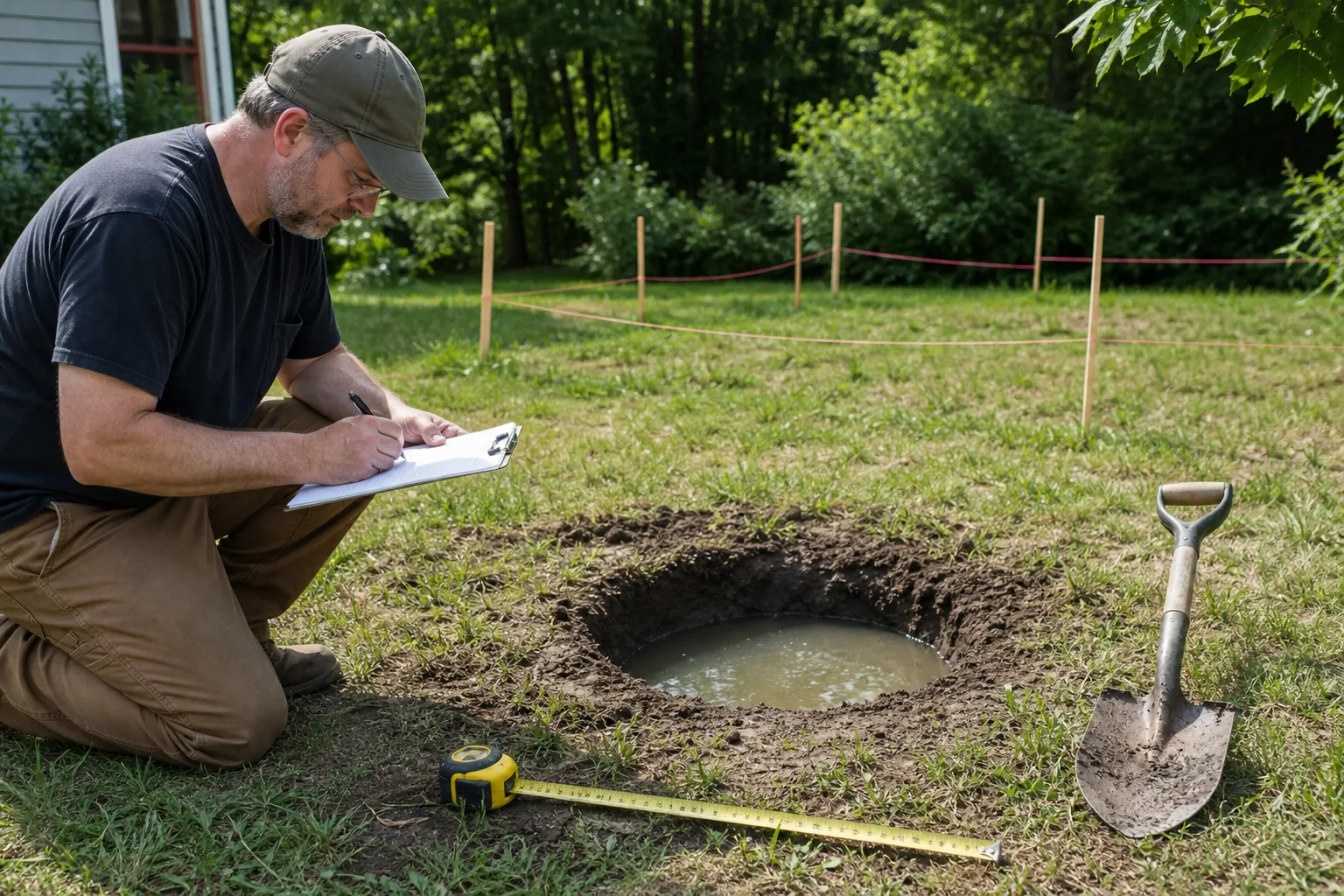
25. Add a planted downspout area with an overflow route. A modest planter or rain garden near a downspout can slow water and turn an awkward corner into a feature. Make sure the container has a safe overflow path and does not discharge against the home. Watch it during a heavy rain before finalizing the layout; concentrated flow can wash out mulch or expose roots.
Use edges, walls, and small structures well
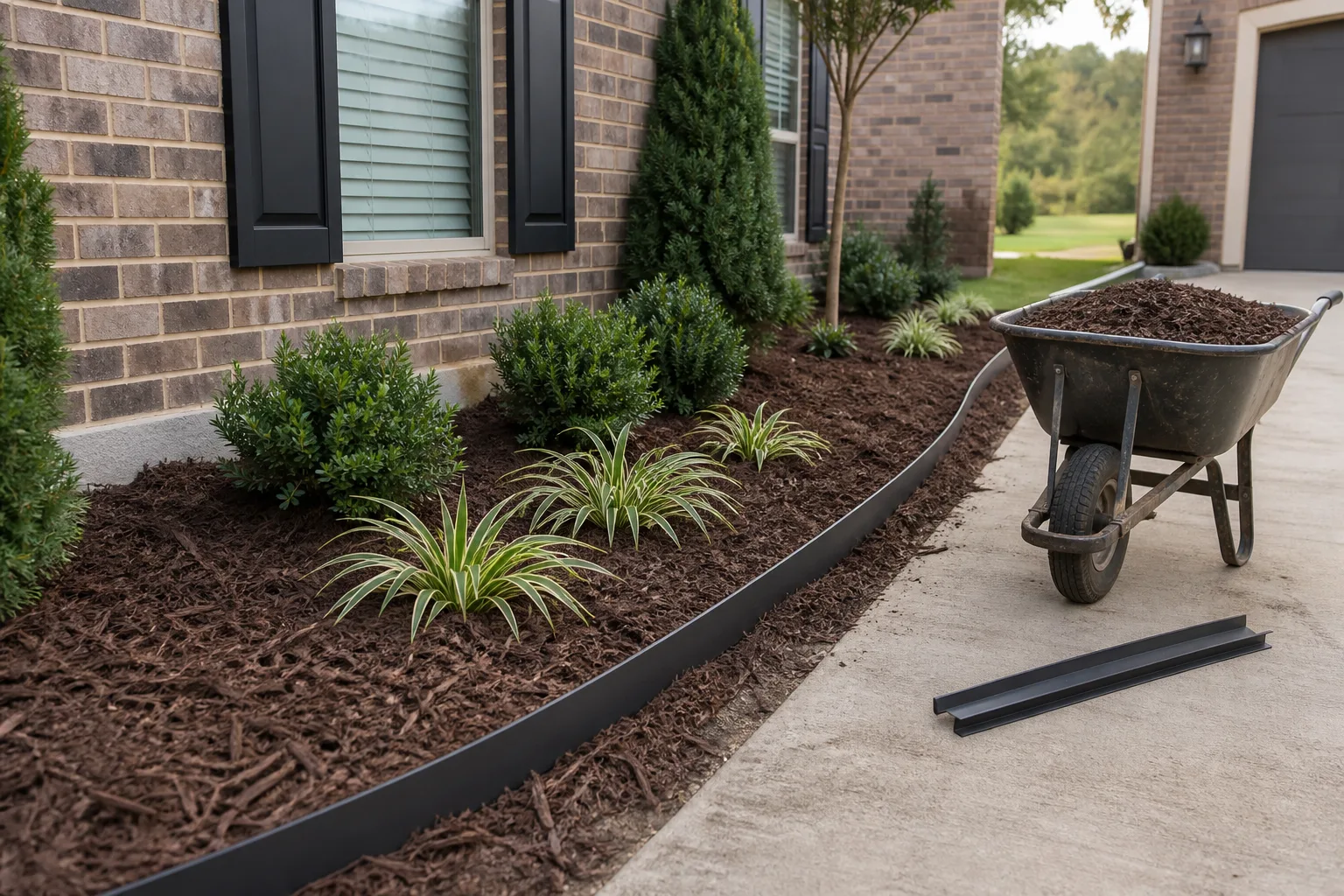
26. Trace a broad bed edge instead of outlining every shrub. One continuous curve around a small group of plants looks calmer and is easier to maintain than scalloped islands. Use a spade-cut edge, stone, or metal to separate lawn from bed and leave enough space for a mower or string trimmer. Keep the curve purposeful: it should frame the walk or house, not consume the walking area.
27. Add vertical green on an independent support. A trellis can dress a blank wall or fence without using the ground footprint of a wide shrub. Keep the support and mature vine clear of gutters, vents, doors, and windows. Do not let self-clinging vines attach to fragile siding or mortar; select a manageable climber suited to your climate and prune it before it blocks maintenance access.
28. Use an open fence or low hedge for a boundary. A short picket fence, simple rail, or loose hedge can define a garden edge while keeping the façade visible. Check property boundaries and local rules before installing a fence, and keep plantings low where drivers or pedestrians need to see around a corner or driveway. A dense hedge gives more privacy but takes more width and pruning.
Choose a design you can maintain
29. Make a seasonal display in one contained spot. A window box or two planters at the front step can supply seasonal color when there is no room for a deep bed. Match pot size to the plant’s mature needs and expect containers to dry faster than in-ground soil. If daily summer watering is unrealistic, choose a large pot, drought-tolerant plants, or a permanent foliage planting instead of thirsty annuals.
30. Add a bench and discreet path lighting only if you will use them. A small seat can turn the area beside a porch into a genuine pause point, but leave the main entry route open. Low, shielded lights can make steps and the approach easier to see after dark; position them to illuminate walking surfaces instead of shining into windows or neighbors’ yards. Check that fixtures are rated for outdoor exposure.
For a budget-friendly first pass, remove only the plants that are dead, unsafe, or badly placed. Recut the bed edge, improve the approach, and add mulch before buying a long plant list. Plant in phases so you can learn what thrives through a full season. If paving, retaining walls, major grading, large trees, or drainage changes are involved, check permits, utility markings, and contractor qualifications first. U.S. homeowners can contact 811 before digging; other countries have their own utility-locating services. The Pipeline and Hazardous Materials Safety Administration’s call-before-you-dig guidance includes small landscape projects such as planting shrubs or trees.
A good front yard should be easy to approach and suit the house, climate, and amount of care you want to give it. The Gardeners’ World front-garden design advice similarly emphasizes keeping routes practical, avoiding clutter, and using vertical space in small gardens. Let one or two strong features carry the design, then repeat a few plants and materials around them. That restraint leaves room for the garden to grow without making a small lot feel crowded.
Conclusion
The most successful small front yard landscaping ideas start with the site rather than a shopping list. Follow the natural route to the door, understand the sun and drainage, and choose plants for their mature size. Use lawn for a real purpose, keep paving proportionate, and preserve a safe path for visitors and maintenance.
Pick two or three ideas that solve a specific problem on your lot, such as a clearer entrance, a bed where turf fails, or a place for roof runoff to soak in. Repeat materials and plant forms so the result feels connected to the architecture. Build in stages and evaluate the yard after a season. A modest, well-planned front garden will look more finished and be easier to care for than a crowded design assembled all at once.



