24 Colorful Shrubs for Year-Round Garden Color
Explore 24 colorful shrubs for year-round color, from winter flowers and evergreen foliage to spring bloom, summer berries, vivid fall leaves, and bright stems.
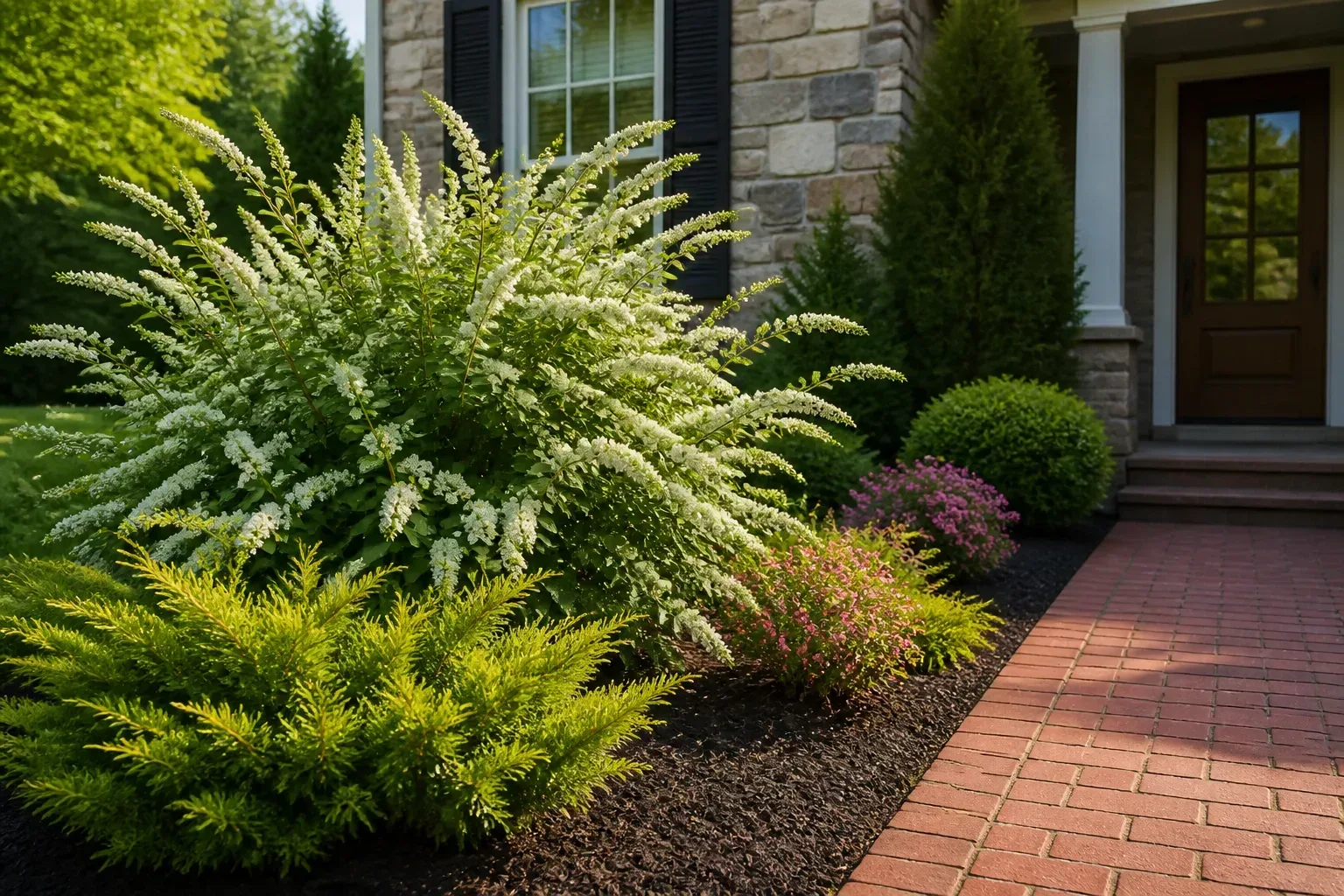
A garden can look colorful in January without a flower in sight. Witch-hazel petals, evergreen leaves, berries, peeling bark, and red stems all count; year-round interest comes from choosing plants whose best features take turns.
No shrub decorates every month. Penn State Extension notes that many flowering shrubs bloom for about four weeks, so choose a small mix that fits your climate, soil, light, space, and pruning tolerance. Its shrub-selection guide and the RHS winter-interest guide emphasize features beyond flowers.
What year-round color really means
“Year-round” means a succession of features, not a shrub that blooms all year. In cold-winter regions, color may come from evergreen foliage, persistent berries, peeling bark, or bright young stems. In mild climates, camellias and witch hazels may flower in winter; colder sites can shift or damage those blooms.
Spring brings the largest wave of flowers, but displays are brief. Summer color comes from repeat blooms, vivid foliage, and fruit; autumn adds berries and changing leaves. Ask what a shrub contributes after it flowers. If the answer is “nothing,” pair it with an evergreen, fall-color plant, or colorful-stem shrub.
Choose shrubs for the site, not just the flower color
Match light, soil, and moisture to the plant
Start by observing the planting spot through a full day. “Partial shade” can mean cool morning sun with afternoon protection or dense shade under a roof; those are not interchangeable. A camellia, rhododendron, or azalea appreciates protection from hot afternoon sun, while a lilac, forsythia, or smoke bush flowers or colors best with more direct light. If the ground stays wet, a plant adapted to moist soil such as summersweet or red-twig dogwood is a safer choice than a shrub that needs sharp drainage.
Check drainage before amending soil: after a soaking rain, note whether water stands, drains within a day, or leaves the bed dry quickly. Soil pH matters especially for acid-loving rhododendrons, azaleas, camellias, and some hydrangea effects, but adding amendments without a test can create new problems. Extension profiles also warn that rhododendron roots dislike dense, poorly drained clay; set the root ball slightly high if drainage is marginal, and do not bury the crown.
Check mature spread and growth habit before buying
Read mature width as carefully as height. Border forsythia can reach roughly 10 feet wide, while dwarf fothergilla and compact spirea cultivars suit tighter spaces; a small nursery pot can still become a broad shrub. Leave room for the natural outline.
Check how a shrub spreads, too. Elderberry and red-twig dogwood can sucker into a thicket—useful on a wet bank, awkward beside a foundation. Choose a site that fits the mature habit, then thin stems selectively instead of shearing every shrub into a ball.
Count foliage, fruit, bark, and evergreen structure as color
A four-season border needs more than a flowering calendar. Penn State Extension’s wildlife landscape guidance highlights fragrance, fruit, fall color, and winter form; evergreens provide a backdrop while deciduous shrubs bring seasonal changes.
The Gardeners’ World flowering-shrub roundup spans different bloom windows. Treat bloom months as estimates, since climate, cultivar, plant age, and winter injury shift timing. The shrubs below are grouped by their strongest seasonal feature, even when they contribute in more than one season.
Winter and earliest-spring color: six shrubs
Winter does not need six flowerers; it needs a few points of focus. These choices mix blooms, evergreen foliage, gold needles, berries, and stems so that one frozen flower display is not carrying the whole garden.
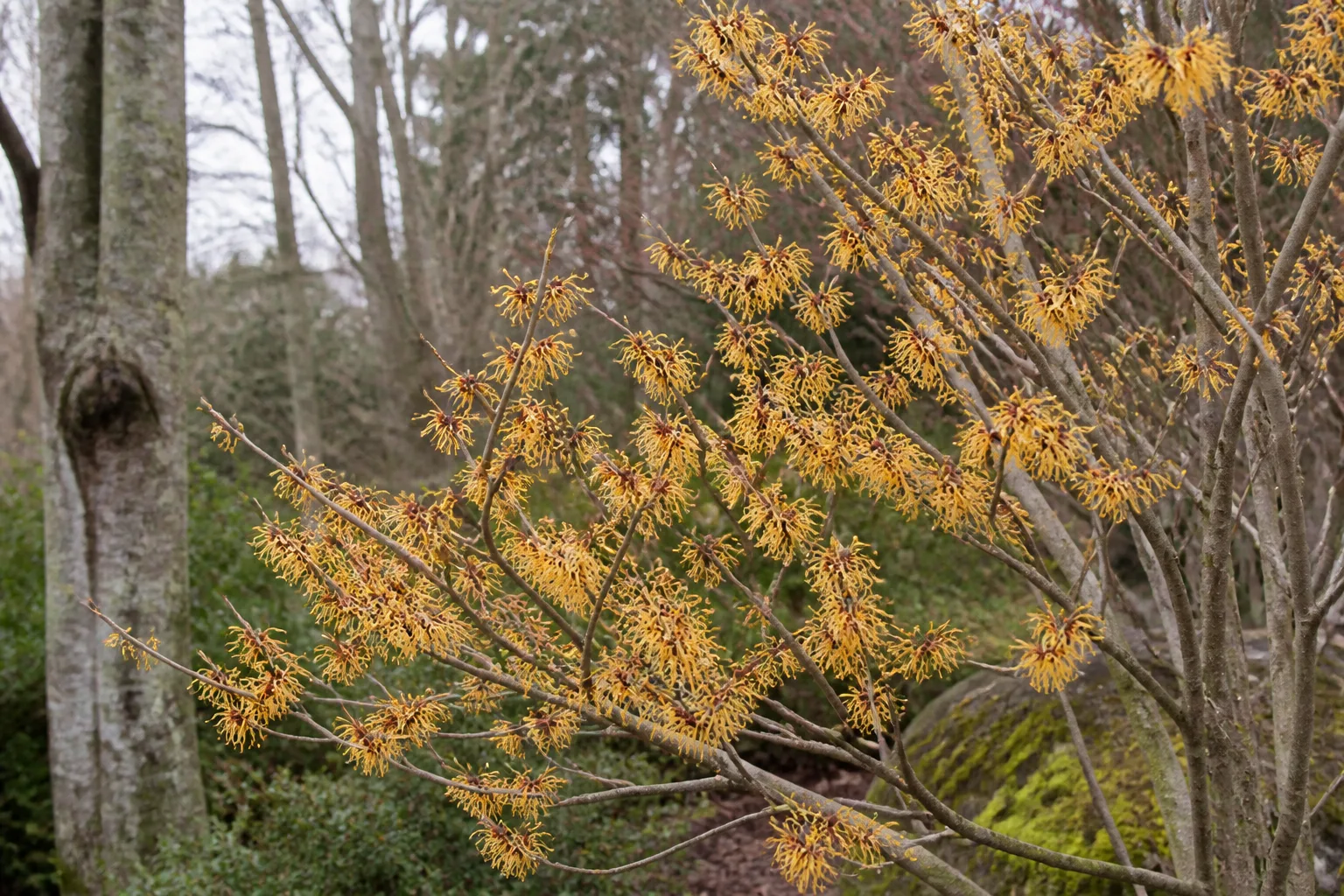
1. Hybrid witch hazel (Hamamelis × intermedia) — This large shrub or small tree opens yellow, orange, or copper-red flowers on bare branches in late winter or early spring, then colors in autumn. Choose a cultivar by mature size and flower color; many need more room than a foundation bed provides. Plant in moist, well-drained soil in sun or light shade, and prune sparingly because flowers form on older growth. NC State Extension lists cultivar differences.
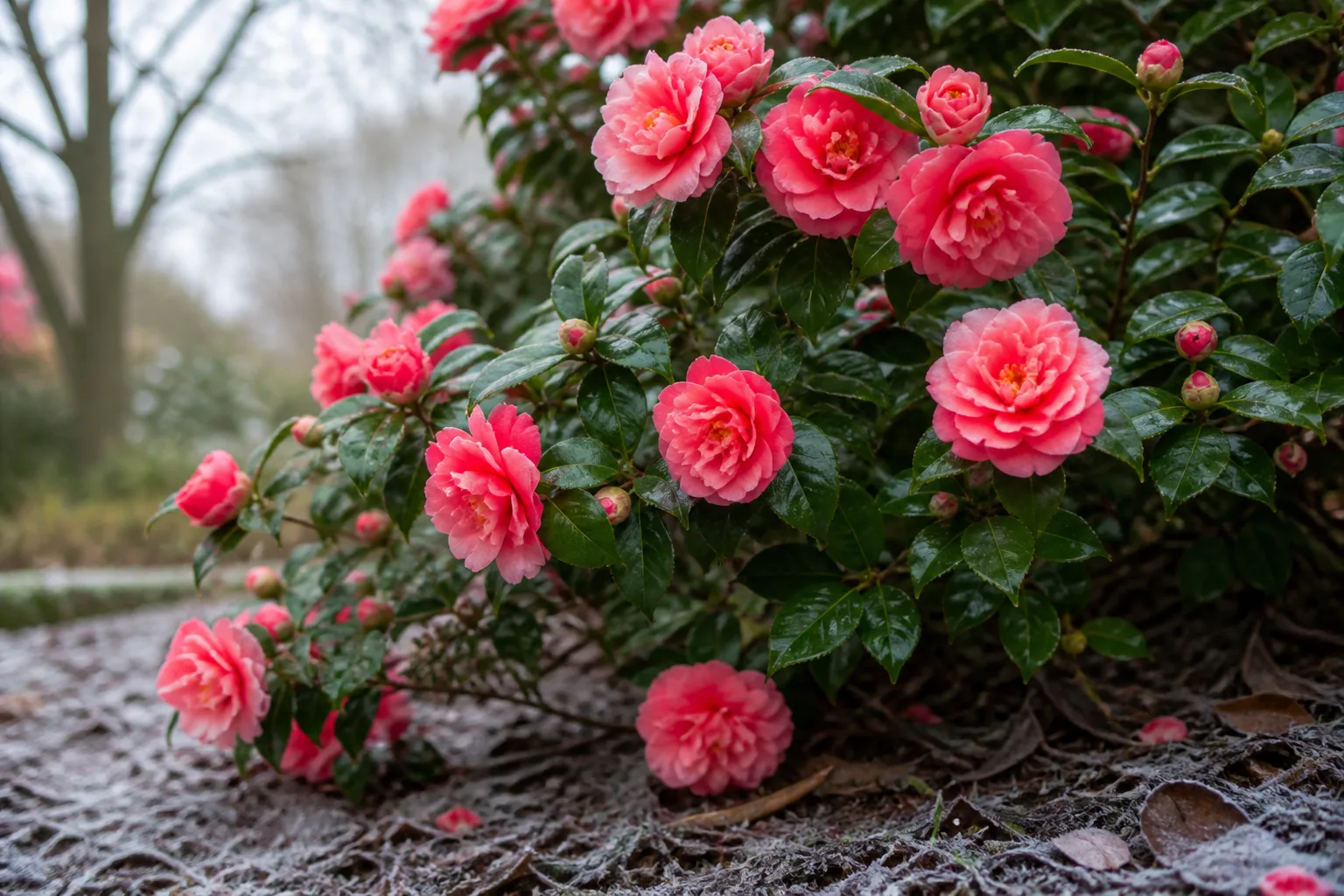
2. Sasanqua camellia (Camellia sasanqua) — Glossy evergreen leaves hold the garden together while white, pink, or red flowers open in autumn and early winter. It suits a sheltered, mild-winter site with acidic, well-drained soil and summer moisture while buds form. For late-winter or spring flowers, choose C. japonica or C. × williamsii instead; camellia species bloom in different seasons. The RHS growing guide distinguishes the groups.
3. Blue Princess holly (Ilex × meserveae ‘Blue Princess’) — Blue-green spiny leaves remain through winter, and red berries may persist into spring. ‘Blue Princess’ is female and needs a compatible male Meserve holly, commonly ‘Blue Prince,’ nearby for pollination; one female alone may not fruit. Give this broad evergreen room beside a wall or in a border. Keep berries away from children and pets that may chew them. NC State Extension explains pollination and cultivar sizes.
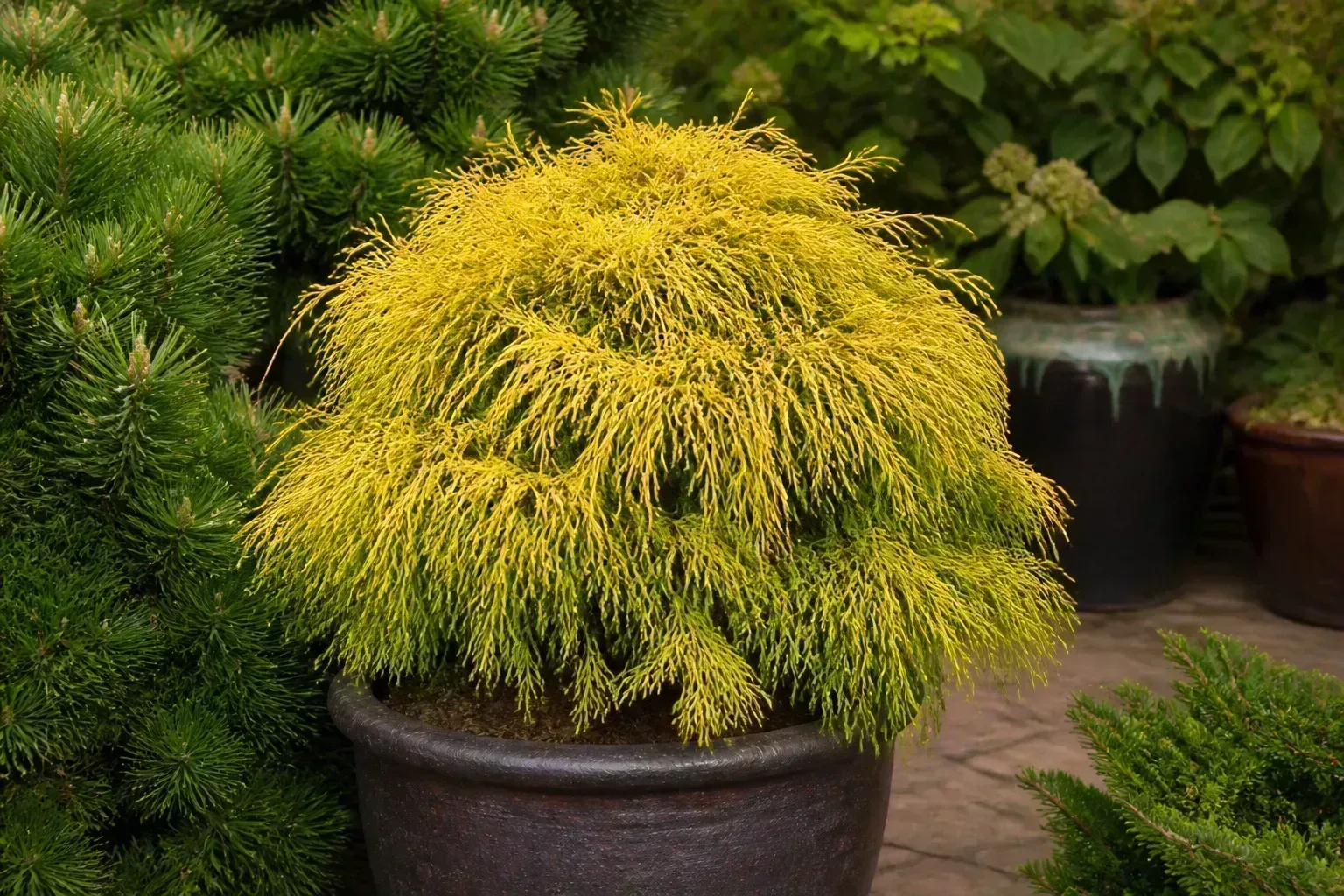
4. ‘Golden Mop’ false cypress (Chamaecyparis pisifera ‘Golden Mop’) — Threadlike golden evergreen foliage adds color when deciduous shrubs are bare. Its contribution is texture and year-round needles, not flowers. The slow-growing shrub can still widen over time, so check the selected cultivar’s mature size. Plant in sun to partial shade in moist, well-drained soil; avoid hot, dry reflected heat. NC State Extension describes its habit.
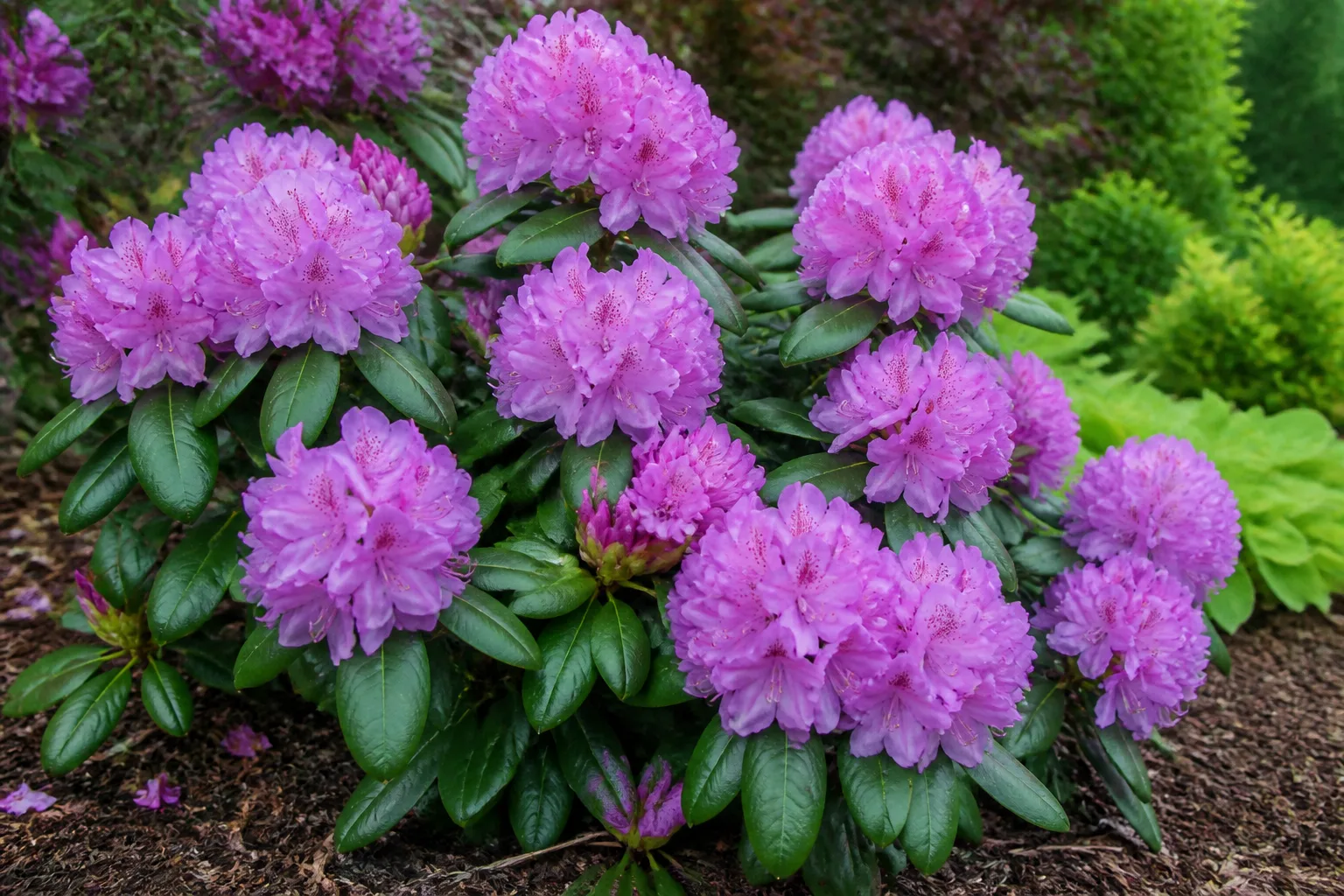
5. Rhododendron (Rhododendron spp.) — Broad evergreen leaves persist through winter before large spring flower trusses open. Species and cultivars vary in size and hardiness, so buy by name rather than the generic label. Most prefer cool partial shade, acidic organic soil, and reliable drainage; hot afternoon sun, alkaline soil, and waterlogged roots can cause decline. Plant parts are toxic if eaten, so keep them away from children and pets. NC State Extension covers site needs and safety.
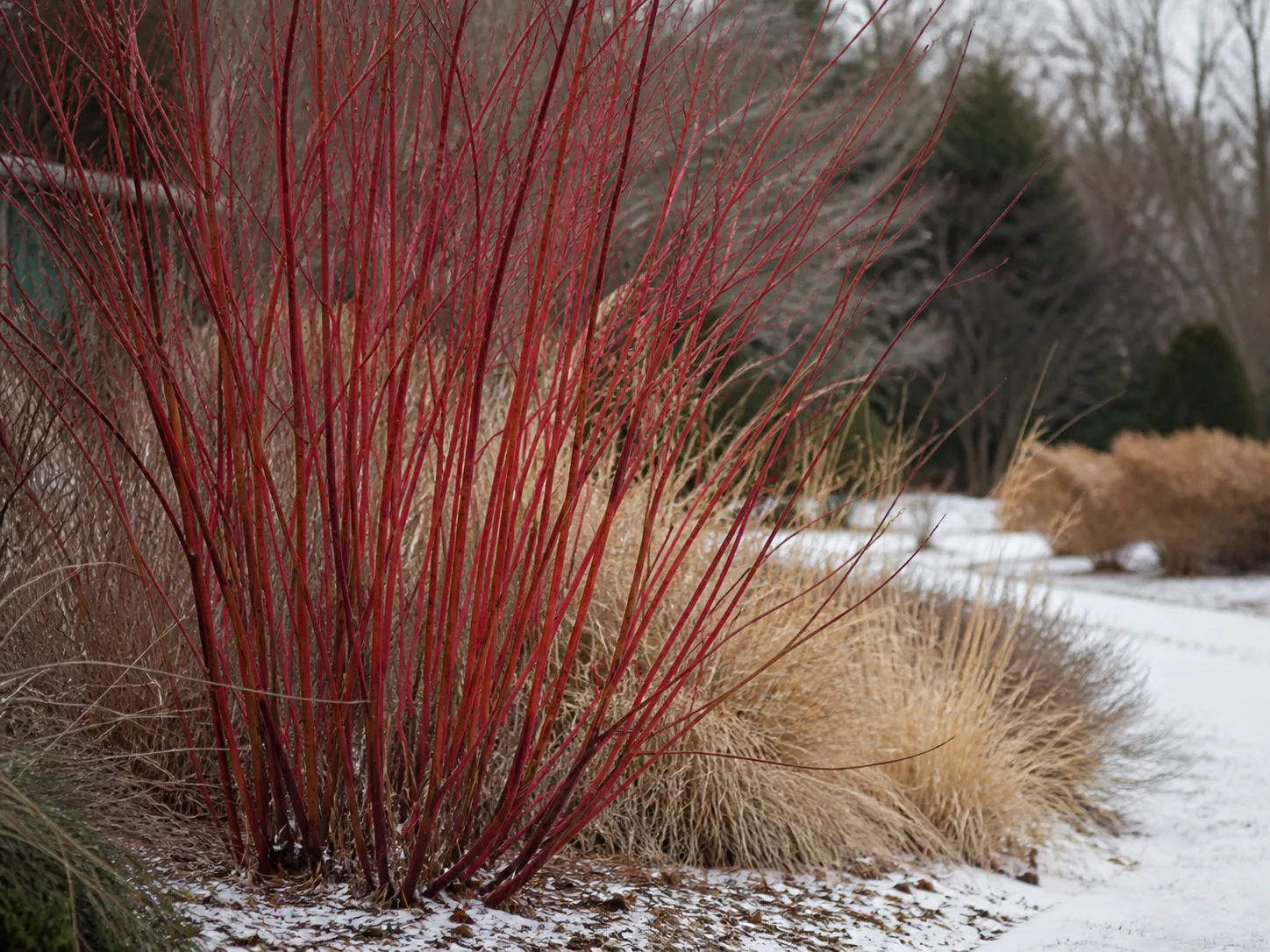
6. Red-twig dogwood (Cornus sericea) — After leaves fall, young stems glow red or burgundy; spring flowers, white berries, and autumn foliage extend its interest. It tolerates moist soil and suits a rain garden or low border, but underground stems can spread. Remove some of the oldest canes in early spring to encourage colorful new growth. Use it as a habitat thicket or plan a boundary in smaller gardens. NC State Extension explains its spread and pruning.
Spring display: six shrubs
Spring bloomers make the first large wave, but their bloom time and post-flower appearance differ. Plant them where the spring show is visible, then let surrounding foliage or evergreen structure take over once petals fall.
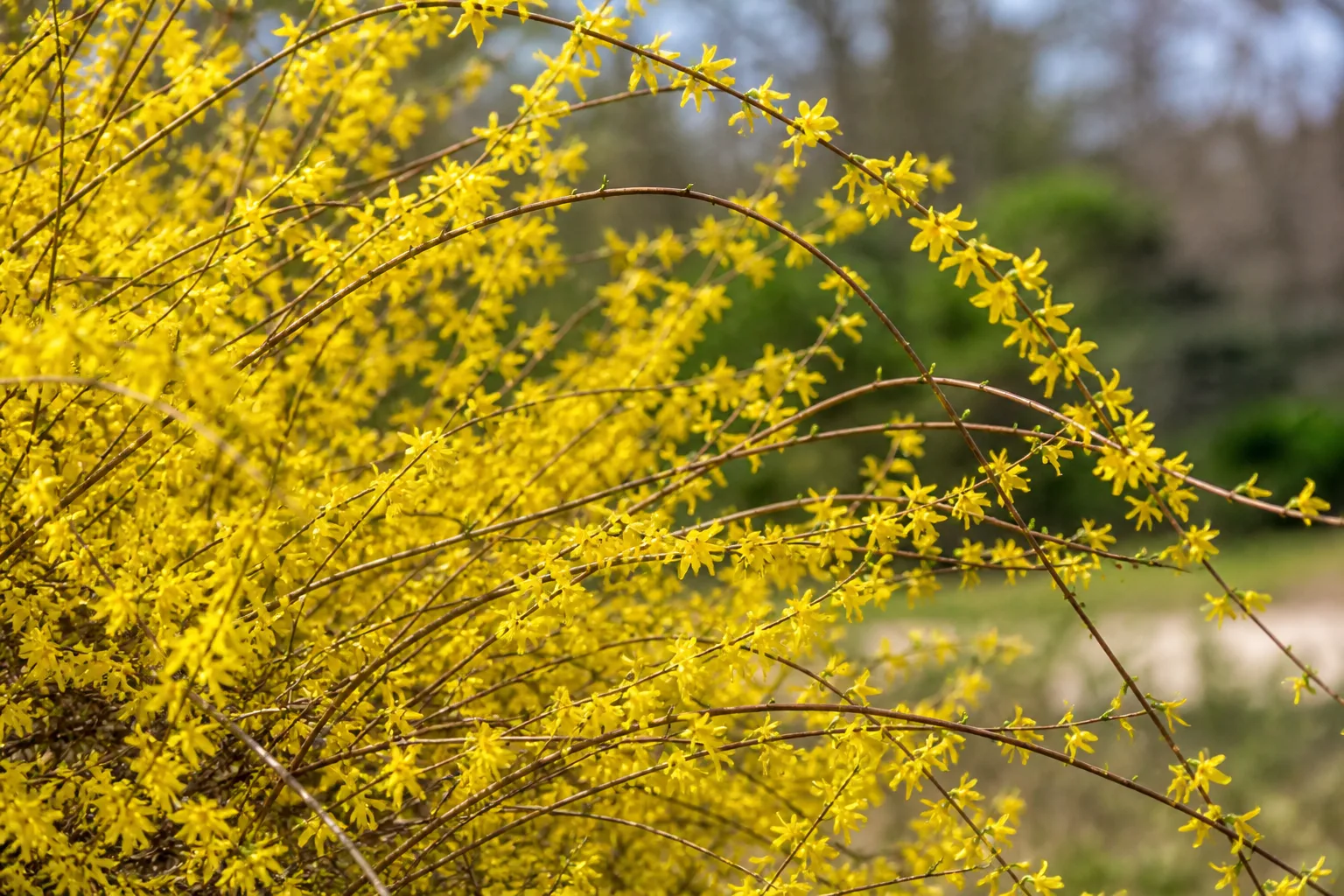
7. Forsythia (Forsythia × intermedia) — Arching branches covered in yellow flowers make forsythia an early spring signal. A full-size plant can become broad, so choose a compact cultivar for a small bed. Flowers form on old wood: thin the oldest stems just after bloom, not in late summer when next spring’s buds are developing. Full sun gives the strongest display. NC State Extension gives bloom and pruning guidance.
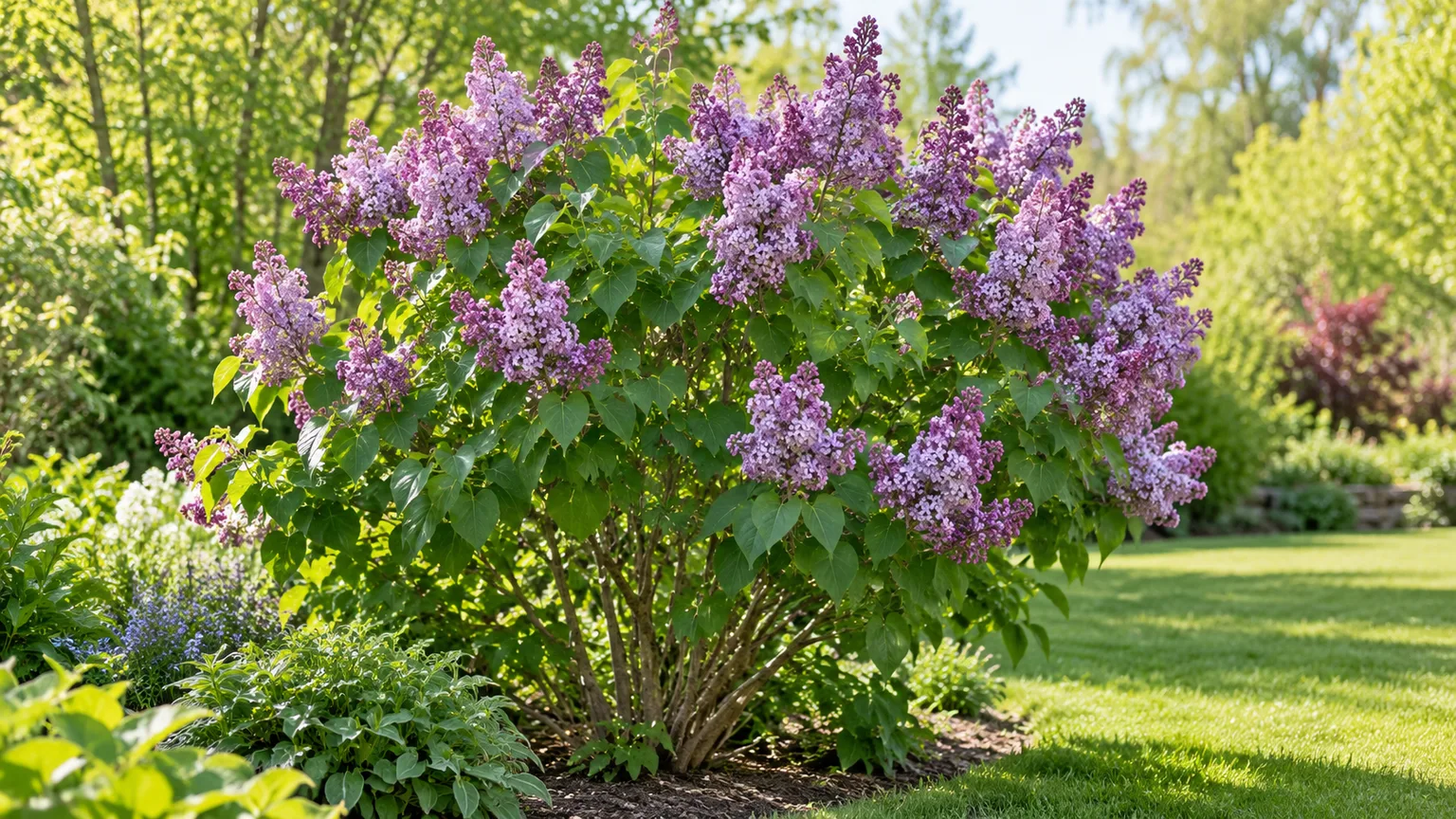
8. Common lilac (Syringa vulgaris) — Fragrant panicles in purple, lavender, pink, or white make this a spring focal point. Lilacs need winter chill, well-drained soil, and enough sun; warm winters may mean fewer flowers, and mildew can mark summer leaves. Remove spent clusters and prune selectively just after bloom, preserving shoots that will flower next year. NC State Extension covers climate, soil, and suckers.
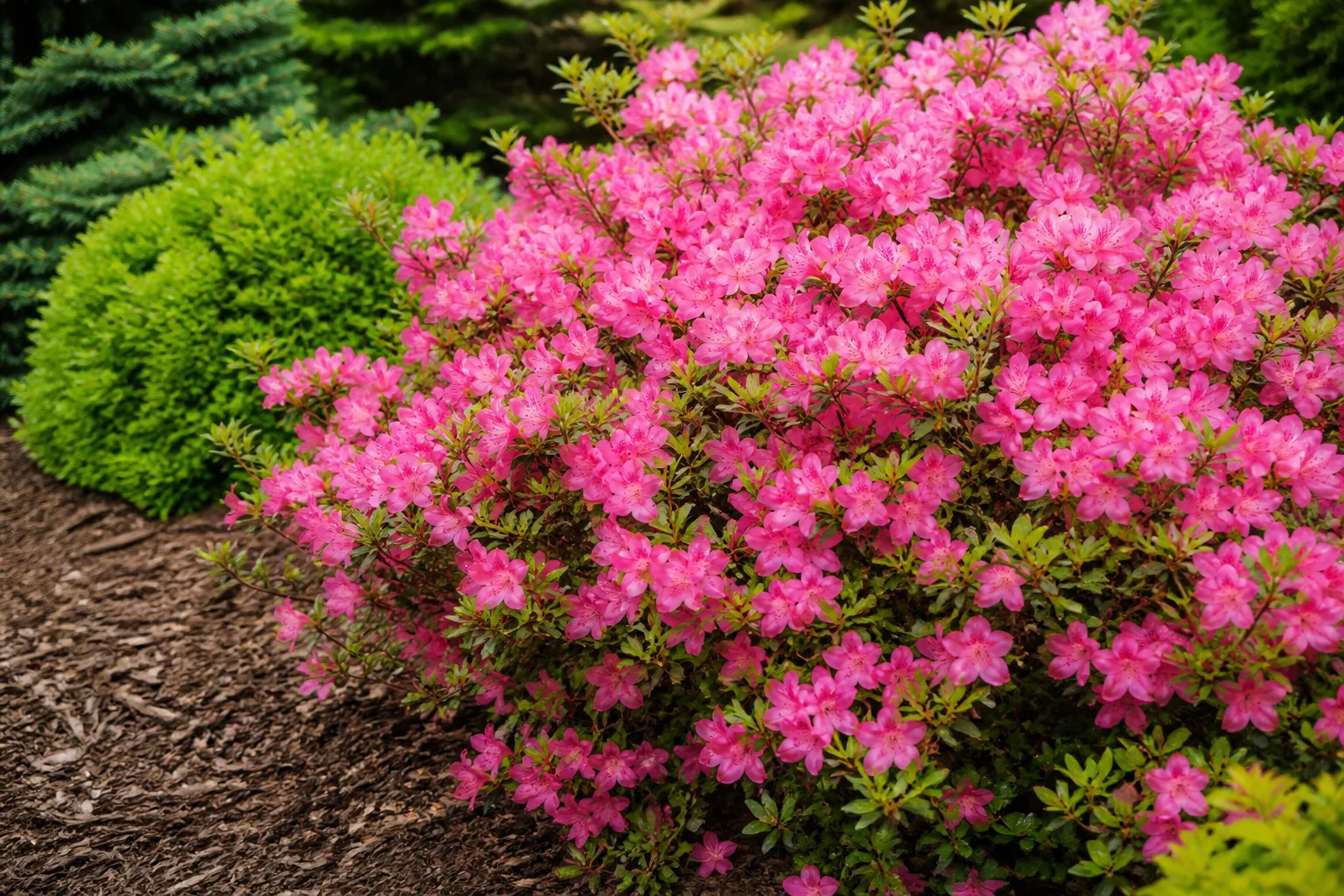
9. Stewartstonian azalea (Rhododendron ‘Stewartstonian’) — Red spring flowers and bronzy winter foliage give this evergreen azalea more than one season of color. It needs acidic soil, even moisture, and filtered light or morning sun with afternoon shade. Its shallow roots dry quickly under turf or beside a hot wall, so mulch lightly without burying stems. Prune after flowering only if needed; azaleas set next year’s buds early. NC State Extension details the site requirements.
10. Dwarf fothergilla (Fothergilla gardenii) — Fragrant white bottlebrush flowers appear in spring, followed by blue-green leaves that turn yellow, orange, and red in autumn. It prefers organic, slightly acidic, moist but well-drained soil; sun strengthens flowers and fall color, while afternoon shade helps in hot climates. It can sucker, so remove shoots if you want a single clump. Penn State Extension describes its seasonal value; NC State covers the species.
11. ‘Red Prince’ weigela (Weigela florida ‘Red Prince’) — Red tubular flowers bloom in late spring, with bright green leaves through summer and occasional lighter rebloom. Its arching form suits an informal border better than a narrow clipped hedge. It flowers on old wood, so prune after the main spring flush and thin older stems rather than shearing the canopy. NC State Extension gives the pruning window.
12. Variegated weigela (Weigela florida ‘Nana Variegata’) — Pink flowers are followed by cream-edged leaves that keep the shrub colorful after bloom. Give it enough sun for better flowering and leaf contrast, and leave space for its eventual width. ‘Red Prince’ and ‘Nana Variegata’ are close relatives with overlapping spring bloom; in a small yard, choose the one whose flowers or foliage fills a real gap. Prune just after flowering to preserve next year’s buds.
Summer through early fall: six shrubs
Late-spring flowers can leave a garden looking finished too early. These choices add summer flowers, fragrant spikes, repeat blooms, or a long transition into fruit and autumn color.
13. Rugosa rose (Rosa rugosa) — Fragrant pink or white flowers may repeat through summer, followed by orange-red hips and autumn foliage. Its prickles and suckering habit make it unsuitable beside a narrow path. Rugosa rose is invasive in some coastal and northeastern regions, so check local rules and keep it away from dunes, wetlands, and natural areas where restricted. Where allowed, give it full sun and room to spread. NC State Extension notes its regional risk.
14. Summersweet (Clethra alnifolia) — Fragrant white flower spikes brighten summer in partial shade; glossy leaves often turn gold in fall, and seed capsules persist into winter. This eastern North American native prefers moist, acidic soil, making it useful near a pond, rain garden, or damp woodland edge—not a hot, dry foundation bed. It can sucker, but late-winter pruning is compatible with flowers on new growth. NC State Extension covers its site and bloom needs.
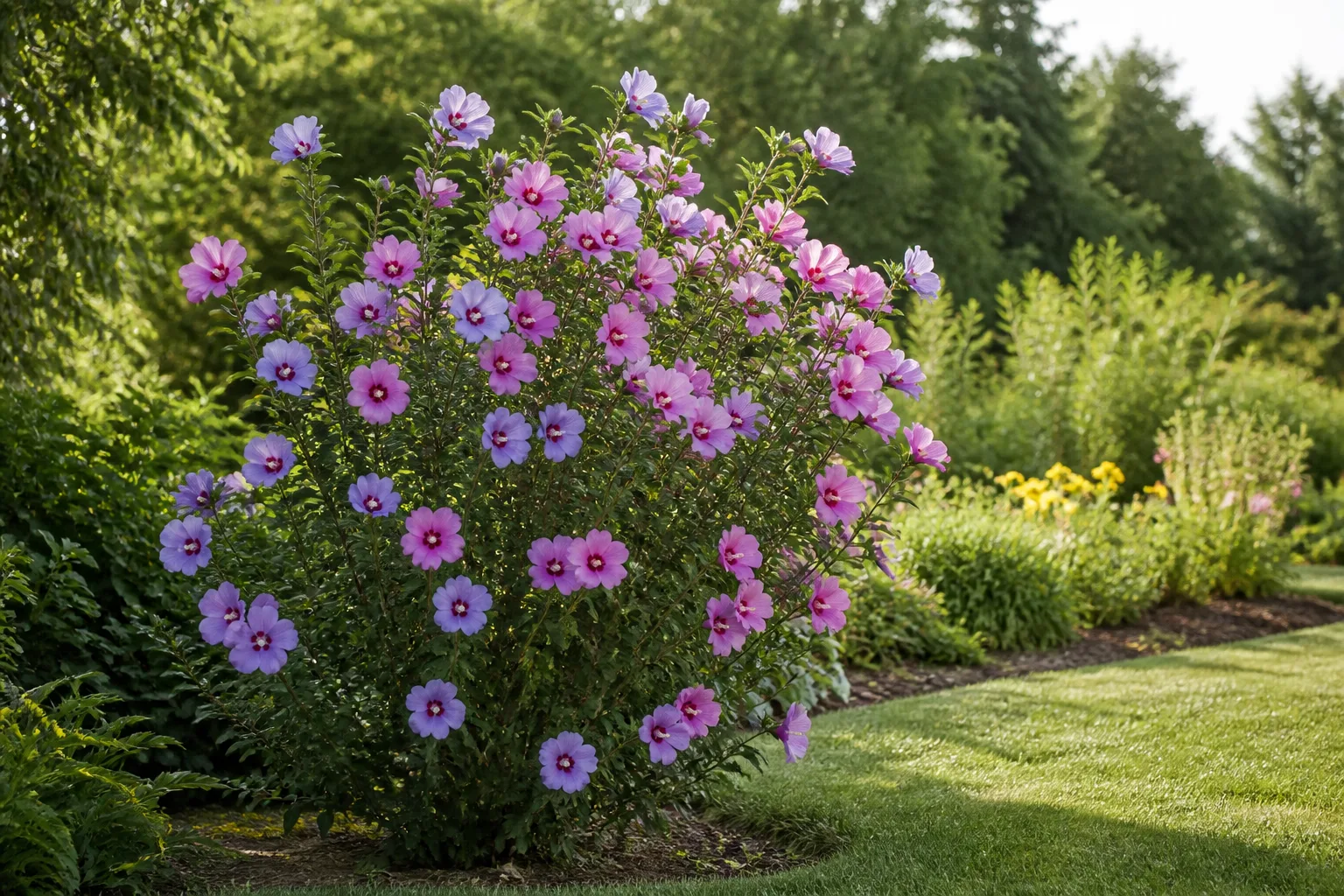
15. Rose of Sharon (Hibiscus syriacus) — Large pink, purple, white, or bicolor flowers open in midsummer, extending the show beyond spring. It tolerates heat and varied soils but needs drainage and room; full-size forms can reach 8 feet or more. Flowers form on new growth, so late-winter pruning is possible, though hard cuts may delay bloom. Buds keep opening over a long season even though each flower is short-lived. NC State Extension describes size and pruning.
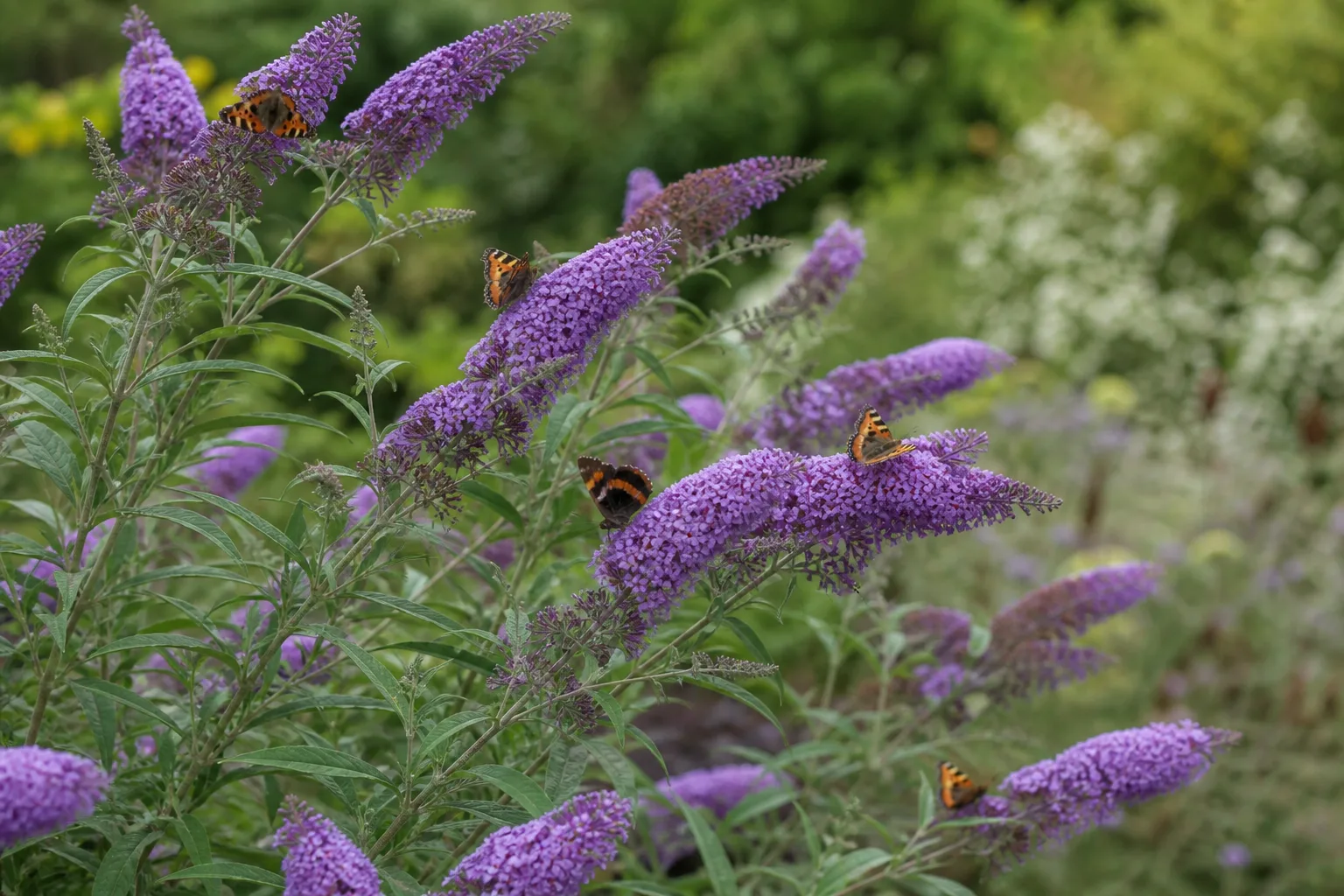
16. Butterfly bush (Buddleja davidii) — Long summer panicles can supply nectar for adult butterflies, but the leaves do not feed most native butterfly caterpillars. The species spreads by abundant seeds and is invasive or restricted in parts of North America; check local rules and favor native alternatives. Where permitted, choose a documented sterile cultivar and deadhead seed heads before they mature. It flowers on new growth and is generally pruned in late winter or early spring. NC State Extension explains the ecological limits; Oregon State Extension details western Oregon’s risk.
17. Spirea (Spiraea spp.) — The group includes different bloom seasons and pruning needs. Japanese spirea cultivars such as ‘Goldmound’ pair pink summer clusters with yellow-green leaves that warm in fall; bridal wreath spirea flowers earlier on old wood. Check the cultivar’s size and prune according to its bloom cycle. Japanese spirea naturalizes and is considered invasive in some states, including North Carolina; choose a locally appropriate native species where that is a concern. NC State Extension compares spirea types and flags regional invasiveness.
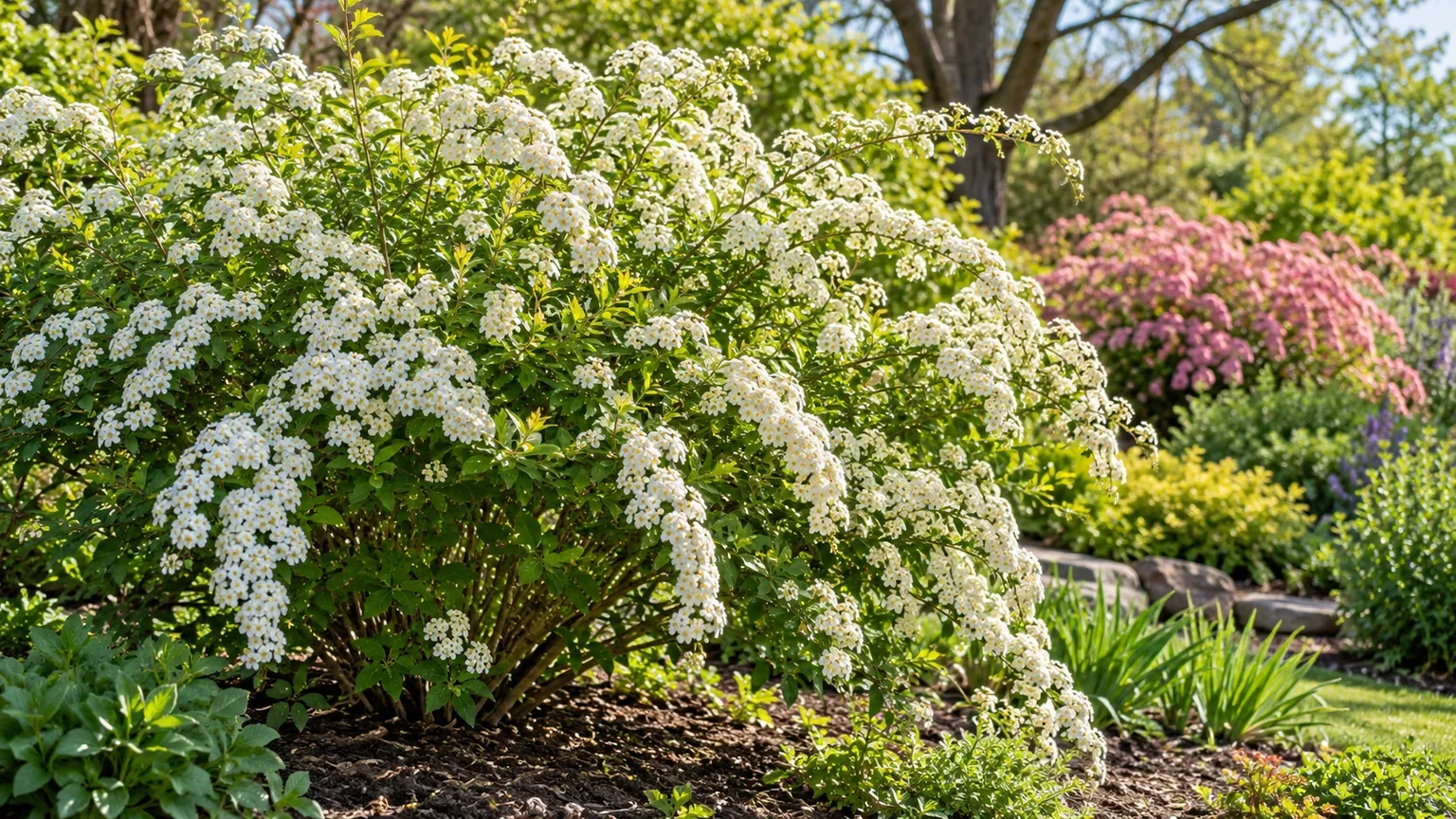
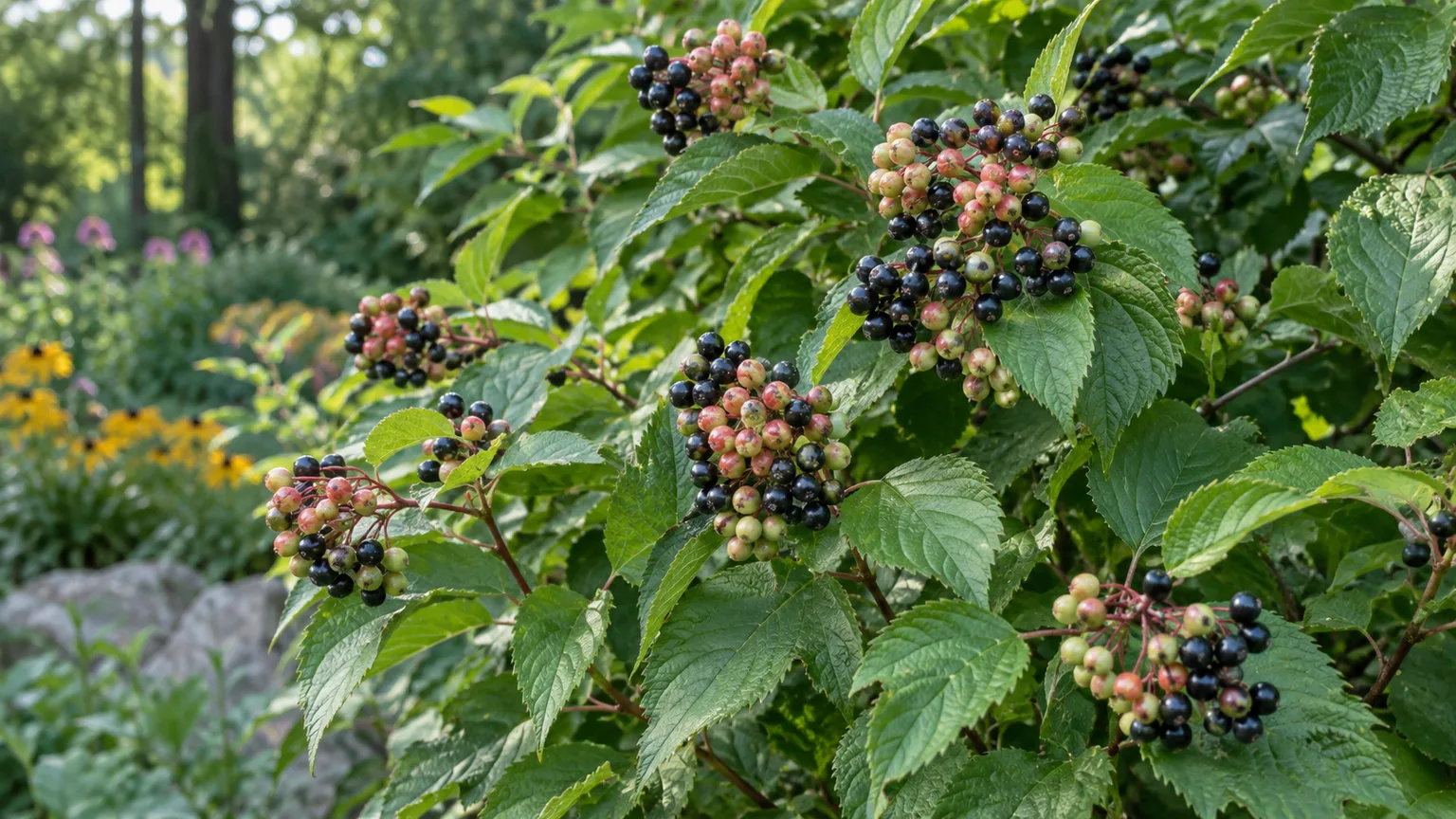
18. Arrowwood viburnum (Viburnum dentatum) — White spring flowers become blue-black fruit in late summer and fall, while leaves may turn red, purple, yellow, or orange. Good fruit set requires a genetically different compatible plant, so ask the nursery about pollination when choosing cultivars. Arrowwood can become a large shrub, useful as a screen or habitat hedge but oversized for a compact foundation bed. It tolerates sun or partial shade and varied moist soils. NC State Extension and Penn State Extension discuss its seasonal value and pollination.
Late summer, autumn, and winter: six shrubs
Some shrubs are at their best as summer wanes: fruit ripens, leaves change, or flower heads persist and dry. These plants make the handoff into winter more visible, especially when paired with evergreens and colored-stem dogwoods.
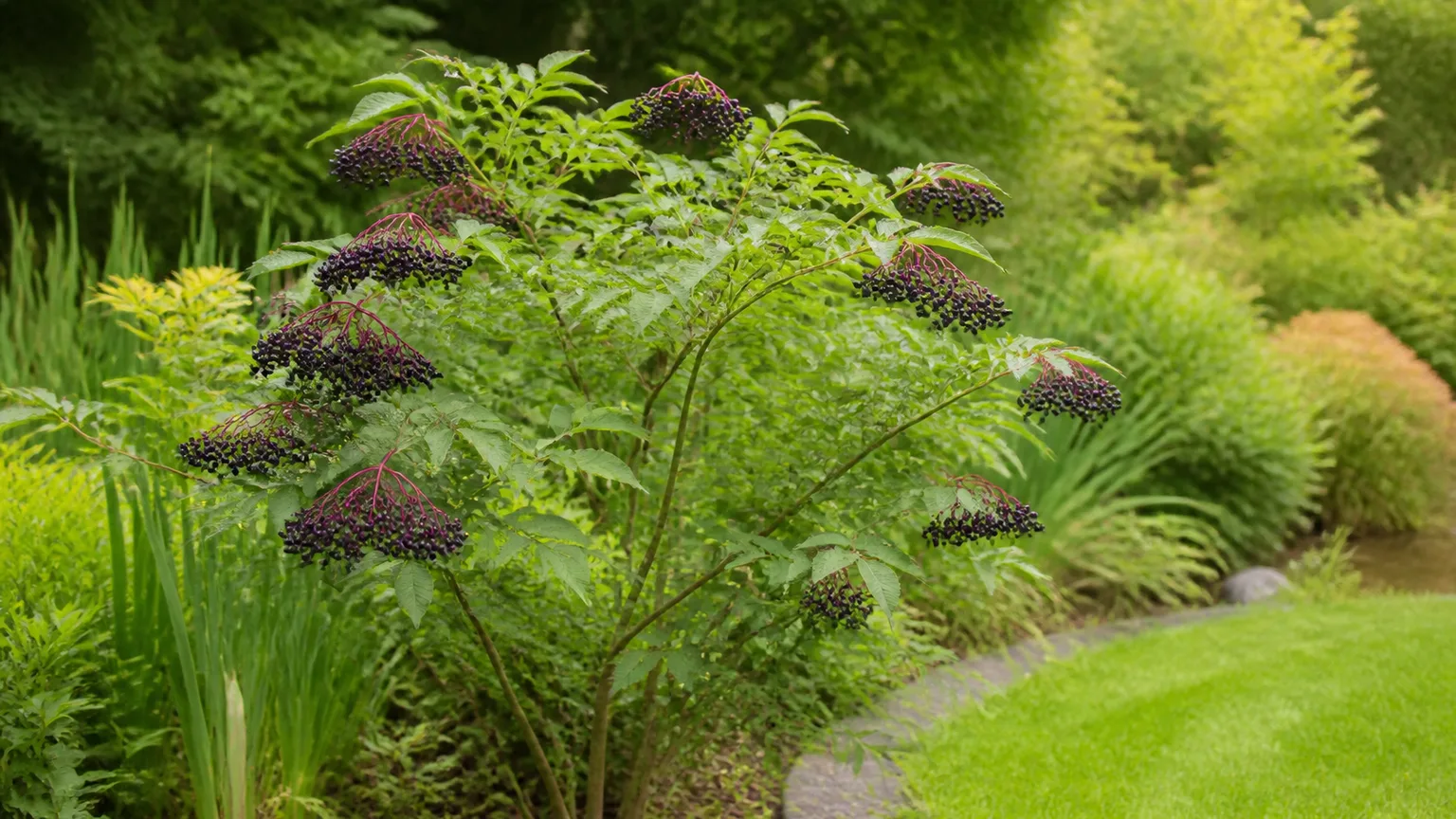
19. American elderberry (Sambucus canadensis) — Creamy summer flower clusters are followed by dark fruit that feeds birds and can be cooked for human use. Do not eat raw berries or other plant parts; identify the species correctly and cook harvested berries thoroughly. Elderberry suckers and looks informal, so place it at the back of a moist border rather than forcing it into a clipped hedge. Thin old stems selectively and leave some habitat for wildlife. NC State Extension covers fruit and growth habit.
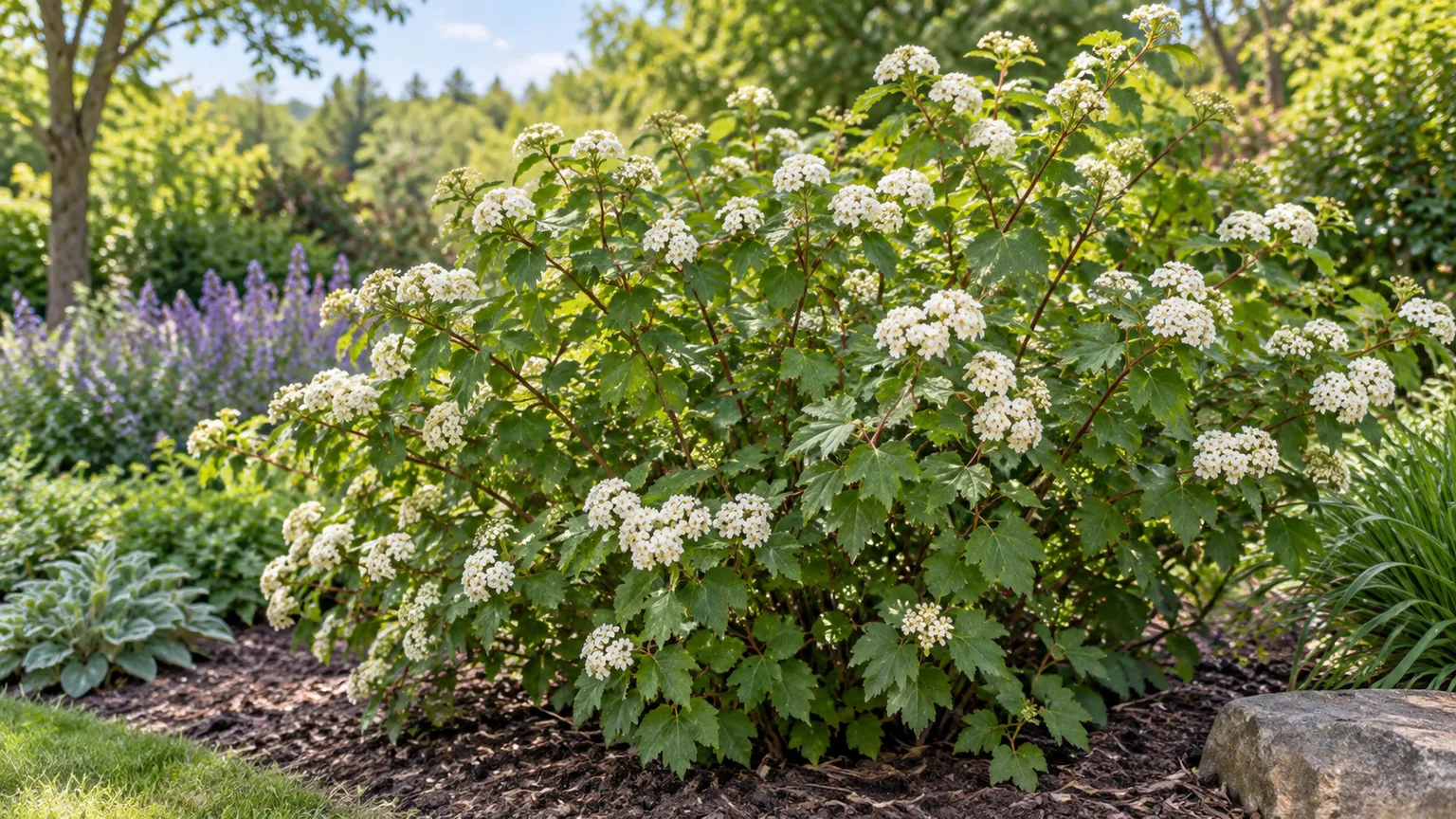
20. Ninebark (Physocarpus opulifolius) — Spring flowers, cultivar-dependent foliage in green, gold, copper, or burgundy, and peeling cinnamon bark carry interest into winter. Purple-leaved forms retain stronger color in sun. The native species can grow large, but compact cultivars are available; check the tag before choosing a foundation spot. Use it as a backdrop where peeling bark is visible, and thin congested stems rather than shearing its natural outline. NC State Extension describes cultivar foliage and bark.
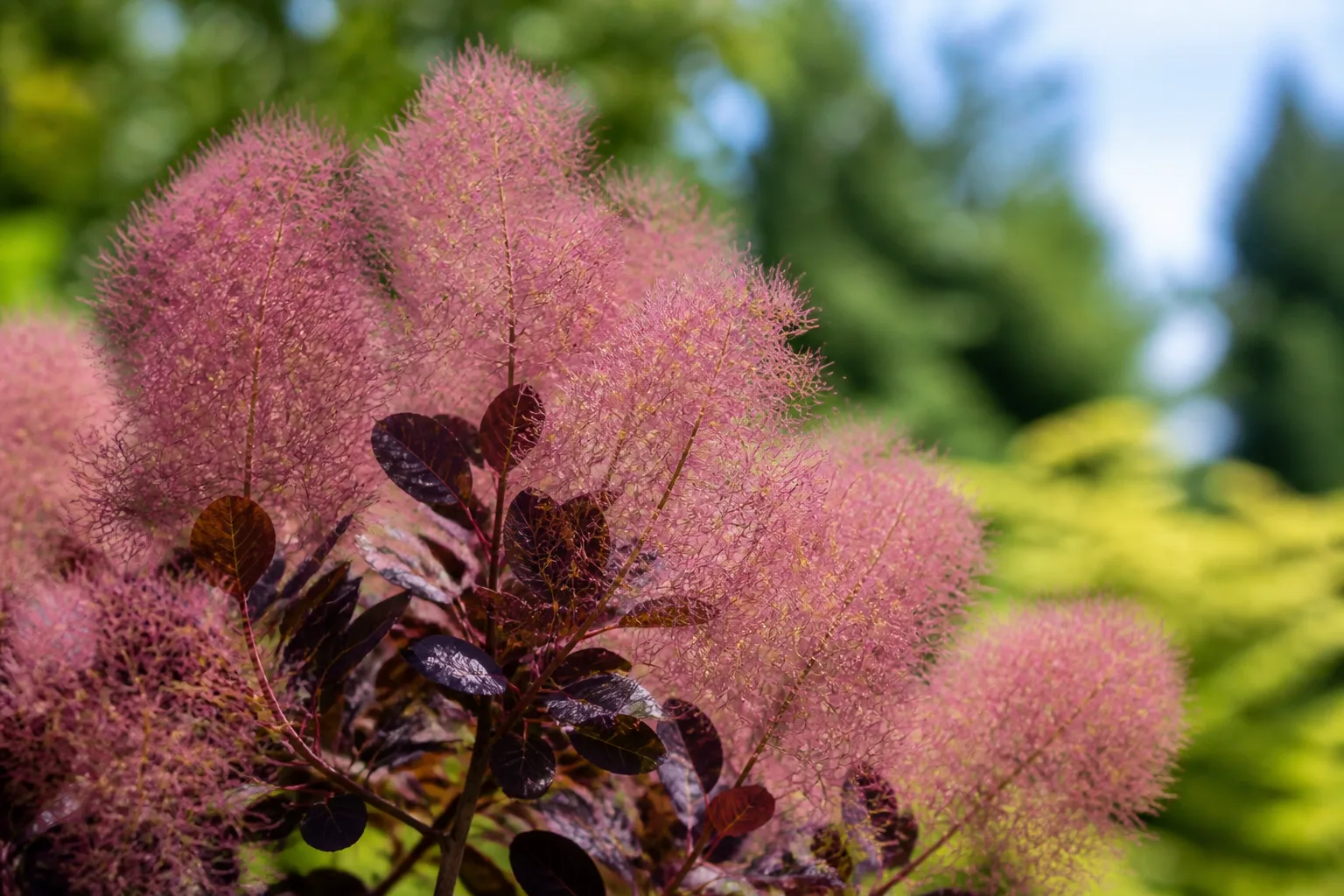
21. Smoke bush (Cotinus coggygria) — Airy flower stalks appear in summer, while purple or blue-green foliage and fiery fall color often do the longer visual work. Full sun helps purple cultivars hold their leaf color; shade can turn them greener. Check mature size before planting near a walk or window. Hard late-winter pruning produces fresh leaves but sacrifices that year’s smoky plumes; keep some older stems if you want both effects. NC State Extension explains the pruning tradeoff.
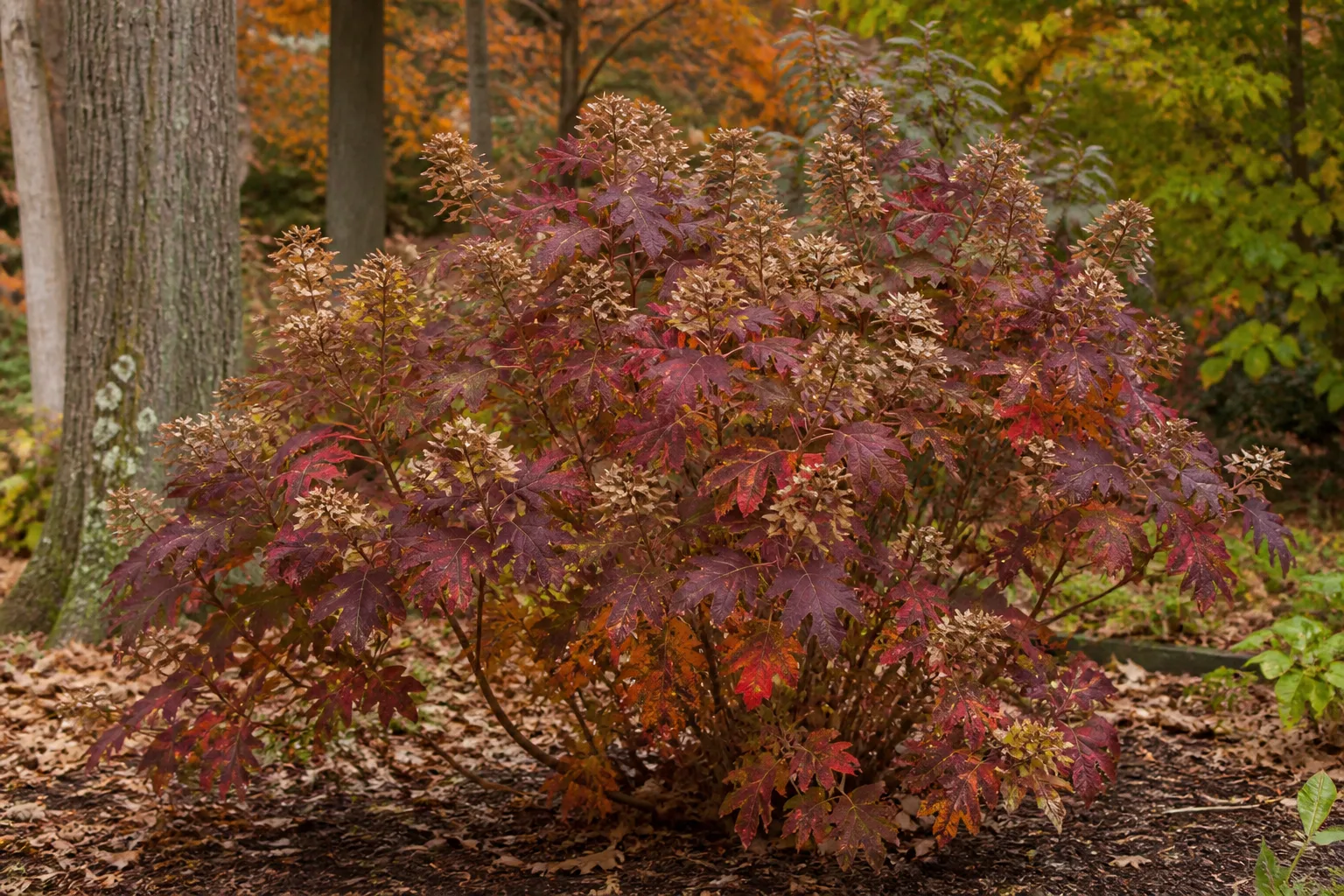
22. Oakleaf hydrangea (Hydrangea quercifolia) — White summer panicles age toward pink and tan, oak-shaped leaves turn wine-red or orange, and mature stems reveal cinnamon bark in winter. This southeastern native can reach 6 to 8 feet wide; compact cultivars suit smaller beds. Plant in rich, well-drained soil in morning sun or partial shade. It blooms on old wood, so prune only after flowering if needed. NC State Extension confirms its seasonal traits and pruning window.
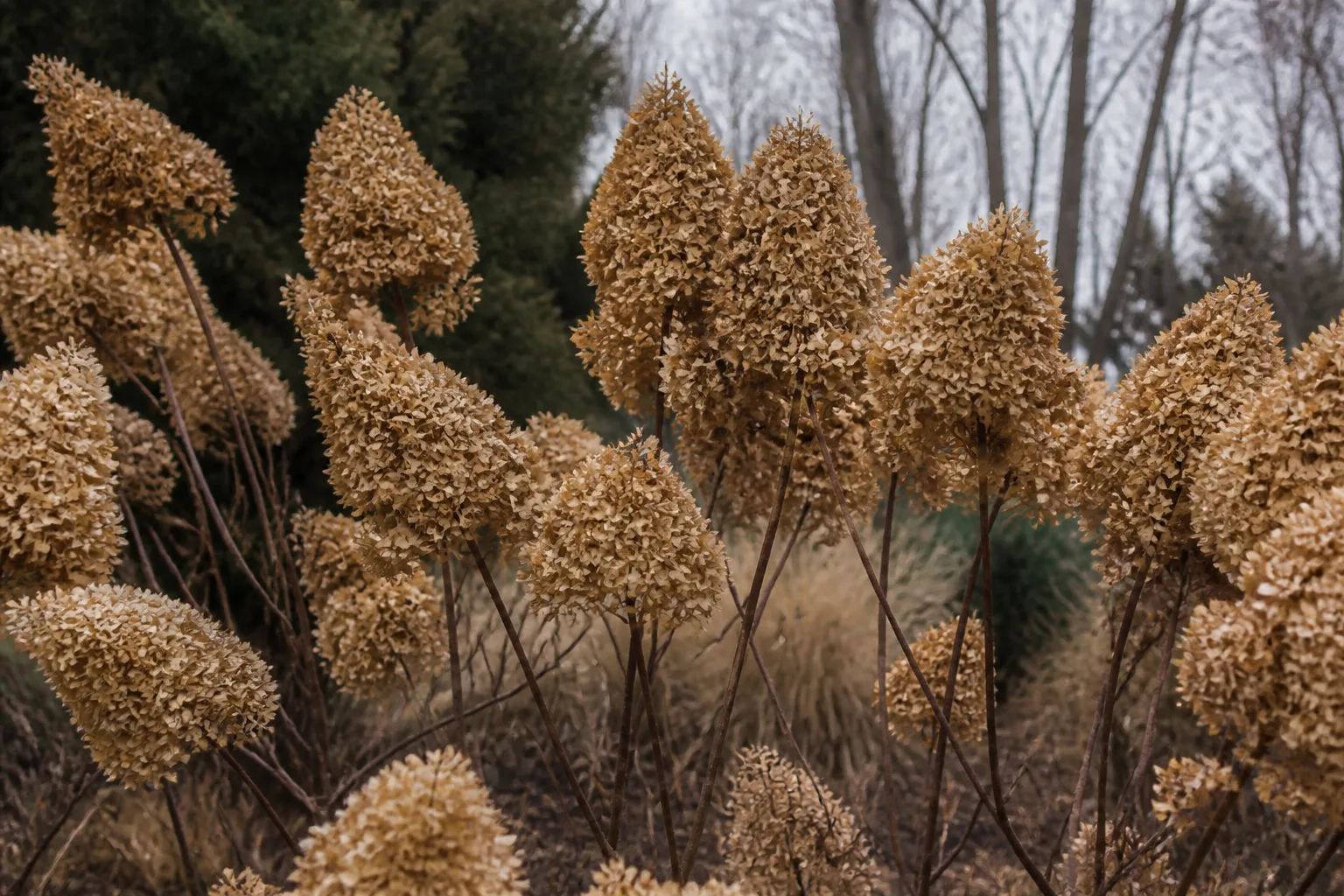
23. ‘Limelight’ panicle hydrangea (Hydrangea paniculata ‘Limelight’) — Large flower cones shift from pale green to cream and often blush as they age, stretching summer color into fall. Unlike bigleaf hydrangea, it blooms on new wood, so late-winter pruning will not remove last year’s buds; severe cuts can still create weak, oversized heads. Provide sun and reliable moisture in well-drained soil. Choose a compact cultivar if the full-size plant will crowd the bed. Penn State Extension identifies ‘Limelight’ as a new-wood bloomer.
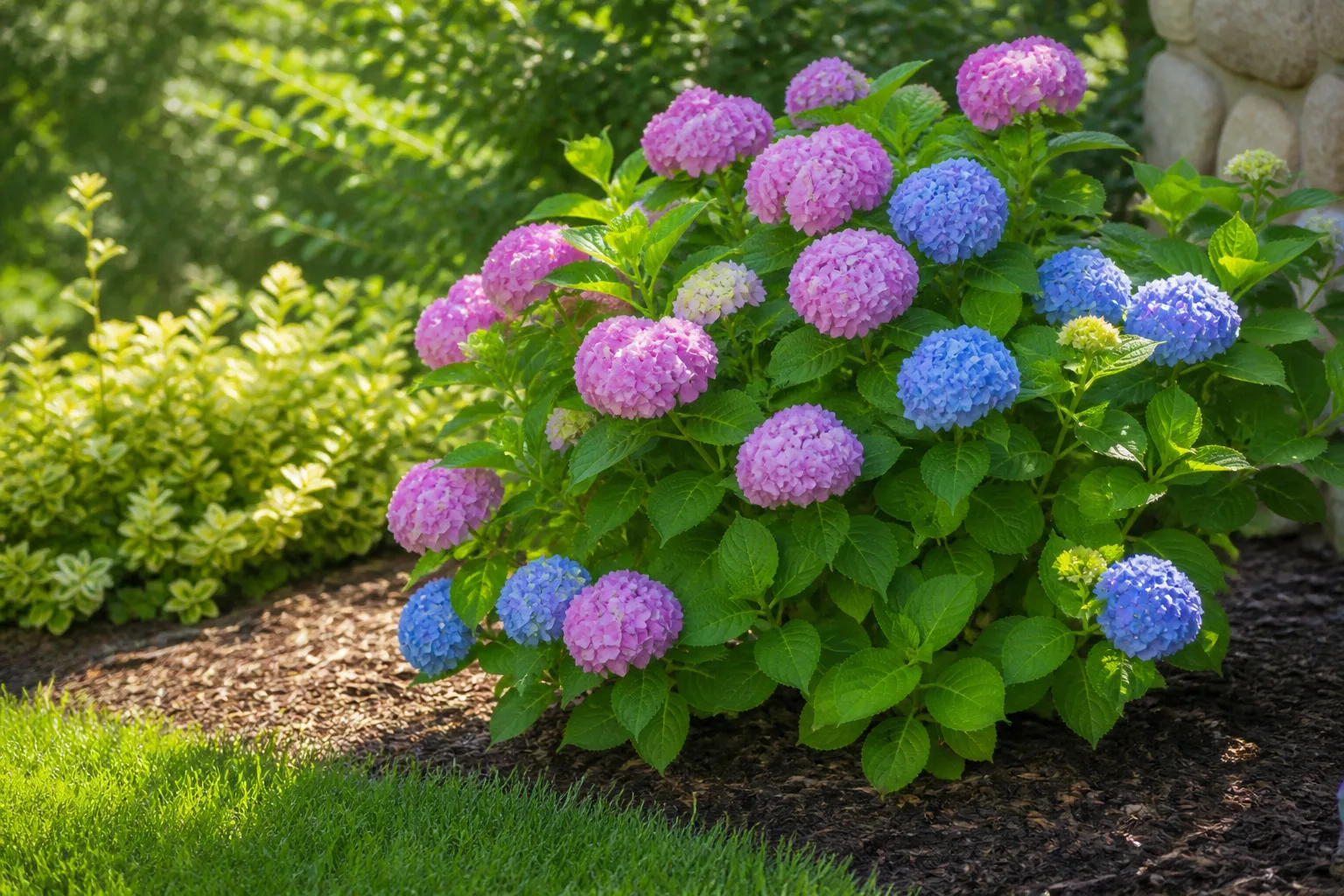
24. Bigleaf hydrangea (Hydrangea macrophylla) — Pink, blue, purple, or white mophead and lacecap flowers bring summer color, and aging heads can remain attractive into fall. For some cultivars, soil acidity changes aluminum availability and therefore flower color; white cultivars do not turn blue. Most set buds on old wood, so winter cold or pruning before bloom can remove next year’s flowers. In colder zones, choose a hardy or reblooming cultivar and prune after flowering only when needed. Penn State Extension explains color and bud loss.
Build a sequence that does not depend on nonstop bloom
Fill the winter gap first
Begin with winter, when color is scarce. Choose an evergreen anchor—holly, camellia, rhododendron, or golden false cypress—then add a feature the site supports: witch-hazel flowers, berries, red stems, or peeling bark. Two or three well-placed features can carry a small garden.
Then add spring and summer shrubs suited to the same light and soil. A sunny border could combine lilac, spirea, and a summer bloomer; a moist, partly shaded bed could use fothergilla and summersweet. These are starting points: verify hardiness, mature width, and cultivar behavior locally.
Overlap flowers with foliage, fruit, and stem color
Aim for overlap, not a relay of bare gaps. Pair spring flowers with autumn foliage, place berries where they remain visible after leaf fall, and set red-twig dogwood against evergreen foliage. Vary plant height so flowers, fruit, and leaves do not hide one another.
Sketch four columns—winter, spring, summer, autumn—and mark each candidate’s strongest feature. Circle only plants that fit the bed’s light and moisture. Fill an empty season rather than buying more spring bloom because it is flowering at the nursery.
Care choices that protect next season’s display
Establish roots with deep, measured watering and mulch
For the first growing seasons, water the root ball and surrounding soil deeply when the upper few inches dry; do not rely on a quick sprinkle that wets only the surface. The exact interval depends on rainfall, soil texture, heat, and container size, so check the soil instead of following a fixed calendar. A 2- to 3-inch layer of organic mulch helps moderate temperature and conserve moisture, but keep it a few inches away from stems and trunks.
Do not fertilize a shrub simply because it grew slowly the first season. First check whether it is planted too deeply, receiving the right light, or sitting in saturated or compacted soil; excess nitrogen can produce leafy growth at the expense of flowers. For acid-loving plants, soil-test before trying to lower pH, and remember that improving drainage is not the same as adding a small amount of amendment into an entire clay bed.
Prune only after identifying flowering wood
The safest rule is to identify the shrub and how it blooms before making a major cut. Many spring-flowering shrubs—forsythia, lilac, azalea, weigela, camellia, oakleaf hydrangea, and most bigleaf hydrangeas—carry flowers on older wood or buds formed before winter. Prune them just after flowering if needed, not in autumn or late winter when you may remove those buds. Penn State Extension’s pruning guide explains the old-wood/new-wood distinction.
Summer bloomers that flower on current-season growth, including butterfly bush, panicle hydrangea, summersweet, and some spirea, can generally be pruned before spring growth begins. Even then, pruning is not a requirement to make a shrub bloom: use clean tools, remove dead or crossing wood first, and avoid cutting a plant into a shape that fights its natural form. If the label is gone and you cannot identify a shrub, wait until you can confirm its bloom cycle before hard pruning.
Check regional invasiveness and plant safety
A shrub’s benefits depend on where it is planted. Rugosa rose is restricted or invasive in some coastal regions, butterfly bush can escape into natural areas, and Japanese spirea has been listed as invasive in some states. Check your state or provincial invasive-plant council and local rules before buying; a cultivar advertised as sterile is not a reason to ignore regional status or proper disposal of cut seed heads.
Berry color is not a safety signal. Holly, rhododendrons, and hydrangeas have toxic plant parts, and elderberry must be correctly identified and cooked before eating. Wear gloves around thorny roses, keep plant parts away from curious children and pets, and use local poison-control or veterinary guidance if ingestion occurs. Use this list to shortlist plants, not to assume every shrub belongs in every garden.
Conclusion
A colorful shrub garden assigns plants different jobs: evergreens hold the winter frame, flowers create spring and summer peaks, fruit and foliage stretch color into autumn, and bark or red stems remain after leaf fall. Match each plant to the conditions you can provide.
You do not need all 24. Choose a small mix that fits, leave room for mature growth, and prune by flowering wood. That is more dependable than choosing shrubs only for the flowers on nursery tags.



