29 Low-Maintenance Flowering Shrubs for Easier Care
Choose a low-maintenance flowering shrub for your light, soil, and climate. Learn bloom timing, first-year watering, pruning, mature size, and caveats.
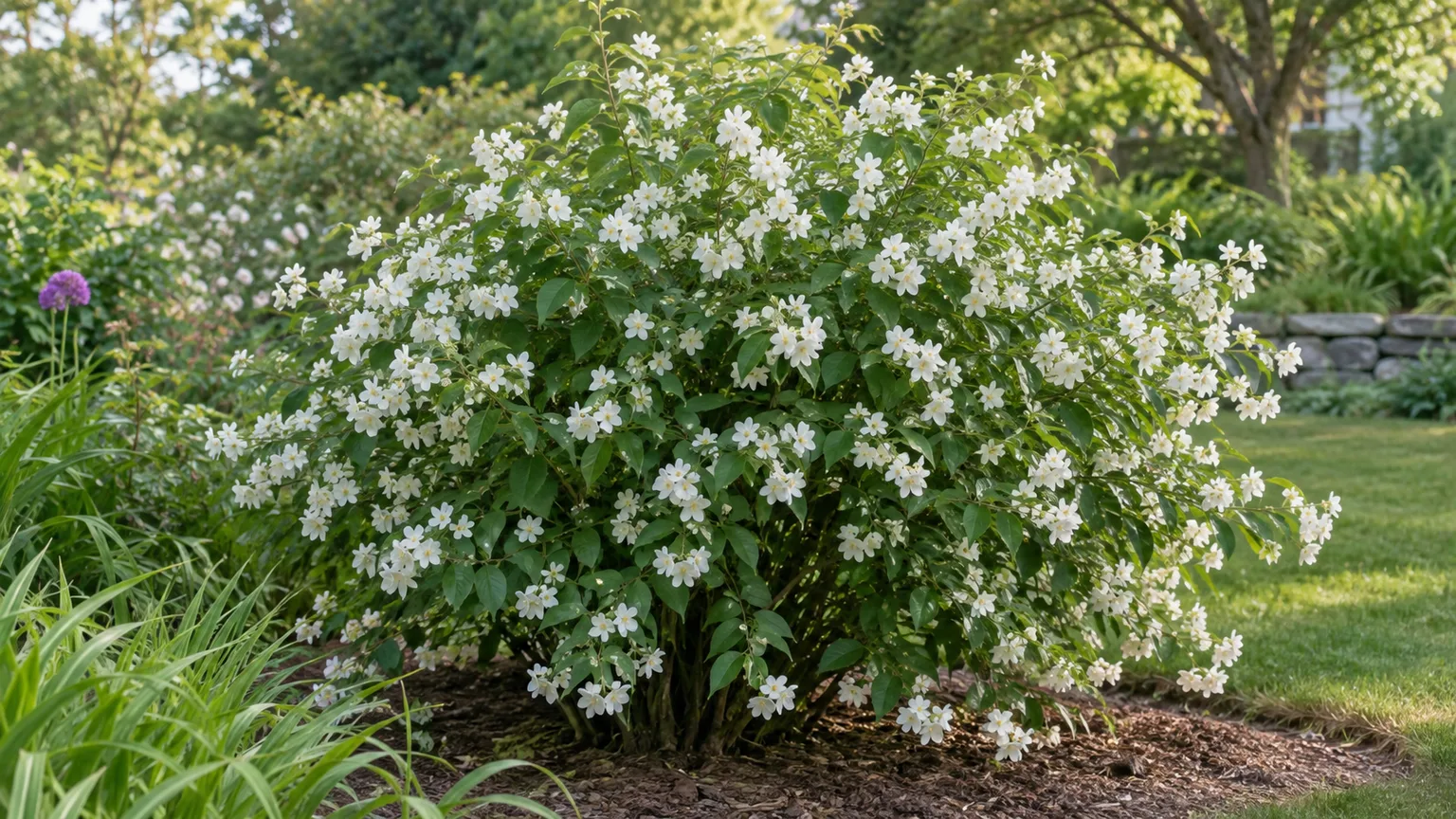
“Low maintenance” is not a plant personality. It is a match between a shrub and the place you give it. A sun-loving lavender in gravelly soil may need little attention after it roots in, while the same plant in a shaded, waterlogged bed can become a yearly rescue project. A hydrangea may be easy in moist woodland soil and thirsty beside a hot driveway.
This list includes 29 shrubs and woody subshrubs with flowers, fragrance, berries, or useful structure. Some are genuinely forgiving; others are easy only in the right climate or if you accept a trade-off such as pruning after bloom, seasonal watering, or checking whether they spread locally. Use the site-fit notes before choosing by flower color.
What “Low Maintenance” Actually Means
A low-maintenance shrub usually needs less routine shaping, feeding, spraying, or watering once it is established. It still needs a suitable planting site, room to reach its natural size, and regular moisture while its roots grow into the surrounding soil. The Royal Horticultural Society’s drought-resistant gardening guide advises assessing shade, soil, and garden microclimates before choosing drought-tolerant plants; those same checks prevent many “easy shrub” disappointments.
Expect trade-offs. A plant may bloom for months but need deadheading; another may be nearly self-sufficient but bloom for only two weeks. A clipped hedge is not low-maintenance just because boxwood is hardy: frequent shearing is a design choice. The least-work shrub is often the one you can leave in its natural shape without forcing it into a smaller space.
Match the Shrub to Your Yard Before You Choose
Sun, Heat, and Wind
Check the actual planting spot during the growing season, not just the yard as a whole. Full sun can mean six or more hours of direct light, but reflected heat from paving, a south-facing wall, or a driveway can stress a plant more than an open border. Lilacs, potentilla, lavender, and many spireas flower best with generous sun; azaleas and rhododendrons generally prefer protection from hot afternoon sun.
Wind and winter exposure matter too. An evergreen shrub can look tidy in a nursery pot yet scorch in a wind tunnel, while a warm-climate shrub may survive summer heat but fail in a hard winter. Use a plant’s botanical name and named cultivar when checking local hardiness guidance; broad labels such as “hydrangea” or “lantana” cover plants with different habits and tolerances.
Drainage and Soil Moisture
“Well-drained” does not mean bone-dry, and “drought-tolerant” does not mean drought-proof. Caper bush and lavender need fast drainage; buttonbush and summersweet are better choices for consistently moist ground. A shrub that likes moisture beside a pond can be a poor choice for a dry slope, just as a Mediterranean shrub can decline in heavy clay that stays wet through winter.
Notice where rain collects and how quickly a bed dries. The RHS guide recommends considering soil type and local microclimates, then improving soil where needed and mulching after planting. Avoid amending only the planting hole into a rich, loose “pot” surrounded by compacted clay; water can collect there instead of moving through the wider bed.
Mature Size and Pruning
Read the mature width as carefully as the height. A shrub sold at 18 inches may eventually spread six feet or more, and constant pruning to hold it in a too-small spot erases the low-care advantage. Choose a compact cultivar for a tight foundation bed or give a naturally arching plant enough space to grow without yearly reshaping.
Also ask when it flowers. Spring bloomers often carry flower buds on older wood, so a winter haircut can remove next spring’s display. Summer bloomers that flower on new growth are often pruned during dormancy. The exact rule varies by species and cultivar, so confirm the plant before making a hard cut.
29 Low-Maintenance Flowering Shrubs to Consider
Treat the short profiles as a shortlist, not a universal ranking. A “best” shrub for dry sun may be a frustrating choice for shade, and several entries are better for foliage or berries than for showy flowers.
For Sunny, Well-Drained Sites
1. Caper bush (Capparis spinosa) brings fragrant flowers and edible unopened buds to a hot, dry garden. It suits a sunny site with gritty, sharply drained soil in a mild-winter climate; cold, wet ground is the wrong combination, and its sprawling, sometimes prickly growth needs space.
2. Shrubby cinquefoil (Dasiphora fruticosa, often sold as potentilla) is a compact choice for cooler regions, with flowers continuing over a long summer season once established. It tolerates leaner soil and dry spells better than moisture-loving shrubs, but it still needs drainage and a few seasons to settle before you leave it to rainfall.
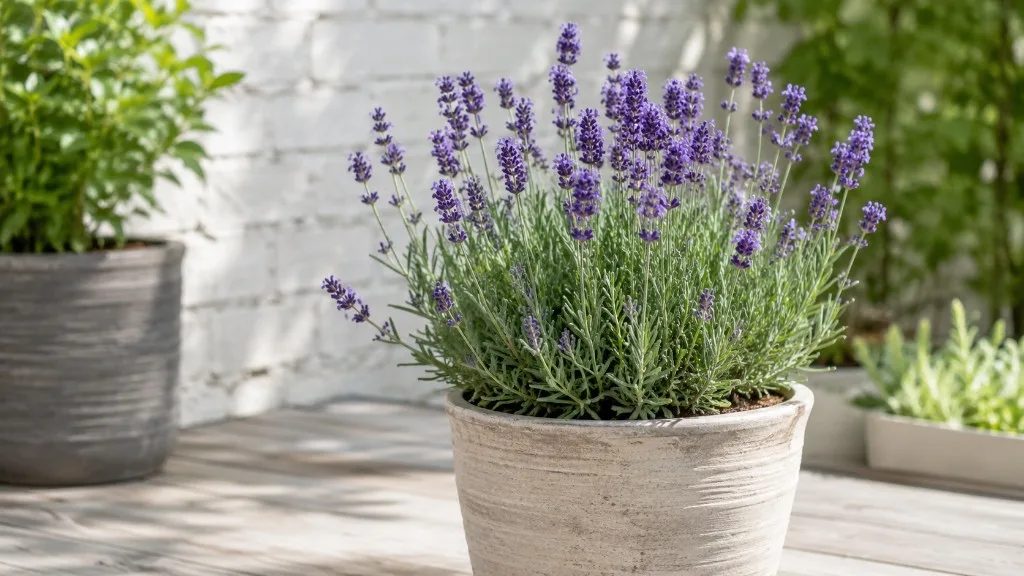
3. English lavender (Lavandula angustifolia) is a woody subshrub rather than a conventional leafy hedge. Give it full sun, airflow, and gritty soil; trim the green growth lightly after flowering, but do not cut deep into bare old stems. Skip it in wet clay or if you want a shrub that tolerates shade.
4. Bluebeard (Caryopteris) earns its place with late-summer blue flowers when many spring shrubs are finished. It prefers sun and free-draining soil, and it is usually cut back in late winter because flowers form on new growth. In colder gardens, choose a reliably hardy cultivar and expect the top growth to die back.
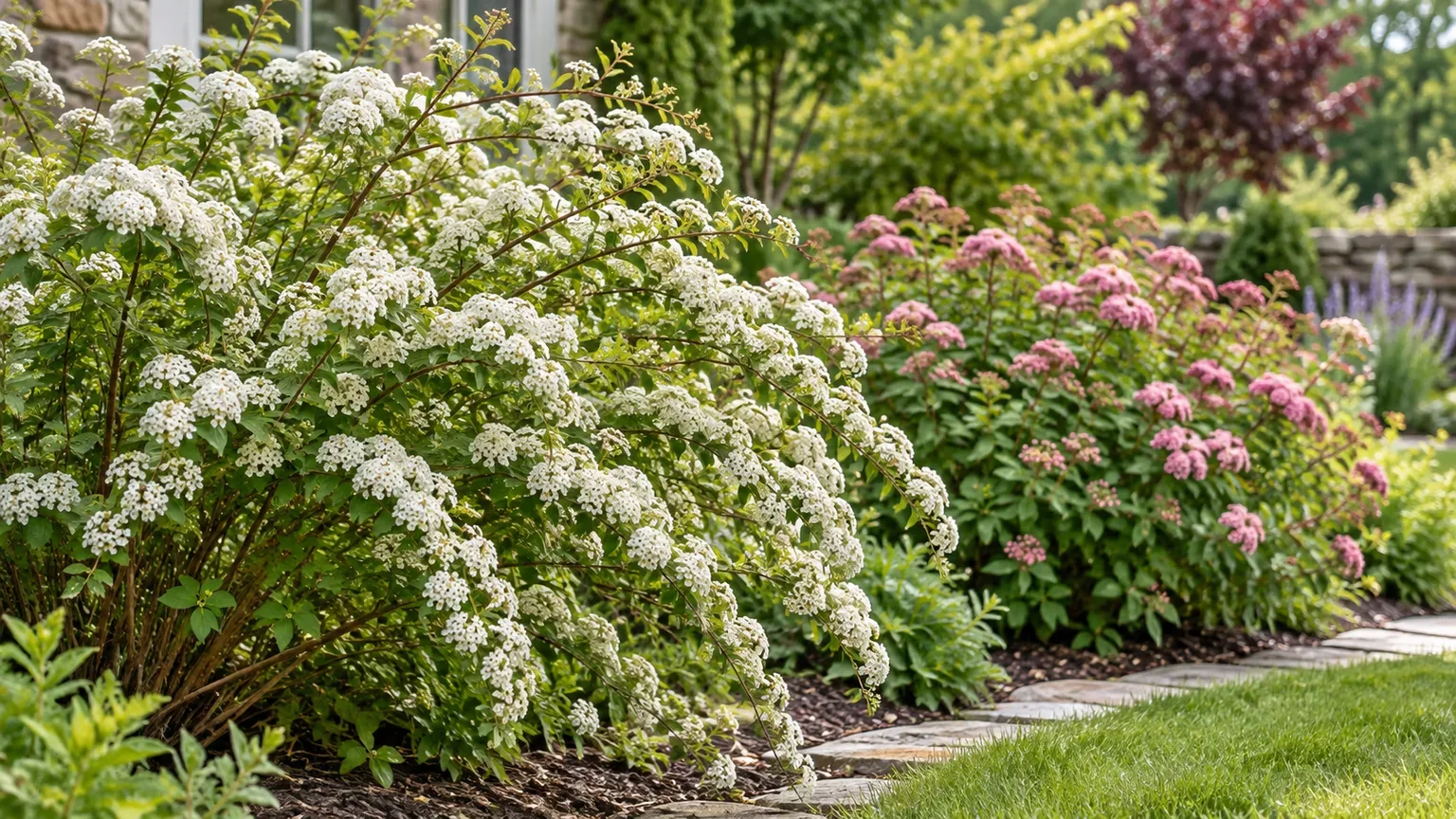
5. Spirea (Spiraea) is a broad group, so choose by bloom season and final size rather than the genus name alone. Compact summer-flowering types suit sunny borders and can be pruned in late winter; spring-flowering types should be trimmed after flowering if they need shaping. Most look better with selective cuts than with repeated shearing.
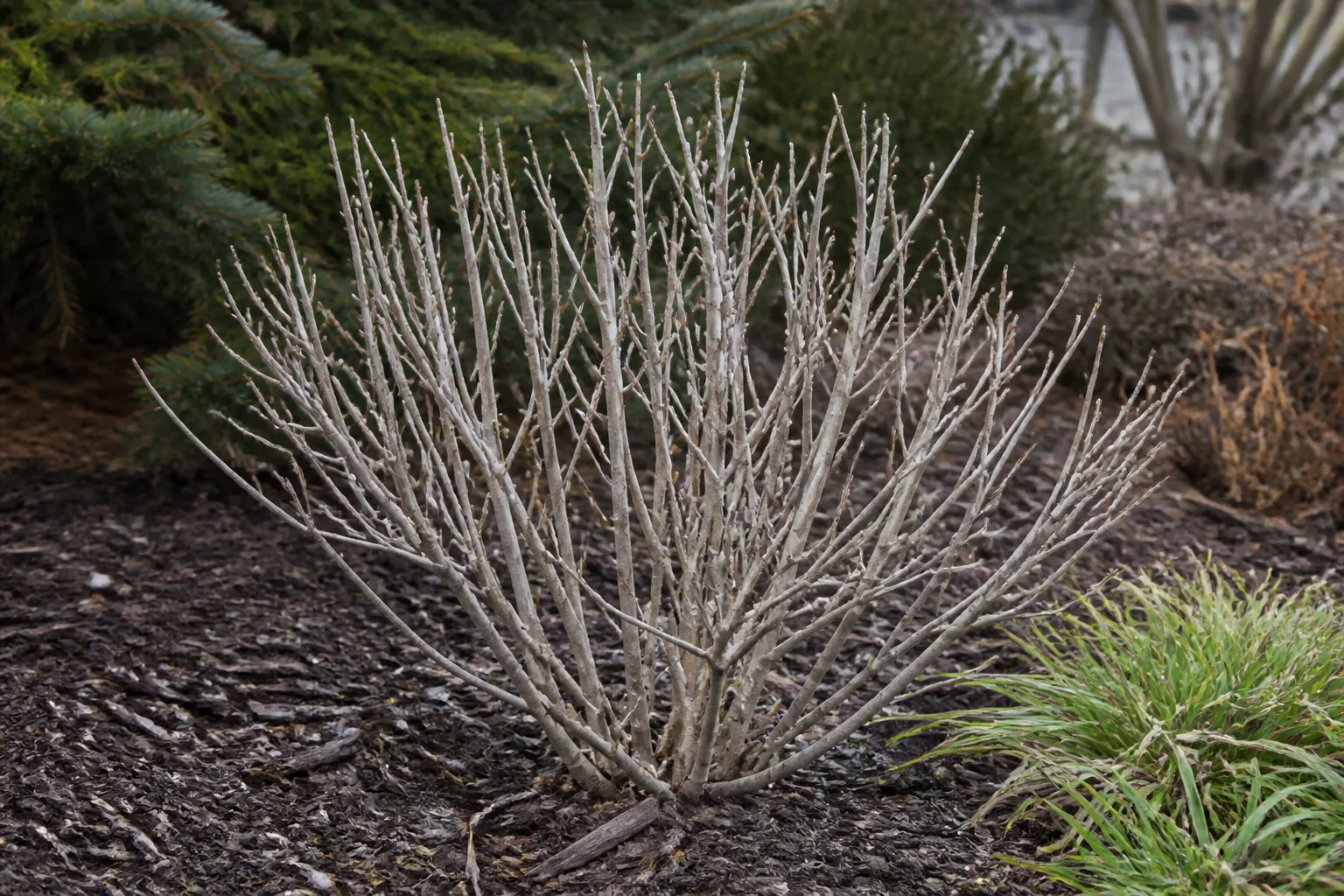
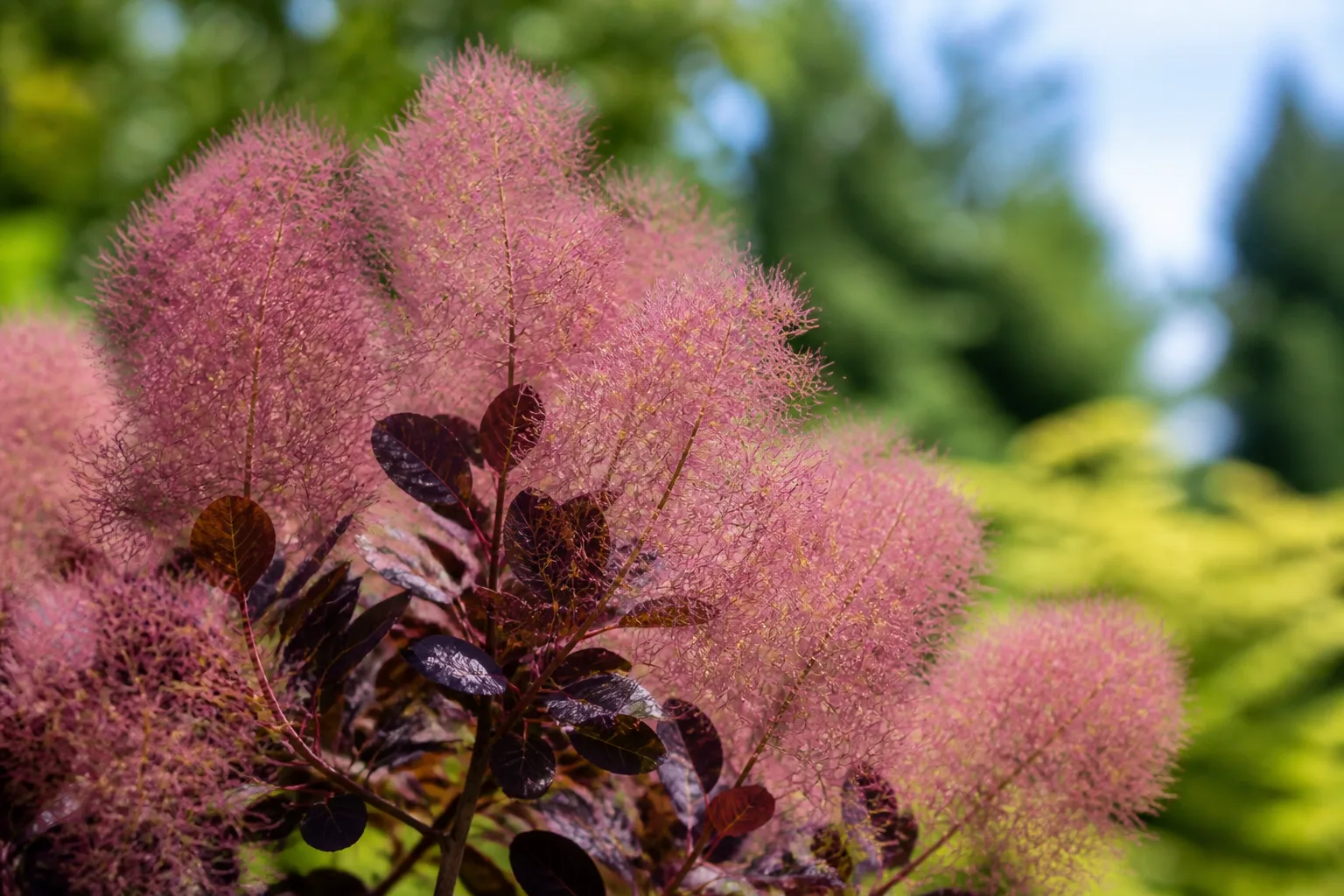
6. Smoke bush (Cotinus coggygria) offers dramatic foliage and hazy flower clusters, but its mature size can be substantial. It handles sunny, relatively dry sites after establishment and needs little shaping if you allow its natural form; hard annual pruning can emphasize large leaves while sacrificing some of the smoky plumes.
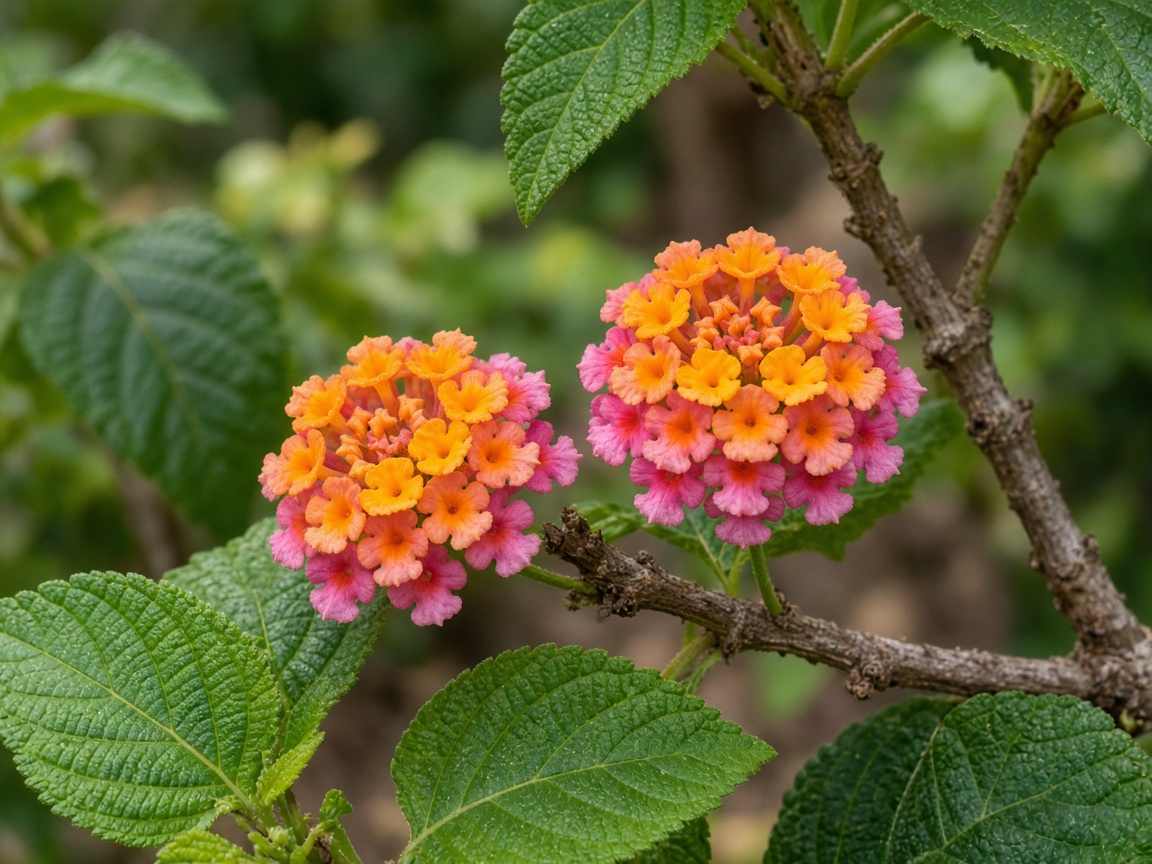
7. Lantana (Lantana spp.) is a heat-loving choice for long color in warm regions, often treated as an annual where winters are cold. Give it sun and drainage; check local guidance before planting because lantana can behave differently across climates, and do not assume that a plant sold as a compact cultivar will stay small without trimming.
8. Bush daisy (Euryops spp.) can flower for a long stretch in mild, sunny gardens, with yellow blooms above evergreen or semi-evergreen foliage. It needs drainage and is not a dependable choice where hard freezes are common. Treat it as a warm-climate shrub, not a universal perennial that will return everywhere.
For Spring Flowers and a Longer Season
9. ‘Miss Kim’ lilac (Syringa pubescens subsp. patula ‘Miss Kim’) stays more compact than many common lilacs and produces fragrant spring panicles. It flowers best in sun and benefits from airflow; prune only after bloom if it needs shaping, since a late-winter cut can remove buds already set on older stems, as Savvy Gardening’s lilac and weigela profiles also explain.
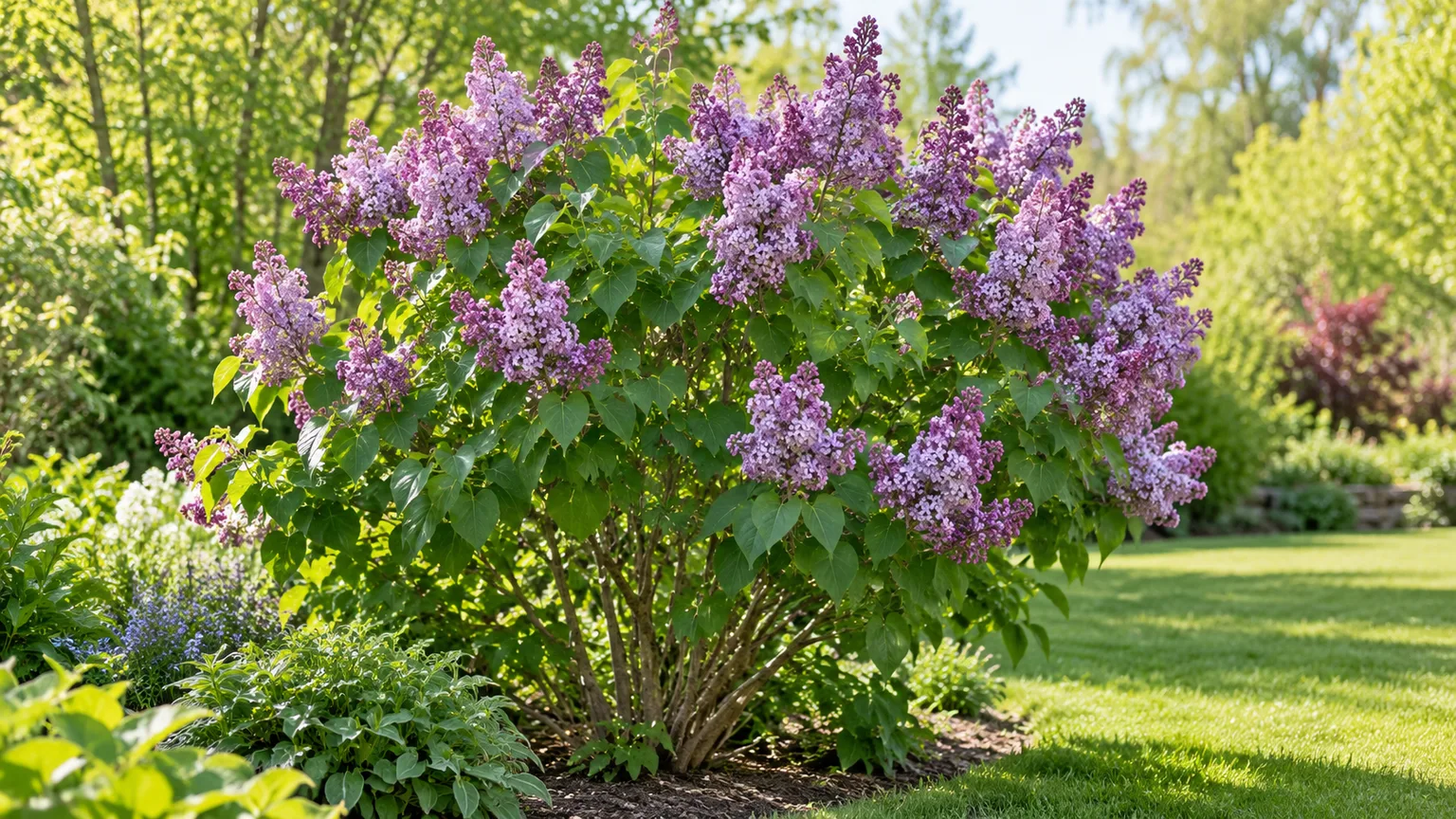
10. Meyer lilac (Syringa meyeri) is another compact, fragrant lilac, often suited to smaller yards. Its rounded habit reduces the urge to shear, and it can tolerate some dry weather once established. It still needs sun for strong flowering, and any corrective pruning belongs right after its spring bloom.
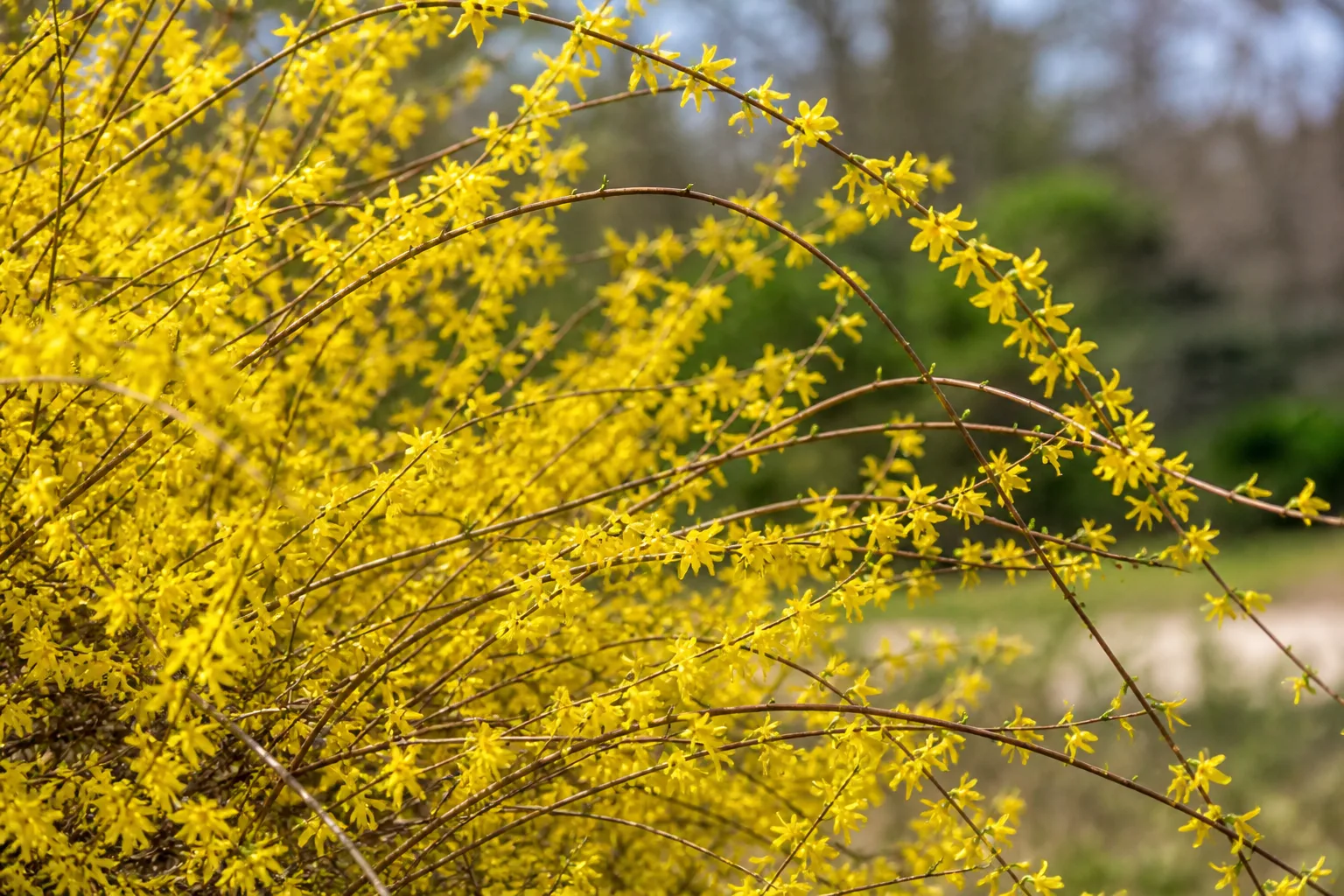
11. Forsythia (Forsythia spp.) is one of the easiest shrubs for a bright early-spring display, especially when allowed to arch naturally. It blooms on older wood, so prune after the yellow flowers fade rather than cutting it back in fall or winter. Its mature spread can surprise gardeners who plant it beneath low windows or beside a narrow walk.
12. Flowering quince (Chaenomeles speciosa) offers early blossoms and a rugged, thorny structure that can work as a barrier. It tolerates a range of soils once established, but suckers can spread from the base and thorns make cleanup less pleasant. Choose it for an open edge, not where children or pedestrians will brush past it.
13. Weigela (Weigela florida and hybrids) produces tubular spring flowers that attract hummingbirds and often has a naturally arching shape. Most need little pruning if given enough room; if you must thin or shape it, wait until the first bloom is over. Cultivars vary widely in height, foliage color, and repeat flowering, so check the label rather than relying on a species-wide size.
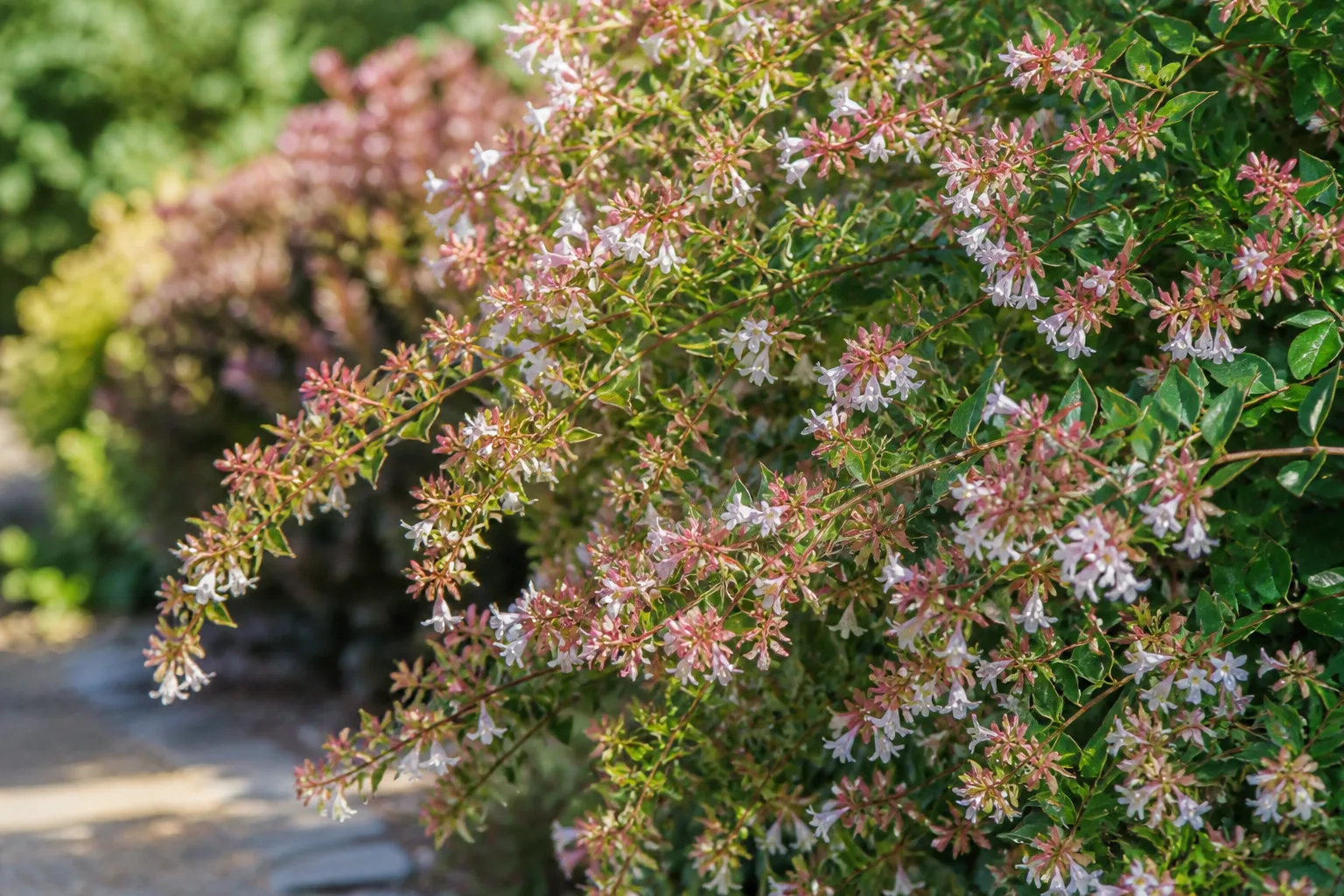
14. Abelia (Abelia and hybrids) brings glossy foliage and a long run of small, often fragrant flowers, with many cultivars attracting pollinators. It is forgiving in sun or part shade and usually needs only light cleanup. For the least work, select a compact variety that fits the site instead of cutting a large form back into a ball each year.
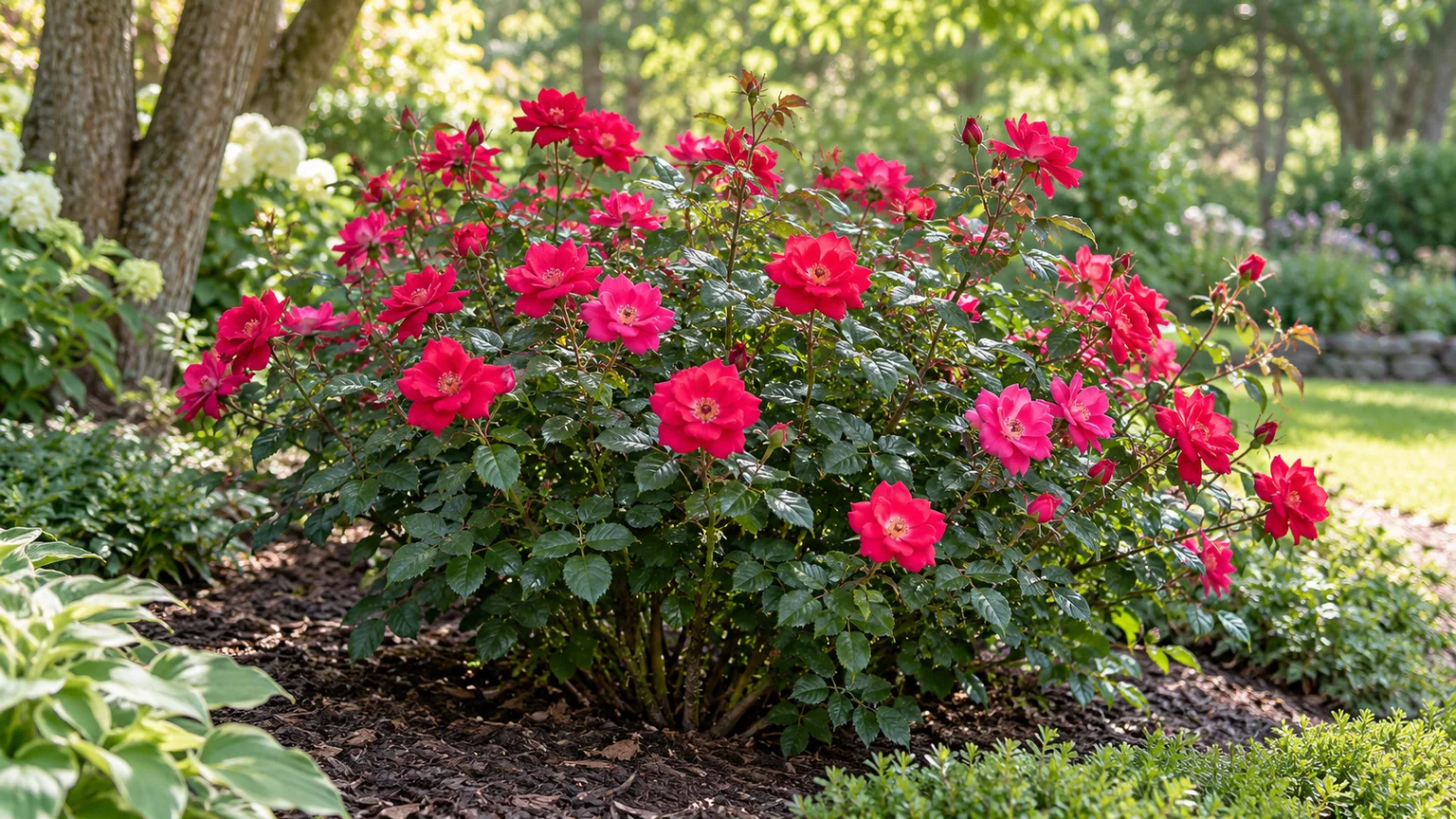
15. Knock Out roses (landscape rose hybrids) are repeat bloomers bred for easier disease management than many traditional roses, not immunity from every pest or disease. Plant them in sun with airflow and water deeply while they establish. A yearly late-winter cleanup is often enough for informal beds, but deadheading and periodic shaping add work if you want a continuously polished look.
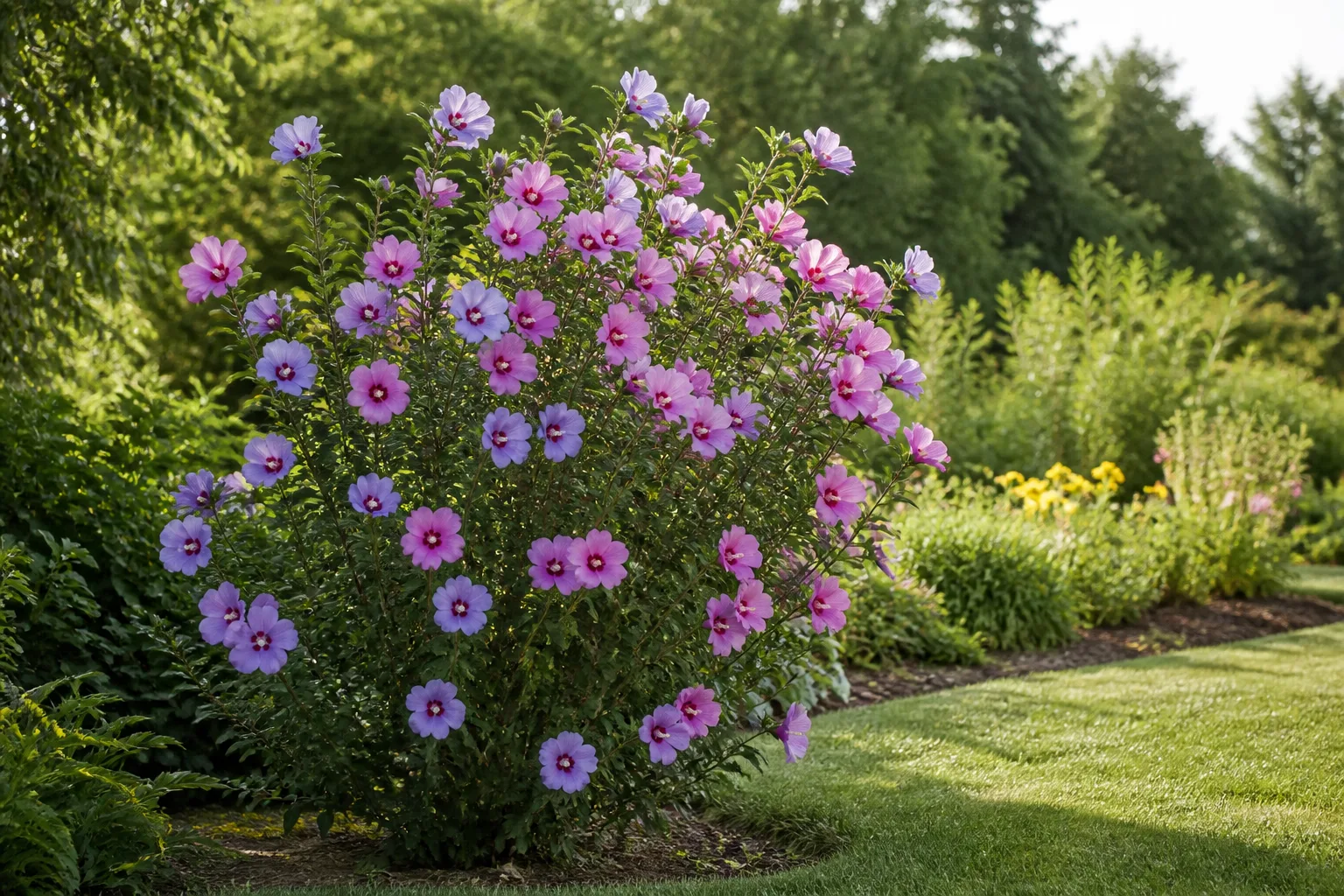
16. Rose of Sharon (Hibiscus syriacus) fills a late-summer gap with large flowers when many spring shrubs are done. It handles heat better after rooting in and can grow into a tall screen, but it may self-seed and can become a recurring cleanup job. Choose a compact or low-seed cultivar where available, and make sure the mature height will not block windows or paths.
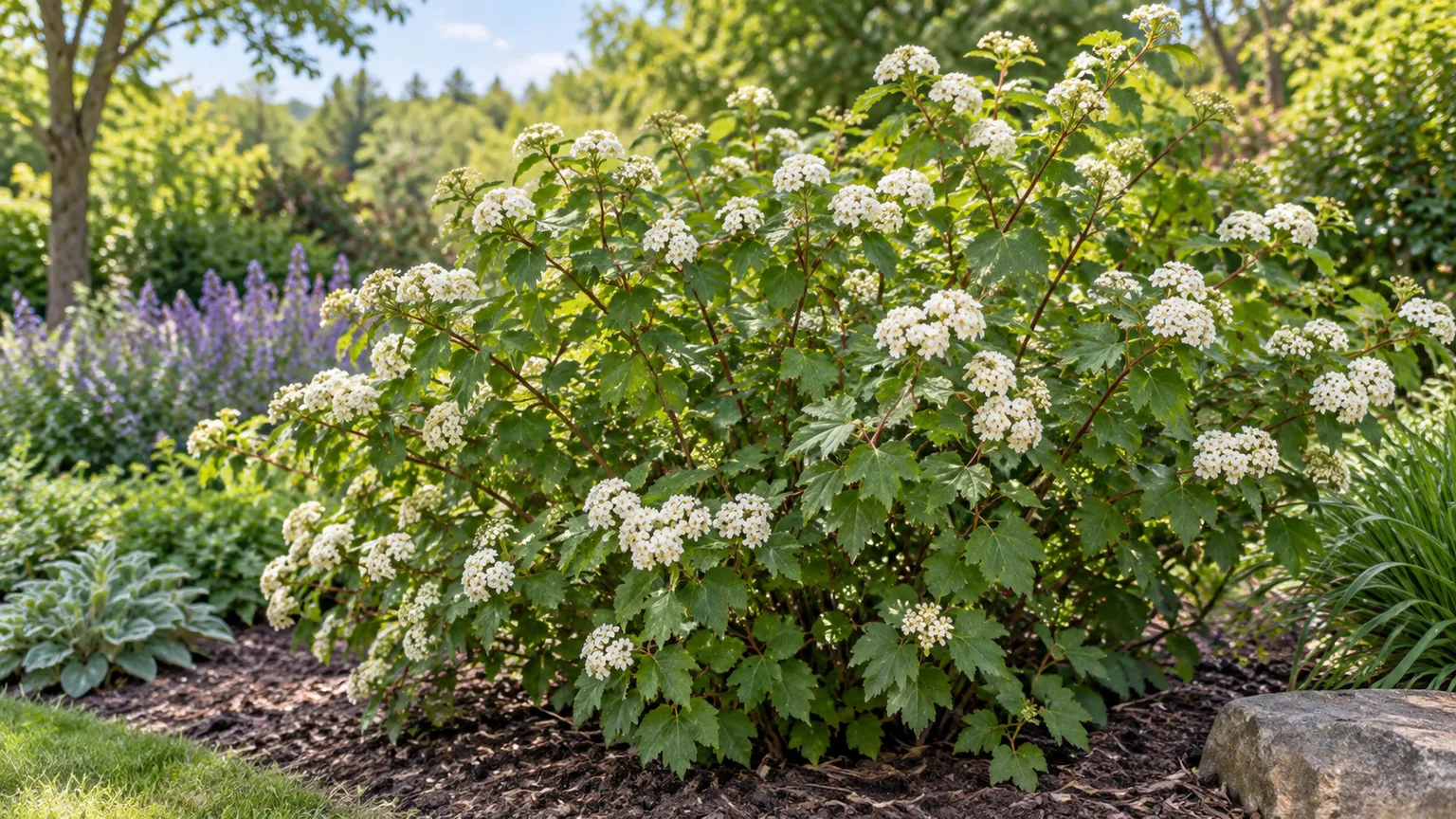
17. Ninebark (Physocarpus opulifolius) combines spring flower clusters with colorful leaves and peeling bark for interest after bloom. It is a tough, cold-hardy North American shrub, but many varieties grow wider and taller than a foundation planting can accommodate. Give it space; remove older stems selectively after flowering rather than shearing the whole shrub.
For Shade, Moisture, or Woodland Edges
18. Carolina allspice, or sweetshrub (Calycanthus floridus) is valued for unusual, often fragrant flowers and adaptable sun-to-part-shade growth. It suits woodland edges better than a parched, reflected-heat strip and may spread by suckers. Leave room for its loose shape and remove unwanted shoots at the base instead of repeatedly clipping the canopy.
19. Buttonbush (Cephalanthus occidentalis) is a strong pick for a rain garden, pond edge, or low spot that stays moist, with round flowers that draw pollinators. It can become a sizable shrub, so it is not a small-space solution. Its tolerance for wet ground is a feature; planting it in a dry bed removes that advantage.
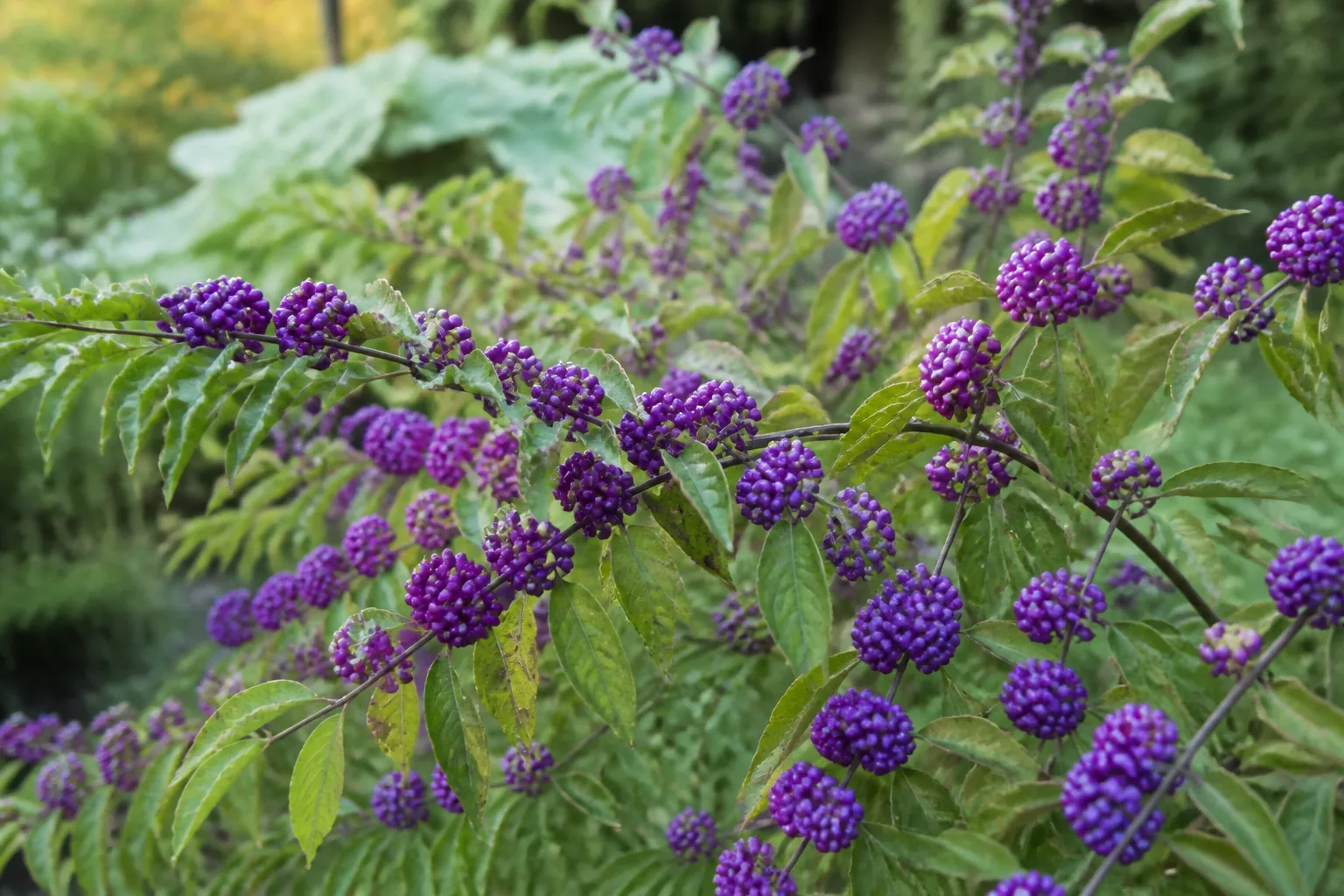
20. American beautyberry (Callicarpa americana) earns attention for clusters of small summer flowers followed by bright purple berries in fall. NC State Extension describes it as a 3- to 8-foot shrub for sun to part shade and notes that flowers and fruit form on new shoots, allowing a late-winter cutback when needed. Several nearby plants may improve fruiting, and the arching habit needs room.
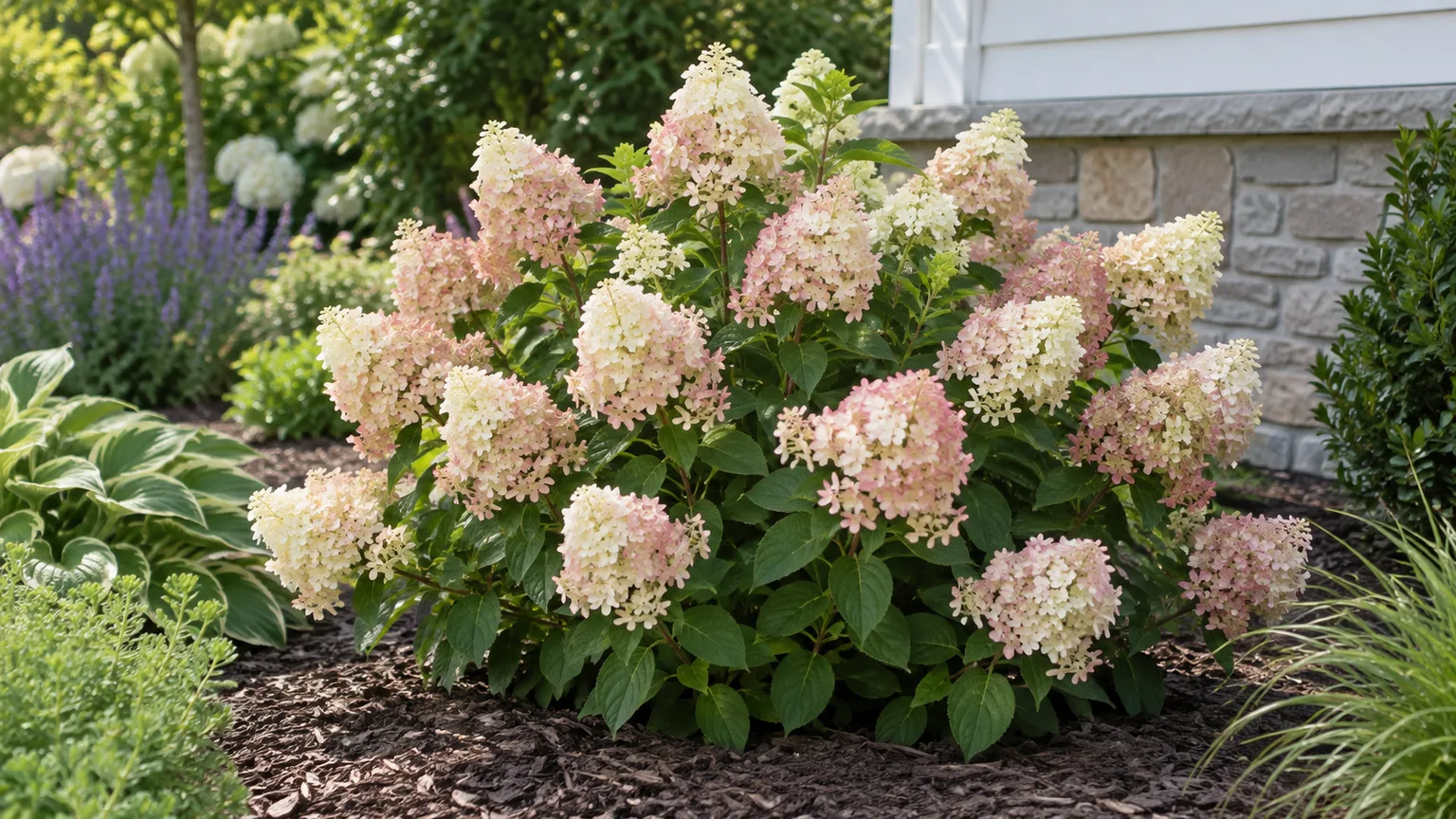
21. Hydrangeas (Hydrangea spp.) can be easy when you pick the right type for your soil moisture, sun, and pruning habits. Panicle hydrangeas are generally more sun-tolerant and flower on new wood; bigleaf and oakleaf types need more attention to moisture and old-wood buds. Know the species before pruning—“hydrangea” is not one maintenance plan.
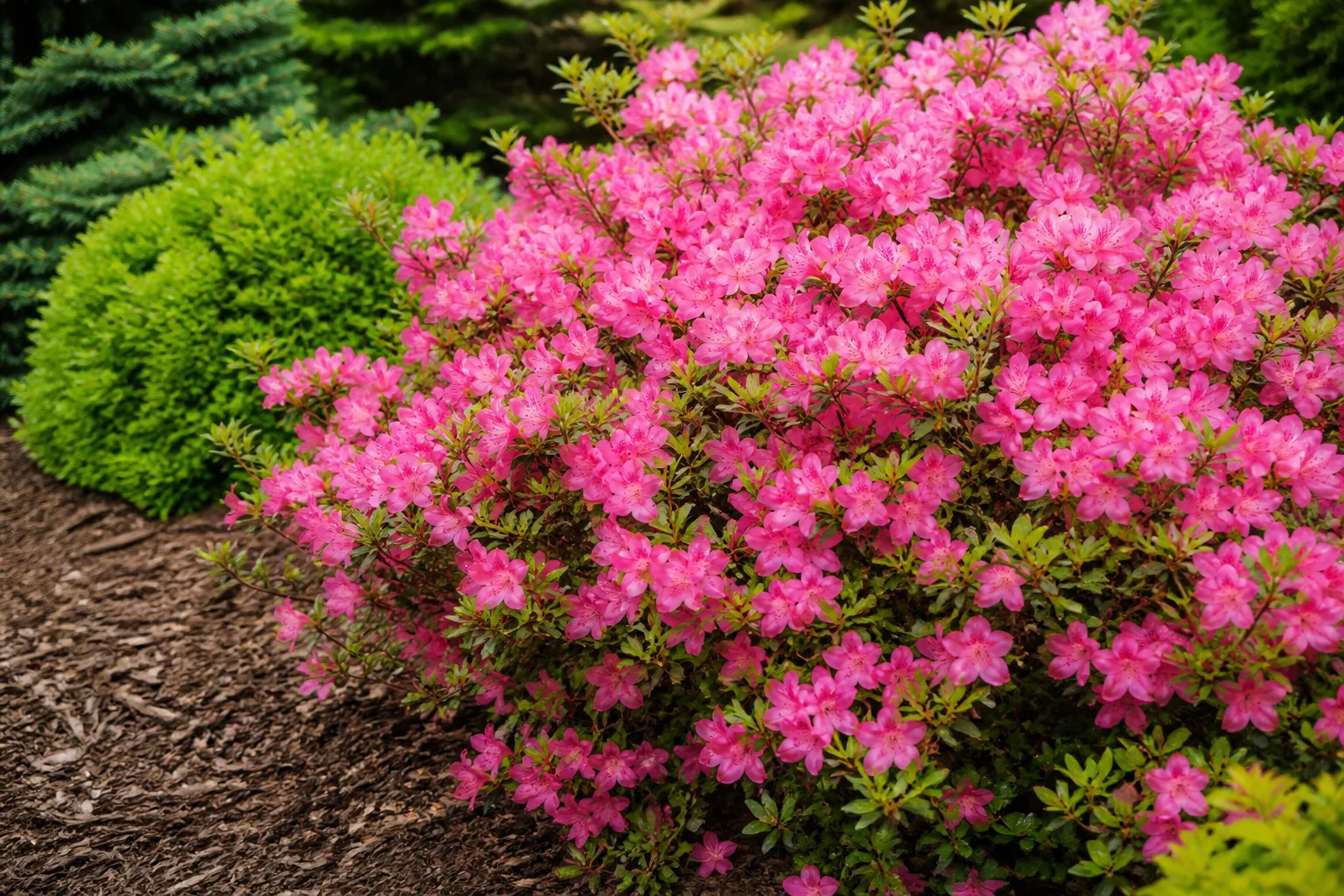
22. Azaleas (Rhododendron spp.) suit part shade and acidic, well-drained soil, where they can provide a dense spring bloom without regular shearing. Their shallow roots appreciate an even layer of mulch and moisture during dry spells, especially in the first years. Avoid planting them in alkaline soil or in deep, dry shade and expecting the same performance.
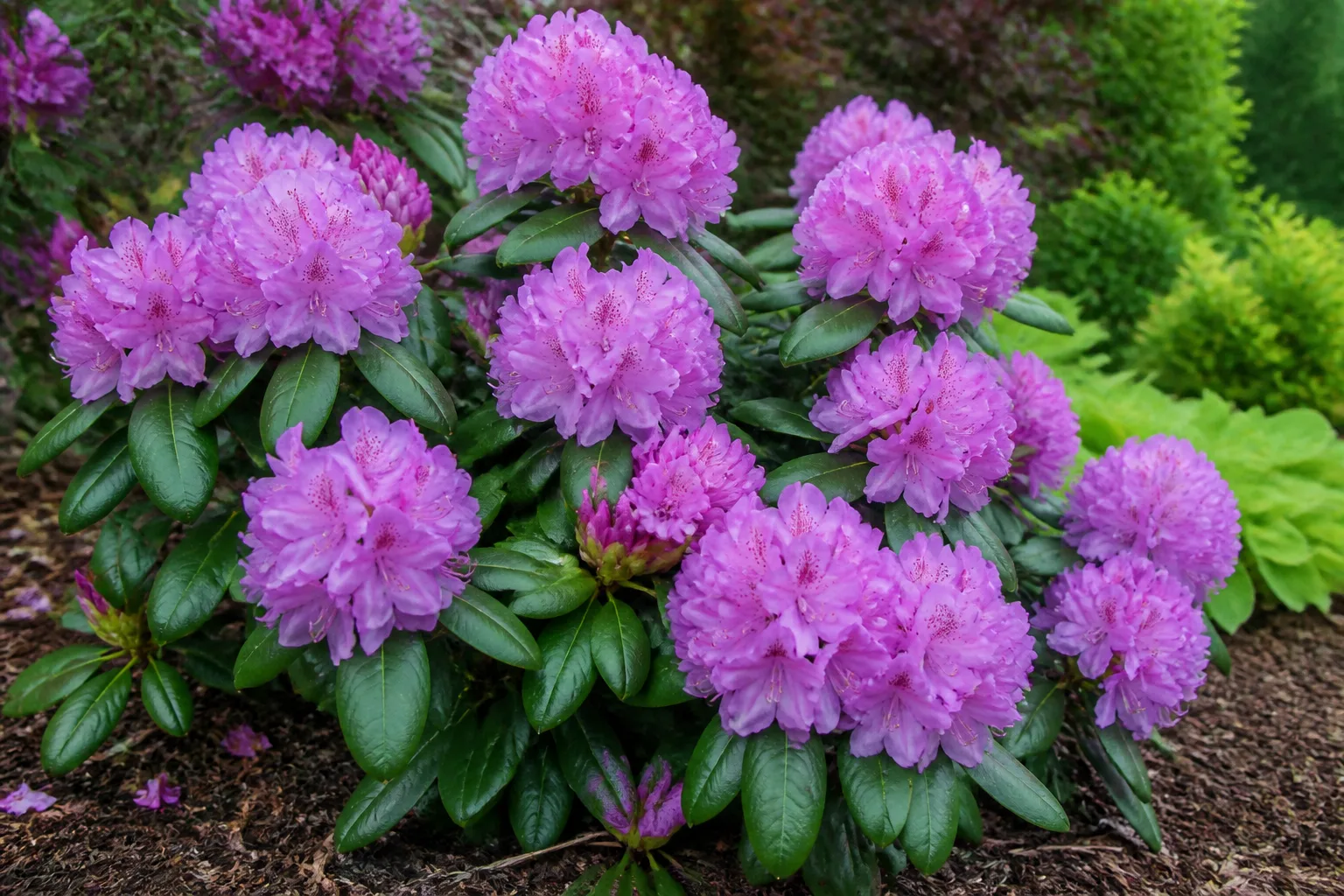
23. Rhododendrons (Rhododendron spp.) are evergreen or semi-evergreen flowering shrubs for gardeners with suitable acidic soil and filtered light. Many dislike hot afternoon exposure, drying winds, and waterlogged roots, so “hardy” does not mean adaptable to every yard. Choose a variety for your local climate and mature size; minimal pruning cannot compensate for a poor site.
24. Summersweet (Clethra alnifolia) is a useful native shrub for damp borders and part shade, with fragrant midsummer flowers that attract bees and butterflies. It tolerates wet soil better than many flowering shrubs and can form colonies by suckering. If you do not want a naturalized patch, remove shoots at the edge while they are small.
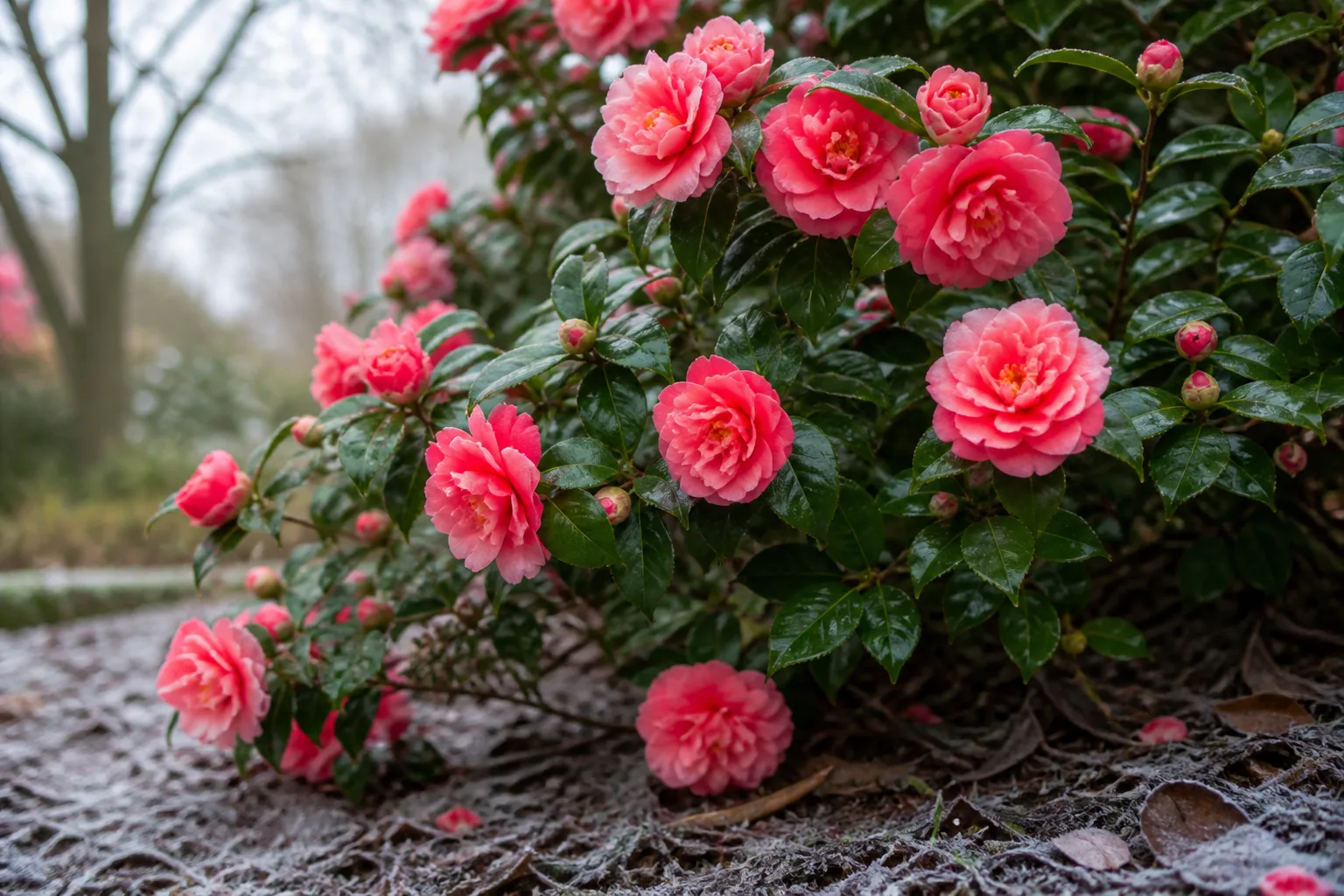
25. Camellia (Camellia spp.) gives evergreen structure and flowers in fall, winter, or early spring, depending on species and cultivar. It prefers acidic soil, shelter, and consistent moisture while roots establish; harsh sun or drying winter wind can damage foliage and buds. Choose a cultivar rated for your winter conditions and allow it to grow naturally rather than pruning it into a tight shape.
For Year-Round Structure or Warm Climates
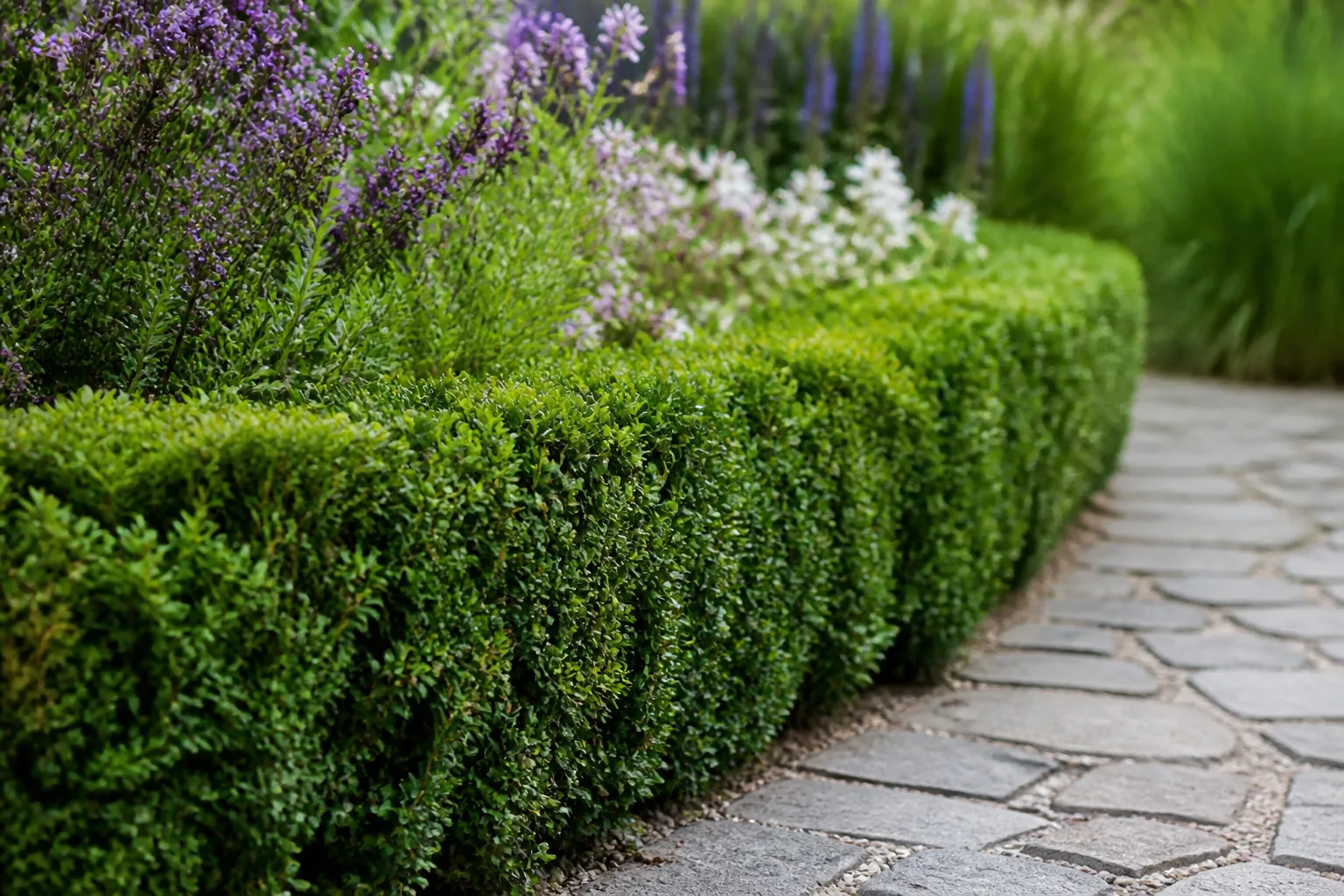
26. Boxwood (Buxus spp.) is included for its evergreen structure, not showy flowers—the small blooms are easy to overlook. It can be a low-input natural mound, but a formal clipped hedge requires repeated shearing and good airflow. If flowers are the main goal, choose another shrub; if you need a green framework, select a cultivar that fits its final space.
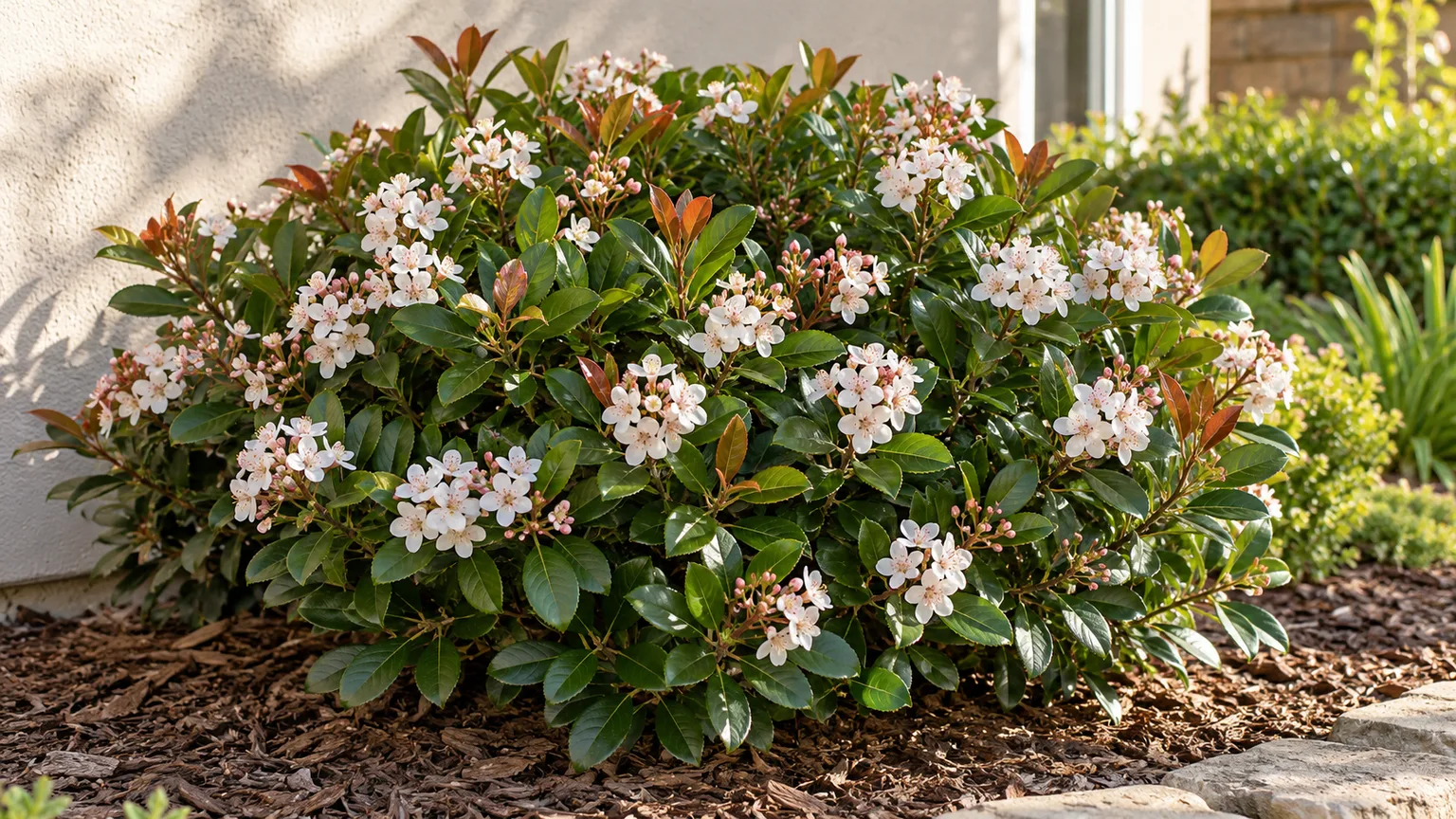
27. Indian hawthorn (Rhaphiolepis indica) is an evergreen option for mild-winter regions, with spring flowers and a naturally rounded habit. It can be drought-tolerant after establishment, but is not a reliable choice for cold-winter gardens, and wet soil increases problems. Use it as a low hedge only if the mature spread matches the space.
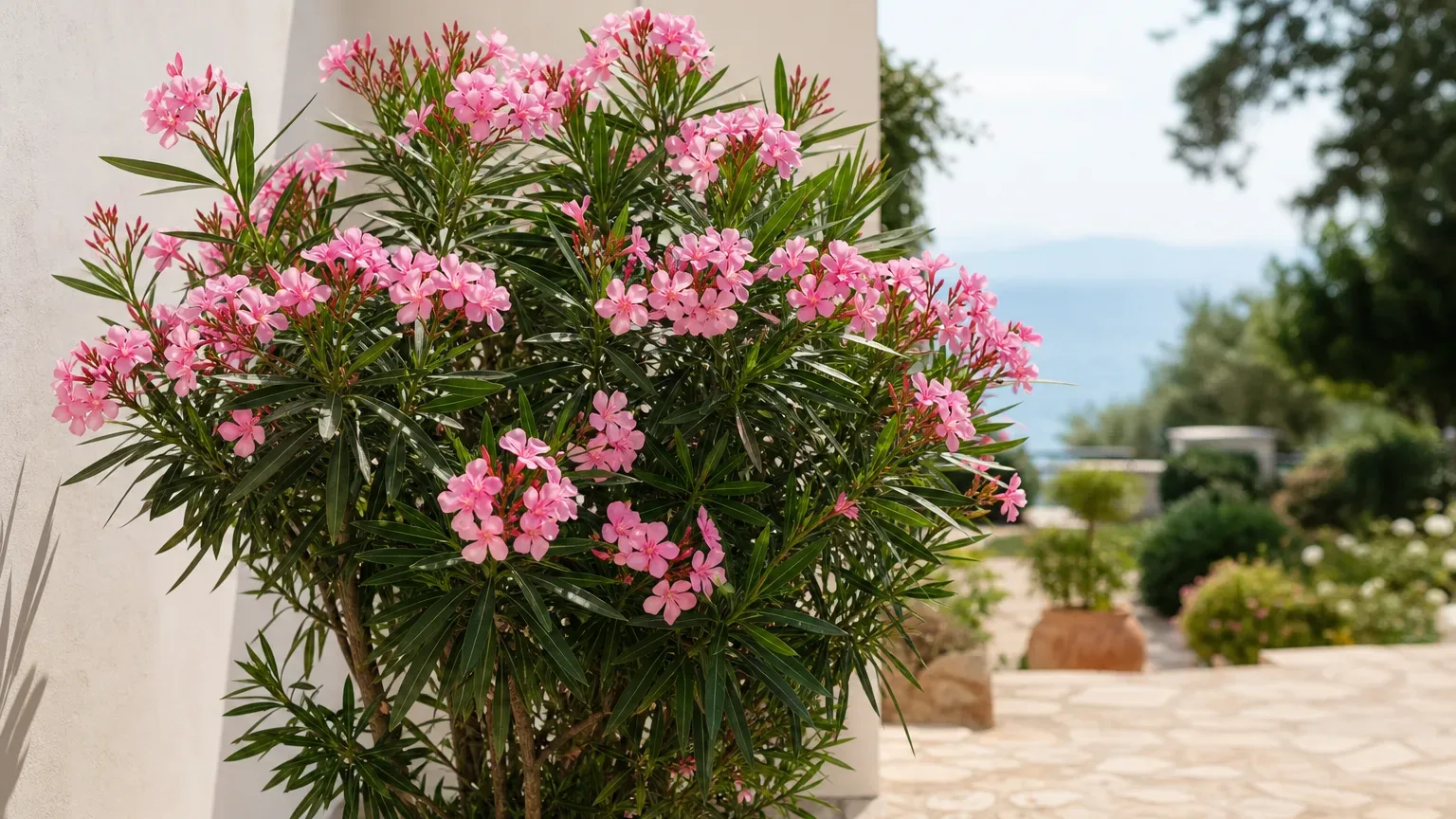
28. Oleander (Nerium oleander) is a heat- and drought-tolerant flowering screen for warm climates, with very little shaping needed if it has room. Its major drawback is safety: the ASPCA lists oleander as toxic to dogs, cats, and horses. Avoid it where pets may chew the plant or where fallen material is difficult to control; choose a safer shrub for those settings.
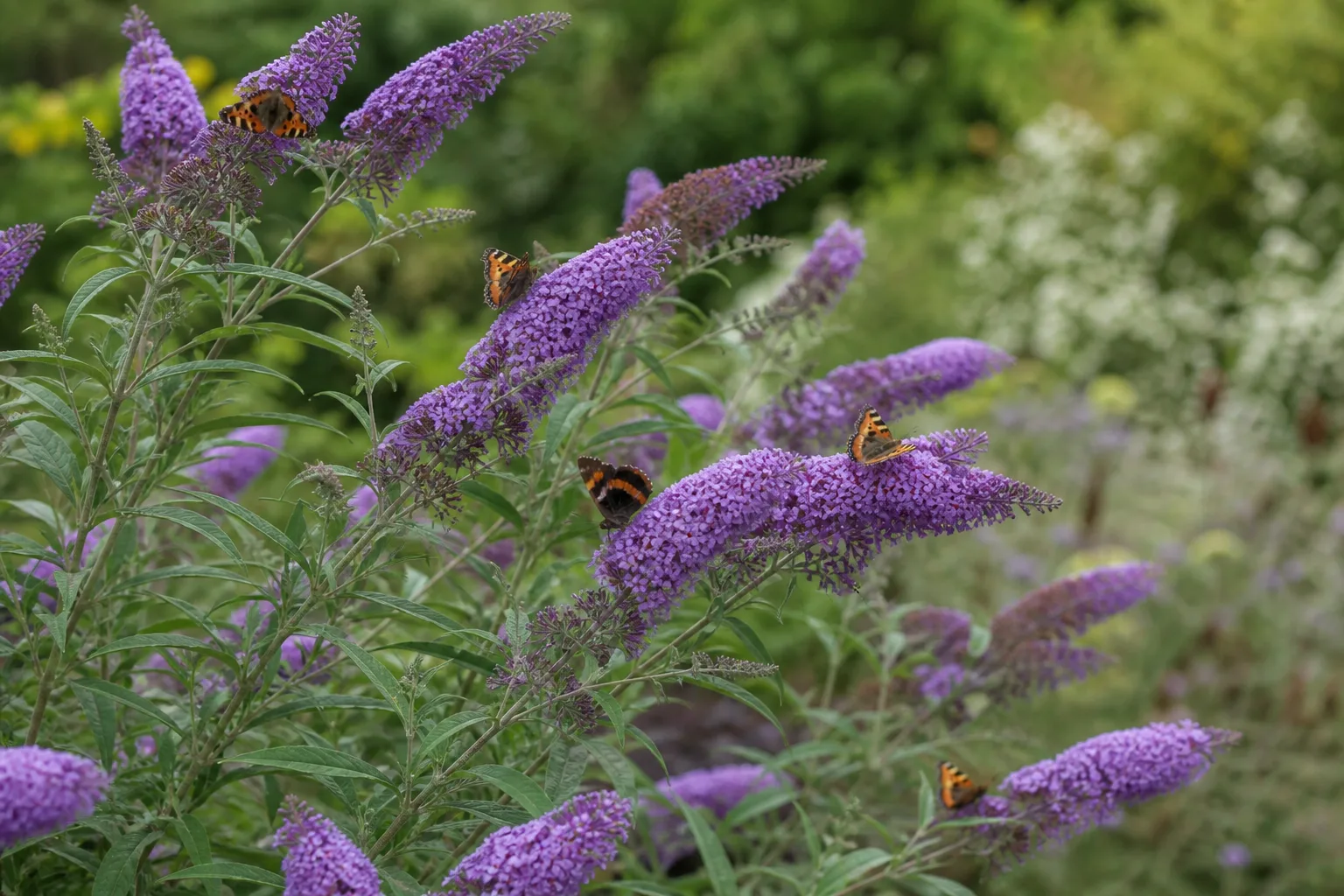
29. Butterfly bush (Buddleja davidii) produces long flower spikes through summer and can tolerate dry conditions once established. Its seedlings can escape cultivation in some regions; an Oregon invasive-plant advisory that reproduces Oregon State University and state-agency guidance describes local natural-area impacts, so check your state or regional invasive-plant list before buying. If it is allowed and appropriate, select a locally recommended cultivar and remove spent heads when local guidance calls for it.
The Care Shrubs Still Need After Planting
Establishment Comes First
Water new shrubs thoroughly at planting, then keep the root zone evenly moist while roots spread beyond the nursery root ball. The RHS advises watering newly planted shrubs regularly in the first year, or longer depending on plant size and conditions, even when a plant is described as drought-tolerant. That is not a promise to water on a rigid weekly schedule: check the soil a few inches down, account for rainfall, and water deeply when the root zone is drying.
Apply a moderate mulch layer over the bed to slow evaporation and suppress weeds, keeping mulch away from stems. A broad mulched bed also reduces competition from turf, which can steal water from young roots. Do not compensate for poor drainage with more irrigation; if the soil stays saturated, choose a wet-soil species or improve the site before planting.
Feed only when a soil test or plant-specific guidance gives you a reason. Extra fertilizer can push soft leafy growth without solving a mismatch in light or drainage. For the simplest planting, group shrubs with similar water needs together, then use rainfall and soil condition to guide irrigation once they are established.
Prune for the Flowering Wood You Have
Pruning becomes low-maintenance when you make a few correct cuts instead of repeatedly shearing the whole shrub. Spring bloomers such as lilacs, forsythia, weigela, and many spring spireas often flower on last year’s stems; if they need shaping, wait until flowers fade. Summer-blooming shrubs that flower on new growth, such as many panicle hydrangeas and bluebeard, are generally pruned in late winter or early spring.
Hydrangeas show why plant identity matters: the pruning advice differs among bigleaf, oakleaf, smooth, and panicle types. Epic Gardening’s shrub-pruning guide also distinguishes old-wood and new-wood bloomers and cautions that unnecessary cuts can remove flowers or prompt unwanted growth. Remove dead, broken, or crossing branches first, then stop if the shrub already has a good natural shape.
If you want a precise hedge line, topiary, or a small shrub where a large cultivar belongs, plan for recurring pruning before you plant. A compact cultivar may cost more initially, but it is often cheaper than years of cutting a shrub back to fit a space it outgrew.
Reasons to Skip a Shrub, Even If It Looks Easy
Skip a plant when your site contradicts its basic needs. Do not choose lavender for heavy, wet soil, buttonbush for a dry slope, or an acid-loving rhododendron for alkaline ground unless you are prepared to amend and monitor the site. A shrub advertised as drought-tolerant may still wilt during its first summer; established roots are the difference.
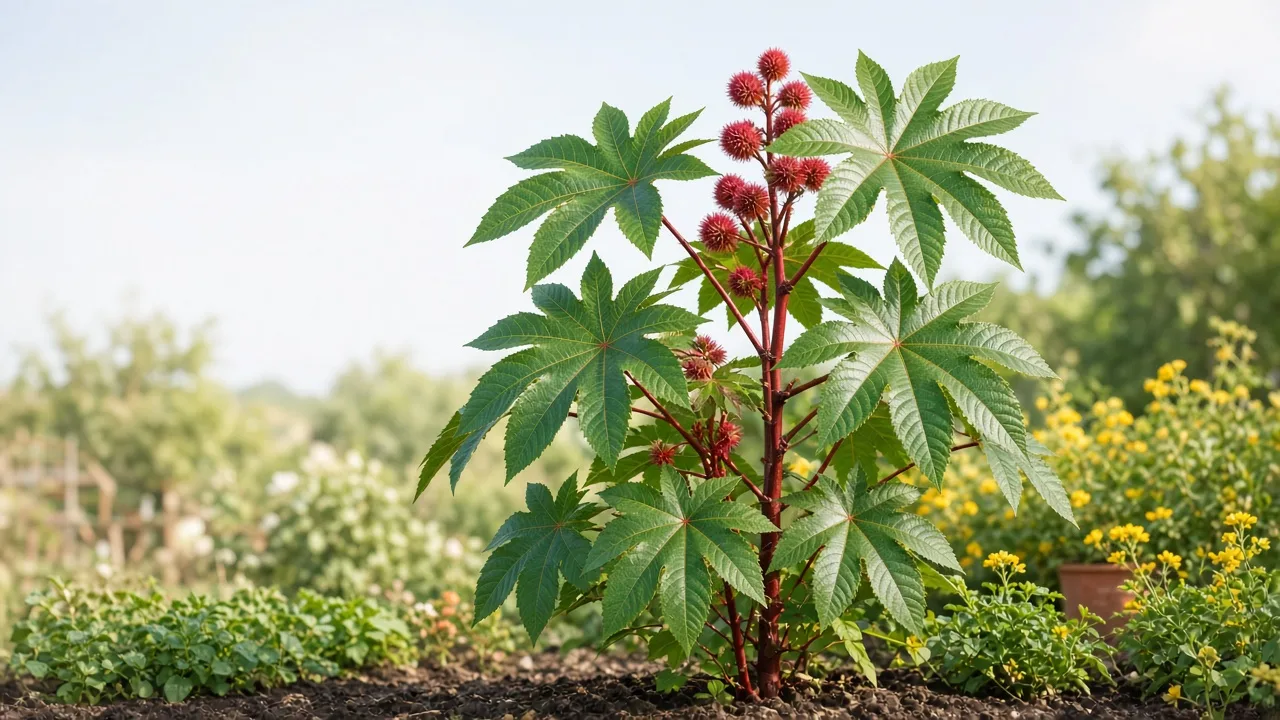
Check mature dimensions and local plant status before buying. Butterfly bush has been flagged as invasive in some areas, while lantana’s behavior varies by climate; local rules and regional ecological advice should outrank a generic nursery tag. For a yard with dogs, cats, or horses, leave oleander off the shortlist because the ASPCA identifies it as toxic to all three.
Also decide how much cleanup you tolerate. Flowering quince can sucker and has thorns; beautyberry may need a nearby partner for heavier fruiting; rose of Sharon can seed itself; and a clipped boxwood hedge needs more regular shaping than a natural mound. These are manageable traits when chosen deliberately, not evidence that the plant is universally easy.
Design for Less Work Over Time
Use a small number of shrubs in groups rather than buying one of everything. Repeating three compatible plants makes weeding and irrigation simpler, and matching species to the same moisture zone prevents some roots from drying while others stay soaked. Combine spring flowers, summer bloomers, and fall berries or foliage if you want a longer display without expecting one shrub to bloom all year.
Put the tallest mature plant at the back of a border and keep access open for occasional pruning. Leave enough space to reach the center of the shrub and avoid planting directly under eaves where rain cannot reach. In a small yard, compact cultivars of lilac, spirea, abelia, or potentilla are usually easier than trying to maintain a full-size hedge in a narrow strip.
A Simple First-Year Checklist
- Confirm the plant’s botanical name, mature size, and local hardiness before purchase.
- Check hours of sun, soil drainage, winter wind, and reflected heat at the actual planting spot.
- Water the root ball well at planting and keep checking the wider root zone through the first growing season.
- Mulch the bed, keep grass away from young roots, and avoid routine fertilizer without a clear need.
- Write down the shrub’s bloom time and pruning window; do not prune spring bloomers in winter by habit.
- Check invasive-plant guidance and pet-safety information for the specific shrub you select.
Conclusion
The easiest flowering shrub is the one that fits your soil, light, climate, and available space without constant correction. Use dry-site shrubs in fast-draining sun, choose moisture-loving species for damp or shaded edges, and give every new planting a real establishment period. Once the site and mature size are right, many shrubs need little beyond occasional watering, selective pruning, and the freedom to keep their natural form.



