15 Low-Maintenance Lawn Grasses by Climate and Site
Find 15 low-maintenance lawn grasses for cool or warm climates, from fine fescue to zoysia. Compare shade, traffic, water, mowing, and establishment needs.
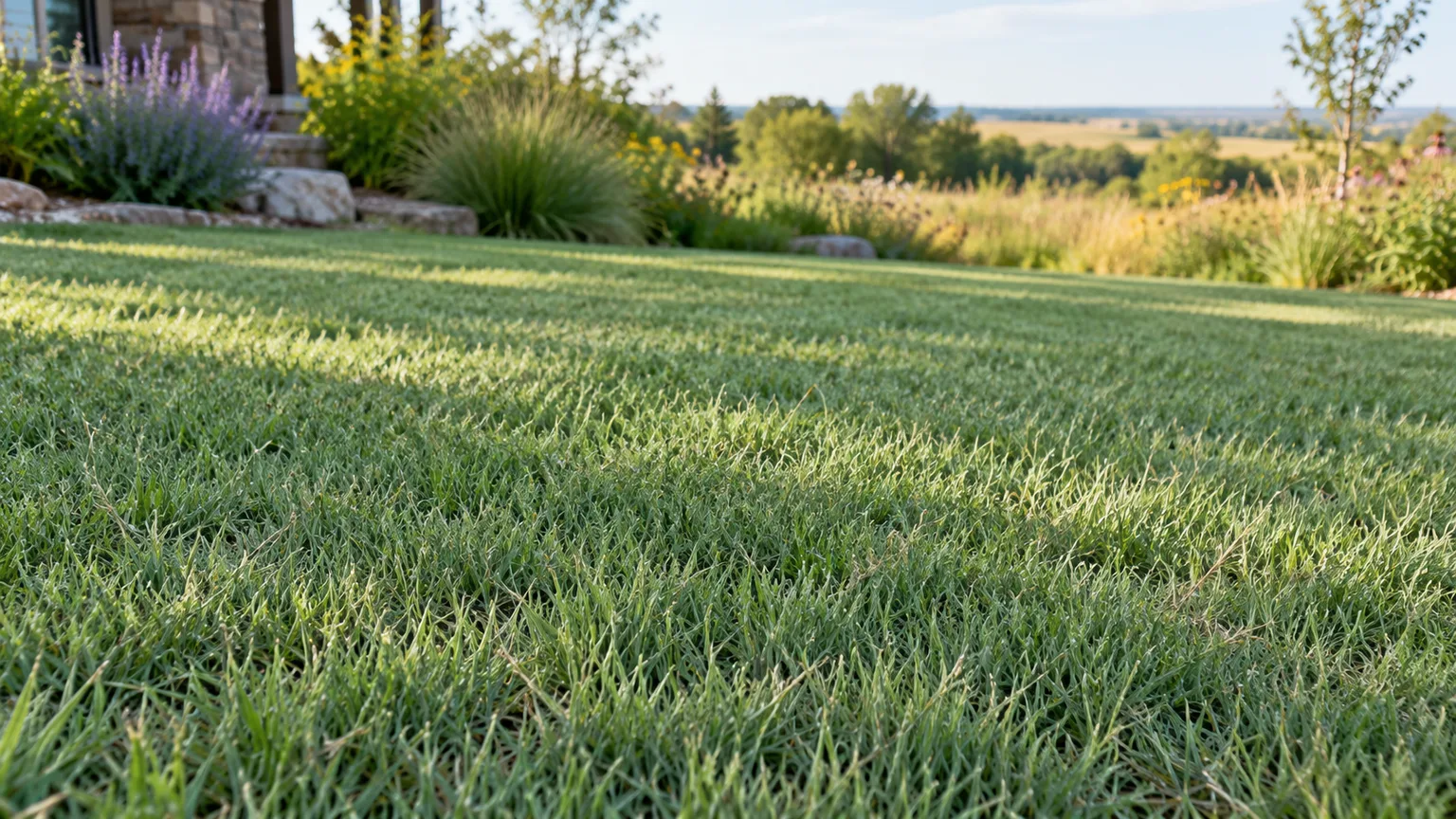
A lawn that needs less work starts with a grass that already suits the yard. Choose for climate, sun, soil, traffic, and the look you can accept; a drought-tolerant grass that goes brown in summer will disappoint someone who expects emerald color, and a shade-tolerant fine fescue will thin out under a daily dog run.
“Low maintenance” also has a start-up cost. Even a grass that later needs little fertilizer or mowing must be watered while it establishes, and a low-input lawn usually looks less uniform than a tightly managed one. The most useful question is not which grass is easiest everywhere, but which one can meet your yard’s main job with the fewest compromises.
Start with the lawn you need, not the seed bag
First decide what the grass must do. A front yard that is mostly viewed from the street can tolerate seasonal dormancy, seed heads, or a coarser texture; a play area needs better wear tolerance and recovery. Shade beneath mature trees, compacted soil, salty irrigation water, and a wet low spot each narrow the list before you consider seed price.
Grass also has a growing season. Cool-season grasses grow most actively during cool spring and fall weather and may struggle or go dormant in summer heat. Warm-season grasses grow fastest in summer and commonly turn tan after frost. The transition zone can support both types, but that does not mean every yard there is a good place for both. Hardiness zones alone cannot account for summer humidity, winter temperature swings, shade, soil drainage, or water availability; use local turf guidance to narrow down the choices.
What “low maintenance” means in practice
For most homeowners, lower maintenance means fewer mowing visits, less fertilizer, less irrigation, fewer pest treatments, or some combination of those—not an untouched green carpet. Colorado State University Extension makes the trade-off explicit: minimal care usually produces minimal turf quality, and the cultivar matters as much as the species. Its turfgrass selection guide ranks buffalograss and blue grama among the grasses that persist best under low-input conditions, while perennial ryegrass and improved Kentucky bluegrass rank poorly in that same comparison.
There are at least three different goals hiding inside “easy lawn.” Low-water lawns may go dormant during drought; low-mow lawns may grow taller and set seed; low-fertilizer lawns may be thinner or slower to recover after wear. Pick the chore you most want to reduce and accept the corresponding look. If you need year-round green, close mowing, high traffic tolerance, and no irrigation all at once, no grass can reliably deliver that combination.
Quick comparison: match a grass to your site
Use this table as a shortlist, not a national ranking. “Low” describes typical relative maintenance once the grass is established in a suitable region; the first growing season can still need regular water and weed control. Warm-season options are most useful in the South and warmer parts of the transition zone; cool-season choices fit northern regions and higher elevations.
| # | Grass | Best fit | What can reduce work | Main catch |
|---|---|---|---|---|
| 1 | Buffalograss | Sunny Great Plains and interior West | Very low fertilizer and infrequent mowing | Slow spring green-up; may go tan in drought; poor under heavy traffic or shade |
| 2 | Blue grama | Dry, sunny naturalized lawns | Low fertilizer and infrequent mowing | Clumpy, slow to fill, and not a play lawn |
| 3 | Bermudagrass | Hot, sunny yards with regular activity | Handles heat, drought, and wear; repairs quickly | Needs frequent mowing in a lush growing season and spreads aggressively |
| 4 | Zoysiagrass | Warm lawns needing dense turf | Drought and wear tolerance; slower growth than Bermuda | Slow to establish and recover; winter dormancy in cool regions |
| 5 | Centipedegrass | Acid, low-fertility soil in the Southeast | Low fertilizer needs and modest mowing | Poor choice for heavy traffic, salty soil, or extended drought |
| 6 | Bahiagrass | Sandy, acidic sites in the South | Low-input and pest-resistant in suitable conditions | Coarse, open turf; limited shade and wear tolerance |
| 7 | Carpetgrass | Wet, acidic parts of the humid Southeast | Low fertilizer and mowing demands | Poor drought and wear tolerance; not for most inland or northern yards |
| 8 | St. Augustinegrass | Warm yards with some shade | Broad blades can cover ground at moderate mowing frequency | Medium maintenance; sod or plugs, not seed; pest and cold limits |
| 9 | Seashore paspalum | Salty coastal soil or irrigation | Holds turf where many grasses fail from salt | Specialty grass with medium maintenance and specific site needs |
| 10 | Turf-type tall fescue | Cool-season or transition yards with traffic | Deep roots reduce drought stress; tolerates some shade | Bunching growth means damaged areas may need overseeding |
| 11 | Creeping red fescue | Cool, partially shaded, low-traffic lawns | Low fertility; creeping types can fill small gaps | Thin recovery under repeated wear or prolonged heat |
| 12 | Chewings fescue | Cool, shady or low-input ornamental turf | Fine texture, shade tolerance, and modest fertilizer needs | Bunch-forming; slow to recover from traffic |
| 13 | Hard fescue | Dry, low-fertility cool-season sites | Slow growth and useful drought tolerance | Slow establishment and limited wear tolerance |
| 14 | Sheep fescue | Naturalized or infrequently mown cool lawns | Often needs little fertilizer and mowing | Bunchy, meadow-like look; poor choice for regular play |
| 15 | Common-type Kentucky bluegrass | Cool, sunny lawns needing repair after wear | Rhizomes knit small damaged spots back together | Often needs more water, fertilizer, and mowing than fine fescues |
University comparisons show why one label such as “drought-tolerant” is not enough. In its Florida chart revised in 2025, UF/IFAS rates bahiagrass and centipedegrass as low-maintenance, but distinguishes their soil, shade, drought, and wear limits; it also notes that drought survival and summer-green color are not the same thing. See the UF/IFAS grass comparison before settling on a warm-season option.
Two native choices for dry, sunny regions
Buffalograss
Buffalograss is a warm-season, spreading native grass for sunny parts of the Great Plains and interior West. Established turf-type cultivars can need substantially less irrigation than Kentucky bluegrass and generally need less frequent mowing; Colorado State reports 50 to 75 percent less irrigation for newer turf types when the goal is to keep the lawn attractive and green. It also recommends only one or two fertilizer applications a year for a good-quality lawn, though local conditions still matter.
The hard part is getting it started. Seed, plugs, and sod all need steady moisture while roots form, and seeding may take more patience than a conventional cool-season lawn. Once established, buffalograss can survive without irrigation, but that does not mean it stays green: it may go dormant for much of summer and is more vulnerable to weeds while open or brown. It greens later in spring, turns straw-colored after frost, dislikes heavy shade, and can thin where people or dogs repeatedly run the same path. The Colorado State buffalograss guide is useful if you are weighing its low-input mature state against the establishment work.
Blue grama
Blue grama is another warm-season Great Plains native, but it behaves more like a bunchgrass than a carpet. It can work in a low-input, sunny area where a relaxed, naturalized texture is acceptable and foot traffic is light. Its heat, cold, and drought tolerance can make it a practical fit in the region, and it usually needs little fertilizer and infrequent mowing.
Do not choose it for a smooth play surface or a yard that needs rapid cover. Blue grama does not spread into a dense sod the way rhizomatous turf does, and it may establish less uniformly than a conventional lawn. Leave room for seed heads and seasonal color changes. If you want an uninterrupted, closely clipped green surface, choose a different grass or reduce the lawn to a smaller area.
Warm-season choices for southern and transition lawns
Warm-season grasses can reduce summer stress in a hot climate, but their maintenance levels differ sharply. Bermuda handles concentrated activity but may demand more mowing; centipede and bahiagrass are easier on fertilizer but do not tolerate the same traffic. Shade also has limits: St. Augustine and some zoysia cultivars tolerate more shade than Bermuda, yet still need daily sun to grow well.
Seven warm-season options and their trade-offs
Bermudagrass is for a hot, sunny lawn that gets used. It handles wear well and spreads by runners, so bare areas can recover faster than with bunch-type grasses. That recovery and dense turf are useful for active yards, but rapid growth means more mowing when water and nutrients are plentiful. It can invade beds and neighboring lawns, and many high-performance cultivars need more management than a low-input landscape wants.
Zoysiagrass makes a dense, attractive mat and handles drought and foot traffic better than many warm-season alternatives. It generally grows more slowly than Bermuda, which can mean fewer mowing visits, and it has useful shade tolerance for a warm-season grass. The compromise is a slow start: plugs or sprigs can take time to knit together, and a worn patch may recover slowly. It also turns brown in cool weather, so it is a poor choice if winter color matters.
Centipedegrass fits acidic, relatively infertile soil in the humid Southeast, where it can stay acceptable with less fertilizer and mowing than a high-input lawn. It is an option for a yard that gets casual use, not the soccer goal or dog track. It can lose color in drought and has limited recovery from damage; feeding it heavily to force a deep-green color can create extra growth and more work.
Bahiagrass is a durable low-input choice for many sandy, acidic southern sites, especially where an even, fine-textured carpet is not the priority. It is relatively resistant to several common turf pests and does not require the intensive feeding that some lawns receive. The trade-off is a coarse, open lawn with visible seed heads, less shade tolerance, and weaker wear performance than Bermuda or zoysia.
Carpetgrass is worth considering in wet, acidic parts of the Gulf Coast and Southeast. It tolerates conditions that can frustrate other lawn grasses and stays relatively low-input once established. It is not a drought grass, and its weak wear tolerance makes it a poor fit for an active backyard. Treat it as a site-specific solution for a damp lawn rather than a universal alternative.
St. Augustinegrass is a useful warm-region candidate where partial shade makes Bermuda a poor match. Some cultivars are more shade-tolerant than most warm-season grasses, and broad leaf blades fill space quickly when conditions are right. It is not the lowest-maintenance option in the group: it is medium-maintenance in the UF/IFAS comparison, is established with sod or plugs rather than seed, and can be limited by cold, pests, or disease. It still needs sufficient daily sun; shade tolerance does not mean deep shade.
Seashore paspalum is a specialist for salt-affected coastal yards, including places exposed to salt spray or saline irrigation. It tolerates salt better than common warm-season grasses, so it may persist where the alternatives decline. That resilience is valuable only if salt is the actual problem; UF/IFAS assigns it a medium maintenance level and rates its drought tolerance as good rather than excellent. For ordinary inland lawns, a less specialized grass is easier to source and maintain.
Cool-season choices for northern and higher-elevation lawns
For cooler regions, start with fine fescues when shade, low fertility, and fewer mowing visits matter more than durability. Choose turf-type tall fescue if the lawn receives more wear or heat. Kentucky bluegrass can make sense when the lawn needs to repair after traffic, but it is not automatically the lowest-input choice just because seed is widely available.
Tall fescue and Kentucky bluegrass
Turf-type tall fescue is the adaptable compromise for a cool-season lawn that gets moderate use. Its deep roots help it ride through dry periods, and it tolerates more heat and shade than many cool-season grasses. Buy a turf-type blend selected for home lawns; coarse pasture types such as Kentucky 31 produce a different, rougher lawn. Tall fescue grows in bunches rather than spreading into every bare patch, so expect occasional overseeding where play or pets thin it out. It can still need frequent mowing when actively growing.
Common-type Kentucky bluegrass is a better fit where a dense, uniform lawn and repair after wear matter more than minimizing every input. Its underground rhizomes fill small gaps, and local low-input cultivars can reduce water and fertilizer compared with high-performance types. But it generally needs more nitrogen and irrigation than fine fescues to maintain a lush appearance, performs poorly in dense shade, and spreads into beds. University of Minnesota Extension’s low-input lawn mixes use common Kentucky bluegrass with fine fescue for sunny northern lawns, with a higher fine-fescue share for partial shade.
Four fine fescues for lower-input lawns
Fine fescues are a group, not one variety. They have narrow blades, need relatively little nitrogen, tolerate shade better than many turf grasses, and can survive drought by going dormant. They are usually a good answer for a cool-season yard that is lightly used; they are not the right answer for a playground, sports field, or route where pets run every day. In a low-mow mixture, the grass may arch over and look like a meadow rather than a short, clipped lawn. Fine Gardening’s regional report on low-mow grasses describes the tall seed heads, softer outline, and traffic limits readers should expect.
Creeping red fescue spreads by short rhizomes, so it can fill small thin spots better than bunch-forming fine fescues. Use it in cool, partially shaded lawns with moderate or light traffic. It recovers more slowly than a dense spreading bluegrass lawn when repeatedly trampled, and prolonged summer heat can make it go dormant.
Chewings fescue is a dense, bunch-forming fine fescue that suits a cool, shaded lawn or a low-mow blend. It tolerates low fertility, but it will not creep far into an open bare patch. Include it where soil and shade are the main challenge and the lawn is decorative or lightly used.
Hard fescue is one of the stronger fine-fescue candidates for dry, low-fertility sites. Its slow growth can lower mowing demand, and it can handle rocky or otherwise difficult ground once established. It starts slowly and does not bounce back quickly from wear, so it is better for a quieter lawn edge or open area than for a central play space.
Sheep fescue is a bunchgrass used most often where a naturalized look and very low mowing are acceptable. It can survive on low fertility and often needs little attention after establishment, but its clumps and fine meadow texture are conspicuous in a closely clipped suburban lawn. Choose it for a lightly walked area, not for a uniform sports surface.
Set up a low-input lawn before you reduce care
Species selection saves recurring effort only if the lawn is established well and planted in the right place. A sparse lawn invites weeds, which can erase the savings through repeated hand-weeding, herbicide use, or reseeding. Before buying grass, identify what already grows well nearby and ask your local extension office which cultivars persist with your soil, sun, and rainfall.
Seed, sod, plugs, and cultivar labels
Seed is often the least expensive way to cover a large area, but it requires seedbed preparation and careful watering while seedlings emerge. Some warm-season species are hard to establish from seed or are sold only as sod, sprigs, or plugs. Sod costs more and gives quick cover, but it still needs frequent water until roots attach. Plugs can lower up-front material cost for spreading grasses, but bare soil between plugs remains vulnerable to weeds while the grass closes.
Read the seed label instead of buying a bag because it says “shade,” “drought,” or “low maintenance.” Check the listed species and cultivars, the share of each species, germination and purity information, and whether the mix contains temporary cover grasses or annual ryegrass. A local extension recommendation is more reliable than a broad national blend because the same species can behave differently across heat, humidity, soil, and winter conditions. For example, Minnesota Extension recommends fine-fescue mixes for low-input lawns, but it also warns against using perennial ryegrass in shade.
Make the soil test before fertilizing, not after the lawn looks poor. Excess nitrogen pushes leaf growth, which means faster mowing and can increase disease or weed pressure in some warm-season lawns. Correct only the deficiencies the test identifies. If the site stays wet, improve drainage or choose a wet-tolerant grass; do not try to “fix” standing water by adding more seed.
Get through establishment before cutting back
Low-water species still need water while they root. Water newly seeded areas often enough to keep the seedbed from drying, then lengthen the interval as roots deepen; sod, sprigs, and plugs also need regular moisture until they are anchored and actively growing. This early irrigation is not a contradiction of later water savings: the young plants have not developed the roots or spread needed to survive dry spells. Colorado State warns that starting a buffalograss lawn can require as much or more water than establishing bluegrass or tall fescue.
Keep foot traffic off new turf until it is rooted, mow at the height recommended for that species, and remove weeds before they seed. Do not apply a pre-emergent weed product over new seed unless its label explicitly permits it; many products also prevent the grass seed from germinating. When the lawn is established, reduce water and fertilizer gradually rather than stopping both at once. A sudden change during heat or drought can thin the stand and invite weeds.
Keep maintenance low without asking turf to do the impossible
Water for roots—or accept dormancy
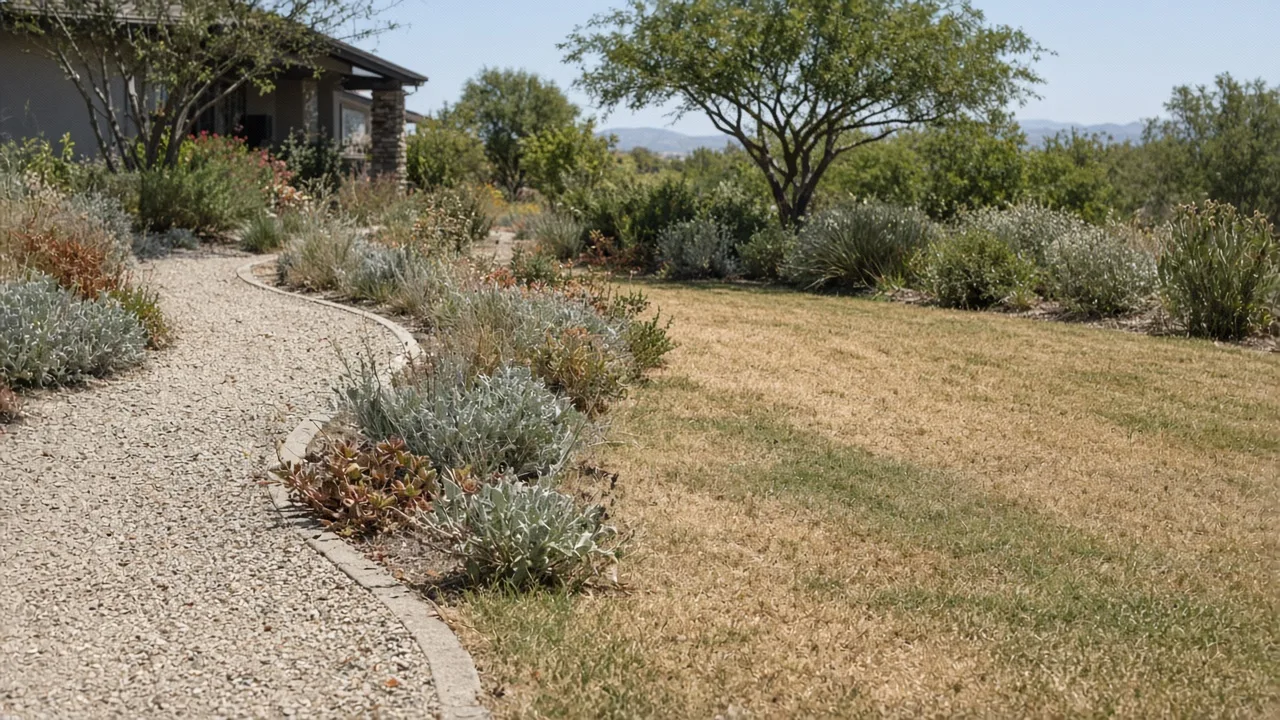
Drought tolerance describes survival, not a promise of green color. Many grasses respond to water shortage by slowing growth or going dormant; foliage may turn tan even while crowns and roots remain alive. If your priority is conservation, decide whether that dormant look is acceptable before planting. If the lawn must stay green through a dry summer, plan to irrigate according to local guidance or choose a smaller turf area.
When you do irrigate an established lawn, water deeply enough to moisten the root zone, then wait until the grass shows signs of needing water rather than running a brief sprinkler every day. The right amount depends on soil, weather, roots, slope, and grass type. Sandy soil drains quickly; compacted clay may shed water before it penetrates. A screwdriver or soil probe can help you check moisture below the surface. A “drought-tolerant” label cannot compensate for shallow roots caused by frequent, light watering.
Mow and feed to fit the grass
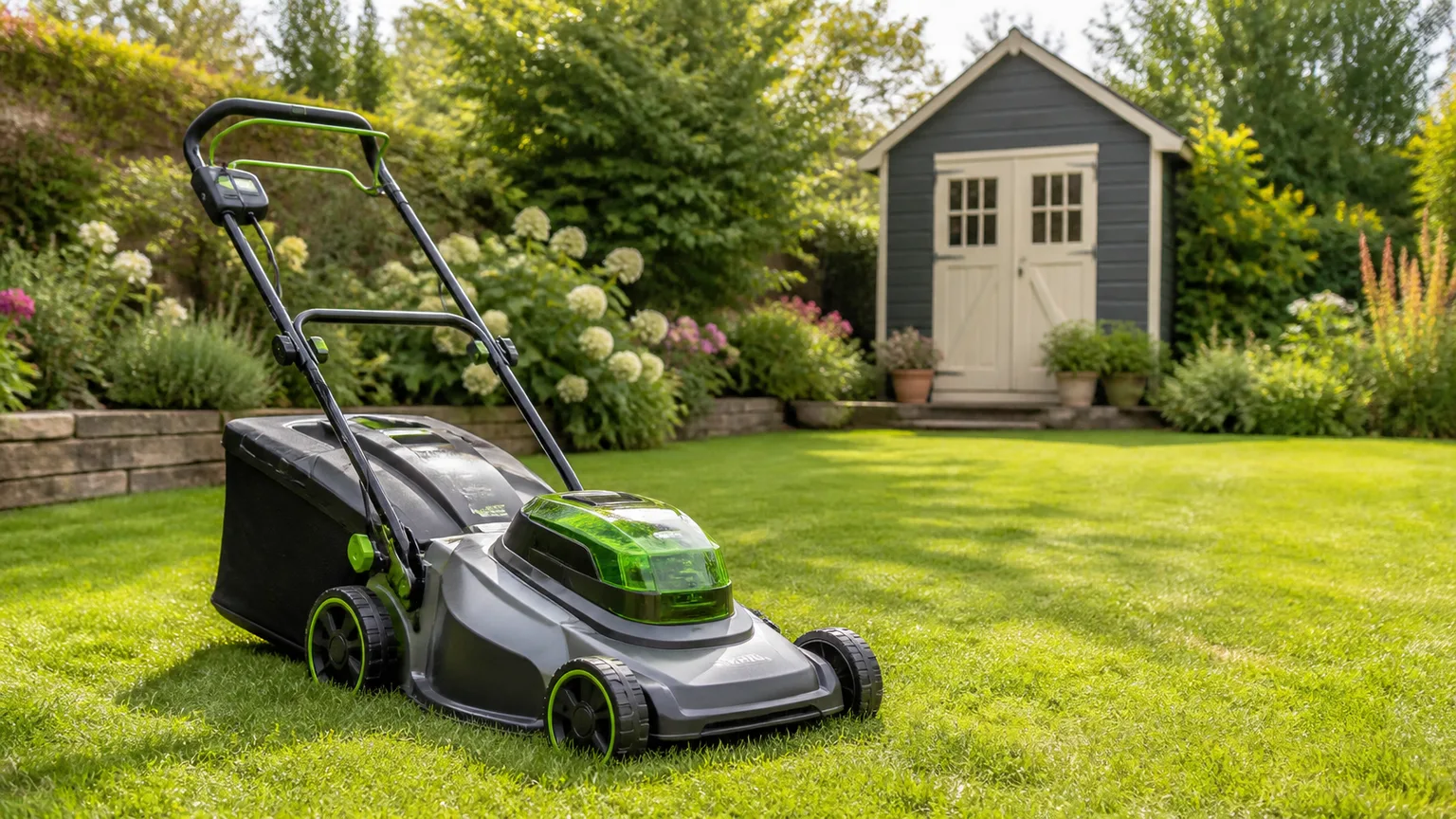
Mow based on the grass’s growth rate, not a fixed weekly calendar. Removing too much leaf at once stresses turf; a common rule is not to cut more than about one-third of the blade in a single mowing. Low-mow fescue is often left longer and cut once or twice a year; a conventional lawn needs regular mowing during active growth. If you want the lawn to look like close-cut turf, do not choose a meadow-style blend and expect fewer mowing visits without a visible change.
Use a sharp blade and leave fine clippings on the lawn when they are short enough to settle into the turf. They return nutrients to the soil and do not cause thatch by themselves. Follow local fertilizer limits and the grass’s seasonal growth pattern; feeding dormant grass will not make it green again and may waste fertilizer or pollute runoff. As a rule, the simplest low-input lawn is one that is mowed high enough for its species, fertilized only when needed, and allowed to change color during a normal dormant period.
When grass is the wrong tool
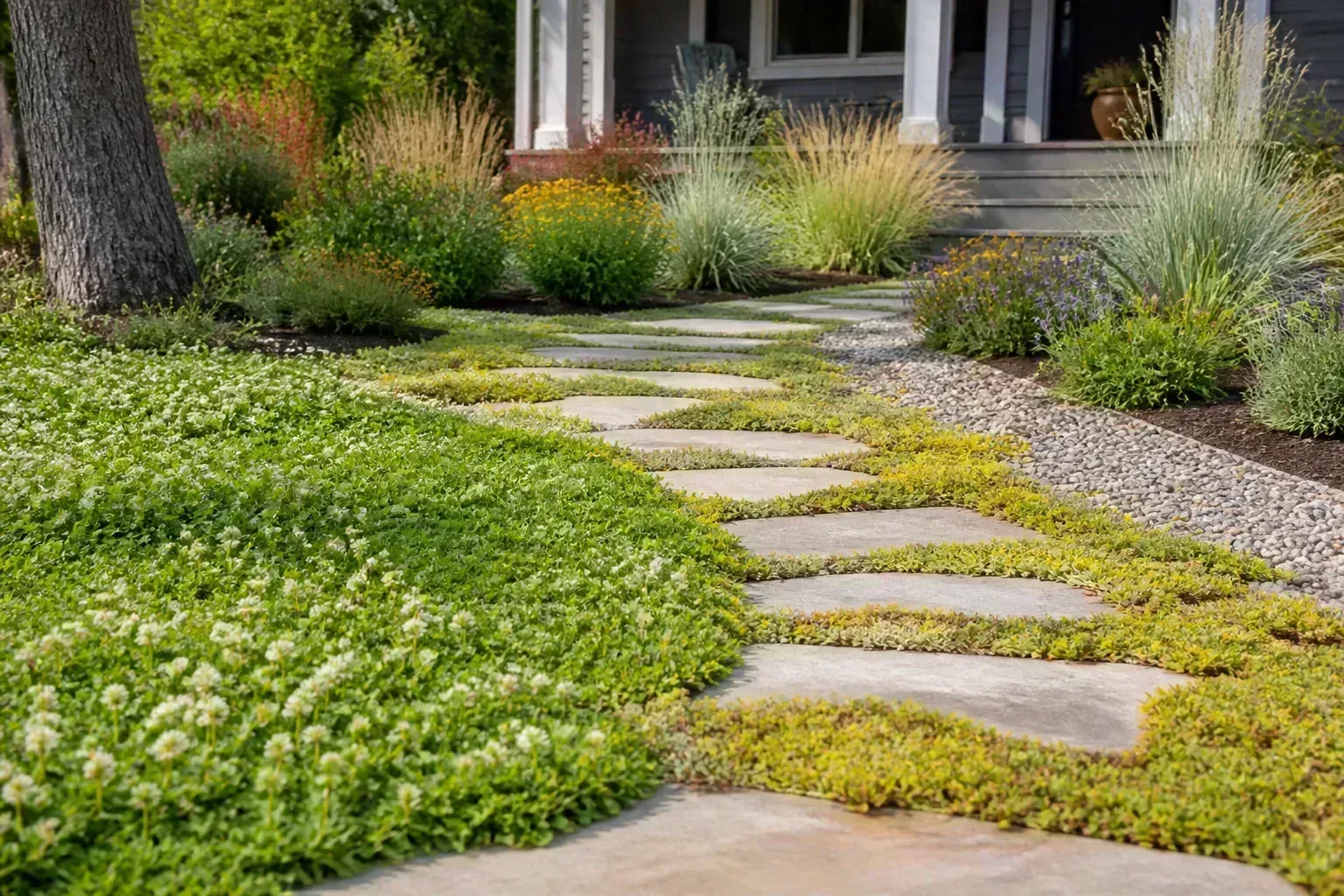
A lawn is a poor fit for a slope that is difficult to mow, dense dry shade under mature trees, persistent wet soil, or a narrow strip that receives no useful sunlight. A grass chosen for the wrong site demands more water and repair but may still fail. If a modest turf area cannot do the job, convert only that problem area to a groundcover, mulch, path, or planting bed rather than replacing every square foot of lawn.
Clover, moss, creeping thyme, sedges, and ornamental grasses can be attractive lower-maintenance choices in the right location, but they are not interchangeable with mowable turf. Their durability, pollinator value, seasonal appearance, and tolerance of regular walking differ. If children or pets need a dependable play surface, keep a smaller patch of traffic-tolerant turf and use alternatives for the difficult edges or unused corners. A mixed landscape can be easier to care for than forcing one grass across very different conditions.
Conclusion
The easiest lawn is usually the grass that matches the site and the appearance you can accept. For dry Great Plains sun, shortlist buffalograss or blue grama; for cool shade and lighter use, compare fine fescues; for active warm-season lawns, weigh Bermuda and zoysia against their mowing and spread. In the Southeast, centipede, bahiagrass, carpetgrass, St. Augustine, and seashore paspalum solve different soil, water, salt, and shade problems rather than competing as one “best” grass.
Before you buy, confirm the species and cultivar with local turf guidance, check how it is sold, and plan for establishment water. Then decide whether a dormant, taller, or less uniform lawn is an acceptable trade for fewer inputs. That decision does more to make a lawn low maintenance than the label on the seed bag.



