10 Linden Tree Species for Your Landscape
Choose the right linden for a yard, street, or large garden with size comparisons, identification clues, climate notes, and care advice.
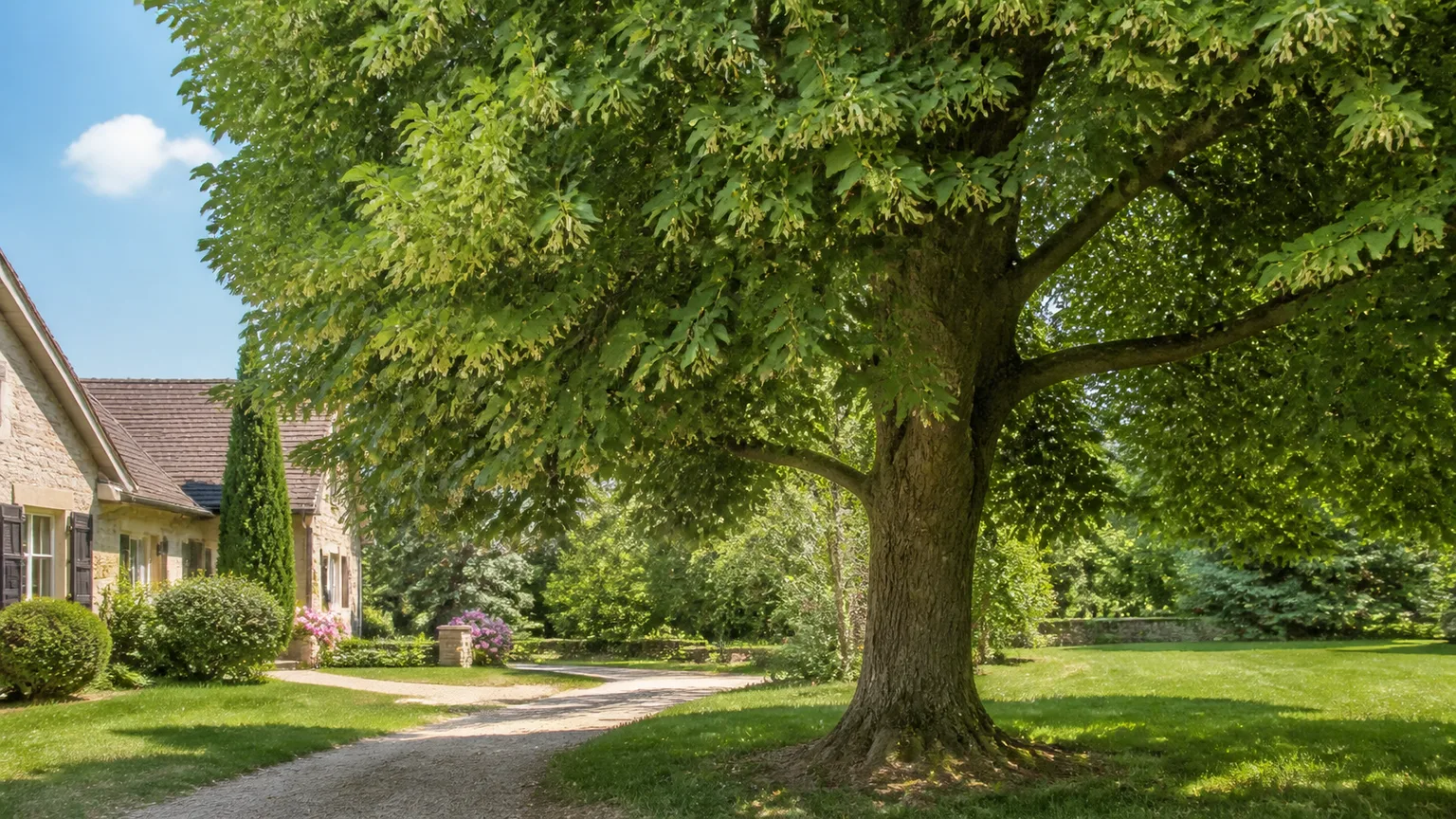
Linden trees are famous for the things a good shade tree should do: build a broad canopy, carry fragrant summer flowers, and give a garden a strong sense of permanence. But “linden” is not one interchangeable tree. The Tilia genus includes native basswoods, European species, hybrids, and ornamental forms with very different mature sizes, leaf textures, drought tolerance, and performance beside roads or buildings.
The right choice starts with the site, not the flower color. A spacious rural yard can support American basswood, while a street tree in compacted soil may be better served by a little-leaf, silver, European, or Crimean linden. The comparisons below use approximate nursery and horticultural ranges; local cultivar, soil, moisture, and exposure can move a tree outside them.
What makes a linden a linden?
Lindens are deciduous trees in the Tilia genus, part of the Malvaceae family. Depending on where you live, you may hear them called lindens, basswoods, or lime trees; “lime” here has nothing to do with citrus. Most have simple, alternate, heart-shaped leaves with toothed edges, a dense canopy, and gray bark that becomes more furrowed with age.
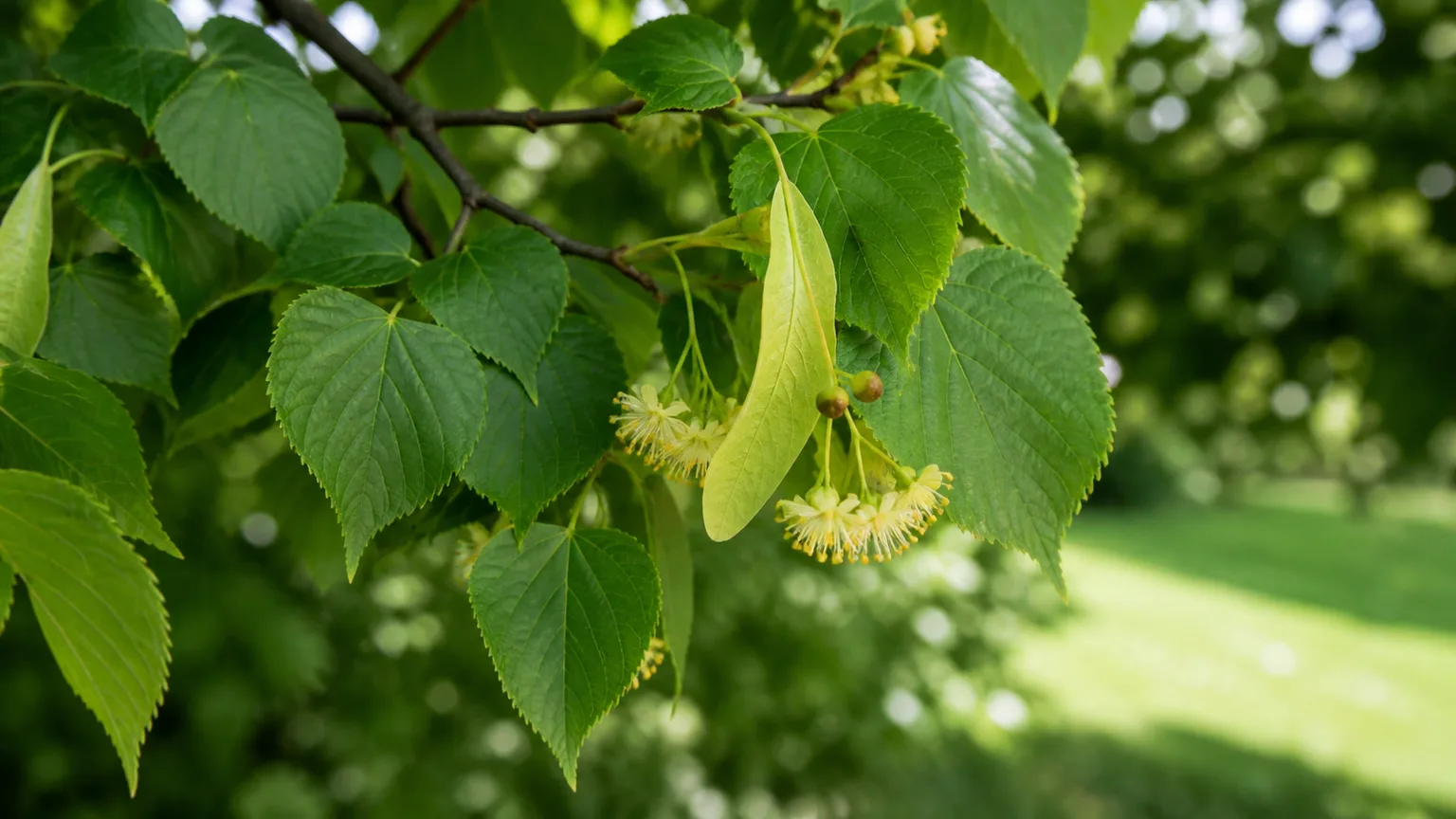
The flowers are small rather than showy, but their fragrance makes them memorable. Clusters of pale yellow to yellow-white flowers hang from a long, leaf-like bract, and the flowers are followed by small nutlike fruits. The bract is not just decoration: it is part of the characteristic linden fruiting display and helps wind move the fruits. In a U.S. Forest Service review of American basswood, one pollination study recorded 66 insect species from 29 families visiting Tilia flowers, which helps explain why a flowering linden can feel unusually active with bees and other insects. The U.S. Forest Service basswood review also documents the species’ wildlife value, wood uses, range, and growth habits.
There is a taxonomic catch. Lindens hybridize, and some familiar landscape names are varieties or hybrids rather than universally accepted standalone species. That is why the same plant may appear on a nursery tag as Tilia americana var. caroliniana, Tilia caroliniana, or a synonym. For buying and planting, the nursery’s complete botanical name and cultivar matter more than winning an argument over the common name.
Pick the planting site before the species
Most lindens need full sun to light partial shade, a soil that drains reasonably well, and dependable moisture while they establish. They are generally poor choices for a narrow foundation bed, a site directly under power lines, or a strip of lawn so compacted that water runs off instead of soaking in. Their eventual canopy, trunk, surface roots, flower debris, and shade are part of the design—not problems to discover later.
Use the table as a first filter, not a promise of exact performance. A 50-foot tree is still too large for a small yard even if it can be pruned; repeated heading cuts do not turn a large linden into a naturally small tree. Conversely, a species described as urban-tolerant still needs adequate soil volume, irrigation during drought, and protection from mower and string-trimmer damage.
Ten linden trees at a glance
| Linden | Approx. mature size | Approx. USDA zones | Strongest landscape fit | Main caution |
|---|---|---|---|---|
| American basswood | 50–80 ft tall | 2–8 | Large rural or suburban shade tree | Sensitive to harsh urban conditions; needs room |
| Carolina basswood | 30–60 ft tall | 7–9 | Warm-region native or specimen tree | Taxonomy varies; needs rich, moist soil |
| White basswood | 50–80 ft tall | 3–7 | Cooler suburban or rural site | Not a good default for polluted streets |
| Little-leaf linden | 50–70 ft tall | 3–7 | Street, formal, or urban planting | Can scorch in drought; still a large tree |
| Large-leaved lime | 60–80 ft tall | 3–7 | Parks and large properties | Needs space and consistent moisture |
| European linden | 50–90 ft tall | 3–7 | Formal avenues and broad shade | May need early structural training |
| Crimean linden | 40–60 ft tall | 3–8 | Urban specimen or constrained site | Hybrid identity and longevity can be variable |
| Silver linden | 50–70 ft tall | 4–7 | Hotter, drier, or urban exposure | Dense canopy and mature size still demand room |
| Weeping silver linden | 50–70 ft tall | 5–9 | Specimen with a low, draping canopy | Branching needs clearance and training |
| Henry’s lime | 20–30 ft tall | 6–8 | Smaller garden or late-blooming specimen | Slow growth and less cold hardiness |
Ranges above synthesize the species comparisons in Tree Vitalize’s linden overview and Plant Detectives’ linden guide. Treat zones as a starting point: a protected site, winter wind, summer drought, and the exact cultivar can matter as much as the zone number.
How to identify a linden in the field
Start with a living twig and the whole tree rather than a single fallen leaf. Look for a broad, simple leaf with a heart-shaped or slightly uneven base, fine to coarse teeth along the edge, and a pointed tip. The underside may be nearly smooth, softly hairy, or distinctly white and silvery, depending on the species.
Next, check the flower cluster and bract when the tree is in bloom. A pale strap-shaped bract attached beneath or beside the flower cluster is a useful genus-level clue. The exact number and orientation of flowers, the amount of hair on the leaves, and the fruit’s ribs can help with species-level identification, but they are subtle. Tree Vitalize’s identification guide compares those details and explains why hybrids and cultivar variation make a confident name difficult from one photograph.
The most useful field shortcut is to compare three features together: leaf size and underside, flower cluster position relative to the bract, and fruit shape. Little-leaf linden tends to have smaller leaves and flower clusters held more upright, while bigleaf and European types have larger or intermediate leaves and drooping clusters. Silver linden is the one that flashes pale when wind turns the densely hairy leaf undersides toward you. If the tree is valuable or near a target, confirm the ID with a regional extension key or an arborist rather than treating one clue as proof.
Ten linden tree species worth considering
1. American basswood
American basswood (Tilia americana) is the classic large North American linden: fast-growing on a good site, broad-crowned, fragrant in early summer, and capable of casting deep shade. The U.S. Forest Service describes it as a large tree of eastern and central hardwood forests that performs best on deep, moist soils, though it can occur on a wider range of sites. Missouri Botanical Garden lists a typical landscape height of 50 to 80 feet, with larger specimens possible. Its plant profile is a useful reference for its rounded crown, flowers, fruit, and native range.
Choose it for a large lawn, acreage, woodland edge, or generous suburban property where its native wildlife value is an advantage. Do not make it your first choice for a narrow, polluted street strip; compacted soil, reflected heat, road salt, and erratic moisture can turn a naturally vigorous tree into a stressed one. Give it room for both canopy and roots, and expect some suckering or low growth that may need occasional removal.
2. Carolina basswood
Carolina basswood is often listed as Tilia americana var. caroliniana and sometimes treated as Tilia caroliniana. That naming variation is worth knowing before you search for a plant, because a nursery or reference may use either name. It is the warm-climate member of the American basswood group, generally suited to Zones 7–9 and often described as a 30- to 60-foot tree with fragrant flowers and a dense crown.
This is a thoughtful choice for a spacious yard in the Southeast, Florida, or other warm regions where a native basswood is wanted. It performs best in rich, well-drained soil with steady moisture and is not a drought-proof street tree simply because it tolerates heat. Use the leaf undersides, local range, and complete plant label together when identifying it; the line between Carolina and other American basswoods is not always visually clean.
3. White basswood
White basswood, Tilia americana var. heterophylla, is another American basswood form whose taxonomic treatment varies. Its practical distinction is the conspicuously pale, densely hairy underside of the leaf. In a cooler mountain or rural landscape, that pale foliage can add a soft two-tone effect without changing the familiar broad-canopy character of basswood.
Plant it where the soil stays reasonably moist and where the tree can mature without traffic pollution and severe reflected heat. It is a large shade tree, commonly described in the 50- to 80-foot range, so “white” does not mean compact. The underside is paler and more white than the silver linden’s shimmering gray-silver effect; however, a single leaf from a variable tree is not enough to settle the identification.
4. Little-leaf linden
Little-leaf linden (Tilia cordata) is one of the most useful lindens for formal streetscapes and urban yards because its smaller leaves, regular habit, and tolerance of pruning suit managed landscapes. The “little” leaves are small only compared with other lindens, not tiny. Mature trees still commonly reach 50 to 70 feet, and narrow cultivars can remain substantial.
Select it when you want a tidy oval or pyramidal crown, late-season shade, and a better chance of coping with city conditions than a native basswood. It still needs irrigation in extended drought, especially in heat-reflecting pavement, and can show leaf scorch when the root zone dries. Remove basal suckers where they interfere with mowing, and leave enough soil volume for roots rather than relying on the species’ reputation for toughness.
5. Large-leaved lime
Large-leaved lime, also called bigleaf or large-leaved linden (Tilia platyphyllos), earns its name from broad leaves that can approach six inches long. Its rounded, domed form and rich green canopy make it a handsome park, estate, or large-yard tree. The leaf undersides and petioles are often hairy, and the fruit is more distinctly ribbed than the smooth or faintly ribbed fruit of some lookalikes.
This species suits a sunny site with fertile, moist, well-drained soil and enough space for a 60- to 80-foot tree, with larger specimens possible. It can tolerate a wider range of conditions than its ideal description suggests, but adaptability is not a reason to plant it in a dry parking-lot island. Choose it when the goal is a broad, traditional canopy and the site can provide water during establishment.
6. European linden
European linden (Tilia × europaea) is a naturally occurring hybrid of little-leaf and large-leaved lindens. Its intermediate leaves and rounded crown help explain its long history in parks, avenues, and formal plantings. It can be an excellent shade tree, but its early structure deserves attention: a young tree may develop multiple stems, basal shoots, or a congested crown unless a central leader and strong branch spacing are maintained.
Choose a nursery-grown tree with a visible root flare and a sound, evenly spaced framework. European linden is often a better urban candidate than American basswood, yet it still produces a large canopy and can become costly to correct if it is planted beneath wires or allowed to develop weak unions. It is a good match for a formal allée or broad lawn where regular inspection and light structural pruning are realistic.
7. Crimean linden
Crimean linden (Tilia × euchlora) is a hybrid with glossy green leaves, a rounded to pyramidal crown, fragrant flowers, and good reputation for urban tolerance. Its leaves and branching can droop slightly with age, creating a softer outline than the strict pyramid of some little-leaf cultivars. Horticultural references commonly describe it as a 40- to 60-foot tree, although container specimens and young grafted plants look much smaller.
It is appealing for an urban specimen or a site where pollution and compacted soil are concerns, but do not confuse “urban-tolerant” with “indestructible.” The tree still needs a generous root zone and deep watering during drought. Its hybrid history and variable reports about service life make it a less obvious choice when your primary goal is a centuries-long legacy tree; for that purpose, compare it with a well-sited basswood or a proven local cultivar.
8. Silver linden
Silver linden (Tilia tomentosa) is easiest to recognize when wind flips its leaves and reveals the dense white hairs on the underside. The effect can make a mature crown shimmer, while the yellow fall color and pale summer flowers extend the seasonal interest. It is commonly described as a 50- to 70-foot tree and is valued for better heat, drought, compaction, and pollution tolerance than many other lindens.
Silver linden is one of the strongest candidates for a hot urban site, but it is not a desert tree. Establish it with consistent water, then use deep irrigation during prolonged dry weather rather than waiting for widespread scorch. The thick canopy still needs clearance from roofs, drives, and overhead lines, and fallen flowers and leaves can be noticeable over parked cars or patios. If you want silver foliage plus a more compact outline, look for a named cultivar and verify its mature dimensions rather than assuming the straight species will stay narrow.
9. Weeping silver linden
Weeping silver linden is often sold as Tilia tomentosa var. petiolaris or Tilia petiolaris. It keeps the silver-backed foliage of silver linden but adds pendulous twigs, longer leaf stalks, and a low, draping canopy. That habit can make a dramatic specimen beside a lawn, in a park, or at the edge of a large garden where branches are allowed to hang naturally.
Use it only after checking the clearance the mature lower canopy will need. A weeping form beside a walkway may require training to lift branches, and repeated harsh cuts can destroy the character that justified choosing it. It is still a large tree—often listed around 50 to 70 feet tall—so the weeping habit changes the silhouette, not the long-term space requirement. Its better drought tolerance after establishment is helpful, but young trees remain dependent on good watering.
10. Henry’s lime
Henry’s lime (Tilia henryana) is the outlier in this group. It is slower growing and smaller, commonly reaching about 20 to 30 feet, with unusual sea-green leaves whose vein tips can extend into bristly points. It also blooms later than many lindens, giving a sheltered garden a fresh flush of fragrance after earlier species have finished.
This is the linden to investigate when you have a smaller property, a protected courtyard-like garden, or a collector’s interest in distinctive foliage. It is not a quick shade tree, and its Zone 6–8 range leaves less margin for exposed cold sites than the hardier species above. Plant it in full sun to light shade with well-drained soil, protect it from drying winds while young, and accept that patience is part of the design.
Plant and establish a linden without future conflicts
First, measure the mature height and spread of the exact species or cultivar. Then look up and out: mark overhead wires, roof edges, driveways, septic features, sidewalks, and the area where the mature crown will cast shade. A large linden should not be forced into a two-sided foundation bed. If the available planting circle is smaller than the tree’s mature root and canopy footprint, choose a different tree rather than planning to contain it with repeated topping.
Plant in early spring or fall when local conditions allow, or plant a container-grown specimen during the growing season only if you can keep the root ball watered. Dig a hole no deeper than the root ball and roughly two to three times as wide. Find the root flare before the tree goes into the hole; the first major roots should finish at or just above surrounding grade, never buried beneath a deep cone of backfill.
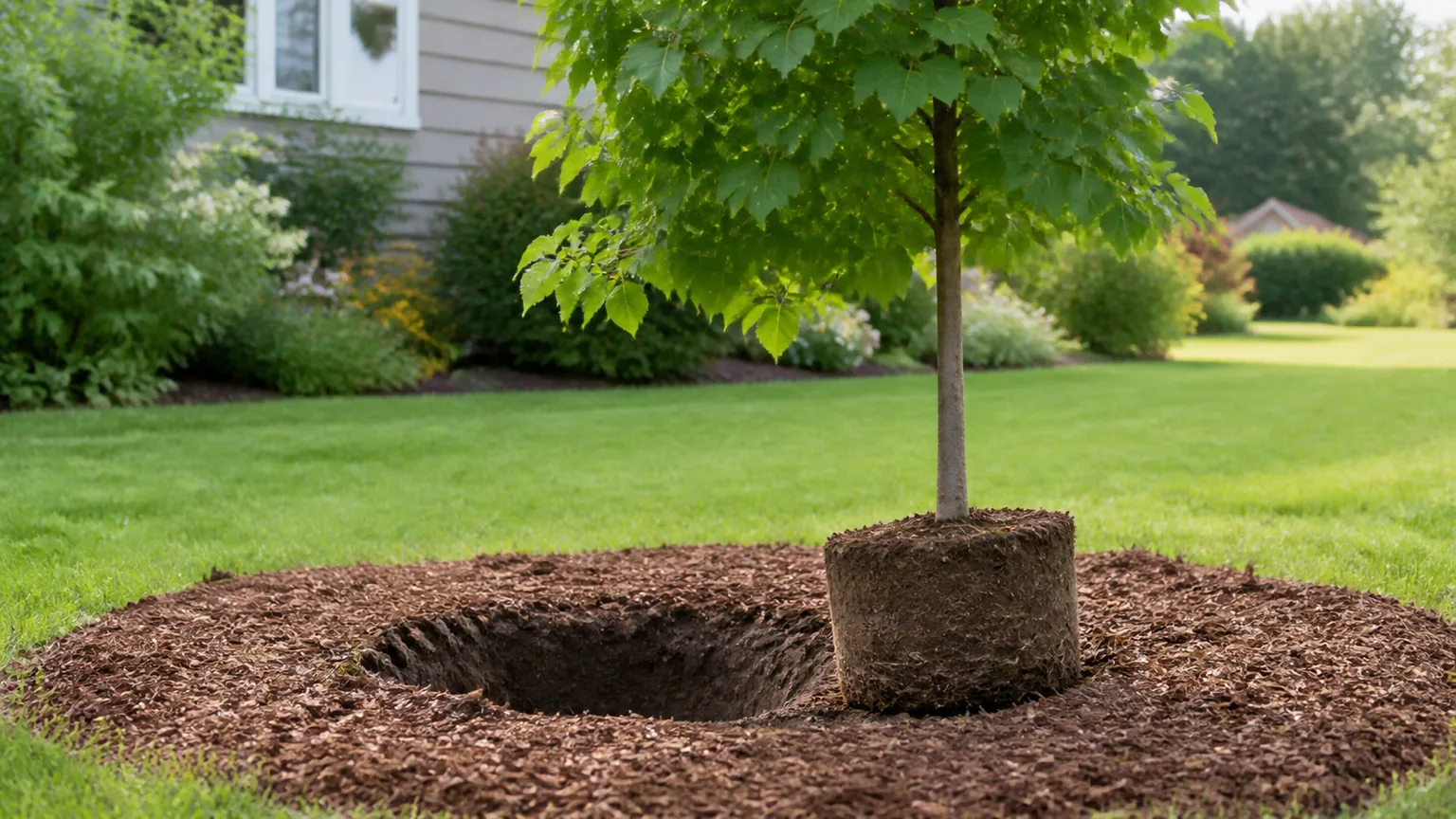
Set the tree straight, remove circling roots when appropriate for the nursery stock, and backfill with the soil you removed. Water slowly to settle air pockets, then apply a 2- to 3-inch mulch layer over the root zone. Keep the mulch several inches away from the trunk so the bark remains dry and visible. Stake only when the root ball cannot stand securely or the site is unusually windy, and remove support before it starts restricting the trunk.
Care priorities after planting
The first two growing seasons are when watering matters most. Check the soil in the root ball and surrounding planting zone, then water deeply enough to wet the full root area rather than sprinkling the trunk or surface every day. The right interval depends on soil, rainfall, temperature, and root-ball size; sandy soil may need more frequent attention than clay, while a cool rainy week may need none.
Keep competing turf and weeds out of the mulched root zone, but do not pile compost or fertilizer against the trunk. Established lindens usually benefit more from correct siting, organic-matter cycling, and drought protection than from routine high-nitrogen feeding. If growth is weak, leaves are pale, or the tree repeatedly scorches, test the soil and inspect drainage before reaching for fertilizer.
Most species flower best in sun. Light shade is useful in hot climates, but deep shade can produce a thin crown and fewer flowers. Watch the tree’s response over a season: premature yellowing, marginal browning, sparse new growth, or repeated dieback indicate stress that may come from drought, compacted roots, planting depth, salt, or a disease—not simply a need for more food.
Pests, maintenance, and honest trade-offs
Aphids are common on lindens and can leave sticky honeydew on leaves, patios, cars, or furniture. Japanese beetles and leaf-feeding insects can make holes or skeletonize foliage in some seasons. On a mature, otherwise healthy tree, this damage is often temporary or cosmetic; on a newly planted tree, repeated defoliation is more serious because it reduces the limited energy available for root establishment.
Start by identifying the pest and checking whether natural enemies are present. A strong stream of water can reduce aphid colonies on reachable young growth, while sanitation, irrigation, and avoiding unnecessary broad-spectrum insecticides protect beneficial insects. Do not spray a product simply because a linden looks busy with insects during bloom; flowers are a reason to be especially careful around pollinators, and pesticide labels and local extension guidance should control any treatment decision.
Linden wood is relatively soft, and some trees develop weak or crowded branch structure. Inspect the canopy after storms and prune dead, broken, crossing, or badly attached branches with a clear structural goal. Small cuts made while branches are young are easier for the tree to close over than large corrective cuts later. For mature or hazardous trees, hire a qualified arborist rather than climbing or removing major limbs yourself.
The maintenance trade-off is straightforward: lindens offer shade, fragrance, wildlife value, and a strong silhouette, but they are not invisible trees. They drop leaves, bracts, flowers, and fruits; some attract honeydew-producing aphids; and their shade can suppress lawn beneath the canopy. Pick the species and location with those effects in mind, and the same traits become part of the landscape rather than a surprise.
Conclusion
The best linden tree species is the one whose mature size, climate range, soil tolerance, and canopy behavior fit the site you actually have. American, Carolina, and white basswoods bring native character to roomy landscapes; little-leaf, European, Crimean, and silver types are more useful where streets and heat add stress; weeping silver offers a distinctive specimen form; and Henry’s lime gives smaller gardens a slower, unusual option.
Before buying, confirm the botanical name and cultivar, measure the future canopy space, and make a first-year watering plan. Get those decisions right and a linden can provide fragrant bloom, deep summer shade, and decades of structure without asking pruning to solve a planting mistake.