How to Grow and Care for Mexican Heather
Learn how to grow Mexican heather in beds or pots, manage watering and pruning, keep it blooming, and decide whether it can survive your winter.
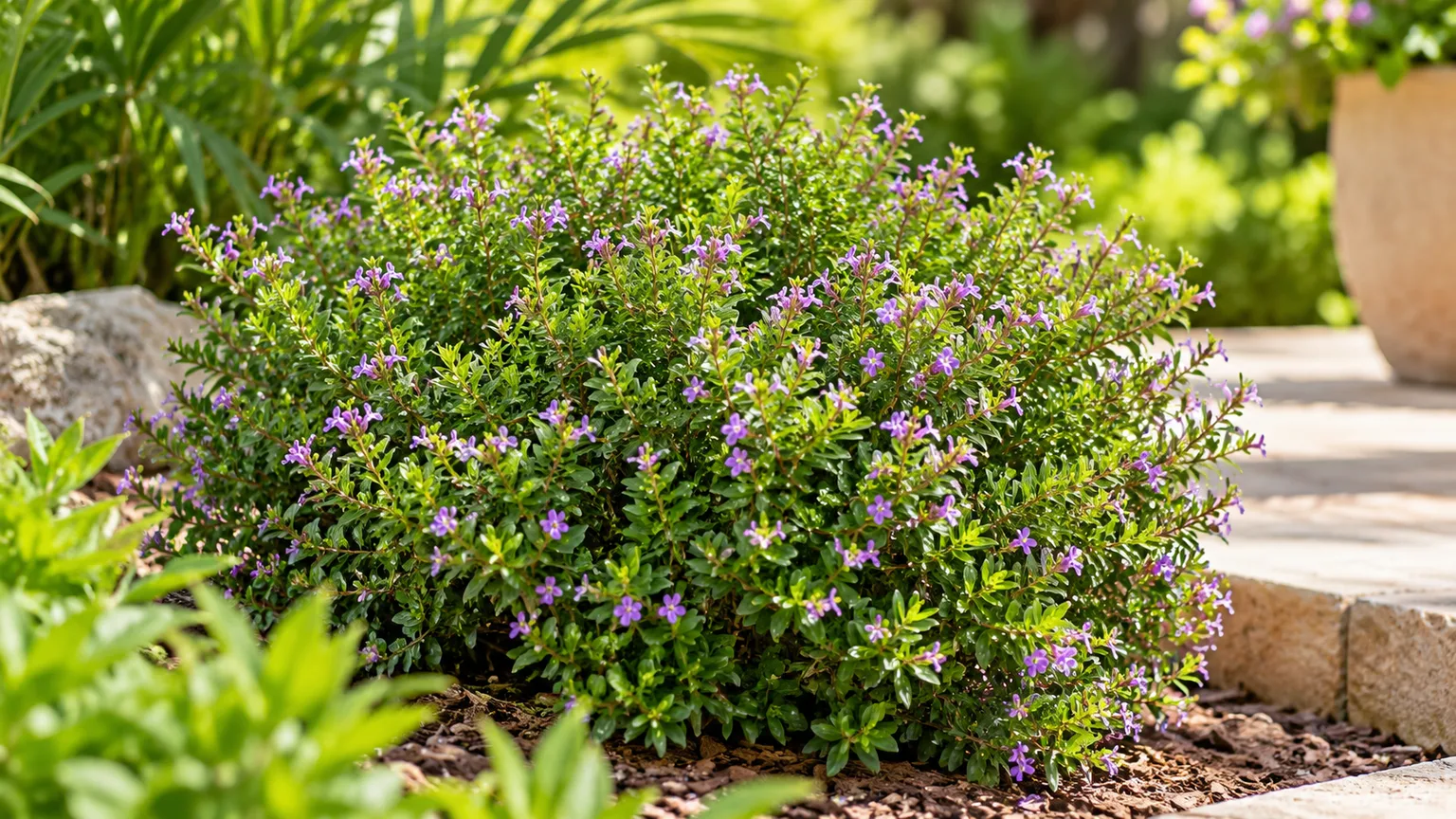
Mexican heather rewards a warm, sunny spot with a dense cushion of small leaves and tiny flowers that can keep coming for months. The key decision is not a complicated fertilizer routine; it is whether your winter is mild enough for this frost-sensitive shrub to live outdoors year-round. Once you plan around that limit, the rest of its care is straightforward: give it light, drainage, and water that reaches the roots without leaving them saturated.
What Mexican Heather Actually Is
Mexican heather is Cuphea hyssopifolia, a compact, branching shrub in the loosestrife family, Lythraceae. It is also sold as false heather or elfin herb. Its fine leaves and low, rounded habit resemble true heathers, but it is not a member of the heather family and does not share their cool-climate requirements. NC State Extension describes a dense plant that commonly reaches about 1 to 2 feet tall, with a similar or wider spread; the Royal Horticultural Society lists a compact shrub up to about 45 centimeters high and 0.5 to 1 meter wide. Expect the exact size to vary with cultivar, climate, and whether the plant is clipped.
The familiar form has green foliage and small lavender-purple, trumpet-like flowers, while pink- and white-flowering selections are also sold. Individual blooms are modest, but the plant produces them along the stems over a long season. In warm regions flowering may continue for much of the year; in gardens with a cool winter, it usually starts as the weather warms and continues until frost. NC State Extension notes that the flowers attract bees, butterflies, and hummingbirds, making a low border or container more than a foliage accent. NC State Extension’s plant profile and the RHS plant profile are useful references for the species’ dimensions and form.
Can You Grow It in Your Climate?
Treat Mexican heather as a tender perennial. NC State Extension lists it for USDA Zones 9a through 11b, while Texas Tech’s plant database places it in Zones 9 through 11 and calls out its lack of cold tolerance. These ranges are useful starting points, not a promise that every plant in a listed zone will survive every winter. A sheltered urban courtyard, a windy low spot, a container above cold paving, and a site with repeated freezes can behave very differently even when the zone number is the same.
If your garden rarely freezes, you can grow it as a small evergreen shrub or groundcover and expect it to return. Where frost is routine, use it as a warm-season annual or keep it in a movable container. Extension guidance notes that plants may die back to the ground in some Zone 8–9 conditions and resprout from a mulched base, but that recovery is not dependable after a hard or prolonged freeze. If keeping the same plant matters, do not gamble on mulch alone: move a container before cold weather or take cuttings while the plant is actively growing.
Use a Container Where Winter Is Uncertain
A pot turns the cold-limit question into a manageable seasonal routine. Keep it outside while nights are reliably mild, then move it to a bright, warm place before frost is forecast. The trade-off is that a container needs more frequent moisture checks in summer and enough indoor light to hold its shape through winter. It may flower less indoors than it does outdoors, and it can drop leaves after the change in light; that is a reason to inspect conditions, not an automatic sign that it needs more water.
For gardeners in colder regions, an annual planting can be the simpler choice. Mexican heather is inexpensive and quick to establish in warm months, and a new spring plant often performs better than a stressed specimen kept in a dim room all winter. The practical rule is simple: overwinter it if you have a sunny indoor location and want to keep a particular plant; otherwise, treat it as seasonal color and propagate a backup before frost if you want the same cultivar next year.
Site: Sun, Heat, and Shade
Start with full sun, roughly six hours or more of direct light a day. NC State Extension identifies full sun as a suitable exposure, and practical growing guidance from Epic Gardening likewise recommends a sunny position for the strongest flowering. Mexican heather tolerates high summer heat, but “heat tolerant” does not mean its roots should dry completely every afternoon. In a very hot, exposed site, a little afternoon shade can reduce leaf scorch and slow moisture loss without sacrificing the plant’s compact habit.
A bright partial-shade site is a reasonable compromise in hot inland gardens, but expect flowering to be lighter if the plant receives only a few hours of sun. Avoid deep shade, where the stems can stretch toward light and the plant may look open instead of mounded. If a plant is leafy but has few flowers, assess the actual direct-light hours before adding fertilizer. Moving an established plant can help, but do it when temperatures are moderate and keep the root ball intact.
Good air movement matters more than a perfectly sheltered corner. Mexican heather works well at the front of a sunny border, along a warm walkway, or in a patio container where you can water it and move it if cold threatens. Avoid a low spot that stays wet after rain, a roof drip line that saturates the root zone, and a narrow gap where an overhanging shrub blocks most of its light.
Soil and Planting
Use well-drained soil that holds some moisture rather than either a dry, fast-draining gravel bed or a permanently wet pocket. The profiles show the plant’s flexibility: NC State lists clay, loam, and sand when drainage is good, while the RHS lists chalk, loam, and sand. That range is a good reminder not to chase one ideal soil texture. Heavy ground can work if water does not stand around the roots; sandy soil can work if you water during dry spells and add a modest amount of organic matter to slow drying.
Slightly acidic soil is compatible with Mexican heather, but gardeners should not automatically acidify the bed. NC State Extension lists acidic soil, while the RHS profile includes chalk among suitable soil types. That range is a good reason to prioritize drainage and consistent root-zone moisture over forcing a particular pH. If leaves turn yellow while the veins remain greener—especially in alkaline soil—test the soil first and use local extension guidance to interpret the result rather than adding peat, sulfur, or acidifying fertilizer by guesswork.
Spacing and First-Season Establishment
Plant outdoors after frost risk has passed and the soil has warmed. In frost-free climates, choose a mild part of the year rather than the harshest stretch of summer; a newly planted root ball establishes more easily when it is not battling heat and drought at the same time. Set the plant at the same depth it grew in its nursery pot, backfill, and water thoroughly so the surrounding soil settles around the roots.
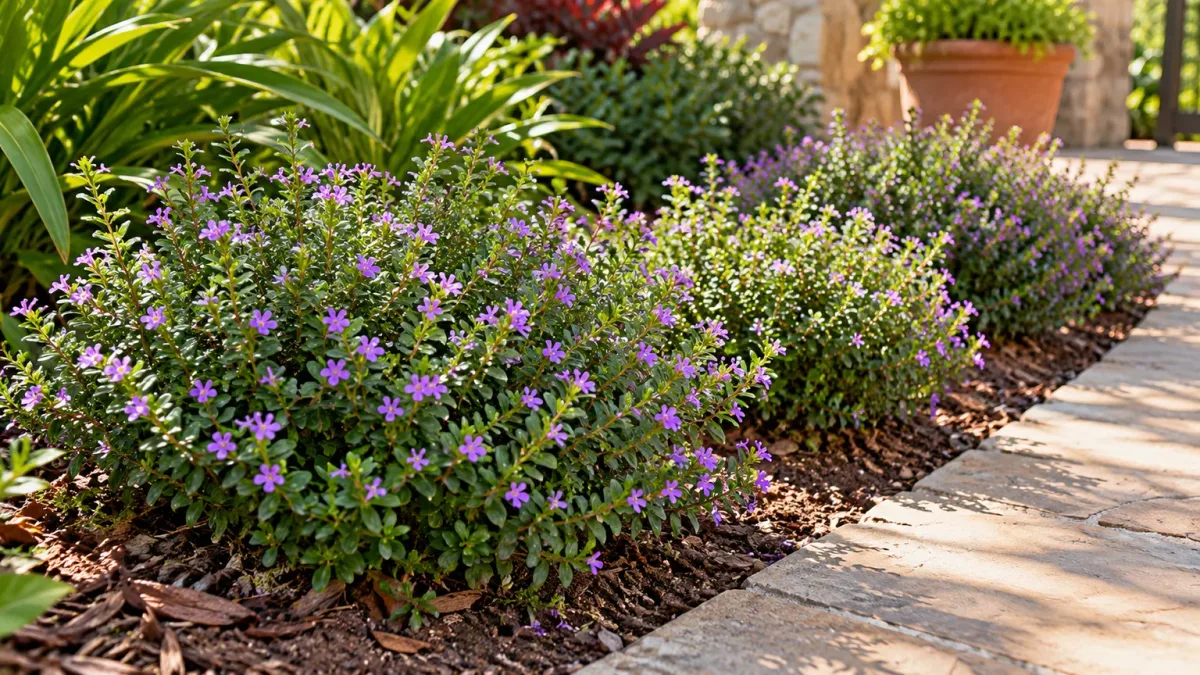
Allow about 18 to 24 inches between plants for a low border, adjusting toward the wider end if your cultivar spreads broadly or you want more airflow. Gardening Know How recommends at least 18 inches; NC State lists mature widths that can approach 2 feet or more. A closer spacing creates a quicker visual mass but can make individual plants compete sooner and hide the foliage at the center. Keep mulch shallow and pulled back from the stems; it should reduce evaporation, not bury the crown.
For a small group, water each root ball separately at planting rather than sprinkling the foliage and assuming the roots are wet. During the first few weeks, check the soil near the original root ball because nursery mix can dry at a different rate from surrounding garden soil. Once you see new growth and the plant resists a gentle tug, it is settling in; gradually shift to deeper, less frequent watering.
Watering: Even Moisture Without Soggy Roots
Mexican heather is more forgiving of a short dry spell than of roots that stay waterlogged, but it flowers and fills out best with regular moisture. Do not use a fixed “once a week” rule as your only test. Rainfall, temperature, soil texture, wind, mulch, pot size, and root development all change how quickly the root zone dries. Instead, feel the soil an inch or two below the surface near the plant. If it is still cool and damp, wait; if it is dry at that depth, water slowly at the base until the root zone is moist.
A newly planted shrub needs closer checks than an established one. In a hot, rainless week, a new plant may need water more than once, while a mature plant in loam may need less. Container plants dry faster, particularly in small pots, hanging baskets, terracotta, and afternoon sun. Check those daily during heat waves, but water only when the mix is beginning to dry rather than keeping it constantly wet. Let excess drain completely and empty a saucer after watering.
Watering deeply and less often encourages roots to occupy a wider volume of soil than frequent shallow sprinkles. If leaves wilt during the hottest part of an afternoon but recover by evening, check the soil before reacting; heat can temporarily outpace water uptake even when the bed is moist. Persistent wilt with dry soil points to thirst, while persistent wilt in wet soil suggests poor drainage or damaged roots. Watering more in the second case usually makes the problem worse.
Fertilizer and Mulch
Mexican heather is not a plant that needs a heavy feeding program to flower. In an average, healthy garden bed, start with compost worked into the planting area or a thin surface layer of compost as mulch. If growth is weak and soil is poor, use a balanced fertilizer at the label rate during active spring growth. A container can benefit from a light, controlled feeding because nutrients leach out with repeated watering, but follow the product label and stop feeding when growth slows for winter.
More fertilizer is not a reliable fix for sparse flowers. Too much nitrogen can produce soft, leafy growth and may increase the need for pruning without addressing the real cause. If flowering fades, check light, root moisture, and cold injury first; then consider a soil test if foliage color or growth remains poor. Gardening Know How recommends regular balanced feeding, while Epic Gardening treats fertilizer as optional except in poor soil. A restrained, condition-based approach avoids feeding by calendar when the plant is already growing well.
Use a light layer of organic mulch in an outdoor bed to reduce evaporation and weeds. Keep it a few inches away from the stems, and do not pile it up in an attempt to insulate the plant through a severe freeze. Mulch can buffer a brief cold snap and protect the base in marginal conditions, but it cannot turn a tender shrub into a reliably hardy one.
Pruning and Shaping
Routine pruning is optional. If the plant is already compact and flowering well, leave it alone; deadheading is unnecessary because the flowers are small and new blooms continue along the stems. If it becomes lanky, uneven, or crowded against a path, trim it lightly in late winter or early spring before the main flush of growth. Use clean, sharp shears and shorten the longest stems gradually rather than shearing the entire shrub into a hard, flat shape.
Light tip-pruning can encourage branching and restore a rounded outline. Avoid cutting far back into old, leafless wood unless you know the plant is actively resprouting from that point; a tender shrub may not replace every bare stem after a harsh cut. If winter has damaged the top growth, wait until the worst cold has passed and new buds show where the plant is alive, then remove only dead material. This prevents a premature cut from exposing surviving tissue to another freeze.
For a low border, one careful shaping pass is usually enough. In a container, rotate the pot occasionally so each side receives light and growth stays balanced. Do not prune solely to force flowers: better light and steady root moisture are more dependable levers.
Getting Flowers Through the Growing Season
Mexican heather flowers most reliably when it has warmth, sun, and a root zone that does not swing between bone-dry and saturated. The small purple, pink, or white blooms may appear from summer until frost in a seasonal garden; in tropical or otherwise frost-free settings, the display can last much longer. A plant that is new in spring may take time to branch and fill in before it makes a continuous-looking carpet of flowers.
When bloom is sparse, troubleshoot in this order. First count direct-sun hours; if the plant gets only morning light under a tree, that is the likely bottleneck. Next check the root zone: drought-stressed plants conserve growth, while wet, oxygen-starved roots cannot support new stems. Finally consider cold damage, heavy nitrogen feeding, or a recent hard prune. Adding bloom fertilizer without checking these basics often spends effort without improving the plant.
The flowers are too small and numerous for deadheading to be practical, and removing each spent bloom is not needed for continued flowering. If you want a tidier plant, trim lightly after a flush rather than picking off individual flowers. In frost-free gardens, allow some seed capsules to develop only if you want possible seedlings; remove them or trim the plant if you need to limit self-seeding.
Container Care and Indoor Growing
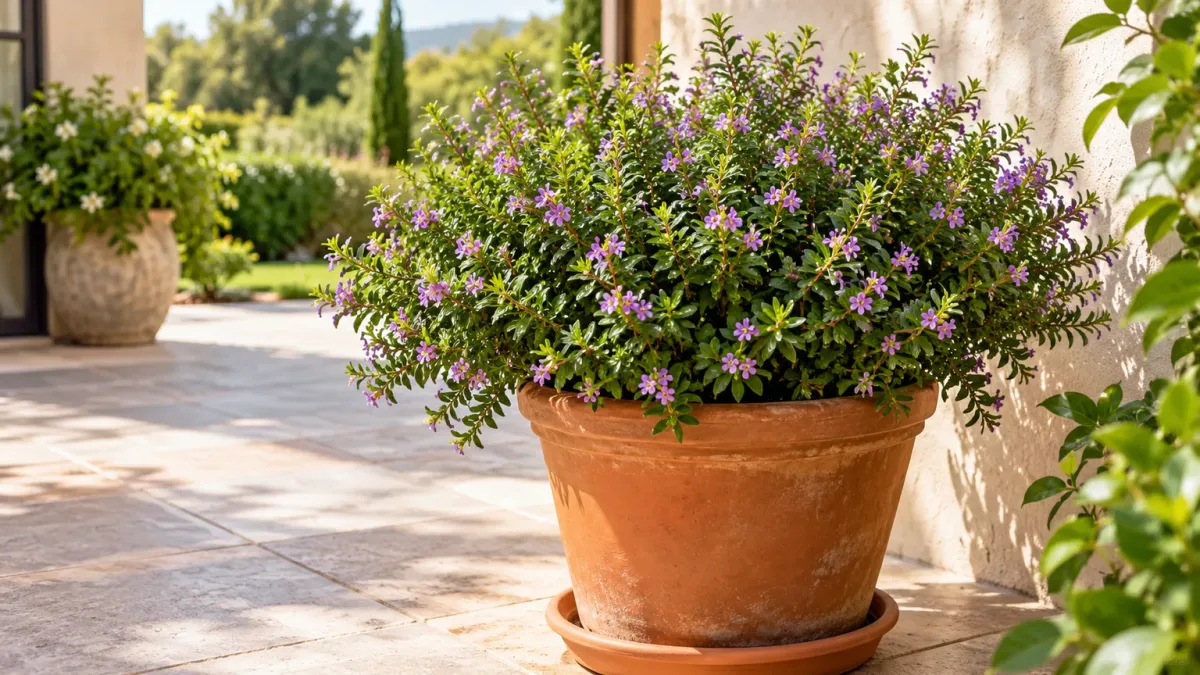
A container suits Mexican heather if you want a patio accent or need to move the plant out of cold. Choose a pot with drainage holes that is only modestly larger than the root ball; an oversized volume of mix can stay wet around a small root system. Use a quality, free-draining potting mix, not dense garden soil. A shallow tray can catch runoff, but do not let the pot stand in it after watering.
Place the container where it gets several hours of sun and check moisture more often than you would in a garden bed. The plant’s fine leaves and small flowers make it useful at the edge of a mixed container, but its spreading stems need room to show rather than being crowded by vigorous companions. A hanging basket can work if it drains freely and is large enough that the mix does not dry out within hours on hot days. Prune lightly to shape after growth becomes uneven.
Indoors, give the plant the brightest available window and avoid placing it against cold glass or next to a heating vent. Rotate it every week or two, keep the potting mix only moderately moist, and expect slower growth with shorter days. Do not compensate for dim light by watering more or feeding heavily; both can leave the plant with soft growth and stressed roots. Inspect leaf undersides before bringing it into a room with other plants, since a move indoors can also bring small pests along.
Bringing a Pot Indoors for Winter
Move the plant before frost, not after leaves have turned black. A bright, cool-but-frost-free room is generally more useful than a warm room with little light. Remove dead or damaged growth, rinse the foliage, and isolate the plant for a few weeks while you look for mites, whiteflies, or mealybugs. If the plant drops some leaves after the move, check for drafts, low light, and overwatering before deciding it is failing.
Water less often as growth slows, but do not let the root ball become completely dry for long stretches. Hold fertilizer until days lengthen and new growth resumes. In spring, acclimate the plant outdoors gradually over about a week: begin in bright shade, then increase sun exposure in stages. Moving it straight from a dim room into a full day of intense sun can scorch foliage even though the mature plant thrives outdoors.
Propagation by Cuttings or Seed
Propagation is useful if you want to keep a favorite flower color or hedge against winter loss. Cuttings generally preserve the parent plant’s traits more predictably than seedlings, while seed is a reasonable option when you are happy to grow whatever color and form results. NC State Extension lists both seed and stem cuttings as propagation strategies. Take material from a healthy, actively growing plant rather than one weakened by drought, pests, or winter decline.
Rooting Softwood Cuttings
In spring or early summer, take a 3- to 4-inch tip cutting from a nonflowering, flexible stem. Remove leaves from the lower portion, then place that end in a small pot of moist, sterile seed-starting or propagation mix. A rooting hormone is optional rather than essential. Cover the pot loosely with a clear bag or use a propagation dome to hold humidity, keeping the leaves from touching the cover and the mix damp but not soggy.
Set the cutting in bright indirect light, not hot direct sun. Open the cover briefly each day for fresh air and remove any fallen leaves. New growth is encouraging, but a gentle tug is a better check that roots have formed; do not pull hard enough to break them. Once rooted, pot it into regular container mix and give it a week or two to settle before increasing sun. If a cutting blackens at the base, discard it and restart in cleaner mix with less water.
Starting Seed
Start seed indoors about 8 to 10 weeks before your average last frost if you want plants ready for spring. Sow onto moist seed-starting mix and cover only lightly, because tiny seeds may struggle if buried deeply. Keep the surface evenly moist and warm. Germination may be slow or uneven, so avoid discarding the tray after a few days; instead, keep conditions steady and watch for seedlings over a longer window.
Once seedlings appear, give them strong light and good airflow so they do not become thin and stretched. Pot them individually after they develop several true leaves, then harden them off before planting outside. Seed-grown plants can vary in flower color and habit, particularly if the parent was a named cultivar. If matching a specific pink, white, or purple selection matters, use a cutting or buy a plant that is sold under that cultivar name.
Pests and Problems: What to Check First
Healthy outdoor plants are not usually troubled by serious disease, but pests and root stress can happen. NC State Extension lists mealybugs, thrips, whiteflies, flea beetles, and nematodes among possible problems; RHS describes the species as generally pest- and disease-free. Those statements are compatible: many plants grow without trouble, but a stressed specimen or a pest-prone indoor environment can still develop an issue. Inspect the undersides of leaves and the newest stems before treating anything.
Yellow leaves need a cause-based check. If the whole plant is yellow and the soil stays wet, improve drainage and pause watering until the root zone begins to dry. If the tissue is pale between greener veins and the soil is alkaline, test pH before attempting to correct nutrient availability. If only older leaves yellow after a cold night, wait for the weather to settle and see whether new growth remains healthy. Do not assume every yellow leaf means the plant needs fertilizer.
Dry, crisp foliage usually points first to a root ball that dried out, a pot that heats quickly, or a recent period of high wind and sun. Confirm the mix is actually dry before watering; brown leaves with wet soil can indicate root damage instead. Fine webbing and stippled leaves suggest spider mites, while clusters of soft insects or white residue may indicate aphids, whiteflies, or mealybugs. Rinse a small plant thoroughly and repeat inspections; if a labeled insecticidal soap is needed, follow its directions exactly and avoid spraying during intense heat or on pollinators. Flea beetles can make many small holes and may defoliate a plant; if damage continues, identify the pest before choosing a control.
A plant that steadily declines despite corrected watering may have root damage, nematodes, or a site problem that cannot be fixed by pruning. Check whether the root zone drains after rain and whether the plant is receiving enough direct light. For persistent decline or suspected soil-borne pests, ask a local extension office about diagnosis rather than repeatedly applying fertilizer or broad-spectrum pesticides.
Cultivars and Flower Colors
Purple is the most familiar flower color, but garden centers also sell pink- and white-flowered forms. The RHS describes flowers in light purple, pink, or white, and NC State Extension notes white and pink cultivars alongside the standard lavender-purple type. Habit and mature width can vary as much as color, so read the plant tag before buying if you want a tight edging plant rather than a wider, spreading mound.
Some named selections are sold for compact habit or heavier flowering, but names and availability vary by nursery and region. A label with a cultivar name is more useful than a color description if you plan to propagate that plant: seedlings may not come true to the parent. In a mixed border, choose colors that repeat nearby rather than buying one of every shade; the foliage texture is fine, so small groups usually read more clearly than scattered single plants.
Where Mexican Heather Works Best
Use Mexican heather as a low edging plant, a warm-climate groundcover, or a compact flowering shrub in patio pots. Its small scale makes it useful along a path or at the front of a border, while its long flowering season can soften the edge of larger tropical plantings. It is not a substitute for lawn grass or a plant for a dry, unwatered slope: although it tolerates some drought once established, it looks fuller with regular moisture and can suffer when roots sit in stagnant water.
Give it room to spread and keep it where you can monitor seedlings. NC State Extension reports that the species has naturalized in Hawaii and New Zealand and can be considered weedy in Hawaii. That does not make it invasive everywhere, but it is a reason to check local guidance in warm regions and to remove unwanted seedlings before they mature. In places where it is considered a problem, choose a locally recommended alternative instead of planting it as a groundcover.
Conclusion
Grow Mexican heather outdoors as a perennial only where winter is reliably mild; in frost-prone places, use it as a warm-season annual or plant it in a pot you can move. Give it sun or bright partial shade in very hot sites, drainage that keeps roots from sitting wet, and enough water to prevent repeated drying while it establishes. Feed lightly only when soil or container conditions call for it, prune for shape rather than flowers, and check light and moisture before trying to fix sparse bloom. That simple sequence—choose the right winter plan, plant into draining soil, then respond to what the roots and leaves show—keeps this small flowering shrub useful without turning easy care into a weekly chore.