How to Grow and Care for Monstera Peru
Grow a healthy Monstera Peru indoors with a flexible watering routine, airy soil, climbing support, propagation steps, and symptom fixes.
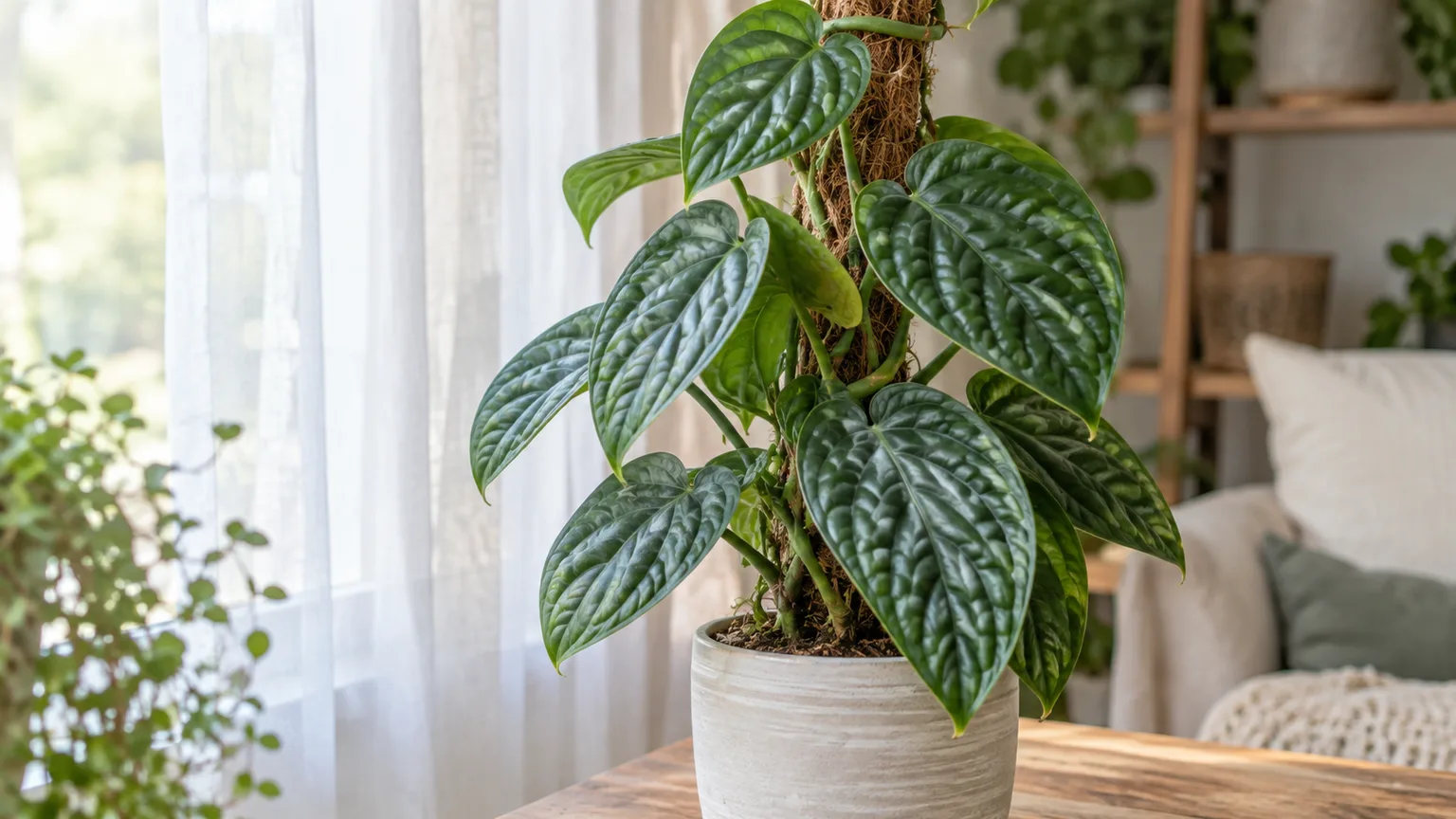
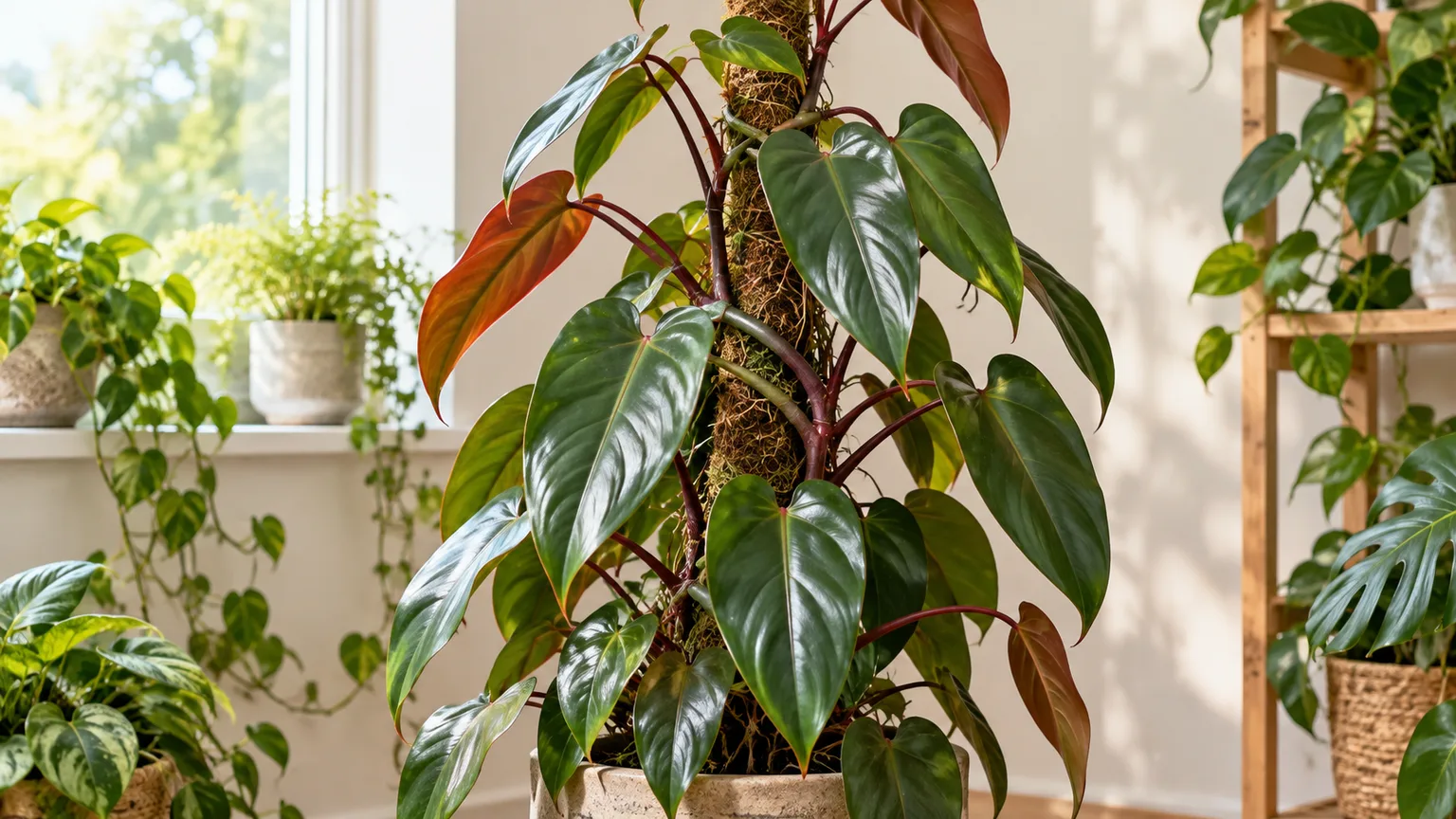
Monstera Peru is a compact climbing aroid valued for thick, deeply puckered leaves rather than the dramatic holes of Monstera deliciosa. It is a good fit for an indoor plant shelf, but it is not a plant to water by habit: the safest routine is bright filtered light, an airy root zone, and a moisture check before every thorough watering.
The name is also less settled than the label in a plant shop suggests. You may see the same textured climber sold as Monstera Peru, Monstera sp. Peru, or Monstera karstenianum. That uncertainty does not make the plant impossible to care for. It does mean you should identify the plant by its visible growth—thick quilted leaves and a vine that wants to climb—rather than copying a schedule meant for a different monstera.
Quick Monstera Peru care profile
| Care factor | Practical target | What to watch |
|---|---|---|
| Light | Bright indirect or filtered light | Faded patches and crisp scorch mean too much intensity; long gaps between leaves mean too little |
| Water | Water thoroughly when the top 2 inches of mix are dry | Wet soil plus yellowing is more concerning than a single missed watering |
| Soil | Chunky, moisture-holding mix with bark and perlite or pumice | A pot that stays heavy for many days may be too dense, too large, too dark, or all three |
| Pot | Drainage hole and a close fit around the root ball | Decorative cachepots must be emptied after watering |
| Humidity | Average home air is workable; moderate humidity is helpful | Brown tips can also come from uneven watering, salts, sun, or drafts |
| Temperature | Warm, stable indoor conditions; protect from cold glass and vents | Cold wet roots recover slowly |
| Support | Moss pole, plank, trellis, or stake as the vine reaches | Training is easier before stems sprawl |
| Feeding | Diluted balanced fertilizer during active growth | Stop feeding dry, stressed, recently repotted, or root-damaged plants |
The table is a starting point, not a substitute for observation. A small plant in a porous pot near a bright window may need water far sooner than a large plant in a plastic pot several feet from a north window. Light, temperature, pot size, mix, and root mass all change the dry-down rate.
What Monstera Peru is—and why the name can be confusing
In current horticultural commerce, “Monstera Peru” functions as a trade name for a textured, climbing aroid. Kew’s Plants of the World Online currently accepts Philodendron opacum and lists Monstera karstenianum among its synonyms. Retailers and collectors still use the familiar Peru label, so the name on the pot may not match the name used by a botanical database.
For day-to-day care, the useful facts are more concrete: this plant climbs, produces aerial roots, has thick leaves that tolerate a short dry spell, and reacts poorly when its roots sit in stagnant water. It is an epiphyte-like climber in the sense that its natural growth strategy depends on support and air around the roots, but that does not mean it should be planted in bark alone or allowed to dry to dust.
How to tell it from other monsteras
Monstera Peru is often confused with Monstera siltepecana, Monstera adansonii, and young Monstera deliciosa. Look first at the leaves. Peru has a dark green, heavily textured or quilted surface and usually does not develop the large fenestrations that define mature deliciosa; siltepecana is typically flatter and may show a silvery cast; adansonii has thinner leaves with obvious holes.
Those comparisons are useful because the plants can have different growth rates and space requirements. A plant shop’s broad “monstera” label is not a reliable care instruction. If the leaves are thick and puckered but the vine is stretching, solve the light and support problem before adding more water or fertilizer.
Light that keeps the vine compact
Place Monstera Peru in bright indirect light: near an east window, a few feet from a bright south or west window, or behind a sheer curtain that removes the harshest midday rays. A bright room with filtered daylight is a better target than a dim shelf simply because the plant is tropical. Penn State Extension’s Monstera guidance similarly recommends bright light without direct sun and notes that overwatering is a root-rot risk.
A little gentle morning sun may be tolerated, especially after gradual acclimation. Strong sun through glass can bleach the leaf surface and leave dry tan or papery patches. Move the plant back from the window or filter the light rather than responding to scorch by watering more.
Low light creates a different pattern: longer spaces between leaves, smaller new leaves, slow rooting, and a vine that reaches toward one side. The existing stretched growth will not compact again, but brighter filtered light can improve the next leaves. If natural light is weak, a full-spectrum grow light on a timer can be more predictable than moving the plant repeatedly.
Water by root-zone condition, not by calendar
Water when the top 2 inches of potting mix are dry, then water slowly and thoroughly until some runs from the drainage hole. Empty the saucer or cachepot afterward. The aim is to rehydrate the root ball without leaving the roots in a reservoir of runoff.
The exact interval may be about a week in a bright, warm room or several weeks in a cool, dim winter setup, but those numbers are not a care prescription. Costa Farms’ current Monstera Peru guidance also uses the upper few inches of mix as the practical dryness check and warns that overwatering can yellow and drop leaves. Use the plant’s actual pot and room as the source of truth.
A two-minute moisture check
Before watering, use three signals together:
- Push a finger or wooden skewer about 2 inches into the mix. Surface dryness alone is not enough in a deep pot.
- Lift the pot, or compare its weight with how it felt just after a full watering. A still-heavy pot usually needs more time.
- Look at the plant and the newest growth. Thirst can cause temporary droop and curling; wet-soil stress can also cause droop, so the root-zone check comes first.
If water races down the gap between the pot and the mix, the root ball may have become hydrophobic. Pour slowly in two passes, or briefly bottom-water to re-wet the mix, then let the pot drain completely. Do not leave it standing in water.
Thick leaves make Peru more forgiving of a short delay than a thin-leaved tropical, but they do not make it immune to dehydration. Repeated hard dry-downs can cause crispy edges, stalled new leaves, and a vine that sheds older foliage. The better goal is a repeatable cycle: thorough watering, free drainage, partial dry-down, then thorough watering again.
Soil mix and pot choice for healthy roots
Use a chunky indoor potting mix that holds some moisture but leaves visible air spaces after watering. A practical starting blend is two parts quality houseplant mix, one part medium orchid bark, and one part perlite or pumice. For a pot that stays wet, increase the bark and mineral fraction modestly; for a very fast-drying terracotta setup, keep more of the moisture-holding base.
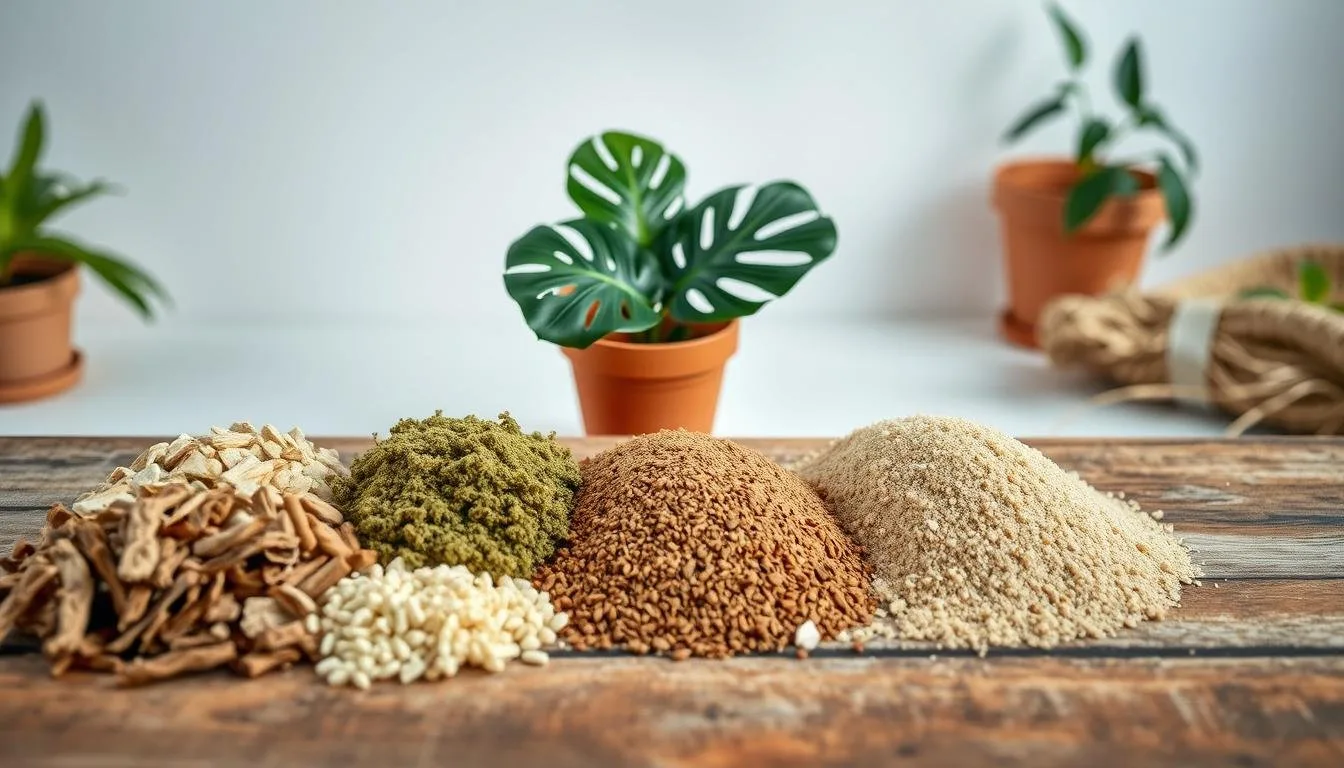
There is no magic brand or universal ratio. Bark provides coarse structure, perlite or pumice creates air space, and the potting base retains water and nutrients. NC State Extension’s Monstera profile lists good drainage and organic-rich soil as important cultural conditions; the same physical logic is useful for a smaller textured climber.
Choose a container with at least one open drainage hole and only a little more width than the root ball. An oversized pot is not automatically generous: the unused mix stays wet longer, especially in low light. Plastic retains moisture, terracotta dries faster, and a heavy ceramic pot can stabilize a pole. Match the container to the room and to how closely you can monitor moisture.
Do not add a gravel layer to the bottom of a pot in an attempt to create drainage. The root zone still depends on the mix and the drainage hole above it. A decorative outer pot is fine, but take the nursery pot out to water or empty all runoff so the inner pot never sits in a hidden puddle.
Temperature and humidity indoors
Keep Monstera Peru warm and stable, ideally in a room that stays roughly 65–85°F (18–29°C). Protect it from cold window glass, air-conditioning blasts, heaters, and sudden moves between a warm room and an outdoor balcony. Cold stress is more damaging when the mix is already wet because cool roots use water slowly and receive less oxygen.
Average household humidity is usually survivable. Moderate humidity can support cleaner leaf edges and unfurling, but humidity is not a replacement for light or drainage. A bathroom is a good location only if it has enough daylight or supplemental light.
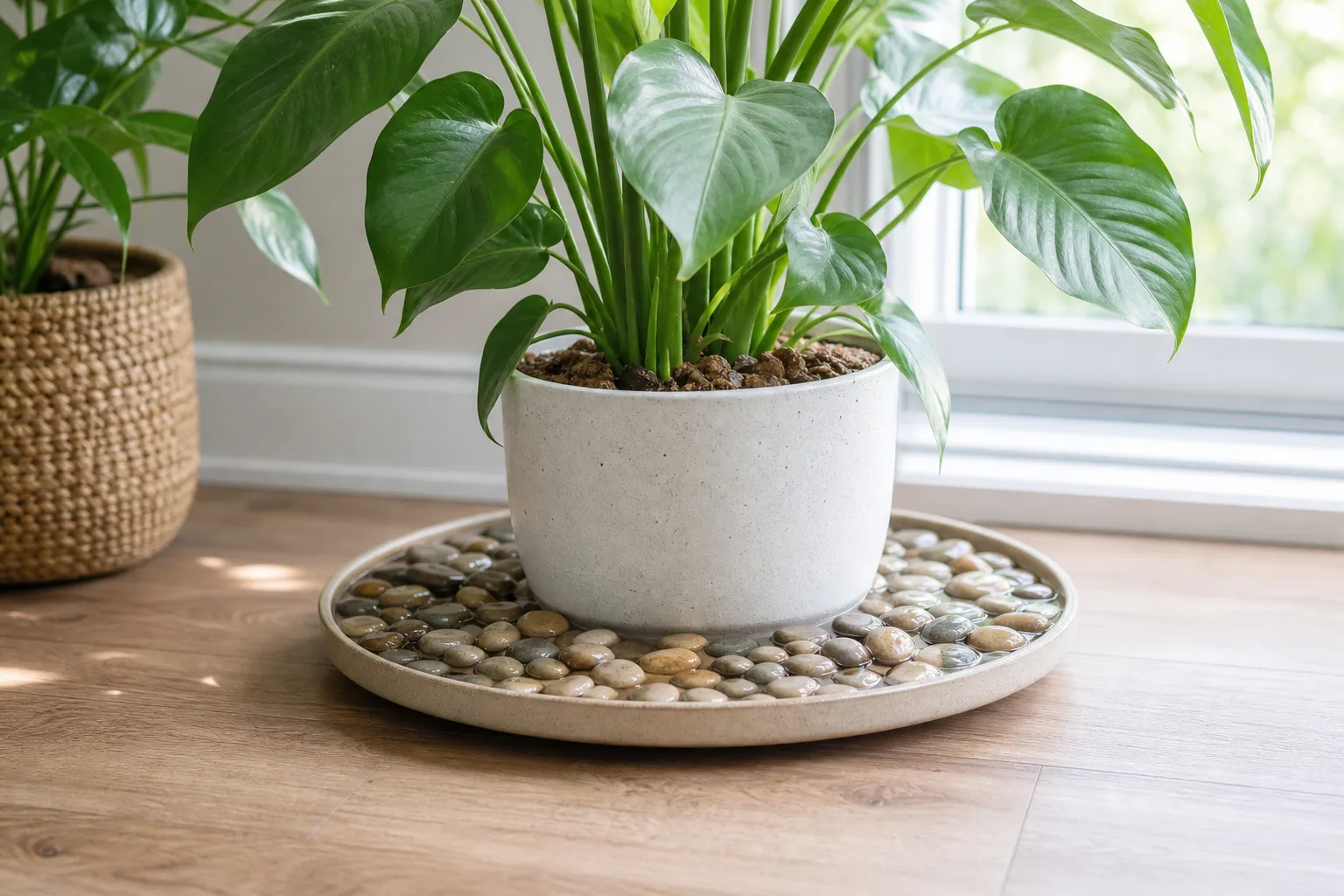
If the air is very dry, group plants with space between leaves, run a clean humidifier nearby, or use a hygrometer to measure rather than guessing. Pebble trays have a small local effect and should be built so the pot sits above the waterline. Never place the pot base in standing water; that turns a humidity aid into a root problem. Misting is temporary and can leave moisture trapped in the leaf texture without meaningfully changing room humidity.
Fertilizer without salt buildup
Feed during active spring and summer growth with a balanced liquid houseplant fertilizer diluted to one-quarter or one-half of the label rate. Feed only after the mix is already moist, and follow the product label rather than assuming that more fertilizer will create faster, larger leaves. A plant under a grow light may continue growing into winter; a plant in low winter light may need no fertilizer until new growth resumes.
Pause feeding if the plant is wilted, dry, freshly repotted, pest-stressed, or showing root damage. White crust on the soil or pot rim, browned tips after fertilizing, and stalled growth can indicate soluble-salt buildup. Flush the pot thoroughly with plain water and let it drain before considering another application.
New leaves are a better measure of the routine than a single old leaf. If new growth is healthy and the plant is slowly extending, resist changing three inputs at once. Monstera Peru is not a heavy feeder that needs constant intervention.
Climbing support, trailing, and leaf size
Monstera Peru can trail from a shelf or hanging planter, but it is naturally easier to manage when it has something to climb. Give the support early, while the stems are flexible. Use soft ties to guide the stem without pinching it, and keep the plant’s brighter side facing the light so new leaves do not reach away from the support.
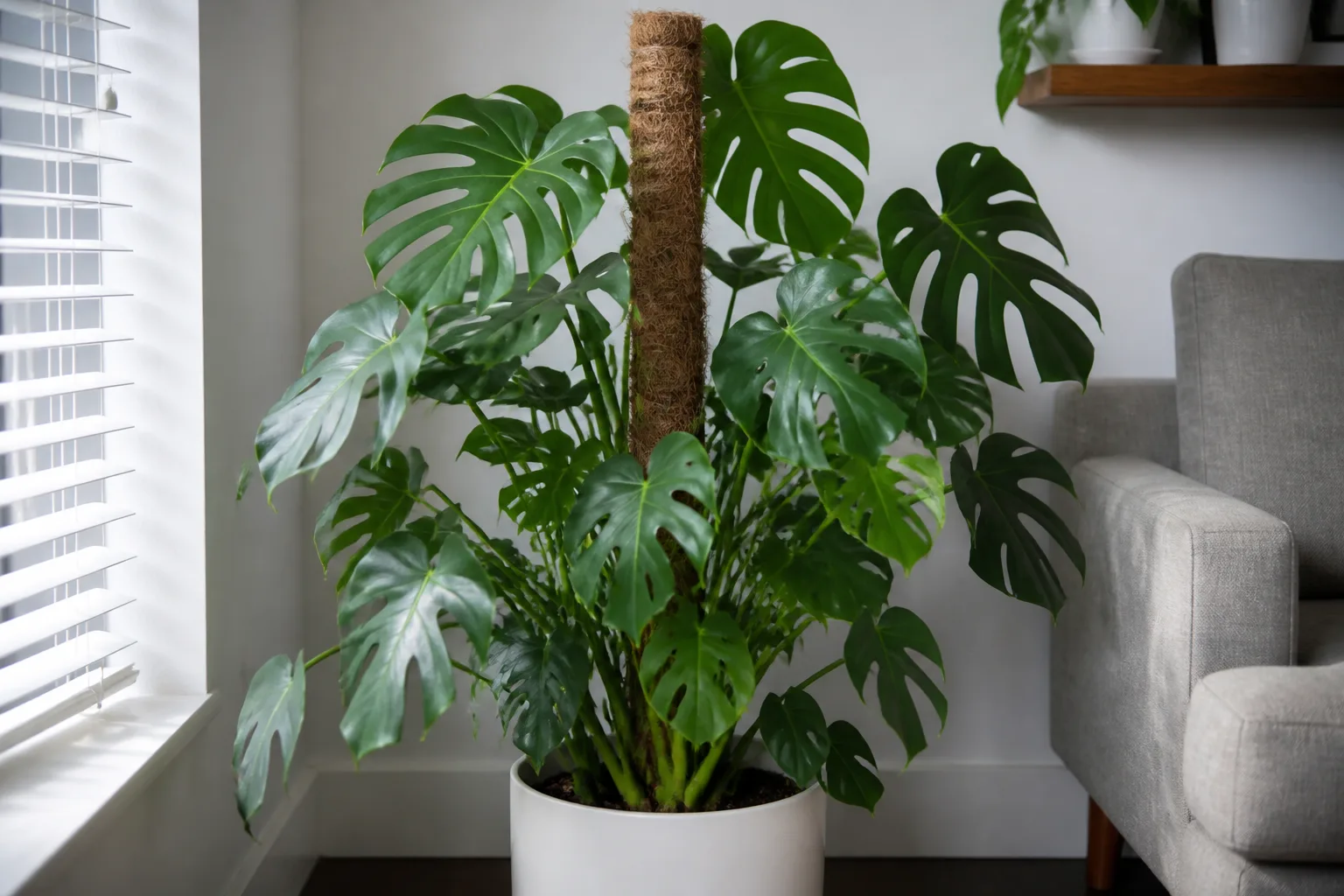
Support changes presentation and can improve how the plant allocates growth, but it does not manufacture light. A pole in a dim corner may produce a tall, sparse vine; move the plant into brighter filtered light first. A support also helps prevent stems from bending under their own weight and gives aerial roots a surface to contact.
Moss pole versus trellis
A moss pole or coir pole gives aerial roots a textured vertical surface and is useful when you want the vine to climb upward. A trellis is often simpler, cleaner, and easier to remove when you want a broad fan or a temporary display. A plank or sturdy stake can work too. The best support is the one that fits the pot, does not wobble, and can be installed without shredding the root ball.
Do not force every aerial root into wet moss. Keep the support secure, guide the stem rather than bending it sharply, and let the plant decide where roots attach. If you prefer a trailing display, allow the vines to cascade and prune them to keep the pot balanced.
Pruning and routine grooming
Prune to control length, remove damaged material, or create cuttings—not because a healthy plant needs a yearly haircut. Use clean, sharp scissors and cut just above a node when shortening a stem. The node is the point that can produce a new shoot or roots; a leaf without a piece of stem and node cannot create a new Monstera plant.
Remove yellow, soft, or badly damaged leaves at the base of the petiole. Keep a partly green, firm leaf while the plant is recovering because it still contributes energy. Wipe dust from the broad leaf surfaces with a damp cloth and inspect the undersides and stem joints at the same time. Avoid oily leaf-shine products that can interfere with the natural surface and trap residue in the leaf texture.
Propagating Monstera Peru from a stem cutting
Propagate from a healthy, actively growing stem in warm, bright indirect light. Choose a section with at least one clear node; two or more nodes and one or two healthy leaves give a beginner a wider margin for error. University of Minnesota Extension’s Monstera propagation guidance emphasizes that a cutting without a node cannot make new growth, even if the leaf looks perfect.
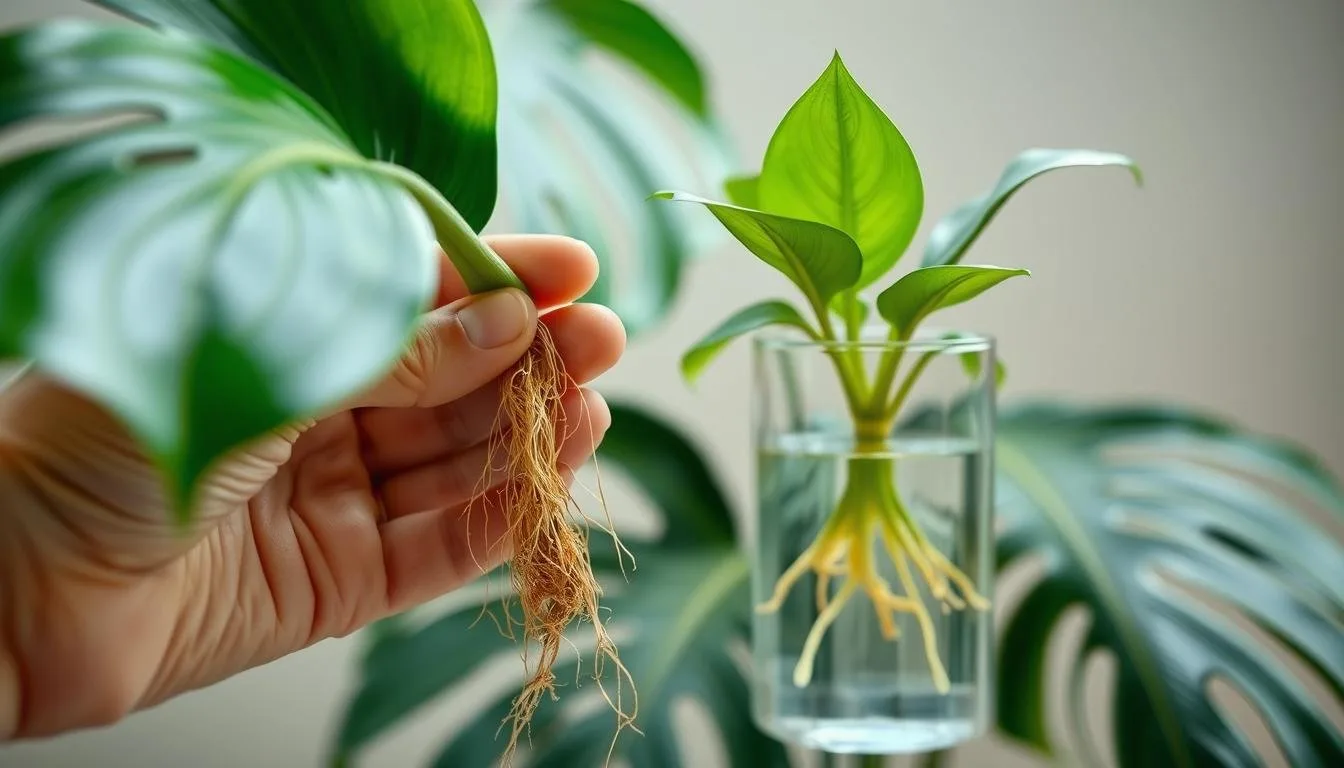
Make the cut with a sterilized blade just below a node. Remove any leaf that would sit underwater or in wet propagation mix. Let a fresh cut surface air-dry briefly if it is very wet, then place the node in clean water or a lightly moist, airy medium. Keep leaves above the water or substrate, provide warmth and indirect light, and change water when it becomes cloudy.
Look for firm, pale roots rather than a fixed deadline. Penn State Extension’s houseplant propagation guidance recommends bright indirect light, moist but not saturated media, and warm rooting conditions. A cutting that sits cold, dark, or waterlogged may stall or rot; more humidity is not a cure for poor airflow or a dirty container.
Water propagation versus soil propagation
Water propagation makes root development easy to see and is forgiving when you are learning where the node is. The trade-off is that water-grown roots can be more sensitive during the transition to potting mix. Move the cutting once it has a useful cluster of firm roots, pot it into a small draining container, and keep the mix lightly and evenly moist while it adapts.
Soil or another airy propagation medium avoids a later water-to-soil transition and can produce roots already adapted to the final environment. It is less visually obvious, so use a small clear container or resist disturbing the cutting every few days. In either method, one healthy node matters more than a long leafless stem or a leaf with no growth point.
Repotting without causing a wet-pot problem
Repot when roots circle densely, emerge from the drainage hole, the mix has collapsed, or watering has become erratic because water races through or remains trapped. Repotting on a calendar can create unnecessary stress. A slow-growing Peru may be content for years in the same container if the mix still drains and the roots have room.
Spring or early summer is the easiest time because active growth supports recovery. Move up one pot size, loosen only compacted outer mix, and keep the stem and nodes at their previous depth. Planting deeper to bury a bare section can keep the stem wet and invite rot.
After repotting, water enough to settle the new mix and let every drop of excess drain. Do not keep watering because a freshly handled plant looks temporarily limp. Give it stable light and warmth, then return to the same moisture check used before repotting.
Pests and common problems
Inspect new leaves, leaf undersides, petioles, and stem joints once a week. Fungus gnats are encouraged by persistently wet mix; spider mites prefer hot, dry conditions; mealybugs hide in joints and under leaves; scale appears as fixed bumps; thrips can leave silvery scarring and distorted new growth. Isolate a suspect plant before treatment so a small problem does not become a collection-wide problem.
Start with physical removal and improved conditions: rinse or wipe accessible pests, remove badly infested leaves, and correct the moisture or airflow issue. If a labeled insecticidal soap or other product is needed, follow its label, test on a small area, and repeat only at the stated interval. Never spray a stressed plant in direct sun or use a household cleaner as an improvised pesticide.
Reading yellow, brown, drooping, and leggy growth
Symptoms overlap, so read the pattern before changing the routine:
- Yellow lower leaves with wet mix: Check drainage, light, and roots before watering again. Prolonged wetness is the leading concern, although one old leaf can yellow naturally.
- Yellowing with bone-dry mix and a light pot: Water thoroughly and then shorten the interval slightly. Do not compensate with daily sips that wet only the surface.
- Brown, crispy edges: Compare root moisture with humidity, fertilizer history, direct sun, and drafts. Brown tips are damage already done; judge recovery by new growth.
- Faded or bleached patches on the window side: Suspect sun stress and move the plant farther from intense direct light. Do not mistake scorch for thirst.
- Drooping while the soil is wet: Treat it as a possible root-zone problem, not proof that the plant needs more water. Inspect drainage and roots if the pot stays wet or smells sour.
- Long bare sections and small new leaves: Increase filtered light and add support. Pruning the stretched section can improve the shape, but it cannot substitute for brighter conditions.
Change one major variable at a time when possible. Moving the plant, repotting, fertilizing, and treating pests on the same day makes it difficult to know what helped and can stack stress on already damaged roots.
Pet and child safety
Treat Monstera Peru as a toxic houseplant and keep it away from children and pets that chew foliage. Exact trade-name plants can be mislabeled, but the broader Monstera group contains insoluble calcium oxalate crystals. Penn State Extension describes Monstera as toxic if ingested, and the ASPCA’s Monstera deliciosa entry lists calcium oxalate crystals and oral irritation, drooling, vomiting, and difficulty swallowing as possible signs.
Do not wait for a serious reaction before seeking help. If a child or animal chews the plant, contact a veterinarian, poison-control service, or medical professional promptly and take the plant label or a photograph for identification. Keep fallen leaves and pruning waste out of reach too.
Conclusion: build the routine around the pot you actually have
Monstera Peru care is straightforward when you focus on the root zone instead of the calendar. Give it bright filtered light, a draining but not barren mix, a pot that fits its roots, and enough time to dry between thorough waterings. Protect it from cold drafts and harsh sun, feed lightly during active growth, and support the vine before it becomes a tangle.
When something goes wrong, start with light, soil moisture, drainage, and recent changes in that order. That simple sequence prevents the most common mistake—adding water or fertilizer to a plant whose roots are already stressed—and gives this textured climber the stable conditions it needs to make healthy new leaves.