13 Trees With Brilliant Fall Color for Your Yard
Compare 13 trees with brilliant fall color by mature size, leaf shade, climate, soil, and maintenance before choosing one for your yard.
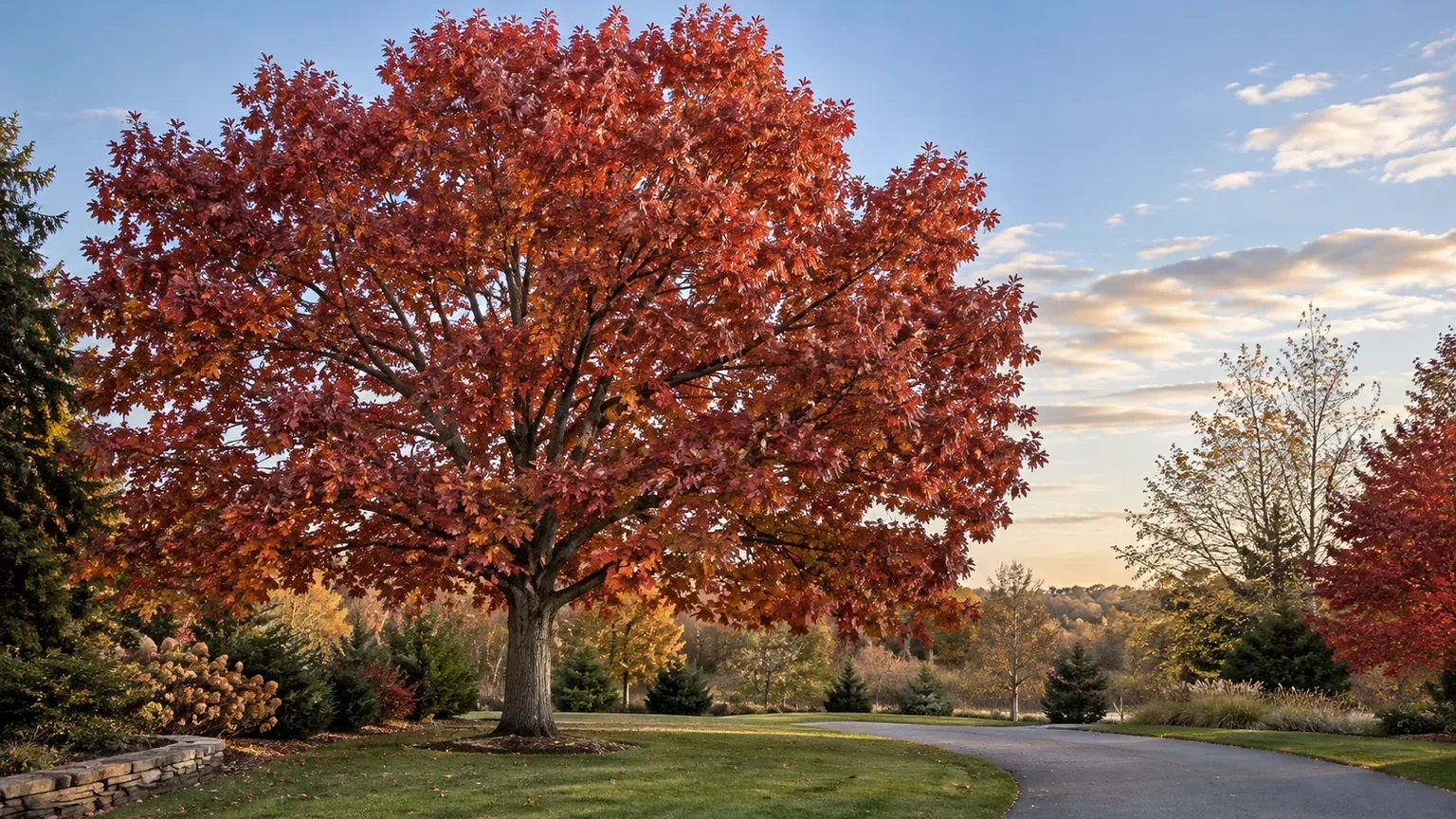
The best fall tree is not simply the one with the reddest leaves in a photograph. It is the one that can reach its full size in your yard, suit your local climate and soil, and produce a display you will still enjoy when leaves or fruit start dropping. Some trees glow yellow; others turn orange, scarlet, or purple. The same species can look different from one site or year to the next.
A few cues make the choice easier. Check the tree’s mature width as carefully as its height, match its moisture and drainage needs to the planting site, and decide whether you can live with its fruit, surface roots, or leaf litter. Hardiness zones help screen cold tolerance, but they do not tell you whether a tree will thrive in summer heat, compacted soil, or salty street runoff.
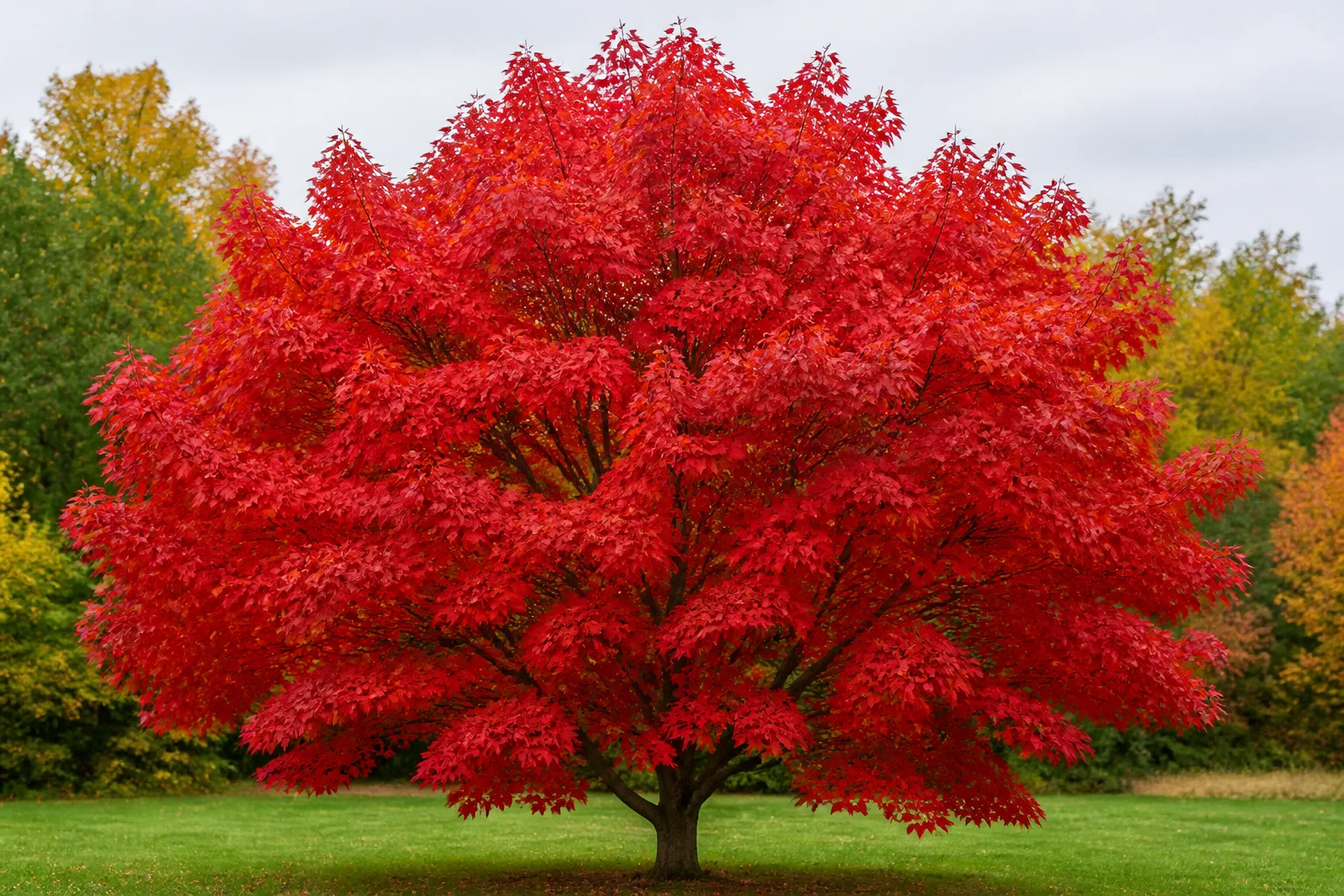
Choose a fall-color tree by site, scale, and season
Leaf color comes from pigments already in the foliage and pigments produced as the growing season ends. When chlorophyll breaks down, yellow and orange carotenoids become visible; red and purple anthocyanins develop in some species. Genetics set the possibilities, while weather and site affect the display. Bright days, cool nights, adequate soil moisture, and a healthy canopy can favor stronger color; drought, injury, disease, or early leaf loss can mute it. A single tree may even show different shades on sunlit and shaded leaves. Purdue Extension explains how pigments, weather, and tree condition shape autumn color.
Start with the space. The measurements below are broad mature ranges, not a promise that every cultivar reaches the same size. A Japanese maple may fit a courtyard; a sugar maple or red oak can eventually dominate a small suburban lot. Then use soil and regional fit to narrow the list.
| Tree | Typical fall color | Approximate mature size | A good fit when… |
|---|---|---|---|
| Red maple | Red, orange, sometimes yellow | 40–70 ft tall | You have room for a large eastern North American native and moist, acidic soil |
| Sugar maple | Orange, red, yellow | 50–120 ft tall | Your climate is cool enough and the site has deep, fertile, well-drained soil |
| Japanese maple | Red, orange, yellow, bronze | 15–25 ft tall | You want a smaller ornamental and can shelter it from drying conditions |
| Amur maple | Red to orange | 15–20 ft tall | A compact tree suits your colder region and it is not invasive locally |
| Ginkgo | Clear gold | 50–80 ft tall | You can give a slow-establishing tree full sun and choose a male cultivar |
| Black gum | Scarlet to burgundy | 40–70 ft tall | You want a native tree with strong color and can plant it young |
| Sweetgum | Yellow, orange, red, purple | 60–100 ft tall | You have generous space or select a suitable fruitless cultivar |
| Sassafras | Yellow, orange, red | 30–60 ft tall | A naturalized edge can accommodate its suckering habit |
| Sourwood | Red to reddish purple | 20–30 ft tall | Your soil is acidic and you want a smaller native tree |
| Northern red oak | Russet to red | 50–75 ft tall | A large canopy and acorn drop work in your landscape |
| Shagbark hickory | Yellow to golden brown | 70–90 ft tall | You can provide deep soil and tolerate nuts and leaf litter |
| Quaking aspen | Clear yellow | 40–50 ft tall | Your site is cool and you have room for a spreading colony |
| Flowering dogwood | Red to reddish purple | 15–25 ft tall | A partly shaded, moist but well-drained understory site is available |
Sizes and color are averages drawn from extension plant profiles; local cultivars and growing conditions can shift both. For winter survival, consult the USDA Plant Hardiness Zone Map and your local extension service. The map is one screen, not a guarantee of summer performance or fall display.
13 trees that earn a place in a fall garden
The choices below emphasize different colors, scales, and regional conditions rather than treating every red-leaved tree as interchangeable. Mature sizes are approximate. Before ordering, verify the cultivar’s dimensions, hardiness, soil needs, and any local invasive-plant restrictions. An independent comparison of trees for fall color also highlights red maple and sassafras among the choices, while a horticultural overview of autumn-color trees compares familiar options such as ginkgo, Japanese maple, and sugar maple. Use those comparisons for ideas, then let the conditions in your own yard decide.
Red maple (Acer rubrum)
Red maple is a strong choice for a large, adaptable native shade tree. Its fall leaves may turn scarlet, orange, or yellow, and individual trees can differ noticeably in timing and intensity. Many reach about 40 to 70 feet tall with a broad canopy, so measure well beyond the planting hole: the eventual crown, not the nursery pot, determines whether it belongs near a house, overhead wires, or a narrow sidewalk.
It grows across much of eastern North America and tolerates moist conditions, but a well-drained, slightly acidic soil generally supports better growth than chronically alkaline ground. Some cultivars are selected for more consistent red foliage. Ask a local nursery which ones perform in your region, and remember that surface roots can make lawn mowing and underplanting difficult as the tree matures. NC State Extension’s red maple profile describes its size, site range, and color variation.
Sugar maple (Acer saccharum)
Sugar maple is an iconic choice where summers are not too hot and the soil stays fertile, moist, and well drained. Its fall canopy may mix orange, red, and yellow; cool autumn nights and good growing conditions help the display, but no cultivar can override a poorly matched site. Allow for a very large tree: mature height can range roughly from 50 to 120 feet, depending on conditions and form.
This eastern North American native does not suit every urban planting strip. It is sensitive to heat, compaction, road salt, and pollution, and it needs root-zone space. Plant it where the crown can mature and the soil is not repeatedly disturbed. If you garden in a warm region or a tight, paved site, a smaller, more heat-tolerant choice will be easier to keep healthy. NC State Extension’s sugar maple profile details its soil and stress limits.
Japanese maple (Acer palmatum)
Japanese maple brings fall color to a smaller garden, courtyard, or sheltered entry. Depending on cultivar, foliage can turn red, orange, yellow, or bronze; some cultivars also hold red leaves through summer, so fall may deepen or alter a color already present. Most mature around 15 to 25 feet, but a named cultivar can be far smaller or wider. Check the tag for both height and spread.
Choose a spot with evenly moist, well-drained soil and protection from harsh afternoon sun, drying wind, and reflected heat. Morning sun with light afternoon shade is useful in hot-summer locations, while cooler climates can support more sun if soil moisture is steady. Drought and wind can scorch leaf edges before the fall display. NC State Extension’s Japanese maple profile notes cultivar variation and the need to avoid drying conditions; ask locally about regional invasive concerns before planting.
Amur maple (Acer tataricum subsp. ginnala)
Amur maple is one of the smaller trees on this list, usually about 15 to 20 feet tall and similarly broad. Its leaves can shift from green to red and orange, making it a candidate for a compact yard or informal screen where a large canopy tree is impractical. It is more cold-hardy than many ornamental maples and tends to perform best in cooler regions.
Give it sun for stronger fall color and soil that drains reasonably well. The main caution is local: Amur maple has escaped cultivation and is considered invasive in parts of the Midwest and Northeast. Check your state or county invasive-species list before buying; where restricted or troublesome, choose a native alternative such as red maple or serviceberry. Its compact size does not make it harmless to nearby natural areas. NC State Extension’s Amur maple profile covers its size, hardiness, and regional invasive risk.
Ginkgo (Ginkgo biloba)
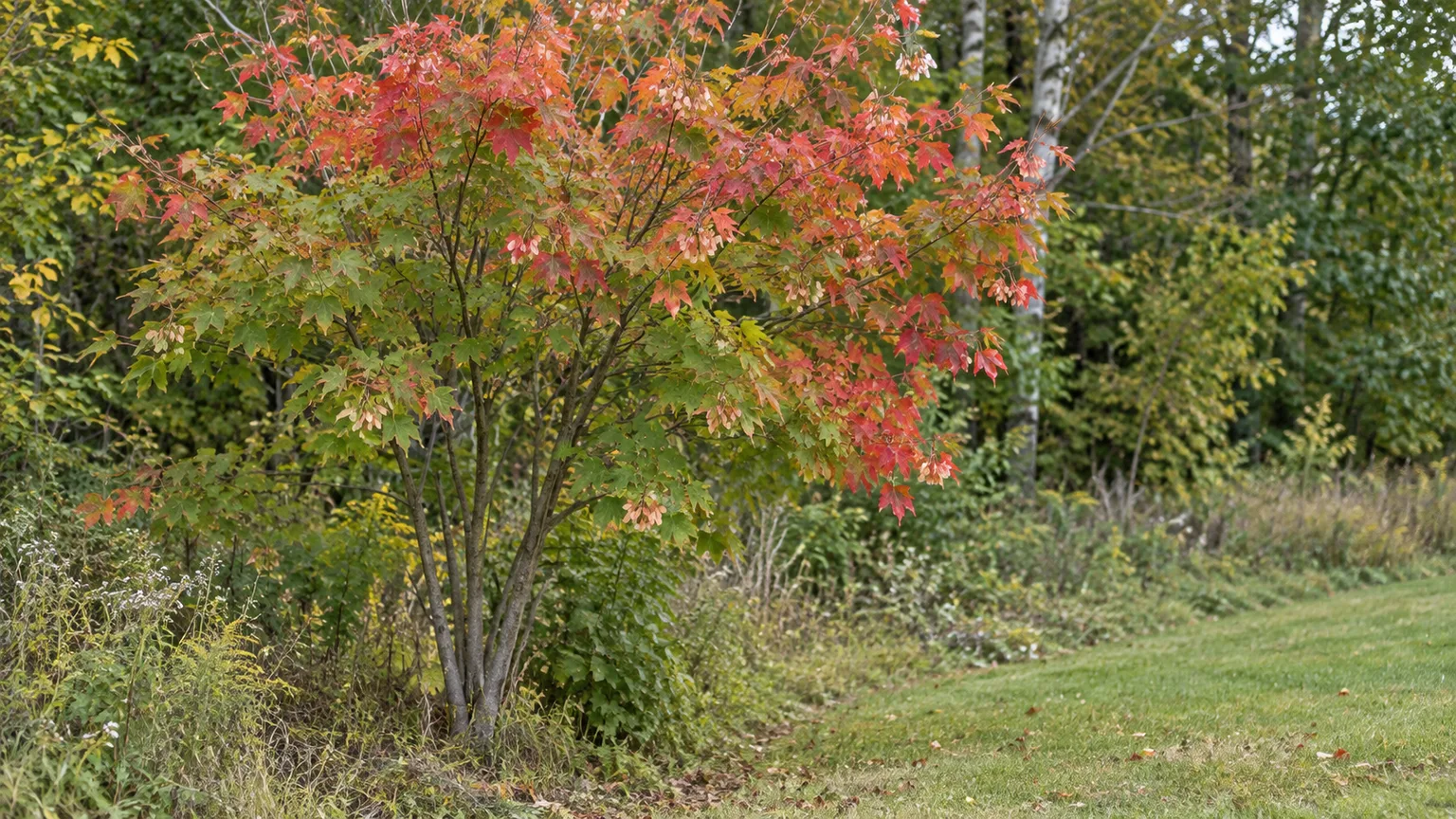
Ginkgo offers a different fall effect: a full canopy turns a clear, luminous gold, then the leaves often drop in a short window and make a bright carpet. A mature tree can reach about 50 to 80 feet high and 30 to 40 feet wide. Give it full sun and adequate drainage, and do not choose it for a spot where rapid shade is the priority; it can take time to establish.
Buy a named male cultivar from a reliable nursery. Female ginkgo trees produce fleshy seeds with an unpleasant odor, and the fallen fruit can make a sidewalk or driveway unpleasant to clean. Male selections avoid that particular litter. Ginkgo tolerates urban conditions better than many trees once established, but it still needs room for its eventual crown. NC State Extension’s ginkgo profile describes its dimensions and the reason to select male trees.
Black gum (Nyssa sylvatica)
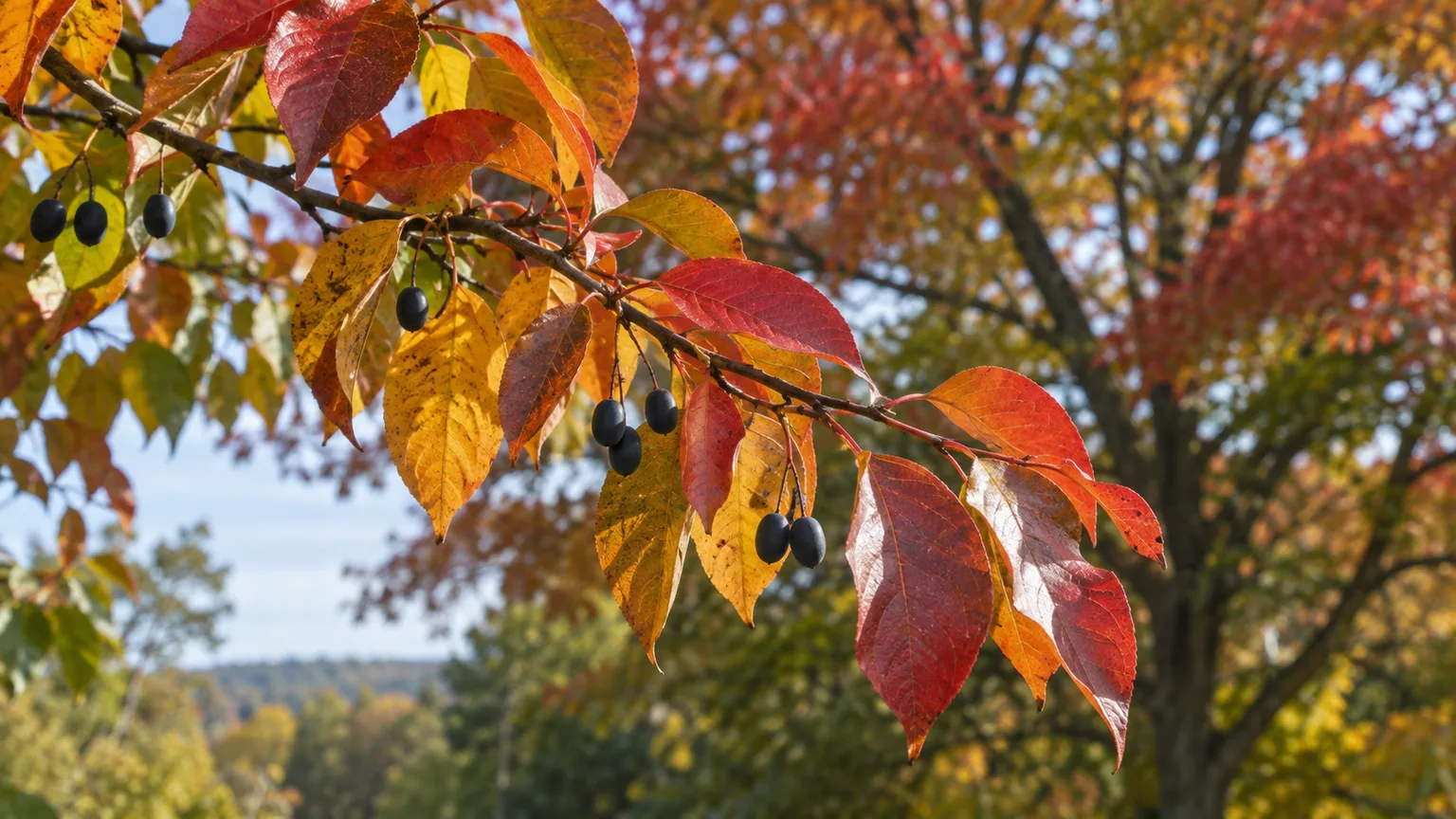
Black gum, also called black tupelo, is a standout for dependable scarlet color and a good native choice across much of the eastern United States. It commonly grows 40 to 70 feet tall, although a young tree may take years to build a full canopy. Fall foliage can move through orange and red into deep burgundy. The effect is especially useful where a yard needs a strong red anchor among yellow maples or golden ginkgoes.
Black gum prefers acidic soil and can tolerate moist ground and some drought after establishment, but it is not a tree to transplant casually once large. Its taproot makes young nursery stock the easier choice. Avoid strongly alkaline sites, and give it enough open space to develop. It also produces small dark fruits that wildlife may use. NC State Extension’s black gum profile describes its soil, mature size, and brilliant color.
Sweetgum (Liquidambar styraciflua)
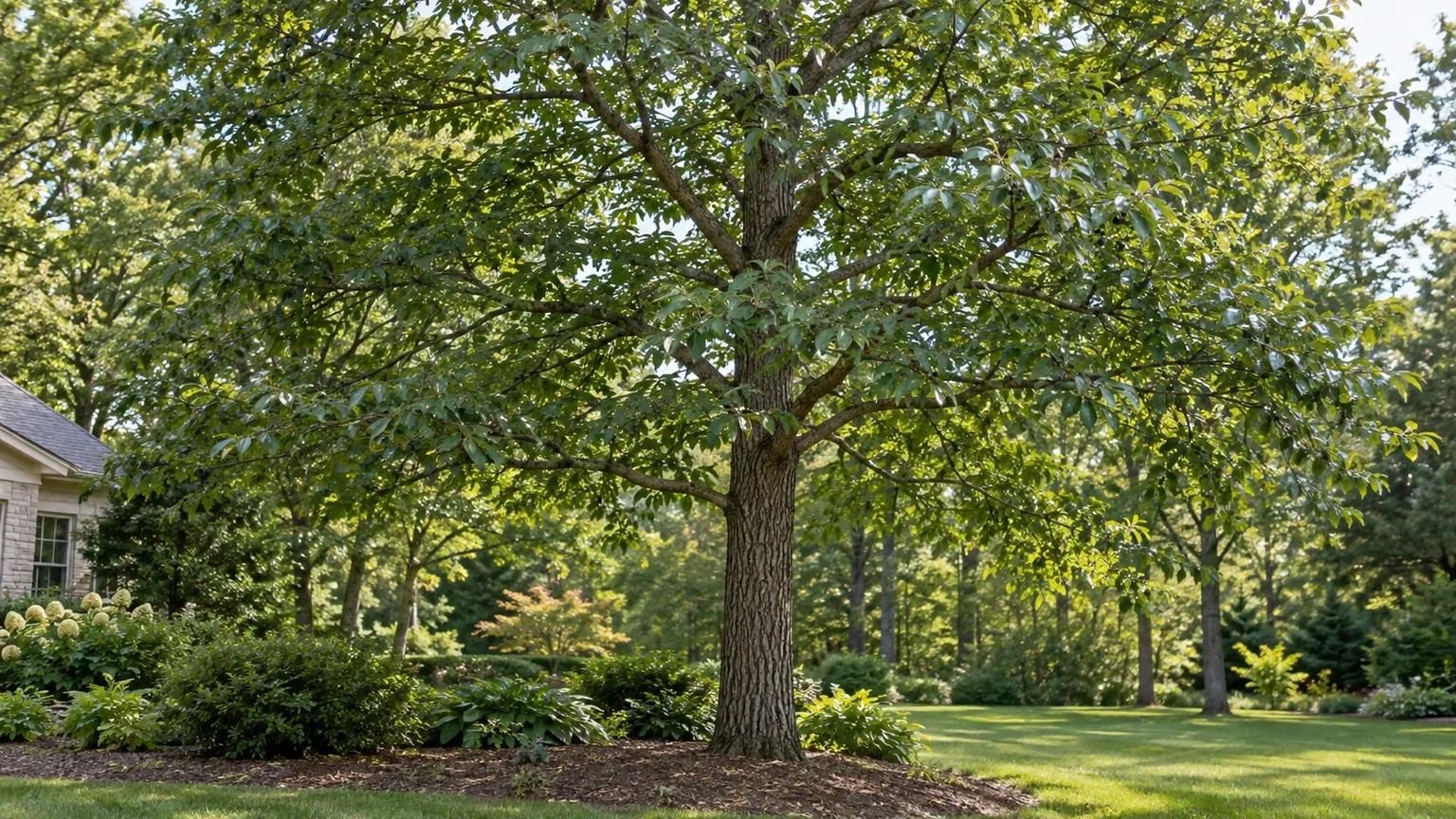
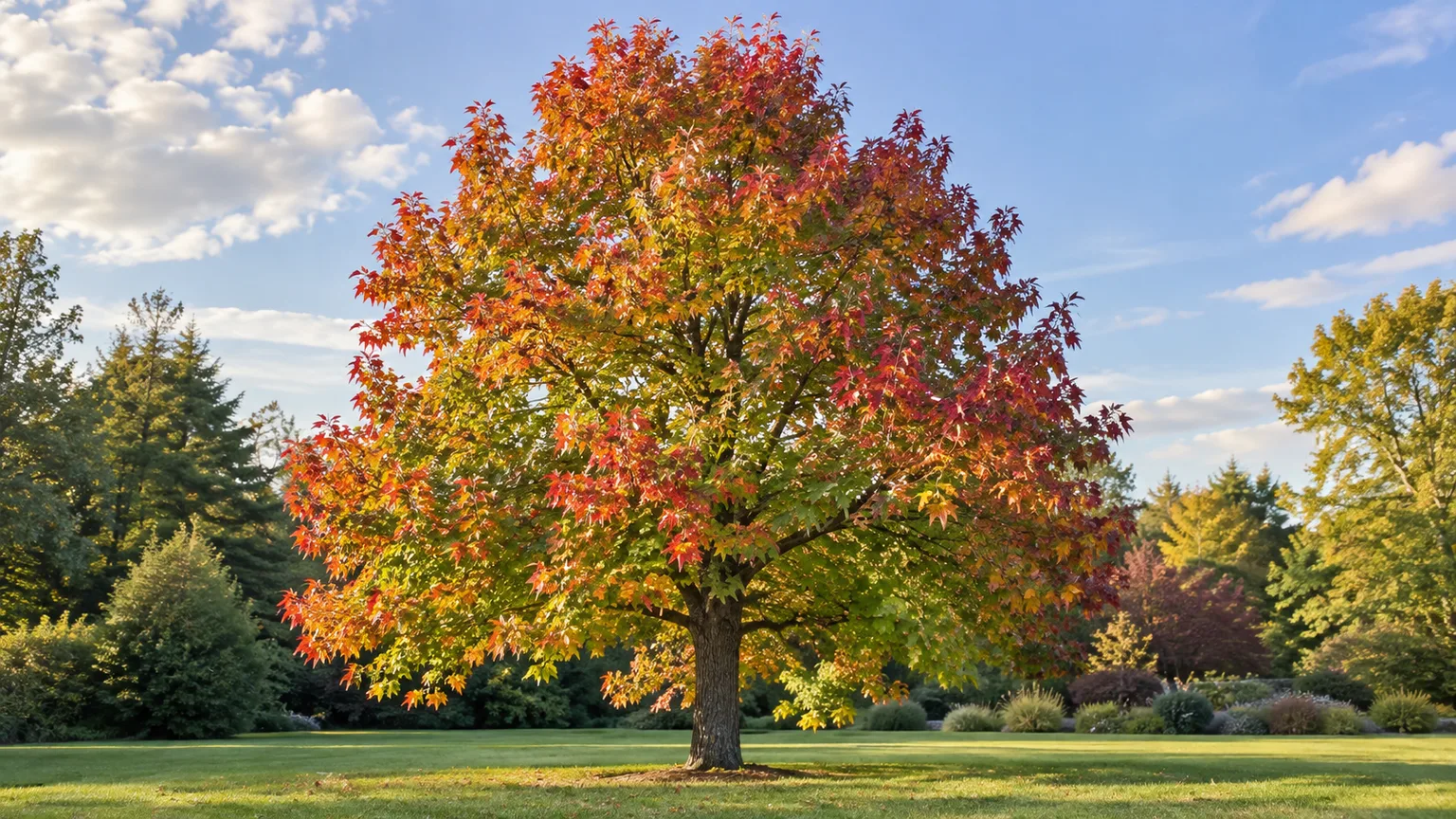
Sweetgum can produce one of the broadest palettes on this list: a single tree may show yellow, orange, red, and purple leaves at once. It is a large shade tree, often 60 to 100 feet tall with a broad spread, and works best where its roots and crown have room. Moist, well-drained, acidic to neutral soil and full sun help it grow well.
Its familiar drawback is the spiky seed balls, which drop and roll across lawns, paths, and play spaces. They can be uncomfortable underfoot and add cleanup. If the color appeals but the fruit does not, ask about a fruitless cultivar such as ‘Rotundiloba’ and verify its dimensions and regional performance before planting. This selection decision matters more than hoping the tree will produce less litter with age. NC State Extension’s sweetgum profile and fruitless ‘Rotundiloba’ profile cover those trade-offs.
Sassafras (Sassafras albidum)
Sassafras often combines several fall shades on one plant: yellow, orange, and red can appear across its distinctive mitten-shaped and lobed leaves. A mature tree is commonly 30 to 60 feet tall. It is native to eastern North America and fits a naturalized border, woodland edge, or larger informal yard better than a tightly clipped foundation bed.
The key planning issue is suckering. Sassafras can spread by root sprouts and form a thicket, which is useful for a natural screen but inconvenient in a small, formal garden. It prefers sun to partial shade and well-drained soil; its deep taproot also makes a larger established specimen difficult to move. Plant a young tree where its colony can be managed rather than repeatedly cutting shoots at the lawn edge. NC State Extension’s sassafras profile describes its foliage, site, and spreading habit.
Sourwood (Oxydendrum arboreum)
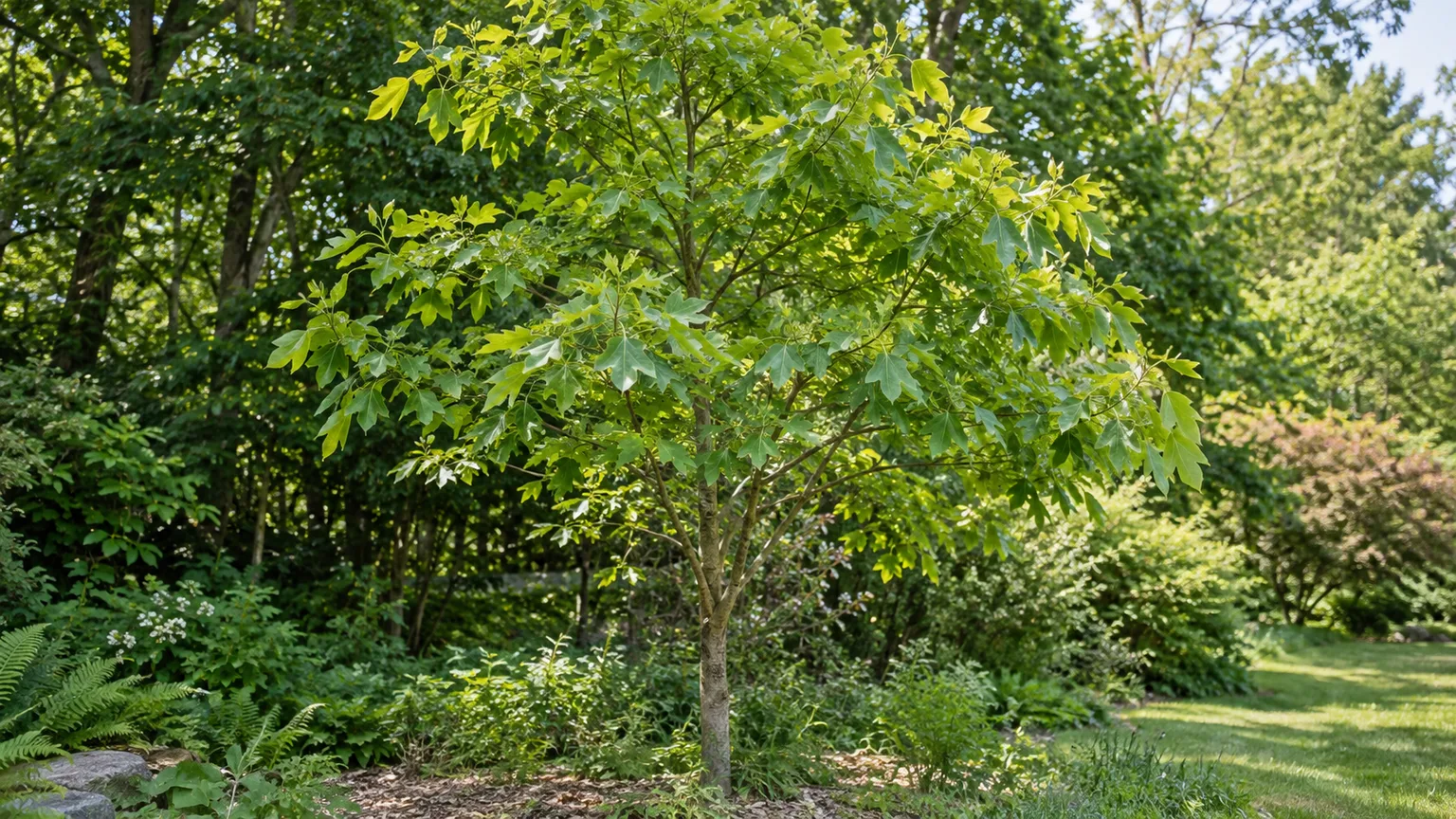
Sourwood is a smaller eastern native with red to reddish-purple fall foliage, plus white summer flower panicles that can add another season of interest. It generally reaches about 20 to 30 feet tall and 10 to 15 feet wide. Its narrower footprint makes it useful where a giant shade tree would overwhelm a house or garden.
Site conditions matter: sourwood favors acidic, moist but well-drained soil and does poorly in highly urban, polluted settings. It can grow in sun or partial shade, with more sun often improving the fall display when moisture is adequate. Do not plant it into alkaline, compacted fill and expect the same performance as a woodland-edge site. It is also best planted young, before its root system becomes difficult to move. NC State Extension’s sourwood profile gives its size, soil needs, and regional range.
Northern red oak (Quercus rubra)
Northern red oak is a long-lived canopy tree for a large property, park-like lawn, or spacious street planting. It can reach about 50 to 75 feet tall and wide. Leaves turn russet, reddish brown, or scarlet, though its fall display is often less uniformly vivid than a red maple’s. The payoff is a broad shade canopy, strong structure, and acorns for wildlife.
Give it full sun and acidic, fertile, well-drained soil; it can grow across a range of moisture conditions once established, but poor drainage is not a cure for drought. Allow room for the crown and for acorns to fall. Do not plant it over a small patio or narrow path if seasonal cleanup would be a nuisance. NC State Extension’s northern red oak profile describes its size, site, and variable russet-to-scarlet foliage.
Shagbark hickory (Carya ovata)
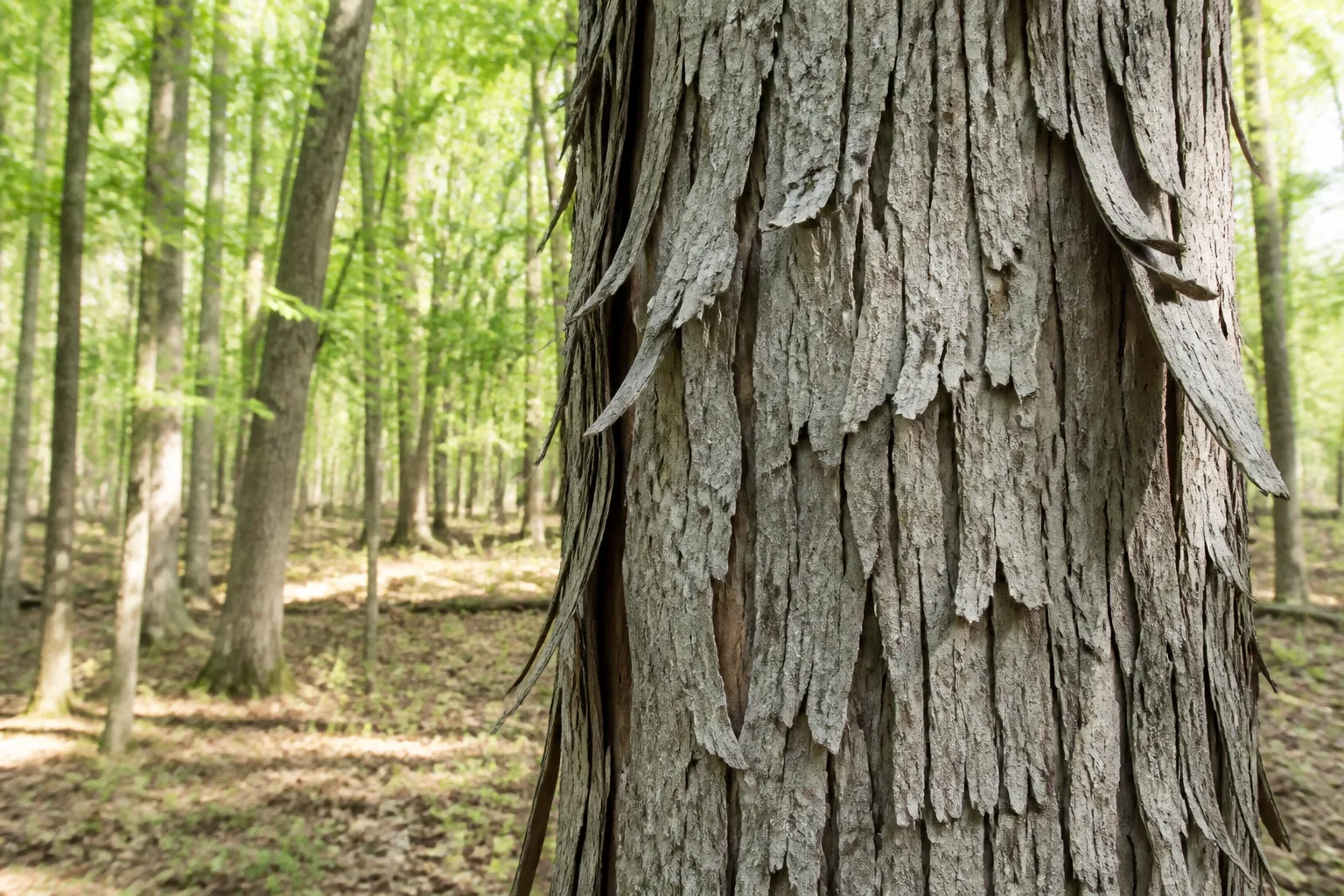
Shagbark hickory turns yellow to golden brown and earns its place through more than leaf color. Its mature bark separates into long, shaggy plates that remain striking in winter, and the tree can provide nuts for wildlife. It is a very large, slow-growing native, often 70 to 90 feet tall with a wide crown; the best setting is a deep-soil, low-disturbance landscape.
Choose it only if you can accept a long establishment period and seasonal litter from leaves and nuts. A taproot makes transplanting a larger tree difficult, so select a young specimen and a permanent site. It prefers full sun or partial shade and deep, fertile, well-drained soil. It is not a quick color fix for a small garden, but it offers durable structure and a softer gold display. NC State Extension’s shagbark hickory profile covers its size and site requirements.
Quaking aspen (Populus tremuloides)
Quaking aspen lights up cool landscapes with clean yellow leaves that flutter on flattened leaf stalks. It is native across much of North America, but its best garden range is far north or at higher elevations. Trees commonly reach about 40 to 50 feet tall. Heat and humidity limit performance in warmer regions, so a nursery label’s hardiness range alone is not enough to judge whether it will thrive through summer.
Aspen also spreads through root suckers and may form a colony rather than remain a single tidy specimen. That behavior is natural and useful on a broad property, but it can become a maintenance problem beside a lawn, pavement, or small garden. Ask local extension staff whether local conditions support it before planting. Choose it for a cool, spacious site where its spreading habit is welcome, not as a generic substitute for a compact yellow-leaved tree. NC State Extension’s quaking aspen profile outlines its cool-climate limits and size.
Flowering dogwood (Cornus florida)
Flowering dogwood is an understory tree with a second-season show: white or pink spring bracts, red fruit, and foliage that can turn red or reddish purple in fall. It usually matures around 15 to 25 feet tall, making it one of the more manageable choices near a house. Birds may eat the fruits, and the layered branches add shape after leaf drop.
Plant it where it receives morning sun or filtered light and has moist, well-drained, slightly acidic soil. Hot, dry, exposed sites can stress it; the fall color will not compensate for a poor location. Keep the root zone mulched, avoid mechanical damage to the trunk, and choose a disease-resistant cultivar recommended for your area. It is native to eastern North America and does best when treated as an understory tree rather than exposed to reflected pavement heat. NC State Extension’s flowering dogwood profile describes its size and preferred growing conditions.
Build a longer show and help a new tree establish
For a longer display, combine color and timing instead of planting a row of the same cultivar. A red maple or black gum can provide red; ginkgo or aspen can add gold; an oak or hickory contributes a later, earthier tone. This is a design sequence, not a guarantee: weather can shift the timing by weeks, and local cultivars may peak at different times. Keep the large trees far enough apart that each crown can mature rather than forcing them into a crowded color wall.
Before planting, check the mature spread against buildings, overhead lines, driveways, septic areas, and underground utilities. Verify drainage and soil pH with observation or a soil test; do not add amendments to a planting hole based only on the tree’s common name. Plant at the correct depth with the root flare visible, then water the whole root zone deeply. For a newly planted tree, check soil moisture regularly during establishment and water when the root zone begins to dry; rainfall and soil type determine the interval. Penn State Extension’s new-tree watering guidance explains why establishment takes consistent attention.
Spread organic mulch broadly over the root zone, generally about 2 to 4 inches deep, but keep it several inches away from the trunk and leave the root flare exposed. A mulch mound against the bark holds moisture where it can cause damage and hides the root flare. Avoid heavy fertilizer unless a soil test or local expert identifies a need; it will not make a poorly sited tree produce better fall color. Penn State Extension’s tree-mulching guidance covers depth and trunk clearance.
If a tree colors unusually early, turns brown, or drops leaves well before nearby trees of the same kind, treat it as a possible stress signal rather than a bonus display. Check recent soil moisture, root disturbance, paving, compaction, salt exposure, pests, and injury; the cause may have occurred months earlier. A single early-color episode is not a diagnosis, but repeated symptoms or canopy dieback justify an assessment from a certified arborist or local extension office. UW–Madison Extension’s guide to early fall color explains why timing can reveal tree stress.
Conclusion
A vivid autumn canopy starts with a tree that fits the site. Choose a red maple or black gum for red, ginkgo for gold, sweetgum for a broader palette, or a smaller Japanese maple, sourwood, or dogwood where space is limited. Then confirm the mature width, local climate, soil and drainage, and the litter or spreading habit you are willing to manage. A well-matched tree has the best chance to color strongly and stay healthy long after the leaves fall.