Best Time to Mow Your Lawn: Weather Rules
The best time to mow your lawn changes with weather. Learn when to wait, how high to cut in heat, and how to recover after rain or overgrowth.
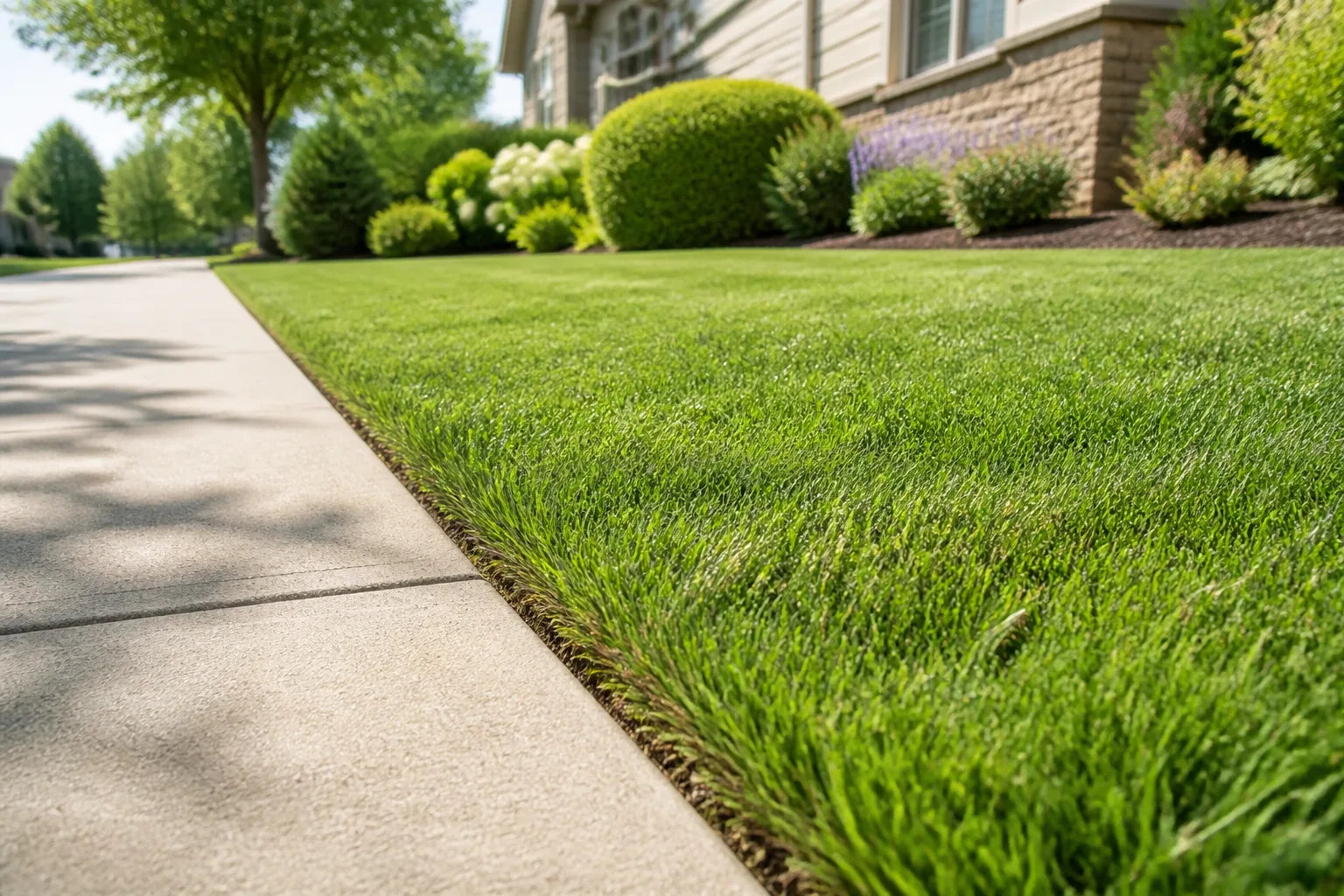
The best time to mow your lawn is not a universal hour on the clock. It is the next dry, reasonably cool window when the grass is actively growing, the soil can support the mower without deforming, and you can finish before rain, lightning, or intense heat makes the job unsafe.
For most yards, that means mid-morning after dew has dried and before peak afternoon heat. But that answer is only useful after you check the lawn itself. A green lawn with dry blades can be ready at 9 a.m.; a shaded lawn covered in dew may not be ready until noon; a brown, dormant lawn may not need mowing at all.
Use this order of decisions: check weather hazards, check grass and soil moisture, identify whether the turf is growing or dormant, then choose the mower height. That sequence is more reliable than mowing every Saturday at the same time.
Why the calendar is secondary to the lawn under your feet
Grass grows at different rates in different weather. Temperature, moisture, sunlight, fertility, season, and the natural growth rate of the turf all affect when the lawn reaches a mowable height. NC State Extension’s lawn handbook treats mowing frequency as a response to growth, not a fixed weekly appointment.
Use this quick check before starting the mower:
| What you see or feel | Mow today? | Better decision |
|---|---|---|
| Blades are dry, soil is firm, and grass is green and growing | Usually yes | Choose a cool part of the day and remove no more than one-third of the leaf. |
| Dew or irrigation still beads on the blades | Wait | Let foliage dry; a damp surface can clog the deck and worsen the cut. |
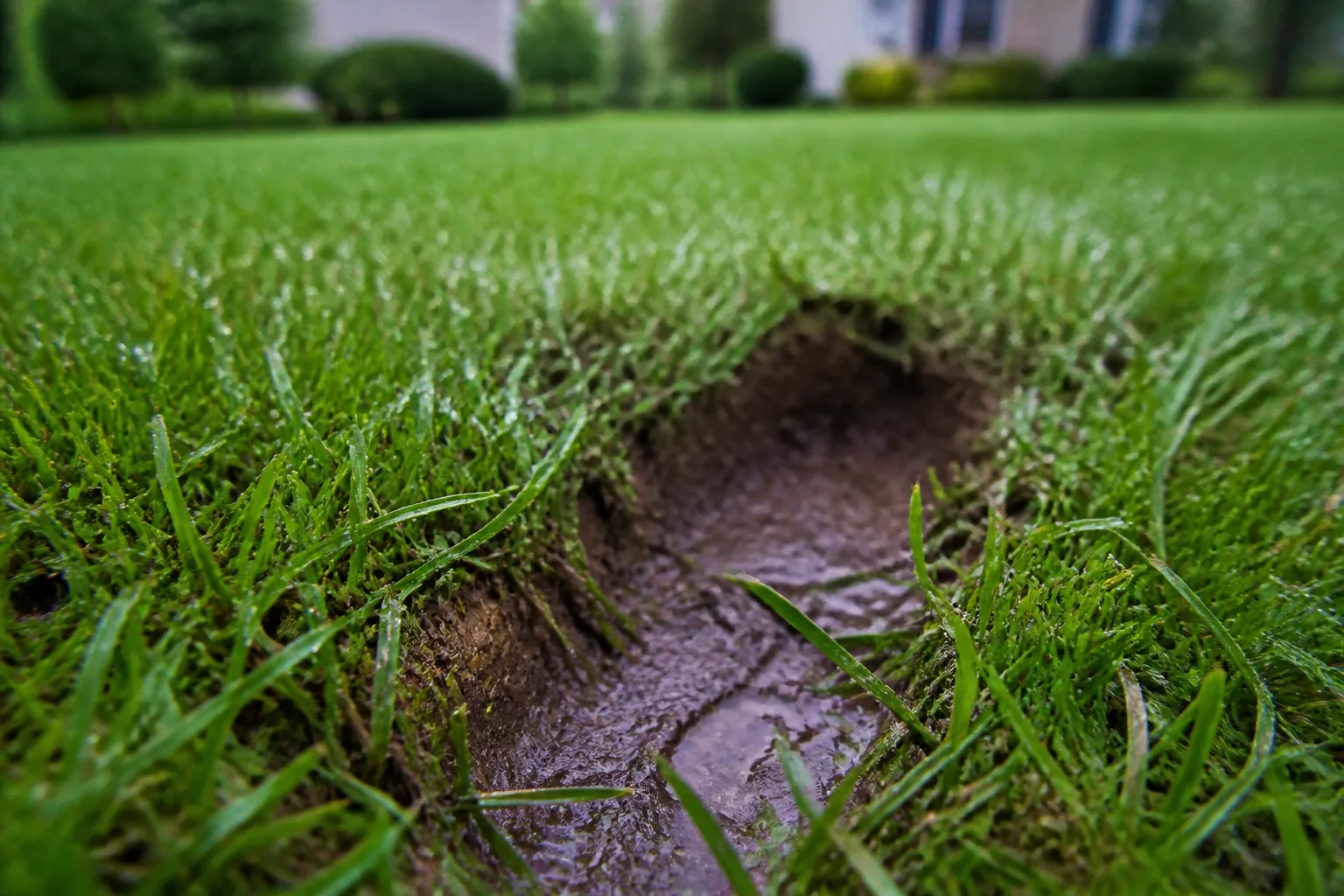
| Shoes sink, leave deep prints, or smear soil | No | Wait for drainage and firmer soil, even if the tops of the blades look dry. |
| Grass is brown and not growing during drought | Usually no | Postpone routine mowing; protect dormant turf instead of cutting it shorter. |
| Frost remains on the lawn | No | Wait until the frost melts and the foliage dries completely. |
| Thunder is audible or lightning is nearby | No | Stop outdoor work and move to a substantial indoor shelter. |
This table is intentionally conservative. Missing one mowing window is cheaper than creating ruts, tearing wet foliage, or putting yourself under a storm. The lawn will usually tolerate a little extra height better than it tolerates a badly timed cut.
Three common yards show why a clock-only answer fails. A sunny sandy lawn may be ready soon after a brief shower because water drains and the canopy dries quickly. A north-facing lawn over dense clay may still be too soft the next afternoon. A lawn under a tree can be dry on top while the soil below stays wet, so the shoe-and-footprint test matters more than the surface appearance.
Dry grass and firm soil are the first green lights
The most useful test after rain or irrigation is not “How many hours has it been?” It is whether the grass and the soil are dry enough to support a clean pass. Walk across an inconspicuous strip in sturdy shoes. If the turf springs back without a dark footprint and the soil does not feel slick or spongy, conditions are moving in the right direction.
The RHS recommends waiting until the grass is dry so the blades cut cleanly and the mower does not clog. It also warns that mowing very wet soil can compact it and leave muddy wheel ruts (RHS guidance on mowing a lawn). A light dew on a sunny, well-drained lawn may disappear quickly; a shaded clay lawn after a downpour can stay too wet for much longer.
Heat and drought change the risk
Heat does not make every mowing session impossible, but it narrows the safe window. A growing green lawn is already losing water through its leaves, and cutting away leaf area reduces the tissue available for photosynthesis and cooling. The risk is higher when the lawn is thin, recently seeded, shallow-rooted, on a sunny slope, or showing wilt and footprints that remain visible.
When a hot spell arrives, mow in the coolest dry window, raise the deck slightly above its usual summer setting, and skip the cut if the turf has stopped growing. A higher canopy shades the soil and slows evaporation. Consumer Reports explains that allowing summer grass to grow taller can support deeper roots and reduce moisture loss, while cutting too low can scalp turf even in otherwise favorable conditions (Consumer Reports summer lawn-care guidance).
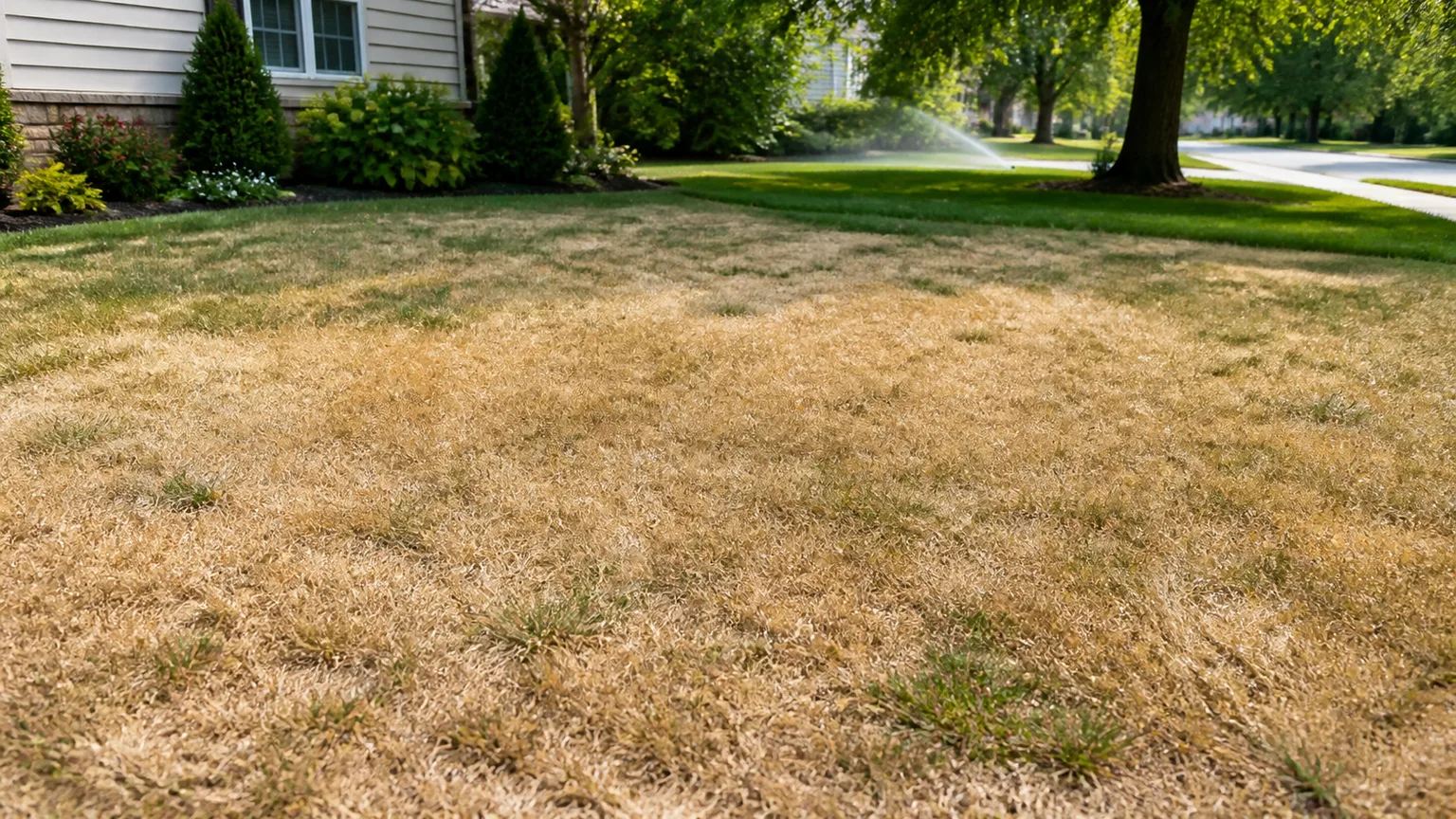
Brown does not automatically mean dead. Many established turfgrasses can go dormant during drought and recover when moisture returns. If the grass is not putting on new growth, there is little benefit in maintaining a short cosmetic height; wait for active growth, follow local watering restrictions, and avoid fertilizing or mowing your way out of dormancy.
Wind and humidity deserve a quick look too. Wind can dry the canopy quickly, but it can also blow clippings into beds, streets, and storm drains and make a lightweight mower harder to control. High humidity slows evaporation even when the air feels warm, so a forecast that says “sunny” does not guarantee that a shaded lawn will be dry by mid-morning. Treat the forecast as a planning aid, then confirm the conditions at ground level.
Frost and thunderstorms are hard stops
Frost-covered blades are stiff and brittle. Mowing across them can break tissue and leave visible damage, so wait until the frost has thawed and the lawn is dry. This is especially important in spring and fall, when a cold shaded corner may stay frosted after the rest of the yard looks ready.
Thunderstorms are a separate safety issue, not just a lawn-health issue. If you can hear thunder, put away the mower and go indoors; the National Weather Service lightning guidance emphasizes that outdoor activity should stop when lightning is a threat. Do not try to finish a final strip during a storm, and do not use a corded mower in wet conditions.
The best time of day depends on the weather window
The familiar mid-morning recommendation works because it balances two competing problems: morning moisture and afternoon heat. It is a window, not a magic appointment. Start when the blades are dry, then make sure the forecast gives you enough time to finish before the lawn or the operator is exposed to worsening conditions.
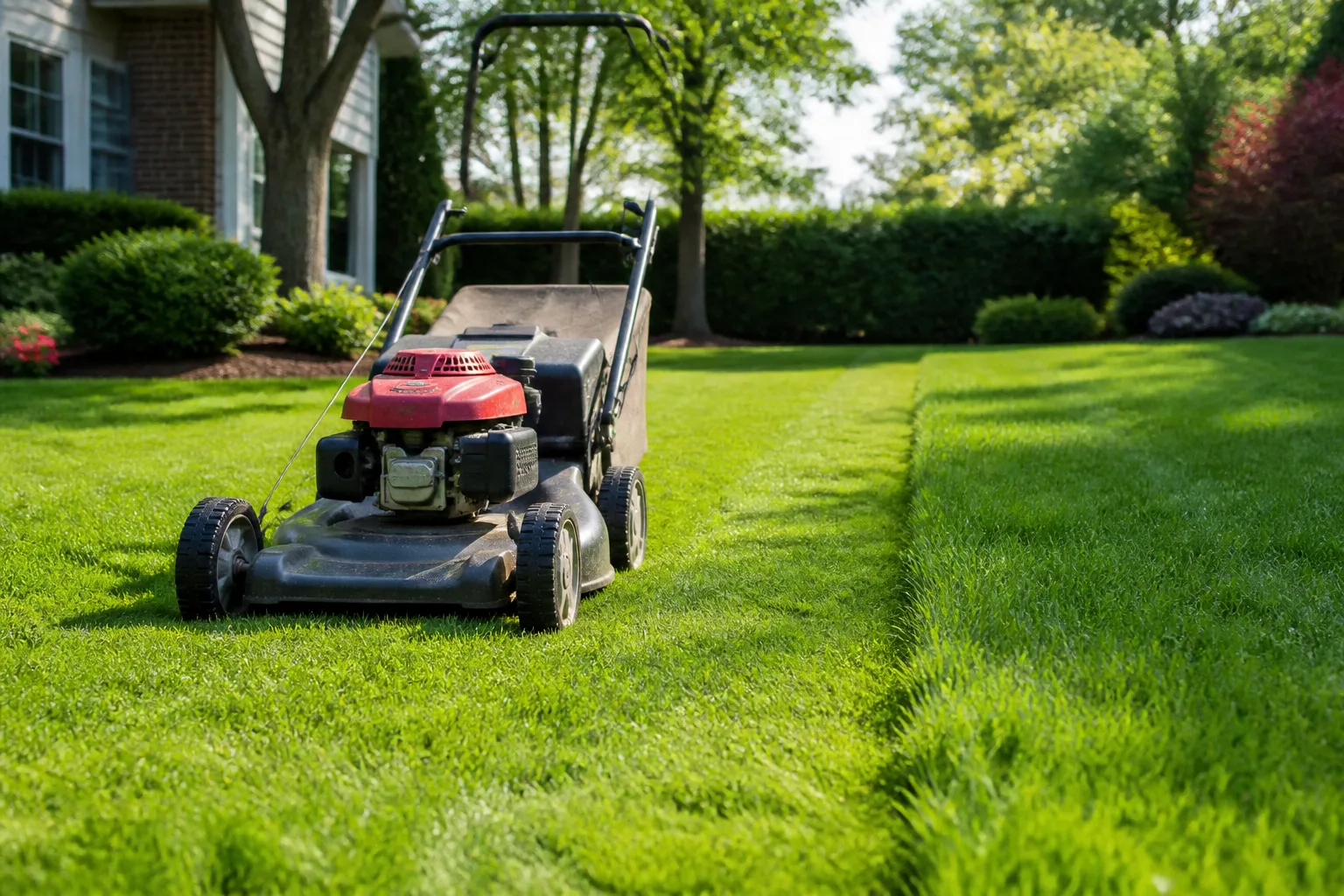
Mid-morning is the usual starting point
On a normal growing day, late morning is often the best compromise. Dew has had time to evaporate, the sun is not yet at its strongest, and the cut grass has much of the day to dry. This is why “after the dew dries, before the afternoon heat” is more useful than a rigid 8:30 a.m. or noon rule.
If a heat advisory is in effect, shift earlier only after the foliage is dry. Starting at dawn on a wet lawn defeats the point. If the morning stays damp and the afternoon becomes dangerously hot, postpone the job rather than choosing between wet turf and heat-stressed turf.
Early evening can work on a dry, mild day, especially for a small lawn, but do not wait until dusk. The mower needs enough daylight for you to see stones, irrigation heads, toys, holes, and wildlife, and the grass should have time to dry before nighttime humidity settles in. Follow local noise rules as well, particularly in neighborhoods where evening equipment use is restricted.
Spring and fall need a dew and frost check
Cooler seasons often make the morning window less dependable. Dew and frost linger longer, and growth may be slow enough that a calendar-based weekly cut removes too much of the leaf. Wait for the lawn to thaw and dry, then mow only when the grass has actually grown beyond your target height.
In late fall, the final cut should not be an excuse to scalp the lawn. Keep the mower at the normal seasonal height unless your local turf guidance says otherwise, and clear heavy leaves that block light. In a mild winter, an occasional cut may still be needed; in a freeze or prolonged wet period, leave the mower parked.
Newly seeded lawns and fresh sod deserve a separate caution. Let new grass establish enough root and shoot growth to tolerate the mower, keep the first cut high, and avoid driving over a soft seedbed. The exact timing depends on the grass and installation, but the principle is consistent: a lawn that has not rooted firmly is more vulnerable to wheel damage and scalping than an established stand.
Set mower height and frequency for active growth
Weather timing cannot rescue a mower set too low. A short cut makes the lawn look tidy for a few days but removes more leaf area, exposes the soil, and leaves less margin for heat, drought, shade, and foot traffic. Mower height should be a turf-health setting, not just a visual preference.
Follow the one-third rule
Remove no more than one-third of the grass blade’s height in a single mowing. If you want to maintain a 3-inch lawn, mow when it reaches about 4.5 inches and return it to 3 inches. If you want a 3.5-inch lawn, mow around 5.25 inches and set the deck to 3.5 inches.
The one-third rule reduces shock and leaves enough green tissue for the plant to keep producing energy. It also prevents a large volume of clippings from forming a mat. NC State Extension recommends mowing often enough to remove no more than one-third and says frequency should follow growth rate; in many lawns that means weekly mowing during active growth, but not during every slow or dormant period (NC State guidance for established lawns).
If your lawn has grown too tall, do not solve the problem with one low pass. Use the high-deck recovery method later in this guide.
Match the height to grass type and stress
There is no single correct mower setting for every lawn. Cool-season grasses such as tall fescue and Kentucky bluegrass generally perform better at a taller height than a low-cut bermudagrass lawn. Warm-season grasses differ from one another too: bermudagrass tolerates a lower cut than St. Augustinegrass, while zoysiagrass height depends on cultivar, mower, and site.
Use your seed or sod label and local extension recommendations first. As a rough starting point for ordinary home lawns, many cool-season lawns are maintained around 2.5 to 4 inches, while warm-season lawns may range from about 1 to 4 inches depending on the grass. The range is broad on purpose; species, shade, slope, mower type, and climate matter.
During heat or drought stress, move toward the taller end of your grass’s recommended range rather than making a dramatic change. BBC Gardeners’ World mowing guidance similarly recommends raising the blade when conditions are hot and dry and keeping the one-third rule in view. A half-inch adjustment can be useful; scalping the lawn is not.
Mower type matters at the margins. Reel mowers can give a clean low cut on a level, fine-textured lawn, but they struggle when grass is long, wet, or uneven. Rotary mowers are more forgiving for ordinary home turf, yet they still need a sharp, balanced blade and a deck high enough to avoid scraping soil. Whatever the machine, measure the actual blade height on a level surface at least once; the numbered notch on the mower is not a universal inch measurement.
Cut often enough to stay within the one-third rule, but let growth set the interval. A cool, rainy spring may require more frequent mowing. A dry summer may slow growth so much that mowing every week becomes unnecessary. If the mower is leaving clumps because growth is fast, the answer may be a shorter interval, a sharper blade, or a dry day—not a lower deck.
Why mowing wet grass backfires
Wet mowing is tempting after several rainy days because the grass seems to grow by the hour. The problem is that a wet lawn creates several failures at once: the mower cuts unevenly, clippings stick together, wheels damage the soil, and wet foliage can move disease organisms around the yard.
Poor cuts and clumped clippings
Water weighs blades down, so they do not stand upright for the mower to cut cleanly. The result is a ragged-looking lawn with missed strips, torn tips, and extra passes. Wet clippings also stick under the deck and collect in heavy mats instead of dispersing through the canopy.
Thin, dry clippings left in a light layer can return nutrients to the lawn. Wet piles are different. If clippings are holding the grass down or shading the crowns, rake or collect them once the conditions are safe. Do not spread a wet, compacted mat and assume it will disappear on its own.
Ruts, compaction, and disease spread
The mower’s weight is the second reason to wait. When soil is saturated, wheels press air out of pore spaces, leave ruts, and smear the surface. Compaction reduces drainage and makes later rain linger, which can turn one rushed mowing session into a recurring wet-lawn problem.
Wet foliage also raises disease risk. NC State Extension’s established-lawn guidance says turf should be mowed when foliage is dry because wet mowing can spread disease-causing organisms from infected leaves to healthy ones. That does not mean every wet cut will create a disease outbreak, but it does mean a wet lawn is the wrong place to take unnecessary chances, especially if you already see thinning, spots, or a patch spreading through the grass.
The correct answer to “How many hours after rain can I mow?” is therefore not a fixed number. Sandy soil on a breezy sunny slope may be ready sooner than heavy clay in shade. Check the blades, the soil, and the wheel tracks you are about to create.
How to recover when weather ruins the schedule
Rainy weather and rapid spring growth can leave a lawn well above its target height. The recovery mistake is to set the deck low and try to restore the normal look in one pass. That removes too much leaf tissue, overloads the mower, and leaves the turf vulnerable just when weather has already made conditions difficult.
The high-deck recovery cut
When the lawn is finally dry, use this sequence:
- Confirm that growth is active. If the grass is brown and dormant, wait unless long vegetation creates a separate safety or access problem.
- Clear debris and inspect the route. Remove branches, stones, toys, and anything hidden by the overgrowth. Check slopes and soft areas where the mower could slide or sink.
- Raise the deck. Set it high enough to remove no more than one-third of the current leaf height. If you cannot estimate the height, start high and take less.
- Mow slowly with a sharp blade. Use a collection bag if the first pass produces heavy clumps, or stop and rake them rather than leaving mats on the turf.
- Wait one or two days before the next pass. If the lawn is still too tall, lower the deck modestly and repeat. NC State Extension recommends gradual height reduction with short intervals after a wet period instead of one severe cut.
- Return to the normal setting only after recovery. Keep the taller setting if a heat wave or drought follows; the calendar does not outrank the stress on the grass.
If the lawn is so tall that the mower stalls repeatedly, do not keep forcing it. Clear a small dry path, use a higher setting, or hire help for the first reduction. A mower that is bogging down is a sign that the pass is too aggressive, the blade is dull, the deck is clogged, or the grass is still too wet.
Look ahead before making the recovery cut. If heavy rain is expected within a few hours, waiting may spare you another round of clumps and ruts. If a heat wave follows the dry window, choose the taller setting and cut only what is necessary for access or appearance. The goal is to get the lawn back inside a safe height range without turning one missed weekend into two stresses in a row.
Mower and personal safety still come first
A good mowing window is one in which both the turf and the operator can work safely. Wear sturdy, closed-toe shoes, eye protection, and hearing protection when the mower requires it. Keep children and pets away, clear hard objects from the lawn, and do not mow a slope when wet footing makes a slip likely.
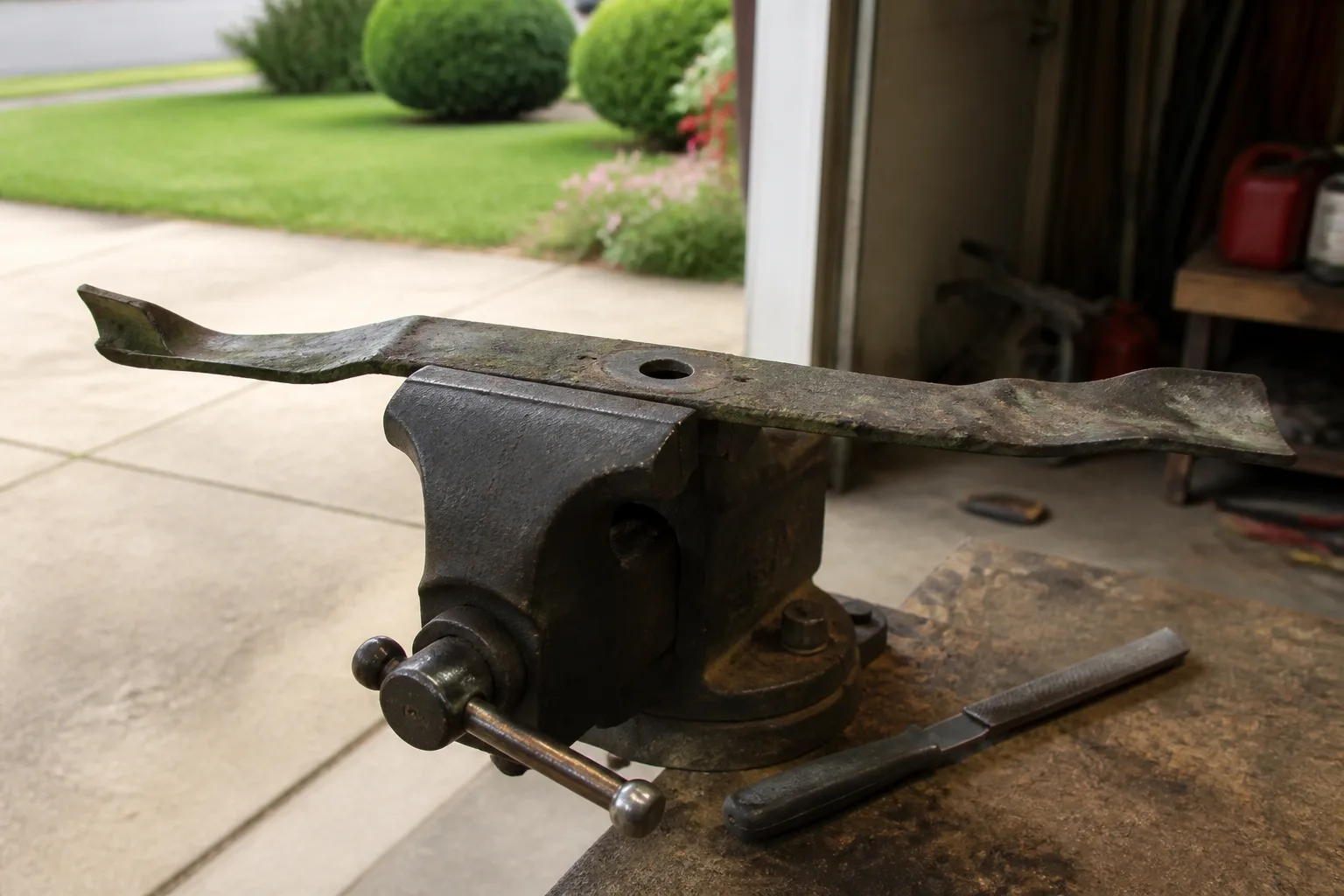
Keep the blade sharp and the underside of the deck clear. A dull blade tears rather than cuts, leaving ragged tips that dry and discolor quickly. Before reaching under the deck, disconnect the spark-plug wire on a gas mower or remove the battery and safety key on a battery mower; Consumer Reports includes these precautions in its mower-maintenance guidance.
Do not mow during active rain, near lightning, or when high wind is throwing branches and debris across the yard. Do not treat a forecast gap as permission to start if thunder is already audible. A healthy lawn can wait; a person operating a noisy metal machine in a storm should not.
On very hot days, your own condition is another stop signal. Take breaks, drink water, wear sun protection, and avoid mowing when you feel dizzy, weak, confused, or unusually hot. The grass may technically be dry while the operator is not in a safe condition to push a heavy machine, especially on a slope or in full sun.
Conclusion
The best time to mow your lawn is after the grass is dry, while the soil is firm, and before heat or storms make the work stressful. Mid-morning is the usual sweet spot because it often clears dew without exposing freshly cut turf to the hottest part of the day, but the lawn’s condition matters more than the number on the clock.
Skip wet soil, frost, lightning, and routine mowing of dormant drought-stressed grass. When weather makes the lawn overgrown, raise the deck, remove no more than one-third, and make gradual follow-up cuts. Pair that weather-first judgment with the right species-specific height and a sharp blade, and you will avoid the damage caused by trying to keep a perfect calendar during imperfect weather.



