10 Easy Plants to Start in April for a Fuller Garden
Plant pansies, lettuce, radishes, zinnias, and six more in April to green up a sparse spring garden. Soil-temp rules, frost timing, and spacing for each crop.
April is the month gardeners feel most cheated. Daylight stretches, nursery tables overflow with color, and your neighbor’s daffodils are already shouting — yet your own beds still look like a construction site with mulch. That gap between spring energy and summer fullness is exactly why plant choice in April matters more than plant quantity. The right ten starters can add foliage, groundcover, and early bloom in weeks, while the wrong ten sit in cold soil and leave you staring at empty rows until June.
This guide is not a generic “what to plant in spring” roundup. Every pick below is chosen because it delivers visible garden mass quickly — leafy coverage, low spread, or fast color — with realistic timing notes for cool climates and warm ones. You will also get the decision rules competitors skip: soil temperature targets, frost tolerance splits, and what to do when your calendar says April but your thermometer says wait.
Why April Gardens Still Look Bare (and What “Full Fast” Really Means)
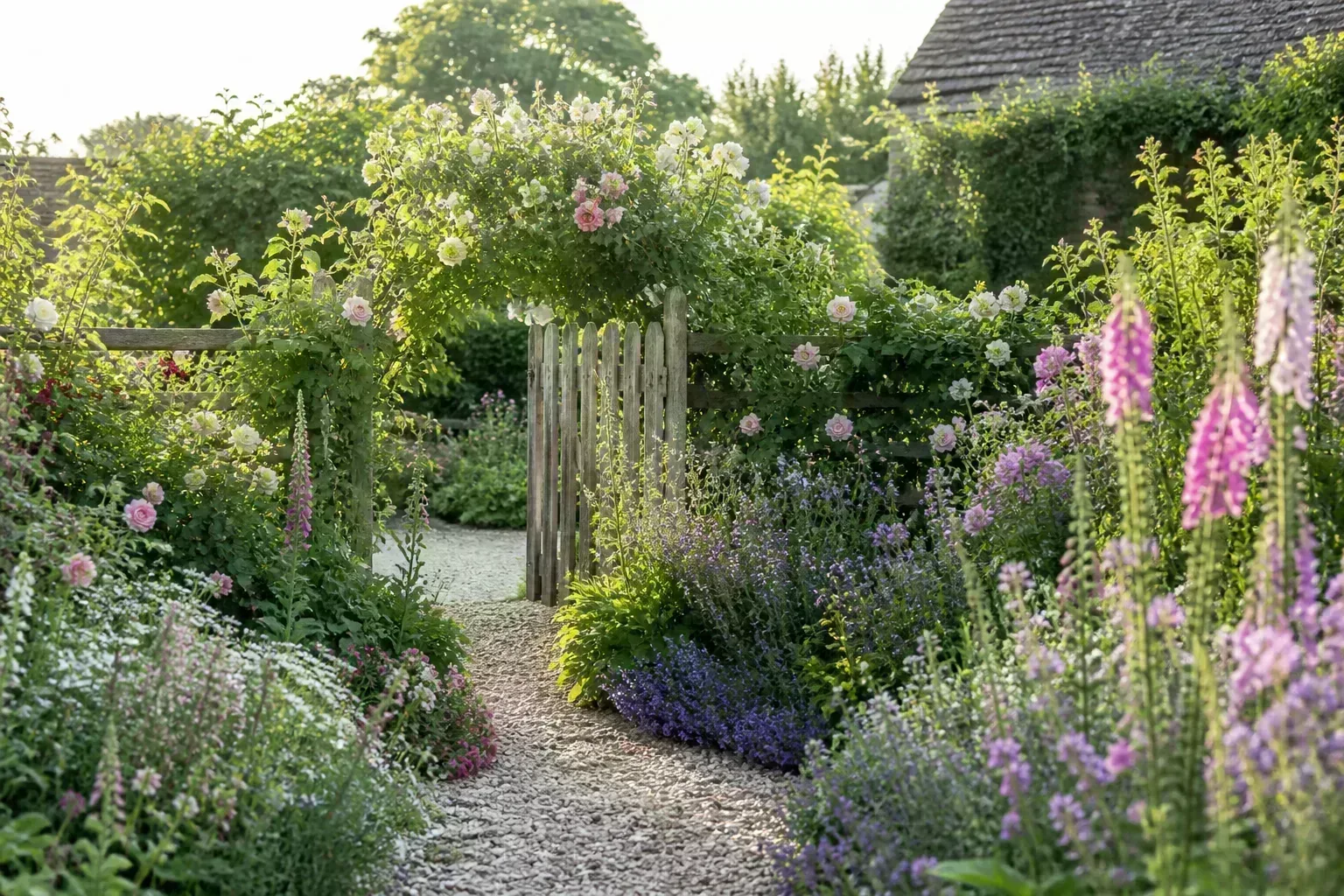
A full garden in April rarely means every perennial is in peak bloom. Most herbaceous perennials are still pushing new shoots from the crown, woody plants are leafing out unevenly, and last year’s mulch exposes every gap between clumps. Visual fullness at this stage usually comes from three things working together: low, spreading foliage (lettuce, wild strawberry, yarrow leaves), cool-season flowers (pansies, early phlox), and fast annuals once soil warms (zinnias, marigolds, sunflowers).
“Fast” also has two clocks. Days to green measures when a bed stops looking empty — often 10–21 days for direct-sown radishes or purchased pansy packs. Days to bloom runs longer: sunflowers may need 50–70 days from seed to open flower, even though their seedlings add height quickly. Planning both timelines prevents the disappointment of sowing only slow bloomers and wondering why the border still feels thin at Memorial Day.
If you are still deciding whether the ground is ready, read our guides on how long seeds take to sprout and when to plant vegetables by season before you buy a cartload of seedlings.
The April Planting Test: Soil, Frost, and Speed
Before any plant on this list goes in the ground, run two checks that matter more than the date on the calendar.
Soil temperature beats the calendar. Germination speed and transplant survival are driven by soil temperature at seed depth, not air temperature on your porch. Slide a soil thermometer one inch into the bed, or dedicate an instant-read kitchen probe to the garden. The Iowa State germination requirements chart for annuals and vegetables shows wide differences: lettuce can sprout in soil near 40°F, while marigolds and zinnias often stall until the ground reaches 60–70°F.
Workable soil is the second test. Squeeze a handful — it should crumble when you open your fist, not squish like clay or blow away like dust. If you leave boot prints that fill with water, wait. Planting into saturated soil compacts pores, suffocates roots, and turns seed rows into crusted concrete after the next rain.
Cool-season vs heat-lovers in the same month. April is a transition month, which means two planting windows often overlap in one yard. Cool-season plants — pansies, lettuce, radishes, woodland phlox, yarrow divisions — tolerate light frost and prefer mild temperatures. They are your best bet for early color and foliage in USDA zones where nights still dip into the 30s.
Heat-lovers — zinnias, sunflowers, French marigolds — need frost-free nights and warm soil. Starting them too early does not make them tough; it makes them stall, rot, or get set back by a single late cold snap. In the northern half of the U.S., that often means late April or early May outdoors, even when garden centers sell zinnia packs in March.
The split is simple: if your last frost date is still ahead of you, prioritize the cool-season half of this list. If frost is behind you and soil at one inch reads 60°F or higher, add the heat-lovers. When in doubt, plant lettuce today and hold zinnia seed for two weeks.
Quick Reference: 10 April Starters at a Glance
Use this table as a shopping and sowing checklist. “Days to impact” is when the bed looks noticeably fuller — foliage or flower — not necessarily peak bloom.
| Plant | Best April role | Frost tolerance | Start method | Days to visual impact | Watch for |
|---|---|---|---|---|---|
| Pansy | Instant color in pots and beds | High (light frost) | Transplants | 0–7 days | Heat ends bloom by summer |
| Phlox | Early spring color, groundcover | Moderate to high by type | Transplants or division | 7–21 days | Powdery mildew in stagnant air |
| Yarrow | Foliage texture, summer blooms later | High once established | Divisions or small plants | 14–28 days foliage | Spreads by rhizomes in rich soil |
| Comfrey | Large leaves, fast bulk | High | Crown cuttings | 14–21 days foliage | Spreads aggressively — site carefully |
| Wild strawberry | Groundcover, edible fruit | Moderate | Plants or runners | 14–28 days | Runners invade paths if unchecked |
| Zinnia | Bold summer color | None | Direct sow after frost | 14–21 days seedlings; 50–60 days bloom | Cold soil delays or kills seed |
| Sunflower | Vertical height fast | None | Direct sow or indoor start | 10–14 days seedlings; 50–70 days bloom | Birds on seed; stake tall types |
| Marigold | Orange/gold fill, pest buffer | Low | Direct sow or transplants after frost | 7–14 days germination; 50–80 days bloom | Wet cold seed rots |
| Lettuce | Leafy green mass, edible | Moderate to high | Direct sow or transplants | 10–21 days | Bolts in heat — sow succession |
| Radish | Fast row green + harvest | High | Direct sow only | 7–14 days seedlings; 25–35 days harvest | Woody roots if heat arrives early |
Cool-Season Flowers That Fill Gaps in Weeks
These three are the first stop when your last frost is still weeks away but you want the front bed to stop looking like a mulch delivery.
Pansies
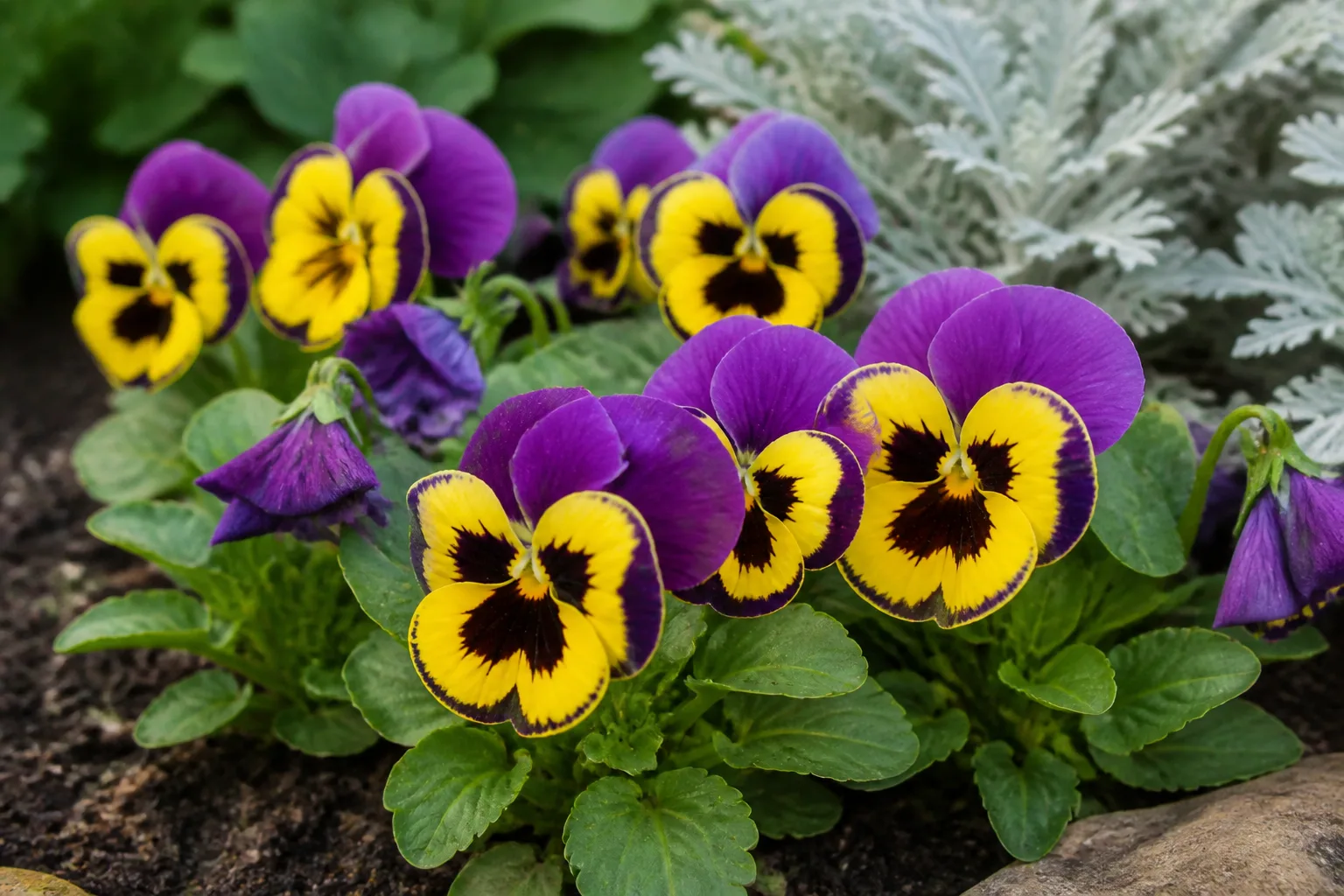
Pansies (Viola × wittrockiana and related violas) are the fastest honest color you can buy in April. Nursery packs with tight buds — not fully open flowers — establish in cool soil and often survive light frost, which is why they anchor spring containers and edging beds across temperate climates.
Plant at the same depth they grew in the pot, spacing six to eight inches apart for a solid ribbon of color. Full sun to partial shade works; in the South, afternoon shade extends bloom life. Deadhead spent flowers to keep new buds forming until summer heat shuts production down. Pansies are not a summer solution — plan to swap them for heat-tolerant annuals in June — but for three to six weeks of instant fullness, nothing else matches a flat of violas on a gray April morning.
Choose plants with more buds than open blooms. Open flowers look good at checkout and tired two weeks later.
Phlox
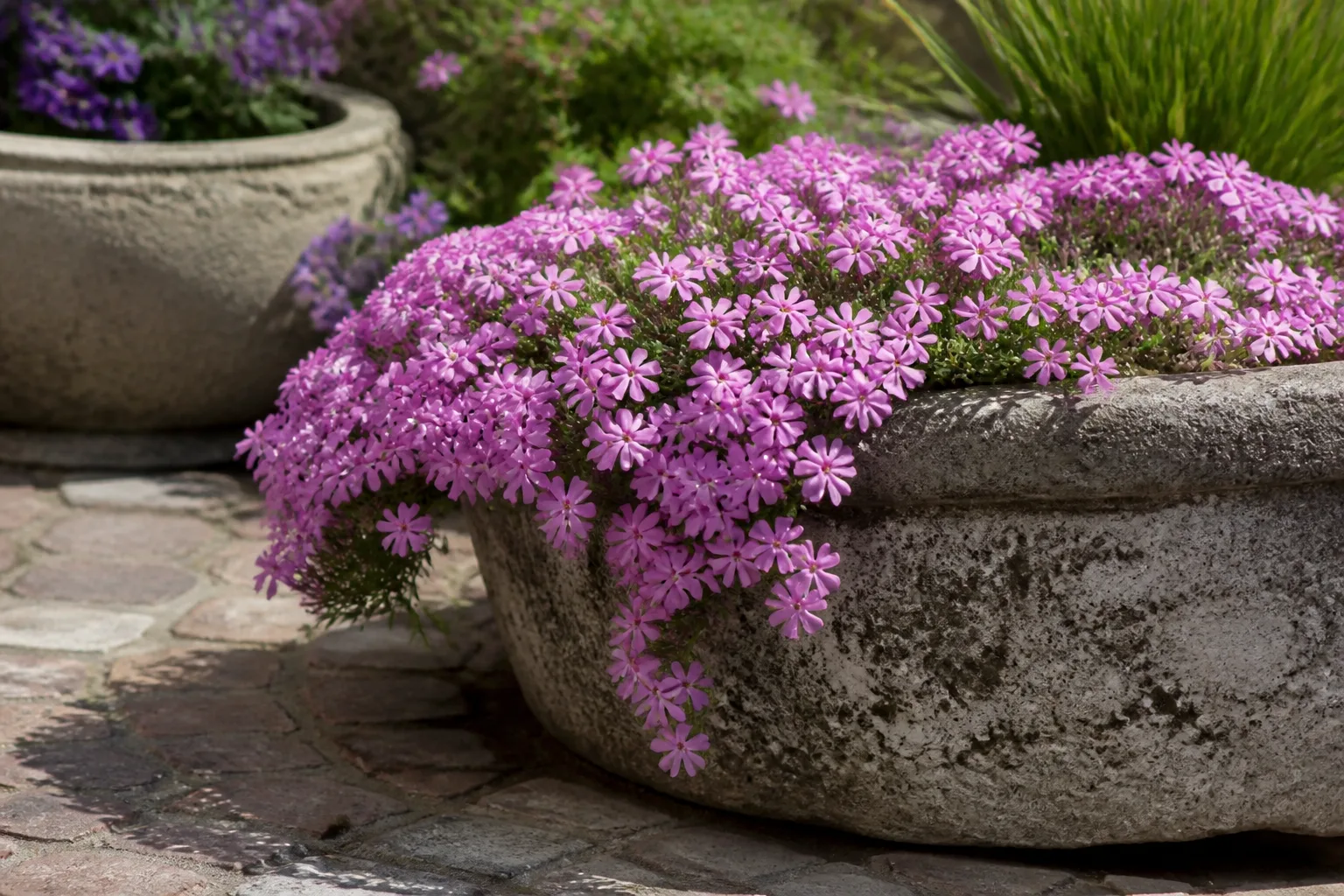
Phlox is not one plant but a genus with very different April roles. Woodland or creeping phlox (Phlox stolonifera, P. subulata) spreads low mats of early spring color — pink, purple, white — and fits rock edges, retaining walls, and sunny slopes. Taller border phlox (Phlox paniculata) is a summer star, but purchased starts or divisions planted in April build leafy clumps that make beds feel occupied long before July bloom.
The RHS phlox genus guide notes that types range from rock-garden cushions to scented summer borders, so match the tag to your spot. Creeping types want sun and sharp drainage; woodland types tolerate more shade. Space mat-forming species 12–18 inches apart so they knit together by late spring without crowding. Divide mature clumps in early spring if you already grow phlox — replant divisions at the same depth, water in, and mulch lightly.
If mildew has been a problem on tall phlox in your garden, prioritize creeping species for April fill and save P. paniculata for areas with morning sun and good air movement.
Yarrow
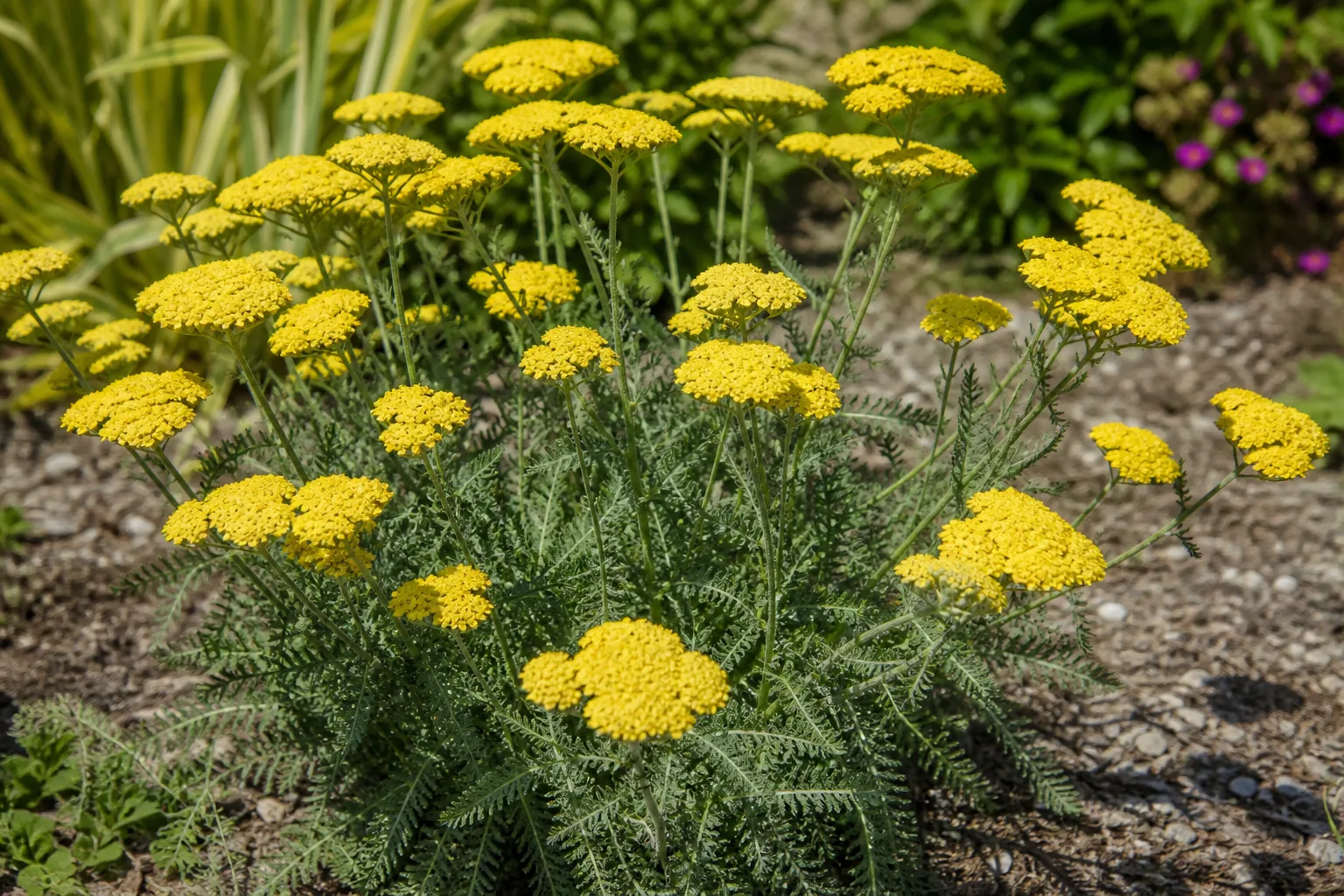
Yarrow (Achillea millefolium and cultivars) is the foliage-first workhorse of this list. Feathery leaves expand quickly from small divisions planted in April, giving beds texture weeks before flat-topped summer flowers arrive. Yarrow tolerates poor soil, drought once established, and cold snaps that would wreck tender annuals.
Plant divisions or nursery pots 12–18 inches apart in full sun. Avoid rich, heavily fertilized beds — yarrow flops and spreads faster in nitrogen-heavy soil. Many gardeners use it as a support plant near fruit trees and shrubs because deep roots mine nutrients and the umbel flowers attract beneficial insects. Cut spent flower heads if you do not want self-seeding, or leave them for late-season structure.
For fastest visual impact, choose young plants with active leaf growth rather than dormant bare-root stock that sits invisible for a month.
Perennials and Groundcovers That Add Bulk Before Bloom
These two build mass through leaves and spread — not splashy April flowers — which is exactly what sparse beds need.
Comfrey
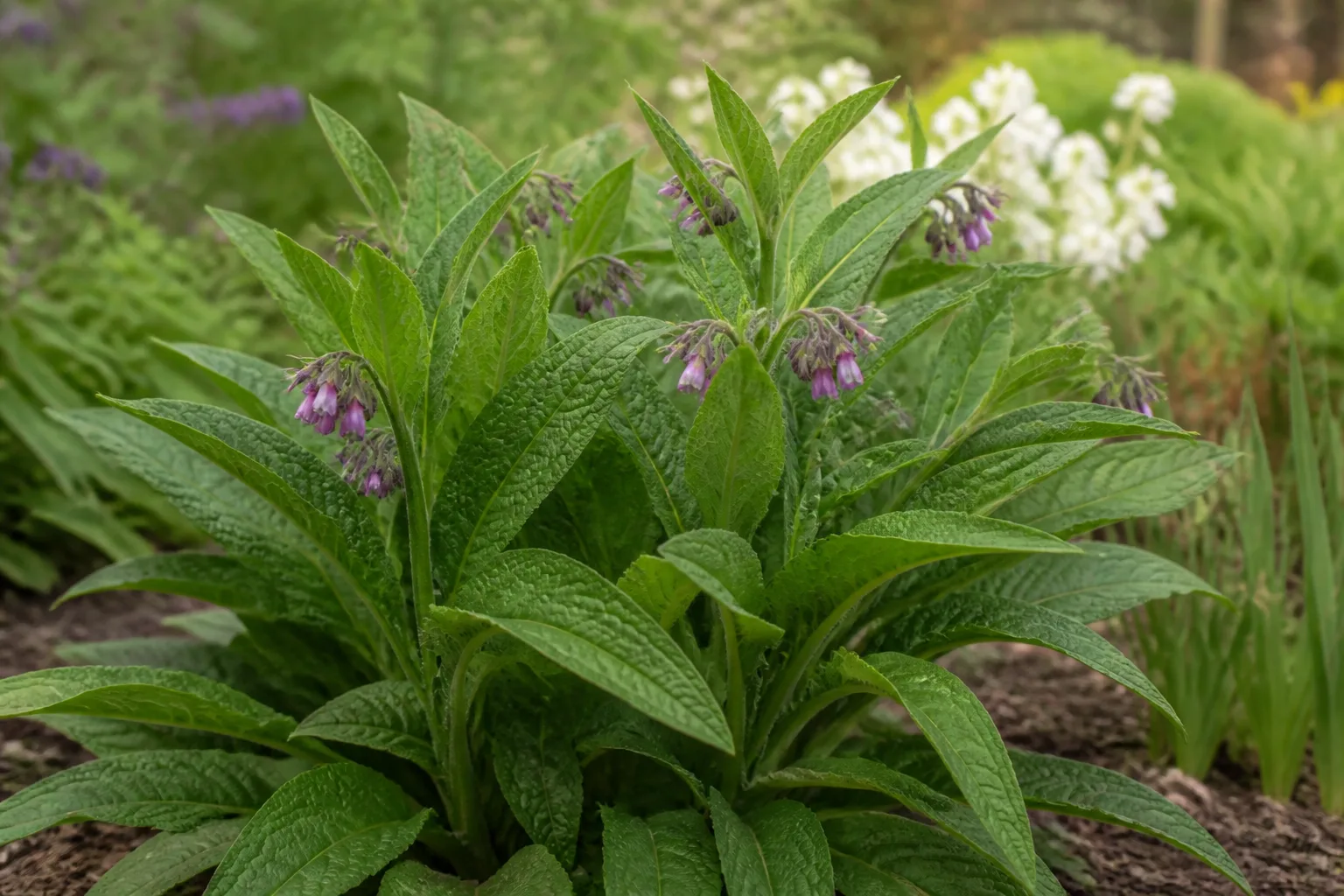
Comfrey (Symphytum spp.), especially sterile cultivars such as Bocking 14, is one of the fastest ways to add large, lush leaves to a new bed. Crown cuttings or small plants set in April can produce a dense clump within weeks in cool, moist soil. Garden designers value comfrey for biomass: leaves make mulch, compost activator, and pollinator forage.
Site comfrey where its size is an asset, not a future chore. It spreads by crown expansion and, in fertile soil, can become difficult to remove. Many growers confine it to orchard edges, compost corners, or dedicated “chop-and-drop” beds rather than mixed perennial borders. Plant crowns two to three inches deep, space three feet apart if you want individual clumps, and water regularly until new leaves unfurl.
Comfrey is not a casual filler for a small formal bed. Treat it as infrastructure — a living mulch factory — and it will make the garden feel full faster than almost any ornamental perennial you could buy the same week.
Wild Strawberry
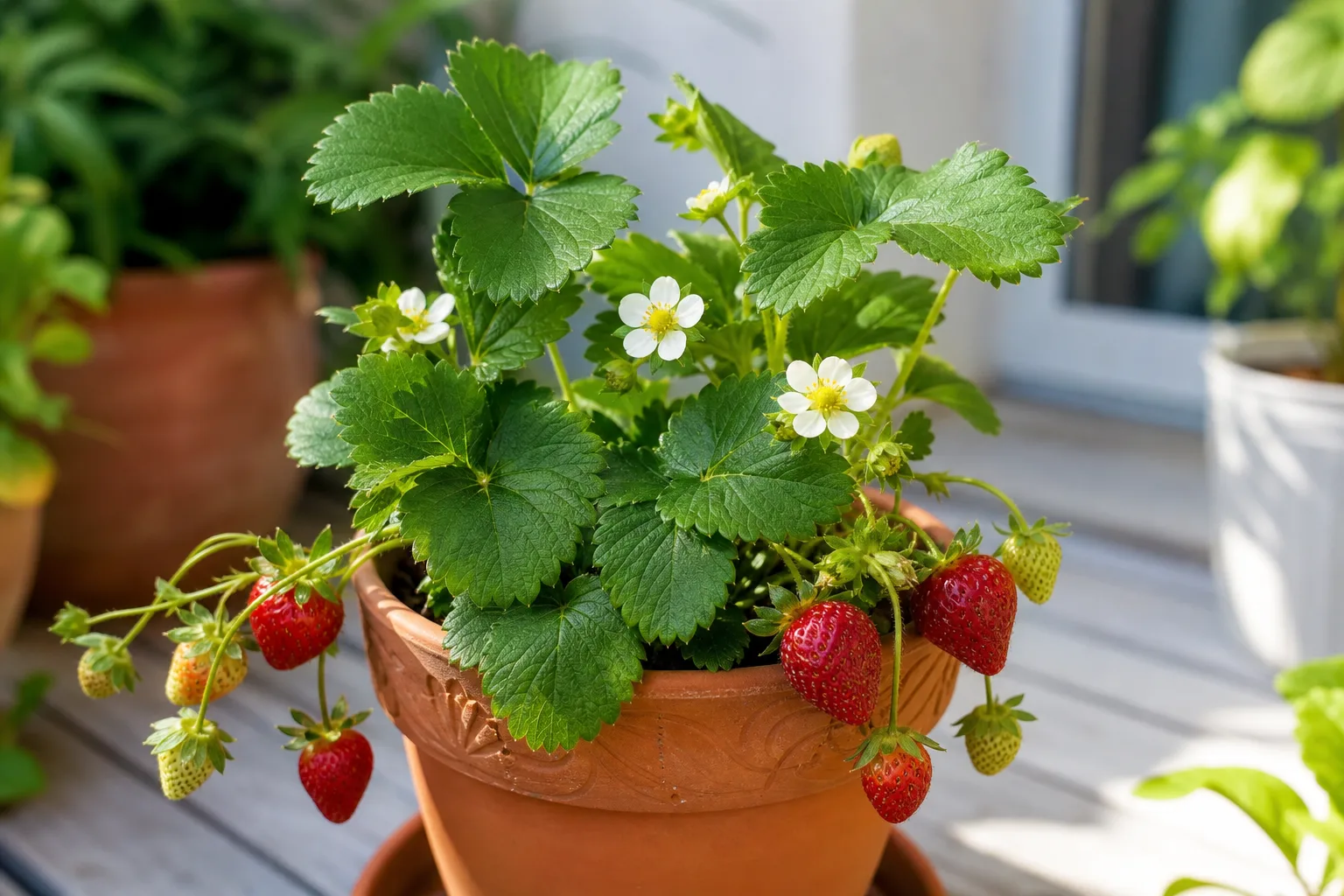
Wild strawberry (Fragaria vesca) and alpine strawberry types fill gaps with runner-forming rosettes and small edible fruit. Unlike June-bearing garden strawberries bred for single big harvests, wild types produce steadily from late spring through summer when picked often. April planting from small pots or runners lets roots establish before summer heat.
Plant in sun to partial shade, spacing about eight to twelve inches apart if you want a groundcover mat this season. Runners will bridge gaps by late May — tuck them into bare soil or snip them if paths are nearby. Harvest regularly; neglected fruit attracts slugs and signals the plant to slow production. Wild strawberry is ideal under shrubs, along path edges, and between young perennials that will not size up until year two.
Do not confuse wild strawberry with ornamental mock strawberry (Potentilla indica), which spreads similarly but produces dry, flavorless fruit.
Heat-Lovers to Start Only After Frost Risk Drops
Once soil warms and frost is unlikely, these three annuals add height and saturated color fast. Starting them too early is one of the most common April mistakes.
Zinnias
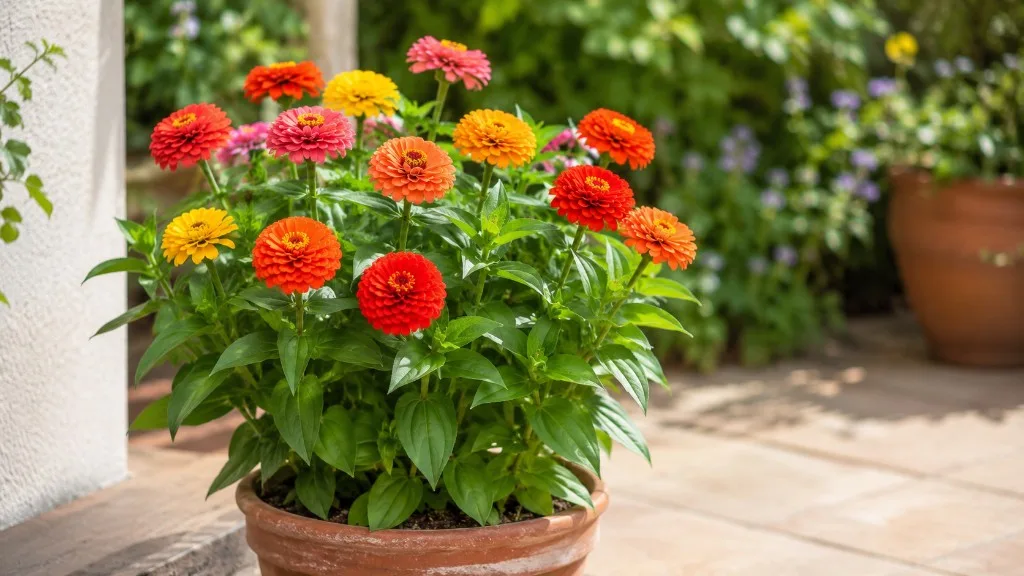
Zinnias (Zinnia elegans and hybrids) germinate in days and shoot up in warm soil, but they are frost-sensitive and sulk in cold ground. Wait until soil holds near 60°F at one inch and your last frost date has passed — or passed with confidence in your microclimate. Direct sowing is usually better than transplanting because zinnias resent root disturbance.
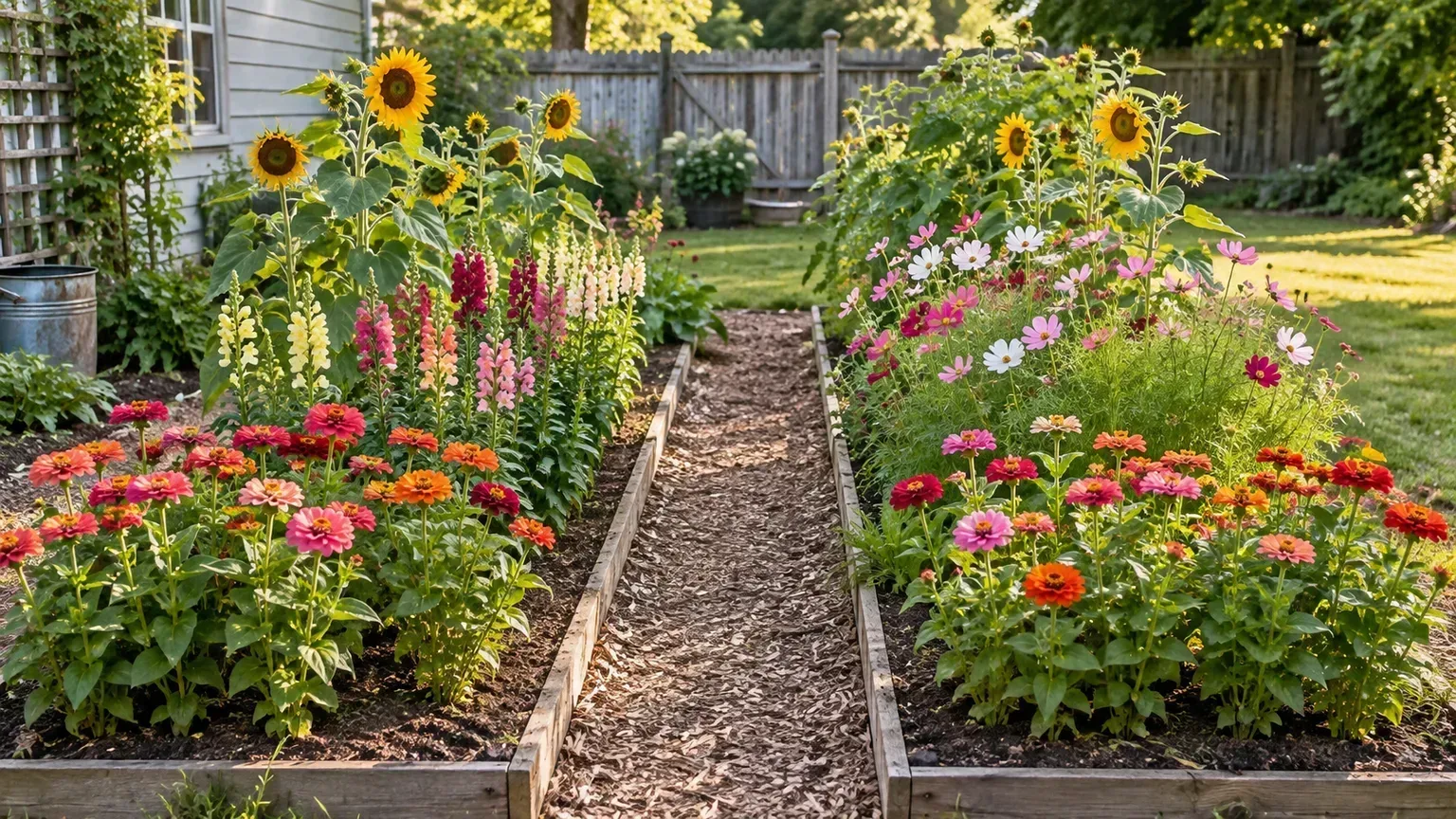
Sow seeds ¼ inch deep, six inches apart in rows or groups, and thin to 12–18 inches for tall cutting types. First seedlings appear in five to ten days in warm soil; blooms follow in roughly eight to ten weeks. For continuous color, sow a second batch three weeks after the first. Zinnias fix the “all green, no punch” problem by late June even when April was all pansies and lettuce.
If nights are still cool but days are warm, hold seed and buy one flat of transplants for instant color while you wait — do not direct sow into 45°F soil and assume patience will reward you.
Sunflowers
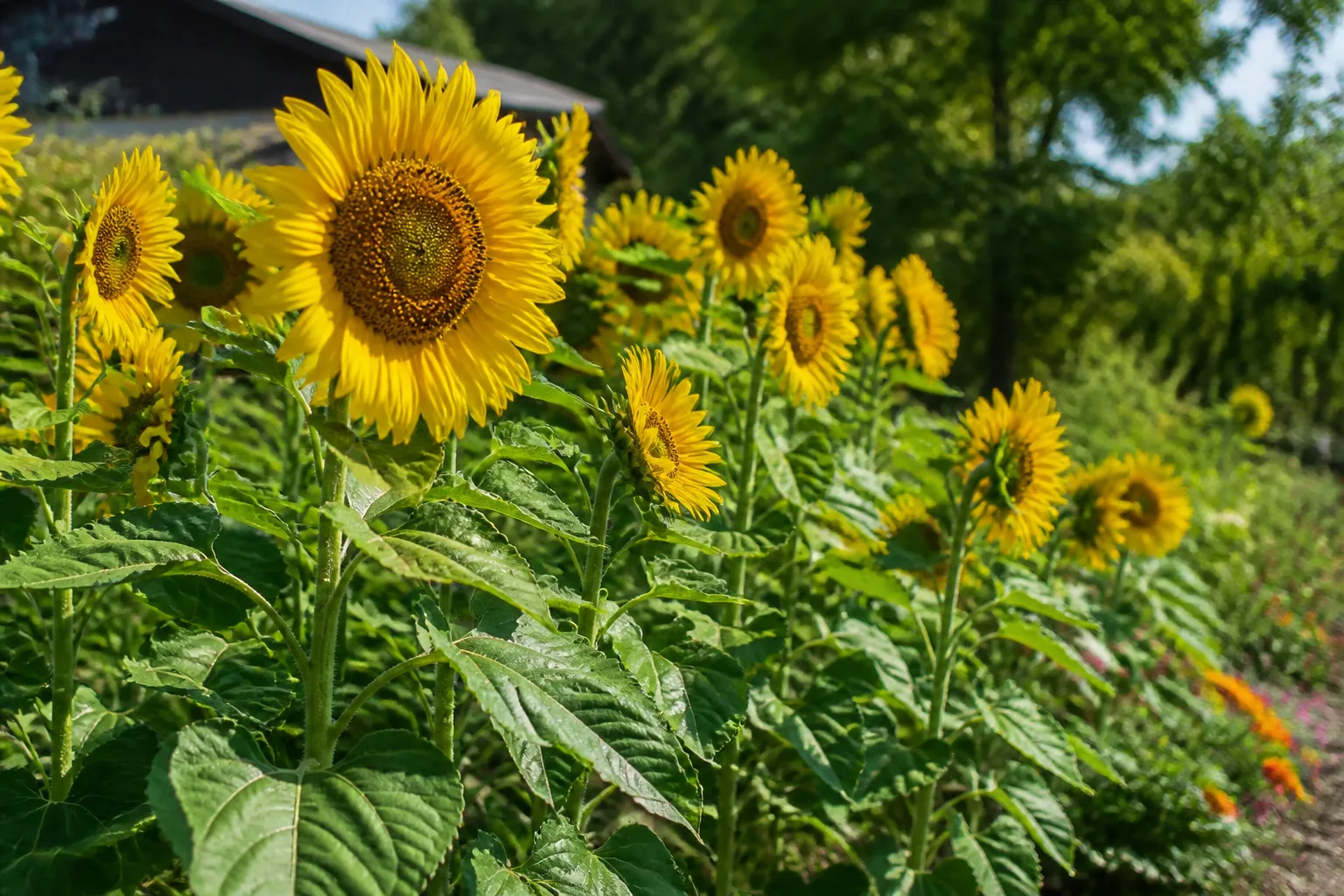
Sunflowers (Helianthus annuus) deliver vertical mass faster than almost any annual. In warm April zones, direct sow after frost one inch deep, six inches apart, thinning to 12–24 inches depending on variety. In cooler zones, start indoors in biodegradable pots two to three weeks before transplanting so you do not lose a month — sunflowers dislike having their taproot disturbed, so peat or cow pots planted whole work best.
Fast varieties such as ‘ProCut’ and many branching pollenless types bloom in 50–60 days from seed. Leaves are large by week two, which helps a young bed look intentional even before flowers open. Stake single-stem cutting types in windy sites; branching types often support themselves but may need help in exposed lots.
Cover newly sown rows with row cover if birds are an issue — they will pull sprouting seed the morning after you celebrate germination.
Marigolds
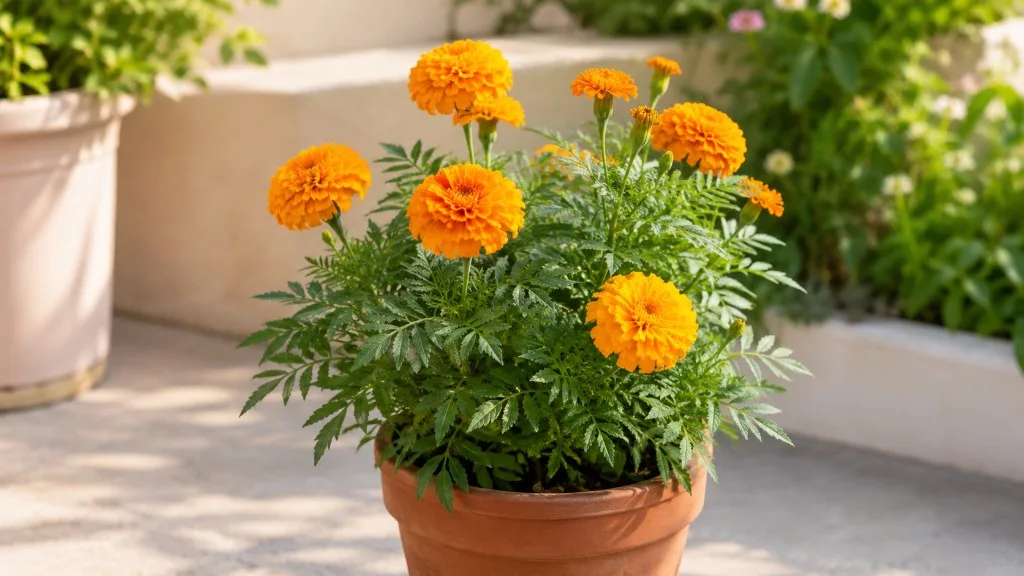
Marigolds (Tagetes patula, T. erecta) are the workhorse annual for orange and gold fill, companion planting, and pollinator support. Seed germinates in four to seven days in soil near 70°F, with flowers roughly 50–80 days from sowing depending on type. French marigolds stay compact for edging; African types add height at the back of a new bed.
Sow after frost when soil warms, or set out nursery packs on the same schedule as tomatoes and basil. Space French types eight to ten inches apart, Africans twelve to eighteen inches. Deadhead spent blooms if you want maximum flower production into fall. Marigolds tolerate mediocre soil and short dry spells once established, which makes them forgiving first-year fillers around slow perennials.
Wet, cold soil is marigold seed’s enemy. If April is rainy and nights stay in the 40s, wait — rotted seed is slower than a patient May sowing.
Fast Vegetables That Green Up a Bed Fast
Edible crops belong on this list because nothing makes a kitchen garden look alive faster than rows of lettuce and radish tops — and you can harvest them while slower ornamentals find their feet.
Lettuce
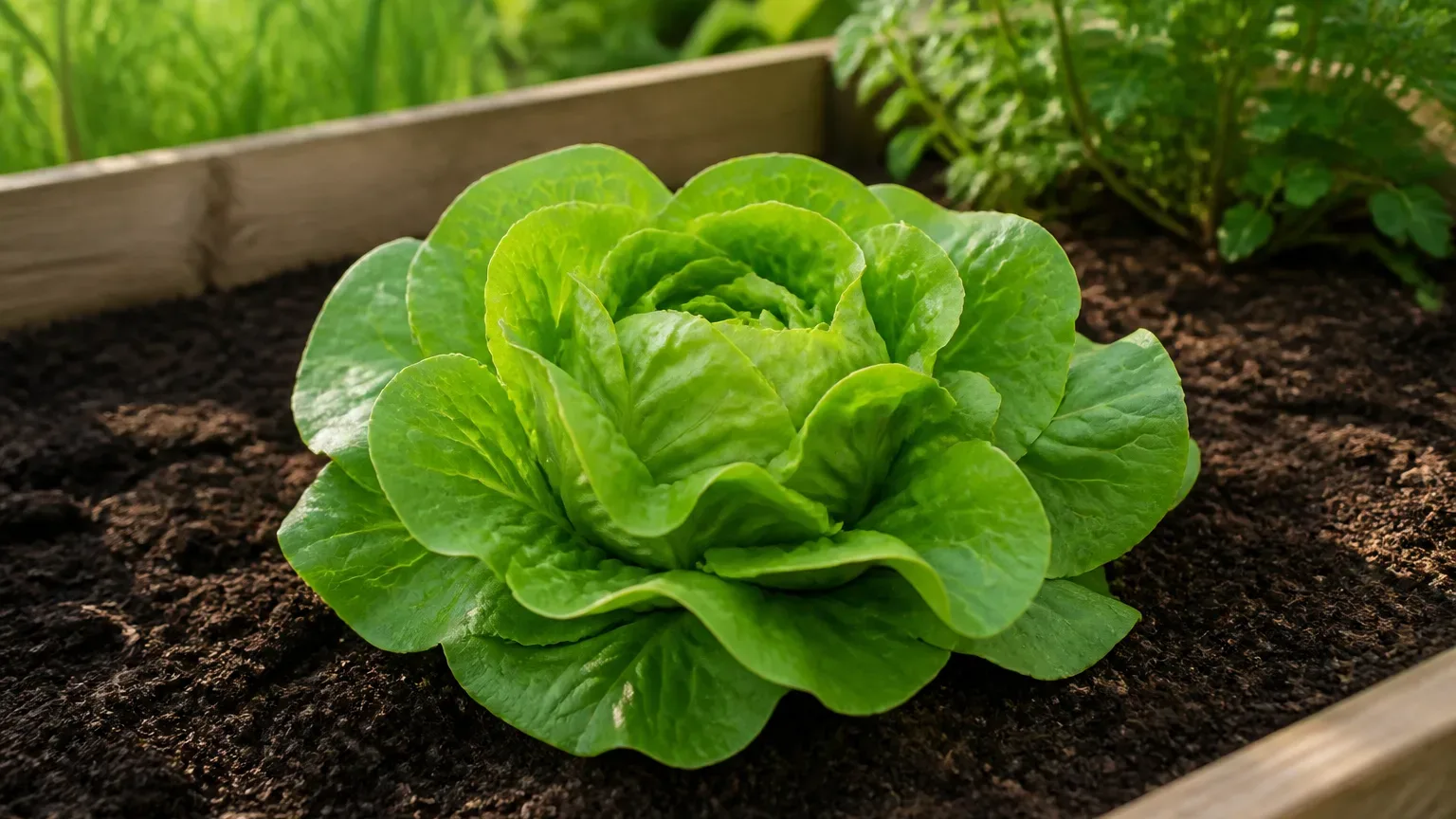
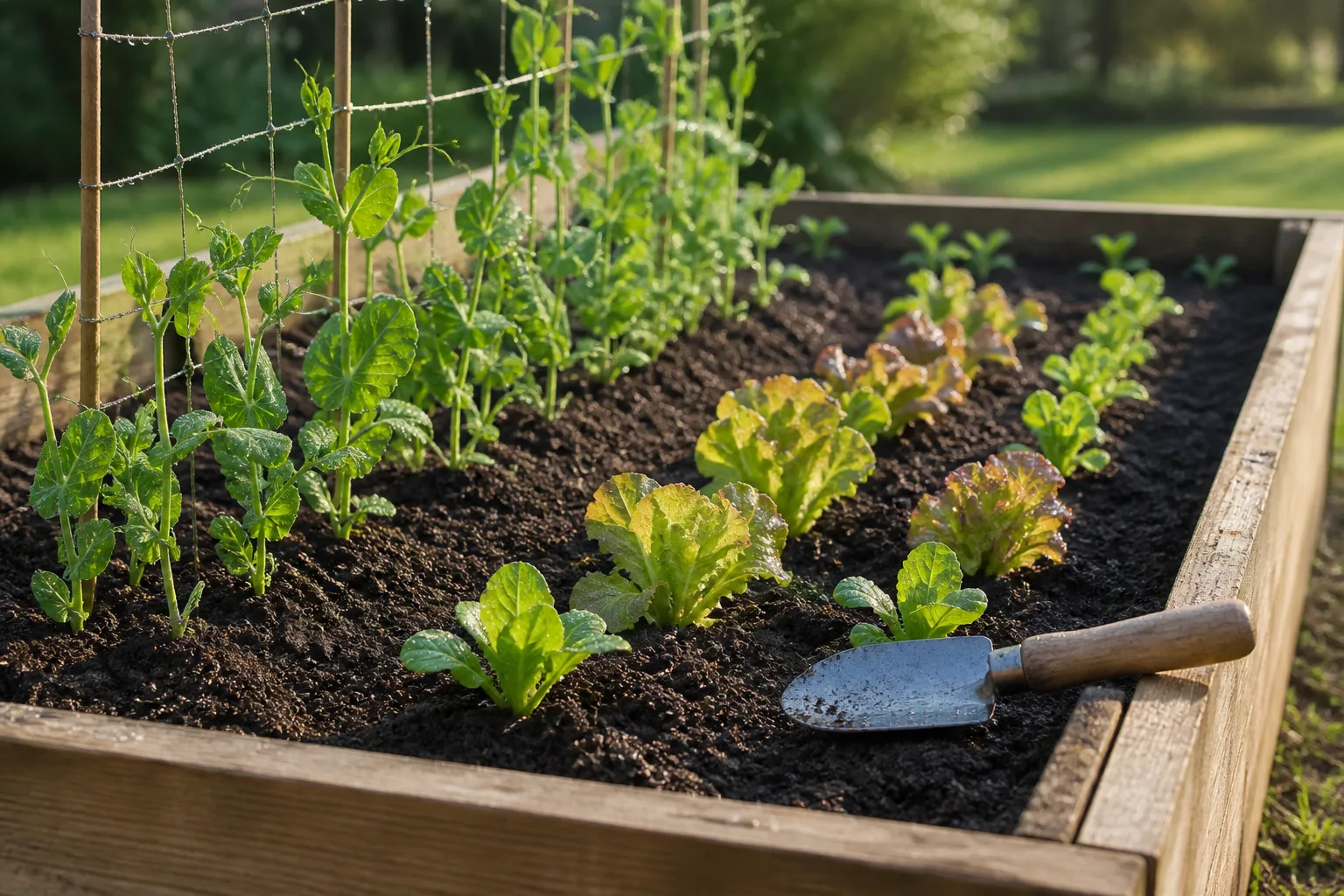
Lettuce is the cool-season champion for April fullness. Seed germinates in soil as cool as 40°F, though 55–65°F is ideal for even stands. Sow leaf types every two weeks for a continuous ribbon of green; head lettuce needs more space and time but still adds mass quickly. Plant seeds ⅛–¼ inch deep, firm soil lightly, and keep the row moist until emergence — usually seven to fourteen days.
Space leaf lettuce four to six inches apart for cut-and-come-again harvests, or broadcast and thin. Mix colors — red oakleaf beside green romaine — and the vegetable patch reads as intentional design, not a utilitarian afterthought. Lettuce bolts when days lengthen and heat arrives; plan a shaded succession or swap to warm-season fillers in June. Pair timing guidance with our article on easiest seeds to direct sow if this is your first spring bed.
Transplants from a garden center work when soil is workable but you do not trust seed in crust-prone clay — they are the fastest way to a full-looking row on planting weekend.
Radishes
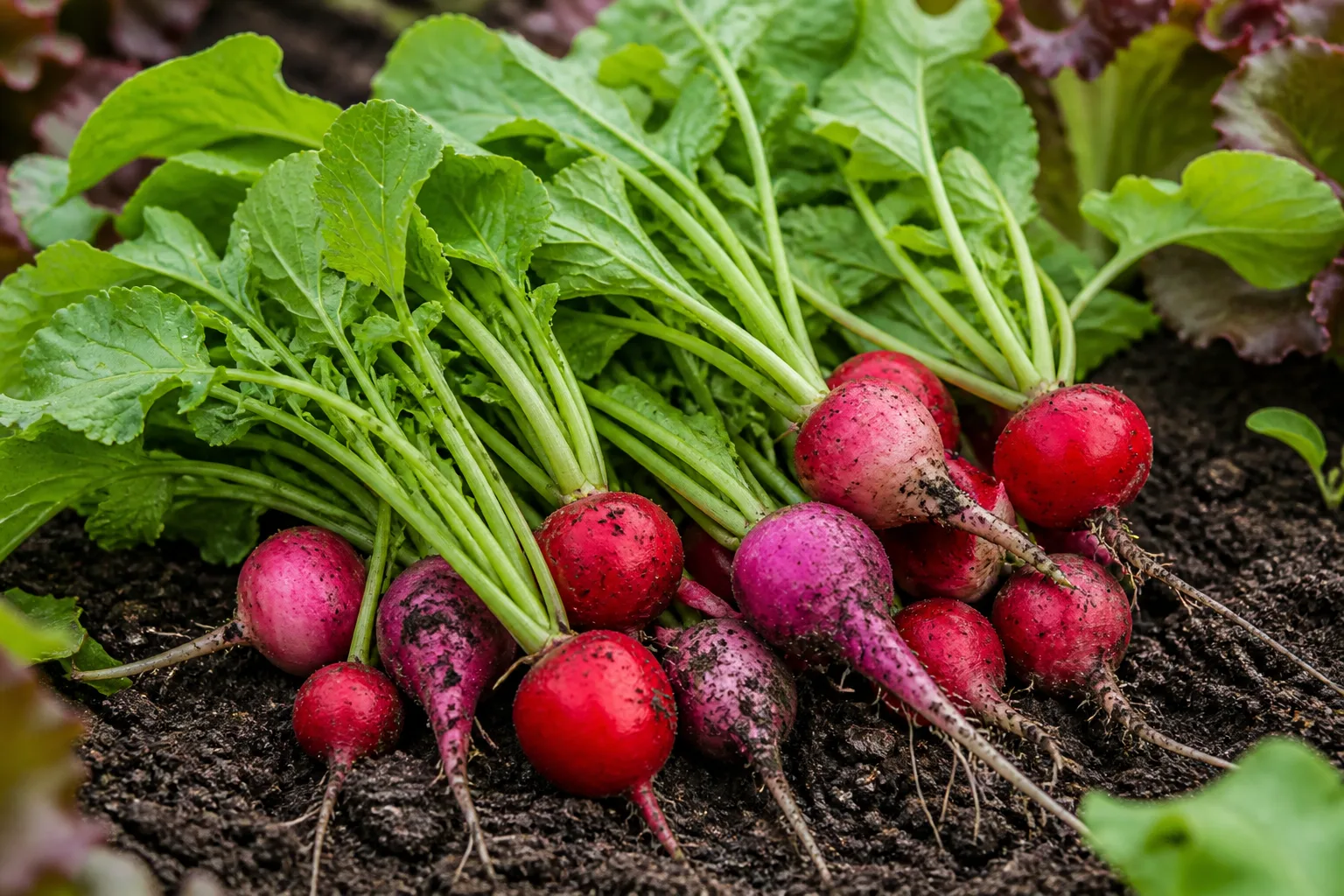
Radishes are the speed benchmark of the spring garden. Many varieties go from seed to harvest in 25–35 days, with seedlings visible in as few as four days in cool soil. Direct sow only — transplanting distorts the root. Plant seeds ½ inch deep, one inch apart in rows, and thin to two inches for round types. The Old Farmer’s Almanac radish profile recommends succession sowing every ten days until warm weather arrives for steady harvests.
Foliage is dense and glossy within two weeks, which is why radishes double as a nurse crop in new beds: they mark rows, suppress dust on bare soil, and come out before slower crops need the space. Pull radishes promptly — oversize roots turn woody and pithy. When temperatures spike, skip a cycle; radishes bolt and turn harsh instead of crisp.
For more on timing and harvest size, see how long radishes take to grow.
How to Layer These Plants for a Fuller Look Sooner
A flat list of ten plants still leaves beds looking random unless you stack roles. Use this layering order in a typical new or refreshed bed:
Edge and containers: pansies or marigolds (by frost timing) for immediate color at paths and entry points. Low mat — six inches to one foot: wild strawberry, creeping phlox, or lettuce as a living skirt around taller plants. Mid-height foliage — one to two feet: yarrow, comfrey (only where spread is welcome), and radish rows between slow perennials. Vertical accents — three feet plus: sunflowers and tall zinnias at the back or center of island beds. Succession: sow radishes and lettuce every ten to fourteen days; sow zinnias and marigolds in two waves two to three weeks apart so one heat wave does not end your entire display.
Repeat the same plant in groups of three or five rather than dotting one of everything — the human eye reads mass as fullness. Mulch between established starts, but keep seed rows bare until seedlings are up. A two-inch mulch blanket on unsprouted lettuce is a common way to get a beautiful, empty row.
Common April Planting Mistakes
Planting heat-lovers on the calendar, not the thermometer. Zinnias, sunflowers, and marigolds in cold, wet soil rot or sit dormant while you assume failure. Check soil temperature and forecast, not only the month.
Buying only open flowers. Pansy and marigold packs in full bloom exhaust themselves before your garden party. Bud-heavy plants last longer.
Ignoring spreaders. Comfrey, yarrow, and wild strawberry solve bare soil fast and create maintenance homework just as fast. Assign them borders with clear edges.
Skipping succession. One sowing of lettuce or radishes gives you one flush. Bare soil returns in June unless you replant.
Forgetting height. A bed of only low plants can still feel empty. Add sunflowers or tall zinnias even in a small garden — one vertical cluster changes the whole composition.
Working wet soil. Compaction from planting in mud costs you more than waiting three dry days.
Conclusion
April rewards gardeners who match plant appetite to soil reality. Pansies, phlox, yarrow, lettuce, and radishes carry cool-season beds while frost still lurks; comfrey and wild strawberry build leafy mass that lasts; zinnias, sunflowers, and marigolds supply summer color once warmth arrives. Run the soil thermometer, split your list by frost tolerance, and layer low mats with vertical accents instead of planting one of everything in a line.
The fastest full garden is not the one with the most plants on planting day — it is the one where every starter has the right temperature, spacing, and succession plan behind it. Start with what your soil allows this week, schedule heat-lovers for the week after your last frost, and sow radishes and lettuce on repeat until summer heat tells you to stop. By the time slow perennials wake up, your April work will already look like a garden — not a promise.