What to Do About Mushrooms in Houseplant Soil
Found mushrooms in a houseplant? Learn why they appear, how to remove them safely, when pets or children need protection, and when repotting actually helps.
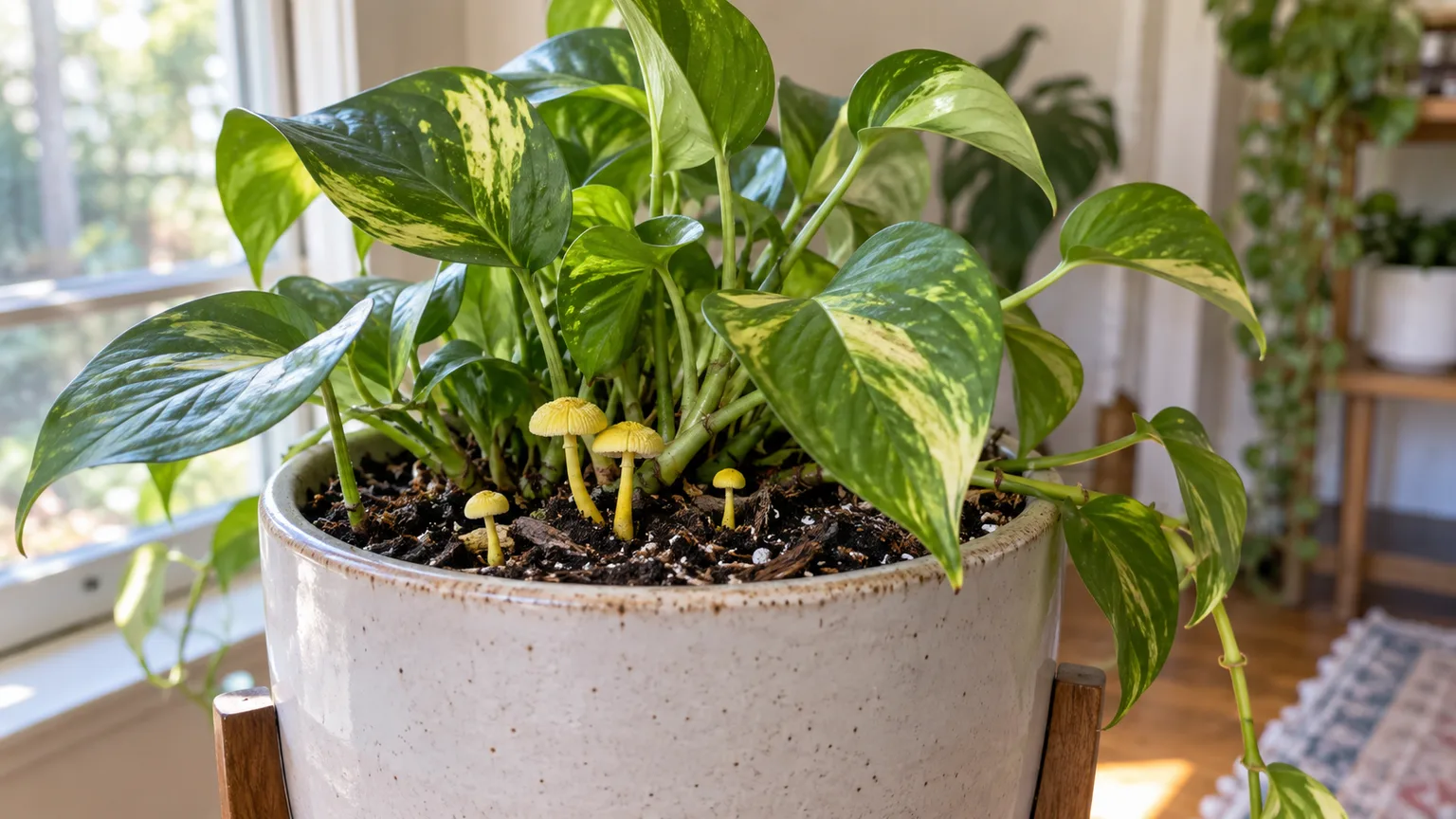
A mushroom in a houseplant can look like a problem that arrived overnight. In most cases, the cap is a temporary sign that a fungus already living in the pot has found conditions suitable for fruiting; it does not, by itself, mean the plant is diseased or dying.
Start with two separate questions: could a child or pet eat it, and does the plant’s soil stay wetter than the plant can tolerate? Keep curious mouths away and remove the visible mushrooms if access is possible. Then check the pot’s moisture, drainage, and the plant’s condition. A healthy plant with a free-draining mix usually does not need an emergency repot.
A calm first response: leave, remove, or investigate?
Use the plant’s condition and the household’s safety needs to choose a response. The mushroom alone is rarely a reason to strip soil from the roots, but a pot that stays waterlogged or a plant that is declining deserves attention whether mushrooms are present or not.
| What you notice | Sensible first move |
|---|---|
| The plant looks healthy, the pot drains, and no child or pet can reach the caps | You can leave them or remove them for appearance; monitor the next watering cycle. |
| A pet or young child can reach the pot | Move the plant out of reach and remove the caps promptly. Treat unknown mushrooms as unsafe to eat. |
| Soil stays wet for many days, smells sour, or the plant wilts while wet | Check drainage and roots; correct the wet conditions and repot only if the mix or roots warrant it. |
| White fuzz, tiny flies, or crusty deposits are present instead of caps and stems | Identify that growth separately; mold, fungus gnats, and mineral salts call for different fixes. |
This keeps the response proportionate. Removing a cap can solve the immediate appearance or access issue, but it will not sterilize the pot. Conversely, changing every care condition just to prevent another mushroom can deprive the plant of the moisture or light it needs.
Protect children and pets before doing anything else
Do not let children or pets nibble on a mushroom or use a phone photo as proof that it is safe. A bright yellow mushroom in a pot is often the flowerpot parasol, Leucocoprinus birnbaumii, but other fungi can appear in potting mix and color is not a reliable safety test. Iowa State University Extension describes the common yellow houseplant mushroom as poisonous to people and animals, while the ASPCA explains that mushrooms can be difficult to identify and that some toxic species cause serious illness. (Iowa State University Extension; ASPCA)
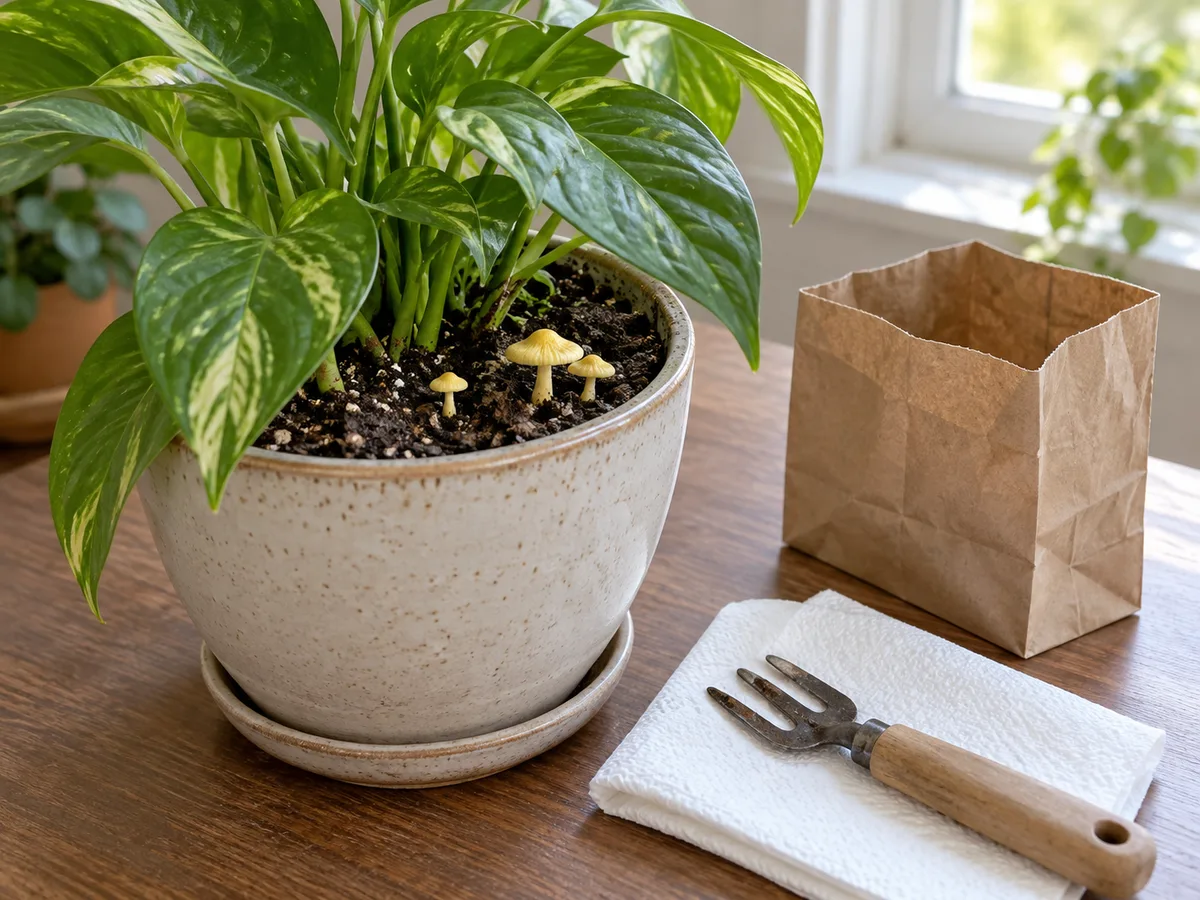
If a pet eats an unknown mushroom, contact a veterinarian or animal poison-control service promptly; do not wait for symptoms or try to induce vomiting unless a professional tells you to. If a person may have eaten one, contact your local poison center or medical service for case-specific advice. Take a clear photo of the mushroom and its cap, stem, and base if you can do so safely, but do not delay the call to identify it. Until then, move the pot or block access. Routine handling of an intact cap is not the same as eating it; a disposable tissue or fork is a convenient way to remove it without touching it.
What houseplant mushrooms usually look like
The mushroom people most often notice in indoor pots is a small, bright lemon-yellow cap on a slender yellow stem. It may appear by itself or in a small cluster, and a young cap can look rounded or bell-shaped before it opens. Iowa State Extension says that a yellow mushroom in a houseplant pot is probably Leucocoprinus birnbaumii, also called the yellow houseplant mushroom, yellow parasol, or flowerpot parasol. Its guidance describes caps roughly one to two inches wide and mushrooms around one to three inches tall. (Iowa State University Extension)
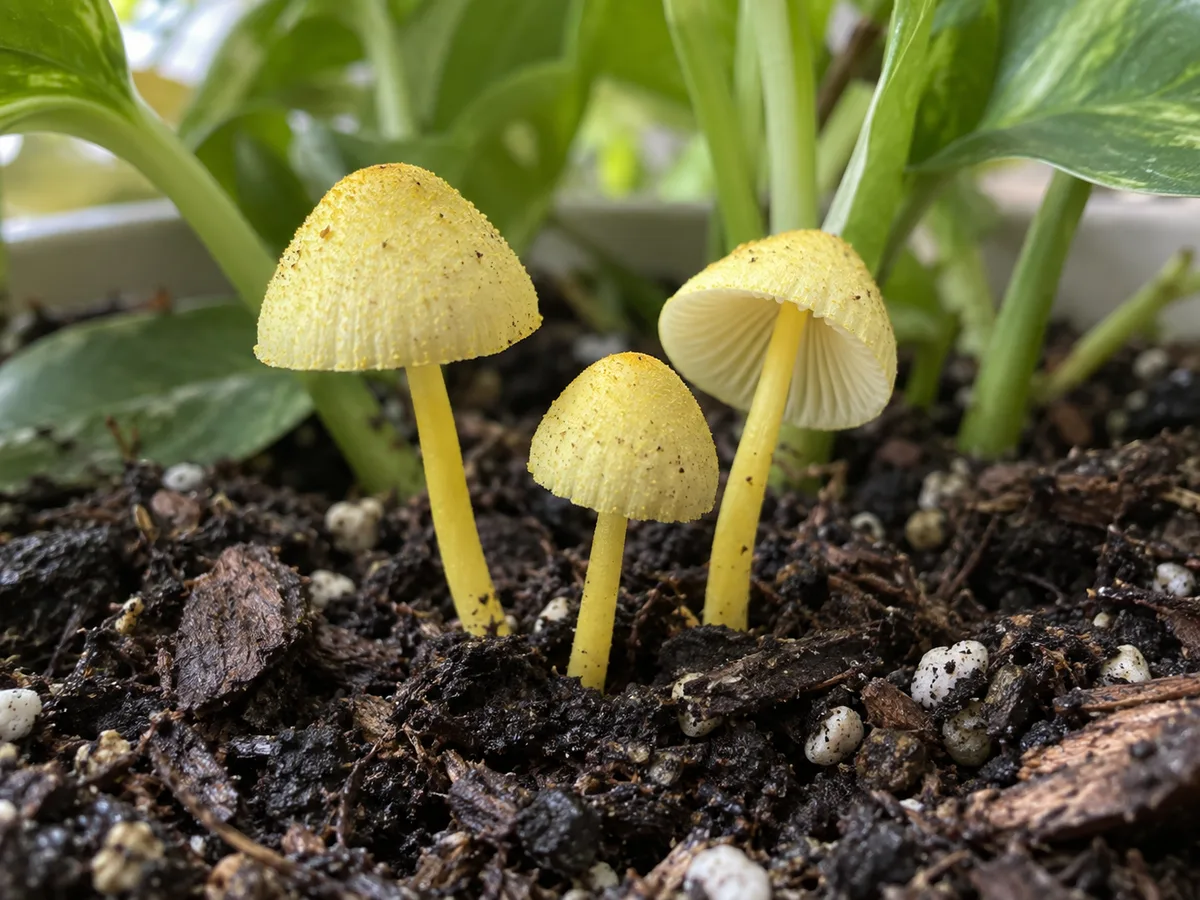
The common yellow flowerpot parasol
That familiar yellow mushroom is a useful possibility, not a home identification guarantee. A cap may pale as it matures, and photos can distort size or color. Other mushrooms also fruit in pots, so do not eat it, feed it to a pet, or assume that every mushroom in a houseplant belongs to one harmless-to-the-plant species.
The visible cap is the part that helps the fungus reproduce; most of the organism is hidden in the mix. You do not need to identify the species precisely to make the practical choice: prevent ingestion, remove accessible caps, and look for plant stress separately. If you need a formal identification because of an exposure, contact poison control, a veterinarian, or a local mycology or extension service rather than relying on an app alone.
Mushroom caps, white mold, and fungus gnats are not the same
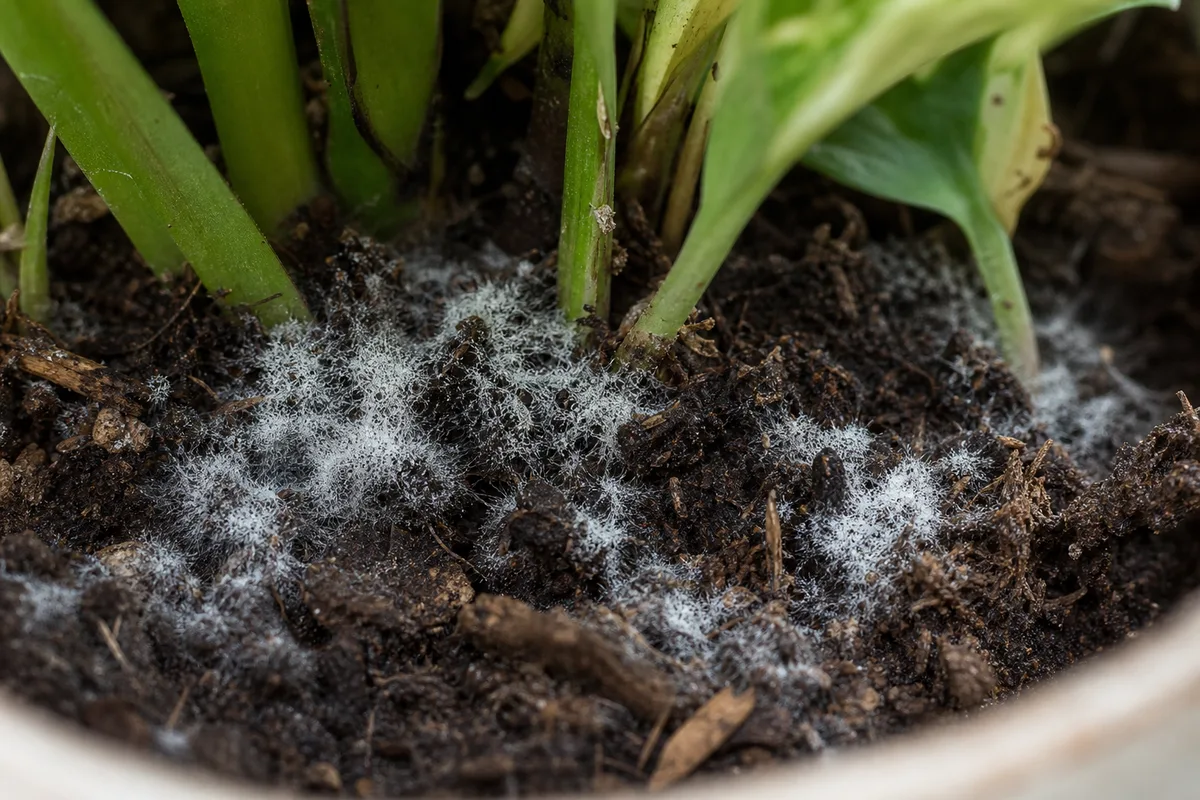
A true mushroom has a distinct cap and stem rising above the mix. White or gray mold looks like a low, soft, fuzzy film or threads across the surface; it does not form umbrella-like caps on stems. This guide to white mold on houseplant soil covers that separate problem and why a fuzzy surface often points to slow dry-down.
Fungus gnats are small flying insects; the adults hover near the pot and their larvae live in the upper layer of damp soil. Their presence does not prove that mushrooms are growing, and a mushroom does not prove that you have gnats. Algae can form a green slick on persistently wet mix, while hard-water or fertilizer salts may leave a pale, crusty deposit. Look closely before treating: a fungicide, insect treatment, or fertilizer flush aimed at the wrong thing can add stress without solving the actual issue.
Why mushrooms appear in potting mix
Mushrooms are the reproductive structures of fungi. The main fungal body is a network of fine threads, called mycelium, that is usually hidden in soil, bark, compost, or other organic material. Iowa State Extension explains that the visible mushroom can develop from fungal growth introduced in potting mix or from spores that settle into the pot. (Iowa State University Extension)
The cap is only the fruiting body
The cap is comparable to the visible reproductive part of a much larger organism. Picking it does not remove every fungal thread from the pot, which is why a new cap may appear later. That is not proof that the first cap was left behind or that the plant is contagious; the underground network can remain while conditions still favor fruiting.
This distinction changes what “getting rid of mushrooms” can realistically mean. You can remove caps from view and make repeat fruiting less likely by adjusting conditions the plant can tolerate. You usually cannot guarantee a fungus-free pot without replacing the mix, and even fresh mix can later receive spores from the surrounding environment.
Warmth, moisture, and organic matter make fruiting possible
The fungi commonly found in houseplant soil feed on dead organic matter in the mix, such as bark, composted material, and small decomposing plant fragments. A warm room and a pot that remains moist can give the fungus enough time to fruit. The combination is common in indoor growing, especially when the top layer never dries, water sits in an outer cachepot, or the mix is dense and slow to drain.
The mushrooms are not the cause of wet soil. They are a clue to conditions at the surface, not a precise moisture meter for the root ball. A moisture-loving fern can have healthy roots in a consistently damp mix, while a cactus in the same potting conditions could be in trouble. Read the species and the root zone together rather than treating every mushroom as proof of overwatering.
Are they harming your plant?
Usually, the mushroom itself is not attacking the living plant. Iowa State Extension says L. birnbaumii breaks down dead organic matter in potting soil and does not harm living plants; Gardening Know How gives similar practical guidance for mushrooms in houseplant soil. This decomposer role does not prove that every pot is perfectly managed or that the fungus is directly feeding the plant. It means that the cap alone is not evidence of a plant disease. (Iowa State University Extension; Gardening Know How)
The more useful question is whether the plant is also showing signs of root stress. Check for a sour or swampy smell, persistently saturated soil, a pot without working drainage, or stems and leaves that keep wilting despite wet mix. If you unpot for a legitimate root check, healthy roots are generally firm, while rotting roots are soft or mushy and may be dark. Do not diagnose root rot from a mushroom, a little surface mold, or one wet day alone.
If the plant is growing normally and the pot dries at a pace that suits its species, leave the roots alone. If the plant is deteriorating, solve that root-zone problem on its own evidence; simply plucking mushrooms cannot correct poor drainage, and removing the plant from the pot without a reason can create transplant stress.
What to do today: a low-disturbance cleanup
If the caps are reachable or you simply do not want them in the pot, remove what you can see and then assess the growing conditions. You do not need a chemical treatment or a full cleanup of the root ball for an otherwise healthy plant.
Remove visible caps without disturbing roots
Put the plant out of reach first if children or pets are nearby. Lift the mushroom at its base with a tissue, disposable fork, or gloved fingers, trying not to churn the soil. Place it in household waste, wash your hands and tool, and avoid leaving a removed cap beside the pot where a pet can find it. If caps have opened, a few spores may already have dispersed; that does not make the room unsafe or mean you must discard the plant.
The goal is access and appearance, not sterilization. Remove new caps when you notice them, particularly before they open if pets or young children can reach the pot. It is reasonable to leave a cap alone when the plant is inaccessible and the household is not concerned by it; the plant does not require mushroom removal for its own health.
Check watering and drainage by reading the plant
Look for a drainage hole and make sure the pot is not standing in runoff inside a decorative cachepot. Empty the saucer after watering when the plant’s routine allows it. Feel the mix below the surface rather than judging only by its appearance: dark bark or coco fiber can look dry on top while deeper mix remains wet, and a dry-looking crust can sit above a saturated lower zone.
Then check the plant’s normal moisture preference. If the species likes a partial dry-down, wait until the usual depth is dry before watering again. If it prefers evenly moist soil, do not withhold water until the whole pot is bone-dry just to discourage a mushroom. A moisture meter can help you compare the surface and root zone, but it should support—not replace—knowledge of the plant and the mix. The watering advice in Ohio Tropics similarly emphasizes letting suitable houseplant mixes dry between waterings rather than relying on a fixed schedule.
Should you scrape the surface or repot?
Do not unpot a healthy plant just because a mushroom appeared. Repotting can disturb fine roots, and washing every bit of mix away is both stressful and unlikely to remove all fungal material. Gardening Know How notes that changing soil may not prevent recurrence if fungal growth remains on the roots; Ohio Tropics likewise cautions against replacing all the mix solely to remove a mushroom. A cap can return after repotting if the new conditions remain favorable or spores reach the pot again. (Gardening Know How; Ohio Tropics)
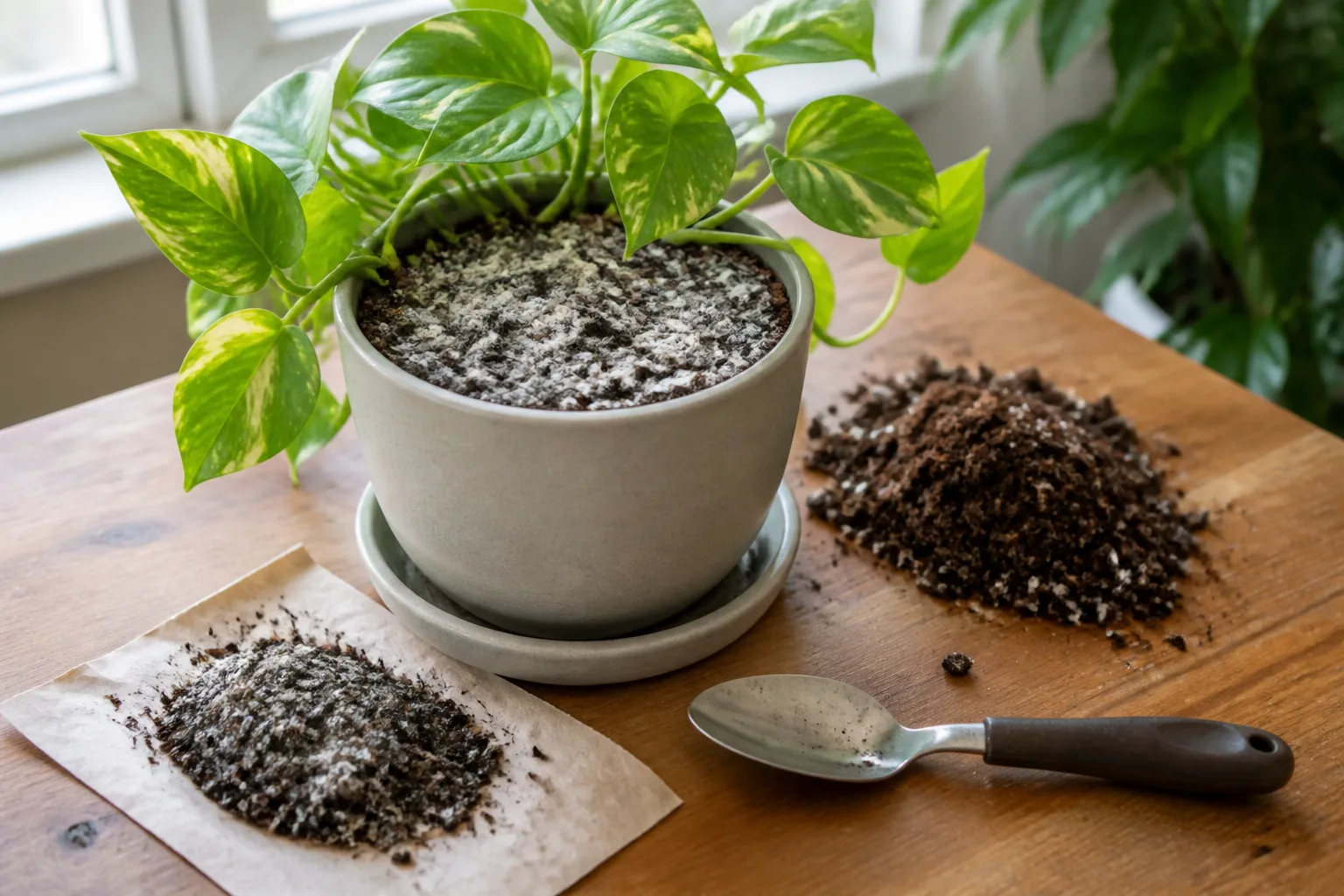
A shallow surface refresh is an optional cosmetic measure if caps keep returning and the plant can spare the top layer. Remove only the loose upper inch or so of mix, taking care not to cut shallow roots, and replace it with fresh, appropriate potting mix. This may remove some visible fungal growth and debris, but it does not guarantee that mushrooms will never return. Avoid scraping deeply or using a fork to churn the entire pot.
Repot when there is a plant-care reason: the mix has collapsed or become compacted, drainage is poor, the container has no usable drainage and the plant needs a change, or roots show rot or another serious decline. Choose a clean pot with suitable drainage and a mix appropriate for that plant. Do not bare-root a healthy plant as a mushroom-control measure; the likely benefit is small compared with the stress.
How to reduce repeat mushrooms without harming the plant
You can make another flush less likely by changing persistent conditions—not by trying to eliminate every spore. Aim for a surface and root zone that match the plant’s needs, with water able to drain and no standing runoff. Ohio Tropics and Gardening Know How both recommend removing visible caps and adjusting moisture rather than expecting a one-time removal to eradicate the fungus. (Ohio Tropics; Gardening Know How)
Water for that plant’s needs, not a calendar
Use the plant’s usual dry-down cue, pot weight, and the feel of the mix at root depth to decide when to water. For plants that prefer a dry interval, allow the upper layer to dry as recommended for that species, then water thoroughly and let excess drain. For plants that prefer steady moisture, keep the mix evenly damp but not waterlogged; a mushroom is not a reason to push the plant into drought.
Season and light change how quickly a pot uses water. A plant may dry slowly in winter, in a low-light room, or after growth slows, even if you have not changed your watering schedule. A smaller pot, porous container, and airy mix often dry differently from a large plastic pot sitting inside a cachepot. Recheck rather than carrying a summer interval into a cooler season.
Keep soil and pot conditions in balance
Remove fallen leaves and other debris from the soil surface, since decomposing scraps add food and can keep the top layer damp. Improve gentle room airflow if the area is stagnant, but do not aim a strong fan at a delicate plant or reduce humidity below its care needs. Give a plant the light level it tolerates; moving a shade plant into harsh direct sun may damage leaves without meaningfully solving an underground fungus.
Use a potting mix with texture and drainage suited to the species, and do not let water collect around the inner pot. If the container has a decorative outer sleeve, lift the nursery pot to check for leftover water after watering. These small changes support healthy roots whether or not another mushroom appears.
What not to apply to mushroomy potting mix
Skip fungicide unless a qualified plant-health professional has identified a disease and recommended a product labeled for that use. Iowa State Extension says fungicide treatments are generally ineffective against the common yellow houseplant mushroom. A mushroom is a fruiting structure connected to fungal growth throughout the mix, so spraying the cap or drenching the pot is not a dependable way to remove what is underground. (Iowa State University Extension)
Also avoid pouring bleach, vinegar, hydrogen peroxide, or concentrated soap into the soil. These remedies are not selective: they can injure roots, disrupt the potting mix, or create a new chemical problem while leaving fungal material behind. Cinnamon and surface stones may hide or discourage visible growth for a while, but neither corrects water trapped in a cachepot nor confirms the soil is safe for a particular plant. Use the least disruptive approach that matches the actual issue: remove caps, adjust water when appropriate, or repot only for a real mix or root problem.
Do not deliberately dry the plant to the point of wilt. Houseplants differ widely: a cactus, a pothos, and a maidenhair fern cannot share one watering rule. Suppressing the fungus is not a worthwhile trade if the plant’s leaves, roots, or growth suffer.
When to investigate recurring mushrooms more closely
Repeated caps alone still do not prove disease, but recurrence is a reason to check the setup carefully. Look for a cachepot holding water, a blocked drainage hole, a mix that has become dense, a very oversized pot that stays wet for too long, or a watering routine that no longer matches the season. If the surface stays wet for a week or more after watering and the plant is struggling, examine the root zone rather than continuing to remove caps indefinitely.
Get help with identification if an unknown mushroom may have been eaten, if a child or pet has symptoms after possible exposure, or if you need to know a species for safety. Do not wait for a mushroom to mature or use a cap color chart as the deciding factor. A clear photo of the cap, gills, stem, base, potting mix, and plant may help a local extension office or mycology service, but exposure response should come first.
If mushrooms recur while the plant is healthy, the mix dries appropriately, and no one can reach the pot, the simplest choice may be to remove caps when they appear—or tolerate them. The underground fungus may persist even after a surface refresh. That persistence is not automatically a plant-care failure; prioritize the plant’s condition and household access over a fungus-free-looking pot.
Conclusion
Most mushrooms in houseplant soil are a manageable sign of fungal activity, not an emergency for the plant. Keep children and pets from eating unknown caps, remove visible mushrooms when useful, and use the plant’s own moisture needs to decide whether watering or drainage needs adjustment. Repot only when the mix, pot, or roots provide a separate reason. You may see another cap, but you do not have to sacrifice a healthy plant to chase every fungal thread from its soil.