How to Keep Snakes Out of Your Yard Naturally
Learn how to keep snakes out of your yard naturally by removing shelter and prey, fixing water sources, closing burrows, and adding targeted fencing.
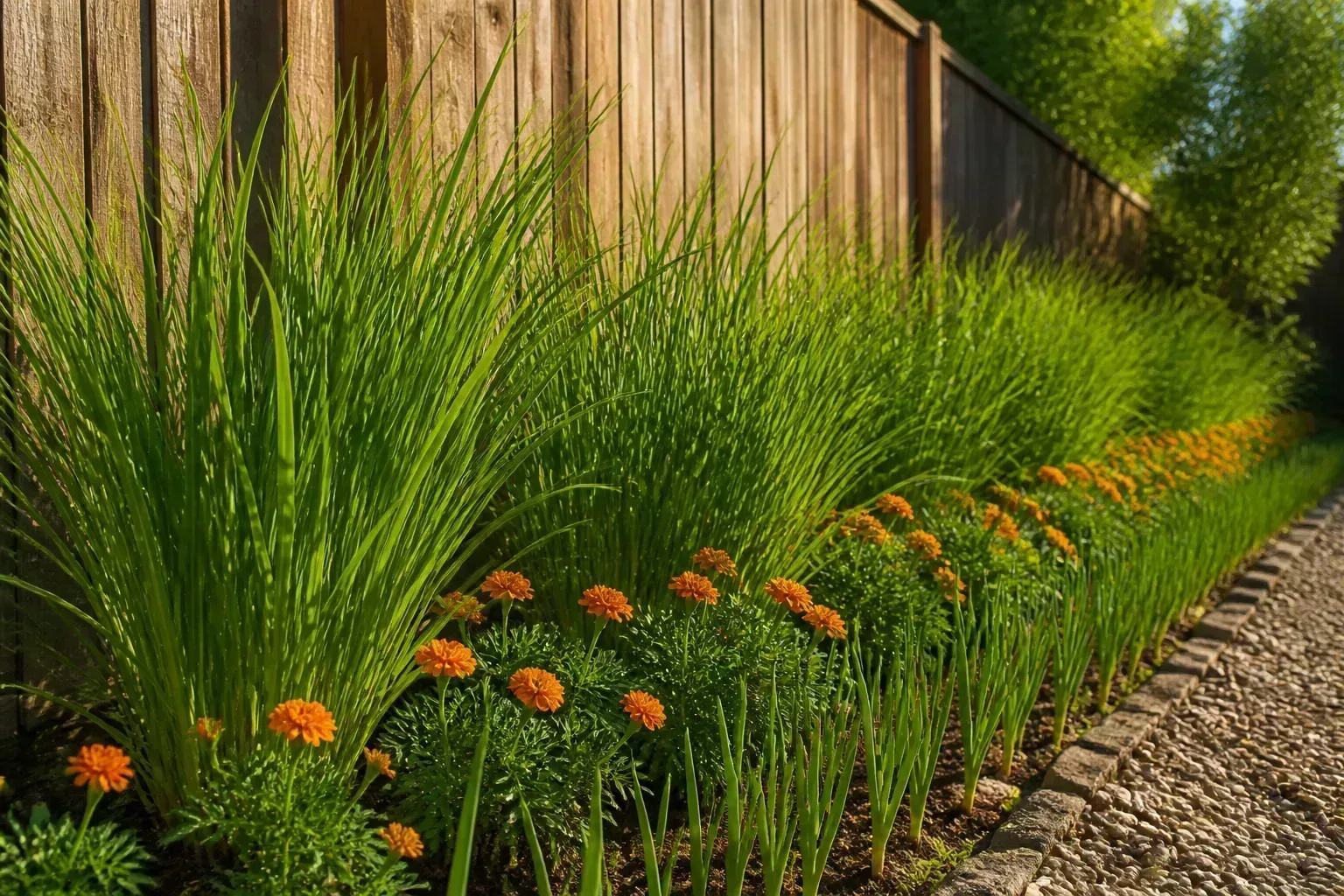
If snakes keep appearing in your yard, start by looking for what the yard is offering rather than shopping for a stronger-smelling repellent. A backyard with tall cover, damp hiding places, rodents, spilled bird seed, or easy access under a shed can be more attractive than the surrounding landscape.
The most dependable natural approach is habitat modification: remove the shelter and prey that make a yard worth returning to, then use physical exclusion at the specific places where snakes keep getting through. It will not make a property biologically sterile, and it cannot promise that a snake will never cross the lawn. It can, however, reduce the reasons for staying and make encounters easier to avoid.
Snakes are also part of a functioning garden ecosystem. The University of Florida IFAS guidance on residential snakes notes that many snakes eat rodents, slugs, and insect pests, while The Old Farmer’s Almanac describes garter snakes as useful garden predators. The goal here is to protect the places people use most—doorways, play spaces, patios, sheds, and vegetable beds—not to kill every snake that passes through.
Start With a Yard Audit, Not a Repellent
Walk the property in daylight and mark three kinds of clues: cover, prey, and access. Cover includes tall grass, dense groundcover, brush piles, stacked lumber, rock piles, open compost, and the dark space beneath decks or sheds. Prey includes mice, voles, chipmunks, frogs, slugs, insects, bird seed, pet food, and poultry feed. Access includes gaps under doors, open drains, foundation cracks, and holes around fences.
This quick audit gives you a better first move than scattering powder around the perimeter. If the only evidence is one snake crossing the lawn, make the yard easier to see and remove nearby shelter. If you are finding shed skins, repeated tracks, droppings, or snakes near a shed or play area, look for a concentrated food or entry point and plan a targeted exclusion project.
Decide Whether You Need Deterrence or Removal
A snake in the yard is not automatically an infestation. A nonvenomous snake moving through open ground may be passing between cover and prey, and it may leave once the local food source changes. Repeated snakes in a building, a chicken coop, a children’s play area, or a spot where you cannot keep people and pets away is a different management problem.
Species and local law matter. Do not move close enough to identify an unfamiliar snake by head shape, pupil, or pattern, and do not assume a snake is harmless because it is small. Keep children and pets indoors, give the animal a clear route away from you, and use a local wildlife professional when the species is unknown or potentially venomous.
1. Keep Grass and Edges Short Enough to See the Ground
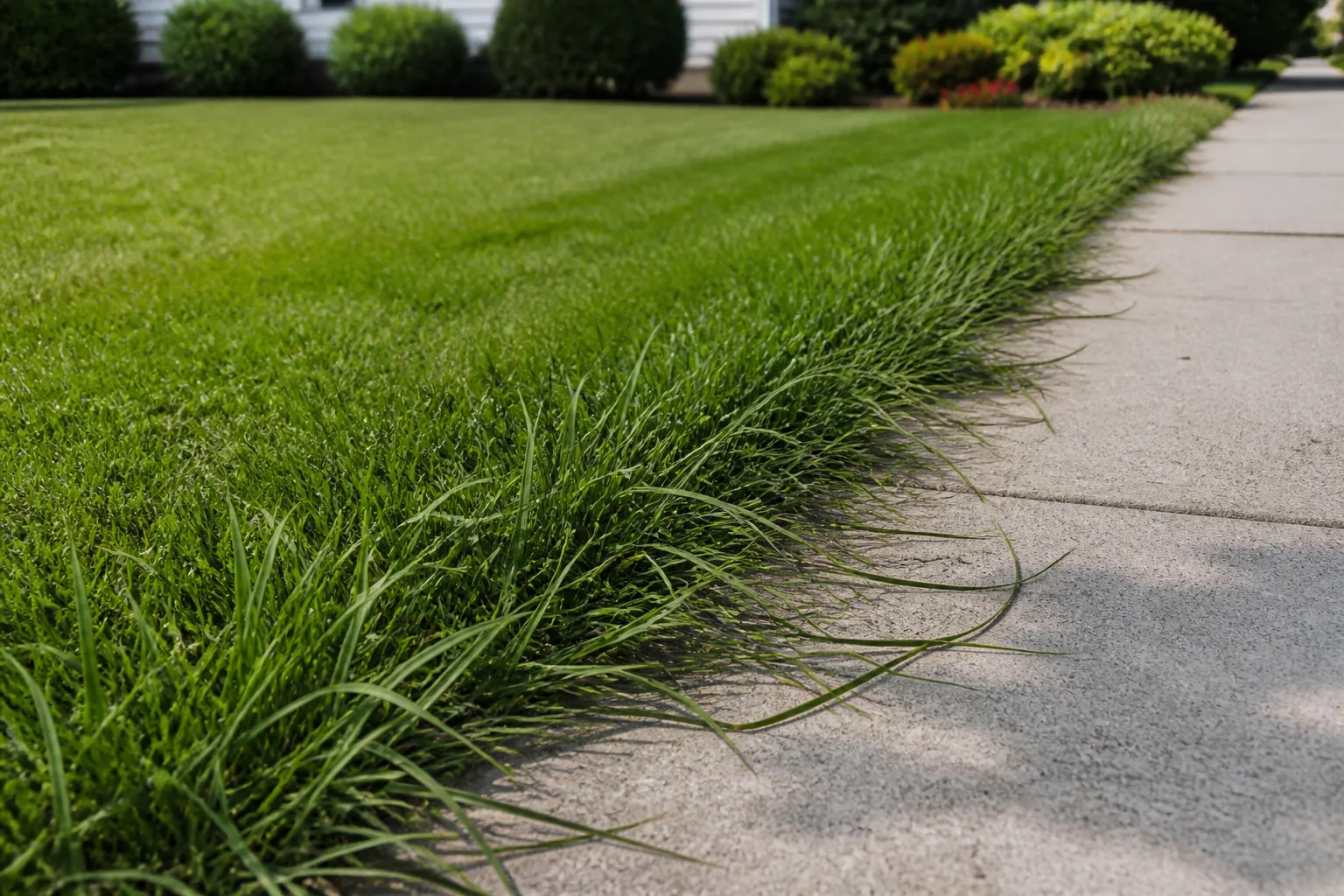
Mow the areas people regularly cross and keep the grass short enough that you can see the soil surface, stepping stones, and the base of fences. Short grass removes some concealment and makes both snakes and the rodent trails they follow easier to spot. Utah State University Extension specifically recommends mowing often because shorter grass increases a snake’s exposure and makes it easier for people to see one.
This does not mean scalping every inch of the property. Leave a managed meadow, pollinator border, or wetland edge where it supports wildlife, but separate it from a patio, path, dog run, or play area with a visible mown transition. Do not mow blindly into tall grass or a brushy edge; walk the area first, wear closed shoes, and inspect where the mower deck or trimmer will go.
2. Open Up Dense Shrubs and Overgrown Tree Bases
Snakes favor places where they can stay concealed while following prey. Prune shrubs so their lower stems are visible near doors, paths, and the house, and remove branches that rest on the ground or create a tunnel beside a wall. A 24- to 36-inch clear space under shrubs and small trees is a useful visibility target around high-traffic areas, not a rule that every natural planting must be stripped bare.
Keep vines, groundcover, and mulch from forming a continuous bridge to a foundation, deck, or fence. If a shrub is healthy but simply too dense for its location, thin it gradually or move the plant during a suitable season rather than shearing it into weak, top-heavy growth. The point is to expose the ground and remove sheltered runways, not to damage the landscape.
Trim with care around places that may shelter wildlife. Use a long-handled tool to move suspicious debris, look before reaching under a shrub, and work with another person if the yard has a known venomous-snake risk. UC Integrated Pest Management guidance warns that snakes may be concealed under logs, rocks, dense vegetation, and other surface objects.
3. Remove Hiding Places: Brush, Firewood, and Debris
Clear brush, scrap lumber, sheet goods, unused pots, and piles of leaves from around the house, garage, shed, and play spaces. Store firewood neatly on a rack rather than directly on the ground, with enough clearance to inspect underneath. Move the stack away from the house instead of turning it into a sheltered wall beside a back door.
Do not rush into a pile and start lifting pieces. Wear gloves and boots, use a rake or pole to disturb the edge from a safe position, and assume that rodents or other animals may be inside. Break down one section at a time, then keep the cleared area visible so it does not quietly become a new debris pile.
The Colorado State University Extension snake guide groups brush and rock piles, tall grass, shrubbery close to foundations, and food supplies as the main conditions to address. UF/IFAS adds an important nuance: wildlife brush piles can still have ecological value when they are kept well away from buildings and places where children play.
If you have a pond, rain garden, or damp irrigation corner, do not drain it just because it can attract frogs and other prey. Instead, keep a clear, visible path around the areas people use and place barriers around the specific zone that needs to stay snake-free. A healthy wildlife feature and a safe play area do not have to occupy the same footprint.
4. Cut Off Food and Water That Draw Wildlife
Snakes usually follow prey, so reducing rodents and other attractants is often more useful than trying to repel the snake directly. Store bird seed, poultry feed, and pet food in a tightly closed metal or heavy-duty container. Pick up spilled feed, fallen fruit, and outdoor pet meals promptly, and keep compost or food-scrap bins secure.
Look for the small water problems that increase prey activity: leaking hose connections, a constantly wet patch under a faucet, clogged gutters, and overwatering that creates a steady supply of slugs, worms, or frogs. Utah State Extension cautions that excess landscape water can attract prey, while Better Homes & Gardens recommends fixing leaks and protecting ponds or fountains when those features are drawing snakes into high-use areas.
Do not use rodenticide as a shortcut. Poisoned rodents can expose pets and wildlife that eat the carcass, including raptors that you may want in the yard. Use sanitation, exclusion, and a licensed pest professional when a rodent problem is beyond simple cleanup.
Bird Feeders Can Create a Snake-Mouse Pipeline
Bird feeding is not automatically incompatible with snake prevention, but placement and cleanup matter. Move feeders away from the house, keep them over a surface that can be swept, use a catch tray if it does not create a wet mess, and clean fallen seed frequently. If you see fresh rodent signs below the feeder, pause feeding until you have solved the spill and storage problem.
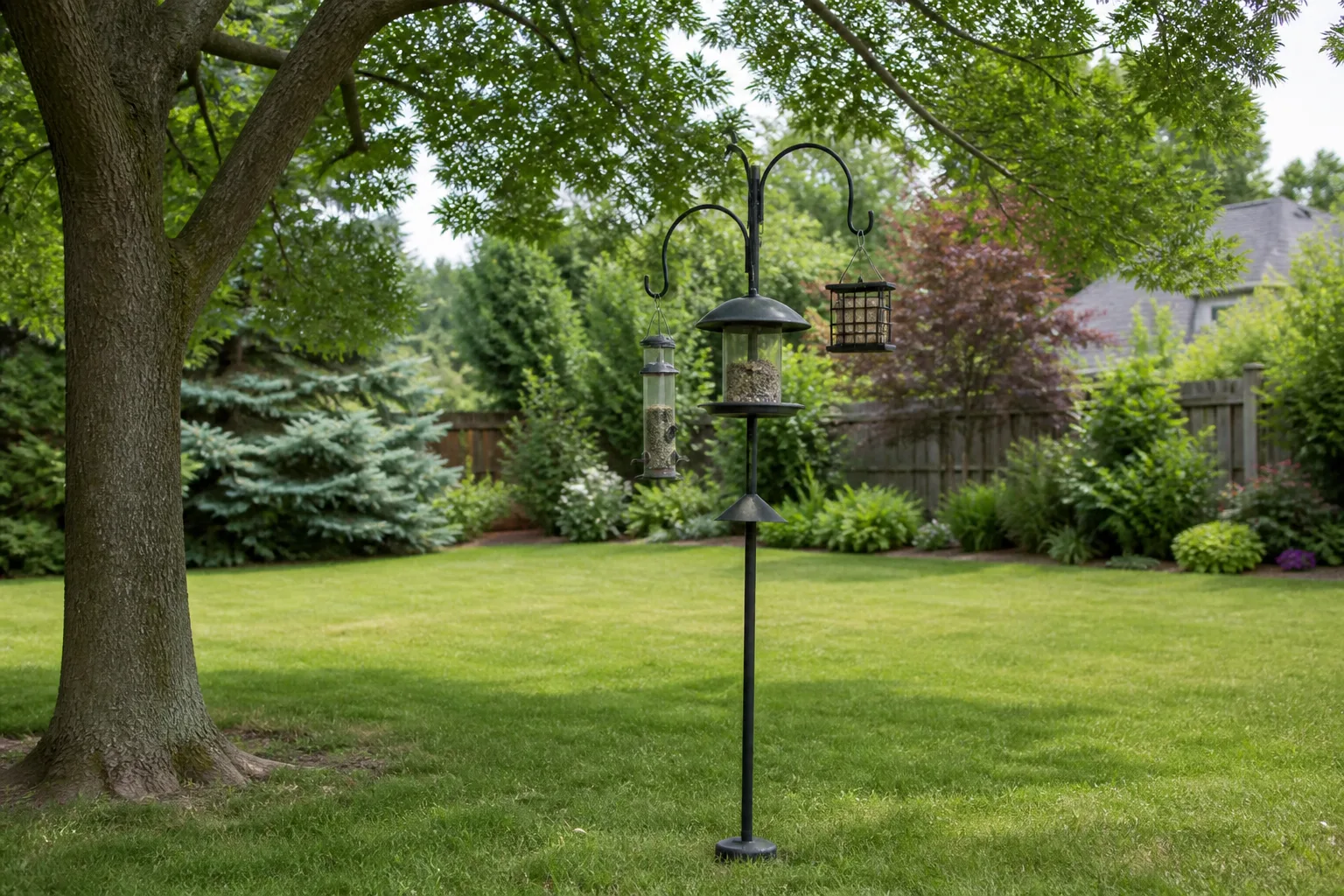
A feeder can attract birds and still attract mice. That is why adding a hawk decoy while leaving a carpet of seed on the ground rarely solves the underlying issue. Make the food source less available first, then decide whether feeding remains worth the maintenance in that location.
5. Close Rodent Holes Only After You Know They Are Empty
Snakes generally do not excavate the burrows they use. Abandoned or active holes made by rodents, chipmunks, ground squirrels, or other small mammals can offer a ready-made retreat. A hole near a shed, retaining wall, woodpile, or vegetable bed is a reason to inspect for the original occupant—not a signal to pack it full immediately.
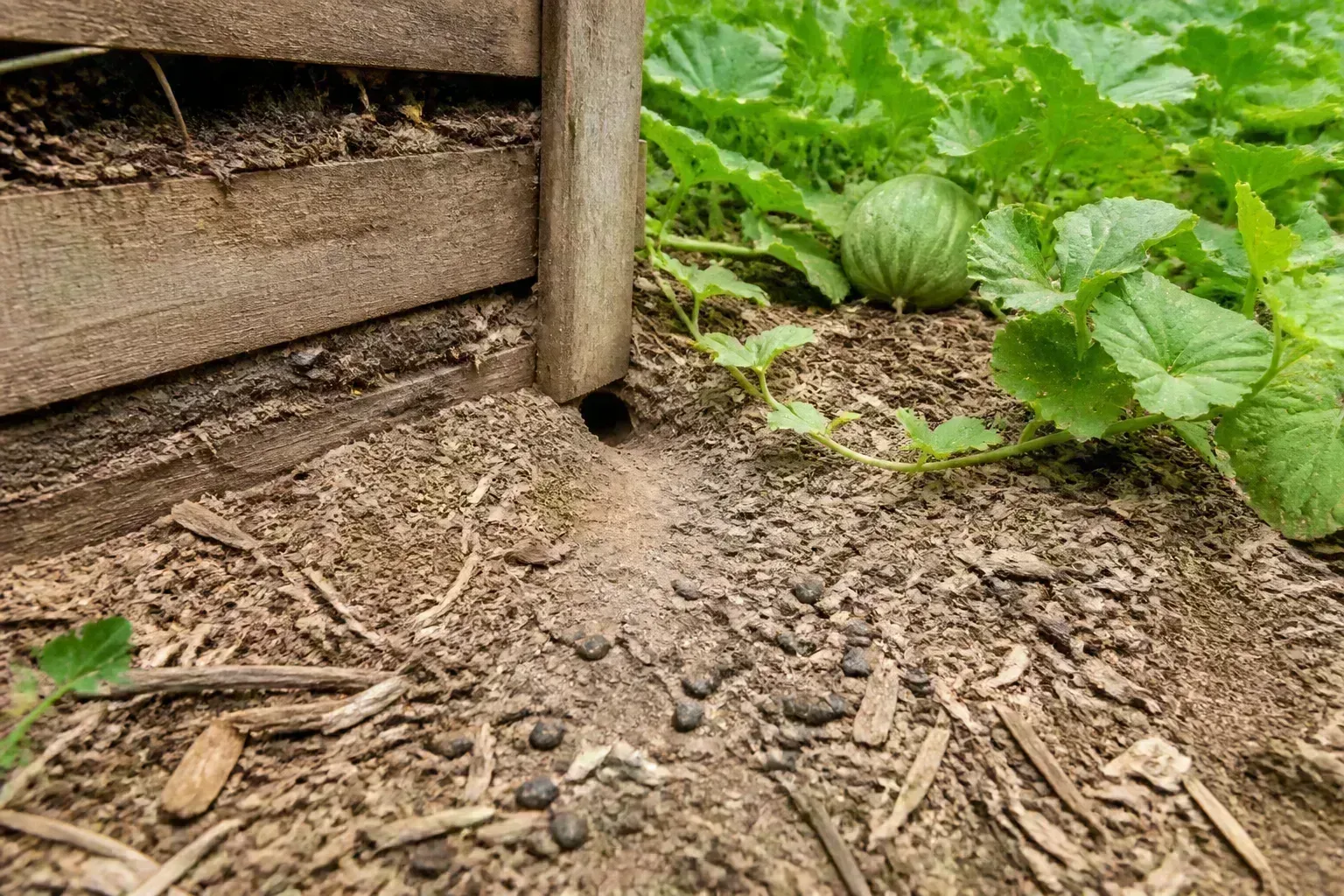
Watch the hole for fresh soil, tracks, droppings, or activity, and address the rodent safely before sealing the opening. If a snake may be inside, do not put a hand, stick, hose, smoke, or chemical into the burrow. A wildlife or pest professional can tell you whether the hole is active and how to close it without trapping an animal underground.
Fill Burrows, Then Fix the Reason They Reopen
Once you are confident the burrow is inactive, fill it with soil and pack the surface firmly. Recheck after rain and again over the next week. If it reopens, the problem is not that the fill was too loose; an animal may still be using it, or the surrounding yard may be providing food and cover.
Make the repair durable by removing nearby brush, securing feed, and keeping a clear strip around the building. A flat stone or a piece of correctly installed hardware cloth can protect a filled hole from immediate disturbance, but do not cover an active burrow to trap what is inside. This sequence—inspect, resolve the occupant, fill, then remove the attractant—is safer than repeated blind patching.
6. Use Raptors and Healthy Predators Carefully
Hawks and owls eat some snakes, and raptors also reduce rodents that attract snakes. You can support them by preserving suitable mature trees, reducing unnecessary nighttime lighting, and avoiding rodenticides. A perch pole may give a hunting bird a better vantage point in an open yard, but it is a habitat-support measure, not a guaranteed snake-control device.
Native garter snakes, kingsnakes, and other nonvenomous species can also help control pests. The UC IPM rattlesnake guidance cautions that relying on predators as biological control does not meaningfully solve a home-yard snake problem, and relocating a kingsnake to a property is not recommended. Let native wildlife use the habitat it already occupies; do not buy, release, or bait predators.
Why “Natural Predators” Is Not a License to Add Wildlife
Attracting predators by adding food, nesting boxes, or water can create new nuisance problems if the setup is not appropriate for your region. A poorly placed bird feeder may increase rodents, and an artificial snake introduction may violate wildlife rules or put pets at risk. The safer strategy is to improve habitat quality for the broader ecosystem while making the small area around your home less attractive to prey and shelter-seeking snakes.
7. Install Snake-Exclusion Fencing Where It Matters Most
Fencing is the most direct physical deterrent, but enclosing an entire property can be expensive, visually intrusive, and difficult to maintain. Reserve it for a defined high-priority zone such as a children’s play space, patio edge, chicken coop, pool equipment area, or the side of a house where snakes repeatedly enter.
For a general starting point, use rigid mesh or solid sheeting with openings no larger than 1/4 inch, make the barrier roughly 2 to 3 feet high, and bury the lower edge about 6 inches. Colorado State University Extension describes a 36-inch, 1/4-inch galvanized hardware-cloth fence buried 6 inches and angled outward about 30 degrees as a snake-proofing approach for higher-risk areas. The exact design should match your local species, soil, flood exposure, and property rules.
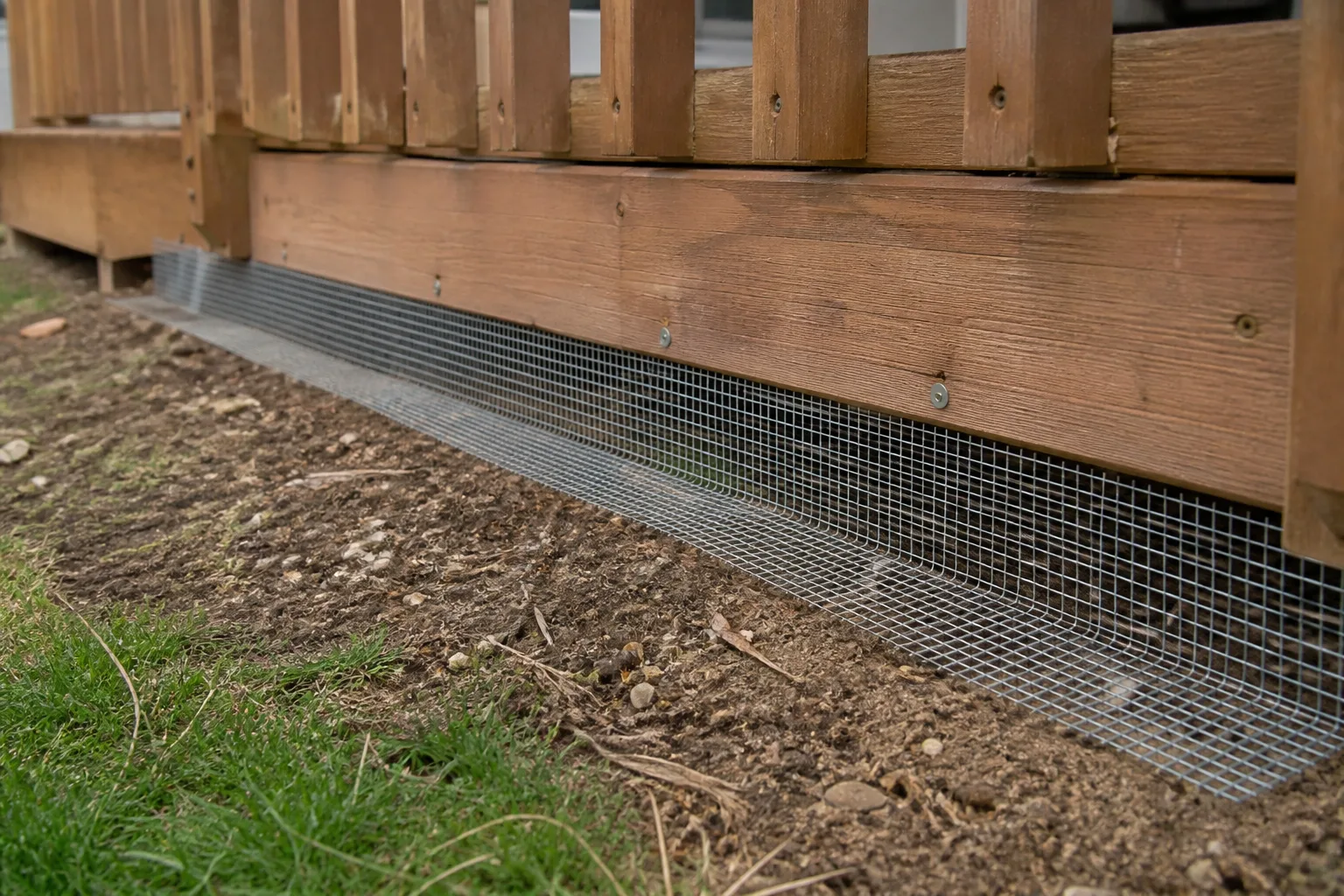
How to Build a Practical Fence
Install the barrier continuously, including under or around gates. A gap at the gate can defeat an otherwise solid run. Keep grass, vines, leaves, mulch, and stored materials away from both sides so they cannot act as a ramp or hide damage.
Set posts or supports on the protected side where possible, inspect after storms, and look for washouts beneath the buried edge. If the fence borders woods or wetland, turn the ends outward so a snake moving along the edge is directed away from the protected zone rather than funneled toward an opening. Do not assume a fence is permanent; vegetation, erosion, and a lifted gate can create a passable gap within one season.
The best fence is the smallest one that solves a defined problem. A 30-foot barrier around a play area is easier to inspect than a 200-foot fence around a whole yard, and it lets you preserve a wildlife-friendly part of the property without mixing it with the places where children and pets spend time.
What Not to Scatter in the Yard
Skip mothballs, sulfur dust, cayenne lines, essential-oil puddles, and mystery powders marketed as universal snake solutions. Colorado State Extension reports that tested home remedies—including mothballs, sulfur, cayenne spray, and several other substances—did not repel black rat snakes, while UC IPM says there is not enough evidence to recommend commercial snake repellents. UF/IFAS also notes that there are no registered repellents, toxicants, or fumigants for snakes in its guidance.
Mothballs are especially poor outdoor pest control: they contain pesticides intended for specific labeled uses, can expose children, pets, and wildlife, and do not turn a yard into a reliable snake barrier. Sticky traps outdoors are also indiscriminate and can injure non-target animals. Utah State Extension advises against both unproven chemical remedies and outdoor sticky traps.
Do not pour chemicals into holes, burn brush to flush a snake, or use a weapon to kill one. Those actions can cause a bite, fire, soil contamination, or harm to an animal that was not the source of the problem. If a product does not have a legal label for the exact outdoor use, do not improvise with it.
A 30-Day Snake-Deterrence Plan
You do not need to remodel the whole yard in one weekend. Use this order so the first changes are inexpensive and give you information about what is attracting the snakes.
- Days 1–3: Map the activity. Note where you see snakes, shed skins, tracks, droppings, holes, rodent signs, wet patches, and dense cover. Keep people and pets away from unknown snakes while you inspect from a distance.
- Days 4–7: Open the sightlines. Mow the high-use lawn, trim ground-level branches, clear the path to doors, and move firewood or brush away from the house. Do not reach into an unseen pile.
- Week 2: Remove prey incentives. Secure seed and pet food, clean feeder spills, pick up fallen fruit, fix leaks, and reduce unnecessary irrigation. If rodents are active, choose a pet-safe control plan instead of scattering poison.
- Week 3: Resolve access points. Inspect gaps under garage doors, shed walls, decks, crawl spaces, and gates. Seal a building opening only after confirming that no animal is inside; use appropriate hardware cloth or weather-stripping for the opening.
- Week 4: Decide whether exclusion is worth it. If sightings have stopped, keep the maintenance routine. If a specific high-use area still has repeat activity, price a targeted mesh barrier and plan for vegetation and erosion checks.
This sequence also shows whether the snake is the cause or the symptom. If sightings drop after seed cleanup, the feeder was part of the problem. If snakes remain beside a damp foundation or active rodent burrow, the next step is structural or wildlife management rather than another scent-based product.
When to Call a Wildlife Professional
Call a qualified local wildlife or pest professional when a snake is inside the home, trapped in a wall or crawl space, repeatedly entering a coop or shed, or potentially venomous. Choose someone who can identify local species, explain the removal method, and address the entry or prey problem instead of offering only a blanket spray.
Until help arrives, close interior doors, keep children and pets away, and give the snake space. Do not corner it for a photograph, attempt to catch it, or handle a snake that appears dead. If a bite occurs, move away from the animal and seek emergency medical care immediately; do not delay to capture or kill the snake.
Conclusion
The best natural snake deterrent is not a scent. It is a yard that offers less concealed shelter, less concentrated prey, fewer damp access points, and a clearly protected zone where people need to feel comfortable.
Start with mowing and pruning, then remove brush and firewood from high-use areas, secure bird seed and pet food, manage rodents before filling burrows, and reserve 1/4-inch mesh fencing for the places that truly need exclusion. Keep native snakes at a safe distance when they are simply passing through, and call a professional when species, location, or behavior makes the encounter unsafe.



