Inch Plant Care Guide: Light, Water & Propagation
Inch plant care made practical: keep Tradescantia zebrina purple, water on a clear schedule, pinch for fullness, propagate in water or soil, and fix leggy or yellow leaves fast.
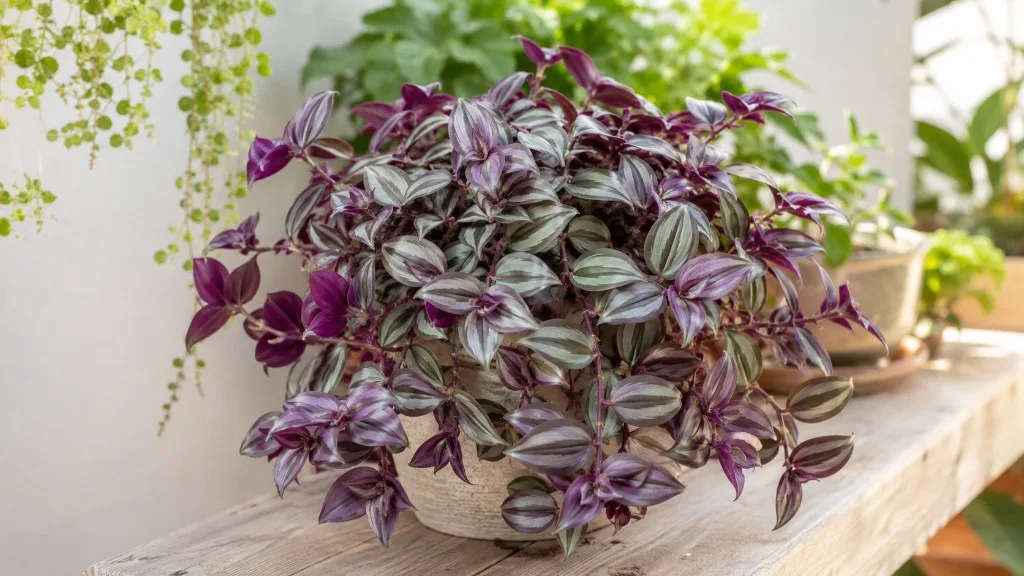
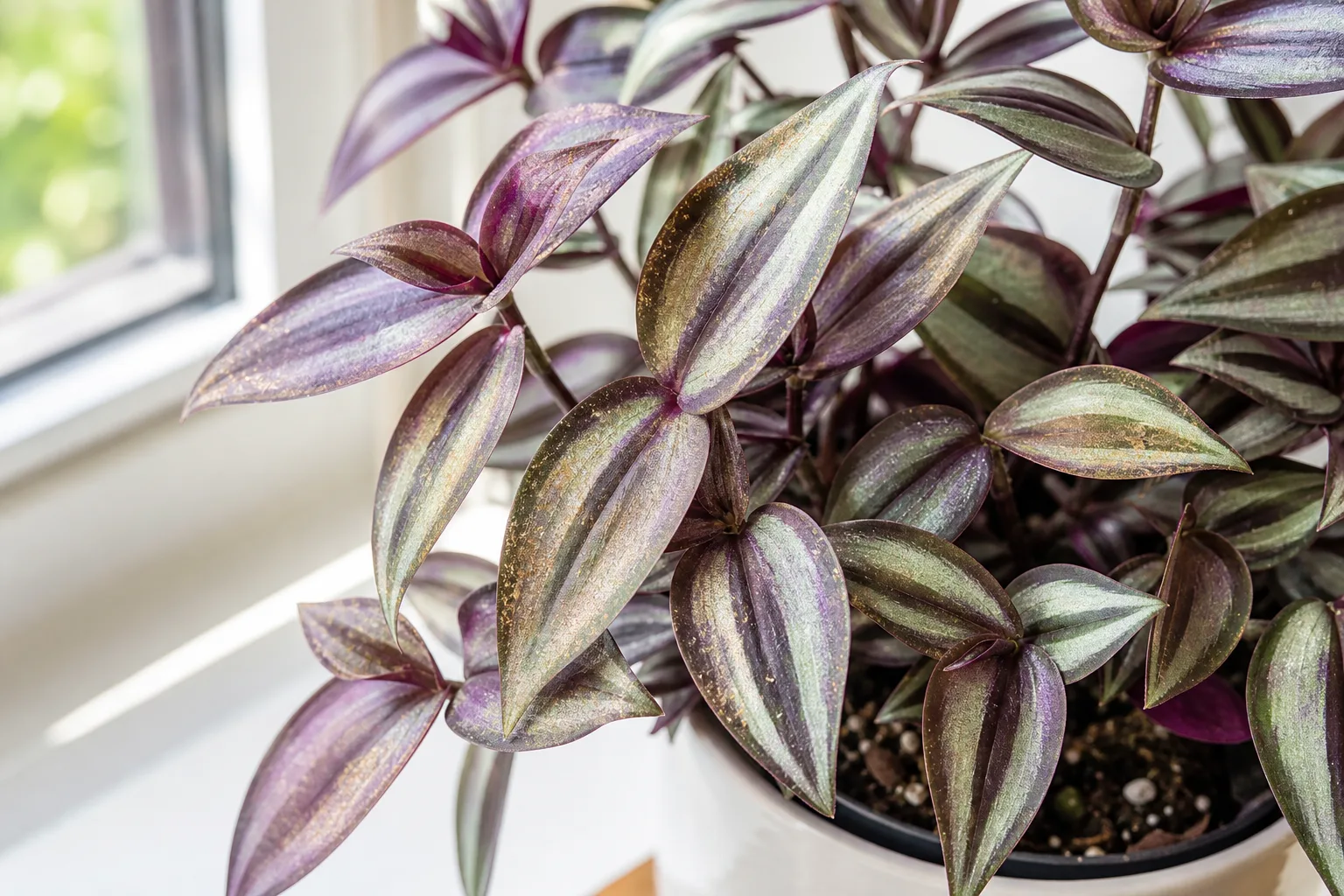
Tradescantia zebrina — the houseplant most people call inch plant, wandering dude, or zebra plant — is one of the fastest, most colorful trailing vines you can grow indoors. The leaves look painted: metallic silver stripes over blue-green on top and solid purple underneath. The stems are fleshy, root at every node, and can cascade 2 feet (60 cm) or more from a hanging basket in a single warm season. That speed is the whole story. Zebrina rewards bright light and regular pinching with a dense, vivid waterfall of foliage. It punishes dim corners and soggy soil with stretched green stems and a bare crown that makes beginners think the plant is dying when it is simply aging.
If you want a purple-striped trailer and you are willing to refresh cuttings once or twice a year, inch plant is genuinely easy. If you want a slow, stable specimen that looks the same for three years without pruning, choose something else. The care checkpoint is simple: bright indirect light, water when the top inch of soil dries, and pinch stems above a node every four to six weeks during active growth. Everything else — propagation, repotting, pest control — flows from those three habits.
What Inch Plant Actually Is (and What the Names Mean)
In commerce, inch plant gets applied to more than one Tradescantia species. The purple-striped plant in this guide is Tradescantia zebrina (older synonyms include Zebrina pendula and Tradescantia pendula). NC State Extension describes it as a creeping herbaceous perennial native from Mexico through Central America to Colombia, with leaves about 1 to 3 inches long and nodes spaced roughly an inch apart on the stem — one plausible origin of the common name.
Tradescantia fluminensis, a mostly green trailer, is also sold as inch plant or wandering dude in some regions. That matters for pet safety because the ASPCA inch-plant listing uses T. fluminensis as the scientific name, while nursery tags for purple-striped zebrina may still say “inch plant.” When toxicity or precise ID matters, confirm Tradescantia zebrina on the label. For daily care, zebrina and fluminensis share similar light and water needs, but zebrina’s color is far more light-dependent.
The genus honors John Tradescant and his son, royal gardeners to Charles I. The species epithet zebrina refers to the zebra-like silver banding. You may also see silver inch plant, spiderwort, or wandering dude — the last name replaced older common names many growers now avoid. Sticking to the botanical name prevents mix-ups with Tradescantia Nanouk or green T. fluminensis at the shop.
Tradescantia zebrina vs. other “inch plants”
Zebrina is the purple-striped species with metallic silver banding and purple leaf undersides. T. fluminensis is typically green or white-variegated and even more aggressive as a groundcover outdoors. T. pallida (purple heart) has solid magenta foliage and demands even more light to hold color. Care overlaps, but zebrina is the one most beginners buy for hanging-basket color — and the one most likely to fade to green when light drops.
Quick Care Snapshot Before You Buy
Use this table as your daily reference. Details in each section below go deeper on the decisions that actually matter.
| Need | What zebrina wants | What goes wrong fast |
|---|---|---|
| Light | Bright indirect; east window or filtered south/west | Dim light → green, stretched stems |
| Water | When top 1–2 inches (2.5–5 cm) of soil is dry | Wet crown → mushy stems, root rot |
| Soil | Standard potting mix + perlite; pot with drainage | Heavy, soggy mix → crown rot |
| Temperature | 65–85°F (18–29°C); avoid cold drafts | Below ~55°F (13°C) → stall, yellow leaves |
| Food | Diluted liquid feed monthly spring–fall | Overfeeding → fast green growth, dull color |
| Maintenance | Pinch above nodes every 4–6 weeks | No pinching → bare base, leggy tips |
| Pets | Toxic; hang high out of reach | Chewing → mouth irritation, dermatitis |
Zebrina is winter hardy in USDA Zones 9 through 11 outdoors and grown as a houseplant everywhere else. The Missouri Botanical Garden notes tiny three-petaled pink-purple flowers can appear, but indoor plants are grown almost entirely for foliage. Flowers are optional; stripes are not.
Light: The Variable That Controls Purple Stripes
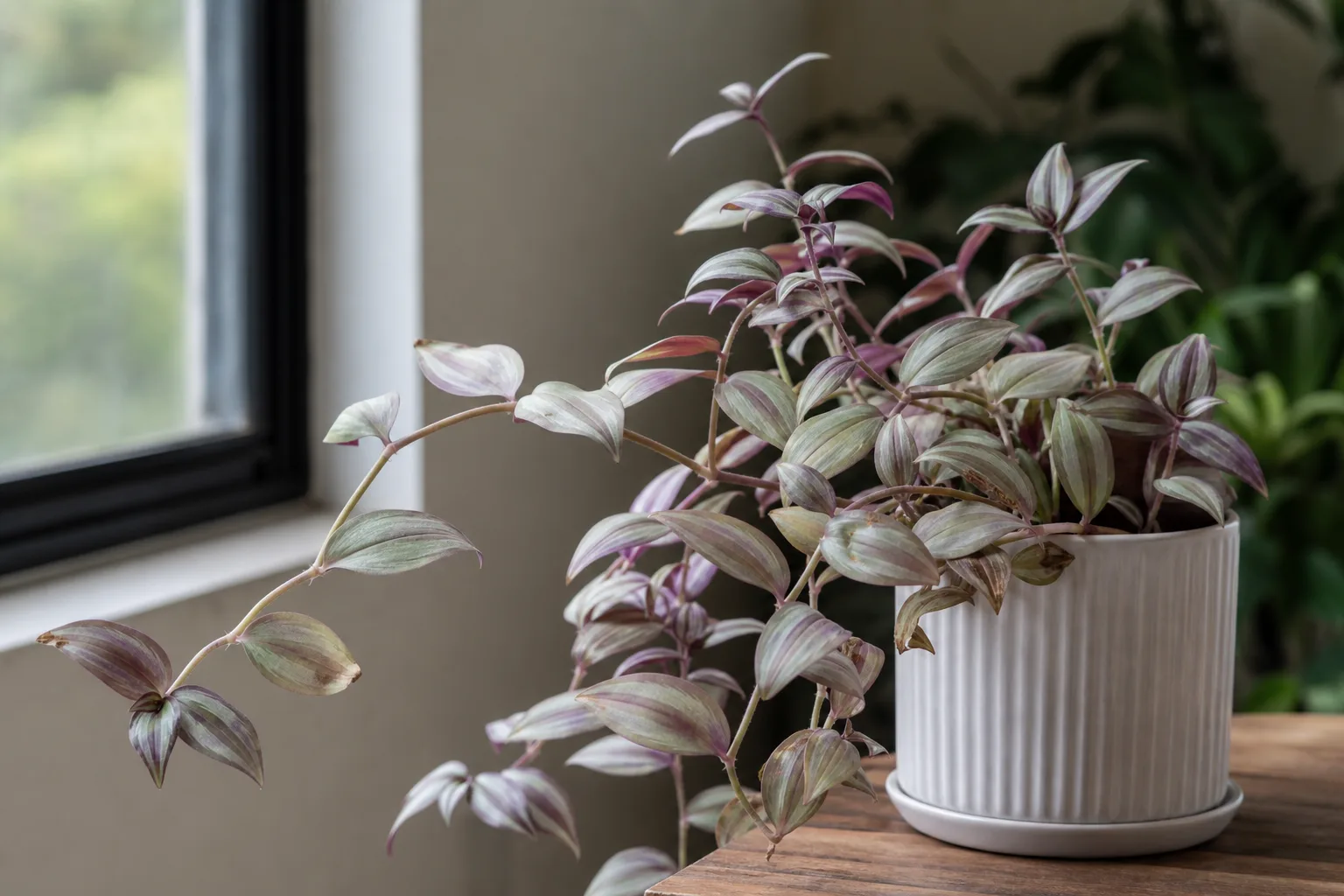
Most inch plant problems trace back to light before watering. Zebrina’s purple and silver pigments are light-dependent. In bright indirect exposure — roughly 2 to 6 feet from an east-facing window or behind a sheer curtain on south or west glass — new leaves emerge compact, firm, and vividly striped. Move the same plant to a dim hallway shelf and within a few weeks new growth turns plain green, internodes stretch, and the metallic sheen dulls. The plant is producing more chlorophyll to compensate for low light. Old leaves do not revert; only new growth shows improved color after you move it.
East-facing windows are often ideal: one to three hours of gentle morning sun, then bright indirect light the rest of the day. Zebrina tolerates some direct sun when acclimated, especially morning rays. Unfiltered midday sun on leaves formed in shade causes bleached patches or brown scorch within days. If you buy a plant from a dim shop, shift it closer to the window over one to two weeks rather than in one jump.
Best window placement indoors
Hang the basket or set the pot where the top of the canopy receives consistent bright light, not just the trailing tips. Zebrina leans hard toward the window; rotate hanging baskets weekly so both sides color evenly. A shelf 2 feet below a skylight or 12–18 inches under a full-spectrum grow light on a 10–12 hour timer works when natural light is weak in winter. You should see tighter internodes on new growth within two to three weeks of better light.
Judge by newest leaves and stem spacing, not older foliage at the base. More light needed: long thin stems, small pale leaves, faded striping, soil staying wet too long. Less direct sun needed: bleached silver areas, brown crispy patches on sun-facing leaves, curled scorched margins. For a deeper placement guide, see the Tradescantia Zebrina light page.
Watering Inch Plant Without Crown Rot
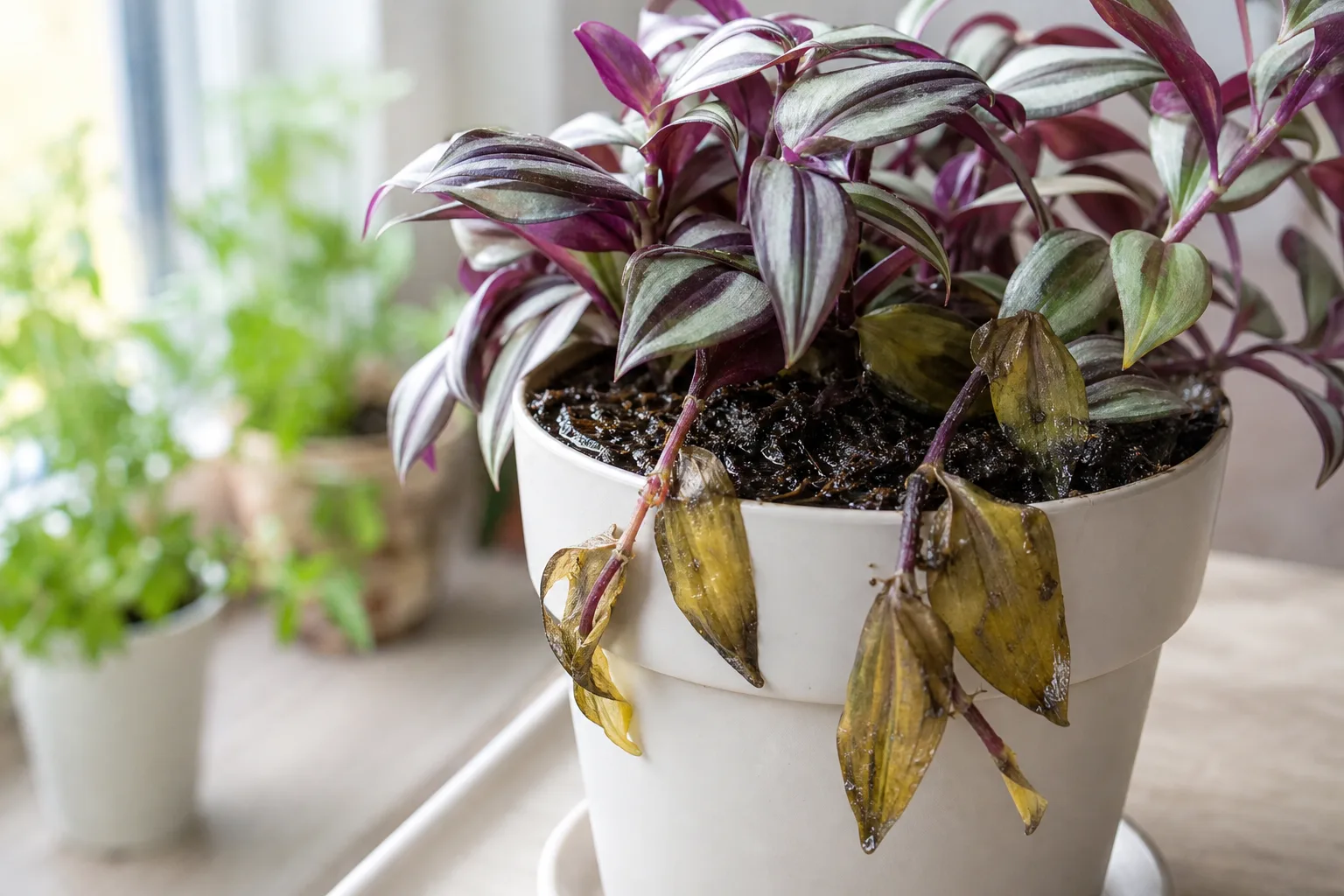
Zebrina prefers evenly moist soil but its semi-succulent stems forgive brief dry spells better than true tropicals like ferns or calatheas. The reliable rule: water when the top 1 to 2 inches of soil feel dry — often every 5 to 10 days in warm bright months and every 10 to 14 days in cooler months for a typical hanging basket. Always check; fixed schedules fail when light, pot size, or AC patterns change.
Water thoroughly until a little runs from the drainage hole, then empty the saucer. Inch plant crown rot starts at the soil line when the base stays wet in moderate light. The first sign is translucent, mushy stems right above the mix. By then rot may already travel upward. Cut healthy stems above the damage, discard the soggy base, and re-root in fresh mix.
The finger-test schedule that works year-round
Stick your finger to the second knuckle. Damp: wait. Dry at depth, cool at surface: water now. Bone dry with limp, papery leaves: you waited too long; soak thoroughly and expect some crispy lower leaves. Wet several days after watering: improve drainage, reduce volume, or move to brighter light so the mix dries faster. Water the soil surface directly rather than showering dense foliage; water trapped in leaf axils encourages fungal spots.
Winter slows growth and evaporation. Many growers underwater in summer and overwater in winter because the schedule stayed the same. Let the pot weight and finger test override the calendar. More detail lives on the zebrina watering guide.
Soil, Pots, and Drainage
Standard well-draining houseplant potting mix works. For faster drainage in plastic hanging baskets, blend 2 parts potting soil with 1 part perlite. Zebrina is not picky about exotic ingredients; it is picky about soggy crowns. The root system is relatively shallow and fine — a wide, shallow pot or hanging basket with drainage holes suits the growth habit better than a deep narrow cylinder.
Glazed ceramic and plastic retain moisture longer than unglazed terra-cotta, which can dry zebrina too fast in hot, bright rooms. Any material is fine if you adjust watering to how fast the mix dries. Never leave a basket sitting in a full outer pot without drainage.
Hanging baskets vs. tabletop pots
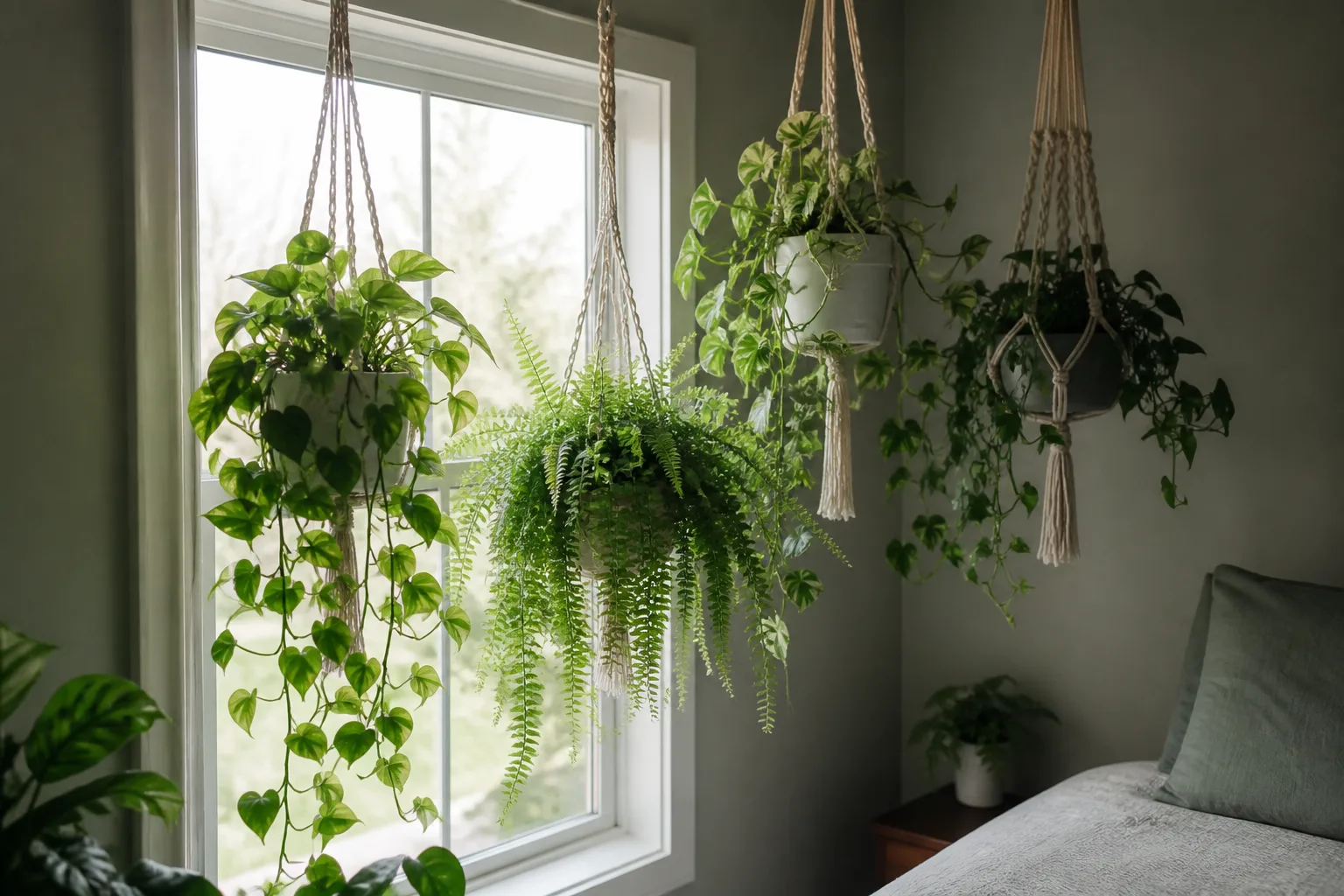
Most growers choose hanging baskets because zebrina’s trailing habit is the whole visual point. Tabletop pots work if you let stems cascade over the edge or train them along a shelf. A mature zebrina can fill a 6- to 8-inch (15–20 cm) basket within one growing season from a few cuttings. Shallow roots mean you do not need a deep container — you need horizontal spread and drainage. See the soil and repotting cluster for mix ratios and refresh timing.
Temperature, Humidity, and Drafts
Zebrina thrives at ordinary indoor temperatures between 65 and 85°F (18 and 29°C). It tolerates brief heat above that range when soil moisture keeps pace. Growth stalls below about 55°F (13°C), and cold drafts from winter window panes or AC vents can cause translucent cold damage on fleshy stems within hours. Keep the pot at least 12 inches (30 cm) from cold glass in winter.
Average household humidity 40–60% is sufficient. Zebrina does not need misting; a fine spray does not raise ambient humidity in a meaningful way and can encourage leaf-spot fungi on dense growth. If winter air near a heating vent browns leaf tips, move the plant or add a small humidifier — not a daily misting routine. Brown tips from dry air are usually cosmetic.
Fertilizer: Light Feeding for Fast Growers
Zebrina is a light feeder. A balanced liquid houseplant fertilizer diluted to half the label strength, applied once a month from spring through early fall, is enough. Skip winter unless the plant is actively pushing new growth under lights. Rich potting mix with compost may supply enough nutrients that you fertilize even less.
Over-fertilizing causes salt buildup and, counterintuitively, excess green growth that dilutes purple striping. Nitrogen-heavy feeding pushes fast chlorophyll-heavy leaves — the opposite of what most zebrina owners want. White crust on the soil surface means flush the pot with plain water two or three times until it runs freely from the bottom. Newly rooted cuttings need no fertilizer for four to six weeks. The zebrina fertilizer page covers timing in more detail.
The Pinch-and-Refresh Routine That Keeps Baskets Full
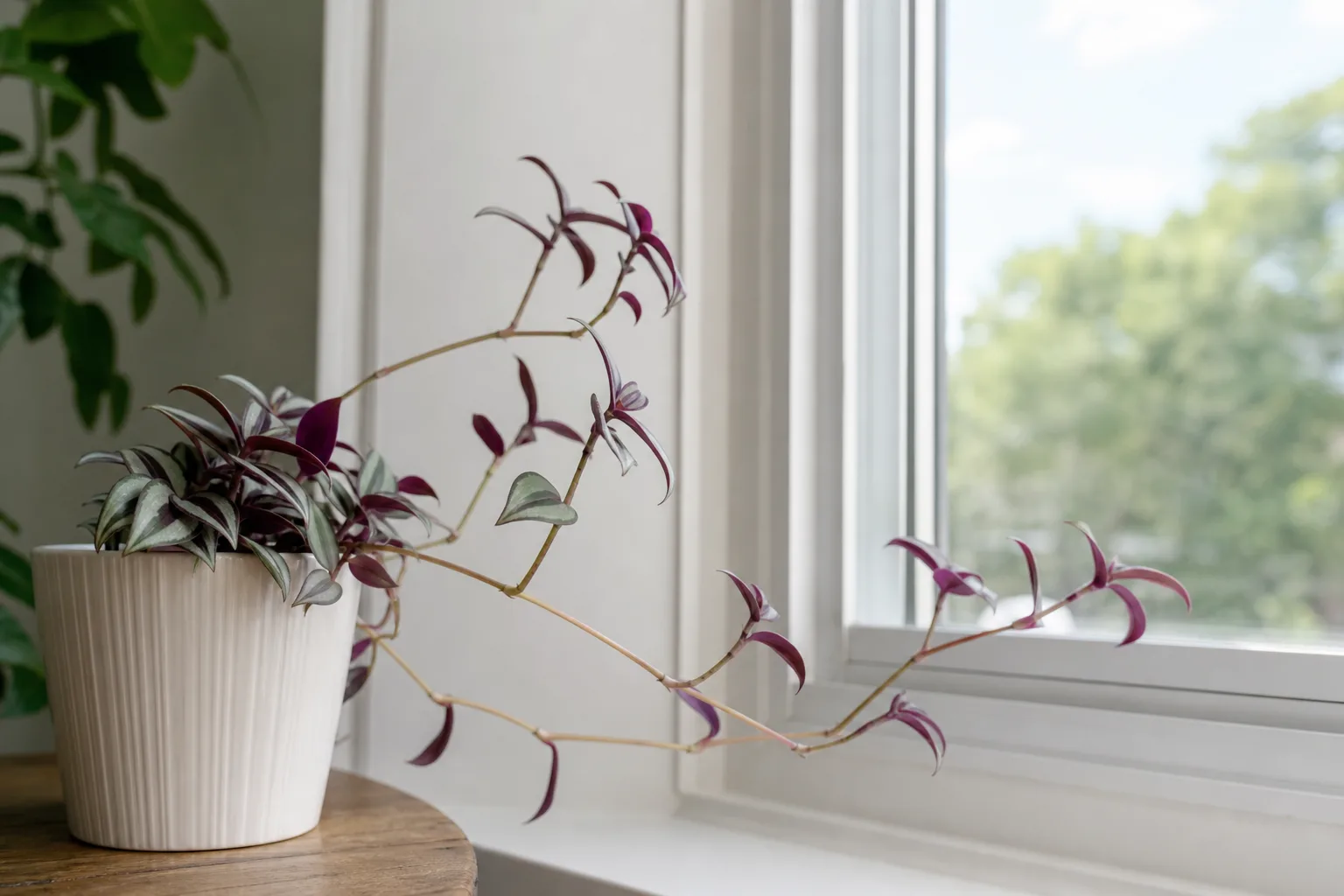
This is the maintenance habit most care guides bury in one sentence and never explain. Without pinching, zebrina stems grow long, drop lower leaves, and end as bare woody sticks with a tuft of foliage at the tip. That is normal aging for a fast trailer, not disease. The fix is the same action as propagation: cut stems just above a node — the swollen bump where leaves meet the stem. Every cut stimulates two new branches from that point, doubling density.
Pinch every four to six weeks during active growth. Leave at least two or three leaves on each remaining stem segment. Stick cuttings from each pinch back into the same pot or root them in water first. Within one season of regular pinching, a sparse basket becomes a dense cascade. Remove no more than about 25 percent of total growth in one session if the plant is already stressed.
When the crown is already bare beyond what pinching can fix, do a chop-and-prop reset in spring: cut all stems to 2–3 inches (5–7.5 cm) above the soil, root the healthy tips in water or moist mix, and replant several rooted cuttings together. Many experienced growers treat this as annual renewal rather than rescue. The zebrina pruning guide walks through the full sequence.
How to Propagate Inch Plant in Water or Soil
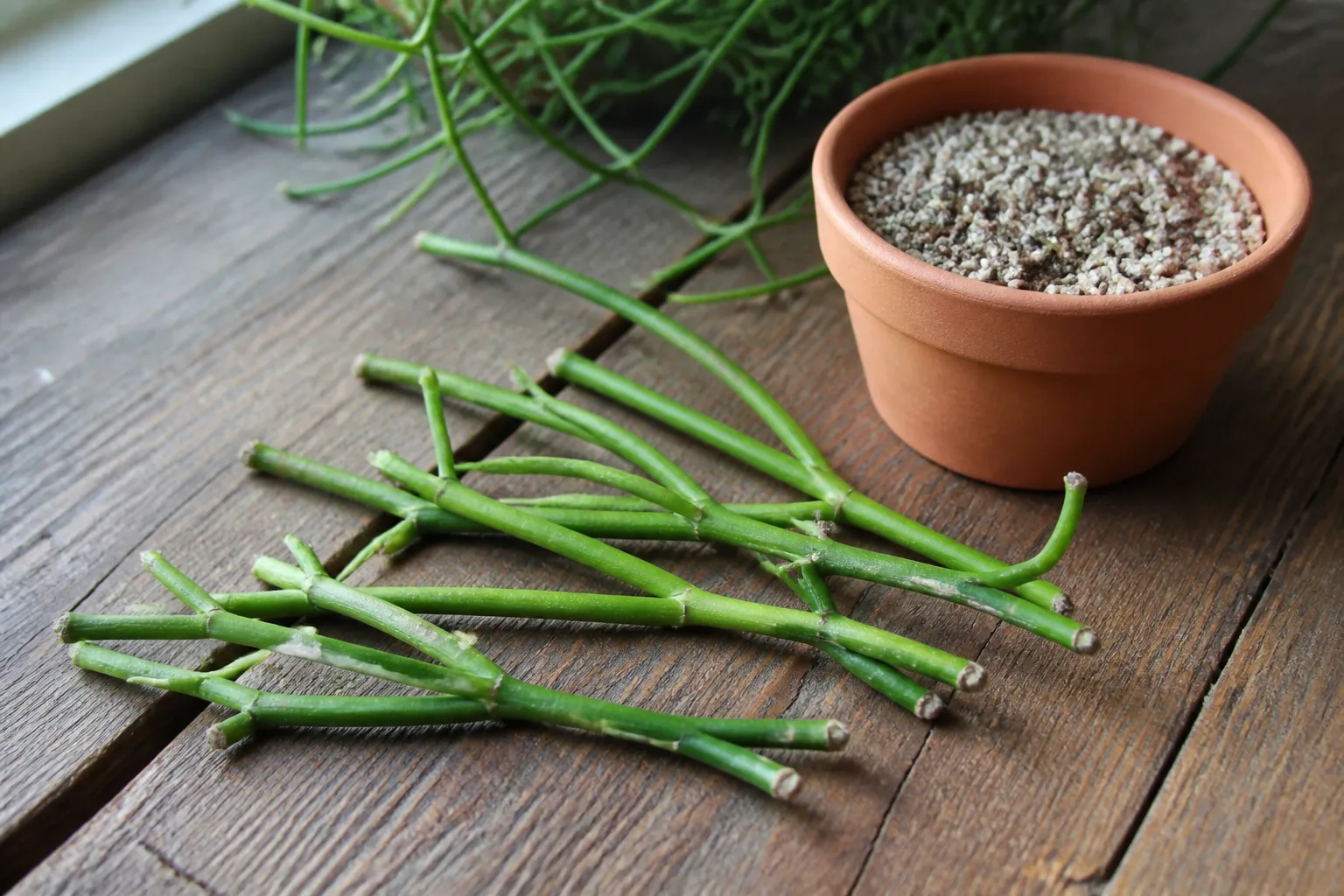
Zebrina is among the easiest houseplants to propagate because every node roots. Success rates in warm months approach 100% when you start from healthy, pest-free stems.
Water method: Cut a 4- to 6-inch (10–15 cm) section just below a node. Strip lower leaves so one or two nodes sit submerged. Place in a clear jar in bright indirect light. Roots often appear in 3 to 7 days; pot when roots reach 1–2 inches (2.5–5 cm). Change cloudy water promptly.
Soil method: Bury at least one bare node in moist well-draining mix. Keep evenly moist for two weeks. Cuttings usually root in place without wilting. This skips the water-to-soil transition that sometimes shocks other species.
Same-pot method: When pinching, push cuttings directly into open soil at the crown to fill bare patches. Root several stems together for a full basket from day one. Wear gloves if sap irritates your skin. Full steps are on the zebrina propagation page.
Repotting: When and How to Size Up
Zebrina tolerates slight root binding and does not demand annual repotting. Repot when roots circle the bottom, growth slows despite good light, or water runs straight through without absorbing. Spring is the best season. Choose a pot only 1–2 inches (2.5–5 cm) wider than the current one — oversized pots stay wet too long.
Repotting is the ideal moment to trim leggy stems and plant fresh cuttings in the same container, so the basket looks full immediately. Use fresh mix, confirm drainage holes, and water once to settle. Then return to the finger-test schedule rather than watering on a fixed day. See repotting guidance for step-by-step timing.
Growing Inch Plant Outdoors (and Why Ground Planting Is Risky)
In USDA Zones 9–11, zebrina can live outdoors year-round in containers. In temperate climates, move pots outside after frost danger passes and bring them in before nights drop below 50°F (10°C). Bright shade or morning sun outdoors often produces the strongest color.
Do not plant zebrina in open ground in warm, humid regions where it can escape. The species spreads aggressively by stem fragments that root wherever they touch soil. It is documented as invasive in parts of Hawaii, Brazil, and Australia, where it forms dense mats that crowd native understory plants. Even in containers, bag trimmings and discard them in trash — not compost or yard waste — so stems cannot establish in garden beds. A windowsill basket is safe; a careless pruning toss into a flower bed is not.
Pet Safety and Sap Irritation
Tradescantia sap can cause contact dermatitis in sensitive people — red, itchy skin where sap touches during pruning. Wear gloves for long pinching sessions. The ASPCA lists inch plant (Tradescantia fluminensis) as toxic to dogs, cats, and horses, with dermatitis as the primary clinical sign; related Tradescantia species including zebrina are treated as unsafe for pets by most poison-control references.
Ingestion can cause mouth irritation, drooling, vomiting, and GI upset. Zebrina is not as dangerous as calcium-oxalate aroids, but it is not pet-safe. The practical risk is trailing stems at cat height — zebrina behaves like a dangling toy. Hang high so stems stay out of reach, or keep the plant in a closed room. Call ASPCA Poison Control at (888) 426-4435 or your vet if a pet chews the plant.
Common Pests on Tradescantia Zebrina
Zebrina’s dense, trailing growth creates pockets where spider mites thrive in dry indoor air. Look for fine webbing at stem joints and stippled, faded leaf patches. Rinse foliage, increase humidity modestly, and treat with insecticidal soap or horticultural oil every 5 to 7 days for three cycles, covering leaf undersides.
Aphids and mealybugs appear on soft new growth, especially when fertilizer pushes tender shoots. Isolate new plants for two weeks. Wipe mealybugs with alcohol on a cotton swab; blast aphids with water and follow with soap if they persist. Fungus gnats usually mean soil staying too wet — let the surface dry more between waterings and avoid overpotting. Chronic overwatering also invites root rot; see the root rot houseplants guide if stems go mushy at the base.
Troubleshooting: Green Leaves, Leggy Stems, and Yellow Foliage
Start troubleshooting in this order: light, then moisture, then temperature, then pests.
Green, faded new leaves: Insufficient light. Move closer to the window or add a grow light. Color improves on new growth only — already-green leaves will not re-stripe.
Long bare stems with leaves only at tips: Low light plus no pinching. Brighten placement and start the pinch-and-refresh routine; replant rooted tips if the crown is empty. The leggy plants guide covers the same pattern across trailers.
Yellow leaves with wet soil and mushy stems: Overwatering or poor drainage. Stop watering, check roots, cut above rot, re-root healthy sections. Crisp yellow leaves on dry soil: Underwatering — soak thoroughly and adjust schedule.
Brown tips with yellow halos: Often low humidity or inconsistent watering; trim cosmetic damage if it bothers you. Brown dry patches on sun-facing leaves: Too much direct sun — filter or move back.
Sudden wilt with wet soil: Root rot or crown rot. Act fast; salvage cuttings above healthy tissue. Problem-specific fixes also live on the zebrina plant-problems cluster.
Popular Cultivars Worth Knowing
Nurseries sell many zebrina selections; mislabeling is common because light changes appearance. Care is identical across cultivars.
- ‘Quadricolor’: Cream, pink-purple, light green, and dark green bands — needs brightest light to hold pink.
- ‘Burgundy’ and ‘Purple Joy’: Deeper purple tones; fade fastest in dim rooms.
- ‘Silver Plus’: More metallic silver, less purple on the upper surface.
- ‘Red Gem’: Intense light purple striping.
If your plant looks different from the tag after six months indoors, compare light first, genetics second. A dim ‘Quadricolor’ can look like plain zebrina within weeks.
Conclusion
Inch plant is not hard — it is fast. Tradescantia zebrina gives you vivid purple-and-silver foliage, effortless propagation, and hanging-basket impact within months if you supply bright indirect light, water when the top inch dries, and pinch stems above nodes on a regular schedule. Treat color fade and bare crowns as maintenance signals, not failures. Refresh with cuttings before the pot looks tired, keep stems away from pets and out of garden soil in warm climates, and you will have a plant worth sharing — which is easy, because every pinch produces another rooted start.
For species-specific depth beyond this guide, start at the Tradescantia Zebrina hub and branch into light, watering, propagation, and problem pages as your plant’s condition demands.



