How to Grow and Care for Ninebark Shrub
Grow a healthy ninebark shrub with the right planting site, first-year watering plan, pruning timing, variety choices, and bloom troubleshooting.
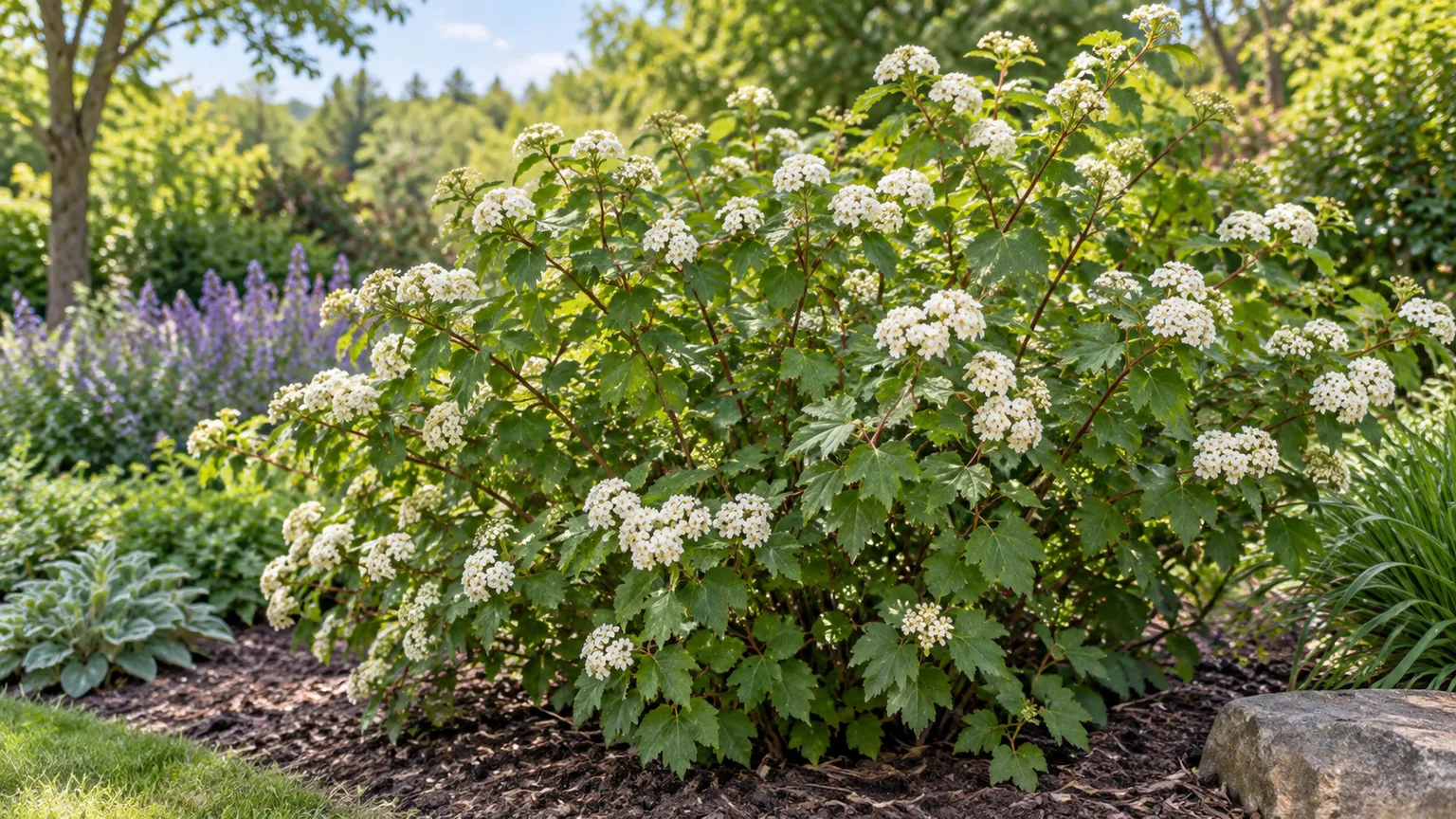
Ninebark (Physocarpus opulifolius) is one of the most useful deciduous shrubs for a low-fuss landscape. It grows quickly, flowers in rounded clusters in late spring or early summer, handles a surprisingly broad range of soils, and keeps contributing after leaf drop because its older stems peel into layers of tan, reddish, and brown bark. The plant is native across much of eastern and central North America, and cultivated forms now range from large, arching shrubs to compact plants suited to smaller gardens.
Its toughness does not make every planting site a good one. The most common ninebark problems are planning problems: a shrub planted where it cannot reach its mature width, a colorful cultivar put in too much shade, or a vigorous plant cut at the wrong time and then blamed for having no flowers. Give it the right amount of light, water the root ball well while it establishes, and prune with its bloom cycle in mind. The result is a shrub that looks intentional instead of merely indestructible.
Ninebark at a glance
Ninebark is a woody, multi-stemmed shrub in the rose family. Depending on the cultivar, it typically reaches about 3 to 10 feet tall and 3 to 8 feet wide, though an unpruned standard type can look larger because its branches arch outward. White to pink flowers appear in rounded clusters on older wood, followed by small fruits that can add late-season interest and food for birds. Leaves may be green, gold, bronze, burgundy, or a blend that changes as the season progresses.
For a quick care plan, plant ninebark in full sun to partial shade, use well-drained soil amended with organic matter only when the ground is poor, and keep the root zone evenly moist during the first season. Once established, water during prolonged drought rather than on a rigid daily schedule. Mulch lightly, avoid piling it against the stems, fertilize only if growth or soil conditions justify it, and prune after flowering.
Choose a site before you buy
Light, soil, and drainage
Full sun gives ninebark the densest growth, strongest flower display, and most reliable leaf color. In a cooler northern garden, six or more hours of direct sun is a useful target. In a hot climate, some afternoon shade can reduce leaf scorch and heat stress, but deep shade usually produces a thinner shrub with fewer flowers and less vivid foliage.
Ninebark is adaptable to clay, loam, shallow soil, and even somewhat rocky ground. Adaptable does not mean indifferent to structure. Break up compacted soil in a broad planting area, mix in finished compost when the soil is very poor, and keep the planting hole no deeper than the root ball. A shrub that sits too low stays wet around its crown and may decline even when the surrounding soil is technically suitable.
The plant can tolerate occasional wet conditions and brief flooding better than many ornamental shrubs, but permanently saturated soil is a different situation. If water stands for days after ordinary rain, plant on a gentle mound, improve the drainage route, or choose a moisture-loving species instead. Roots still need oxygen.
Space for mature width
Measure from the center of the nursery pot to nearby paths, fences, windows, and other shrubs. Use the variety’s expected mature width, not the small size on the garden-center bench. A standard ninebark placed 2 feet from a walkway will eventually require repeated shearing, which ruins its natural arching habit and can keep the interior shaded and congested.
As a general planning rule, leave at least half the listed mature width between the trunk and the nearest obstruction. For a shrub expected to become 6 feet wide, that means roughly 3 feet of open space on each side. Compact cultivars reduce the footprint, but they still need air around them and enough room to be viewed from all sides.
Plant ninebark for fast establishment
Early spring, while the plant is dormant or just beginning to leaf out, is an excellent planting window. Fall planting can also work where the soil remains workable and the shrub has time to form roots before the ground freezes. Avoid planting a newly purchased shrub into waterlogged soil or during the hottest, driest stretch of summer unless you can provide dependable irrigation.
Dig a planting area two to three times the container’s width and only as deep as the root ball. Slide the shrub out, loosen circling roots gently, and set it so the top of the root ball is level with or slightly above the surrounding soil. Backfill with the excavated soil rather than creating a rich pocket that encourages roots to remain inside the hole. Water slowly until the entire root zone is wet, then add a 2- to 3-inch layer of organic mulch over the soil, leaving a bare ring around the stems.
The first watering matters more than a quick splash every day. Check the soil a few inches down; when it begins to dry, water deeply enough to reach the lower part of the root ball. Frequency depends on temperature, soil, rainfall, and container size. A newly planted shrub in sandy soil may need attention several times a week during heat, while one in clay may need less frequent but careful watering. Do not keep the root ball constantly soggy.
Build a simple watering and mulch routine
After the first growing season, ninebark becomes substantially more self-reliant. It can handle dry periods because its established root system explores a broad volume of soil, but drought tolerance is not a reason to ignore a plant that is wilting, newly pruned, or growing in a hot strip beside pavement. Water deeply during extended drought, especially when the leaves lose firmness in the morning rather than only at the end of a hot afternoon.
Mulch helps by slowing evaporation, buffering soil temperature, and reducing competition from grass. Keep it porous and modestly deep. A mulch volcano against the stems traps moisture at the crown, hides rodent damage, and can encourage decay. Pull the mulch back a few inches from the base and refresh it when it has decomposed or thinned.
Feed only when the plant needs it
Ninebark planted in reasonably fertile soil often needs no routine fertilizer. A thin layer of compost in early spring is enough for many garden situations. If new growth is weak, leaves are unusually pale, or a soil test shows a nutrient shortage, use a slow-release tree-and-shrub fertilizer according to its label and spread it over the root zone rather than concentrating it at the trunk.
Excess nitrogen is not a shortcut to a better shrub. It can produce lush, soft growth that is more vulnerable to stress and may encourage a large plant with fewer flowers. Do not fertilize a drought-stressed or newly transplanted shrub until watering and root establishment are under control.
Select a variety that fits the garden
Variety is where ninebark becomes a design plant instead of a generic green shrub. Large purple-leaf cultivars create a strong backdrop or informal screen. Compact forms fit foundation beds and mixed borders. Gold- and orange-tinted foliage brightens a darker planting, but those colors often need enough light to stay clear rather than turning green.
Before purchasing, compare the mature dimensions, not just the cultivar name. A roughly 3- to 4-foot compact ninebark is easier to maintain in a small border than an 8- to 10-foot type. Some selections are promoted for mildew resistance or improved branching, which can be valuable in humid gardens. Cultivars may also carry patent or trademark restrictions, so check the plant tag before taking cuttings for sale or distribution.
Prune ninebark without losing flowers
The safest routine is to prune after the main flowering period, generally in late spring or early summer. This timing lets you remove spent flower clusters, dead wood, crossing branches, and a little excess length without cutting away the wood that will support the next display. Finish major pruning by mid-August in most climates so the shrub has time to produce and harden new growth before winter.
Maintenance pruning
Start by removing branches that are dead, damaged, diseased, or rubbing. Then thin a few of the oldest stems at ground level to open the center. Finally, shorten a long branch back to a strong side branch instead of clipping every stem at the same height. This preserves the natural outline and encourages new shoots from the base.
Remove no more than about one-third of the total branches in a single routine session. A shrub that needs more work is better handled over two or three seasons than forced into a round ball. Shearing the outer shell repeatedly leaves a dense, shaded interior and creates a cycle of fast, weak regrowth.
Rejuvenating an old shrub
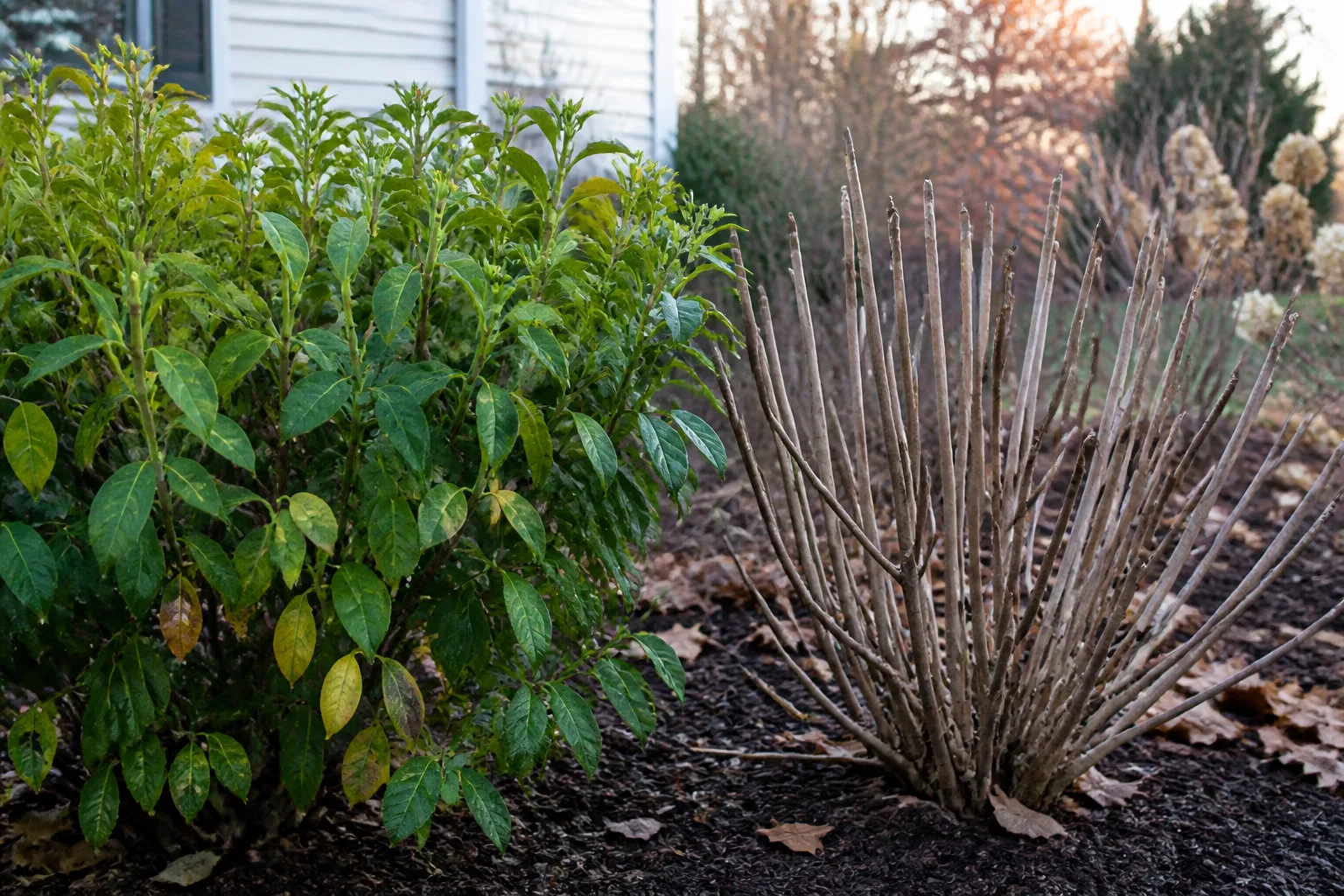
If an old ninebark is woody, bare in the middle, and much too large, use renewal pruning rather than a cosmetic haircut. In late winter or early spring, before active growth, remove the oldest third of the stems at ground level. Repeat the process over the next two years. This gives young shoots room to develop while preserving enough of the existing framework for flowers and screening.
Hard renovation is possible for a severely neglected plant, but it sacrifices that season’s appearance and may reduce flowering temporarily. Cut stems low and cleanly, protect the emerging shoots from lawn equipment, and water during dry weather as the plant rebuilds. Do not treat every stressed shrub this way; first determine whether the problem is poor light, root damage, or a disease that requires a different response.
Grow ninebark in a container
Compact ninebarks can live in large containers, but a pot turns an adaptable landscape shrub into a plant that depends on you. Choose a container at least 24 inches wide and deep with several drainage holes. Use a quality, well-drained potting mix rather than garden soil, which compacts in a pot and makes watering unpredictable.
Container plants dry faster, heat up more quickly, and have less insulation around their roots. Check moisture regularly during the growing season, but let excess water drain completely. Prune lightly to keep the canopy proportional to the root space, refresh the potting mix every couple of years, and move the container to a protected location in very cold climates. If roots circle densely or water runs straight down the sides, repot into the next size rather than making a dramatic jump to a huge pot.
Propagate with cuttings or layering
Hardwood cuttings are taken after leaf drop, when stems are mature and dormant. Choose healthy pencil-thick pieces about 4 to 6 inches long, keeping track of which end was nearer the tip. A cutting needs several nodes. Insert the lower portion into a moist, airy rooting medium with at least one node below the surface, keep it cool but protected, and be patient: rooting and top growth may take a full season.
Layering is often easier for a home gardener with a flexible low branch. Bend a branch to the ground in spring, nick or gently wound the section that will be buried, pin it in place, and leave the tip exposed. Keep the soil modestly moist. When roots have formed, sever the new plant from the parent and transplant it during a mild period. Propagating a named patented cultivar may be restricted, so verify the tag and applicable rules first.
Solve pests, disease, and poor growth
Healthy ninebark usually has few serious pest problems. Aphids may cluster on tender shoots, where a strong stream of water can dislodge them. Avoid spraying broad-spectrum insecticide simply because you see a few aphids; natural enemies often catch up, and flowering shrubs support beneficial insects.
Powdery mildew and leaf spots become more likely when foliage stays damp, air movement is poor, or the shrub is stressed. Give the plant room, water the soil rather than routinely wetting leaves, remove badly affected fallen debris, and prune selectively after flowering. A cultivar with improved disease resistance can be a better long-term solution than repeated rescue treatments. Fire blight-like symptoms, rapidly blackening shoots, or recurring dieback warrant a local extension diagnosis because several problems can look similar.
Encourage better flowering
When ninebark does not bloom, check the site before adding fertilizer. Too much shade is the first suspect, especially when the plant is leafy but soft and stretched. The next is pruning: cutting in late summer, fall, winter, or very early spring can remove the buds or young branches that would have flowered.
Other possibilities include severe drought, transplant stress, an immature plant, or a cultivar whose flowers are less prominent than its foliage. Move nearby branches if they have gradually shaded the shrub, correct watering, and wait through a full season after major disturbance. Do not keep cutting a nonflowering plant shorter; that often removes more potential bloom wood and produces even denser shade inside.
Plan seasonal ninebark care
In early spring, inspect the base and remove winter-damaged wood. Top-dress with compost if the soil needs it, renew the mulch ring, and check that the shrub has not been buried by settling soil. Spring is also a good time to plant dormant specimens and assess whether nearby growth has changed the light.
After flowering, complete selective pruning and remove spent clusters if you prefer a cleaner look. During summer, monitor new plantings and containers closely, watch for drought stress and mildew, and avoid heavy feeding during heat. In fall, leave healthy leaf litter out of the shrub’s crown if it is free of disease, but clear debris that repeatedly carries leaf spots. Winter is the season to appreciate the peeling bark and evaluate the silhouette without foliage hiding crossing branches.
Use ninebark for wildlife and winter structure
Ninebark earns a place beyond its flowers. Its spring blooms can provide forage for pollinators, and its later fruits may be used by birds. Its arching form softens fences and foundation lines, while the exfoliating bark adds texture in a season when many deciduous shrubs look empty. Use it in a mixed border, informal hedge, rain-garden edge, slope planting, or wildlife-oriented garden where its eventual spread is welcome.
Pair a large type with lower perennials rather than crowding several shrubs into the same footprint. Give a purple- or gold-leaf cultivar a calm background so its color can read clearly, and use evergreen companions when winter screening matters. Ninebark is deciduous, so it should not be sold to yourself as a year-round privacy wall.
Conclusion
The best ninebark care is mostly good planning. Choose a cultivar that fits the available space, give it strong light without ignoring local heat, plant the root ball at the right depth, and water consistently until the roots move into the surrounding soil. Once established, the shrub needs less intervention than many flowering ornamentals.
Prune after flowering, thin rather than shear, and use gradual renewal cuts when an old plant has lost its shape. Keep the canopy open, avoid excess fertilizer, and treat wet soil, shade, and recurring disease as site clues rather than problems to cover up. With those decisions in place, ninebark supplies flowers, changing foliage, wildlife value, and winter bark for years with very little fuss.