Do Onion Skins Help Your Garden? The Real Answer
Wondering if onion skins help your garden? Learn why composting is the best use, how to bury them safely, and why onion-skin tea is not a true fertilizer.
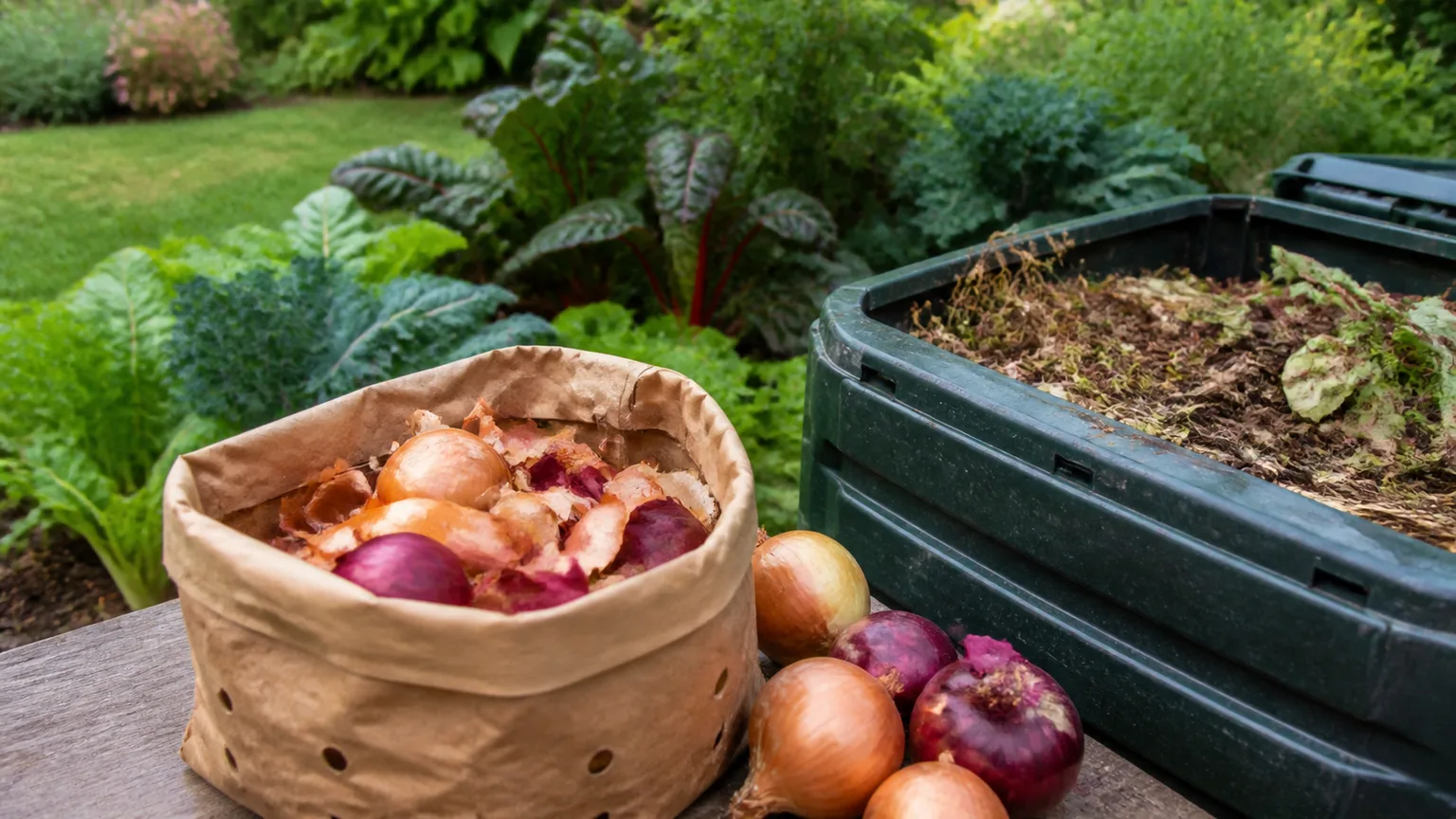
If you are saving onion skins for the garden, compost them first. Papery onion skins are plant-based kitchen waste, so they can contribute organic matter to a balanced compost pile. They are not a complete fertilizer, a soil pH treatment, or a proven pest-control product on their own.
That distinction matters because an onion peel is still a raw scrap when it leaves the cutting board. It has not been analyzed as a fertilizer, processed into a predictable nutrient ratio, or tested as a reliable pesticide. The useful part is the composting process: microbes turn a varied mix of kitchen and garden materials into mature organic matter that can improve soil structure.
The quick answer: compost them by default
Put dry onion skins in a compost bin with other vegetable scraps, dry leaves, shredded cardboard, and garden waste. Tear or crush large pieces, bury fresh scraps under a layer of brown material, and keep the pile moist but airy. Penn State Extension lists fruit and vegetable peels as compost inputs and explains that finished compost improves soil structure, aeration, water-holding capacity, and nutrient retention (Penn State Extension).
If you do not compost, a small amount of chopped skins can be buried in an empty bed. That is a slower form of in-place composting, not instant plant food. Avoid piling raw skins on the surface of an active bed, pouring untested onion water over edible leaves, or assuming a strong smell means pests will stay away.
The simplest routine is also the most reliable: let skins dry in a paper bag or open bowl, add them to the compost pile once or twice a week, and pair them with enough dry carbon material that the pile does not become wet and sour. If your household produces only a handful, save them with leaves or cardboard rather than trying to make a separate onion-skin product.
What onion skins actually add
Onion skins add raw organic matter. In compost terms, papery, dry skins behave more like a small brown ingredient than like a bottle of fertilizer. Their carbon-rich structure gives microbes another material to break down, while the softer scraps in the pile provide moisture and nitrogen.
Finished compost made with onion skins can contribute humus and organic matter to soil, but you cannot predict its nutrient content from the skins alone. The result depends on the onion variety, how much skin you used, what else went into the pile, how completely it decomposed, and the final compost’s moisture and mineral content.
Compost value versus fertilizer claims
A fertilizer is a measured input with a stated analysis or a known nutrient concentration. Onion skins do not come with a dependable N-P-K label, and a kitchen jar of skins cannot tell you whether a bed is deficient in nitrogen, phosphorus, potassium, sulfur, or anything else.
Penn State’s compost guidance recommends soil testing and warns that composts differ in chemical analysis. It also cautions against continuous use of a single organic nutrient source when it could push one nutrient above crop needs (Penn State Extension). That is why onion skins make sense as one small ingredient in a diverse compost stream, not as a replacement for a soil test or a crop-specific fertilizer plan.
You may see claims that onion skins are especially rich in a particular mineral or that they will make flowers bloom, roots grow, or plants resist disease. Some of those statements may be based on onion chemistry or concentrated laboratory extracts, but they do not establish what a few papery skins will deliver in a home garden. The honest benefit is slower and less dramatic: decomposed plant matter can help soil hold nutrients, air, and water.
Why onion-skin tea is not a measured fertilizer
Steeping onion skins in water makes a variable extract. The strength changes with the amount of skin, water temperature, steeping time, onion variety, microbial growth, and whether the liquid is used immediately or stored. Without a tested recipe and nutrient analysis, calling it fertilizer implies more precision than the method provides.
Compost-tea research also shows why homemade liquids deserve restraint. USDA Agricultural Research Service researchers reported that additives used in some compost teas can encourage the growth of bacteria, including pathogens, while the University of Vermont Extension notes that compost-tea results vary between batches and that food-safety concerns apply when liquids touch crops (USDA Agricultural Research Service; University of Vermont Extension). Onion-skin water is not the same as a professionally prepared compost tea, but the lesson is relevant: a dark or strongly scented liquid is not proof that it is safe, effective, or nutritionally balanced.
The best use: add onion skins to compost
Composting gives onion skins the conditions they need to become useful: a varied feedstock, moisture, oxygen, time, and microbial activity. The Royal Horticultural Society recommends combining green material such as vegetable peelings with brown material such as shredded woody waste, paper, and cardboard, rather than allowing one ingredient to dominate (RHS).
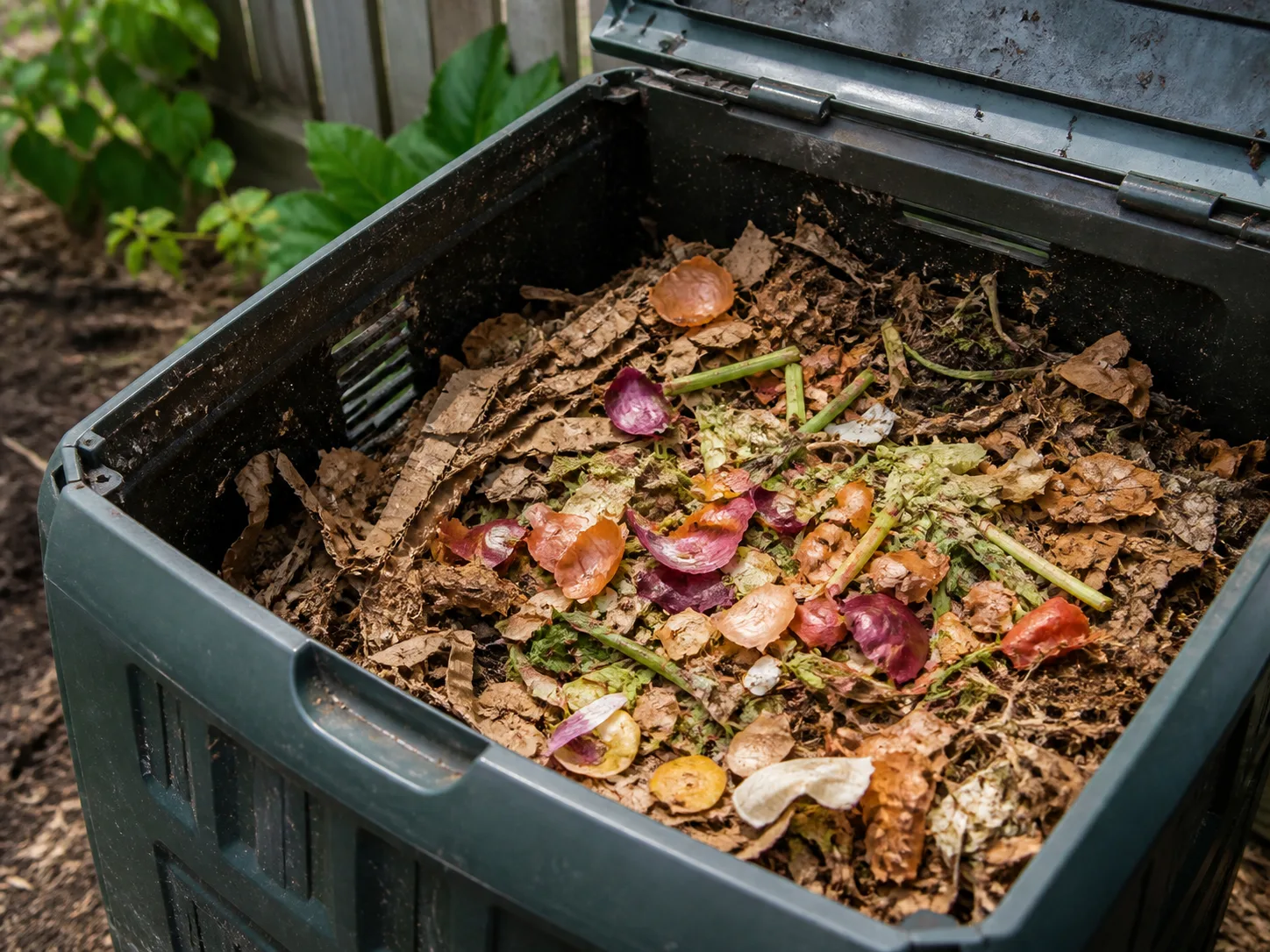
Onion skins do not need a special activator. You do not need to add lime, a commercial compost starter, or a homemade fertilizer to make a normal pile accept them. A balanced mix and enough air do more for decomposition than a special onion recipe.
How to add skins without creating a soggy pocket
Use this short routine whenever you empty your kitchen scrap container:
- Dry the skins briefly. Spread damp skins in a thin layer or leave them in a breathable paper bag. Do not seal wet skins in a jar, where they can mold before compost day.
- Tear larger pieces. Smaller pieces expose more surface area to decomposers. The thin skins do not need to be pulverized; crumbling them with your fingers is enough.
- Mix them with other browns. Pair the skins with dry leaves, shredded cardboard, untreated paper, or small dry stems. This prevents a concentrated wet pocket when other kitchen scraps are added.
- Bury the fresh layer. Place fruit and vegetable scraps in the middle of the pile and cap them with browns. This helps reduce flies and odors.
- Check moisture and air. The pile should feel like a wrung-out sponge, not drip when squeezed. Turn or fork it when material becomes compacted.
RHS guidance gives a rough starting point of 25–50 percent soft green material and 50–75 percent brown material by volume. Treat that as a practical range rather than a laboratory formula; the immediate signals are more useful. A slimy, sour, or ammonia-smelling pile needs more dry browns and air, while a dry pile full of unchanged leaves needs moisture and some fresh green material.
The skins can go into either a hot or a cold backyard pile. A hot pile needs enough volume, moisture, oxygen, and balanced ingredients to heat; a small add-as-you-go pile will usually work more slowly. Do not keep adding onion skins to a pile that is already failing and expect the skins to fix the underlying imbalance.
When compost made with onion skins is ready
Do not plant into or spread raw onion skins simply because they have been sitting in the bin for a week. Finished compost should be dark and crumbly, smell earthy rather than sour, and no longer heat up in the center. The original scraps should be difficult to recognize; papery pieces that are still obvious can go back into the next batch.
Time varies with the pile. Penn State describes a well-managed home pile taking roughly three to four months, while the RHS notes that home compost can take six months to two years depending on the bin, material size, weather, and management. Use appearance and smell as the release test, not a promise that every batch will finish on the same date.
When it is ready, use the compost as a soil conditioner or light mulch. Penn State recommends testing soil before adding repeated compost or amendments and gives 1–2 inches mixed into the top 6–8 inches of soil as a garden-use example. That is a guide for finished compost, not a measurement for raw onion skins.
Direct burial when you do not have a compost bin
If your bin is full, frozen, or nonexistent, use trench composting in an empty section of garden. Dig a trench or hole deep enough to keep scraps away from the surface, add a small mixed layer of onion skins and other plant scraps, cover it completely with soil, and mark the spot so you do not sow directly into unfinished material.
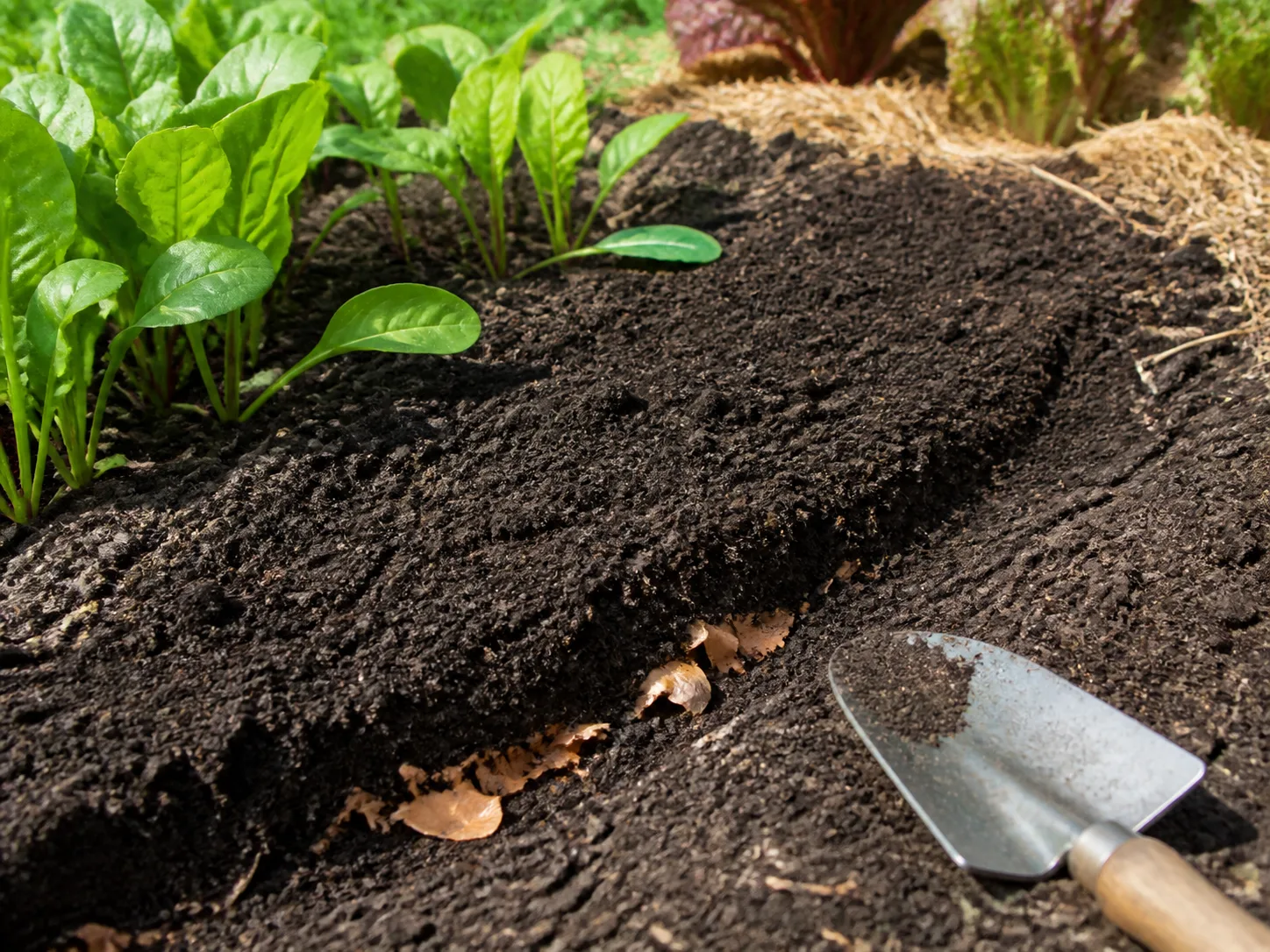
This method works best before planting or in a fall bed that will rest over winter. Leave enough time for the scraps to soften and decompose before placing young roots directly above them. A thin handful buried with soil is a reasonable reuse step; a deep pocket of kitchen waste can settle, smell, attract animals, or temporarily tie up oxygen as it breaks down.
Do not bury raw skins against a plant stem or in a container that has little soil volume. The material needs the same moisture and oxygen balance as a compost pile, and a wet clump under a plant can create a localized rot-prone mess rather than a helpful amendment.
Should you scatter onion skins as mulch?
Usually, no. A few dry flakes will not ruin a bed, but onion skins are light, uneven, and easy to blow away. They also do not provide the consistent coverage of shredded leaves, straw, compost, or wood chips.
If you want to use them as a short-term surface cover, mix a very small amount with an existing mulch rather than laying down a visible blanket. Keep the material away from stems, remove it if it mats or molds, and do not use it around edible leaves that you harvest directly from the soil surface.
Raw skins on the surface can also create a false sense of pest protection. Their scent will fade, rain will move the pieces, and any effect on a particular pest will depend on the insect, the crop, the weather, and the amount of material. Composting is a better soil-building use; established pest problems need identification and a treatment that matches the pest.
Onion-skin water: what is reasonable?
The safest answer is that onion-skin water is optional and unproven, while compost is the evidence-aligned default. There is no broadly accepted home-garden recipe that guarantees a useful nutrient concentration or reliable disease and pest control.
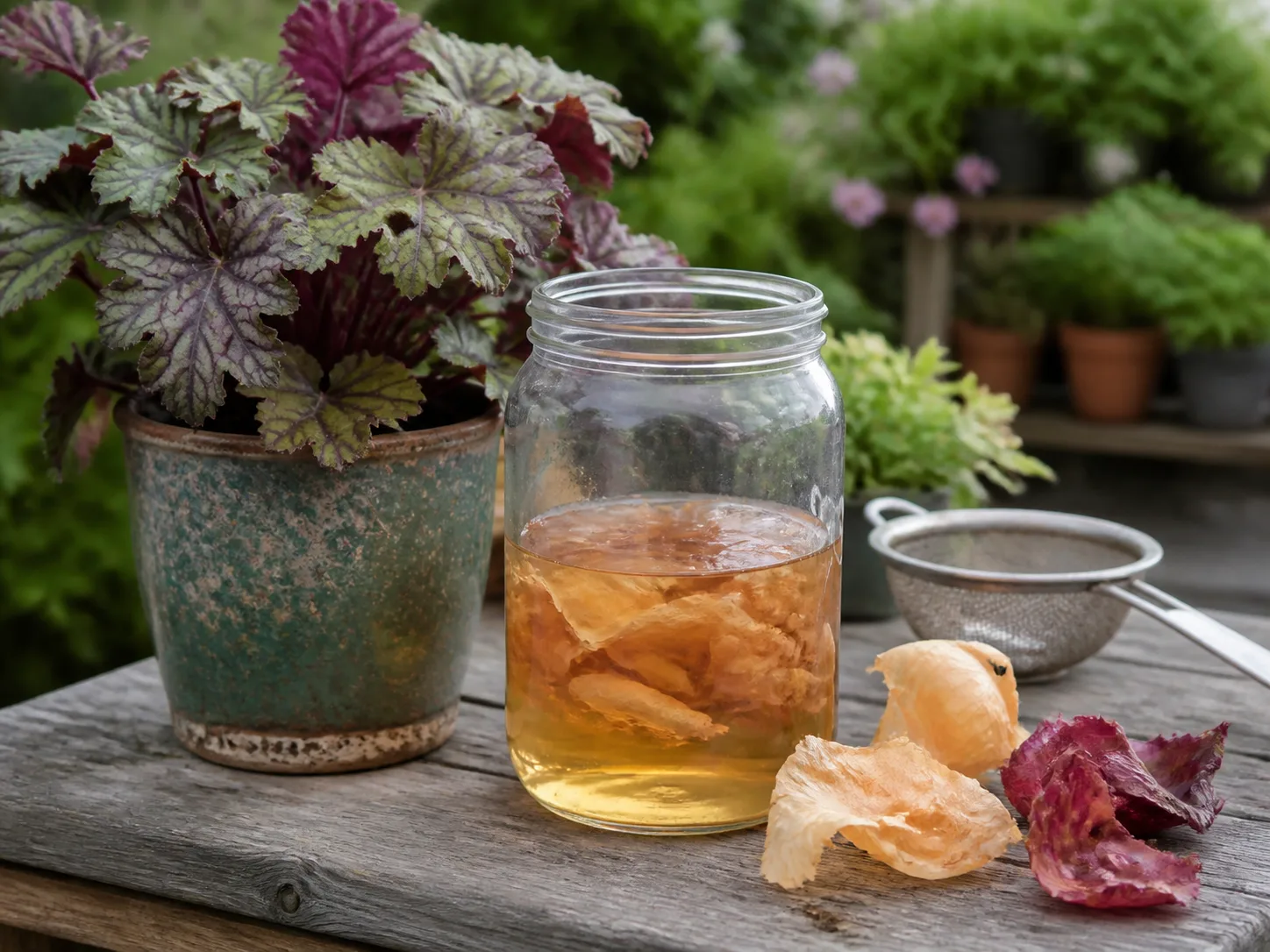
If you are curious, treat a small batch as a one-off observation rather than a feeding schedule. Use clean water, a small amount of fresh, dry skin, a short steep, and a clean container; strain it well and discard the liquid after the trial instead of storing it for repeated applications. Do not add sugar, molasses, milk, oil, manure, or other ingredients to make the liquid “stronger.”
A low-risk ornamental-only trial
For a cautious test, use the strained liquid as a soil drench on one non-edible ornamental plant that is already healthy. Apply it to moist potting soil, not to dry roots, and compare that plant with an untreated one of the same type if you want to learn anything from the experiment.
Watch the plant for several days. Stop if the soil smells sour, the surface grows mold, leaves spot, or the plant wilts. Do not infer that new growth came from the onion water unless the comparison and growing conditions are similar; light, watering, temperature, and ordinary fertilizer usually matter far more.
Never use homemade onion-skin water as a substitute for a labeled fertilizer when a plant has a confirmed nutrient deficiency. If a soil test or plant diagnosis shows a real need, use a product with a known analysis at its labeled rate.
Why to skip homemade spray on edible crops
Spraying a raw kitchen-scrap infusion on lettuce, herbs, tomatoes, or other edible parts adds a hygiene problem without a demonstrated benefit. It can also leave residue, create leaf spotting, and encourage microbes if the liquid is old or the spray bottle is dirty.
The USDA and University of Vermont guidance on compost teas is stricter for good reason: potable water, clean equipment, mature feedstock, and controlled handling matter when a liquid may contact food. A jar of onion skins steeped on a counter does not meet that standard, so keep experiments off edible foliage and do not use the liquid as a routine crop spray.
Worm bins need a lighter touch
A traditional compost pile can handle onion skins as part of a varied feedstock. A worm bin is less forgiving because its composting worms live in a small, enclosed environment where excess acidic, aromatic, wet, or unfinished food can change conditions quickly.
The RHS advises using onions, shallots, leeks, and garlic only in small amounts or cooked first in a wormery, and it recommends feeding small quantities often rather than overloading the bin (RHS worm composting). For onion skins, start with a pinch mixed into bedding, not a thick layer of skins.
If the worms avoid the area, climb the sides, or the bin develops a strong odor, stop adding skins. Cover the food with shredded cardboard or damp paper, check that the bin is not waterlogged, and wait until the existing scraps are being eaten before feeding again. For most homes, a normal outdoor compost bin is a better destination for a large onion-skin stash.
Pest deterrence: a scent effect is not pest control
Onion odor may make a plant or compost area less appealing to some insects or scavengers for a short time, but that is not the same as reliable pest control. A scent barrier does not kill eggs, remove larvae, protect new growth, or stop a pest that is already feeding.
Do not scatter onion skins around a plant instead of checking the undersides of leaves, improving airflow, removing badly infested tissue, or using a tested control. If you see aphids, fungus gnats, caterpillars, or slugs, identify the pest first; the right response may be sanitation, moisture correction, a physical barrier, hand removal, beneficial insects, or a labeled product.
The strongest practical pest benefit of composting onion skins is indirect: keeping fresh food scraps covered and a compost bin balanced can reduce odors and discourage nuisance visitors. That is a compost-management benefit, not proof that onion skins repel garden pests.
What not to put with onion skins
Onion skins are not the ingredient that makes a compost pile dangerous, but they can be part of a bad batch. Keep these stop rules in view:
- Skip oily or cooked skins. Oil, butter, sauces, and greasy roasted scraps can slow decomposition and attract animals. Penn State specifically advises leaving oils and fats out of a home pile.
- Do not add large amounts of moldy or slimy material to a small indoor bin. A well-managed hot pile may process some questionable scraps, but a home gardener should not use a weak, cold pile as a pathogen-control system.
- Keep meat, bones, dairy, and pet waste out of a standard backyard pile. They create odor, pest, and hygiene problems and may be restricted by local rules.
- Do not use raw skins as a substitute for finished compost. Cover or bury them while they decompose, then wait for the finished-compost signs.
- Protect pets from access. The ASPCA lists onion (Allium cepa) as toxic to dogs, cats, and horses, with signs that can include vomiting, weakness, and hemolytic anemia (ASPCA). Use a lidded bin or a bed pets cannot dig in, and contact a veterinarian promptly if an animal eats onion material.
The pet warning is about ingestion, not about a finished compost pile containing a trace of decomposed onion. It is still a good reason not to leave fresh scraps in a dog run, on a patio where a cat can chew them, or in an open bowl beside a rabbit hutch.
Troubleshoot the mess
The pile smells sour or rotten. Too much moisture and too little oxygen are common causes. Add dry leaves, shredded cardboard, or small dry stems, mix the pile, and protect it from heavy rain without sealing it so tightly that air cannot enter.
The pile is dry and the skins look unchanged. Add a little water while turning the material and mix in softer green scraps. Papery skins can persist when they are isolated from moisture and microbes, so distribute them instead of making a dry layer.
Flies gather around the kitchen-scrap layer. Cover fresh material with browns immediately and check that the bin is not waterlogged. If flies keep returning, stop adding wet scraps for a short period and improve the brown cap and aeration.
The compost is hot but contains visible onion skins. That is not automatically a problem. Turn the recognizable pieces into the center of the pile and wait for the whole batch to cool, darken, and smell earthy before using it.
A plant declines after raw skins were buried nearby. Remove any exposed material, check soil moisture and drainage, and do not add more scraps. If the plant remains stressed, treat it as a root-zone or watering problem rather than assuming it needs more fertilizer.
Better alternatives when your goal is fertility
If your real goal is more vigorous growth, onion skins are not the first lever to pull. Start with a soil test, adequate light, correct watering, good drainage, and a fertilizer whose analysis matches the crop and the soil. Finished compost is useful for organic matter, but even compost should be applied with attention to nutrient buildup.
The RHS describes mature compost as a soil improver and mulch that can improve structure, moisture handling, and biodiversity. Penn State’s guidance similarly treats compost as a valuable amendment while recommending testing and avoiding repeated over-application. Those benefits come from the finished material and the diversity of the pile, not from a handful of skins acting alone.
For a small-space gardener, the practical hierarchy is simple:
- Best default: save skins in a breathable container and add them to a balanced compost stream.
- No bin: bury a small mixed amount in a covered trench in an empty bed and wait before planting over it.
- Worm bin: use only a small pinch mixed with bedding, then pause if the worms avoid it.
- Mulch: use only a light, temporary scattering mixed into another mulch, if at all.
- Onion-skin water: treat as an optional ornamental experiment, never a routine edible-crop spray or measured fertilizer.
Conclusion
Onion skins can help your garden, but mostly by joining a healthy compost system. They are useful plant-based scraps that become more valuable after microbes, moisture, oxygen, and time turn them into mature organic matter; they are not a complete fertilizer and are not a dependable pest-control method when scattered raw.
Dry and tear the skins, mix them with browns and greens, cover fresh scraps, and wait for finished-compost signs before using the result. If composting is not available, bury a small amount in an empty bed, keep it away from stems and pets, and resist the urge to make a weekly onion-tea program. The garden gains more from a balanced pile and a soil test than from a stronger kitchen hack.