6 Summer Landscaping Trends That Are Officially Out, Design Pros Say
Learn which summer landscaping trends are officially out—and what to plant, mulch, and redesign instead for a more resilient, wildlife-friendly yard.

Landscape style is moving away from yards that look finished only when every shrub is identical, every bed is edged like a ruler, and every inch of soil is covered in one loud material. The more useful shift is toward landscapes that fit their climate, support how a household actually uses the property, and get better—not merely tidier—with age.
That does not mean ripping out every lawn, banning every stone, or refusing every named cultivar. “Out” is a helpful prompt to question a default, not a command to make every yard look like a meadow. These six trends are worth reconsidering because they often create extra watering, pruning, replacement, or weed work while giving plants and people less room to thrive.
The EPA WaterSense landscaping guidance starts with the same practical question a good designer asks: how will you use the space? Sun, shade, soil, rainfall, slope, and maintenance time matter just as much as the view from the street. Use that lens before you spend on a makeover.
Before You Change a Yard, Audit the Site
Walk the property at three different times of day and mark where the sun lands, where water pools, and where the hose or sprinkler actually reaches. Note foot traffic, children’s play, pets, outdoor seating, snow storage, utility lines, mature roots, and the places you never visit except to mow. A beautiful bed in the wrong location is still a maintenance problem.
Test or identify the soil before choosing replacements. Very sandy, compacted, heavy-clay, or unusually acidic or alkaline soil can change which plants will succeed; the EPA recommends using a soil test and local extension advice when conditions are difficult. Divide the yard into hydrozones—areas with similar watering needs—so a thirsty lawn does not dictate the irrigation schedule for drought-tolerant shrubs.
Finally, decide what “low maintenance” means in your household. A no-mow groundcover can still need edging, hand weeding, and first-year irrigation; a naturalistic bed can need spring cutting and occasional thinning; a formal hedge can be easy if you enjoy clipping it. The best replacement is the one whose work you are willing to repeat.
1. Cookie-Cutter Foundation Beds
The familiar formula is easy to recognize: three matching evergreen shrubs lined beneath the front windows, a flowering shrub at each corner, and one statement tree placed somewhere near the driveway. It is not inherently ugly or horticulturally wrong, but it ignores the house’s proportions, the view from inside, and the small differences in sun and soil along the foundation.
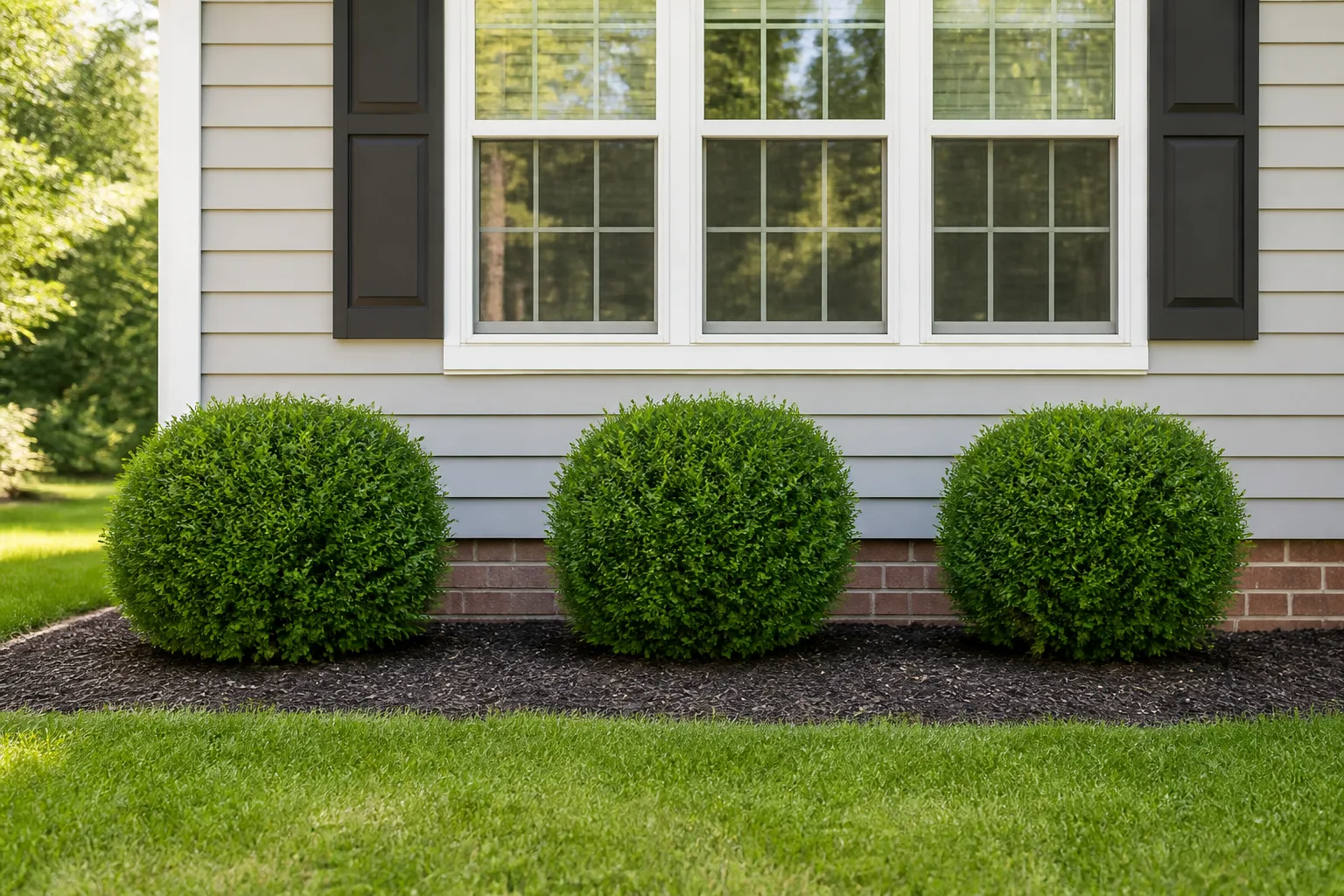
Uniform planting also creates a single point of failure. If the plants share the same pest, disease, water stress, or mature size problem, the whole row can decline together. A front bed should frame the house and guide people to the door, not behave like a hedge-shaped sticker applied after construction.
Build a layered front bed instead
Start with one or two structural plants that fit the mature scale of the house. Add a lower layer of shrubs, grasses, or durable perennials, then a groundcover or mulch that closes the soil without touching trunks or crowns. The layers should overlap visually, but they still need enough air, light, and access for pruning and watering.
The RHS border-planning guide recommends considering soil, aspect, climate, exposure, season of interest, mature spread, and maintenance before planting. Its advice to repeat groups of plants is especially useful: repetition creates cohesion without requiring a mirror image. In a small bed, two or three repeated plant groups can look intentional; six unrelated specimens can look accidental even when each is attractive.
For a quick update, keep healthy shrubs that are correctly scaled and remove only the plants that block windows, crowd the walkway, or demand constant correction. Underplant with a different texture rather than buying a new row of the same plant. Ornamental grasses, regional evergreen groundcovers, and long-lived perennials can make a foundation bed feel layered, but check their mature width and spread before you trust a nursery tag’s small container size.
2. The All-or-Nothing Turf Lawn
A single-species lawn is not automatically a failure. Turf earns its place when it is used for play, pets, walking, entertaining, or a clear visual opening. It becomes an expensive habit when it occupies sunny or irrigated space that nobody steps on, while nearby beds are thirsty because the entire property is being managed around a uniform green carpet.
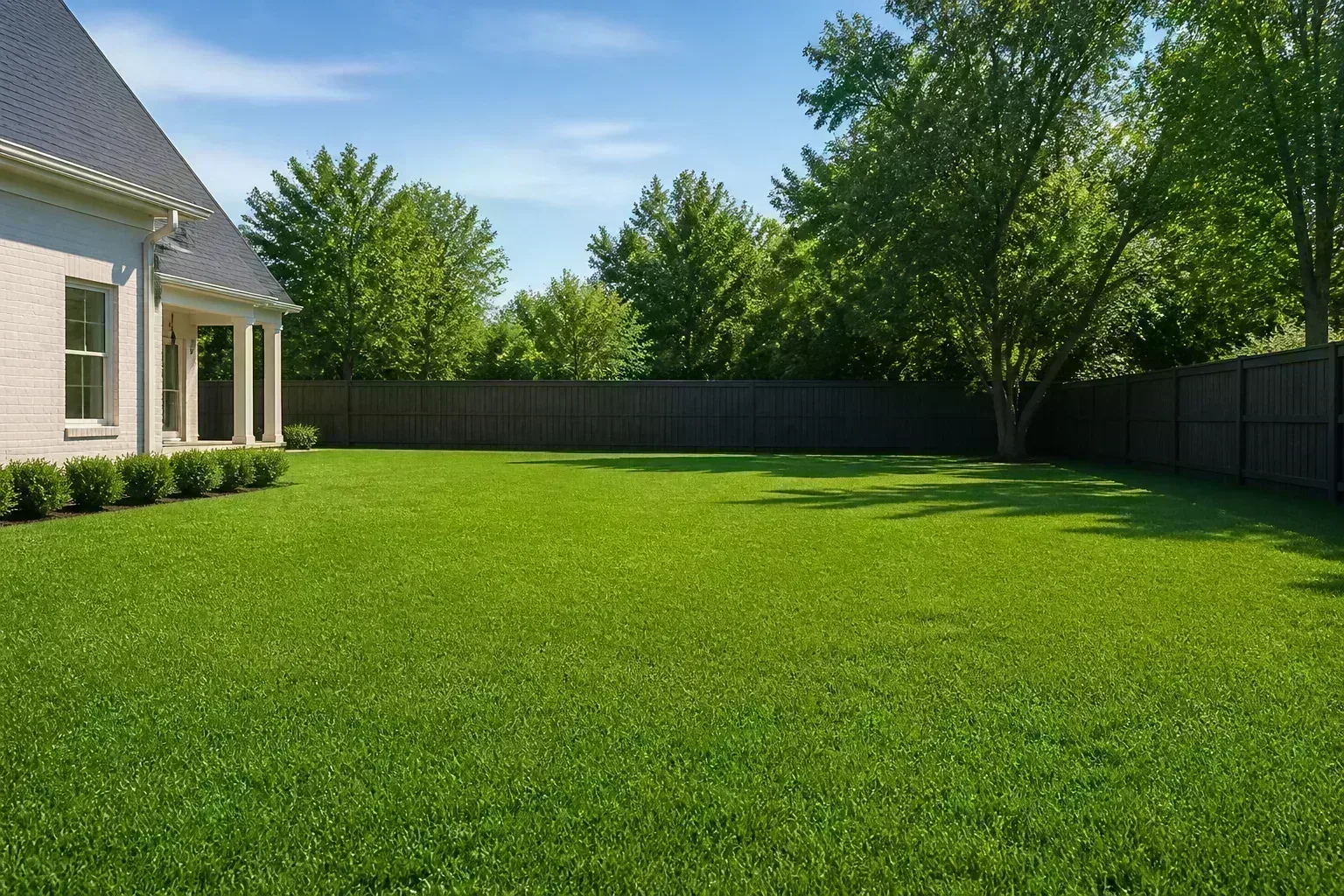
The National Park Service notes that lawns have replaced huge areas of habitat and that native plants can rebuild food-web relationships for insects and birds. That is a reason to reduce unnecessary turf, not a reason to remove the patch where your children play soccer or where a wheelchair needs a stable route. A smaller, functional lawn surrounded by richer planting can be more resilient than a neglected attempt at total lawn replacement.
Keep lawn where it earns its footprint
Draw a line around the turf you actually use. Convert the leftover corners, narrow strips, steep slopes, and spaces under trees into beds, paths, or groundcover only after checking their light and drainage. Keep a clean transition so the new planting reads as intentional rather than as grass that simply stopped being mowed.
If you keep turf, match the grass to the regional climate and raise the mower to the tallest height recommended for that species. The EPA explains that taller grass can support deeper roots, shade the soil, and reduce evaporation; watering only when the lawn needs it is more useful than chasing the same color through every heat wave.
For a lawn alternative, compare several candidates rather than assuming clover works everywhere. Regional sedges, low-growing native groundcovers, mixed grasses, or a planted bed may fit better depending on foot traffic, shade, winter conditions, and local weed pressure. Penn State Extension describes native groundcovers that can stabilize slopes and reduce maintenance, but it also stresses site preparation and watering new plants until they establish.
3. Bright Red Dyed Mulch
Bright red mulch is primarily a visual choice, and many gardeners are moving toward quieter materials that let foliage, bark, stone, and flowers carry the color. The problem is not that every red chip harms a garden; it is that a saturated, uniform band can overpower the planting and encourage people to treat mulch as permanent flooring instead of a temporary soil cover that needs replenishing.
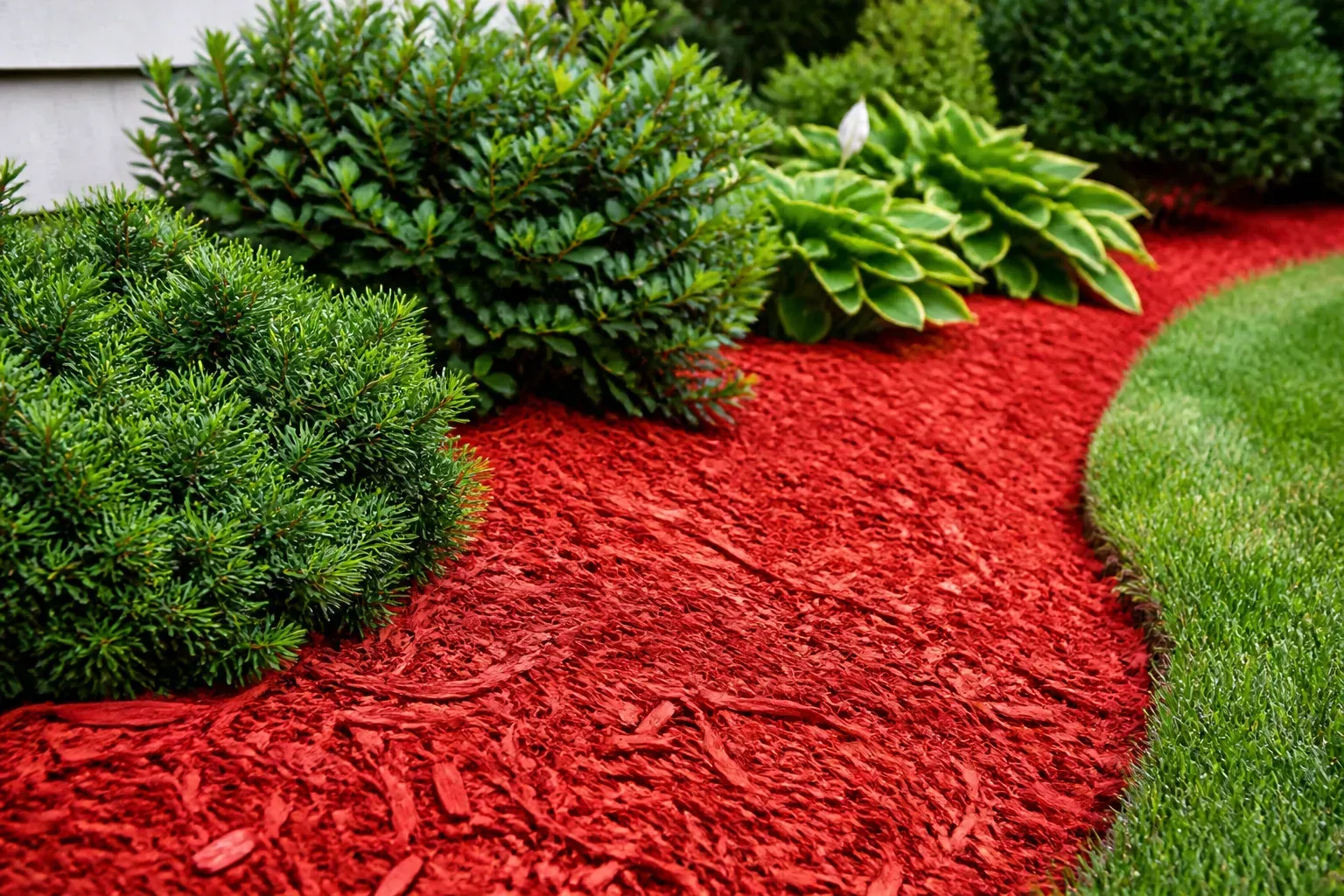
There is also a sourcing question. NC State Extension says there is no evidence that the dyes themselves are toxic, but recycled wood in colored mulch can come from pallets, construction scraps, or other sources that may have been contaminated. That distinction matters: do not repeat a blanket claim about dye toxicity, but do ask the supplier what wood feedstock is used, especially near edible crops, children’s play areas, or soil you plan to amend.
Choose mulch by source, texture, and depth
For most ornamental beds, look first at undyed arborist chips, shredded bark, leaf mold, pine needles, or clean composted leaves. The right choice depends on the bed: coarse chips resist compaction and look natural in a shrub border, while fine shredded material can mat and shed water if it is applied too thickly. A local extension office can help you match mulch to fire risk, slope, soil, and plant type.
Apply mulch to moist, weeded soil and measure the depth instead of dumping by eye. A practical starting range is 2 to 3 inches for many beds, adjusted for the material and local guidance; the EPA notes that roughly 3 to 4 inches provides coverage for many plants but warns that excessive mulch can restrict water flow. Leave a visible gap around trunks, crowns, and stems, and pull back old mulch before adding more if the bed is already deep.
The replacement is not “black mulch everywhere.” Natural color, consistent depth, and a clear bed edge usually make a bigger design improvement than buying a darker product. If existing mulch is healthy and the source is known, let it decompose and transition gradually rather than paying to remove it for fashion alone.
4. Rock Mulch Everywhere
Decorative rock looks permanent, which is exactly why it gets used as a shortcut. It does not need annual topping up in the same way organic mulch does, but it is not maintenance-free: weeds still germinate in dust and leaf litter, leaves are awkward to rake, and stone can migrate onto lawns or become hot enough to stress plants.
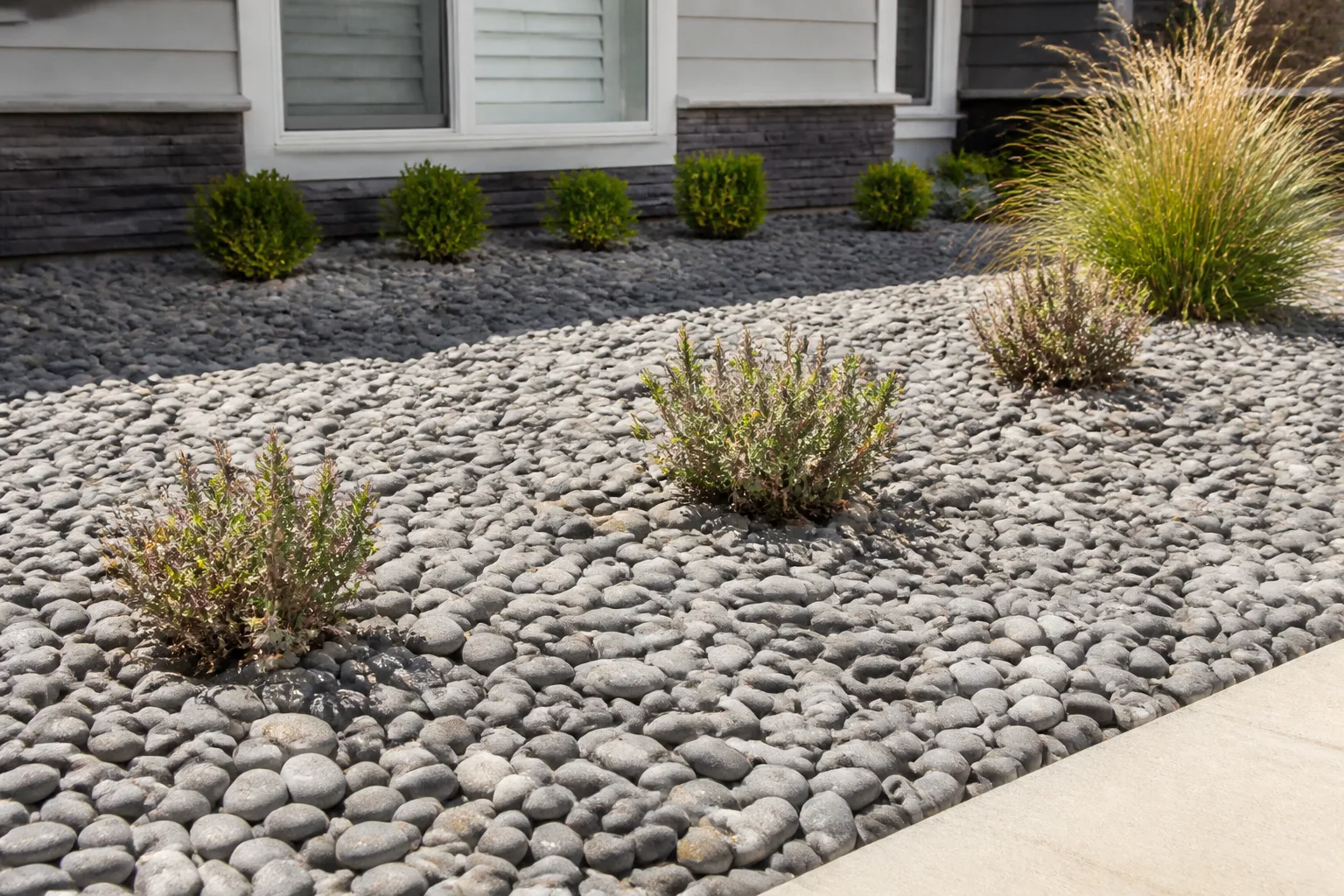
The EPA’s water-smart landscaping guidance specifically cautions against rock mulch in sunny areas or around plants that are not adapted to arid conditions because rock can radiate heat and increase water loss. That is a site warning, not a universal ban. Gravel can be a sensible surface for a path, a drainage feature designed for that purpose, an erosion-control detail, or a carefully planted dry garden with plants that genuinely tolerate the exposure.
Use stone where it solves a real problem
Before covering a bed with rock, answer three questions: what will keep weeds from arriving, how will you refresh organic matter, and what will happen to the soil temperature in August? If the answer to all three is “I hope the rock handles it,” use an organic mulch or living groundcover instead.
Keep stone away from plants that prefer cool, evenly moist soil, south- and west-facing walls that already radiate heat, and beds where fallen leaves are the main source of organic matter. Use a narrow gravel path, a small dry-crevice planting, or a clean transition at the edge of a patio instead of a full blanket over the root zone.
If you already have rock mulch, do not remove it blindly in midsummer. Start by raking out leaf litter, checking the soil under a stone, and observing whether plants are wilting or roots are exposed. You can remove the rock from the hottest bed in stages, add compost only when a soil test or planting plan supports it, and use a regional organic mulch as the replacement.
5. Native Plants as a Purity Test
Native plants deserve a larger role in residential landscapes because they are part of local food webs and can be well matched to local conditions. But “native” is not a substitute for right plant, right place. A plant native to your state can still fail in compacted clay, bake beside a south wall, spread too aggressively for a small bed, or need more water than the site can provide.
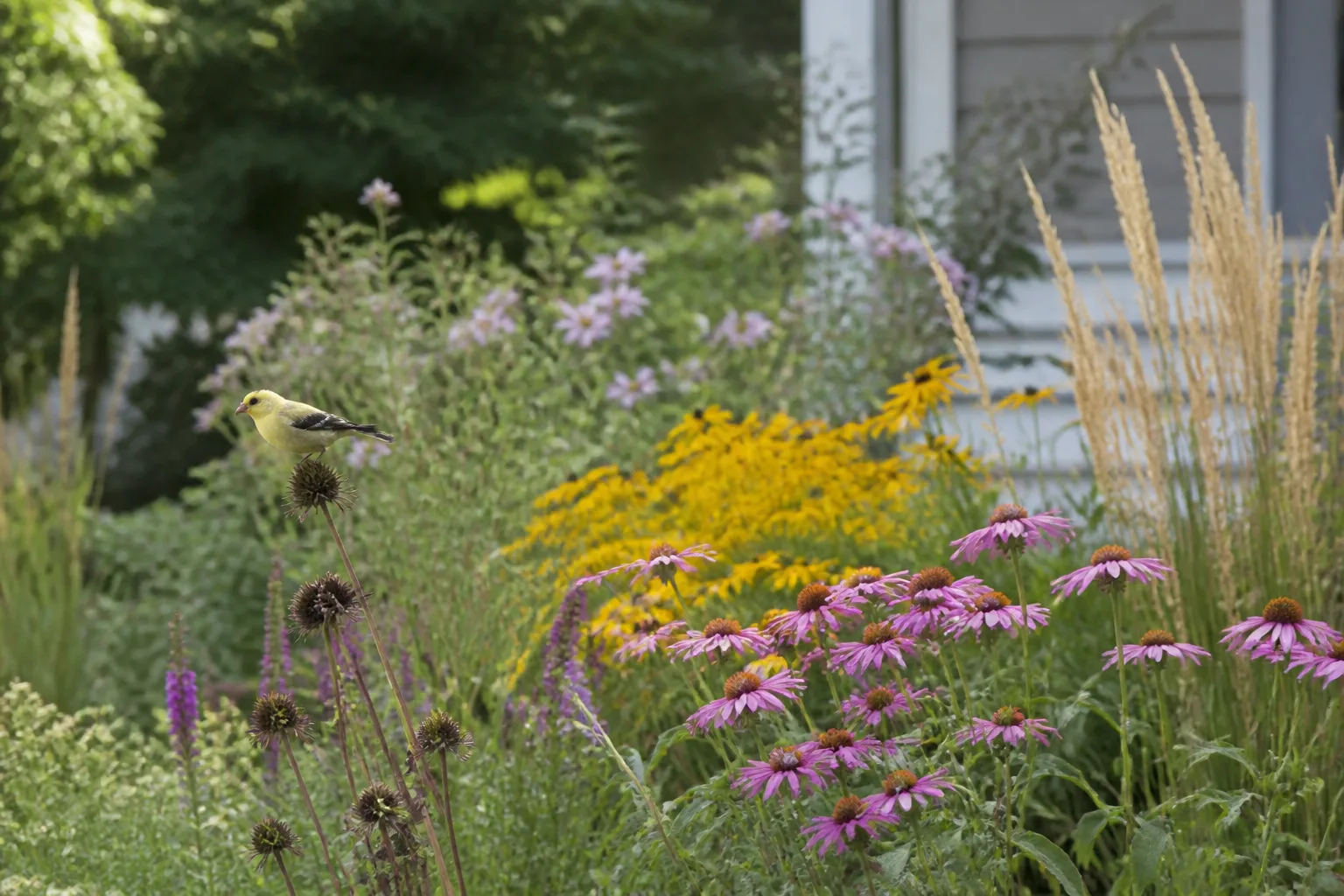
The National Park Service explains why local plant relationships matter: many insects depend on particular host plants, and those insects feed birds and other wildlife. At the same time, ecological garden guidance from Joe Gardener makes a useful practical point: a yard does not have to be 100 percent native to support wildlife. A diverse, site-fit planting that includes regional natives, well-behaved nonnatives, food plants, and useful structure can be more successful than a purity test that leaves the homeowner overwhelmed.
Build a regional plant palette
Begin with a local plant finder, native plant society, botanical garden, or university extension resource. Filter candidates by sun, moisture, soil, mature size, bloom season, winter structure, deer pressure, and whether the plant is invasive in your area. The goal is a palette, not a shopping list: choose a few plants for structure, a few for seasonal flowers, a few for ground-level cover, and at least one layer that protects soil.
Avoid turning one “native” species into a new monoculture. Penn State Extension recommends groups or drifts rather than a single species covering an entire challenging area because one pest or disease can otherwise damage the whole planting. Leave room for new plants to establish, then fill gaps with repetition instead of adding a different specimen every time you visit the garden center.
Plan for the first year honestly. Even drought-tolerant natives need regular watering while roots establish, and a pollinator bed may look sparse before plants mature. Keep a defined path or mown frame, remove invasive plants, and leave some seed heads and stems standing when they are safe and compatible with your household; habitat value and visual order can coexist.
6. Mirror-Image Symmetry
Symmetry is a design language, not a gardening mistake. Formal beds can be handsome, easy to understand, and appropriate beside a symmetrical house. The trouble starts when every bed is mirrored without regard to slope, sun, mature plant size, or the amount of clipping the household can sustain.
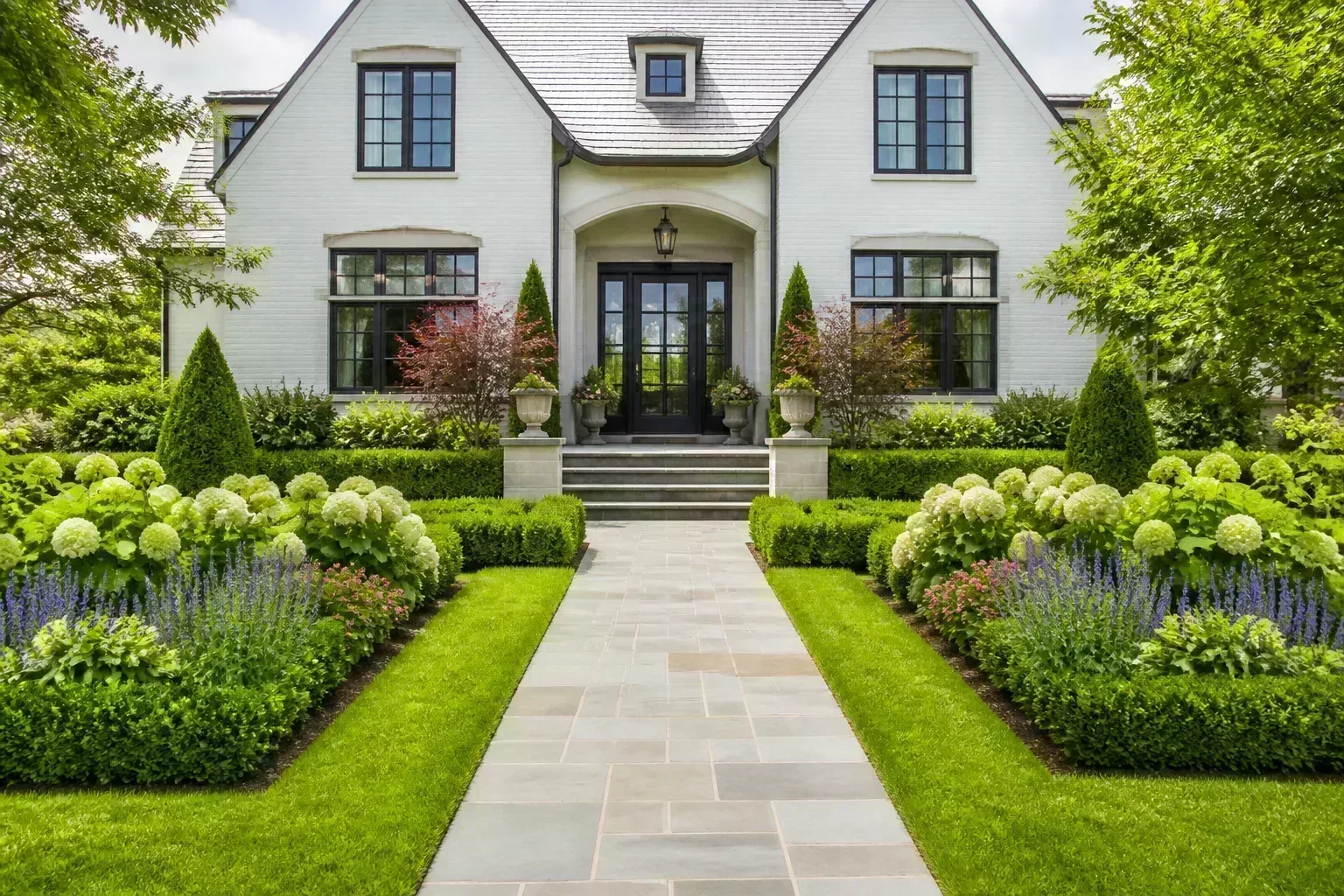
A mirror-image plan doubles mistakes. Two shrubs that fit on paper may receive different afternoon heat; two identical beds may drain differently; and a clipped edge that looks crisp in May can become a weekly task after summer growth begins. Formality should be chosen because you enjoy its maintenance rhythm, not because a straight line is assumed to be easier.
Use rhythm without duplication
Create a visual rhythm with repeated groups, a limited color or foliage palette, and a few reliable lines. Let the groups shift slightly around a tree, bend with a path, or stop where a downspout changes the soil. RHS design guidance recommends planning for year-round interest, mature spread, seasonal color, and maintenance; those checks make a naturalistic plan feel designed rather than random.
Curves can be easier to live with when they are broad and legible. A smooth bed edge gives the mower a clear route, while a narrow trench or durable edging can keep soil and grass from trading places. Avoid a string of tiny scallops, isolated islands, or angles that force a wheelbarrow through a planting bed just to reach the compost pile.
A Summer Retrofit Plan That Won’t Waste Money
The fastest way to make a landscape more current is not to replace everything at once. Phase the work according to plant stress, soil conditions, budget, and what you can observe. A staged plan also lets you test whether a lawn alternative, mulch, or planting style works before repeating it across the property.
What to change this weekend
- Photograph the yard from the street, the front door, and the rooms that look toward it. Mark sun, water flow, paths, utilities, and the turf you actually use.
- Remove obvious litter, invasive plants, dead branches, and weeds that are setting seed. Do not remove a healthy mature tree or shrub until you know the shade, privacy, and cooling function it provides.
- Edge one bed with a clean, broad line and pull mulch away from trunks and crowns. This can make the space look intentional while you plan the larger planting.
- Order a soil test and make a short list of plants that fit the site. Buy fewer, stronger plants from reputable local sources rather than filling every gap with impulse purchases.
- Convert one low-use turf patch or one overheated rock bed first. Track watering, weeds, bloom, wildlife, and time spent for the rest of the season.
This sequence separates cosmetic work from irreversible work. It also gives you a baseline: if a new bed still needs daily watering or constant hand weeding, you have evidence to adjust the plant list, irrigation zone, or mulch before scaling it up.
What to postpone until cool weather
Avoid major transplanting, broad lawn removal, or bare-root planting during the hottest, driest stretch unless you can provide reliable establishment care and the plant is suitable for that timing. Penn State Extension recommends spring or fall for most groundcover installation so plants can establish before summer stress; local climate and nursery availability may change the exact window.
Delay any full-bed excavation until you know where water goes and whether the soil is compacted. Do not bury a drainage issue under fresh rock or add a thick layer of compost without a reason. If a slope erodes, solve runoff and root anchoring first; appearance is the last layer of that repair.
How to Judge a “Modern” Landscape in Five Years
Ignore the trend label and inspect performance. In five years, a successful update should still have a clear place for the activities that matter, plants that fit their mature space, soil that absorbs rain, and a maintenance routine that a real person can keep. It should not depend on weekly rescue watering, constant shearing, or replacing a decorative material every time it fades.
Measure five things after each growing season: water frequency, hours spent weeding and edging, plant losses, usable outdoor space, and the number of months the landscape has structure or bloom. You can add habitat observations—birds, butterflies, caterpillars, or beneficial insects—but treat them as signals, not a guaranteed scorecard. Wildlife responds to the wider neighborhood as well as to one yard.
Ask whether each material is doing a job. Turf should be playable, stone should improve access or drainage, mulch should protect soil, a hedge should provide structure or privacy, and a native plant should fit the site rather than merely carry a label. When an element has no job beyond matching a picture, it is the first candidate for a smarter replacement.
Conclusion
The six summer landscaping trends worth leaving behind are not individual products or styles so much as automatic decisions: identical foundation shrubs, lawn without a purpose, loud dyed mulch, rock over every bed, native plants treated as a purity test, and symmetry that ignores maintenance. The better direction is a landscape designed around use, site conditions, plant diversity, and a level of care you can sustain.
Start with one bed. Keep what works, remove what creates heat or needless work, choose plants for the actual soil and light, and give new plantings time to establish. A yard does not need to look wild or formal to be successful; it needs to perform beautifully for the people, plants, and wildlife that share it.