9 Perennial Groundcovers to Plant in Fall
Find fall-ready groundcovers for sun, shade, dry soil, or woodland beds, plus a frost-countdown rule and planting steps that help new roots survive winter.
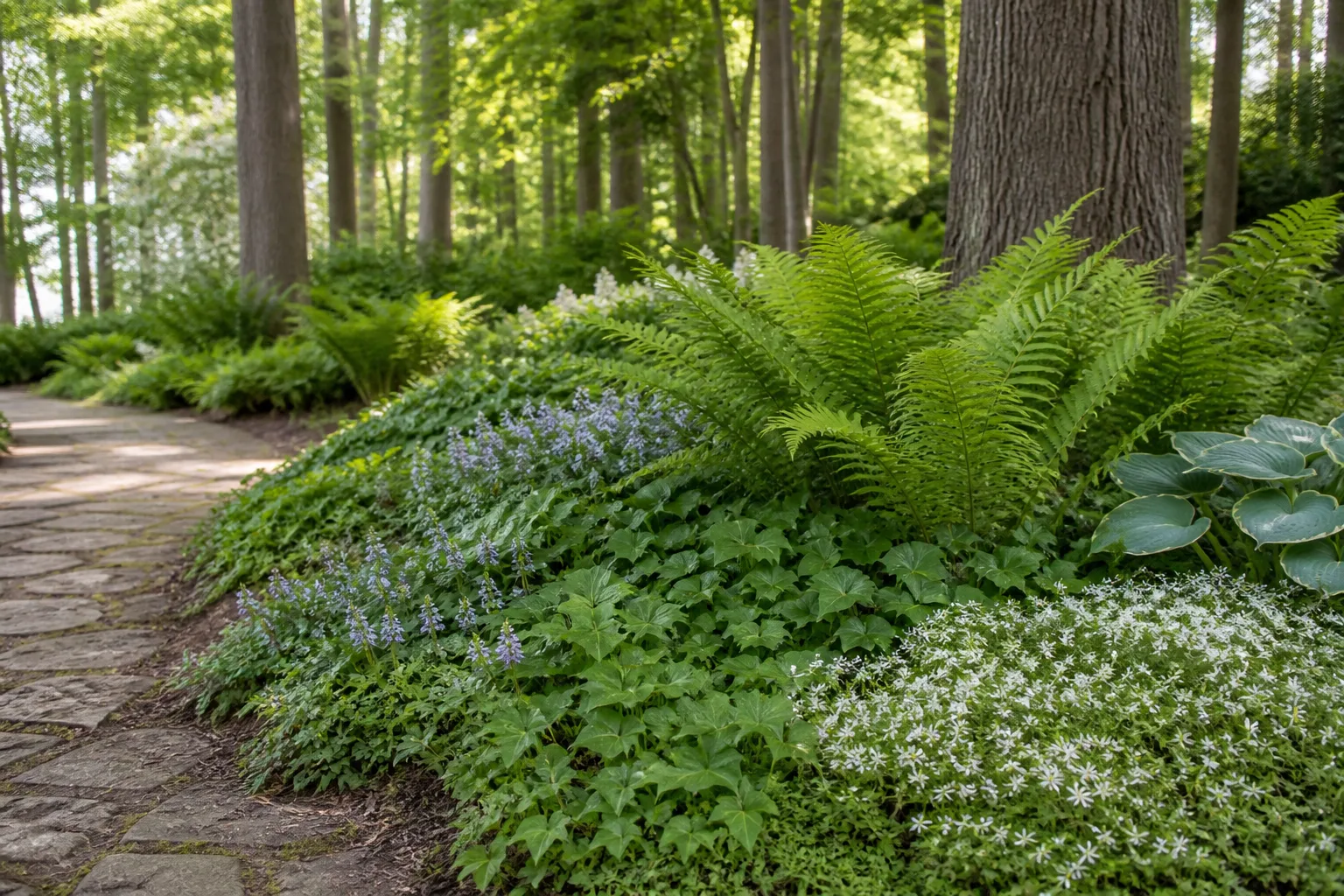
If a garden bed is losing its color in fall, a perennial groundcover can do more than fill an empty patch. The right one can hold soil on a slope, soften a path, keep a tree’s root zone from looking bare, or add berries and foliage after the main flower show is over.
Fall is often a good time to plant these low-growing perennials because the air is cooler while the soil can remain warm enough for root growth. But “plant now” is not a universal date. A plant in a mild, rainy October may have weeks to settle; the same plant bought just before an early freeze may need to wait for spring.
What “plant now” really means in fall
The safest fall planting decision starts with two clocks: the calendar and the weather. Check the plant’s hardiness and mature size, then count backward from your area’s average first hard frost. The Philadelphia Horticultural Society’s fall planting guide explains that cooler air reduces transplant stress while warmer soil helps roots establish, and its broad regional windows place the earliest fall planting in Zones 5 and below, mid-September through mid-November in Zones 6–8, and later fall or winter planting in Zones 8–10. Those are guideposts, not guarantees.
Use the first-hard-frost countdown
For a container-grown groundcover, aim for about four to six weeks before the average first hard frost when possible. That gives the root ball time to make contact with surrounding soil before repeated freeze-thaw cycles. Northern Gardener’s fall perennial guidance uses roughly one month before hard frost as a safe general rule, while also acknowledging that a mild autumn can stretch the window and a cold, dry winter can expose a newly planted perennial.
Use a local frost-date resource or your county extension office rather than treating a USDA zone as a planting calendar. Zones describe typical winter minimums; they do not tell you whether your yard is a cold pocket, whether the ground is waterlogged, or whether a nursery plant has been sitting rootbound in a pot for months.
Here is a practical way to decide:
| Time before average hard frost | What to do |
|---|---|
| Six weeks or more | Plant healthy, well-rooted containers and water them in thoroughly. |
| Four to six weeks | Plant if the site drains well; choose a plant that matches the location exactly and mulch after the soil cools. |
| Two to four weeks | Favor compact, locally hardy stock and protected locations; expect establishment more than rapid spread. |
| Less than two weeks or frozen soil | Wait for spring unless local guidance specifically supports dormant planting. |
The rule becomes stricter for broadleaf evergreens and conifers because their foliage can lose moisture on bright, windy winter days. Creeping juniper is hardy, but a small new plant still needs hydrated roots before the ground freezes. The same logic applies to a groundcover that is winter-hardy once established but vulnerable during its first exposed season.
Decide whether you want a fall display or a spring payoff
A flowering pot gives you an immediate result; a small plug, division, or dormant transplant may give you almost no visible change until spring. Buy a container with healthy foliage and buds if you need color before frost. Buy smaller, less-flowering plants when your priority is economical coverage next year and you are willing to spend the rest of this season building roots.
Do not judge every choice by whether it is blooming in October. Lowbush blueberry may contribute red foliage, but it is not a fast carpet. Wintergreen may look modest when planted, then hold glossy leaves and red fruit through the cold season. Foamflower and sweet woodruff are mainly spring rewards, while creeping juniper and some thyme selections offer structure or foliage rather than a dramatic late flower show.
Pick the groundcover by site, not by label color
“Groundcover” describes a job, not a single type of plant. Some choices are herbaceous perennials that disappear in winter; some are evergreen mats; lowbush blueberry is a dwarf shrub; Virginia creeper is a vigorous woody vine that can also run across the ground. The mature habit matters as much as the color on the nursery tag.
Sunny, dry, fast-draining beds
Start with creeping sedum, creeping thyme, or creeping juniper for a hot edge, gravel bed, rock garden, retaining wall, or sunny slope. American Meadows’ groundcover design guide also highlights the usefulness of low plants between stones, along walls, and around larger plantings. All three resent standing water, but they are not drought-proof on planting day. A newly installed root ball needs regular checks until its roots reach the surrounding soil.
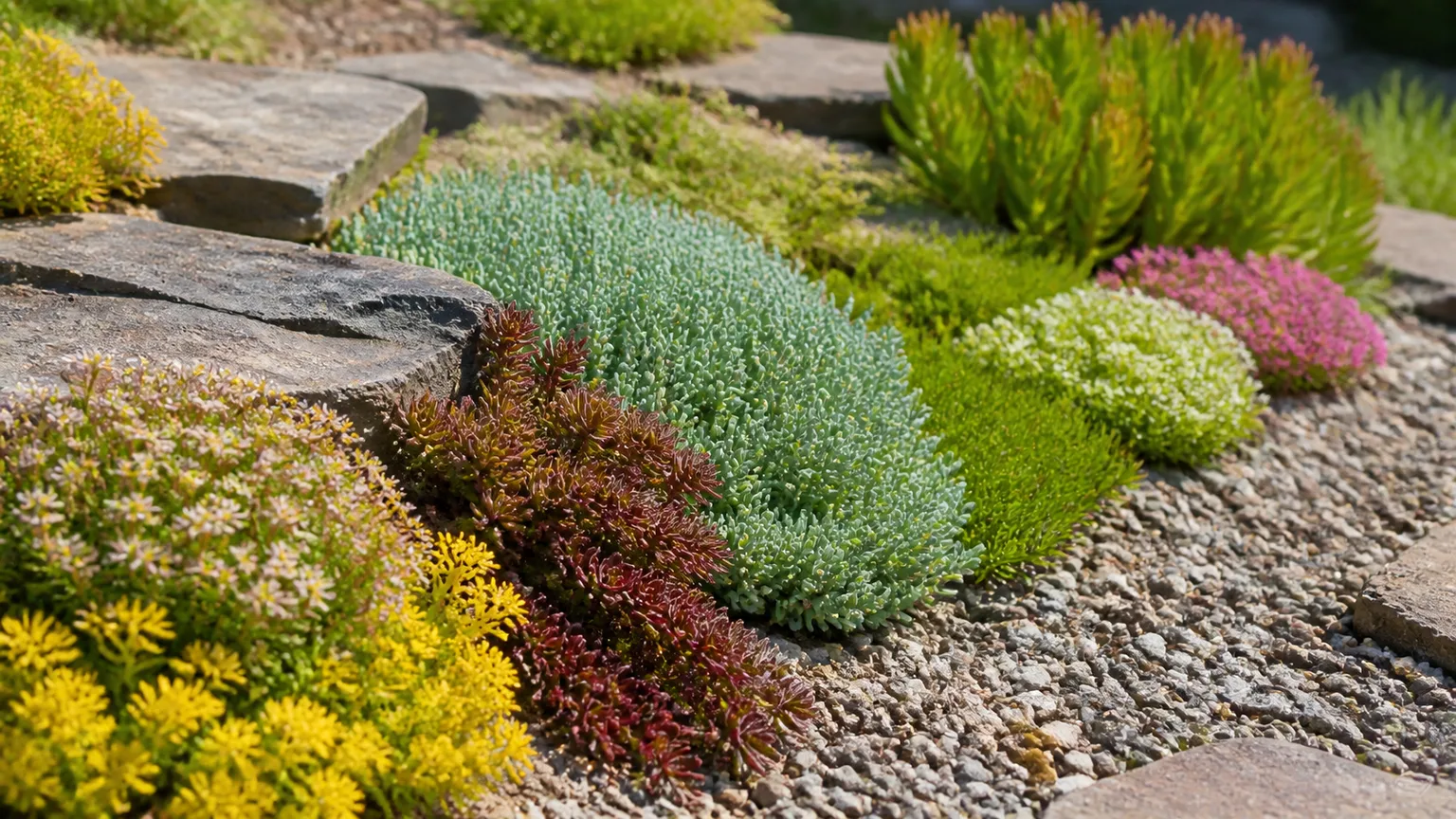
The best dry-site groundcovers are usually the worst choices for a wet clay pocket. Do not “fix” a drainage problem by adding a small mound of amended soil around the plant while leaving a bathtub of compacted soil below it. Redirect runoff, raise the planting area, or choose a moisture-tolerant plant instead.
Shady, cool, humus-rich beds
Foamflower, wintergreen, sweet woodruff, and spotted dead nettle are better candidates beneath deciduous trees or on the north side of a building. They appreciate soil that holds moisture without staying saturated. A deep shade bed can still dry out where tree roots intercept rainfall, so check below the mulch before deciding that shade means no watering.
This group also needs a spread check. Runners, rhizomes, or sprawling stems are useful when you want a colony, but they can cross a path or enter neighboring beds. Edge the planting with a clear boundary and remove runners while they are easy to see rather than waiting until the canopy is dense.
9 perennial groundcovers worth planting this fall
These nine choices cover a wide range of light, drainage, winter interest, and garden style. Hardiness ranges are broad species-level guidance; cultivars can be narrower, so read the full plant tag before buying.
1. Lowbush blueberry (Vaccinium angustifolium)
Lowbush blueberry is a short native shrub, not a uniform lawn substitute. It usually grows roughly 6 inches to 2 feet tall and can spread about as wide, with small white spring flowers, edible berries, and red-to-purple fall foliage. NC State Extension’s lowbush blueberry profile lists it across Zones 2–8 and notes that full sun encourages more flowers, fruit, and showier fall color than part shade.
The non-negotiable is soil chemistry. Lowbush blueberry wants acidic, well-drained soil with organic matter; a typical alkaline foundation bed can leave its leaves chlorotic even when the plant is watered correctly. Test the soil before planting instead of guessing with amendments, and do not place it beside plants that require frequent lime applications.
Plant two or more if fruit production matters, and give each plant room to develop a low, irregular colony. It is an excellent fit for an acidic woodland edge, native planting, or berry-friendly garden, but a poor choice for a narrow formal strip that needs immediate, dense coverage. Expect fall foliage now and a more substantial display as the plants settle.
2. Wintergreen (Gaultheria procumbens)
Wintergreen, also called eastern teaberry, is one of the most convincing choices for shade and winter interest. NC State Extension’s wintergreen profile describes it as an evergreen understory plant in the blueberry family, suited to acidic, moist, well-drained soil and capable of tolerating heavy shade. Glossy leaves, small urn-shaped flowers, and scarlet fruit give it more than one season of interest.
Space plants roughly 10 to 14 inches apart if you want them to knit into a carpet. They spread gradually rather than exploding across a bed, which makes them easier to place among woodland perennials. The red fruits feed birds and small animals, but do not treat a wildlife plant as a snack crop for children; label it clearly and follow local safety guidance if people or pets may chew on garden plants.
Wintergreen is a bad match for alkaline soil, reflected heat, or a dry bed under thirsty tree roots unless you can provide reliable moisture. In the right site, though, it is a quietly durable evergreen that keeps a shaded garden from going completely dormant.
3. Sedum and stonecrop (Sedum spp. and related Hylotelephium)
“Sedum” covers both upright stonecrops and low, creeping forms, so shop by habit rather than genus name alone. For groundcover use, look for a low mat-forming selection such as a creeping stonecrop, ‘Blue Spruce,’ or ‘Angelina,’ and confirm its mature height and spread. NC State Extension’s sedum profile notes that low-growing sedums root along stems, tolerate rocky or poor soil, and need good drainage; taller forms are a different design tool.
The reward is strong texture and color in difficult sunny spots. Depending on the selection, fleshy foliage can be chartreuse, blue-green, burgundy, or bronze, while small flowers arrive in summer. In Fine Gardening’s regional account of creeping sedums, ‘Angelina’ shifts from bright chartreuse to orange-red in fall and holds that color into winter; that is a cultivar-specific example, not a promise for every sedum sold under the name.
Plant sedum in full sun and lean, free-draining soil. Water the new plant deeply, then allow the surface to dry somewhat between checks. Sedum is drought-tolerant after establishment, but wet winter roots can rot, and even the toughest mat will not tolerate constant foot traffic.
4. Sweet woodruff (Galium odoratum)
Sweet woodruff is a fragrant, soft-textured groundcover for part shade to full shade. Whorls of green leaves and small white spring flowers make it useful beneath shrubs or around a woodland path. NC State Extension’s sweet woodruff profile describes a mature height around 6 to 12 inches, stems that can reach about 2 feet, and spread by rhizomes and seed.
That spread is both the appeal and the warning. In moist, fertile shade, sweet woodruff can move beyond the patch you planned. Plant it where a naturalized colony is welcome, keep it away from delicate clumping perennials, and pull or divide the edges in spring if it crosses a boundary. It prefers moist, well-drained soil and may go dormant during a dry summer rather than look lush all season.
Late fall planting suits sweet woodruff because the foliage is not being asked to carry a hot-weather transplant through summer. Still, water the plant into the soil and keep the crown from sitting in a leaf-packed puddle. The main color payoff is spring, with a low green carpet afterward.
5. Virginia creeper (Parthenocissus quinquefolia)
Virginia creeper can be a superb native groundcover for a large slope or woodland edge, but it is not a polite little edging plant. NC State Extension’s Virginia creeper profile describes a vigorous woody vine that can reach 30 to 50 feet or more, climb by adhesive holdfasts, and also run across the ground. Full sun usually produces the best red fall color, while the plant tolerates part shade and a wide range of well-drained soils.
Use it where the mature size is an advantage: erosion-prone banks, naturalized edges, or a sturdy trellis that is not attached to a painted wall. Do not plant it against shingles, siding, gutters, shutters, or wiring. Holdfasts can be difficult to remove, and unchecked vines can cover structures faster than a small nursery plant suggests.
This choice also needs a safety note. NC State Extension rates the fruit as highly poisonous to humans and warns that eating it can be fatal. Its berries support birds and small mammals, but that wildlife value does not make the plant suitable beside a play area, edible garden, or path where children may pick the fruit. If you choose it, mark the planting, keep it pruned to its assigned space, and treat the five-leaflet identification as a botanical description—not a safety guarantee.
6. Foamflower (Tiarella cordifolia)
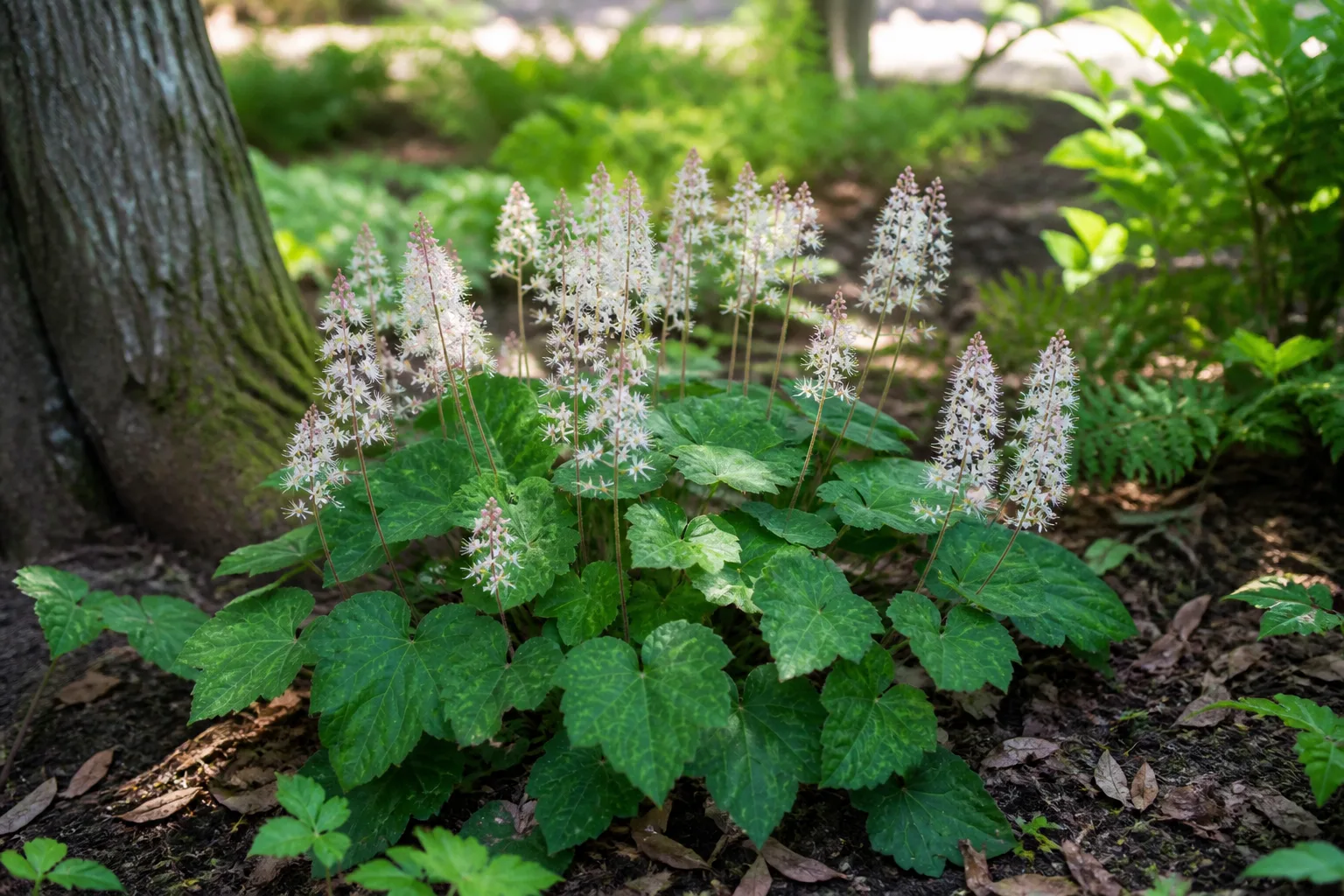
Foamflower is a native eastern perennial for cool shade and moist woodland soil. Its heart-shaped leaves form a low colony, and airy white flower spikes rise in spring. NC State Extension’s foamflower profile lists the species across Zones 3–8 and notes that it is not drought-tolerant, preferring humus-rich, neutral to slightly acidic soil.
Use foamflower beneath deciduous trees, along a shaded path, or at the front of a bed where its foliage can spread without being buried by taller plants. It expands through slender runners, so it can fill in naturally, but give young plants time. The extension profile notes that plantlets should be allowed at least two growing seasons to establish their own roots before separating them from the mother plant; that is a good reminder not to force instant division or instant coverage.
Foamflower is a next-spring investment rather than a late-fall flower fix. Keep the soil evenly moist after planting, especially where tree roots steal rainfall. If your shade is dry and the soil is compacted, improve the bed first or choose a more drought-tolerant plant.
7. Creeping thyme (Thymus serpyllum)
Creeping thyme is the choice for sun, gritty soil, and low-traffic paths. NC State Extension’s creeping thyme profile describes a prostrate, aromatic plant that tolerates poor, sandy, rocky soil and dry conditions, with tiny pink-to-purple flowers that can appear from June into September. Depending on winter severity, the foliage may remain evergreen or become less full.
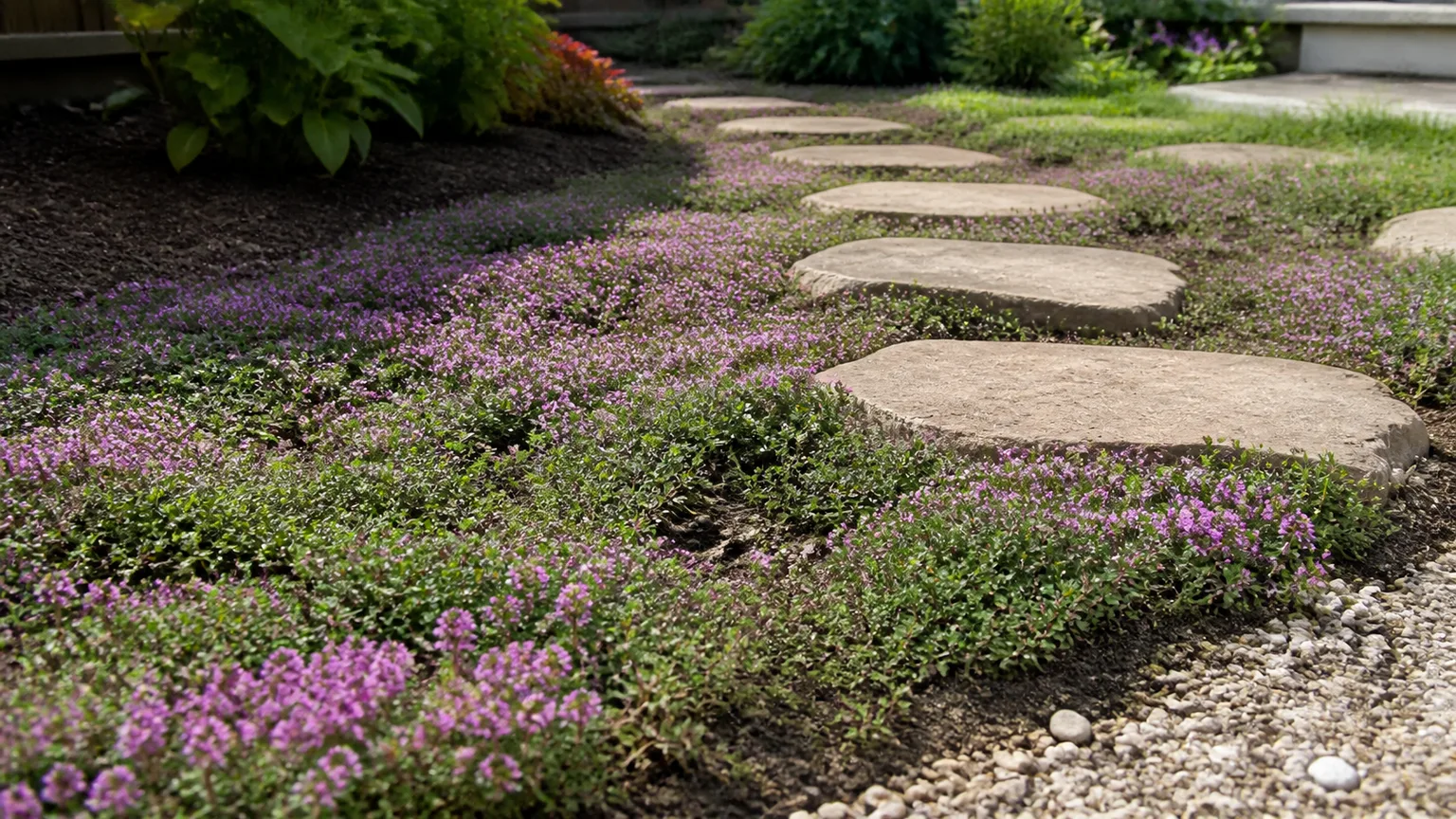
It looks especially good between stepping stones, spilling over a rock edge, or softening the line between gravel and a bed. Do not sell it to yourself as a durable lawn for regular walking. The plant tolerates occasional contact, but repeated traffic breaks stems and opens bare soil where weeds can return.
Water it regularly while roots establish, then reduce irrigation as the soil dries between drinks. Overwatering is the more common mistake in a fall planting: NC State Extension notes that creeping thyme is susceptible to rot in wet or poorly drained soil. Choose the driest workable site in this list, not the dampest corner that needs filling.
8. Spotted dead nettle (Lamium maculatum)
Spotted dead nettle brightens a shady bed with silvery markings and small spring-to-summer flowers. NC State Extension’s spotted dead nettle profile describes a fast-growing mat around 3 to 9 inches high and up to 2 feet wide, best in shaded, evenly moist but well-drained soil. In mild-winter areas it may stay evergreen, while colder gardens may see foliage loss or winter damage.
It spreads through sprawling stems that root where they touch the ground. That makes it useful for quick coverage, but it also means you should leave a small margin around paths and neighboring plants. Starter plants may be spaced 6 to 10 inches apart for faster fill, but spacing closer is not a substitute for removing weeds before planting.
Avoid compacted, wet soil and hot, exposed positions. In humid summers, mass plantings can develop bare patches; cutting back damaged growth can stimulate fresh foliage, but do not use a struggling plant as evidence that every shade bed is suitable. Give it air, drainage, and an edge you can reach.
9. Creeping juniper (Juniperus horizontalis)
Creeping juniper is a large-scale evergreen groundcover for sun, slopes, rock gardens, and retaining walls. NC State Extension’s creeping juniper profile describes a North American native that can grow roughly 6 inches to 1.5 feet high while spreading 4 to 10 feet, with some cultivars taking on a purple tinge in winter. It tolerates drought, deer, salt, rocky soil, and urban conditions once established.
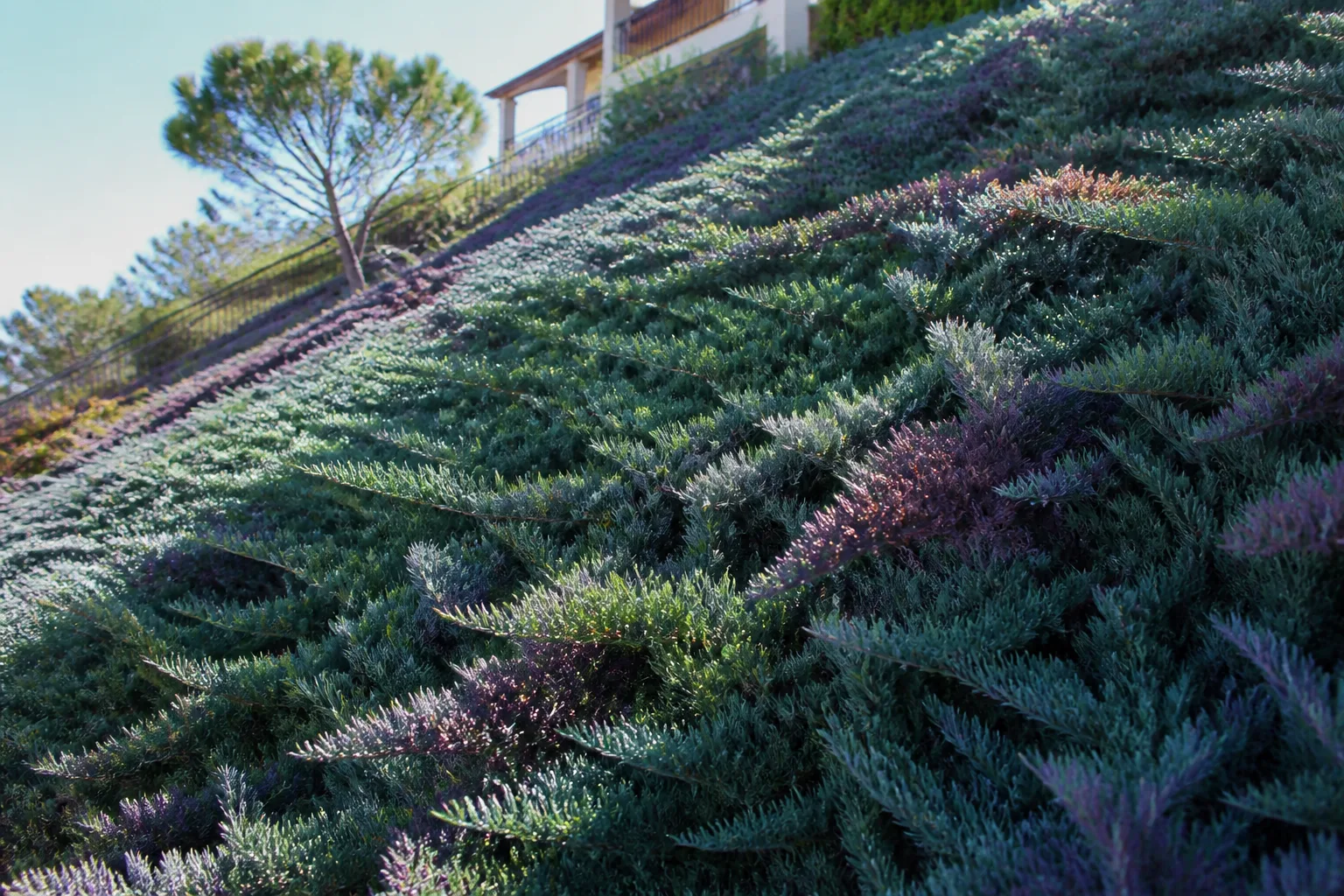
The mature width changes everything about planting. A small pot may look like it belongs 18 inches from the next plant, but the species profile recommends much wider spacing for its full spread; use the cultivar’s tag instead of copying the spacing from another juniper. Set plants far enough apart that their mature branches meet without piling into one tangled mass.
Choose a site with full sun and reliable drainage. Creeping juniper is a better answer for a dry slope than for a shaded, irrigated flower bed. It offers year-round structure rather than a flower show, and its woody stems are not easy to remove once established, so place it where a permanent evergreen mat is genuinely useful.
A planting routine for a late-season transplant
Fall planting is a root-contact job. You are not trying to force a flush of tender growth before winter; you are trying to hydrate the plant, remove air gaps, keep the crown at the right depth, and give roots a stable soil environment.
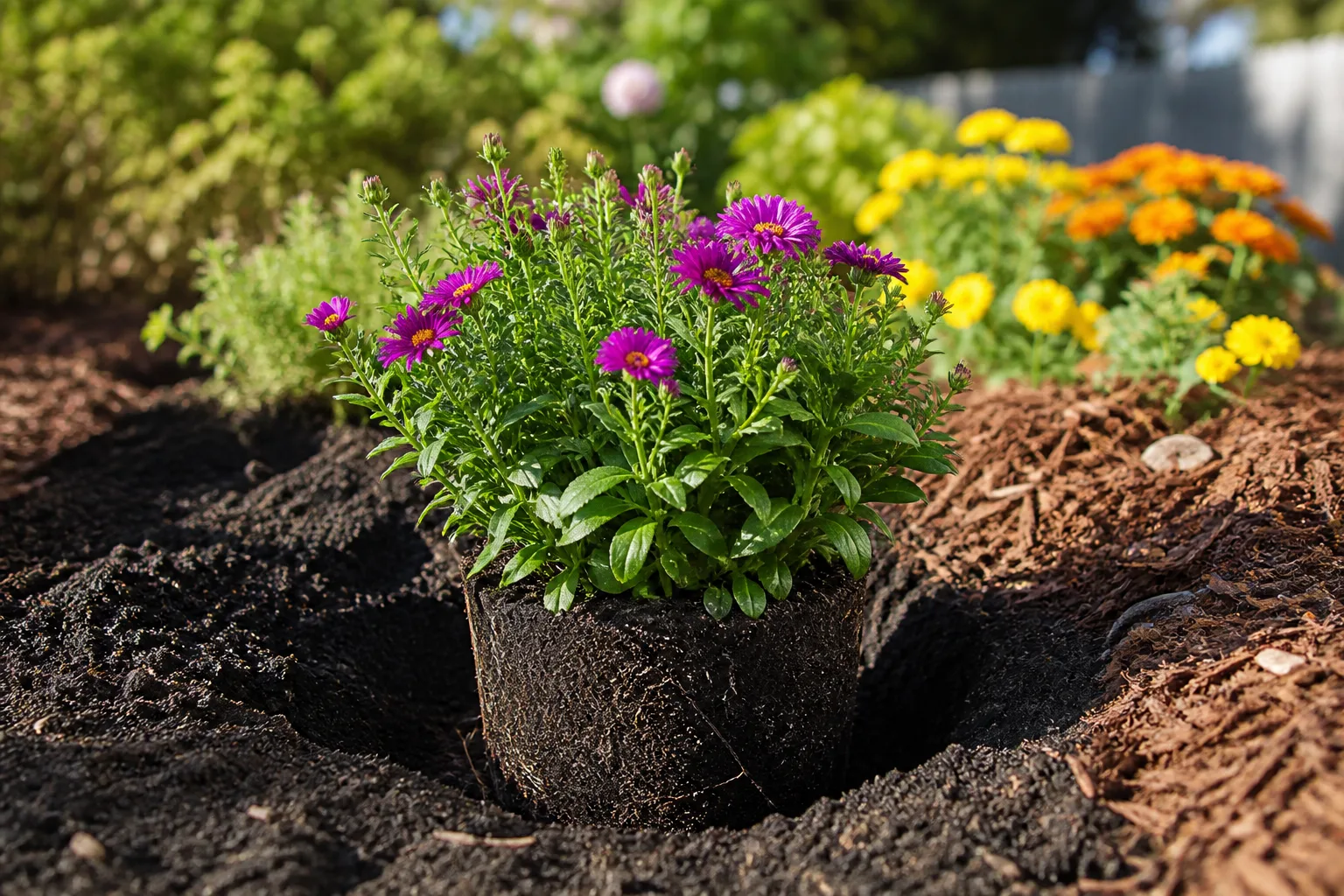
- Water the container first. A hydrated root ball is less likely to crumble, and the first irrigation can move through it instead of running around a dry plug.
- Clear the whole planting area. Remove perennial weeds, grass crowns, and thick roots before the groundcover spreads. Young plugs rarely overpower established weed roots.
- Dig wide, not deep. The hole should allow roots to move outward. Set the crown at the same level as it was in the pot; deep planting traps moisture around the crown.
- Inspect the roots. If the outer inch is a tight circling mat, tease apart a few roots or make shallow cuts through the outer surface. Do not shred a small root ball.
- Backfill with native soil. Mix in compost only where the bed genuinely needs organic matter. Do not create a rich, water-holding pocket around a plant adapted to lean, mineral soil.
- Soak slowly and settle. Water until the surrounding soil closes around the root ball, then check that the crown has not sunk. Refill any air gap with the soil you removed.
- Mulch after watering. Spread a thin layer of shredded leaves or fine bark over the root zone, keeping it a few inches away from the crown and stems. A mulch ring is insulation, not a blanket piled onto the plant.
New plantings need more frequent checks than established groundcovers. Push a finger below the surface or lift a little soil near the root ball; do not water because the calendar says Tuesday. During a warm, windy autumn, a small pot may need water again within days. During steady rain, adding more water can create the very winter-wet problem that kills thyme, sedum, or juniper.
Winter care that improves survival
The best protection is often simple: go into winter with hydrated roots, good drainage, and no smothering debris. Philadelphia Horticultural Society guidance recommends deep watering, mulch around new plantings, and skipping traditional nitrogen fertilizer in fall because tender new growth can be damaged by frost.
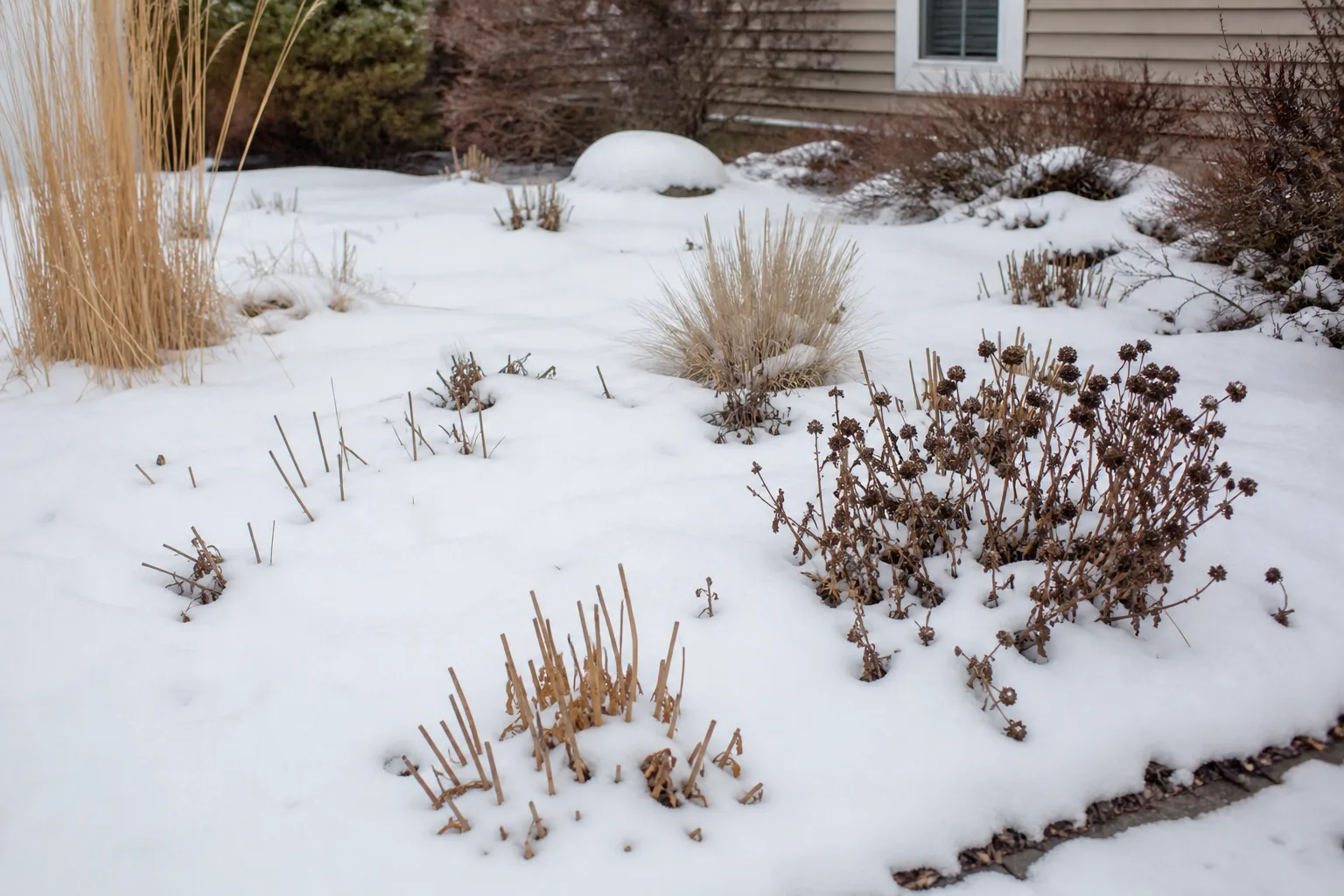
Keep fertilizer out of the late-season rescue plan. If a soil test shows a genuine nutrient need, follow the test and local recommendations, but do not push a newly moved plant into soft foliage when its remaining job is root establishment.
Watch the leaf layer as well. Melinda Myers’ fall and winter groundcover guidance advises removing large fallen leaves from groundcovers because they can block light, hold excess moisture, and suffocate the plants underneath. Shred suitable leaves for mulch elsewhere, but do not allow a thick, wet mat to sit over low evergreen foliage or a newly planted crown all winter.
In very cold regions, a light mulch layer can reduce temperature swings around shallow roots. Avoid heavy, airtight coverage that stays wet. Snow is usually better left in place as an insulating layer unless it is breaking a woody plant or blocking a path; do not repeatedly walk on frozen groundcover.
After a winter thaw, inspect rather than tidy by reflex. Brush away collapsed leaves, check for heaving, press a lifted root ball back into firm soil, and wait until the soil is workable before replanting. Remove only dead or diseased material. Many groundcovers look unimpressive in early spring and recover once the soil warms.
Conclusion
The best perennial groundcover to plant in fall is the one whose roots can spend the remaining mild weeks in the soil they actually prefer. Choose creeping thyme, sedum, or juniper for sunny, sharply drained ground; choose wintergreen, foamflower, sweet woodruff, or dead nettle for cool shade; and reserve lowbush blueberry for acidic soil and Virginia creeper for large, controlled spaces.
Before you buy, check the plant’s scientific name, mature spread, cultivar hardiness, and your average first hard frost. Then plant at the right depth, water the root ball into the soil, hold back late nitrogen, and keep leaves from smothering the bed. That modest preparation is what turns a last-minute fall purchase into living cover that can return with color, texture, berries, or flowers for years.