Perennial Ryegrass: Pros and Cons for Lawns
Perennial ryegrass germinates fast and handles wear, but it will not fill bare spots on its own. Compare its climate limits with fescue and bluegrass.
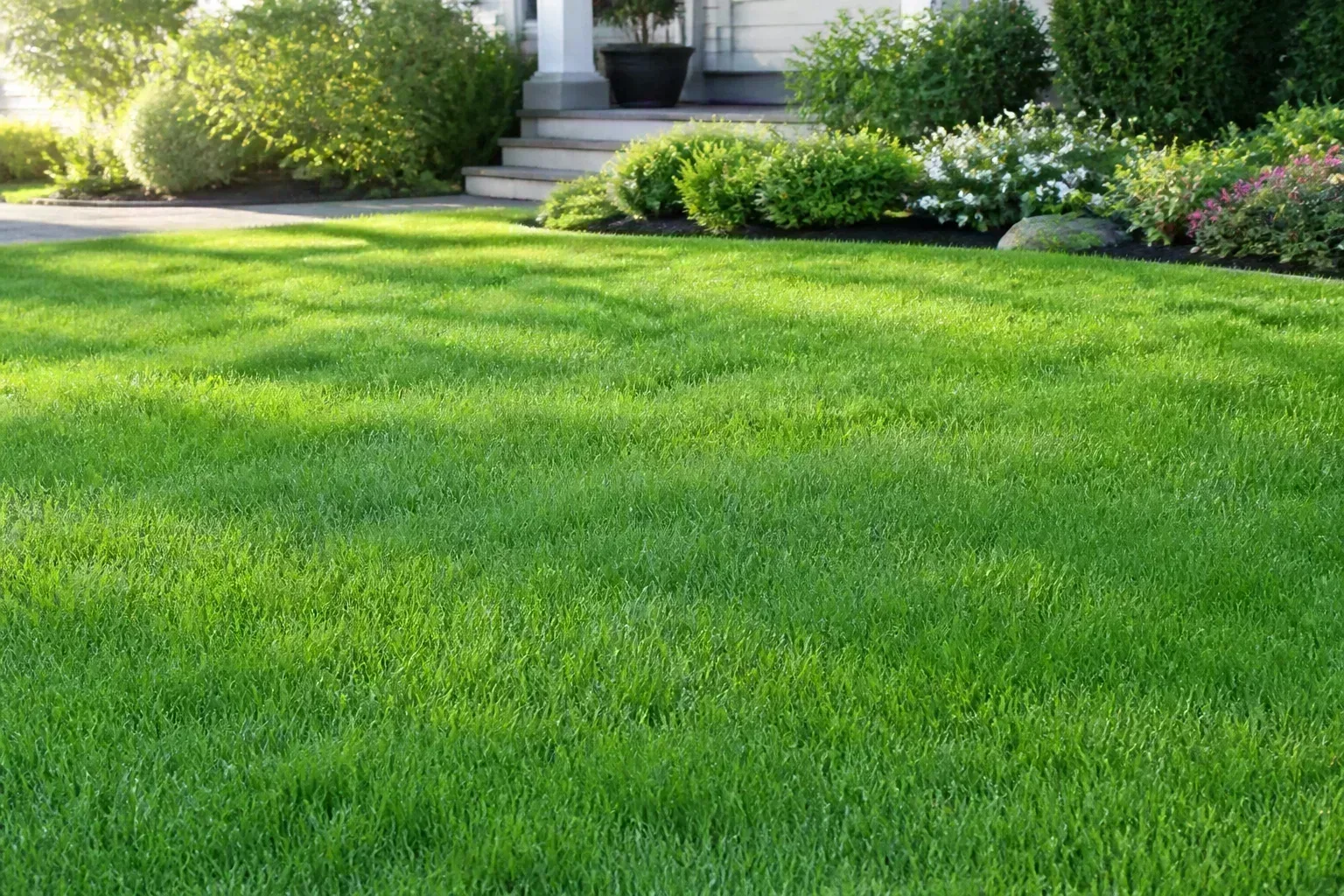
The quick answer: fast cover, with limits
Perennial ryegrass is a useful lawn grass when you need quick establishment, a fine dark-green look, or a cool-season species that stands up to frequent use. It germinates faster than many common lawn grasses, which makes it helpful in a seed blend, for repairing thin turf, and for adding winter color over a dormant warm-season lawn.
Its biggest limitation is easy to miss: perennial ryegrass grows in bunches. It does not send out rhizomes or stolons to creep sideways, so a bare patch will not close just because the surrounding grass is healthy. It can tolerate wear, but tolerance is not the same as self-repair. Heat, drought, heavy shade, ice damage, and disease also limit where a pure stand performs well.
| Lawn goal or condition | How ryegrass fits |
|---|---|
| Quick green-up after seeding | Strong fit when soil and weather favor germination |
| Frequent foot traffic | Useful; its wear tolerance is a strength |
| A lawn that heals its own bare patches | Weak fit; it does not spread by runners |
| Deep shade or recurring summer drought | Usually choose a better-adapted species or blend |
| Winter color over a warm-season lawn | Can work, but plan for the spring transition |
The short recommendation: choose perennial ryegrass for speed and wear, not because it is universally low-maintenance or guaranteed to return unchanged every year. For a permanent lawn, match the grass and cultivar to local winters, summer heat, shade, soil, and the way you use the yard.
A fast first flush is not the same as a finished lawn. Germination tells you when seedlings begin to emerge; it does not tell you whether roots are anchored, whether the stand can handle play, or whether a slower grass in the mixture has caught up. Treat the first green blades as the start of establishment, then judge success by even coverage and how the lawn performs through its first stressful season.
What perennial ryegrass is—and what “perennial” means
Perennial ryegrass, Lolium perenne, is a cool-season turfgrass. It grows most actively during cooler periods, commonly spring and fall in regions with hot summers, and it is used in home lawns, parks, athletic fields, and golf-course areas. Its smooth, glossy-backed blades and rich green color can resemble Kentucky bluegrass, but the growth habits are different.
“Perennial” describes its potential life cycle, not a promise that every plant survives every winter and summer. In a suitable climate, established plants can persist for multiple years. In a stressful site, the stand can thin or die; in some transition-zone lawns, plants seeded for winter color may instead survive into warm weather and become conspicuous clumps. NC State Extension describes that risk after overseeding in areas with cool or wet summers.
Ryegrass is also easy to confuse with annual ryegrass in a seed bag. The names sound similar, but the species and intended jobs differ. Check the label for Lolium perenne if you want perennial ryegrass; Lolium multiflorum is annual or Italian ryegrass, generally used for temporary cover or other short-term purposes. The next section explains how to avoid buying the wrong one.
The advantages of perennial ryegrass
It germinates quickly and establishes fast
Under favorable conditions, perennial ryegrass can begin germinating in about five to seven days, according to Penn State Extension. Cooler or hotter-than-ideal soil, dry seed, poor seed-to-soil contact, and uneven watering can slow that down, so the number is a realistic best-case window rather than a deadline. Rutgers Center for Turfgrass Science reports that full turf cover can develop within about four weeks in suitable conditions.
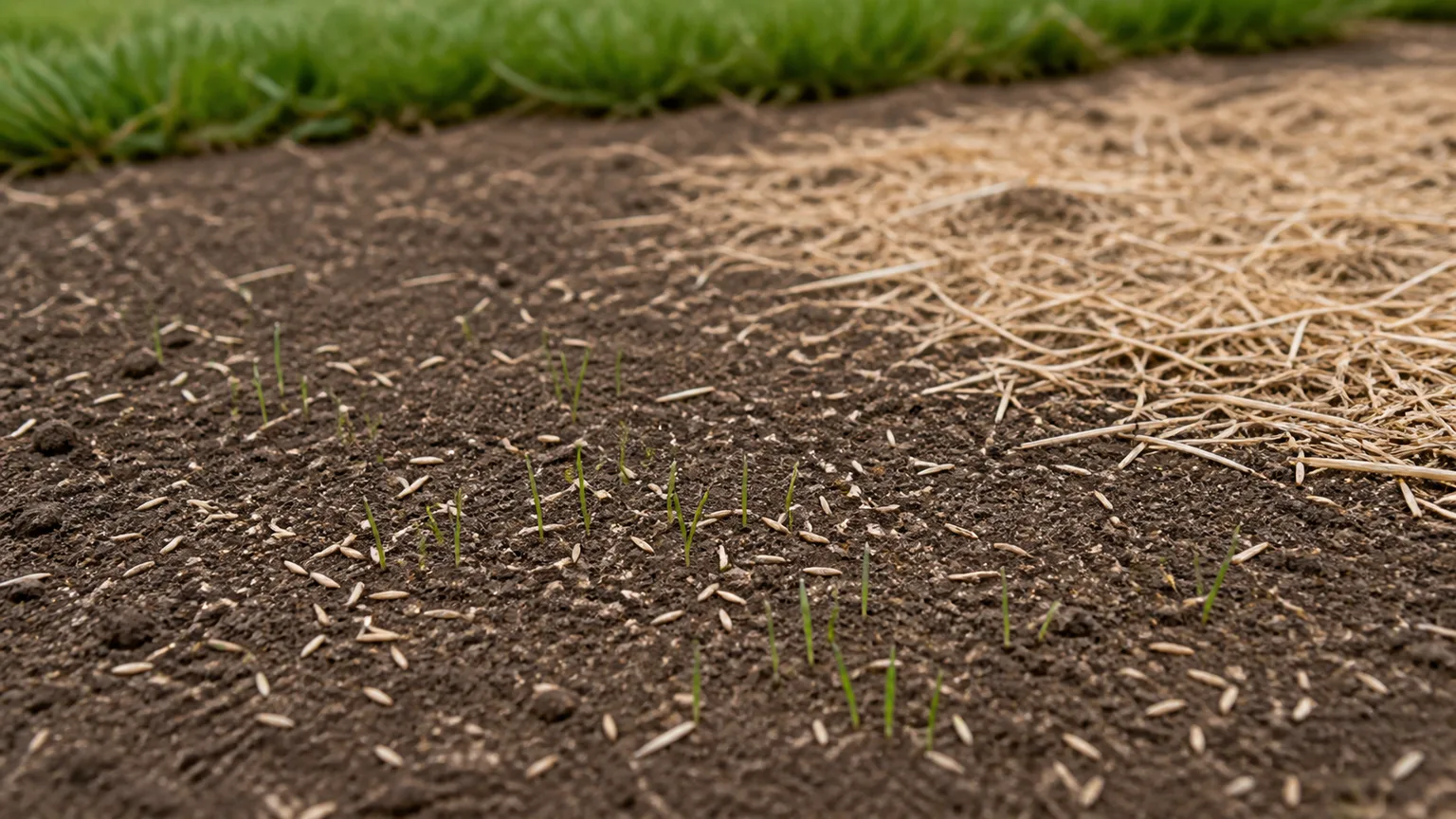
Fast establishment has practical value. It lets you see green sooner after a fall seeding, gives a thin lawn quick cover while slower grasses catch up, and shortens the period when the soil surface is left exposed. It does not guarantee weed-free establishment, so keep the site monitored as the new grass fills in. In a blend, ryegrass seedlings may emerge before Kentucky bluegrass. That early growth can make the lawn look established before the slower species have filled in, so do not stop watering or start heavy use as soon as the first blades appear.
It handles wear and works in useful blends
Perennial ryegrass is wear-tolerant, which is why it appears in athletic-turf and high-traffic seed mixtures. A family lawn that sees running, games, and regular mowing may benefit from ryegrass where the growing conditions suit it. Its rapid germination can also help a renovation cover bare soil before the rest of a mixture establishes.
But there are two different questions: “Will blades withstand traffic?” and “Will the grass fill a damaged spot afterward?” Ryegrass can perform well on the first and poorly on the second. Penn State Extension notes that it lacks the recuperative capacity of Kentucky bluegrass, which spreads by underground rhizomes. If traffic repeatedly wears the same path down to soil, ryegrass alone will not knit that path closed; you will need to change the traffic pattern, improve the site, or reseed.
It makes a fine-textured, dark-green lawn
A good turf-type perennial ryegrass cultivar can produce a dense-looking, dark-green surface with a fine-to-medium blade. Its appearance suits ordinary home lawns and recreation areas, though it is not the best choice for a very short-cut putting-green or bowling-green look. Many cultivars were bred for turf rather than forage, so the seed label matters more than a generic statement about the species.
That cultivar distinction matters when comparing seed bags. A forage-type ryegrass may have a different growth habit and texture from a turf-type cultivar bred for a home lawn. Species tells you which grass it is; the variety name and the stated use help you judge whether that particular seed was selected for the finish and climate you want. If a bag lists no cultivar details, ask the seller or your extension office what the blend contains before assuming all perennial ryegrass performs alike.
The blade can also be shredded rather than cleanly cut when mower blades are dull. Penn State Extension flags this issue for some varieties. A sharp blade is a simple maintenance step: it gives a cleaner cut and avoids ragged tips that can make the lawn look gray or brown after mowing.
The drawbacks to weigh before planting
It grows in clumps and will not repair bare spots
Perennial ryegrass is a bunch-type grass. It produces new shoots, or tillers, from the crown of each plant, but it does not spread through stolons above the soil or rhizomes below it. The result can look thick where seed landed and thin where it did not. Pet damage, disease, construction, a parked vehicle, or heavy recurring foot traffic can leave gaps that persist until new seed establishes.
This trait is not a flaw in every use. A bunch-type lawn can look uniform when seeded evenly and maintained well. The problem is expecting it to behave like a spreading grass. If you want a lawn that fills small gaps on its own, Kentucky bluegrass may be a better cool-season choice where it is adapted. If you prefer ryegrass for its speed or texture, budget for occasional overseeding and fix the cause of bare patches before adding seed.
Heat, drought, shade, winter, and disease narrow its fit
Ryegrass is not a desert grass, and “cool-season” does not mean it thrives through every cold event. Penn State Extension describes it as heat-tolerant but rates its drought and shade tolerance as moderate and notes susceptibility to ice damage. That heat tolerance is relative to cool-season turf: it does not guarantee green growth through a prolonged hot summer. Long hot, dry spells can thin or brown a stand, while dense shade and persistently wet soil make establishment and continued growth less dependable. A patch under a tree may be a poor match even if the sunny front lawn looks excellent.
Disease pressure depends on region, cultivar, weather, and how long the leaves stay wet. Penn State Extension lists brown patch, Pythium blight, dollar spot, red thread, and rust among the damaging diseases of perennial ryegrass. Rutgers Turfgrass Science also warns that gray leaf spot can devastate new ryegrass seedings: several hours of leaf wetness combined with high humidity and temperatures above 68°F favor the disease. That threshold describes conditions that can support an outbreak; it is not a universal temperature at which every lawn becomes infected.
For a new seeding in a humid region, ask a local extension office which cultivars have current disease-resistance data. Avoid keeping foliage wet overnight when practical, and do not assume a fungicide is needed just because the grass is ryegrass. If you see fast-moving spots or thinning, identify the problem before treating it; different diseases and non-disease stresses can look similar.
Shade is also a site question, not just a label claim. A lawn that receives open morning light and some afternoon shade is different from turf under a dense canopy where light is filtered most of the day and tree roots compete for water. Observe the area through the growing season, including when deciduous trees leaf out. If the grass repeatedly thins in the same shaded strip, reseeding with more ryegrass is unlikely to change the underlying light limitation; a shade-adapted mixture or a non-lawn groundcover may be a better use of the space.
Where perennial ryegrass makes sense
Ryegrass is most compelling when its quick start solves a clear problem. In cool, temperate regions with a suitable cultivar, it can be part of a permanent lawn or a blend where speed and wear matter. Penn State Extension describes it for home lawns, parks, grounds, golf courses, and athletic fields, and notes that it can be used alone or with Kentucky bluegrass and fine fescues. That list describes possible uses; it does not mean every site should be planted as pure ryegrass.
It can also provide winter color on a dormant warm-season lawn, a common use in warmer regions. The trade-off is a seasonal transition: as temperatures rise, the warm-season base grass needs room and conditions to resume growth. Perennial ryegrass often declines with sustained warm weather, but NC State Extension notes that a cool or wet transition-zone summer can allow it to persist as clumps. If that lawn stays green longer than planned, do not mistake persistent ryegrass for a permanent upgrade without considering competition with the warm-season turf.
A blend is worth considering when a yard has mixed conditions or when you want different grasses to cover one another’s weaknesses. BBC Gardeners’ World describes ryegrass as a hard-wearing lawn grass that establishes quickly but spreads slowly; Gardening Know How likewise treats it as a fast-establishing grass for cool, temperate areas and cautions about heat and drought. Use local extension advice to decide the blend, because the best proportions vary with region and use.
When to choose a blend or a different grass
A pure ryegrass lawn is a reasonable option only when the climate, cultivar, maintenance expectations, and intended use line up. A blend can be safer when you want quick germination plus better long-term persistence or recovery. It also helps when one area of a yard gets more sun than another, although no single seed mix will solve deep shade, poor drainage, or constant summer drought by itself.
Penn State Extension gives examples of seed mixtures that include roughly 10 to 20 percent perennial ryegrass with Kentucky bluegrass or fine fescue for certain Pennsylvania home-lawn conditions. That is a Pennsylvania recommendation, not a universal formula. A local extension service can tell you whether the ryegrass share should be lower, higher, or omitted for your region, soil, and intended mowing height.
Ryegrass compared with bluegrass and fescues
| Grass | Strongest reason to choose it | Main limitation to consider |
|---|---|---|
| Perennial ryegrass | Quick germination and good wear tolerance | Bunch growth means bare spots need reseeding; heat, drought, and shade can be limiting |
| Kentucky bluegrass | Rhizomes help it spread and recover from injury | Slower establishment and weaker performance in heavy shade |
| Tall fescue | Better heat and drought tolerance than many cool-season lawn grasses | Mostly bunch-type; recovery from damage is limited, and blades are generally coarser |
| Fine fescues | Useful for low-maintenance or shaded cool-season sites | Not suited to heavy wear, hot humid conditions, or high nitrogen inputs |
These are broad tendencies, not guarantees for every cultivar. Penn State Extension notes that variation within a species can be substantial: breeders select for different disease resistance, drought tolerance, density, texture, and wear response. A named, regionally adapted cultivar can perform differently from an unselected generic seed lot. Compare the traits your yard needs instead of treating grass species as one uniform product.
Annual and perennial ryegrass are not interchangeable
The word “ryegrass” on a package is not enough. Perennial ryegrass is Lolium perenne and may persist for several years in a suitable location. Annual or Italian ryegrass is Lolium multiflorum and is generally used for temporary cover. Penn State’s cool-season grass identification guide distinguishes the species by traits including leaf arrangement and auricles, but the seed label is the practical way to check a bag. It can be a sensible short-term choice for erosion control or a temporary green cover, but it is not a substitute for a permanent lawn species when you expect a lasting stand.
Read the species list and percentages before buying. Penn State Extension recommends checking the seed label for the kind and variety of grass, the proportion of pure seed, germination percentage, weed seed, other crop seed, inert matter, and the date of the germination test. Its suggested minimum standards for perennial ryegrass—95 percent purity and 85 percent germination—are for Pennsylvania guidance, not a nationwide legal standard. State rules and seed lots differ, so compare local guidance and fresh labels rather than relying on a front-of-bag marketing phrase.
Purity and germination also affect how much viable seed is actually in a bag. Penn State Extension explains pure live seed as purity multiplied by germination, divided by 100: a lot marked 90 percent pure and 80 percent germination has 72 percent pure live seed. A lower figure does not automatically make a bag unusable, but it means a weight-based rate supplies fewer viable seeds than a higher-quality lot. Compare the complete label and follow the locally recommended rate rather than adding extra seed blindly, especially in a blend where each species already has a planned share.
If you are buying a blend, check what else is in it. A ryegrass-heavy mix may establish fast but leave you with the wrong long-term species for a shady, drought-prone, or very cold site. If the label lists “annual ryegrass” and you want a permanent cool-season lawn, choose another bag. If it lists perennial ryegrass, look for the cultivar name and verify that it suits your region.
How to choose seed and establish ryegrass
Read the label and choose for your region
Start with the job: new lawn, thin-lawn overseeding, athletic or play area, a quick patch, or winter color over warm-season turf. Those jobs can call for different mixtures and seed rates. A bag labeled for one use may contain several species in different proportions, so compare the ingredient panel, not just the variety name or “fast-growing” language on the front.
Then match the mixture to the site. Consider summer temperature and rainfall, winter ice exposure, shade by season, drainage, soil fertility, and how much wear the lawn gets. If you cannot tell what is already growing, have the grass identified before overseeding; otherwise, you may create a patchwork of blade textures and growth habits. For a larger renovation, a soil test and local extension recommendation are more useful than guessing from the seed bag.
Match timing, seedbed, and watering to the job
For a cool-season lawn, late summer to early fall is commonly the best establishment window because young grass can grow in cooler weather before winter. But the correct dates depend on local climate, rainfall, and expected frost. For winter overseeding of warm-season turf, the schedule is different and must leave time for both the ryegrass to establish and the base grass to recover in spring. Follow a local calendar rather than copying dates from another climate.
Prepare the surface so seed reaches soil. Mow existing grass as recommended for your renovation, remove loose debris, and loosen or expose the soil without damaging healthy turf. Spread seed evenly at the locally recommended rate, then lightly rake or otherwise ensure good seed-to-soil contact. Too little seed creates thin clumps; too much can lead to crowded seedlings and weak growth. When overseeding, avoid leaving a thick mat of thatch or leaves between seed and soil.
Keep the seed zone consistently moist while germination is underway, adjusting for rainfall, soil, and temperature. That does not mean keeping an established lawn constantly soggy. Once seedlings emerge and begin rooting, gradually lengthen the interval between watering and water more deeply as appropriate for the site. Delay heavy foot traffic and the first mow until seedlings are anchored and tall enough for a clean cut. The first mow should remove only a modest portion of the leaf, not scalp the new growth.
If you are overseeding into an existing lawn, check whether the desired grass is already present and whether the bare soil is actually accessible. A dense thatch layer, leaves, or closely packed turf can keep seed from reaching soil even when the spreader pattern looks even. For small patches, hand-raking and careful spot seeding may be enough; for widespread thinning, core aeration or renovation may be more effective. The extent of preparation depends on how much healthy turf remains, so avoid disturbing an otherwise sound lawn just to follow a one-size-fits-all checklist.
Maintenance choices that prevent disappointment
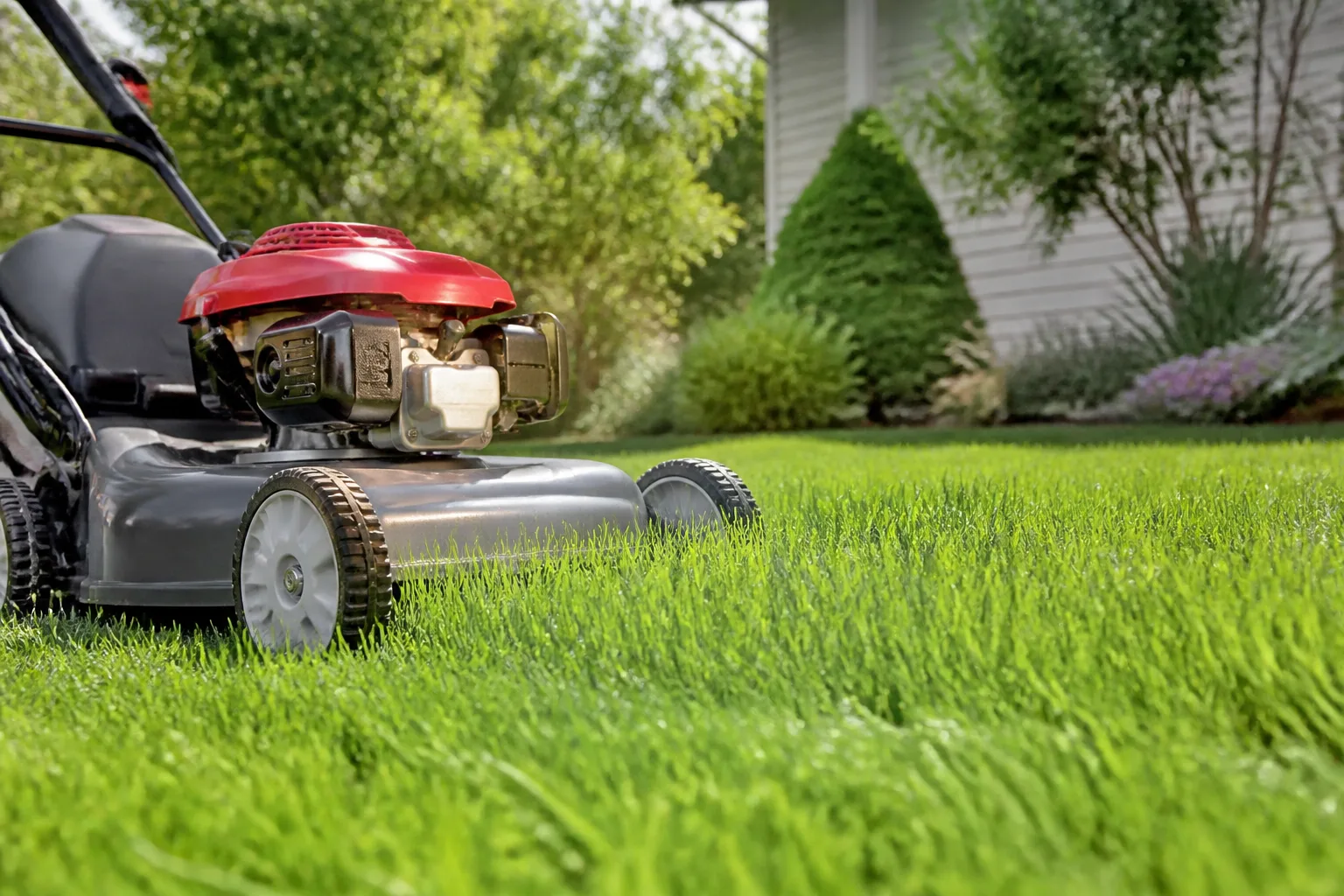
Mow with sharp blades and keep the lawn at a height suited to your region, cultivar, and use. Penn State Extension lists 1.5 to 2.5 inches for improved perennial ryegrass in general turf settings; BBC Gardeners’ World recommends about 5 centimeters for a general-purpose lawn in its UK context. Those figures are not contradictory so much as a reminder that mowing targets vary. If the lawn is stressed by heat, drought, or disease, avoid a close cut that removes too much leaf at once.
Water established ryegrass according to actual soil moisture and weather, not a fixed weekly calendar. Its moderate drought tolerance means a hot dry spell may cause dormancy or thinning sooner than it would in a more drought-adapted species. If the lawn browns, check whether the crowns remain alive and whether rainfall or irrigation reaches the root zone before reseeding. Brown color alone does not tell you whether grass is dormant, dead, diseased, or simply cut too short.
Use fertilizer based on a soil test and local turf recommendations rather than applying it monthly by default. Overfeeding a lawn during stressful hot weather can increase disease pressure and weak growth. Remove fallen leaves that smother the turf, address compacted areas when the grass can recover, and reseed persistent bare patches after correcting the underlying cause. A patch that returns every year is a site or use problem as much as a seed problem.
For a winter-overseeded warm-season lawn, plan the spring transition before you spread seed. As warm weather returns, the ryegrass may decline naturally, but persistent plants can compete with the dormant base grass. The timing and method for managing that transition depend on the warm-season species and local conditions; ask an extension turf specialist before using herbicides or aggressive practices that could injure the desired lawn.
Conclusion
Perennial ryegrass earns its place through speed, color, and wear tolerance. It can be a strong component of a cool-season blend, a quick repair option, or a source of winter green over dormant warm-season grass. Its fast germination gives you a visible result sooner, but it does not guarantee a self-repairing lawn or make ryegrass suitable for every climate.
Choose it when your site is reasonably sunny, the local climate supports the selected cultivar, and you are prepared to reseed areas that thin. Choose a blend when you want ryegrass’s quick cover alongside a grass that better matches your long-term climate or recovery needs. If your yard is deeply shaded, repeatedly drought-stressed, or exposed to harsh ice cover, ask a local extension office which species fits before buying seed. The best choice is the one that matches the conditions you have—not simply the one that turns green first.



