7 Perennials to Plant in Fall for Spring Color
Plant these seven perennials in fall for stronger roots and a better spring display, with practical guidance for sun, shade, soil, water, and mulch.
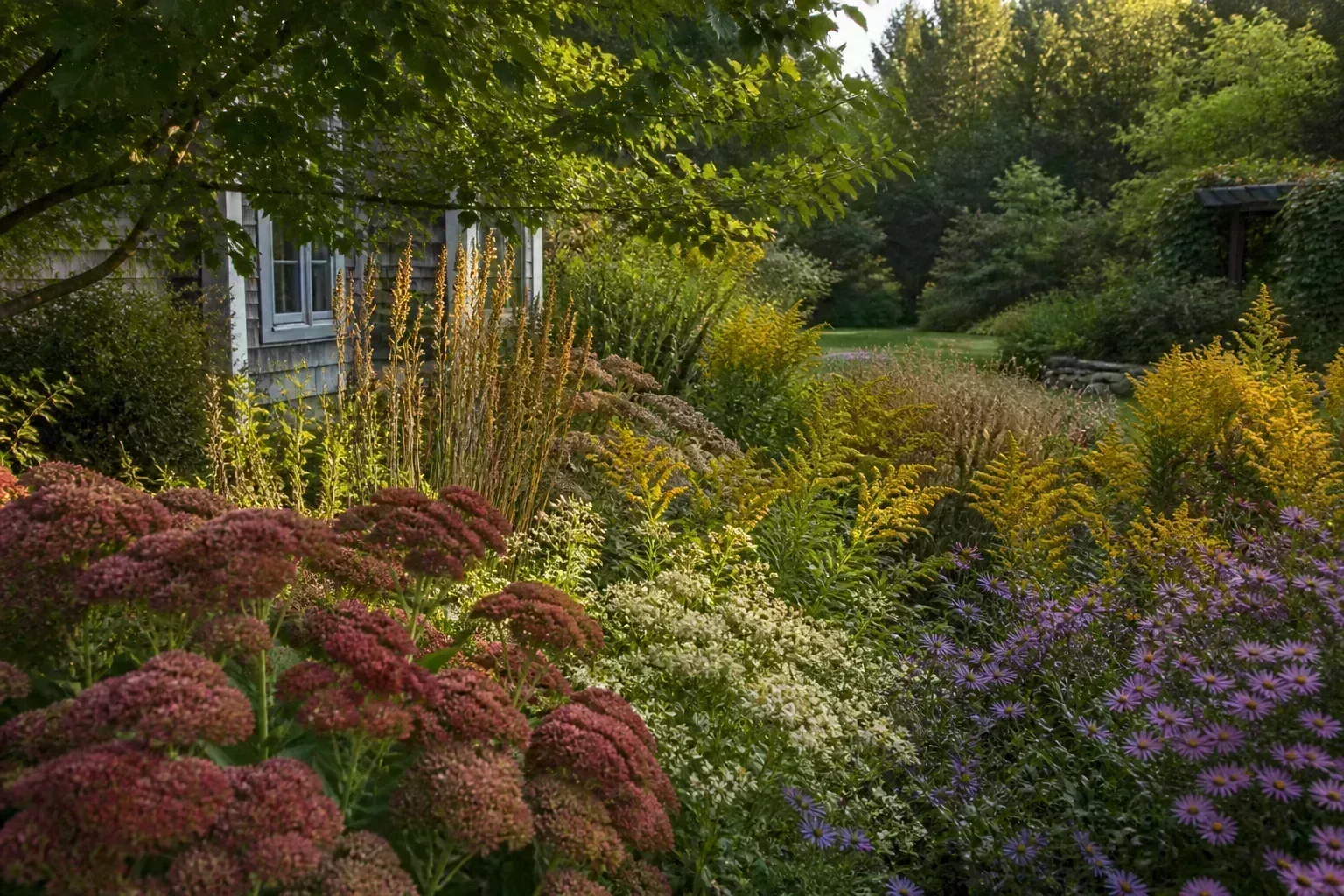
Fall is the season when a perennial can quietly do its most important work. The leaves may slow down and the garden may look less dramatic, but the soil often stays warm enough for roots to grow while cooler air reduces the stress of transplanting. That combination gives a new plant time to settle before it has to face the heat, competition, and rapid top growth of spring.
There is one important correction to the usual promise of a “spring garden”: not every perennial below opens a flower in March or April. Hellebores, peonies, iris, and bleeding heart are genuine spring performers; catmint, coreopsis, and coneflower carry the border into late spring and summer. Planting them together creates a more useful garden—one with an early show and a reliable handoff afterward—rather than a bed that peaks for one week and then goes quiet.
Why fall is a smart season for perennial planting
In a well-timed autumn planting, the roots can expand before the ground freezes even if the plant makes very little new growth above ground. University of Georgia Extension describes fall as an especially good time to plant herbaceous perennials and emphasizes matching each plant to the light and moisture conditions already present in the yard. (University of Georgia Extension)
That does not mean fall planting is automatically safer. A plant installed into compacted, waterlogged soil can sit cold and oxygen-starved all winter. A plant installed too close to the first hard freeze may not root enough to resist frost heave, and a warm spell can push tender new growth that is later damaged. Think of autumn as a useful window, not a guarantee.
The strongest reason to plant in fall is reduced transplant shock. A dormant or nearly dormant perennial loses less water through leaves, so the roots are not trying to rebuild the plant while also supporting a full canopy. The payoff may be faster spring recovery, steadier flowering, and less frequent emergency watering once the weather turns warm.
Choose by bloom timing, site, and plant form
Start with the bed, not the plant tag. Watch the spot for a day if you can: a “full-sun” bed usually needs roughly six or more hours of direct light, while a north-facing foundation or tree-rooted border may offer only bright shade. Notice where water lingers after rain, because no amount of compost turns a low, saturated pocket into a good home for a drought-loving perennial.
Use the seven choices as a design sequence. Put low, early bloomers where you will see them from a path; use peony and iris as structural anchors; place bleeding heart in the cooler shade; and let catmint, coreopsis, and coneflower take over as spring gives way to summer. Check mature width on the label and leave the space the plant will need, rather than planting on the small size of the nursery pot.
The word “perennial” also hides different plant forms. A peony has dormant eyes on a crown, bearded iris has a rhizome that must not be buried deeply, and a coneflower arrives as a crown with fibrous roots. The right depth for one is a failure for another, so the planting directions below are intentionally specific.
Find the planting window before your first frost
Count backward from your area’s average first frost date instead of choosing a fixed date such as September 15. A practical target is about four to six weeks before the ground commonly freezes, with earlier planting favored in colder climates and later planting possible in mild climates if the soil remains workable. The exact window changes with plant size, weather, soil temperature, and whether the plant is container-grown or bare-root. (Bob Vila’s fall perennial guide)
If a nursery perennial is still actively flowering, you can plant it once the heat has eased, but remove only damaged or exhausted flowers. Avoid installing during a heat wave, into muddy ground, or immediately before a forecast freeze. When a late-season bargain appears inside the safe window, check that its roots are firm, the crown is not mushy, and the pot drains freely before bringing it home.
Gardeners in warm-winter climates need a different caution. Fall can be an excellent root-establishment season, but many classic “spring” plants also need a cool dormant period to flower well. Conversely, a plant sold as hardy in one region may struggle in a hot, humid or drought-prone site. Use the plant tag’s hardiness information as a starting point, then match it to the actual drainage and exposure of the bed.
Prepare a bed that drains through winter
Clear perennial weeds before you dig the planting holes. Pulling a few runners now is much easier than separating them from a new crown next spring. Loosen the soil across the whole bed rather than creating a small pocket of rich soil in each hole; roots should be able to move outward without hitting a hard boundary.
Work in finished compost when the soil is poor in organic matter, but do not fill the hole with a soft, highly amended mix that holds more water than the surrounding ground. A soil test is more useful than guessing with lime or fertilizer. University of Georgia Extension recommends using a test to guide pH amendments and notes that mature spacing matters because nursery plants are often much smaller than they will be in the landscape. (University of Georgia Extension)
Do not fertilize heavily at planting. High-nitrogen fertilizer can encourage soft top growth at the wrong time, while roots need time and stable moisture more than a flush of leaves. If a soil test identifies a deficiency, follow its rate; otherwise, a light compost top-dressing is a safer default for an autumn installation.
1. Hellebore for late-winter and early-spring flowers
Hellebores (Helleborus spp.) earn the first place in a spring-focused garden because their nodding flowers can appear while much of the border is still bare. They are most useful under deciduous trees, beside a north- or east-facing wall, or at the front of a partly shaded bed where their evergreen or semi-evergreen foliage can provide winter interest.
Give hellebore rich, well-drained soil that stays reasonably even in moisture. Bright shade is usually a better target than deep, dry shade under thirsty tree roots. The RHS growing guidance for hellebores also makes clear why the site matters: these plants appreciate moisture and shelter, but winter wet around the crown is a poor substitute for good soil structure. (RHS hellebore growing guide)
Plant the crown at the same level it was in the container, firm the soil gently, and water it in. Do not bury the crown under a deep blanket of mulch. If you want more plants later, allow established clumps to settle rather than repeatedly disturbing them; hellebores are not the best choice for a bed that you plan to redesign every year.
2. Peony for a long-lived late-spring anchor
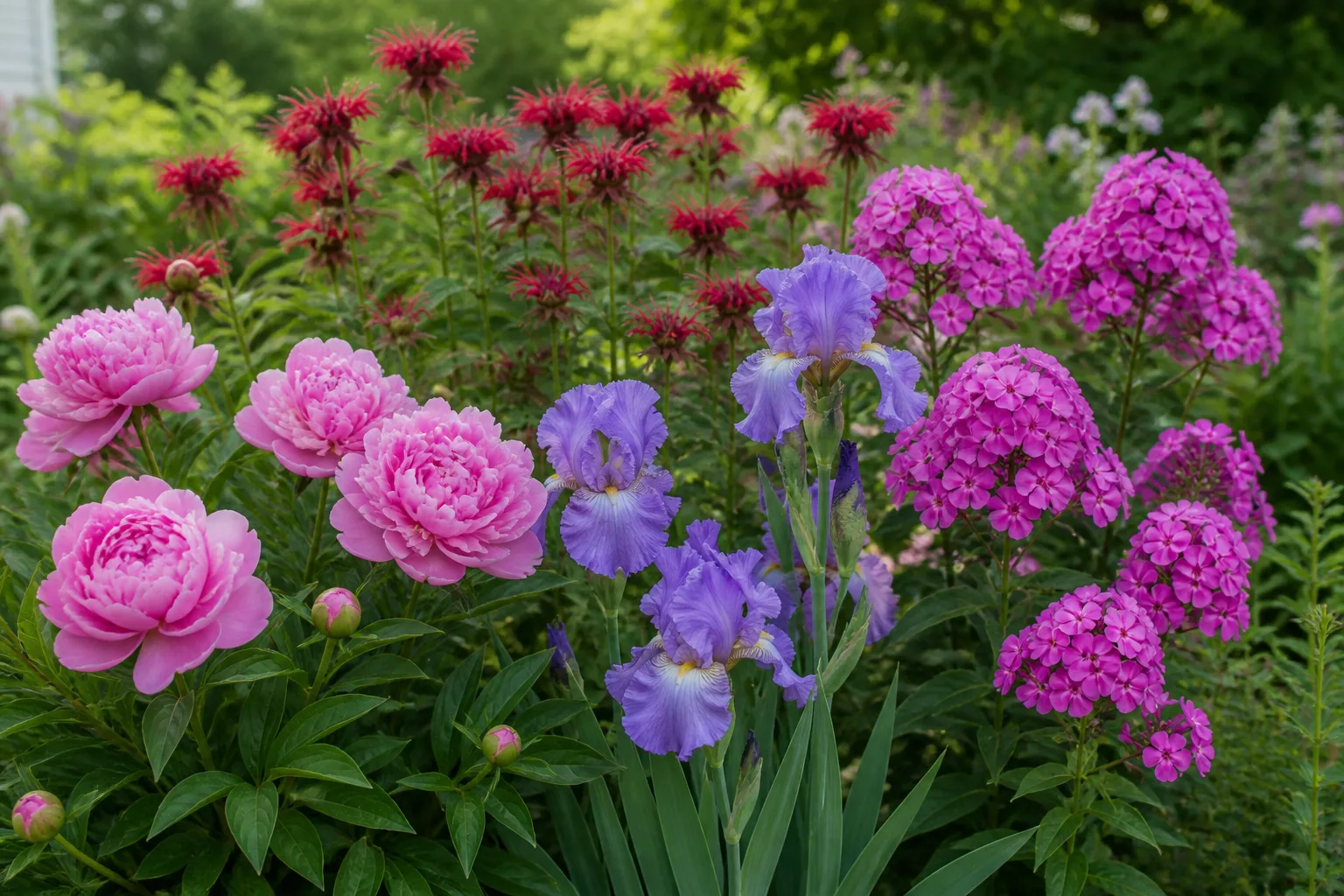
A peony (Paeonia spp.) is a commitment, but it can reward that commitment for decades. Its large late-spring flowers bring a clear focal point to a border, while the divided foliage remains useful after flowering. Plant it where you can leave it in place, with space for mature width and enough sun to prevent weak, floppy stems.
The planting depth is the detail that decides whether a peony flowers. Set bare-root eyes only about 1 to 2 inches below the soil surface; in a container, keep the crown at the level it was growing. Deep planting is a common reason a healthy peony produces leaves but few or no flowers. The RHS peony guide likewise stresses a sunny, well-drained position and careful planting depth. (RHS peony growing guide)
Water after planting, then let the surface begin to dry while the deeper root zone stays lightly moist. Do not build a volcano of mulch over the crown, and do not expect a division or small bare-root piece to make a full florist-quality display the following spring. Peonies often need time to establish, and the most reliable “care” is leaving the crown at the correct depth.
3. Bearded iris for sun and early-summer color
Bearded iris (Iris germanica hybrids) brings sword-shaped foliage and flowers that bridge the gap between early spring bulbs and summer perennials. It belongs in a sunny, open position where air can move around the leaves and rain does not collect. The flowers are often described as spring color, though many cultivars bloom in late spring or early summer depending on climate.
The planting rule is simple: the rhizome should sit at the surface, with its upper side exposed to the sun or covered only by a very thin layer of soil. Burying it deeply or covering it with thick winter mulch can encourage rot and reduce flowering. The RHS iris growing guide provides the same broad message—iris need the correct planting depth and a site that does not stay waterlogged. (RHS iris growing guide)
Space rhizomes so the fan of leaves has room to expand, and point the growing end in the direction you want the clump to move. Fall is a sensible time to divide an overcrowded clump after flowering, but discard soft or damaged sections and keep only firm rhizomes with a healthy fan. If your soil is heavy clay, improve drainage across the bed or plant iris in a raised section rather than trying to compensate with a deeper hole.
4. Bleeding heart for a cool, shady spring border
Bleeding heart (Lamprocapnos spectabilis, formerly Dicentra spectabilis) gives a woodland border an unmistakable spring moment: arching stems lined with heart-shaped flowers above soft foliage. It prefers part shade and soil that holds moisture without becoming stagnant, making it a better companion for hellebore than for sun-loving coneflower.
Choose a location that receives morning sun or filtered light, especially in warmer climates. Protect it from reflected heat and from the dry root competition of large trees. After blooming, the foliage may yellow and disappear as summer arrives; that dormancy is a normal part of its rhythm, not proof that the plant has died.
Plant the crown level with the surrounding soil and mark the spot before winter so you do not accidentally dig into it in spring. A thin organic mulch can reduce temperature swings, but keep it away from the crown. The most common mistake is placing bleeding heart in a hot, dry bed and then trying to rescue it with frequent shallow watering.
5. Catmint for a dry, sunny transition from spring to summer
Catmint (Nepeta spp.) is the choice for a sunny border that needs soft texture, aromatic gray-green foliage, and lavender-blue flower spikes after the earliest spring display has faded. It is not a March bloomer in most gardens, but it is valuable because it fills the late-spring gap and can rebloom after a timely shear.
Give it full sun and sharply drained soil. Catmint tolerates lean, rocky or sandy ground better than a wet, heavily fertilized bed, and too much shade often produces a loose plant with fewer flowers. Space it according to the cultivar’s mature width; a small nursery clump can become a broad edging plant.
Water consistently while new roots are forming, but let the soil drain between deep waterings. Once established, catmint generally needs less irrigation than thirsty border companions. After its first flush of flowers, cut the plant back to a tidy mound rather than snipping a few stems at random; that reset often produces fresher growth and another round of bloom.
6. Coreopsis for a long season of yellow flowers
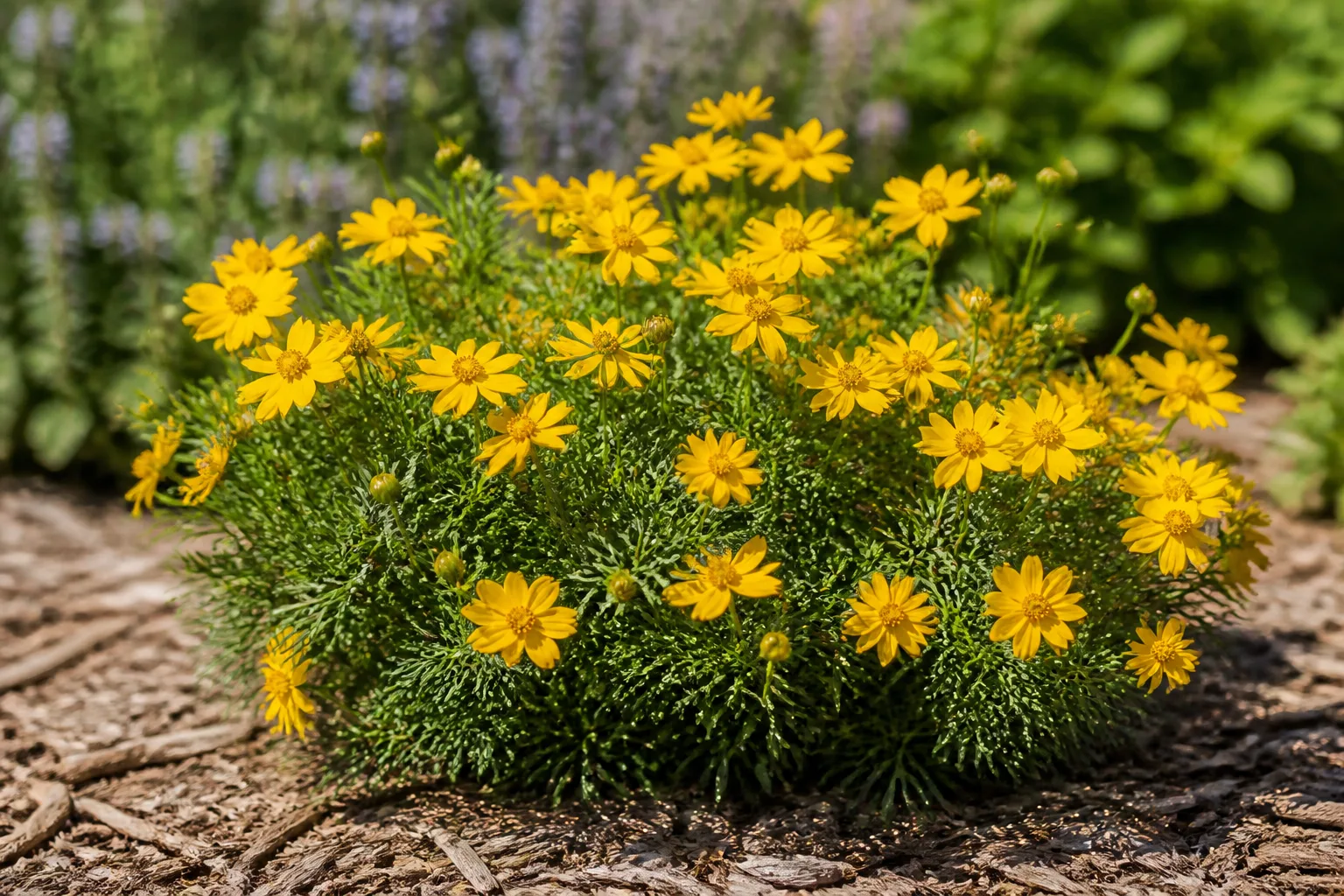
Coreopsis, or tickseed, gives a sunny garden clear yellow color and a long flowering season. Pick a genuinely perennial species or cultivar for your climate; some plants sold under the common name are annuals or short-lived selections. Lanceleaf coreopsis (Coreopsis lanceolata) is a useful native-type example with a sunny-site habit, and the NC State Extension Plant Toolbox lists it as a plant for well-drained conditions and pollinator-friendly landscapes. (NC State Extension Plant Toolbox: lanceleaf coreopsis)
Plant coreopsis in full sun and soil that drains freely. It can tolerate less-than-perfect soil once established, but standing winter water is a greater threat than modest fertility. If deer are a serious problem, treat “deer-resistant” as a likelihood rather than a fence; browsing varies by season, herd pressure, and what else is available.
Water deeply at the root zone whenever the top few inches dry during establishment. Do not keep the entire bed constantly wet just because a newly planted perennial needs attention. Remove spent flowers or shear lightly after a flush if you want a tidier plant and more bloom, but leave some late-season seed for birds if wildlife value matters more than a manicured finish.
7. Purple coneflower for summer pollinator value
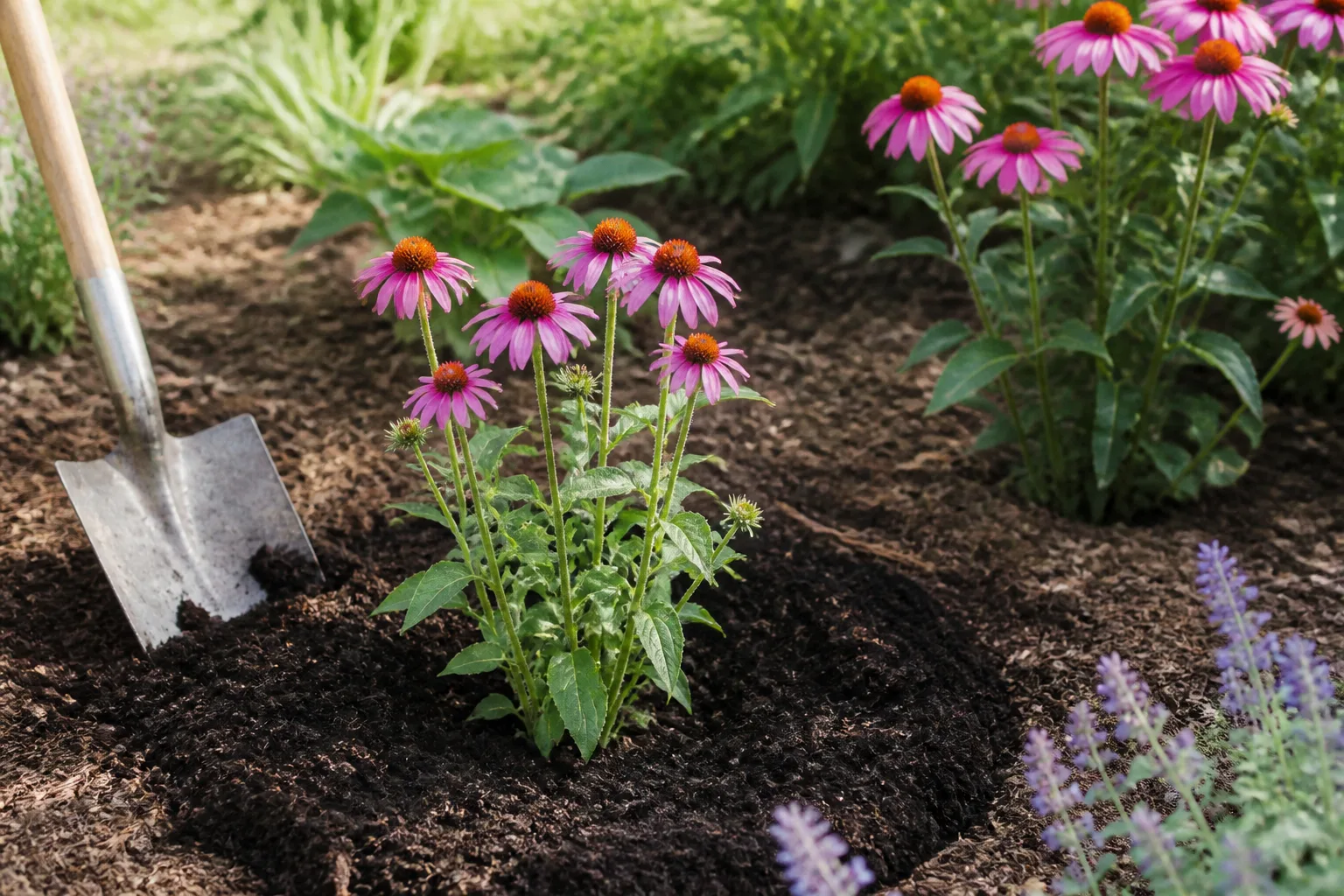
Purple coneflower (Echinacea purpurea) is a durable bridge from a spring garden into summer. Its daisy-like flowers usually arrive later than the hellebore, peony, iris, and bleeding heart, but the plant earns a place through its upright habit, heat tolerance once established, and value to pollinators. The NC State Extension Plant Toolbox describes it as a full-sun perennial that handles a range of soils when drainage is adequate. (NC State Extension Plant Toolbox: purple coneflower)
Set coneflower at the same depth as its nursery pot, keeping the crown at the soil surface. Choose a site with at least several hours of direct light and avoid a low pocket where water stands after rain. One plant can look sparse in its first season; grouping three or more with the spacing shown on the tag creates a stronger visual effect without forcing the crowns together.
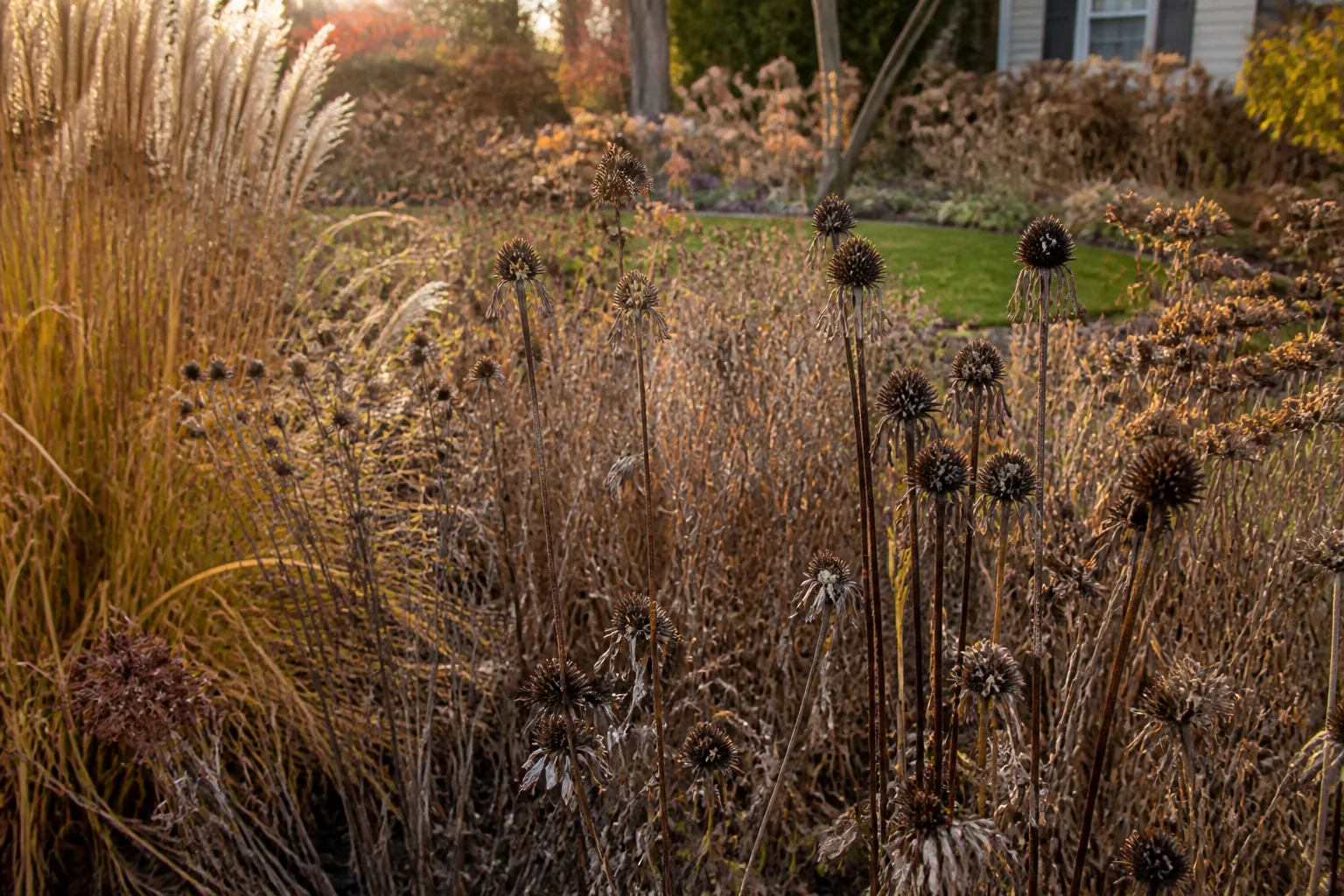
Coneflower seed heads can feed birds and add winter structure, so there is no requirement to cut every stem down in autumn. Leaving them standing is also a practical way to make a pollinator planting useful after bloom; gardening coverage from Martha Stewart likewise recommends allowing coneflower seed heads to remain for birds when conditions permit. (Martha Stewart’s perennial planting guide) If a bed has a history of foliar disease, remove visibly diseased material and dispose of it rather than spreading it through compost. Otherwise, leaving healthy stems standing until late winter can protect habitat and give you a useful marker for the plant’s location.
How to plant nursery perennials in fall
Once the bed and planting date are right, use a repeatable sequence for every container-grown perennial:
- Water the pot a few hours before planting if the root ball is dry, and remove weeds from a space wider than the container.
- Dig a hole no deeper than the root ball and roughly twice as wide. The finished crown should sit at the same height as it did in the pot unless the plant-specific directions above say otherwise.
- Slide the plant out without pulling the stem. If roots circle tightly around the bottom, tease a few loose with your fingers; do not shred a healthy root ball aggressively.
- Set the plant, turn its best side toward the viewing angle, and backfill with the soil you removed. Press gently to eliminate large air pockets, but do not compact the soil into a hard plug.
- Water slowly until the entire root ball and surrounding soil are damp. If the water runs away immediately, make a shallow basin just outside the crown; if it pools for hours, fix drainage rather than watering again.
The hole should not become a permanent moat. Keep the crown level, make the soil meet the existing grade, and use a narrow mulch ring instead of piling material against stems. For a design with several plants, place the pots on the bed first so you can check spacing before any roots go into the ground.
Watering after planting
New roots need moisture, but a calendar such as “water three times a week” is less useful than a soil check. During the first two weeks, inspect every couple of days; if the top inch or two is drying and rain has not supplied enough moisture, water slowly at the base. In cool, rainy weather, you may need no supplemental water at all.
Continue checking until the ground begins to freeze. A small plant in sandy soil may need attention more often than a larger plant in loam, while a heavy clay bed may stay wet long after the surface looks dry. The goal is a damp root zone with oxygen still available, not permanently saturated soil.
Mulch without burying crowns
After the soil has settled, spread about 2 inches of shredded leaves, fine bark, or finished compost over the root zone, leaving a visible gap around crowns and stems. Mulch moderates temperature swings and reduces evaporation, but it should not be used to hide a planting-depth mistake. Coarse, airy material is especially useful in wet climates because it sheds some water rather than forming a dense cap.
Do not apply a thick layer on the first warm day of fall and assume more insulation is always better. Wait until the soil is cool, and refresh only when the existing layer has decomposed or blown away. In spring, pull mulch back gradually as growth appears so the crown dries and the soil warms.
What to do when winter arrives early
If a hard freeze is forecast soon after planting, water only if the root ball is genuinely dry, then add a light mulch layer after the soil cools. Do not wrap hardy perennials in plastic or cover them with an airtight pile of wet leaves. The plant needs protection from temperature swings, not a sealed, soggy environment.
If the ground freezes before the plant has rooted deeply, leave the plant in place rather than repeatedly lifting it to inspect the roots. Frost heave is most likely when a shallow-rooted plant can move in alternating freeze-thaw cycles. A modest layer of mulch and stable soil contact are more useful than extra fertilizer or frequent disturbance.
Some top growth will brown naturally. Cut diseased or collapsed material away, but do not treat a completely bare winter bed as the only sign of good care. Healthy coneflower stems, iris foliage, and other structural remnants can provide habitat and help you recognize where plants are sleeping.
Spring follow-through for a stronger first season
When new growth appears, remove only the winter-damaged material that is clearly dead. Do not work saturated soil, because walking on it can undo the drainage improvements you made in fall. As the garden wakes, pull mulch away from crowns, check for heaving, and press a lifted plant back into firm soil at the correct depth.
Spring is also the time to watch the bed’s real conditions rather than trusting your original sketch. A spot that looked sunny in October may be shaded by a tree’s new leaves; a place that seemed damp may dry quickly once winds pick up. Adjust watering by root-zone moisture, and add temporary support to peonies or tall iris before stems flop rather than after flowers are already on the ground.
Do not judge every plant by the same first-year standard. A hellebore may flower modestly, a peony may make leaves but no buds, and coneflower may spend the season building a crown. Good spring care means keeping competition down, watering during genuine dry spells, and giving each perennial the light and space its mature form requires.
Conclusion
The best perennials to plant in fall are not simply the plants that happen to be discounted at the end of the season. They are plants whose bloom time, mature size, light needs, moisture tolerance, and planting depth fit the bed you actually have.
For the earliest color, start with hellebore, bleeding heart, peony, and bearded iris. Add catmint and coreopsis for the late-spring handoff, then use purple coneflower to carry the border into summer and support pollinators. Plant several weeks before the ground normally freezes, keep crowns at the right depth, water by checking the soil, and mulch without burying the plant. That quiet autumn work is what turns a bare winter bed into a garden with a much better spring rhythm.



