How to Use Fish Emulsion Fertilizer for Flowers
Use fish emulsion fertilizer for flowers without guesswork: read NPK, follow the label, avoid overfeeding, and pair fall feeding with deadheading and mulch.
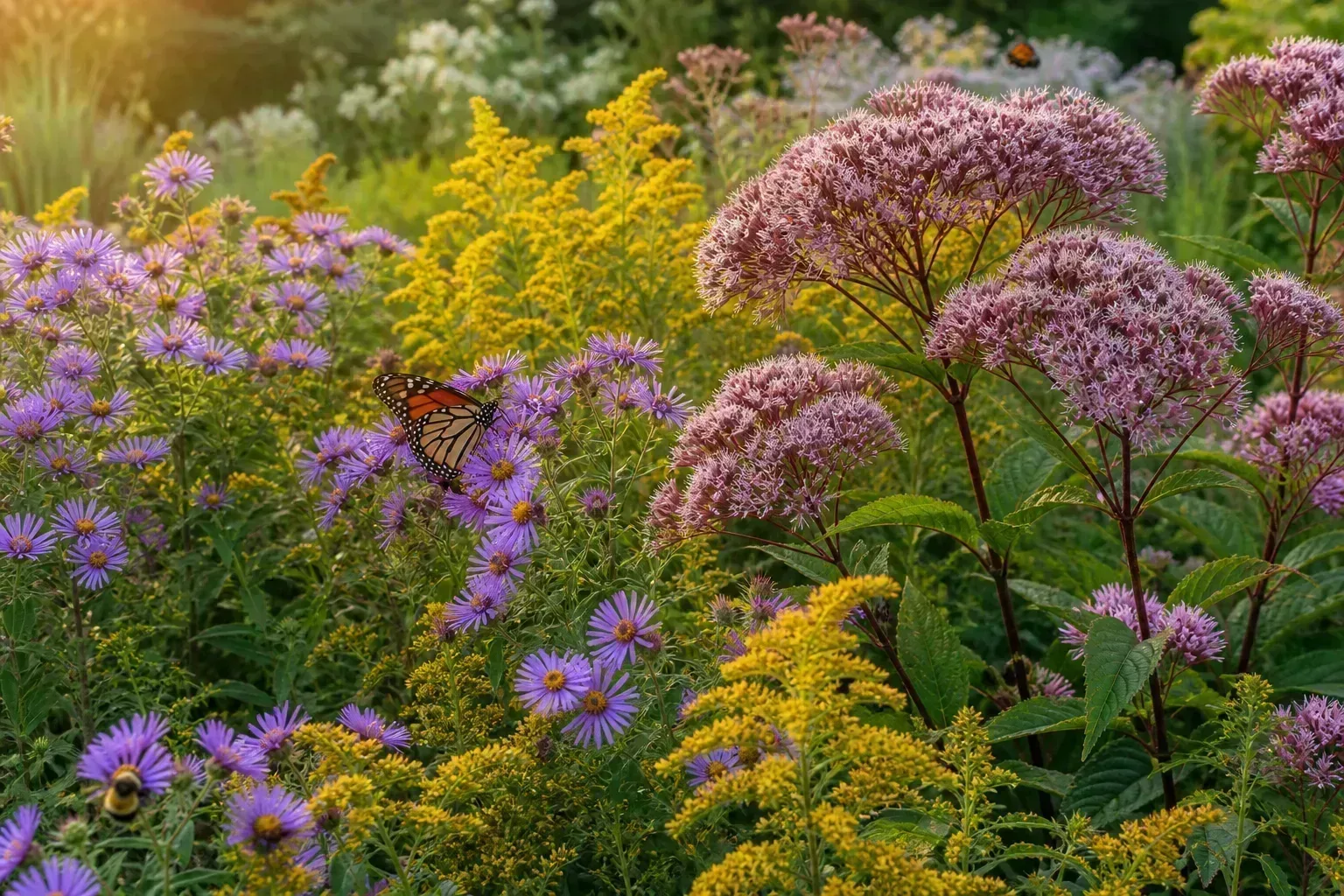
The “one fertilizer” gardeners often reach for when summer flowers begin to slow is fish emulsion: a liquid organic fertilizer made from processed fish byproducts. Gardening Know How’s overview of fish emulsion describes it as a concentrated liquid that must be diluted before use. It can be useful for flowers that are still actively growing, especially when a nutrient shortage is limiting new buds. It is not a magic switch, though, and it cannot make a shade-grown plant bloom, repair waterlogged roots, or keep a tender annual alive after a killing frost.
The best fall-bloom plan is therefore a sequence, not a bottle. Check the plant’s growing conditions, read the fertilizer analysis, apply only the label rate to moist soil, and pair feeding with deadheading and steady root-zone moisture. That approach gives fish emulsion a fair chance to help without turning “more fertilizer” into the next problem.
Is fish emulsion really the right fertilizer for fall flowers?
Sometimes. Fish emulsion supplies plant nutrients in a liquid form and is usually a relatively low-analysis product, so it can fit a gentle maintenance program for annuals, container flowers, and actively growing perennials. The exact analysis varies by product; one bottle may be labeled 2-4-1 while another is 5-1-1, so “fish fertilizer” is a category rather than a single standardized formula.
The important question is not whether fish emulsion is organic or whether it has a high middle number. Ask whether the plant is still growing, whether its roots can take up nutrients, and whether a nutrient shortage is plausible. Texas A&M AgriLife Extension makes the same practical distinction: fertilizer helps when lack of nutrients is the cause, but it will not solve poor drainage, excessive shade, or competition from tree roots (Texas A&M AgriLife Extension’s fertilizing guide).
For a flower bed that has healthy leaves, good light, regular moisture, and plenty of buds, feeding may provide little visible benefit. For a container that has been watered frequently for months, or an annual that is pale and still producing new growth, a careful liquid feed may be reasonable. If the plant is wilting in hot soil, yellowing from saturated roots, or already shutting down for winter, fertilizer is more likely to add stress than flowers.
What fish emulsion does—and what it cannot do
Fish emulsion is best understood as a supporting nutrient input, not a bloom command. Nitrogen helps build chlorophyll, proteins, leaves, and stems. Phosphorus is involved in root development, flowering, and fruiting. Potassium supports many plant processes and helps with stress tolerance. Plants need all three, but they need them in the right amounts and only when they are available to the roots.
That distinction matters in fall because a flower’s season is controlled by more than nutrition. Day length, night temperature, soil moisture, pruning, pollination, plant age, and the first hard frost all influence whether it forms another flush of flowers. A fertilizer can support a plant that has the capacity to keep growing; it cannot override a genetic bloom window or replace sunlight.
Read the NPK numbers before you pour
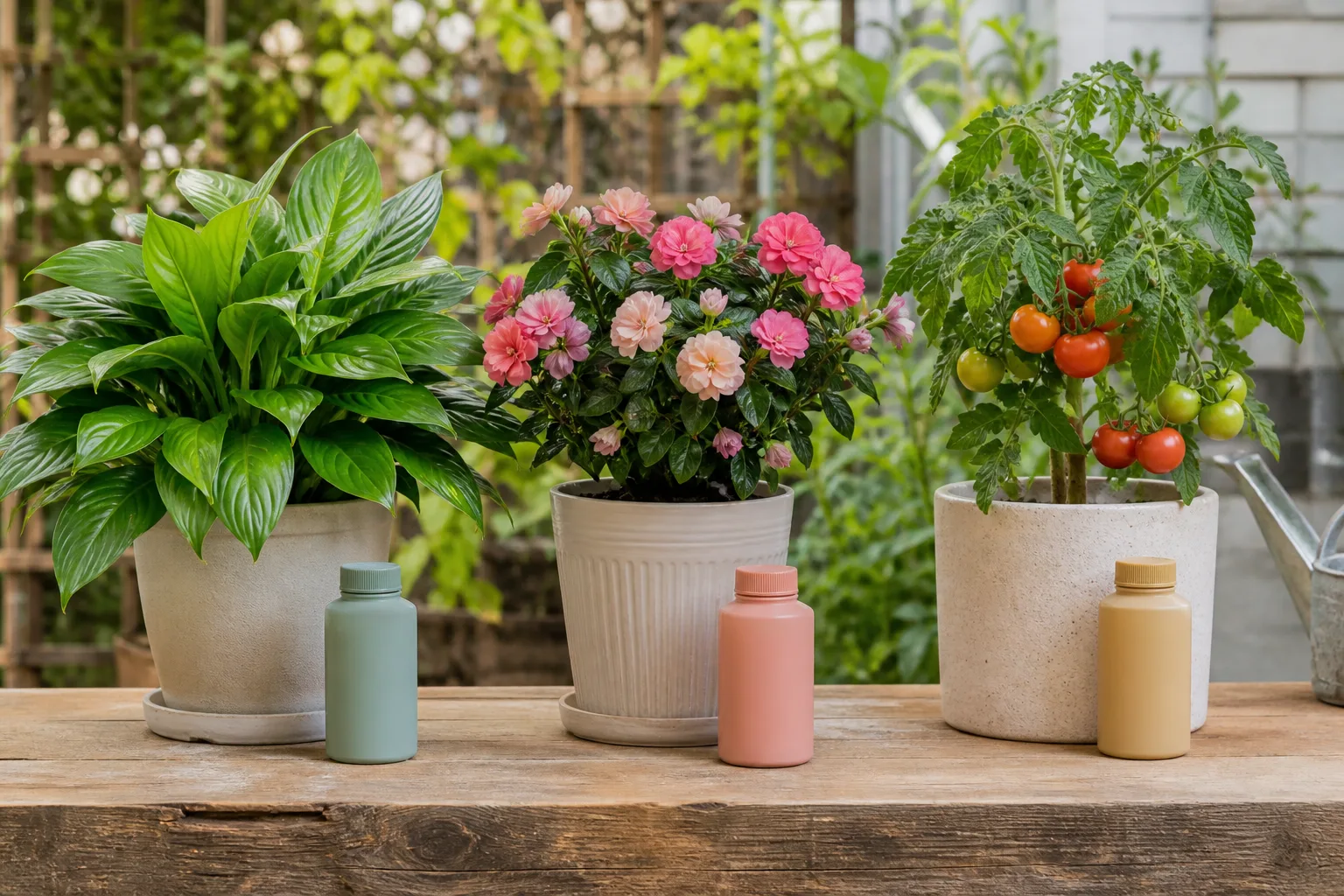
The three numbers on a fertilizer label are the N-P-K analysis: the percentage by weight of nitrogen, phosphate expressed as phosphorus, and potash expressed as potassium. Texas A&M’s example explains why a 10-20-10 product contains twice as much nitrogen and phosphorus per pound as a 5-10-5 product, even though both have the same proportional pattern (Texas A&M’s explanation of fertilizer analysis).
Do not assume the middle number is a “flowering score.” A 2-4-1 fish emulsion contains more nitrogen than phosphorus in absolute percentage, even though phosphorus is twice the nitrogen number in the ratio. The correct reading is the whole analysis, the amount applied, and what the soil and plant actually need.
If your goal is fall flowers, avoid using a nitrogen-heavy product simply because it makes foliage turn greener quickly. Excess nitrogen can produce lush leaves and long stems while delaying or reducing flowers, particularly on plants that are already growing vigorously. Conversely, a high-phosphorus product is not automatically a better choice: Wisconsin Horticulture advises using soil-test results to determine phosphorus and potassium needs because these nutrients can accumulate and excess phosphorus can contribute to water-quality problems (Wisconsin Horticulture’s soil P and K guidance).
Fish emulsion vs bloom booster vs compost
Fish emulsion is useful when you want a diluted, liquid feed that can be stopped or adjusted at the next watering. It generally provides modest amounts of several nutrients and may also contain smaller amounts of other elements, but the label remains the authority. Its downsides are a noticeable odor, variable analysis, and the possibility of plant damage if concentrated solution lands on dry roots or foliage.
A “bloom booster” is usually a fertilizer with a higher phosphorus number. It may be appropriate where a soil test or crop-specific recommendation identifies a phosphorus need, but it is not a universal cure for poor flowering. Adding phosphorus to a soil that already has enough is wasteful and can create runoff concerns without solving a light, water, temperature, or pruning problem.
Compost and well-rotted organic matter work differently. They improve the soil’s physical condition and contribute nutrients gradually, but they are not a precise substitute for a liquid fertilizer when a container plant needs a measured feed. In a bed, a thin top-dressing of finished compost can be a long-term soil-building step; fish emulsion is the more immediate, controllable input. Use them for different jobs rather than stacking everything at once.
Check the plant before feeding
Before mixing fish emulsion, inspect the plant from the soil line to the newest bud. A flower that is not blooming may be hungry, but it may just as easily be receiving too little light, staying too wet, losing roots, or spending its energy recovering from heat. Fertilizer cannot compensate for those bottlenecks.
Rule out light, water, roots, and pests first
Start with light. Most sun-loving annuals and many flowering perennials need several hours of direct sun to make and support buds. If nearby plants, a seasonal shadow, or a moved container has cut the light, feeding will mostly encourage whatever foliage the plant can make. Move a container gradually if it needs more sun; do not take a heat-stressed plant from shade to harsh afternoon exposure in one step.
Next, check water and drainage. The root ball should be moist but not permanently saturated. A pot that drains freely but dries within hours may need a larger root zone or more frequent watering; a bed that stays slick and wet after rain may need drainage correction instead of fertilizer. Wilting with wet soil is a warning to inspect roots, not a signal to add plant food.
Look beneath leaves and around buds for aphids, thrips, mites, chewing damage, or sticky residue. Pests can remove enough sap to stop a plant from flowering even when nutrients are present. Also check whether the plant has been recently transplanted, cut back hard, or exposed to a heat wave. Recovery comes first; feeding a plant in shock creates another variable and makes the diagnosis harder.
Annuals, perennials, containers, and roses need different plans
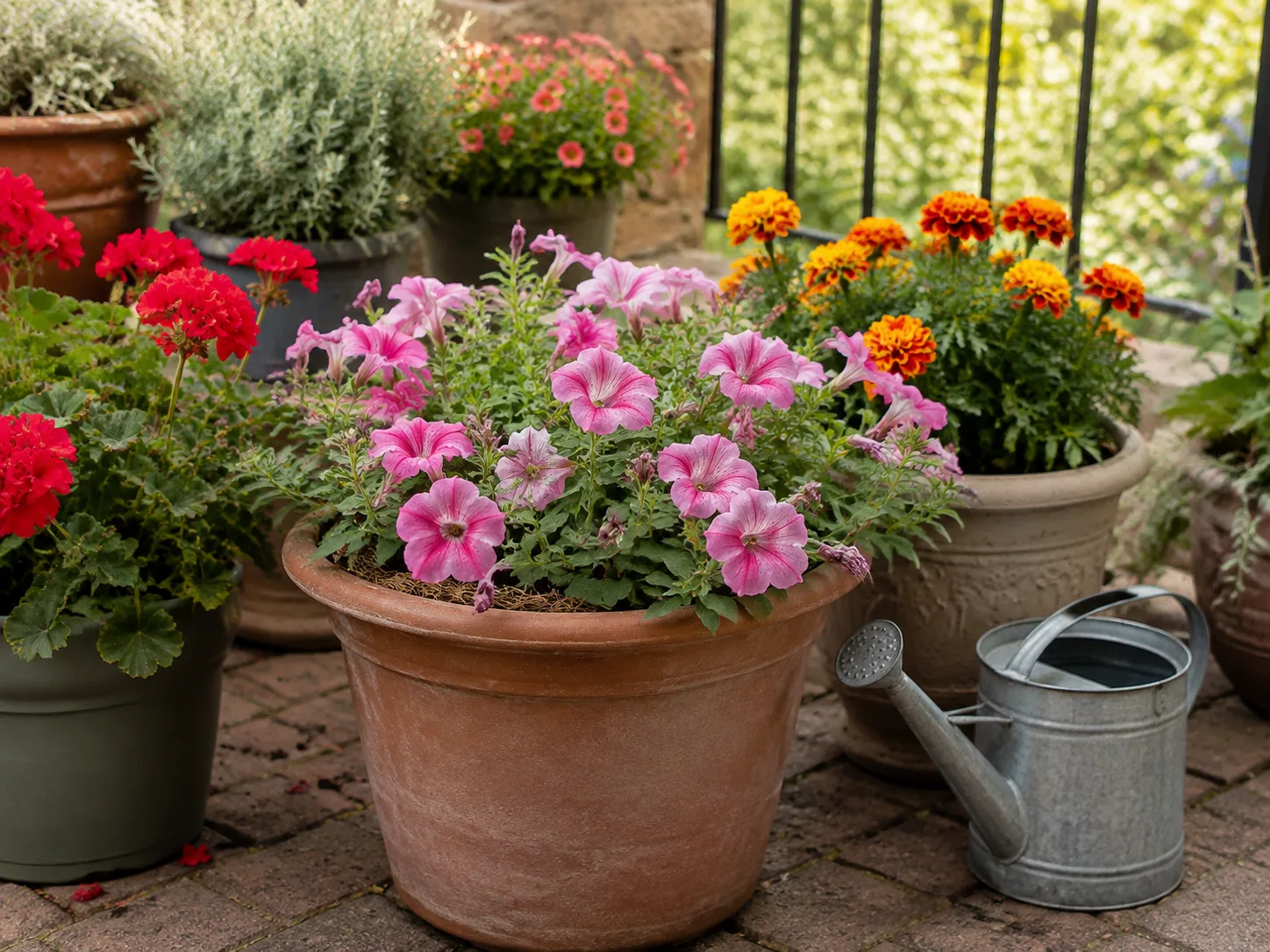
Annual bedding plants such as petunias, zinnias, marigolds, and many salvias often keep growing and flowering until cold weather ends the season. If they are in full sun and actively producing new growth, a label-rate fish emulsion feed can fit their routine. Containers may need more attention than beds because repeated watering carries nutrients out of a small volume of potting mix, but they also accumulate salts quickly when drainage is poor.
Established perennials usually do not need repeated late-season feeding just because flowers are fading. Their roots and crowns are preparing for dormancy, and some late bloomers naturally slow as nights cool. Dahlias are a special case because they can flower heavily until frost, but their tender tops and tubers have a hard seasonal limit. Chrysanthemums, asters, coneflowers, roses, and other perennials should be judged by their species, current growth, and local weather rather than by a single universal calendar.
Roses and other repeat bloomers can benefit from a consistent feeding program during active growth, but a late application should not force soft new growth just before a freeze. If a plant is healthy and already setting buds, water consistency and deadheading may be more valuable than another dose. The goal is a strong plant that finishes its season well, not the greenest possible foliage in October.
How to apply fish emulsion without burning plants
Use the bottle’s label as the starting point because fish emulsion products differ in concentration, intended crop, and directions. A generic recipe copied from another product can deliver several times the intended nutrient load. The safest routine is simple: shake the product, measure accurately, dilute in clean water, and apply to a growing plant whose soil is not bone dry.
Dilute by the product label, not a generic internet recipe
Measure the amount for your crop and application volume; do not estimate with a splash. If the label offers a range, use the lower end for a first application, young plants, hot weather, containers with small root balls, or plants that have not been fed recently. A weaker, repeatable feed is easier to correct than a strong dose that scorches roots.
Do not increase the concentration because the plant looks pale after one day. Nutrient uptake and new growth take time, and pale leaves may have causes other than hunger. Never mix multiple fertilizers, compost teas, bloom boosters, or foliar products in the same can unless the labels specifically allow it. Combining inputs makes it impossible to know which one caused a burn or leaf distortion.
Apply to moist soil and keep it off petals
Water the plant normally first if the soil is dry, then apply the diluted solution around the root zone rather than dumping it against the crown or onto open flowers. A moist root ball distributes the solution more evenly and reduces the shock of concentrated salts or organic nutrients contacting dry roots. Fish emulsion can be used as a foliar spray only when the product label expressly permits it; a soil drench is the more forgiving default for flowering plants.
Keep the spray or splash off patios, driveways, and storm drains. Wisconsin Horticulture notes that fertilizer landing on hard surfaces can move with rain into waterways. Wipe up spills, apply when rain is not about to wash the product away, and water only enough to move the solution into the root zone rather than creating runoff.
Expect odor. Fish-based fertilizer can smell strongest soon after application, so apply it early in the day and not immediately before a garden gathering. Store the container securely; the smell may interest pets or wildlife. The odor is a nuisance, not proof that the product is working, and it is a good reason to avoid overapplying in a small urban garden.
A simple fall feeding schedule
Use plant activity and frost timing to set the schedule:
- At the start of the fall transition: Check light, drainage, pests, and soil moisture. If the plant is healthy but has been growing strongly, apply one low-end, label-rate feeding.
- Two to four weeks later: Feed again only if the plant is still actively growing, the label permits that interval, and there are no signs of burn or excess foliage. Containers may need the shorter end of the interval; established, slow-growing perennials may need none.
- As nights cool and growth slows: Stretch the interval or stop. Do not keep summer feeding rates simply because flowers remain open.
- Before a hard frost or dormancy: Stop routine feeding. Concentrate on watering appropriately, removing diseased material, supporting tall stems, and protecting plants that are actually hardy enough to survive.
There is no responsible schedule that guarantees flowers until a particular date. A warm autumn may give you another flush; an early frost may end it despite perfect care. The schedule should follow growth, not the label of a calendar month.
Build a bloom-supporting routine around fertilizer
Fertilizer works best as one part of a maintenance loop. Remove spent flowers when the plant benefits from it, keep the root zone evenly supplied with water, protect roots with appropriate mulch, and watch the weather. Those steps reduce the amount of nutrient demand that gets wasted on seed production or stress recovery.
Deadhead with the plant’s next bud in mind
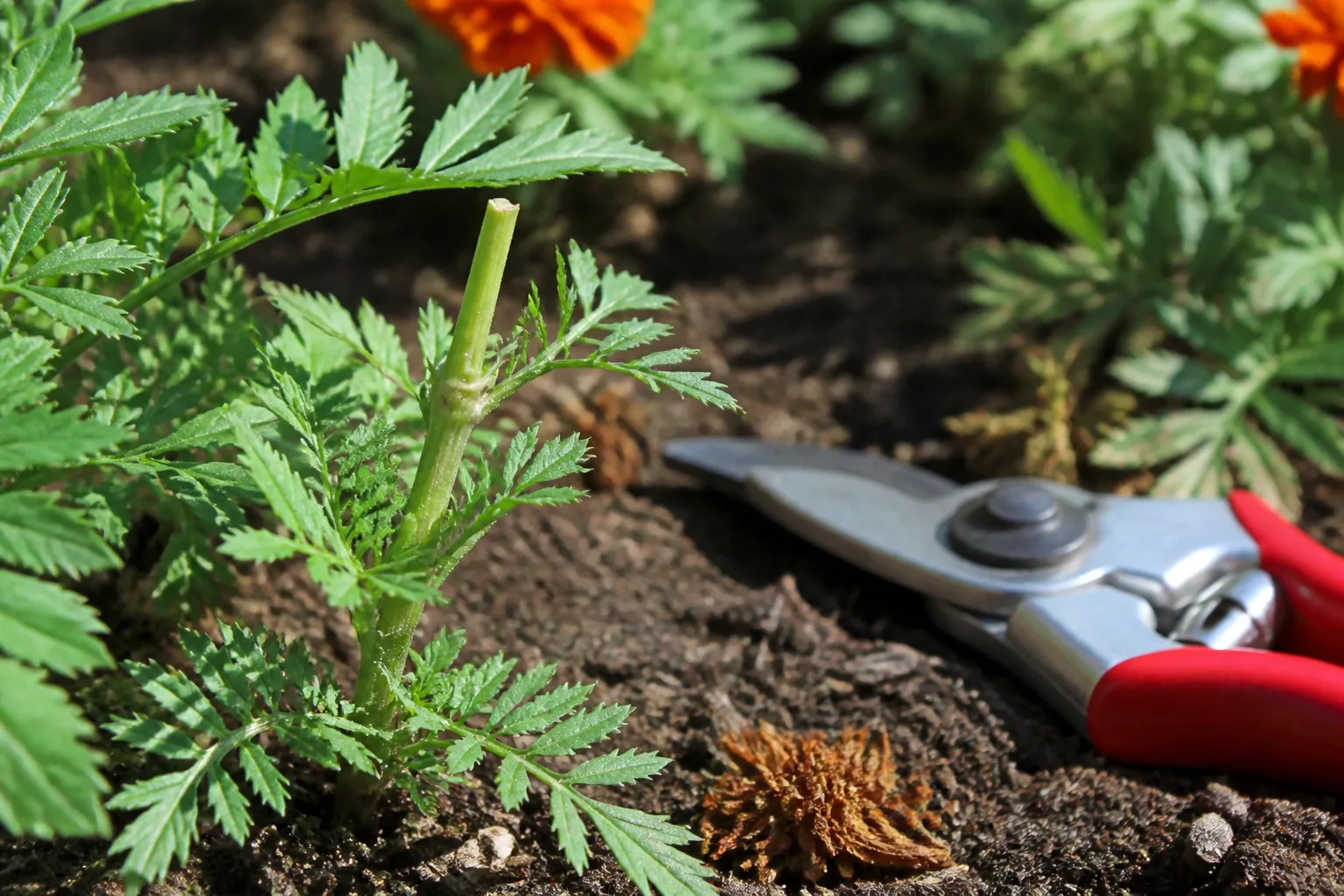
Deadheading removes fading flowers before the plant invests heavily in seed production. The Royal Horticultural Society recommends removing spent blooms regularly and cutting to just above the next bud or leaf on many plants; the timing can range from daily for bedding displays to weekly or every other week for some perennials (RHS guidance on deadheading plants).
The cut point matters. On a petunia or marigold, pinch the faded flower and its short stalk. On a rose, cut back to a strong leaf or bud according to the plant’s growth habit. On a plant with a flower spike, remove the finished head while leaving lower developing buds. Use clean, sharp shears for thicker stems and disinfect them between plants when disease is present.
Do not deadhead automatically. Leave seed heads on plants that provide winter food or structure, on flowers you want to self-sow, and on plants whose seeds are part of the display. Some bulbs need their green foliage left in place after the flower fades so the leaves can recharge the underground storage organ. Deadheading is a tool for repeat bloom, not a rule that every brown flower must disappear.
Mulch the root zone, not the crown
A layer of organic mulch helps moderate soil temperature, reduce evaporation, and limit splash onto lower leaves. It does not feed a plant as precisely as fertilizer, and it should not be piled against stems. Keep mulch a few inches away from crowns and woody bases so moisture and decay do not create a chronic disease-friendly pocket.
Use finished compost, shredded leaves, or suitable bark mulch according to the bed and local availability. Keep the layer modest enough that water can reach the soil. If the bed is already heavily mulched and the soil test shows adequate nutrients, adding fish emulsion on top of more organic material may be unnecessary. Mulch stabilizes the root environment; it does not rescue roots from standing water.
When fish emulsion is the wrong choice
Skip fertilizer when the plant is severely wilted, newly transplanted, badly infested, diseased, or sitting in saturated soil. Correct the immediate stress first and wait for fresh growth. Feeding a dormant or frost-damaged plant cannot restart tissue that has already stopped functioning.
Skip feeding in drought, heat, disease, or dormancy
During extreme heat, roots may not be taking up water normally, and tender new growth is more vulnerable to damage. Water deeply according to the plant’s needs and apply fertilizer after the root zone has recovered, not at the hottest point of the day. If a plant is drought-stressed, the first treatment is moisture and shade protection where appropriate.
For a plant with root rot or persistent poor drainage, fertilizer increases the concentration of material around roots that are already failing. Improve drainage, remove damaged roots if repotting is appropriate, and adjust watering before considering a feed. For a plant covered in pests, identify and manage the pest; extra nitrogen can produce soft growth that is attractive to some sap-feeders.
Finally, do not add phosphorus just because flowers are involved. Soil tests are the best way to determine available phosphorus and potassium, and phosphorus changes more slowly in soil than nitrogen. A test is especially valuable if you fertilize regularly, garden near a pond or stream, or have inherited a bed that received years of manure or bloom booster.
Troubleshoot no blooms after feeding
If flowers still do not appear after a careful fish emulsion application, do not immediately apply more. Start with the most common explanations: not enough direct light, excess nitrogen, temperature stress, inconsistent watering, the wrong pruning time, a young plant, pest damage, or a natural pause between flushes. A healthy-looking plant that is all leaves and no buds often received too much nitrogen or too little light, not too little fertilizer.
Check the newest growth and the root zone. Brown leaf margins, crispy tips, a white crust on soil, sudden wilt, or a sour-smelling potting mix points toward salt stress or root trouble. Stop feeding, flush a container with plain water if it drains freely, and let the mix approach the plant’s normal moisture level before changing anything else. Do not flush a poorly draining pot and leave it sitting in a saucer of water.
If the plant is green but flowers drop, examine heat, drought, thrips, and abrupt changes in light. If it makes buds but they never open, look at night temperatures, water swings, and whether the plant is being moved or pruned at the wrong stage. If it flowers once and then pauses, it may simply be between cycles; deadhead where appropriate and give it time rather than stacking fertilizer.
For outdoor beds, inspect where the solution went after the last rain. Runoff, overspray, and fertilizer on paving are preventable losses. If the plant is approaching its first frost, accept the seasonal limit and collect seed, take cuttings where suitable, or plan a better site for next year. A bottle cannot turn a short-season flower into a winter perennial.
Conclusion
Fish emulsion can help flowers continue active growth into fall, but its value comes from correct timing and restraint, not from a promise that one fertilizer will defeat the seasons. Choose a product whose label suits the plant, read the N-P-K analysis, dilute exactly as directed, and apply to moist soil only when the plant is growing and the root system is healthy.
Then do the work fertilizer cannot do: provide enough light, keep moisture steady, deadhead plants that reward it, mulch without smothering the crown, and stop feeding as growth slows or frost approaches. If flowers are still missing, diagnose the site before reaching for a stronger formula. The healthiest fall display usually comes from matching the plant’s biology to the weather—not from adding more of anything.



