Philodendron Florida Green Care: Light, Water & Soil
Keep Philodendron Florida Green growing well with a soil-check watering routine, bright indirect light, climbing support, propagation steps, and troubleshooting.
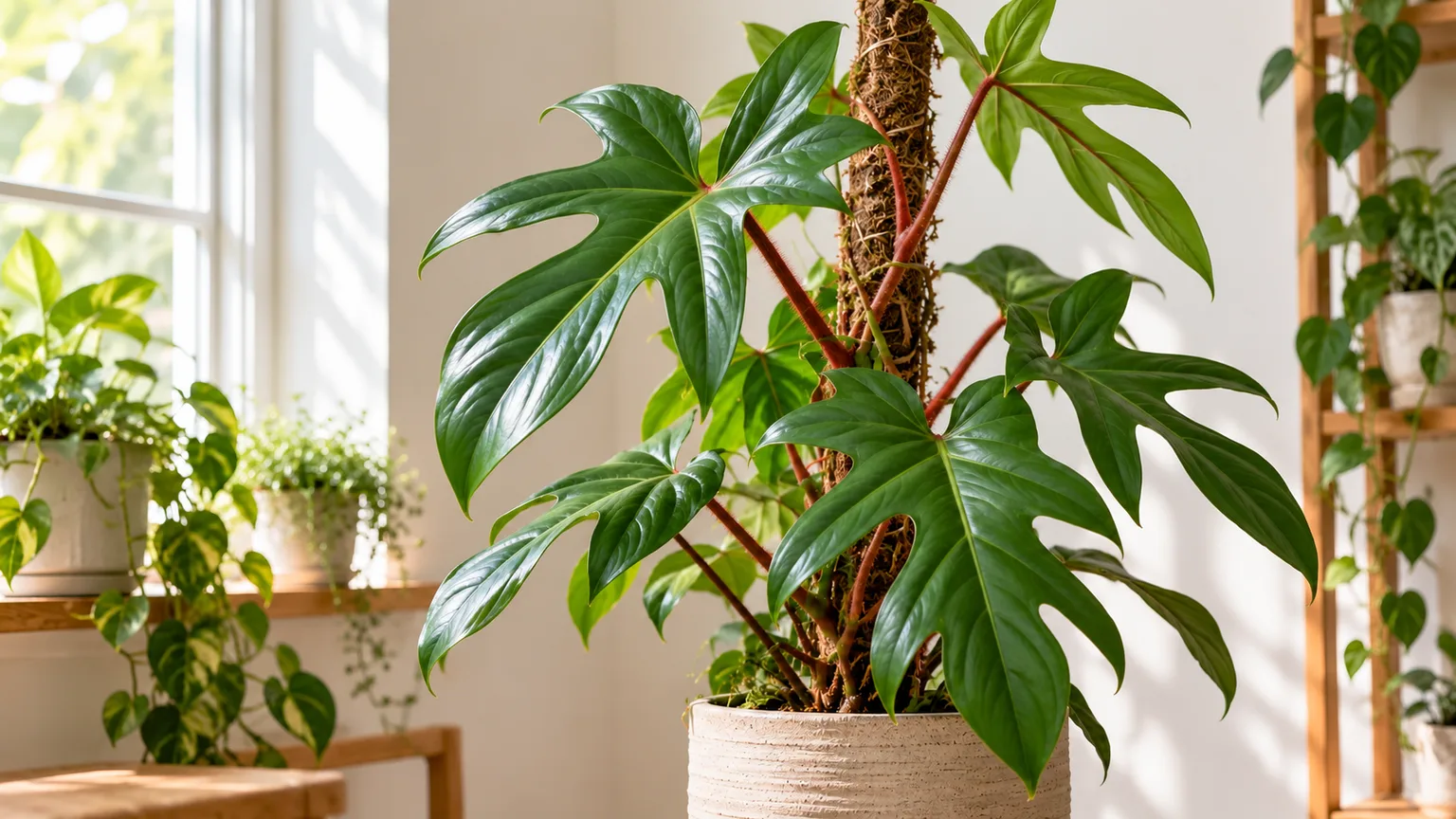
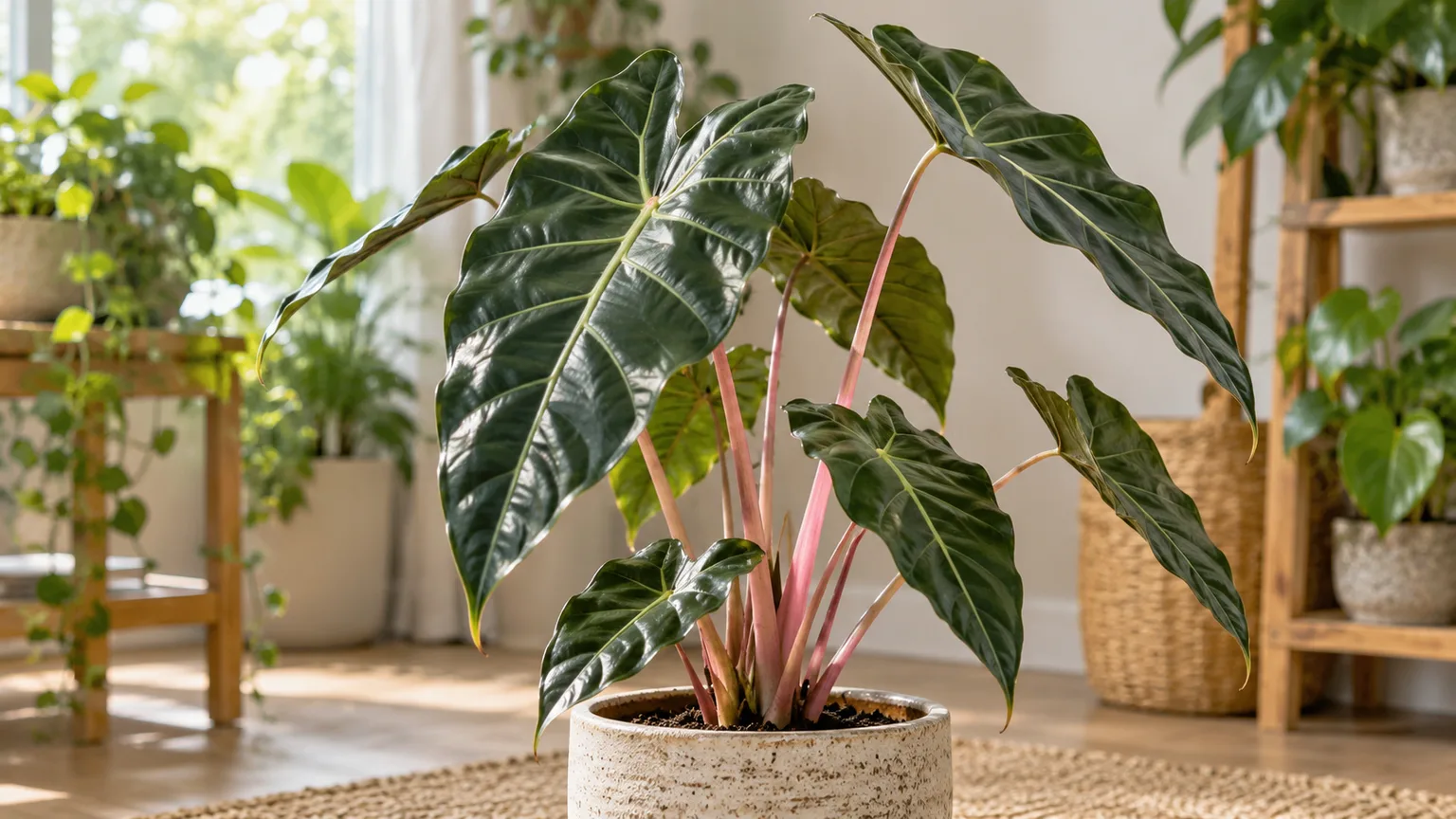
Philodendron ‘Florida Green’ is a climbing aroid with glossy, deeply lobed leaves and reddish petioles that may feel slightly bristly. Caring for it is straightforward once you solve two practical questions: where the vine will climb and how quickly its potting mix dries in your home. Give it warm conditions, bright filtered light, and roots that get both moisture and air; a fixed watering calendar or a waterlogged pot is more likely to cause trouble than a missed dose of fertilizer.
This plant is sometimes sold as Philodendron Florida or Florida Green. It is often described as a hybrid of Philodendron squamiferum and P. pedatum. Since information about named collector hybrids is less standardized than for common species, treat exact origin details as horticultural history rather than a formal care requirement. A plant can thrive without knowing its pedigree as long as you recognize its climbing habit and monitor what its leaves and roots are telling you.
Philodendron Florida Green at a Glance
| Care factor | Practical target | What to watch |
|---|---|---|
| Light | Bright, indirect light for much of the day | Long gaps between leaves suggest too little light; bleached patches suggest harsh sun |
| Water | Water when the top inch of mix dries | Heavy, cool, wet soil for days raises root-rot risk |
| Soil | Loose, airy mix that holds some moisture | Water should drain freely rather than pool on top |
| Temperature | About 65–85°F (18–29°C) | Protect it from cold glass, drafts, and air-conditioning blasts |
| Humidity | Average home humidity is workable; higher can help | Crispy margins may also come from dry soil or salt buildup |
| Support | Pole or trellis for an upright climber; trailing is possible | A support is easier to install before the stem gets long |
| Repotting | When roots crowd the pot or mix stops behaving well | A bigger pot is not automatically better |
| Safety | Keep leaves and sap away from pets and children | Philodendron sap and chewed tissue can irritate |
North Carolina State Extension describes philodendrons as warm-growing plants that prefer bright indirect light and moist, well-drained soil, while noting that needs vary among species. Its genus guidance gives a useful starting range of 65–85°F and says many philodendrons adapt to average household humidity; use those as broad guardrails rather than guarantees for every Florida Green. North Carolina State Extension’s Philodendron overview also separates climbing types with aerial roots from self-heading types, which matters when you choose a support.
Identify Florida Green and Understand Its Growth Habit
The easiest visual clues are a green, dissected leaf and a stem with reddish petioles. The leaves may become more deeply lobed as the plant matures, so a small nursery specimen can look less dramatic than a larger, supported vine. The Florida Green name is also used in collector plant listings, and young leaves can differ in shape from mature foliage; use several traits together rather than relying on one leaf.
The hybrid is commonly described as a cross between P. squamiferum and P. pedatum, with its lobed foliage and textured petioles reflecting that parentage. Easy Care Houseplants credits Florida plant breeder Robert McColley with the cross, but accessible accounts do not establish a registered origin record. Easy Care Houseplants’ Florida Green guide is useful for this cultivar-specific description; care ranges here are practical indoor starting points, not a promise of identical growth in every home.
Florida Green is a climber, not a compact rosette. It makes aerial roots along its stem and can be guided onto a pole or trellis. If left unsupported, it can sprawl or hang, which is a valid choice when you have shelf or basket space. A young plant’s first priority is acclimating to your light and watering conditions; do not repot, fertilize, and install a rigid support all at once just because it arrived in a small nursery pot.
It also helps to avoid borrowing advice from the wrong growth form. Philodendron covers both climbers and self-heading plants; a large upright tree philodendron can tolerate conditions that would stress a climbing collector hybrid. Gardening Know How’s tree philodendron guide describes a different form, a useful reminder to identify the plant’s habit before copying light, outdoor, or size recommendations.
Give It Bright, Indirect Light
Place Florida Green where it receives strong ambient daylight without prolonged, hot afternoon sun falling directly on the leaves. An east-facing window often works well; at a bright south- or west-facing window, set it back from the glass or use a sheer curtain. In a dim room, supplement with a grow light or move the plant closer to a window before expecting long, sturdy stems and larger mature leaves.
“Indirect” does not mean dark. A room can feel bright to a person while the spot behind a sofa receives little usable light. Watch growth over several weeks: unusually long spaces between leaves, leaning toward the window, and new leaves staying smaller can indicate the plant needs more light. Move it in stages if the current spot is very dim so it can adjust without suddenly receiving intense direct sun.
Florida Green is solid green, unlike variegated Florida Beauty and Florida Ghost. It does not need extra-bright conditions to preserve white or ghostly markings, because it has no such pattern to maintain. Its deep green foliage still needs enough light for sturdy growth. Pale or yellowed patches on the window-facing side point toward excess direct sun, while a general slowdown with increasingly stretched stems points more toward inadequate light. These are clues, not diagnoses; confirm the watering and root conditions before making several changes.
Water by Soil Condition, Not by Calendar
Let the top inch (about 2.5 cm) of potting mix dry before watering, then water slowly until excess runs from the drainage holes. Empty the saucer or decorative cachepot after the pot has drained. This moist-but-aerated rhythm suits a tropical climber better than either keeping the whole root ball saturated or letting it dry until the leaves collapse.
The time between waterings changes with season, light, pot size, pot material, and indoor temperature. A small plant in a warm bright room may dry much faster than the same plant in a large plastic pot during a dark winter. Use a finger or wooden skewer to check the mix below the surface; the top can feel dry while the center remains wet. If the pot still feels heavy and the mix clings to the skewer, wait and check again rather than watering because a set number of days has passed.
When you do water, a full soak followed by complete drainage is usually easier to manage than frequent small sips. Small top-ups can leave part of the root ball dry while keeping the surface damp, and water sitting in a cover pot removes the air roots need. If the soil repeatedly stays wet for a week or more, check that drainage holes are open and consider whether the mix is too dense or the pot is oversized. Do not try to solve slow drying by letting a stressed plant wilt; fix the container and substrate.
Choose an Airy Aroid Mix and a Draining Pot
Use a potting mix that holds some moisture but does not compress into a dense, soggy mass. A practical home blend is two parts indoor potting mix or coco coir, one part orchid bark, and one part perlite or pumice. The base provides water retention; bark and mineral particles create larger air spaces so roots can take up oxygen between waterings. If your home is very dry or the plant is in terracotta, keep a little more base mix; if the pot stays wet, increase the coarse fraction.
You do not need to chase an exact pH or buy a branded “aroid” bag. The useful test is how the mix behaves after a thorough watering: water should move through it, the pot should drain freely, and the root zone should not remain saturated. If water races down the pot wall while the center stays bone-dry, the mix may have become hydrophobic or compacted; rewet the root ball slowly and plan to refresh the medium when the plant is actively growing.
Choose a pot with unobstructed drainage holes and only modestly more room than the root ball. A nursery pot can sit inside a decorative cachepot, but lift it out to water and drain. A pot without drainage makes it hard to correct watering mistakes and increases the chance that roots stay wet. Avoid adding a deep gravel layer to the bottom; it does not substitute for drainage holes or a suitable mix.
Keep Temperatures Warm and Humidity Comfortable
A steady indoor temperature around 65–85°F (18–29°C) is a sensible target. Avoid cold drafts from exterior doors and windows, and do not leave the plant pressed against winter-cold glass or over an air-conditioning vent. Temperature swings and chilled wet soil can stall growth even when the room otherwise seems comfortable. If moving it outdoors for summer, wait until nights remain warm, place it in shade or filtered light, and bring it in before cool nights return.
Florida Green often appreciates higher humidity, particularly while unfurling leaves, but you do not need to turn a living room into a greenhouse. North Carolina State Extension notes that philodendrons generally prefer humidity yet can adapt to average household air. A room humidifier is more predictable than misting; place a hygrometer near the leaves if you need to know whether the air is actually dry. Pebble trays may make a small local change but are not a reliable way to humidify an entire room.
If brown edges develop, look at the full pattern before blaming humidity. Check that the root ball is not cycling between bone-dry and saturated, that the plant is away from heat vents, and that fertilizer or hard-water salts are not accumulating as a white crust. Raise humidity gradually if the room is consistently dry and the plant still develops crisp new margins. Keep airflow around foliage; persistently wet leaves and stagnant air can encourage leaf-spot problems.
Decide Whether to Train It Up or Let It Trail
A pole or trellis is optional, but it suits Florida Green’s natural climbing habit. A vertical support keeps a long vine from sprawling across shelves and gives aerial roots somewhere to attach. Many climbing philodendrons produce larger, more mature-looking leaves when they grow upward; this is a useful tendency, not an instant transformation or a guarantee that every leaf will reach a particular size.
Choose the support before the vine becomes awkward to handle. A sturdy trellis is low-maintenance and easy to position, while a moss or coir pole offers a textured surface for roots to grip. Put the support into the pot without forcing it through a dense root mass, then loosely tie the stem with soft plant tape or a flexible tie. Secure the stem, not the leaf petiole, and leave room for it to thicken. Never cinch a tie tightly around a growing stem.
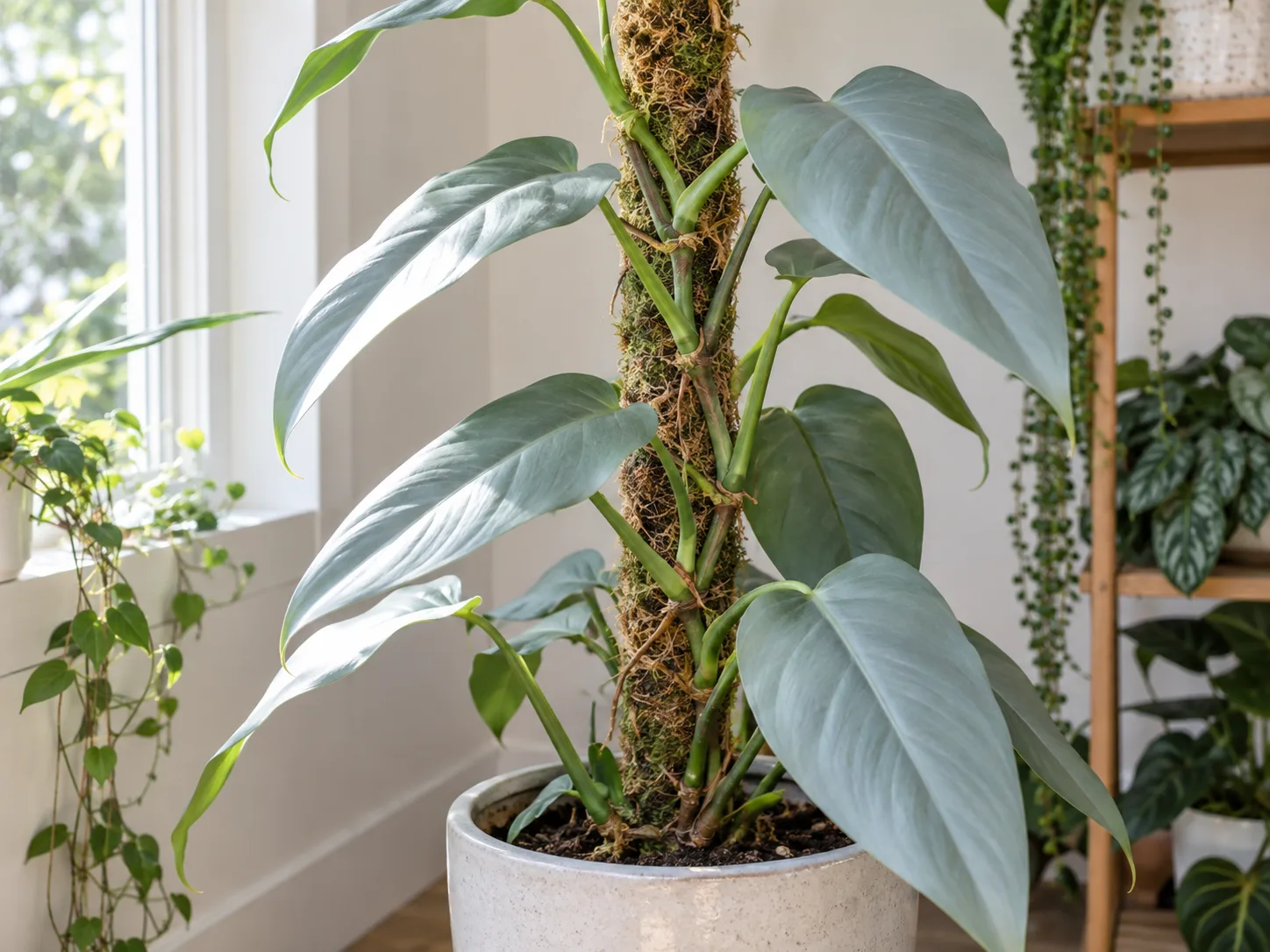
If you prefer a trailing display, use a shelf or hanging basket that can support the pot’s weight and keep the vine out of pets’ reach. Trailing does not harm the plant, but growth may remain smaller and more widely spaced if it also receives weak light. Rotate the pot when growth leans strongly toward a window. For a long-established vine, train one section at a time rather than bending a brittle stem sharply around a pole.
Feed Lightly During Active Growth
Florida Green does not need heavy feeding to produce new leaves. During spring and summer, apply a balanced liquid houseplant fertilizer at the label’s lower recommended strength every four to six weeks, or use a slow-release product according to its label. Begin conservatively if the plant is newly purchased or recently repotted; fresh commercial mix often contains some fertilizer, and a stressed root system is not ready for extra salts.
Do not feed on a strict monthly schedule through winter when light and growth slow. Fertilizer cannot compensate for a dark location, root rot, or a potting mix that stays saturated. If the newest leaves are small, first assess light, support, root crowding, and temperature. Yellowing leaf edges with a pale crust on the potting mix can signal salt buildup rather than hunger; pause fertilizer and water thoroughly so excess salts can drain away.
Prune for Shape and Healthy Nodes
Prune to control length, remove damaged leaves, or take a cutting—not because the plant needs routine shearing. Use clean, sharp scissors or pruners and cut the stem just above a node when shortening a vine. A node is the joint where a leaf and often an aerial root emerge; it is also the section needed for propagation. Cutting only a leaf blade will not produce a new vine.
Pruning during active spring or summer growth gives the plant a longer recovery window. If the plant has one very long runner, remove no more than you can comfortably support and maintain; leaving several healthy leaves gives the remaining stem energy to push new growth. A cut stem may branch from a node below the cut, but the exact response depends on the plant and conditions. Do not strip most of the foliage to make a small specimen look “fuller” in one day.
Philodendron sap can irritate skin or eyes. Wear gloves if you are sensitive, keep the cuttings away from children and animals, and wash your hands and tools after pruning. Remove yellowing leaves at the base only after checking whether the change is limited to one old leaf or spreading across the plant. Pruning the symptom does not correct a watering, light, or root problem.
Propagate from a Stem Cutting with a Node
Use a healthy stem cutting that includes at least one node; a leaf with its petiole but no node cannot grow into a new plant. Take the cutting during active growth if possible, using a clean blade to cut just below the node. Keep one or two leaves on the cutting and remove any leaf that would sit underwater or below the surface of the rooting medium.
For water rooting, place the node below the water line and the leaves above it in a clean jar. Set the jar in warm, bright indirect light, refresh the water when it becomes cloudy, and check that the cutting has not slipped so that the node is dry. A small amount of water that evaporates is fine; do not leave the jar in hot direct sun, where water temperatures can swing.
For soil or sphagnum rooting, use a small pot or propagation container with drainage and a lightly moist, airy medium. Keep the node in contact with the mix, not buried under a heavy wet layer. Covering the container can hold humidity, but leave space around leaves and vent it if condensation stays heavy. In either method, look for roots and new growth rather than promising a fixed date; temperature, season, and cutting maturity all affect timing. When water-grown roots are a few inches long, pot the cutting into a small pot and keep the mix evenly damp while it transitions. Avoid moving it straight into a large pot.
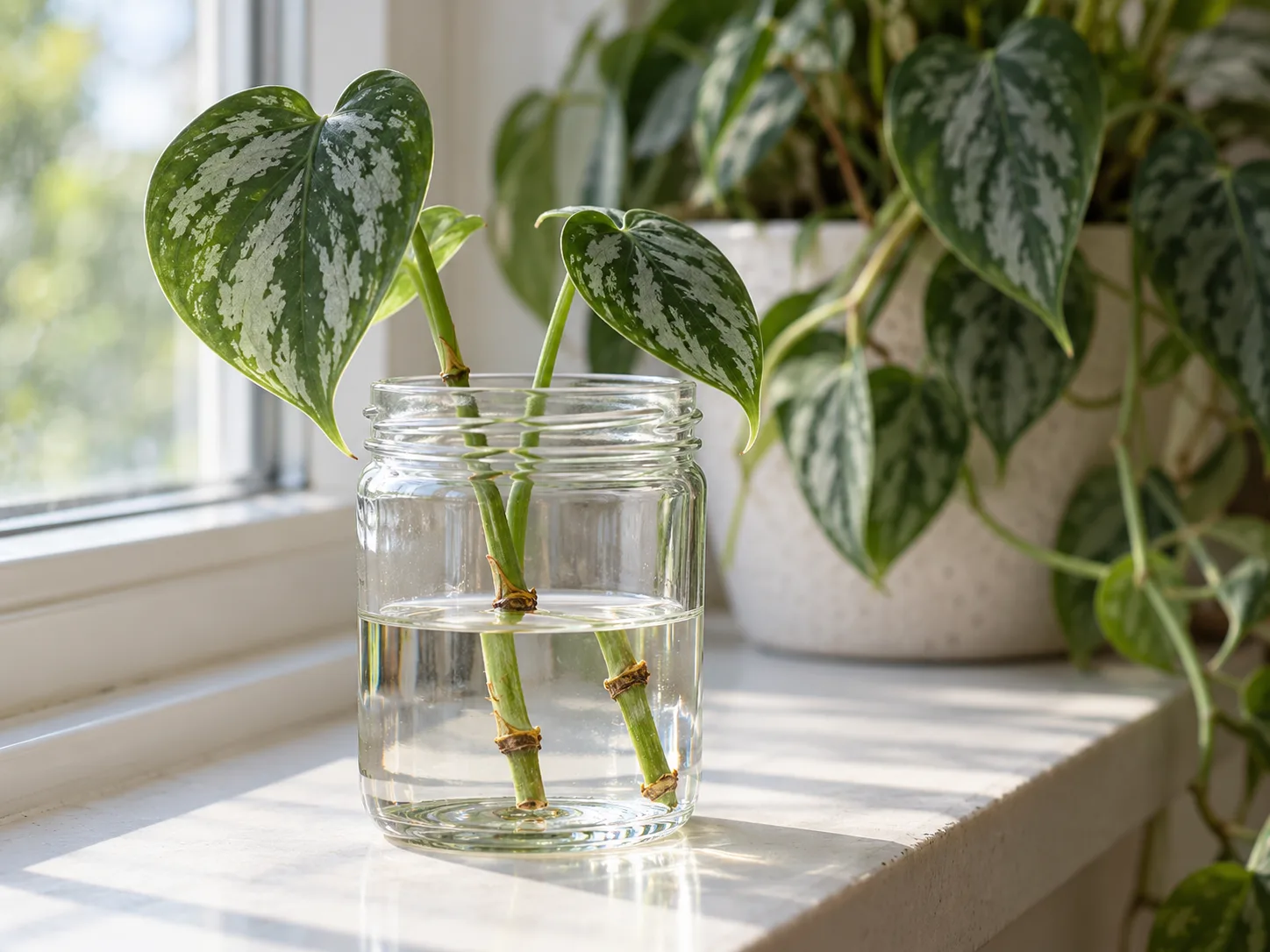
Easy Care Houseplants describes Florida Green as readily propagated from stem cuttings, while North Carolina State Extension’s Philodendron overview lists stem cutting and layering as propagation options across the genus. The critical detail for a stem cutting is the node: leaves and aerial roots emerge there, and new roots form from that point. Keep a cutting’s identity attached to it if you are propagating several cultivars; similar juvenile leaves can be hard to tell apart later.
Repot When Roots Show You It Is Time
A calendar estimate of every two or three years is only a starting point. Repot when roots circle densely, emerge from the drainage holes, or the root ball dries much faster than it used to despite normal conditions. If a healthy plant is growing steadily and watering remains predictable, there is no benefit in disturbing it just because an anniversary has arrived.
Move the plant up one pot size at a time, choosing a container only a little wider than the root mass. Oversized pots hold a large volume of unused wet mix around a small root system, which can leave the middle soggy for too long. Spring is a convenient time because the plant is entering active growth, but a root-bound plant with poor drainage should not be left in crisis simply to wait for a particular month.
Before repotting, water lightly if the mix is bone dry so the root ball does not crumble. Slide the plant out, loosen only the outer circling roots, and trim any soft, black, or foul-smelling roots with clean tools. Set the root crown at the same depth in fresh airy mix, firm it gently, and water until the excess drains. Leave fertilizer off for a few weeks while the roots settle, and expect a short pause in growth after the move.
Prevent and Manage Common Houseplant Pests
Check leaf undersides, stem joints, and the base of new leaves when you water or rotate the plant. Mealybugs hide in creases as white cottony spots; scale can look like fixed brown bumps; spider mites may leave pale stippling and fine webbing. Fungus gnats are more often a sign of persistently damp potting mix than a direct threat to a mature Florida Green. North Carolina State Extension includes mealybugs, scale, and spider mites among pests to monitor on philodendrons.
Isolate a new or infested plant from the collection while you inspect it. For a small outbreak, wipe visible insects away and rinse foliage, taking care not to leave the potting mix waterlogged. If you use insecticidal soap or horticultural oil, choose a product labeled for indoor plants and the pest, test a small area first, and follow label directions exactly. Do not mix household cleaners or apply repeated sprays in hot sun.
Recheck the plant after treatment because eggs and hidden insects may survive the first pass. Avoid treating a plant solely because one leaf is yellow or curled; those signs have several possible causes. Inspect first, identify an actual pest, then match the response to the pest and the product label. Good airflow and a clean, not constantly wet, growing mix reduce conditions that favor recurring problems.
Troubleshoot Changes in Leaves
A symptom is a clue, not a verdict. Look at how many leaves are affected, where the damage appears, what the newest leaf looks like, and how wet the root zone feels before changing care. Correct one likely cause at a time and give the plant enough time to show new growth; existing damaged tissue usually will not turn green again.
Yellow Leaves and Slow Growth
One older leaf yellowing while new leaves look healthy can be normal turnover. Several yellow leaves appearing in quick succession, especially when the soil is still wet, point toward a root-zone problem. Check for an obstructed drainage hole, a cachepot with standing water, dense mix, or soft roots. If roots are dark and mushy, trim damaged tissue and repot into fresh airy mix rather than increasing light and fertilizer together.
When the mix is dry and leaves yellow or droop, the plant may be thirsty, though a very dry root ball can shed lower leaves. Rewater thoroughly and confirm the water penetrates the center. If a root ball has become hydrophobic, water slowly in several passes. Slow growth by itself is not an emergency in winter or after repotting; check light and temperature, then wait for the next leaf before intervening again.
Drooping, Curling, or Brown Edges
Drooping can follow either dry soil or damaged, waterlogged roots. Feel the mix before watering. A light pot with dry mix is a different situation from a heavy pot with cold, wet soil; watering both because the leaves hang can make the second plant worse. If the soil is appropriately moist, inspect for cold drafts, recent repotting, or pests rather than adding more water.
Curling and brown margins can result from low humidity, irregular watering, salt accumulation, or hot direct light. Check if the brown edge is crisp and dry or soft and dark, and note whether it faces the window. A white crust on the mix suggests salts: pause fertilizer and flush the pot with water that drains freely. If the room is genuinely dry, a humidifier may help new leaves, but a pebble tray or occasional mist does not replace correcting dry roots or heat exposure.
Pale Leaves and Scorch Marks
A pale or bleached patch on the side facing a hot window is more consistent with sun scorch than a nutrient deficiency. Move the plant back from the glass or filter the light; burned tissue will not recover, so judge the change by the next leaves. If all new leaves are progressively smaller and stems stretch, increase indirect light gradually instead of applying fertilizer first.
A leaf that emerges pale may darken as it hardens, so give it time before diagnosing a deficiency. Look at the plant as a whole: one older yellow leaf, pale new growth, and widespread yellowing do not mean the same thing. If color problems continue after light and watering are stable, check the roots and fertilizer history, then change only the factor that best fits the pattern.
Handle Sap and Pet Toxicity Carefully
Keep Florida Green where pets and children cannot chew it. Philodendrons contain calcium oxalate crystals; chewing can cause immediate irritation and swelling in the mouth, drooling, and difficulty swallowing. Poison Control explains that philodendron exposure can also irritate skin or eyes if sap is transferred there. Its guidance on philodendrons recommends rinsing exposed skin with soap and water and contacting Poison Control if you are concerned about an ingestion.
Wear gloves if you are sensitive to plant sap, and wash hands after pruning or handling damaged stems. Keep cuttings, fallen leaves, and water from propagation jars out of reach. The plant is not a safe choice for a shelf that a cat routinely jumps onto, even if the pot itself is high; use a closed room, stable hanging location well away from launch points, or choose a non-toxic plant for an accessible space.
If a child or adult chews the plant, remove any remaining pieces and rinse the mouth, then contact Poison Control for case-specific advice. Severe mouth swelling, difficulty swallowing, or breathing problems need urgent medical care. If a pet eats any part, call a veterinarian or animal poison-control service promptly and identify the plant as a philodendron; do not induce vomiting or try home remedies unless a veterinary professional tells you to.
Conclusion
Philodendron Florida Green grows best when you treat it as a warm, climbing aroid and pay attention to the pot rather than the calendar. Give it bright indirect light, an airy mix in a draining container, and water only after the surface layer dries; then empty the saucer so roots are not left in standing water. A pole is useful for an upright display, but a bright shelf can support a trailing vine just as well.
When growth slows or leaves change, check the soil, roots, and exposure before reaching for fertilizer or a humidifier. Prune above a node if you need to manage the vine, and include a node in any cutting you hope to root. With its support planned early, a measured watering routine, and safe placement away from chewers, Florida Green can settle into an indoor space without demanding greenhouse-level care.