15 Plant Shelf Ideas That Save Space and Suit Your Plants
Find a plant shelf idea for your space, from floating shelves to a bookcase or rolling cart, plus clear checks for light, shelf capacity, drainage, and care.
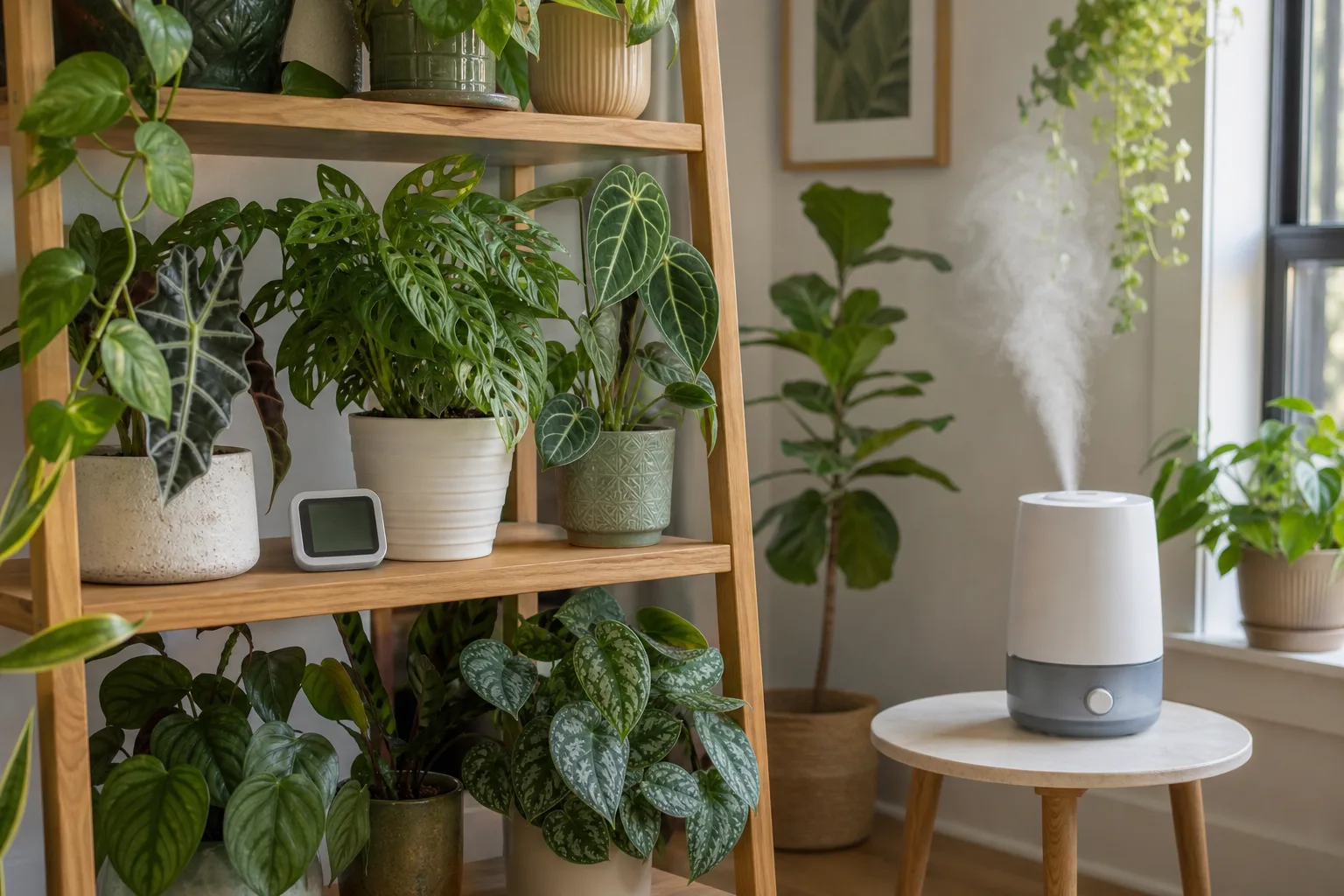
A good plant shelf gives greenery a clear place in the room and keeps everyday care manageable. The best setup is not necessarily the one with the most pots or the most dramatic wall: it is the one that gives each plant enough light, supports its wet weight, and leaves you room to water, prune, and inspect it.
Start with the space you actually have. A sunny window may suit a narrow ledge, while a dim corner may need a freestanding shelf with a grow light. If you rent, choose a movable unit; if you have children or pets, account for climbing, falling objects, and leaves within reach. These 15 plant shelf ideas show how to make the display feel intentional while keeping those practical limits in view.
15 Plant Shelf Ideas for Different Rooms and Layouts
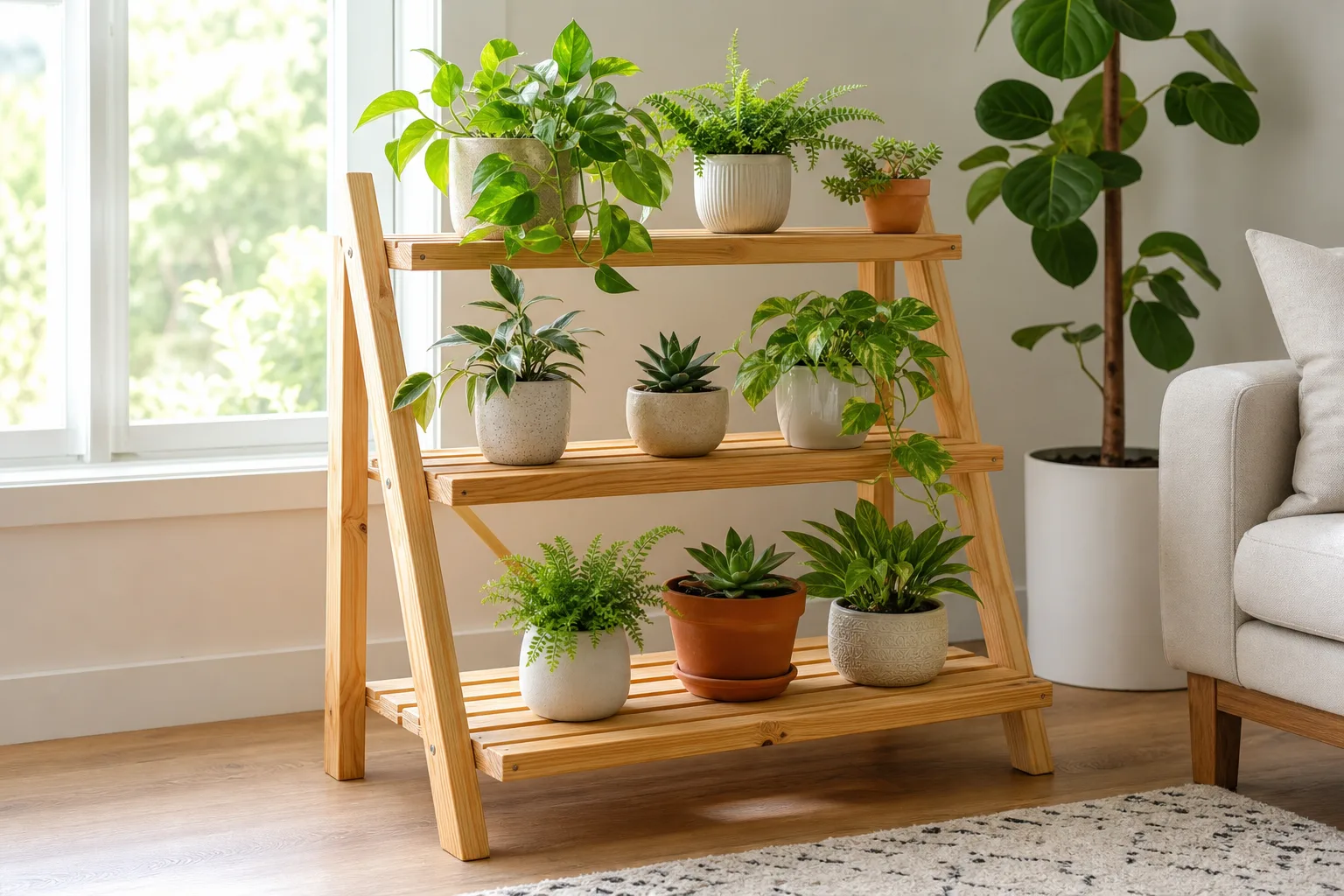
1. A tiered ladder shelf for a bright window
A ladder-style plant stand is an easy way to create several display levels without drilling into a wall. Its open frame reads lightly in a small room, and the shelves can hold compact pots while taller plants stand on the floor beside it. Place the unit near a window only after checking the light at each tier: the top shelf can be brighter, but the lowest level may sit in the stand’s own shade.
Put the heaviest planters on the bottom shelf, where the load is low and the unit feels more stable. Use the upper levels for lighter pots and vines that have room to spill without blocking the plants below. If the stand is tall or accessible to a child, secure it according to the manufacturer’s directions; a display shelf can become a climbing target.
2. Staggered floating shelves for an airy plant wall
Instead of lining up identical shelves in a rigid grid, stagger a few floating shelves so the arrangement follows the wall and the plants’ shapes. Place one compact upright plant on a short shelf, a fuller specimen on a longer one, and a trailing plant at an outer edge. The gaps are part of the design: open wall lets each silhouette read and makes it easier to reach a pot.
This works best when the wall is close enough to useful daylight and the plants have similar light needs. Before mounting, measure the filled pots and saucers, then check the shelf maker’s load rating for your wall type and hardware. A bracket that feels sturdy while empty can still be the wrong choice for several heavy, watered ceramic pots.
3. An L-shaped corner shelf for an awkward angle
Corner shelves use a part of the room that often collects nothing but dust. A few short shelves arranged around a corner can make a compact green vignette without taking up much floor space, and an L-shaped run can visually connect two parts of a room. Keep the largest leaves facing into the room so the display looks full without pressing foliage against the wall.
Do not assume an empty corner is a good plant location simply because it is available. Corners can be farther from windows than they appear, and the nearby wall may block side light. Test the spot for a day, note how the light changes, and choose plants that tolerate the actual conditions; the RHS houseplant guide advises checking a plant’s light and temperature needs instead of placing it only for decoration.
4. Clear shelves across a window for a light-catching display
Slim transparent shelves suspended across a window create a floating effect and can hold small pots in several rows. This setup is especially effective for compact plants with clear silhouettes, such as small succulents or a young snake plant, because the foliage stands out against the light. It also makes a narrow window feel like a deliberate display instead of a crowded sill.
Check the window’s operation before adding anything. The shelf must not interfere with opening the sash, locking it, operating blinds, or reaching an emergency exit. Direct sun through glass can be intense for some foliage, so watch for scorch and move sensitive plants back or soften the light with a sheer curtain. Use only a window shelf designed for the mounting method and weight you have; do not improvise a hanging system over a bed, desk, or walkway.
5. A windowsill extender for small pots
If the sill is too narrow for more than one plant, a properly fitted shelf extender can add a second row without turning the whole wall into shelving. Keep the shortest pots nearest the glass and place taller plants behind or at the sides so leaves do not hide the rest of the display. A row of small herbs, cuttings, or compact foliage plants can look tidy when the containers share a finish.
Measure the sill and the extender’s supports before buying, including how far the unit projects into the room. Leave enough space for the window latch and blinds, and avoid placing pots where condensation or a hot pane will stress them. A row of containers can also trap water on the wood or stone; keep each pot on a watertight saucer and wipe the sill after watering.
6. A bookshelf that mixes greenery with the things you use
Turn a bookcase into a living display by alternating plants with books, framed art, or a few objects that matter to you. A plant can break up a long row of spines, while a low pot beside horizontal book stacks adds a change in height. You do not need to empty every shelf or match every planter; a repeated color or material is enough to make the arrangement feel connected.
Protect both the shelf and its contents. Keep pots on a waterproof tray rather than directly on a book or wood surface, and leave room to lift them out for watering. Avoid placing damp foliage against books or artwork. A mix of plants and personal objects can make a display feel lived in; browsing plant-shelf arrangements and houseplant styling examples gives you a starting point. In practice, leave space to clean and reach pots, and protect books or artwork from water.
7. One trailing plant on top of a bookcase
A single trailing plant on the highest shelf can soften the straight line of a bookcase and draw the eye down through the display. Pothos, heartleaf philodendron, and some hoyas can trail when their light and watering needs are met. Choose one vine with a clear path rather than placing a pot at every corner and letting the stems tangle across the shelves.
Give the plant enough light at its pot, not just enough room for its leaves to hang. Check the vine as it grows, trim it before it reaches a lamp or gets caught behind furniture, and bring the pot down to water if you cannot reach it safely. A high shelf is a poor place for a plant that needs frequent attention or for any plant that must be kept away from a pet or child who can climb.
8. A narrow console behind the sofa
A slim console or low shelf behind a sofa can hold a few plants and visually connect the seating area to a nearby window. Use a medium-height upright plant at one end, a compact pot at the other, and leave the center clear for a lamp or books if you need the surface. The result is a soft room divider that does not close off the view.
This works only if the console has a stable base and the sofa does not make the plants difficult to reach. Measure the gap between the sofa and wall, then check that the unit cannot be pushed backward or bumped during daily use. Keep pots far enough from upholstery that leaves do not brush against people and water cannot spill onto fabric. If the console is tall or child-accessible, anchor it as directed by the manufacturer.
9. A kitchen shelf for herbs and compact foliage
A shelf near a bright kitchen window can keep a few culinary herbs or small foliage plants in view and within reach. Put light-hungry herbs where they receive the brightest practical light, then use the remaining space for a compact plant that tolerates the conditions. A shallow shelf above a prep counter may work better than a deep one because it preserves usable work space.
Avoid mounting a plant shelf directly over the stove, where heat, grease, and cooking steam can make the location unpleasant for both plants and cleaning. A spot above the sink makes watering seem convenient, but splashes, cleaning products, and limited head clearance can become a nuisance. Bring pots to the sink when they need a thorough watering, let them drain, and return them only when the saucer is empty.
10. Hexagon cubbies for sculptural small plants
Geometric wall cubes create a small gallery of separate plant niches. Their shape works well with mini pots, air plants, or other compact specimens that have a distinct form, and a cluster can echo the angles in a modern room. Keep the number of filled cubbies modest so the pattern stays visible instead of becoming one crowded block of foliage.
Check the depth and opening size before choosing pots. A cube that fits a nursery pot may not leave room for a cachepot or saucer, and a sealed pot can leak onto the shelf below. Use removable containers that can be carried to a sink for watering, then return them after they drain. Avoid heavy stoneware in shallow cubbies unless the unit and mounting are rated for the combined load.
11. A suspended macramé shelf with a clear route underneath
A suspended plant shelf brings texture and a softer line to a bare wall, especially beside a window or in a reading nook. Use it for one or two light, easy-to-reach pots, and let a vine fall into open space rather than across a doorway or a person’s work area. A beaded or knotted hanger adds visual interest even when the shelf itself is simple.
Before you hang it, check the ceiling or wall structure and use hardware suited to that material and the filled weight. The plant, pot, wet mix, saucer, and hanger all count; a container that feels light when dry can become much heavier after watering. Keep the shelf away from places where a swinging pot could hit someone, and take the pot down to water if the setup is difficult to drain without spilling.
12. A wall rail that lets you adjust the arrangement
A vertical rail system with adjustable brackets is useful when your plant collection changes often. Move a shelf higher for a trailing vine, widen a gap for a taller pot, or shift a bracket to make room for a grow-light bar. The adjustable layout is also easier to revise than a wall of fixed shelves if you are still learning how the room’s light behaves.
Choose a system with a clear load rating for the actual rail, brackets, shelf material, and wall installation. A rail that holds books may still be unsuitable for several wet planters if its brackets are widely spaced or its anchors do not match the wall. Keep the bottom level open for heavier pots and leave enough vertical clearance to remove each container without scraping leaves or knocking over neighboring plants.
13. A rolling cart for a collection that needs to move
A sturdy bar cart or utility trolley gives renters a flexible plant shelf and lets you move a group closer to a window when seasons change. It is easy to wheel outside for watering or cleaning, and its narrow footprint fits beside a desk or in a corner. Choose a cart with a deep tray or lip so pots are less likely to slide when it moves.
Load the heaviest pots on the bottom, engage the wheels’ brakes when parked, and move slowly over thresholds. A rolling cart is not a substitute for matching plants to light; moving the same collection between windows may help only if the plants can tolerate the change. If the cart is close to a child’s play area, a pet’s climbing route, or a frequently used doorway, another stable location is safer.
14. A dedicated grow-light shelf for a dim room
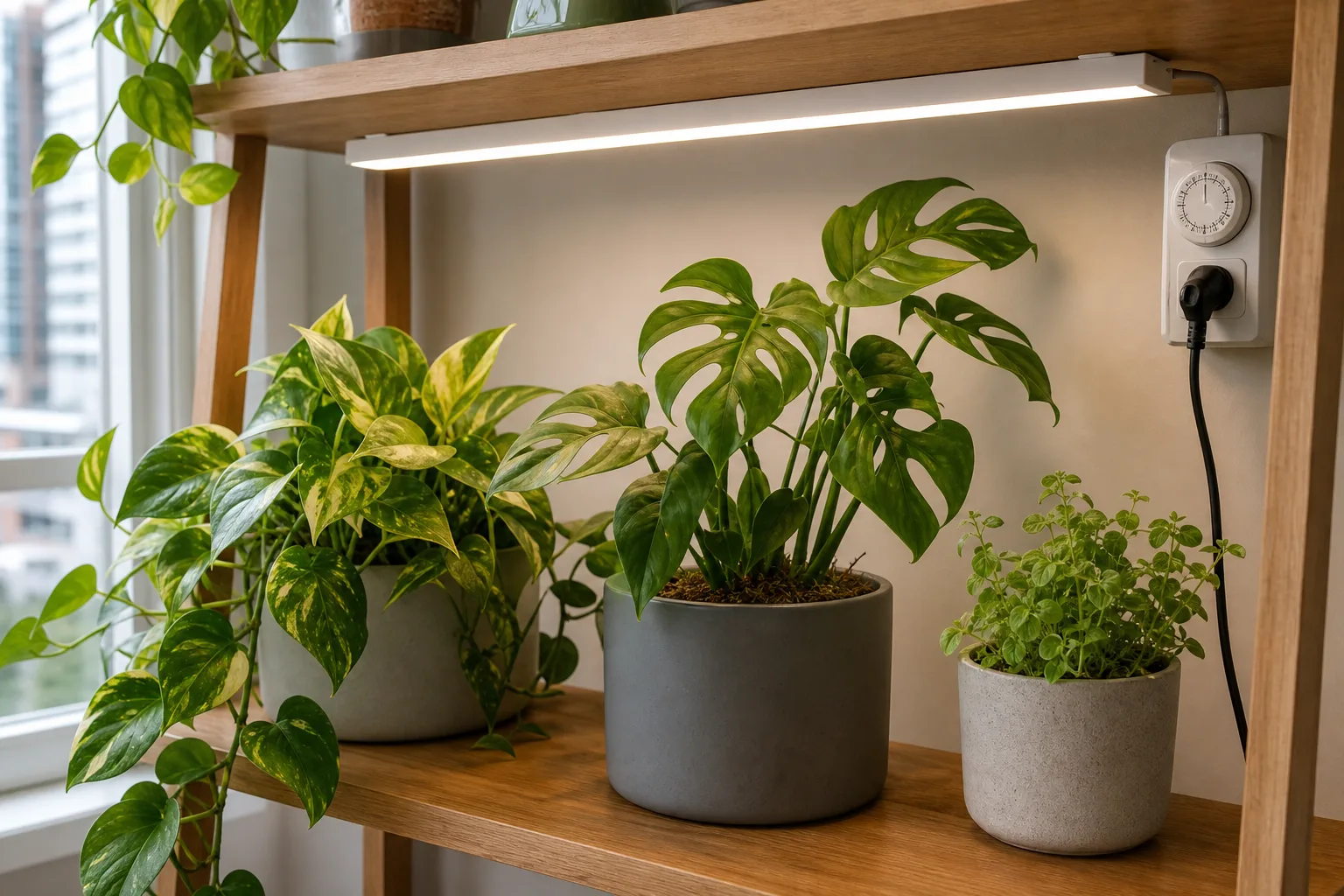
When the best open wall is not close to a bright window, a simple freestanding shelf paired with horticultural lights can support a small foliage collection. Mount a purpose-made LED grow-light bar beneath each shelf, keep the light directed toward leaves, and use a timer so the schedule is consistent. This setup can turn a spare corner into a useful propagation or display area without asking shade-tolerant plants to survive in darkness.
Choose light intensity and distance for the plants you grow; one setting does not suit every species. Low-light tolerance means a plant can manage less light, not that it can grow without light. The Royal Horticultural Society’s artificial-lighting guide recommends using supplemental light where natural light is insufficient and making the most of daylight first. Keep electrical cords away from watering paths and use fixtures according to their instructions.
15. A sturdy vintage ladder or crate display
A well-built wooden ladder shelf, old cabinet, or stack of sturdy crates can bring more character than a new matching set. Keep the wood finish and pot color in the same general family, then let leaf shapes provide the contrast. A vintage piece is also a good choice for a collection that has to change: you can adjust the grouping without drilling new holes every time a plant grows.
Inspect the furniture before loading it. Test that the feet sit flat, shelves do not wobble, and joints are sound; do not use a decorative ladder that was never made to carry pots as a plant stand. Place the largest planters low, protect wood with waterproof trays, and anchor a tall bookcase or hutch when children may climb it. The CPSC’s childproofing guidance specifically calls out shelves and bookcases as furniture that can tip if children climb or pull on it.
Choose the shelf before you choose the look
Measure the plants you own before you shop. Record each pot’s widest point, the height from the shelf surface to the top of the foliage, and the plant’s expected spread; leave room for a vine to lengthen and a broad leaf to turn toward the light. Check shelf depth against the pot base, not just the container’s rim, and leave enough headroom to lift the plant out without bending stems.
Then choose the location by the light it actually receives. Window direction is a useful first clue, but trees, balconies, neighboring buildings, window film, curtains, and distance change the amount of light that reaches a leaf. Observe the spot in the morning and afternoon, and repeat the check when seasons change. The RHS advises choosing a houseplant for its growing conditions rather than placing it only for decoration; it also notes that strong summer sun through glass can scorch susceptible plants. If the shelf is too dim for the plant you want, move it closer to the window, choose a plant suited to the available light, or add a horticultural light.
Work out the loaded weight, not just the shelf’s empty capacity. Ceramic pots, wet potting mix, saucers, and water all add mass, and their weight may be concentrated at one end. Follow the shelf maker’s rating and installation instructions for the exact wall or frame you have; wall material and fasteners affect what a wall-mounted shelf can safely support. If you cannot verify the mount or the shelf flexes, do not use it for heavy containers. A freestanding unit may be the simpler option in a rental, but a tall one still needs a stable base and, where children can reach it, suitable anti-tip anchoring.
Plan the watering route before putting a plant at eye level. A shelf looks tidy when every pot sits inside a cachepot, but the decorative outer pot can hide standing water. The University of Connecticut Extension recommends watering thoroughly, letting excess water drain, and emptying saucers so the mix does not stay saturated. For shelves, that often means carrying the nursery pot to a sink or tub, draining it, and wiping the tray before returning it. Use a waterproof tray on any wood or painted surface, and check it after every watering.
Finally, consider the people and traffic around the display. Keep fragile pots out of a narrow walkway, do not hang a heavy planter above a bed or desk, and leave doors, windows, and blinds usable. If a child or pet can reach the plants, check plant-specific safety and do not assume a high shelf is unreachable. A setup that is easy to reach and maintain will usually last longer than one that looks perfect but requires awkward daily care.
Style a plant shelf without crowding it
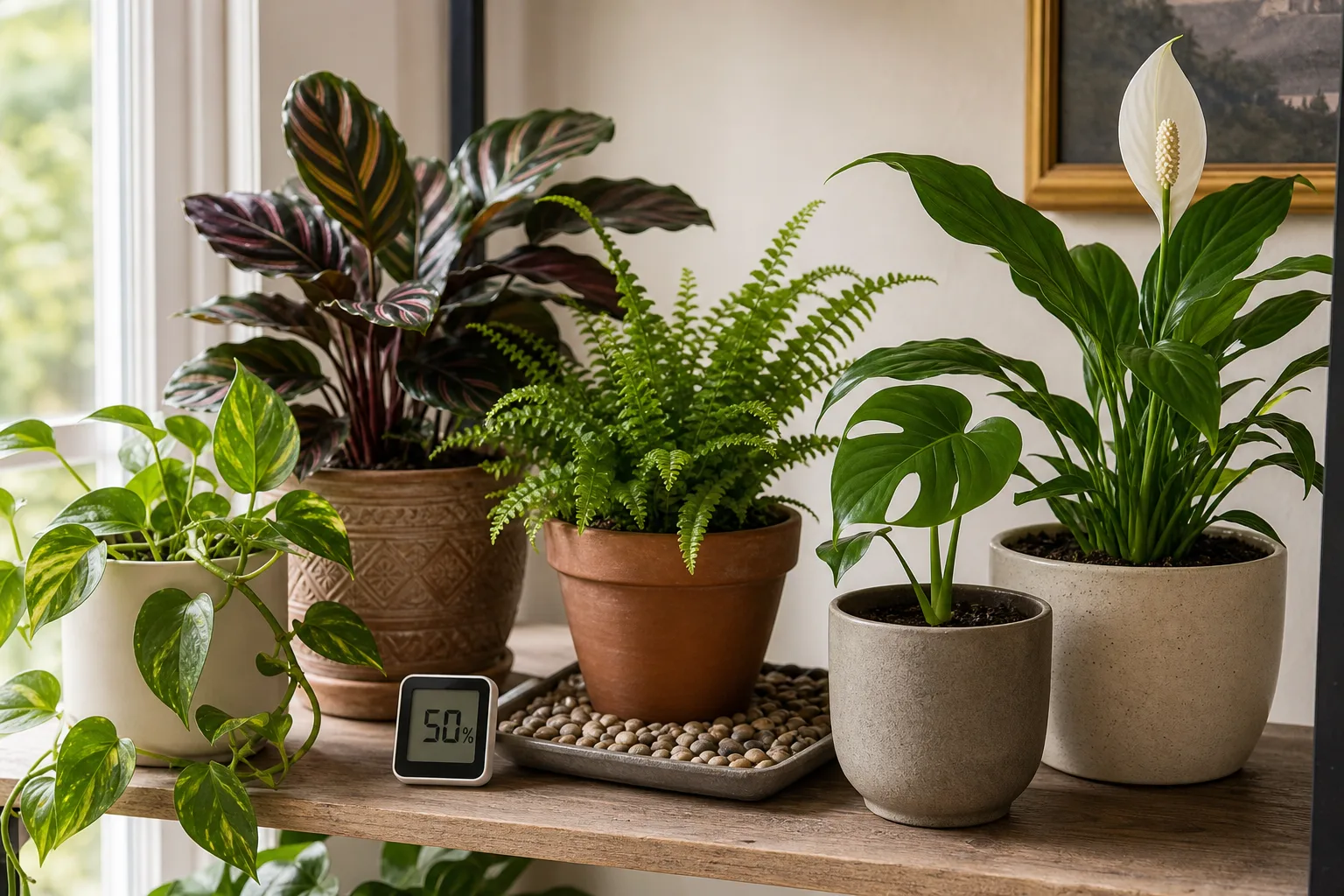
Build the arrangement around one visual anchor: a larger upright plant, a distinctive leaf shape, or a pot with a strong color. Add one compact plant and one trailing or arching form to create height and movement, then stop before every shelf is full. HGTV’s houseplant styling coverage similarly uses different plant heights and a trailing specimen to create a layered look, while Homes & Gardens suggests mixing greenery with books and small art objects. Treat those ideas as starting points rather than strict rules; the room and the plants decide what works.
Repeat one or two details to make a mixed collection feel related. That detail could be warm terracotta, white ceramic, black metal, or a shared pot shape. Let leaf texture supply variety: a broad glossy leaf looks different beside a fine fern or narrow upright foliage even when the containers match. If every pot has a bold pattern, every plant trails, or every shelf is full, the arrangement loses its focal point.
Keep one clear gap on each shelf for maintenance and visual breathing room. That space lets you rotate a pot, remove a yellow leaf, or reach the back of a display to check for pests. Group plants with similar light needs where possible, but do not pack them so tightly that leaves press against a wall or neighbor. Put a larger floor plant beside the shelf if you want a fuller corner; the display can feel lush without making every shelf carry another pot.
Try the arrangement before committing to the wall. Set the pots on the floor or a table in the same order, view them from the doorway and from the seat where you will see them most, and take a quick photo. Adjust the tallest plant, trailing path, and empty spaces until the group feels balanced. Then live with it through one watering cycle. If you cannot reach a pot, the leaves fade, or water lands on furniture, change the setup before adding more plants.
Conclusion
The most useful plant shelf idea is the one that fits the room and the plants you already have. A tiered stand, bookcase, windowsill extender, or wall-mounted display can all work, but each needs enough light, dependable support, room to grow, and a practical way to water without leaving pots in standing water.
Choose the shelf by measuring first, place plants for their actual growing conditions, and style with a mix of forms and some open space. A modest display that is easy to care for will show off greenery better over time than a packed shelf that is difficult to reach or keep healthy.



