How to Grow Pitcher Plants Indoors: Nepenthes Care
Learn how to grow pitcher plants indoors with the right light, mineral-free water, airy media, humidity, and a practical plan for feeding and pitcher loss.
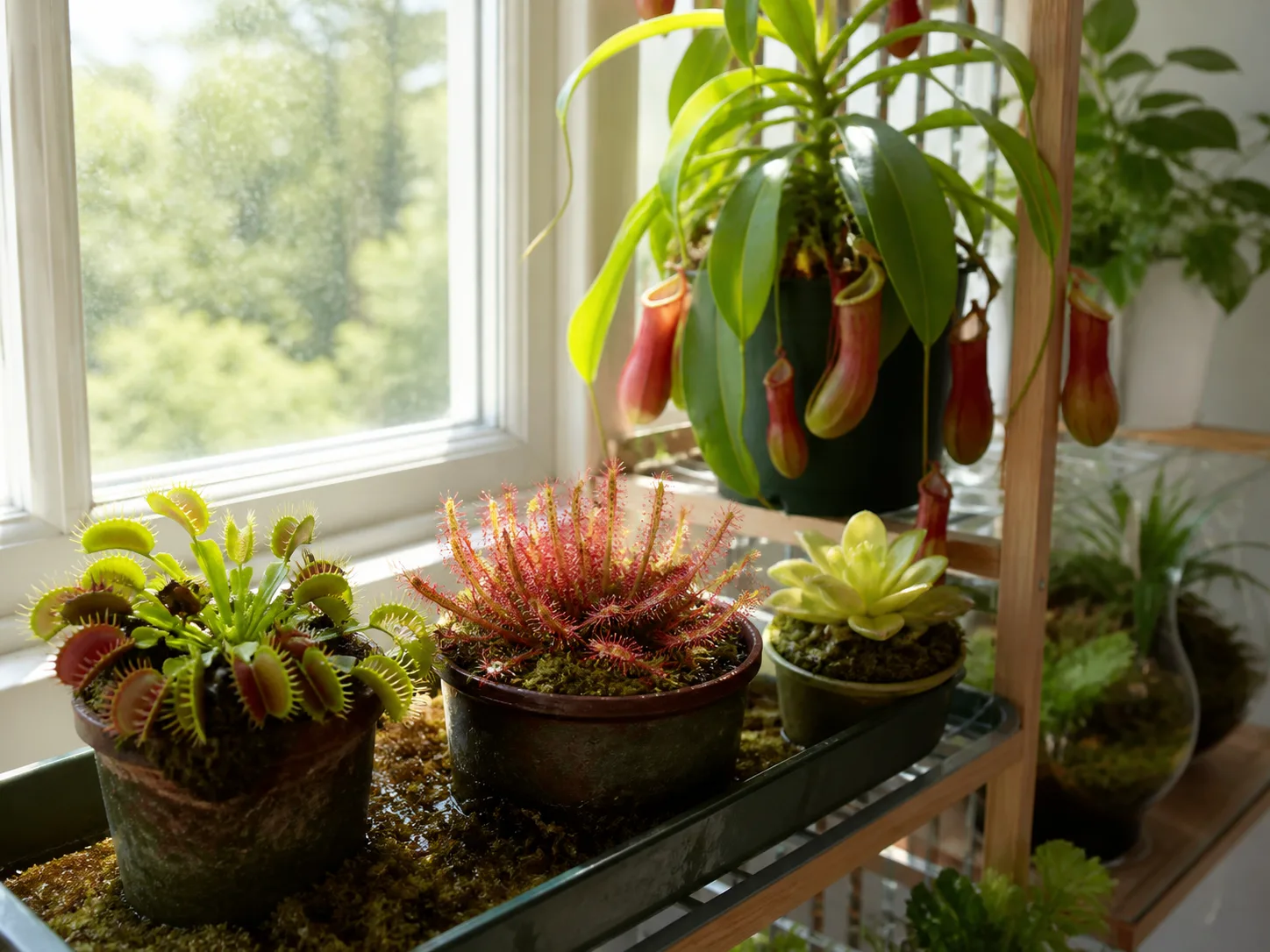
A tropical pitcher plant can catch small insects that enter its pitchers, but it will not make a home insect-free or solve an infestation. Nepenthes are living vines with specific needs for light, mineral-free water, an airy root zone, and enough warmth; the most rewarding approach is to grow one because you enjoy the plant, then treat its insect-catching as a small bonus.
“Pitcher plant” can mean several unrelated carnivorous plants. This guide focuses on Nepenthes, also called tropical pitcher plants or monkey cups: the species with dangling, cup-shaped traps on tendrils. A Nepenthes can succeed on a bright windowsill, but it may produce leaves without pitchers if its light, temperature, humidity, or acclimation are off.
What a pitcher plant can—and cannot—do
Nepenthes form pitchers at the end of extended leaf midribs, which become tendrils. Insects attracted to the pitcher’s rim can slip into its fluid and be digested, providing nutrients that are scarce in the plant’s naturally lean growing medium. That adaptation is fascinating, but it is not a household pest-control system: a single plant catches only some insects that happen to reach it, and it cannot reach eggs, larvae, hidden colonies, or pests breeding in drains, potting mix, or food waste.
If you are dealing with fungus gnats, fruit flies, or another recurring pest, identify where they are breeding and address that source. A Nepenthes might catch an adult gnat that flies close to a pitcher; it will not reliably reduce a population whose larvae are developing in several damp pots. Keep the plant as a houseplant first and consider captured insects incidental.
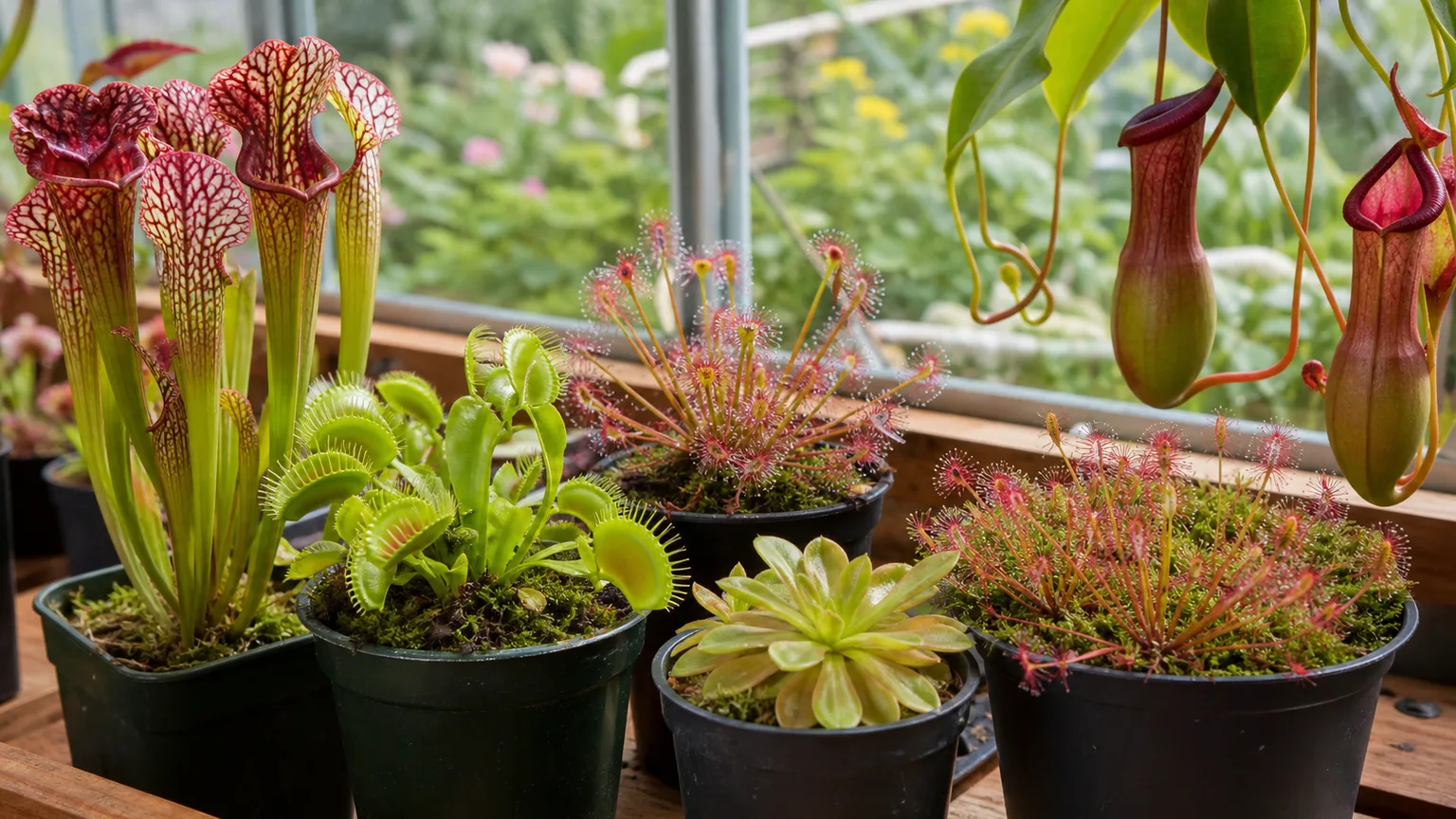
Do not confuse a tropical Nepenthes with a North American Sarracenia. Both make pitchers, but Sarracenia generally grows in sunny, wet bog conditions and often needs a winter rest; most Nepenthes are tropical vines that prefer moist but freely draining media and no true dormancy. Care advice for one genus can harm the other, especially when it says to leave the pot standing in water.
Choose a Nepenthes that fits your room
The easiest plant is not necessarily the species with the most dramatic pitcher. It is the healthy plant whose temperature and humidity needs fit the place you can actually provide. For an ordinary home, look for a labeled, adaptable hybrid rather than an unidentified rare species, and ask the seller whether it is a highland, lowland, or intermediate plant.
North Carolina State Extension describes Nepenthes as shallow-rooted tropical vines, with species from both warm lowlands and cooler mountain environments. The extension notes that lowland types favor warmer conditions, while highland plants benefit from warmer days and cooler nights. A label is useful because a small temperature mismatch can quietly limit growth even when the plant looks green.
Highland, lowland, and intermediate plants
Lowland Nepenthes come from warmer elevations and generally want warm days and warm nights. Highland plants are adapted to a larger day-to-night temperature drop; a home that stays hot overnight may not suit a strict highland species without a cooled growing space. Intermediate species and hybrids tolerate a broader band of household conditions, which is why they are often the safer first purchase.
Common beginner choices include robust hybrids such as Nepenthes × ventrata, Nepenthes ‘Gaya,’ and Nepenthes ‘Bloody Mary,’ though care still depends on the plant and its growing history. A plant grown under greenhouse humidity may pause pitcher production after moving into a dry room. Ask what conditions it was grown in and expect a short adjustment period after bringing it home.
Give it bright light before chasing humidity
Bright, filtered light is the foundation for compact growth and pitchers with good color. Place the plant close to a bright east-facing window or a bright south- or west-facing window where sheer curtains, distance, or gradual acclimation prevents harsh midday sun from suddenly hitting the leaves. A dim corner can preserve green leaves for a while but rarely supports vigorous growth or dependable pitcher formation.
If you move a plant from a shaded store shelf into direct sun, increase exposure over one to two weeks rather than placing it in the strongest beam at once. Pale bleached patches or crisp, tan areas on the window-facing side suggest too much direct sun; long gaps between leaves and weak, stretched growth point toward too little light. Rotate the pot occasionally, but avoid repeatedly relocating the plant while new tendrils are developing.
A full-spectrum grow light is a practical substitute when the window is weak, especially in winter. Keep the lamp at the distance recommended for that fixture and plant, start with a moderate daily schedule, and watch for leaf bleaching or excess heat. A grow light will not correct dry air or an unsuitable temperature, but it removes one common bottleneck without requiring a greenhouse.
Set humidity to your actual room conditions
Humidity advice is often presented as a single ideal number, but the right target depends on the species, airflow, and how the plant was grown. Some adaptable hybrids can make pitchers in ordinary indoor air, while other plants slow down when humidity drops sharply. Tom Bennet of Tom’s Carnivores reports that many hybrids tolerate lower humidity than strict species and cautions that very stagnant, near-saturated air can encourage mold; use that as practical grower experience, not a universal threshold.
Measure the conditions beside the plant with a small hygrometer, preferably over several days. A humidifier can raise room humidity more steadily than frequent misting; leave enough space around the plant for air to move and clean the humidifier according to its instructions. A terrarium or cabinet can help a young plant in a dry home, but it must have ventilation, room for climbing growth, and a way to prevent overheating under lights.
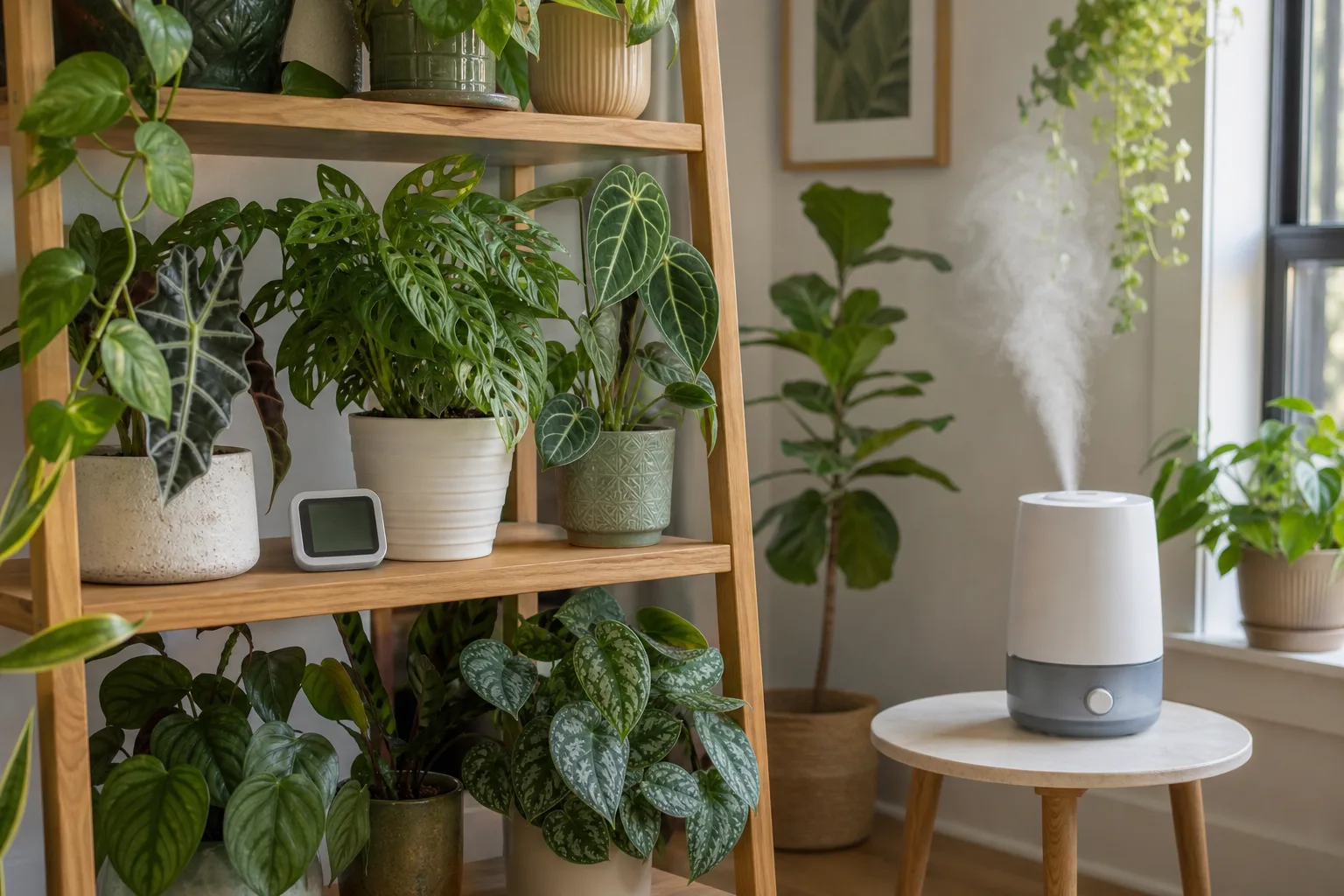
Misting is not a dependable replacement for stable ambient humidity: it raises moisture for a short time, then evaporates. In a Sarracenia Northwest grower Q&A, Jeff Dallas specifically discourages routine misting of Nepenthes tendrils, noting that disturbance and rapid humidity swings can interfere with pitcher formation. If your plant has stopped making pitchers, measure humidity and check light, watering, and temperature before spraying it several times a day.
Water with low-mineral water, but let it drain
Use rainwater, distilled water, or reverse-osmosis water when available. Tap water varies widely: hardness and dissolved minerals can build up in the root zone over time, and North Carolina State Extension advises against tap water for Nepenthes. If you are unsure about your tap supply, choose a low-mineral source rather than guessing from taste or whether it has been filtered for drinking.
Water the growing medium thoroughly, then let excess water drain out of the pot. Keep the medium evenly moist, not saturated; check it with a finger or lift the pot to learn how its weight changes as it dries. Water again when the surface begins to lose its wet sheen and the pot feels lighter, before the root ball dries hard. A weekly schedule is only a starting observation because light, pot size, temperature, airflow, and season all change how quickly the mix dries.
Do not leave Nepenthes sitting in a deep saucer of water as you might with a bog species. A catch tray is fine if you empty it after watering, but persistent standing water can deprive roots of air and encourage decay. If pitchers are empty or recently shipped, a small amount of clean water in a pitcher can help it avoid drying out, but filling every trap is unnecessary and can dilute its digestive fluid.
Use airy, acidic, low-nutrient media
Standard potting soil, compost, garden soil, and fertilizer-rich mixes are too dense or nutrient-heavy for a Nepenthes root zone. The plant needs a loose medium that holds moisture while allowing air to reach its shallow roots. A simple starting mix is long-fiber sphagnum with perlite; some growers add orchid bark for structure. Use ingredients sold for horticultural use and avoid mixes with added fertilizer or wetting agents.
Carnivorous Plant Nursery describes a porous blend containing peat, sand, perlite, fir bark, and chopped sphagnum, while Tom’s Carnivores emphasizes that media recipes can vary if drainage and moisture balance are right. You do not need to copy one exact ratio. If your mix stays waterlogged for days, increase the coarse, airy component; if it dries quickly in your conditions, adjust toward more moisture-retentive sphagnum while keeping drainage open.
Choose a plastic or glazed pot with drainage holes rather than unglazed terracotta, which can wick moisture from the mix. Hanging baskets suit mature vines with long stems and pitchers, but a small plant can remain in a regular nursery pot on a shelf. Keep the crown and growing point above the medium, and do not pack the mix hard around brittle roots.
Feed modestly; do not expect insect control
A Nepenthes does not need a steady supply of insects to stay alive if it is otherwise growing well. Outdoors or in a room with occasional small insects, it may catch prey on its own. Indoors, a healthy plant can often be left unfed; feeding is an optional supplement to growth, not a substitute for light, water, or a suitable root zone.
If you choose to feed, use a very small insect or a tiny portion of an appropriate dried insect food in one or two open pitchers, not every trap at once. Follow the product guidance from a specialist grower and start conservatively. Oversized prey can rot before it is digested, and meat, cheese, fish, or other human food can foul the pitcher and damage it.
Some growers use dilute foliar fertilizer or a small amount of suitable fertilizer in a pitcher, but recommendations vary by product and plant. North Carolina State Extension notes that an organic fertilizer may be used during active growth if insects are unavailable, while specialist growers such as Gulf Coast Carnivores recommend very dilute formulations. If you are new to Nepenthes, skip fertilizer until the plant is settled; a little growth is better than risking leaf or root damage from an uncertain dose.
Pot and prune without disrupting pitchers
Repot when the medium has broken down, the plant dries much faster than it used to, roots crowd the drainage holes, or the base becomes unstable. Spring or early summer is a convenient time because the plant is entering a stronger growth period, but avoid repotting simply because a calendar says two years have passed. Choose a pot only a little larger than the current root ball; a very large pot can stay wet too long around the roots.
Handle the roots gently and refresh the medium without burying the stem. A change in temperature, humidity, light, or root conditions may cause older pitchers to brown after repotting, so give the plant stable care rather than repeatedly moving it or feeding it to force recovery. Most Nepenthes grow as vines; provide a hook, stake, or nearby support as the stem lengthens instead of cutting a healthy growing tip to keep it compact.
A pitcher naturally ages and eventually turns brown. Wait until the pitcher is fully dry before trimming it, then cut the dead pitcher and its tendril near the leaf tip without cutting through healthy leaf tissue. A green leaf with a brown old trap is not, by itself, a reason to prune the whole leaf.
Move it outdoors only when nights suit it
A warm, humid summer can make a protected outdoor spot useful, but outdoor placement is optional. First confirm the plant’s temperature group, then wait until nighttime temperatures are within its comfort range. Put it in bright shade or filtered light and acclimate it over several days; a sudden move from indoor light to strong outdoor sun can scorch leaves.
A shaded porch or greenhouse with airflow is often safer than an exposed patio. Keep the pot above ground, protect it from heavy wind and pounding rain, and watch for slugs, ants, and pests that can travel onto the plant. Bring it back inside before cold nights or a heat wave beyond the cultivar’s tolerance. Most Nepenthes do not need the winter dormancy required by many temperate carnivorous plants; winter growth may simply slow when days are shorter and indoor light is weaker.
Do not transplant a tropical Nepenthes into a garden bog or leave it in a standing-water tray because another pitcher plant grows that way. The same genus can contain plants from very different elevations, so the plant label and its actual conditions should guide the move.
Troubleshoot brown pitchers and stalled growth
A single old pitcher browning while the attached leaf remains healthy is often normal aging. Several pitchers drying before they mature, repeated failure to inflate new pitchers, or declining leaves indicate a care mismatch worth checking. Change one or two conditions at a time and give a developing tendril several weeks to respond; it cannot be forced to open overnight.
Diagnose the pattern before changing care
If new leaves are smaller and stems stretch, check light first. If leaves look healthy but new tendrils repeatedly dry before forming traps, check the measured humidity, watering consistency, and whether the plant has just been moved or repotted. If several leaves yellow at once and the medium stays wet, inspect the root zone and improve drainage; if growth is slow through winter but leaves remain firm, lower light may simply be slowing the plant.
Brown leaf patches that face a hot window suggest sun scorch; black, soft stem tissue or a sour-smelling mix suggests a more serious wet-root problem. Aphids, mealybugs, scale, and thrips can attack Nepenthes, as North Carolina State Extension notes. Isolate an infested plant, identify the pest, and use a treatment labeled for that plant and setting; avoid applying an untested spray to pitchers or in a sealed terrarium.
A useful recovery order is: confirm the species or hybrid, measure the light and temperature, verify low-mineral water, check that the medium drains, then assess humidity and airflow. Resist changing the pot, location, feeding, and humidity all at once. If the plant is otherwise healthy, a stable windowsill routine may work better than repeatedly trying to recreate a tropical greenhouse in a small room.
Propagate Nepenthes from a healthy vine
Stem cuttings are the practical home method, but propagation is slow and not guaranteed. Choose a vigorous, mature vine during active growth, use a clean sharp blade, and take a cutting with more than one node. Remove a lower leaf if needed to expose a node, then place that node into moist sphagnum or another suitable low-nutrient medium.
Keep the cutting warm, bright, and humid with gentle airflow. A clear cover can slow moisture loss, but open it regularly so the cutting is not trapped in stagnant air. Do not tug on it to check for roots; wait for new growth, which is a better sign that it has established. When rooted and growing, acclimate it gradually to the same conditions as the parent plant.
Build a realistic indoor care routine
In the first week, identify the plant if possible, place it in bright filtered light, and learn how quickly its pot dries. Switch to rain, distilled, or reverse-osmosis water if you have been using mineral-rich tap water. Avoid repotting a healthy plant right away unless its medium is clearly unsuitable or breaking down.
For ongoing care, check the medium and leaves when you water, empty the catch tray, and look for pests around leaf joints and undersides. Use a hygrometer before buying a humidifier, and keep a short note of pitcher production after a move or seasonal change. This makes it easier to tell whether the problem is a single aging trap or a pattern tied to light, dry air, or a wet root zone.
The goal is a stable environment that fits the specific plant, not a perfect tropical display. Start with an adaptable hybrid, bright filtered light, clean water, moist but airy media, and enough room for a vine. Once those basics are steady, pitchers are much more likely to follow.
Conclusion
Nepenthes can grow indoors without a greenhouse, but they are not a shortcut to an insect-free home. They catch some small prey; they do not control the source of a pest problem. Choose an adaptable tropical pitcher plant, match its temperature needs to your room, use bright filtered light and low-mineral water, and keep the roots moist but well aerated.
If pitchers stop forming, check light, recent disturbance, humidity, water, and temperature in that order before changing everything. Give the plant time to adapt, prune only fully dead traps, and feed sparingly if at all. A steady routine and realistic expectations are more useful than constant misting, frequent repotting, or a promise that a single pot will eliminate household insects.



