26 Best Plants That Grow in Shade: A Practical Guide
Compare 26 plants that grow in shade, from flowering perennials to evergreen shrubs and ground covers, then choose a fit for your soil, light, and climate.
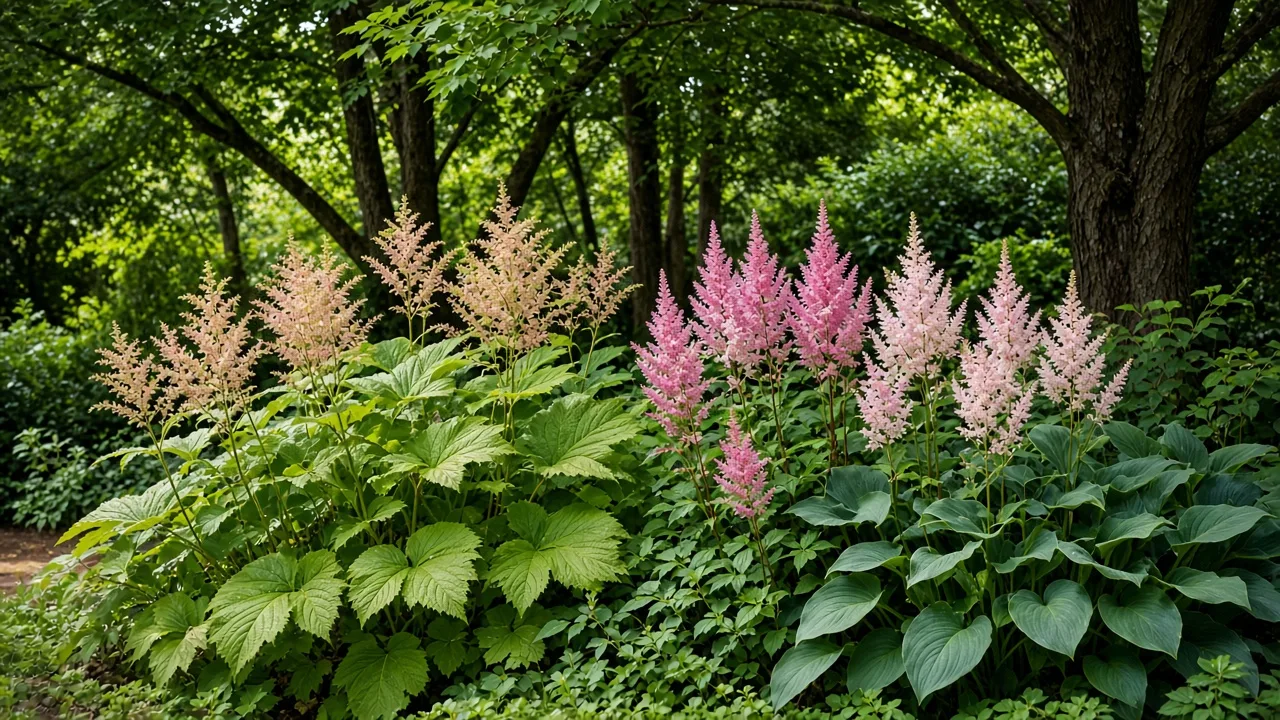
A shady yard can still support flowers, berries, evergreen structure, and colorful foliage. The trick is choosing plants for the shade you actually have: a bright north-facing border, the shifting light beneath deciduous trees, and the dry ground under mature evergreens are three different planting sites.
Start by observing the spot for a day, then check the soil after rain. Use the quick guide below to shortlist plants, and read each plant’s limitation before buying; “shade tolerant” does not mean it will thrive in every shaded bed.
Start by identifying your shade—not just its hours
“Full shade” generally describes a place with little or no direct sun, while partial shade receives some direct sun or bright periods of filtered light. Gardening labels do not use these terms identically, so watch the actual site: note whether direct sun arrives in the morning or hot afternoon, whether a tree canopy is deciduous or evergreen, and whether there is bright open sky above the plants. North Carolina State Extension’s shade-garden guidance describes deep shade as less than about two hours of direct light and dappled shade as light filtered through an overhead canopy; those distinctions are more useful than calling every dark corner “full shade.”
A spot can also change over the season. Under a deciduous tree, spring sunlight reaches the ground before the canopy fills in, which favors spring ephemerals such as Virginia bluebells. A dense evergreen canopy may provide year-round shade and intercept more rain. In either case, shade is not a substitute for enough light: even a tough foliage plant can become sparse when placed in a nearly lightless, enclosed corner. The RHS shade-plant guide likewise distinguishes deeper shade from lighter, dappled conditions when recommending plant groups.
Deep shade still needs ambient light
Deep shade is usually a good place to emphasize foliage, not demand a wall of flowers. Cast iron plant, Japanese painted fern, hosta, and some ground covers can hold their shape with limited direct sun, but their best growth still depends on indirect daylight and suitable moisture. If the bed sits between tall walls or beneath a dense evergreen canopy, a few plants in bright containers may outperform a crowded in-ground border.
Dappled or partial shade opens more flowering choices
If the bed gets morning sun, moving patches of light, or a few hours of gentle sun, the choices expand. Astilbe, coral bells, bleeding heart, impatiens, and many fuchsias can flower or color up there, although flower counts generally fall as the site gets darker. In a hot climate, protect shade-adapted plants from strong afternoon sun; in a cool climate, a little more light may improve flowering without scorching foliage.
Match the plant to soil moisture, not shade alone
Before buying, press a finger into the soil a few inches down after a typical rain. Cool, crumbly soil that drains within a day or two is different from a spot that stays wet, and both differ from dry ground under an established tree. North Carolina State Extension notes that tree-root competition is a major factor in shade gardens; the canopy may block rain while the roots below draw moisture away.
| Site condition | Start with | Be cautious about |
|---|---|---|
| Dry shade beneath trees | Yew, cast iron plant, spotted dead nettle | Planting into thick surface roots or expecting no establishment watering |
| Moist but well-drained shade | Astilbe, leopard plant, Virginia bluebells, toad lily | Letting soil remain waterlogged |
| Bright dappled shade | Inkberry, coral bells, bleeding heart, impatiens | Assuming every cultivar flowers equally in deep shade |
| Shady wall or fence | Climbing hydrangea, Boston ivy | Mature weight, attachment, and maintenance |
Dry shade under trees
Dry shade is common beneath mature trees because roots compete for water and the canopy sheds or intercepts rainfall. The Missouri Botanical Garden makes an important distinction: very few plants prefer dry shade; some tolerate it after establishment, but prolonged drought still calls for watering. That means “drought tolerant” should be read as “more forgiving once settled,” not “plant it and forget it.”
Choose plants with modest water needs, plant small divisions or young container plants between—not through—large roots, and spread a thin organic mulch over bare soil. The Missouri Botanical Garden’s dry-shade guide explains that tolerant plants still need water during extended drought. Do not raise the soil level over a tree’s root zone or cut major roots to make room for a new bed. Water new plants slowly at the root ball during dry spells, then reassess before adding more water; shade does not prevent soil from drying.
Moist shade with free drainage
A woodland bed with consistent moisture can support more lush foliage and longer bloom. Astilbe, leopard plant, toad lily, and bunchberry appreciate soil that stays evenly moist, but they are not interchangeable with plants for boggy ground. If water pools after rain, improve drainage or select a plant adapted to wet soil rather than burying a moisture problem under mulch.
Moist shade is also where spring flowers and later foliage can work together. Virginia bluebells bloom before many tree canopies close, then go dormant; hostas and ferns can fill the space later. A good planting plan leaves room for that seasonal handoff instead of treating a disappearing spring perennial as a dead plant.
26 plants that earn a place in a shade garden
These picks cover several jobs, from evergreen structure to seasonal flowers and low ground cover. Mature sizes and hardiness vary by species, cultivar, and climate, so check the nursery label for your region before planting.
Evergreen shrubs for structure
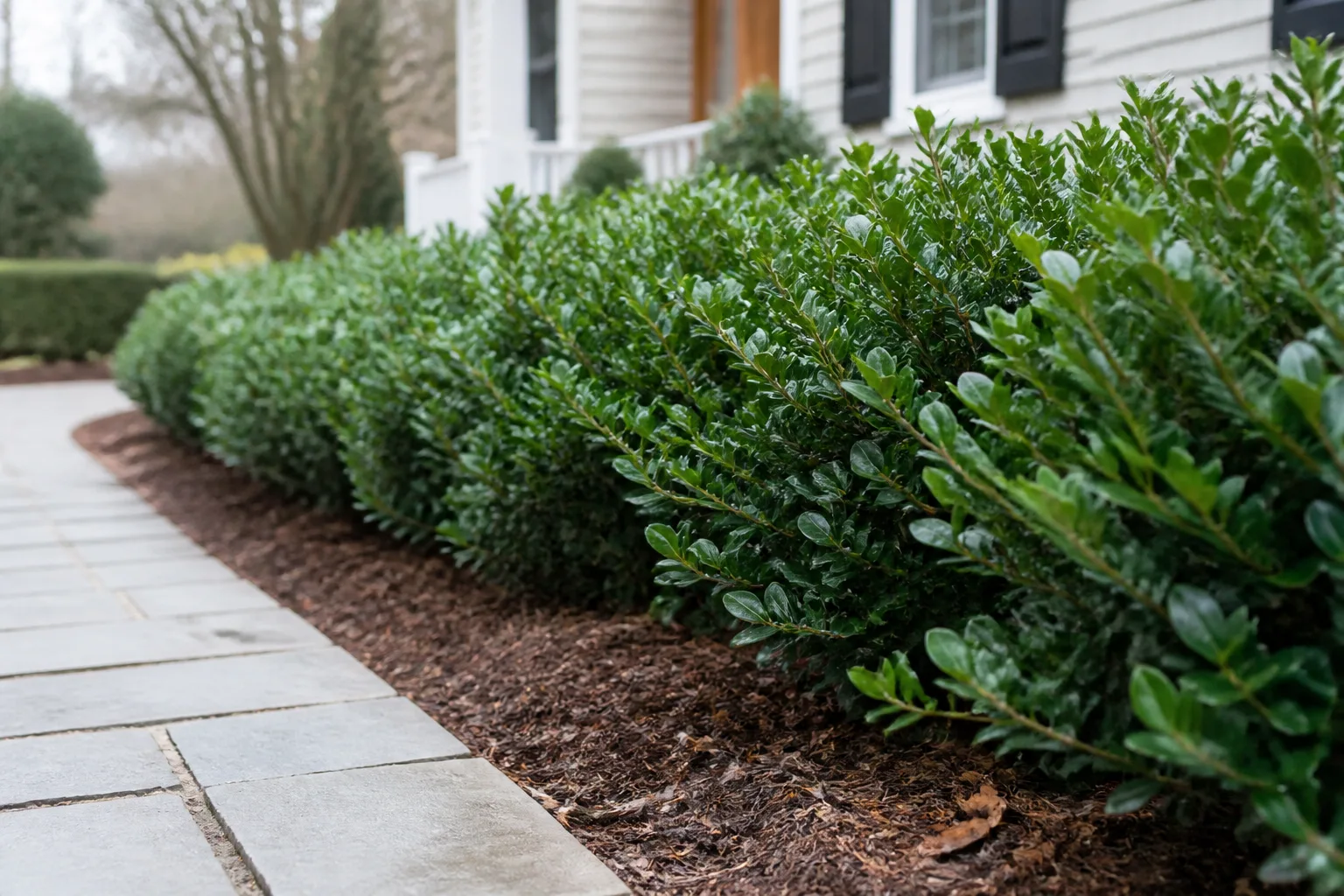
1. Hetz’s Japanese holly (Ilex crenata ‘Hetzii’). Its small oval leaves give a clipped shrub or low hedge a fine texture, and it handles bright shade or partial shade. It needs reasonably moist, acidic, well-drained soil; deep shade can leave it thin, while hot afternoon exposure can stress it. Before planting Japanese holly near natural areas, check local extension or invasive-plant guidance; its non-native status alone does not tell you whether it is a problem in your region.
2. Inkberry holly (Ilex glabra). This North American native evergreen suits a moist, acidic border and can be a better regional choice than Japanese holly where it is locally native. Select a compact cultivar if you want a low foundation shrub, and do not expect a very dark corner to produce dense growth. If berries matter, ask whether the cultivar needs a compatible pollinating plant; not every shrub will fruit by itself.
3. Canadian hemlock (Tsuga canadensis). The species is a large evergreen tree that naturally tolerates woodland conditions, while named dwarf or weeping cultivars can fit smaller beds. Read the plant label carefully: a young tree is not a small shrub, and mature size can overwhelm a foundation planting. If you want a smaller garden plant, choose a named dwarf or weeping cultivar and confirm its mature dimensions before buying.
4. Yew (Taxus spp.). Yews tolerate shade and come in many upright, spreading, and compact forms, making them useful for a clipped screen or year-round structure. They need well-drained soil and enough room for the selected cultivar; standing water is a poor fit. Yew is poisonous if eaten, so keep it away from pets, children, and grazing animals that might chew foliage or seeds.
Perennials for flowers and seasonal change
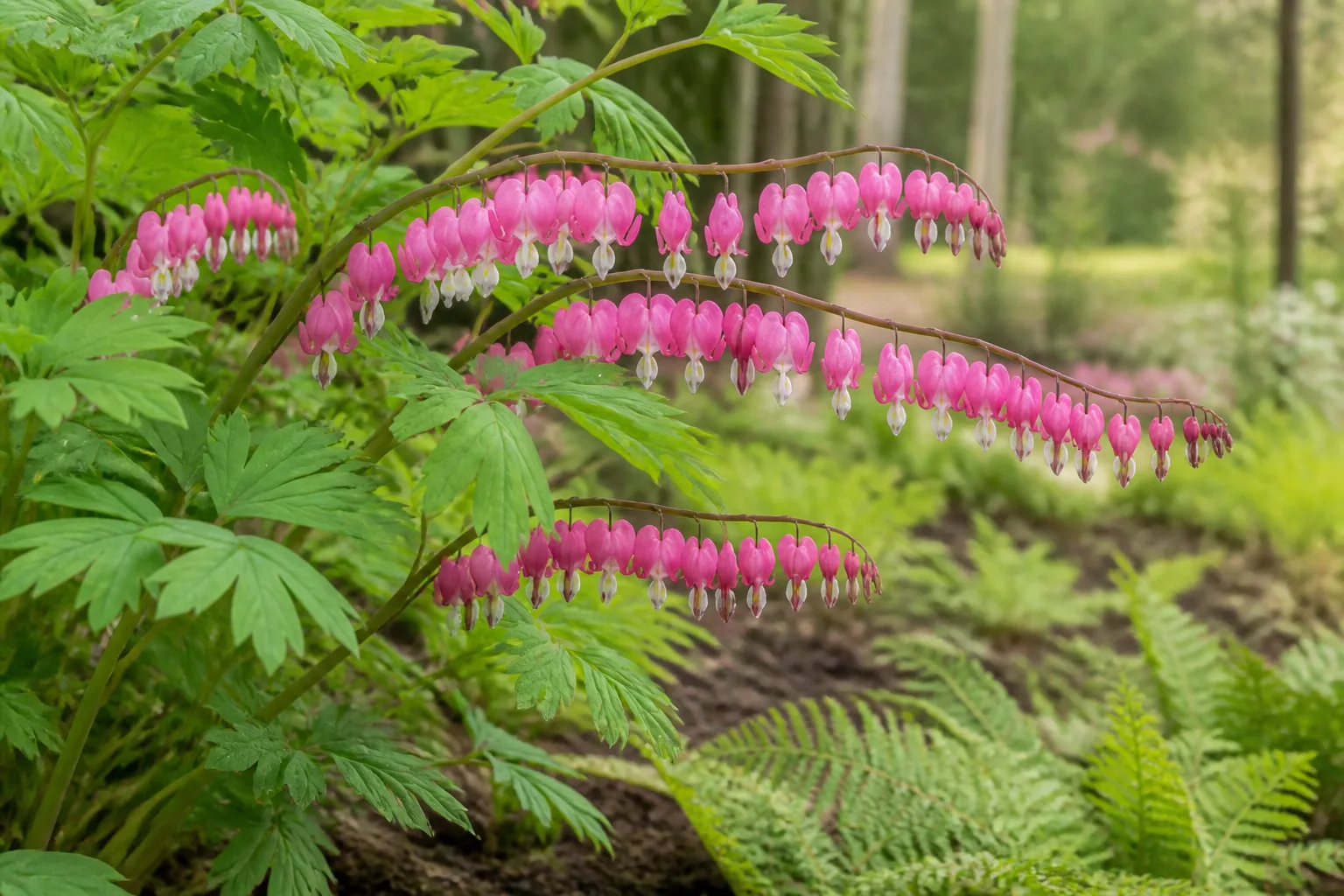
5. Bleeding heart (Lamprocapnos spectabilis). Its arching stems carry heart-shaped spring flowers, and it is most at home in cool, moist, dappled shade. The foliage often yellows and dies back as summer heat arrives; that is its normal seasonal rhythm, not necessarily a watering emergency. Plant it among later-emerging hostas or ferns so the bare patch is covered after the display ends.
6. Jack-in-the-pulpit (Arisaema triphyllum). This woodland native has a striped hood around its flower and bright berries later in the season, giving a naturalistic bed a distinctive focal point. It prefers humus-rich, moist soil and shade, but it can take time to establish and may disappear above ground after its growing season. Plant it where the showy berries will not tempt children or pets to taste them.
7. Lenten rose or hellebore (Helleborus hybrids). Hellebores offer early flowers and leathery leaves when many perennials are still dormant. They are suited to partial or dappled shade and soil that is moist but drains freely; a soggy crown can rot. Because hellebore parts can be poisonous if ingested, choose a different plant beside a play area or where pets routinely browse.
8. Leopard plant (Farfugium japonicum). This plant is grown for large, rounded leaves that brighten a moist shady corner, with yellow daisy-like flowers as a bonus. It is a strong choice for a sheltered site that stays evenly damp, not a dry bed beneath thirsty tree roots. Protect it from hot sun and drying wind, and check the cultivar’s cold tolerance before treating it as a perennial in your climate.
9. Virginia bluebells (Mertensia virginica). This spring ephemeral produces clusters of blue, trumpet-shaped flowers in moist, deciduous woodland shade. It may go dormant soon after flowering, especially as tree shade deepens, so pair it with a later-growing perennial rather than filling every inch with spring plants. A cool site with rich, well-drained soil suits it better than a hot, dry foundation bed.
10. Toad lily (Tricyrtis spp.). Toad lilies extend the flower season with spotted, orchid-like blooms in late summer or fall, when many spring shade flowers are finished. Give them moist, humus-rich soil and protection from harsh afternoon sun; they may be slow to emerge in spring. Their height and spread differ by species, so place them where arching stems will not be buried by faster ground covers.
11. Siberian bugloss (Brunnera macrophylla). This perennial combines airy blue spring flowers with heart-shaped leaves, often silver-marked in cultivars such as ‘Jack Frost.’ It prefers moist, well-drained shade and can add a bright foliage patch beneath trees or along a north-facing border. Hot direct sun can scorch leaves, while very dry soil may reduce the lush effect that makes it useful.
12. Coral bells (Heuchera spp.). Coral bells are compact clump-formers chosen for foliage in shades of green, amber, purple, and silver, with small flowers held above the leaves. They prefer partial shade and soil that drains well; a damp, stagnant corner can encourage crown problems. Cultivars differ in heat and sun tolerance, so select one for your climate instead of assuming every leaf color behaves the same.
13. Astilbe (Astilbe spp.). Plumes of white, pink, red, or purple flowers rise above divided foliage in summer, making astilbe one of the strongest flower choices for moist shade. It wilts and browns when soil dries, so it is a poor match for dry shade under a mature tree unless you can irrigate. Group several plants for a clearer display and leave enough space for their mature clumps.
Annuals for dependable summer color
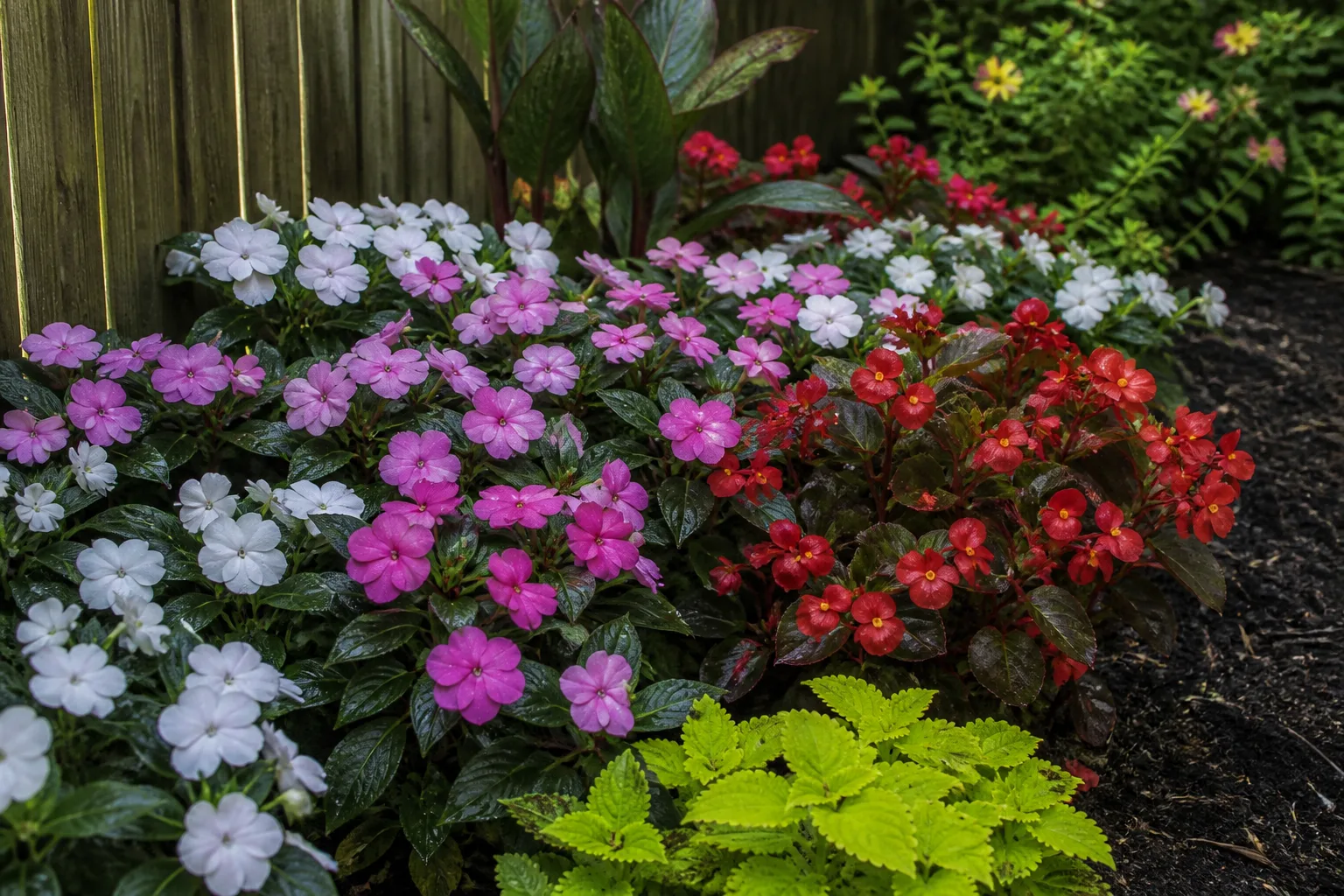
14. Impatiens (Impatiens spp.). Bedding impatiens flower through summer in partial to deep shade and come in a wide range of colors. Common garden impatiens (I. walleriana) can be vulnerable to downy mildew, so seek disease-resistant cultivars and avoid crowded, poorly ventilated beds. These are tender in cold climates and are generally replanted each year, which makes them a flexible way to test color before committing to perennials.
15. Wax begonia (Begonia semperflorens group). Glossy green or bronze leaves and small flowers make wax begonias useful along a shady path or in containers. They tolerate some sun, but in hot climates they often look better with afternoon shade and regular moisture. Treat them as annuals where winters are cold; in mild climates they may persist, though growth and flowering still depend on drainage and local conditions.
16. Coleus (Coleus scutellarioides). Coleus supplies vivid leaf color when a shady bed needs contrast more than flowers. Many cultivars hold their color in shade, but breeders have also introduced sun-tolerant types, so read the label rather than assuming all coleus want the darkest corner. Pinching young stems encourages a bushier shape; protect plants from cold because they are tender in most temperate gardens.
17. Fuchsia (Fuchsia hybrids). Pendant flowers make trailing fuchsias especially effective in hanging baskets or containers placed in bright shade. Keep the root ball evenly moist and protect it from hot, dry afternoon conditions, which can cause buds to drop. Upright hardy varieties can overwinter outdoors in some regions, but hardiness varies widely; treat a nursery fuchsia as an annual unless its cultivar is rated for your winters.
Ground covers and foliage plants
18. Spotted dead nettle (Lamium maculatum). Silver-marked foliage and low purple, pink, or white flowers brighten a shaded edge, and stems can root as they spread. It is useful where you want a living carpet, but that same spreading habit can move into neighboring plants. Check whether it is considered problematic in your region and use a physical edge if the bed meets lawn or natural habitat.
19. Creeping myrtle (Vinca minor). This evergreen ground cover handles shade and forms a dense mat with spring flowers, which can make it tempting for a large bare area. North Carolina State Extension warns that its fast, node-rooting stems can spread into lawns, gardens, and natural areas; it is classified as invasive in North Carolina. Confirm your local status before planting and choose a contained, regionally appropriate alternative where it escapes.
20. Cast iron plant (Aspidistra elatior). Broad, glossy leaves stay composed in low light, and the plant tolerates neglect better than most shade ornamentals. It grows slowly, so it will not cover a large bed quickly; use it as a durable accent or container plant instead. Outdoor use is limited by winter cold, and even this tough plant needs water when the root zone becomes dry.
21. Japanese pachysandra (Pachysandra terminalis). This evergreen ground cover forms a dense carpet in dappled or full shade and can tolerate periods of drought after it is established. North Carolina State Extension notes that it can spread aggressively and be difficult to remove, so it is not a carefree choice beside woodland or a neighbor’s bed. Allow air movement through the planting and avoid overhead watering if leaf blight has been a problem.
22. Hosta (Hosta spp.). Hostas provide some of the broadest choices in leaf size, color, and texture, from small edging clumps to large focal plants. They usually prefer partial or full shade with regular moisture, but slugs and deer may damage them, and a dry tree-root zone can leave leaves undersized. Check mature width before planting; a cultivar that starts small may eventually cover its neighbors.
23. Bunchberry (Cornus canadensis). This low native ground cover has dogwood-like white bracts in spring and red berries later, and it belongs in cool, moist woodland conditions. It is a better fit for northern gardens than hot regions, and it does not appreciate foot traffic or dry, compacted soil. Use it where its seasonal berries can be seen without inviting people to walk over the planting.
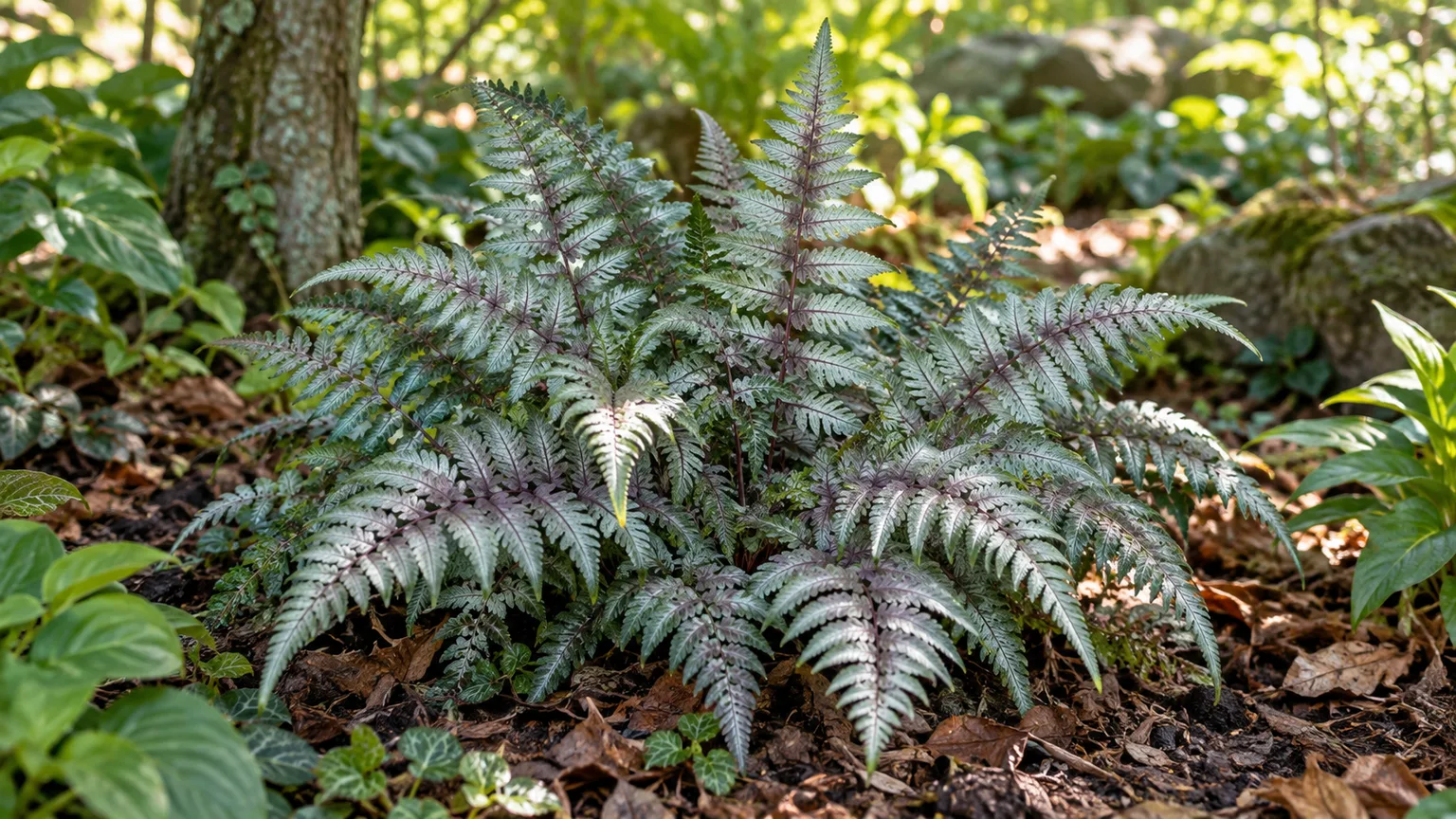
24. Japanese painted fern (Athyrium niponicum var. pictum). Its silver-gray fronds and burgundy midribs add a cool-toned accent to moist, well-drained shade. It is a slow, clumping fern rather than a fast ground cover, so plant it where the foliage can be seen and give it room to widen. Afternoon sun and drought can dull or scorch the fronds; water during dry spells while it establishes.
Vines for shaded walls and supports
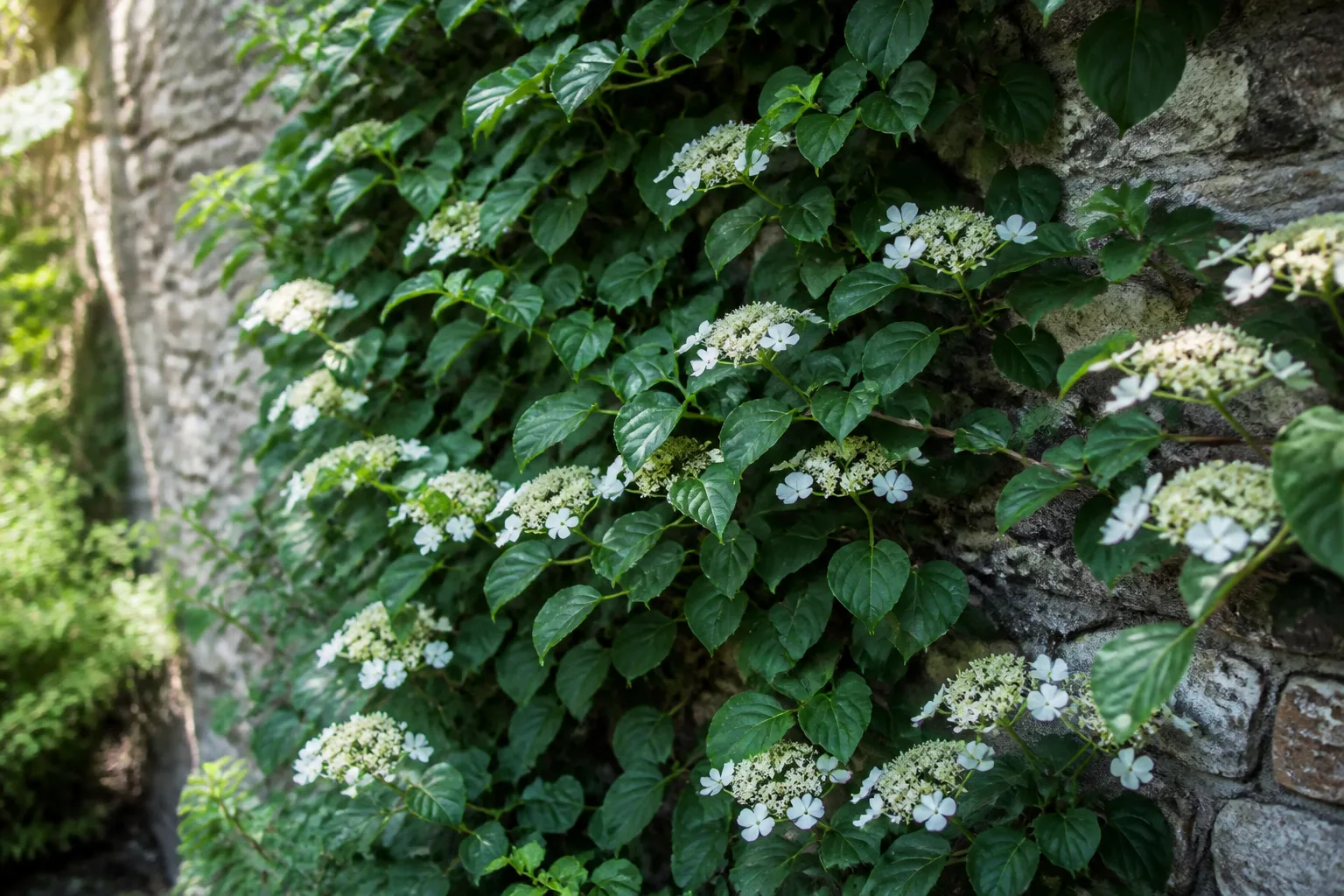
25. Climbing hydrangea (Hydrangea anomala subsp. petiolaris). This woody vine can flower in shade and slowly cover a sturdy wall, fence, or arbor with white lace-cap blooms. It often takes a few seasons to establish, then becomes heavy, so install it beside sound masonry or a robust support rather than a flimsy trellis. Prune with a clear plan, and check pet-safety information before planting where animals may chew it.
26. Boston ivy (Parthenocissus tricuspidata). Boston ivy is grown mainly for its foliage and vivid fall color; it can climb a shaded wall or spread as a ground cover. Its adhesive holdfasts grip surfaces tightly, and established vines require regular pruning to keep them clear of gutters, windows, roofs, and tree trunks. Avoid it on fragile siding or weak mortar, and check local invasive-plant guidance before allowing it to spread beyond a maintained wall.
Plan a layered, year-round shade bed
A useful shade bed has more than one season of interest. Combine a dependable evergreen or persistent foliage plant with spring bloomers, summer foliage, and one late-season flower such as toad lily. Spring ephemerals can disappear naturally; plant a later-growing hosta or fern nearby rather than forcing the ephemeral to remain visible all year.
Build succession with foliage and bloom timing
Foliage carries the garden when flowers pause. Pair large hosta leaves with the finer fronds of a fern, or use silver Brunnera beside dark green shrubs; chartreuse or gold leaves can catch limited light, while repeated plant groups make a border feel calmer than a patchwork of single specimens. Better Homes & Gardens’ shade-design guidance also emphasizes contrasting leaf textures and grouping plants for a stronger visual effect.
Before buying, sketch the mature sizes on paper. Put taller shrubs and vines where they will not block windows or swallow smaller plants, then set low ground covers at the front. Choose a few repeated plants rather than 26 different species in one small bed; this list is a menu, not a recipe to plant everything at once.
Plant and care without stressing tree roots
Planting beneath a tree calls for a lighter touch than digging a new open bed. North Carolina State Extension advises gardeners to account for competition from tree roots and notes that some trees have root systems that make underplanting difficult. If the ground is packed with fine roots, use containers, plant outside the densest root zone, or leave the area as mulch rather than cutting through major roots.
Dig a hole only as deep as the new plant’s root ball and about twice as wide where roots allow. Set the crown at the same level it grew in its nursery pot, backfill with the soil you removed, water it in, and spread a modest layer of organic mulch over bare soil. Keep mulch away from trunks and plant crowns; do not pile extra soil over tree roots to create a raised bed.
Water by the root zone, not by the calendar
A universal “once a week” rule is unreliable in shade. Rain may be intercepted by the canopy, while clay soil can remain wet long after the surface looks dry. Check the root zone with a finger or trowel: water slowly when the top few inches have dried for a plant that prefers steady moisture, and wait when soil still feels wet. Newly planted shrubs and perennials need closer attention than established plants.
Mulch helps reduce evaporation and weed pressure, but it cannot replace watering during a long dry spell. The RHS shade-planting combination guide recommends spreading organic mulch over moist soil to help retain moisture while young plants establish; under trees, keep the layer shallow so roots can still exchange air and water. Avoid frequent overhead watering late in the day if a plant has recurring leaf disease, and improve spacing before reaching for a spray.
Read the plant’s response before changing the site
Sparse growth or few flowers can mean too little light, but it can also point to a cultivar that needs more sun, hungry tree roots, or an overgrown planting. Leaf scorch usually calls for less harsh sun or steadier moisture; yellowing in persistently wet soil suggests drainage deserves attention. Change one condition at a time and watch new growth, since damaged leaves rarely recover their original appearance.
If a plant struggles through a full growing season despite appropriate watering, it may simply be the wrong match for that exact microclimate. Move it during a cool, mild period if it is practical, or replace it with a more shade-tolerant foliage plant. Repeated fertilizing will not compensate for inadequate light or a root zone that alternates between drought and saturation.
Check safety, spread, and regional limits
Before planting a tempting ground cover or vine, check its behavior where you live. Vinca minor and Japanese pachysandra can spread beyond their intended space, while Boston ivy can be difficult to remove from a surface after it matures. A plant that is manageable in a small, edged bed may be a poor choice beside woodland, a stream, or an unmanaged lot. State extension and invasive-plant resources are better guides than a generic national label.
Also verify toxicity for the exact plant and the animal in your home. Yew, hellebore, and several other shade plants can be harmful if eaten; the ASPCA plant database is searchable by plant and pet, but the organization notes that its list is not all-inclusive and that eating plant material may upset an animal’s stomach. If a pet ingests a plant, contact a veterinarian or animal poison-control service instead of waiting for symptoms.
Hardiness zones describe winter survival, not whether a plant will enjoy your light, summer heat, humidity, or soil. A shade plant recommended for a cool northern woodland may fail in a warm, humid region, and a tender fuchsia may need to be treated as an annual where winters freeze. When a plant name includes many species or cultivars, choose by the label’s mature size, zone range, and moisture needs—not by the common name alone.
Conclusion
The most reliable shade garden starts with an honest site check: how much direct or filtered light reaches the bed, how quickly the soil dries, and how much root competition sits below it. Then choose a few plants with different roles—an evergreen structure plant, one or two seasonal bloomers, and foliage or ground cover suited to the moisture—rather than buying by shade tolerance alone.
Give new plants time to establish, water according to the root zone, and keep spreading species within bounds. With those decisions made before planting, a low-light corner can become a layered garden that fits its conditions instead of a cycle of replacements.