Prickly Pear vs. Christmas Cactus: What's the Difference?
Prickly pear and Christmas cactus share a family but need different care. Compare their stems, blooms, light, watering, soil, and placement.
The Short Answer: They Share a Family but Not a Lifestyle
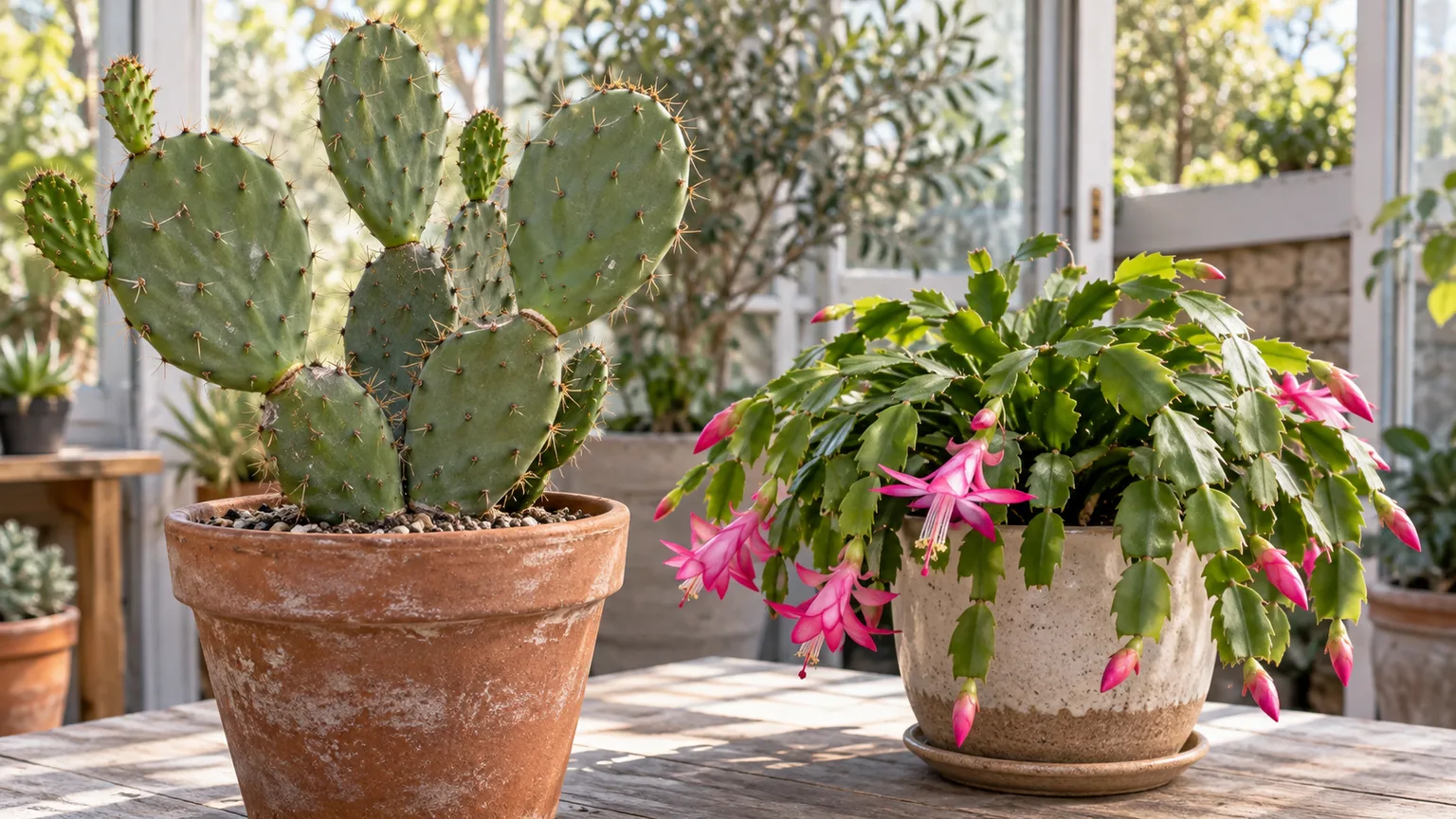
Prickly pear and Christmas cactus are both members of the cactus family, Cactaceae, but they are not close look-alikes once you inspect the plant instead of the flower. Prickly pear belongs to Opuntia, a group of mostly desert-adapted cacti with flat pads, spines, and often tiny barbed bristles. Christmas cactus belongs to Schlumbergera, a Brazilian rainforest cactus with smooth, flattened stem segments that arch or trail from a pot.
That difference in habitat explains almost every care decision that follows. Give prickly pear strong light, a gritty medium, and a real dry-down between waterings. Give Christmas cactus bright filtered light, an airy but more moisture-retentive mix, and enough water to keep the stems from repeatedly shriveling without leaving the roots wet. The flowers may be similarly colorful, but the plants are asking for opposite interpretations of the word “cactus.”
Compare the Plants at a Glance
| Feature | Prickly pear | Christmas cactus |
|---|---|---|
| Botanical group | Opuntia species and hybrids | Schlumbergera hybrids, especially S. × buckleyi |
| Native setting | Arid or semiarid parts of the Americas, depending on species | Mountain rainforests of southeastern Brazil |
| Main visible structure | Flat, oval or club-shaped pads | Flat, jointed stem segments with rounded scallops |
| Spines | Usually present; glochids may be present even on apparently spineless types | Normally spineless |
| Habit | Clumping, spreading, or upright; size varies widely | Upright when young, then arching or trailing |
| Flowers | Usually spring or summer; flowers may be followed by fruit | Usually late fall through winter, often around December to January |
| Best light | Full sun after gradual acclimation | Bright, filtered or indirect light |
| Watering cue | Let the mix dry deeply before soaking and draining | Water when the mix is partly dry, but avoid prolonged saturation or total neglect |
| Best container setting | Sunny patio, rock garden, or bright window for suitable species | Bright indoor window, hanging basket, or shaded frost-free porch |
Use this table as a starting point, not a substitute for looking at the stem. Opuntia is a large genus, and a cold-hardy eastern prickly pear does not have the same outdoor limits as a tropical species. Holiday cacti also vary because nurseries sell hybrids and sometimes use “Christmas cactus” as a broad holiday label. The anatomy is more reliable than the plant tag.
Start With the Stem: Pads vs. Segments
The fastest identification test is to ask whether the green parts look like separate paddles or a chain of leafy-looking joints. They are technically modified stems rather than true leaves, but that distinction is easiest to understand by touch and shape: prickly pear stores water in substantial pads, while Christmas cactus grows a flexible series of thin, jointed segments.
How Prickly Pear Pads Look
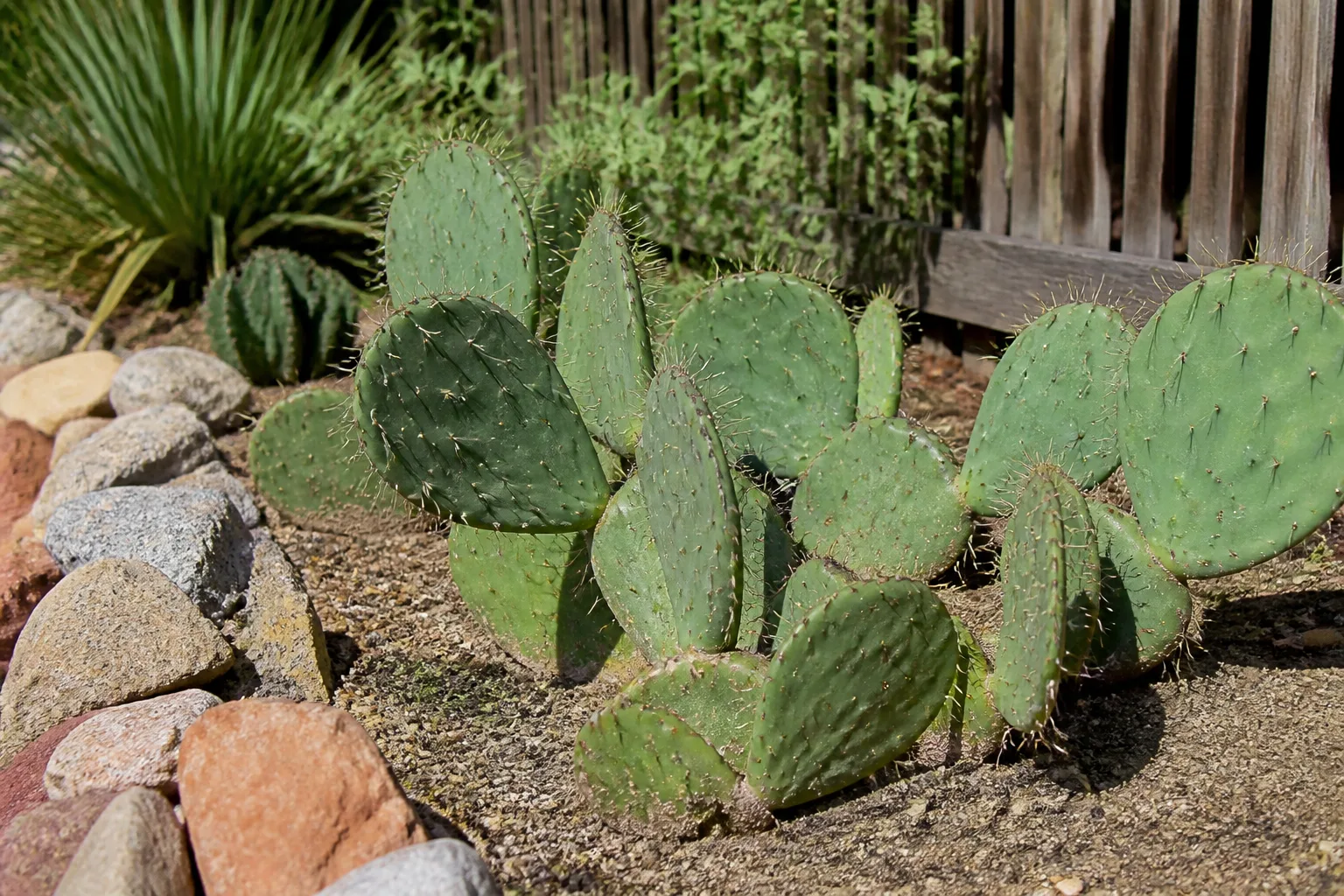
Prickly pear pads are broad, fleshy, and usually oval, round, or club-shaped. New pads emerge from the edges or upper surfaces of older pads, creating the stacked or clumping silhouette associated with paddle cactus. The Royal Horticultural Society describes Opuntia as creeping, bushy, or tree-like, with flattened pad-like stem segments, spines, barbed bristles, funnel-shaped flowers, and fleshy fruit RHS Plant Profile.
Look closely at the surface rather than only the large spines. Opuntia pads have areoles, the small spots from which spines and glochids emerge. Glochids are fine, detachable bristles that can lodge in skin or fabric; they may be harder to see than the long spines and are the reason a plant that appears nearly spineless still deserves careful handling. Color can range from green to blue-green or even purple in some cultivars, so color alone is not an identification test.
How Christmas Cactus Segments Look
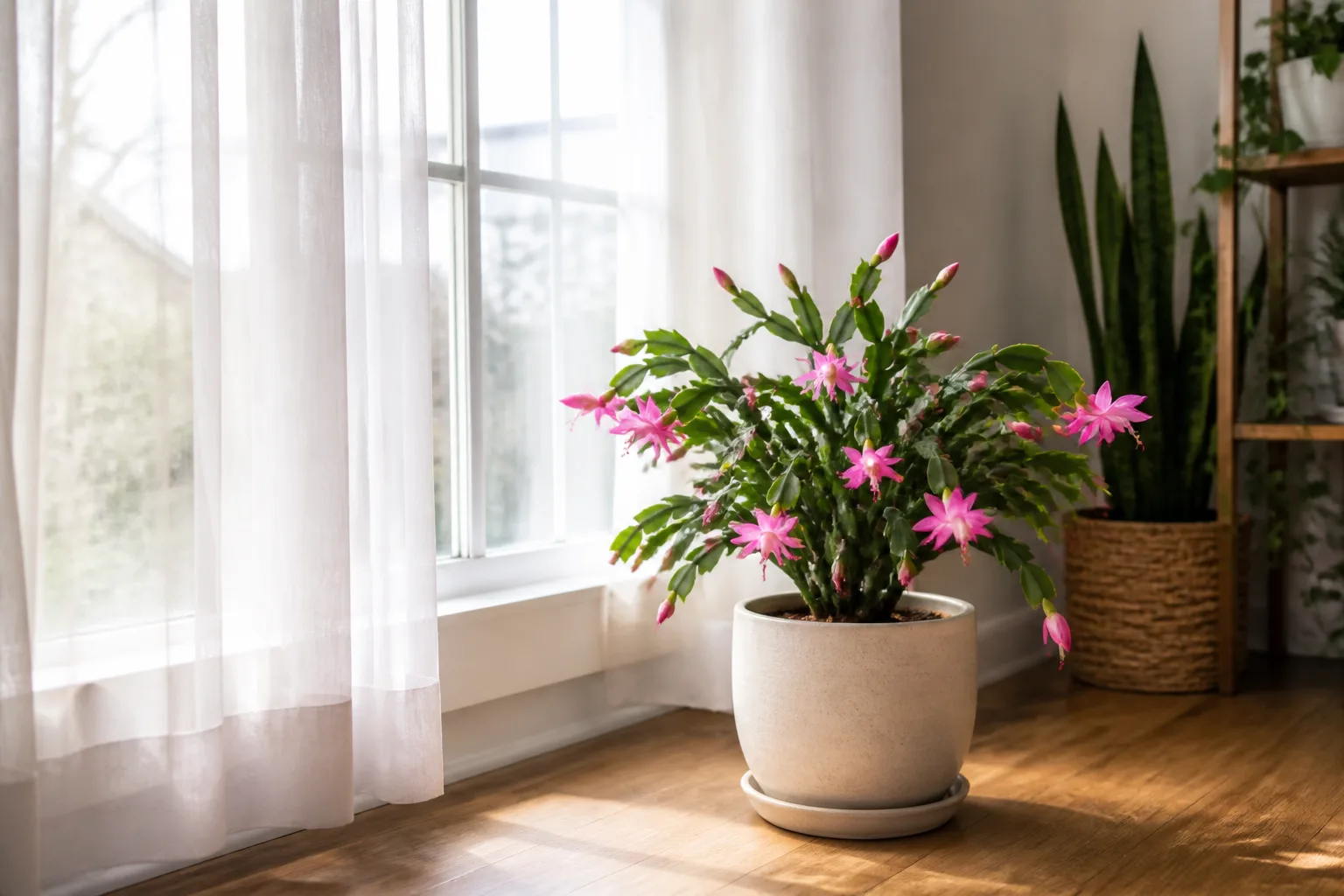
Christmas cactus stems are made of flat, connected segments that look leaf-like at first glance. True Christmas cactus, Schlumbergera × buckleyi, has rounded marginal notches and pendant chains; its flowers hang from the ends of the segments. Missouri Botanical Garden describes the hybrid as a flat-stemmed, frost-intolerant, winter-flowering epiphytic cactus that is commonly grown in containers Missouri Botanical Garden profile.
The segments are smooth and normally spineless, though the margins may be scalloped or softly toothed. A young plant may look upright, but mature stems naturally arch over the edge of a pot, which is why Christmas cactus is often displayed in a hanging basket. If the green parts are thin, jointed, and flexible rather than thick paddles, you are almost certainly looking at a holiday cactus rather than Opuntia.
Flowers and Fruit Give a Second Clue
Prickly pear flowers are usually open, cup- or funnel-shaped blooms that appear on the outer portions of mature pads. Depending on the species and conditions, they may be yellow, orange, pink, or red, and successful flowers can be followed by rounded or pear-shaped fruit. The bloom window is generally spring into summer, but local climate, species, and exposure shift the timing.
Christmas cactus flowers are tubular, layered, and directed outward or downward from the tips of the segments. The classic Christmas cactus has magenta-red to pink flowers, while cultivated holiday cacti can also flower in white, red, purple, orange, coral, or bicolored shades. NC State Extension notes that Schlumbergera is day-length sensitive, typically flowers in late fall or winter, and has showy tubular flowers emerging from the stem tips NC State Extension.
Flower timing is useful, but do not identify a plant from the calendar alone. A Christmas cactus can flower early or late when it is a hybrid, exposed to different night temperatures, or sold under the broad “holiday cactus” label. An Opuntia grown indoors under strong light may also behave differently from one in an outdoor bed. Use flowering season as confirmation after checking the stem shape.
Why the Names Can Mislead You
“Christmas cactus” is often used loosely for several related holiday cacti. True Christmas cactus is associated with Schlumbergera × buckleyi and rounded, scalloped segment edges. Thanksgiving cactus, S. truncata, tends to have sharper claw-like projections and often blooms earlier, closer to November. Hybrids between the two can show intermediate edges and bloom dates.
This naming problem is separate from the prickly-pear comparison, but it matters if your plant seems to contradict its label. Penn State Extension explains that Christmas and Thanksgiving cacti are different species in the same genus, while Easter cactus belongs to a different genus; it also notes that growers have produced thousands of hybrids Penn State Extension. The practical rule is simple: identify the stem first, then use the bloom date as a supporting clue.
Light Is the Biggest Care Difference
Prickly pear wants the brightest location you can provide. Outdoors, that usually means full sun for the species you are growing; indoors, place it in the brightest window available and rotate the pot so growth stays balanced. If a plant was raised under greenhouse shade, move it into stronger sun over several days or weeks rather than placing it immediately in intense afternoon rays. Sudden exposure can cause sunscald even on a desert-adapted cactus.
Christmas cactus needs a completely different light strategy. It grows beneath a forest canopy in its native habitat, so bright indirect light or filtered morning sun is a better default than unfiltered midday sun. A Penn State Extension care guide says holiday cacti prefer filtered light and can be damaged by full-sun conditions Penn State Extension. A bright east window, a few feet back from a stronger south or west window, or a lightly shaded porch usually works better than a hot windowsill.
Light also affects Christmas cactus flowering. In fall, the plant needs bright daytime light plus long, uninterrupted nights; artificial light in a bright living room can interrupt the dark period. NC State Extension recommends at least 13 hours of darkness for several weeks in the fall, while Missouri Botanical Garden pairs long nights with cool night temperatures for reliable bud formation NC State Extension; Missouri Botanical Garden profile. If it has plenty of leaves but no buds, check night lighting before adding fertilizer.
Water and Soil: Dry-Down Is Not the Same
For prickly pear, choose a pot with an open drainage hole and a gritty, fast-draining medium with plenty of mineral material. Water thoroughly, let excess run out, and wait until the mix is dry deep into the pot before watering again. In cool, cloudy, or winter conditions, the plant uses less water, so a fixed calendar schedule is less dependable than checking the soil and the firmness of the pads.
For Christmas cactus, use a well-drained mix that contains organic matter but still has enough perlite, coarse material, or sand to keep air around the roots. The goal is not permanently wet soil; it is a quicker, more even cycle between watering and partial drying. University of Wisconsin Horticulture describes the plant’s natural setting as one with frequent moisture but rapid drainage from branches and rocky surfaces, which is why a Christmas cactus may need more regular watering than a desert cactus while still being vulnerable to root rot University of Wisconsin Horticulture.
The visual warning signs are different too. A severely dehydrated prickly pear may wrinkle or soften, while an overwatered plant can become soft at the base or develop rot. A Christmas cactus that is dry for too long may wilt, shrivel, or drop segments, but keeping it constantly wet is not a solution. Water when the potting mix is partly dry, drain the saucer, and adjust the interval for the pot size, light, humidity, and season.
Temperature and Outdoor Placement
Prickly pear is the more outdoor-oriented choice, but “prickly pear” does not name one uniform cold tolerance. Some species, including eastern prickly pear, can handle cold winters once established, while tropical or tender species need container culture and winter protection. Check the species or cultivar before planting it permanently, and remember that a wet, exposed pad is more vulnerable to cold damage than a dry, dormant one.
Christmas cactus is frost-intolerant and is usually treated as an indoor plant outside warm climates. Missouri Botanical Garden lists the true Christmas cactus as hardy in USDA Zones 10–12 and recommends bringing container plants into a protected setting in cooler regions Missouri Botanical Garden profile. It can spend the warm season outdoors in bright shade or filtered light, but move it before frost and avoid a sudden switch from shade to full sun.
Cool nights help Christmas cactus set buds, but temperature swings can make it drop them. Wisconsin Extension notes that these Brazilian mountain plants prefer cool winter nights without exposure to frost, while daytime temperatures are warmer University of Wisconsin Horticulture. Keep a budding plant away from radiators, drafty doors, and a frequently moved shelf; stability matters more than chasing a precise number after buds have formed.
Handling, Pets, and Household Safety
Treat prickly pear as a look-but-do-not-grab plant. Wear thick gloves, use tongs or folded cardboard to move a pad, and inspect the surface for both obvious spines and fine glochids. Do not brush the plant against clothing, children’s play areas, or a walkway where a falling pad could become a hidden hazard. If a glochid reaches skin, avoid rubbing it deeper; use a careful removal method and seek medical advice if the area is painful, widespread, or difficult to clear.
Christmas cactus is easier to handle because it lacks the defensive spines typical of Opuntia. Its soft segments can still break if the pot is moved by the stems, so lift the container rather than pulling on a trailing branch. Keep either plant labeled if you share a growing area with children or pets, and put prickly pear where curious hands and paws cannot contact it.
Do not assume a “spineless” prickly pear is harmless. Some cultivars have few large spines but retain glochids, and the absence of visible spines does not change the plant’s handling requirements. Christmas cactus is the better choice for a shelf or hanging basket in a high-traffic home; prickly pear is better placed where its silhouette can be enjoyed without contact.
Which Plant Fits Your Space?
The right choice depends less on which flower you prefer than on whether your space can supply the plant’s native-style conditions. A sunny, dry balcony or rock garden favors Opuntia, while a bright indoor room with filtered light and a willingness to adjust watering favors Schlumbergera.
Choose Prickly Pear If…
Choose prickly pear if you have strong direct light, a container or bed that drains quickly, and room to respect the plant’s spines. It is a good match for a drought-conscious landscape, a sunny patio container, or a collector who enjoys sculptural pads and possible flowers and fruit. Select the species carefully if winter temperatures are low, and plan for a plant that may expand by producing new pads.
You should pause before choosing it for a small apartment windowsill that receives weak light or for a walkway where people will brush past it. A struggling Opuntia is not fixed by more frequent watering when the real problem is insufficient light or slow-draining soil. In that situation, a true Christmas cactus is often the more forgiving ornamental choice.
Choose Christmas Cactus If…
Choose Christmas cactus if you want a flowering houseplant for a bright room, hanging basket, or shaded porch. It suits someone who can provide filtered light, an airy mix, moderate moisture, and a stable fall location for bud formation. Its mature trailing habit also makes good use of vertical space without the physical hazard of spines.
Do not buy it expecting desert-cactus care. A gritty mix and dry conditions that keep an Opuntia compact can leave Schlumbergera repeatedly dehydrated, while a dark corner can produce weak growth and few flowers. The plant’s needs are closer to those of an epiphytic tropical than to a barrel cactus or a sun-baked landscape succulent.
Check a Mislabeled Plant in 60 Seconds
If the plant tag is missing, use this sequence before changing its care:
- Look at the green structure. Broad, thick paddles point to prickly pear; connected flat segments point to Christmas cactus.
- Check the surface without touching it. Areoles with spines or hair-like glochids indicate Opuntia; a smooth, jointed surface indicates Schlumbergera.
- Observe the habit. A clump of upright or spreading pads suggests prickly pear; a pot with arching or pendant chains suggests Christmas cactus.
- Use the flower as confirmation. Spring or summer cup-like flowers support prickly pear; drooping tubular winter flowers support Christmas cactus.
- Match the growing conditions. A plant thriving in full sun and drying quickly is likely desert-adapted; one happiest in filtered light with more regular moisture is likely a holiday cactus.
Do not repot immediately just because the label seems wrong. First move the plant away from the most damaging condition: protect a likely Christmas cactus from harsh sun, or improve light and drainage for a likely Opuntia. Once the plant is stable, confirm the species or hybrid and then make larger changes.
Common Identification and Care Mistakes
The most common mistake is treating every flat green cactus part as a leaf. Prickly pear pads and Christmas cactus segments are both modified stems, but their thickness, joints, spines, and growth habit reveal different adaptations. Calling them “leaves” can lead to the wrong conclusion that the plants share the same water storage and light needs.
Another mistake is using a bloom color or retail season as the deciding clue. Pink flowers occur in both plants, and a holiday cactus purchased in November may be Thanksgiving cactus or a hybrid rather than true Christmas cactus. Stem shape is the first test; flower shape and date are supporting evidence.
Overwatering is harmful to both plants, but the cure is not identical. Opuntia usually needs a deeper dry-down and stronger light, while Christmas cactus needs an airy medium that can be watered more often without staying saturated. Conversely, placing a Christmas cactus in harsh direct sun because it is labeled a cactus can bleach or scorch the segments and reduce flowering.
Finally, do not move either plant abruptly between environments. Acclimate nursery-grown Opuntia to full sun, acclimate Christmas cactus to outdoor shade, and keep a budding holiday cactus in one stable location. The safest comparison is not “which cactus is easier?” but “which cactus matches the light, temperature, drainage, and handling conditions I can actually provide?”
Conclusion
Prickly pear and Christmas cactus are related only in the broad sense that both belong to Cactaceae. Prickly pear is the spiny, pad-forming, sun-loving cactus; Christmas cactus is the smooth, segmented, trailing, winter-flowering epiphyte. Once you learn to read the stem, the confusion largely disappears.
Use the same distinction to guide care. Give Opuntia intense light, rapid drainage, and careful handling, while giving Schlumbergera filtered light, moderate moisture, an airy mix, and cool, dark fall nights for buds. If the plant’s label and its anatomy disagree, trust the anatomy first and change its conditions gradually.