How to Prune Pepper Plants: Timing, Cuts, and Steps
Learn how to prune pepper plants without sacrificing fruit. See when to top, which branches to remove, how much to cut, and what to leave for sun protection.
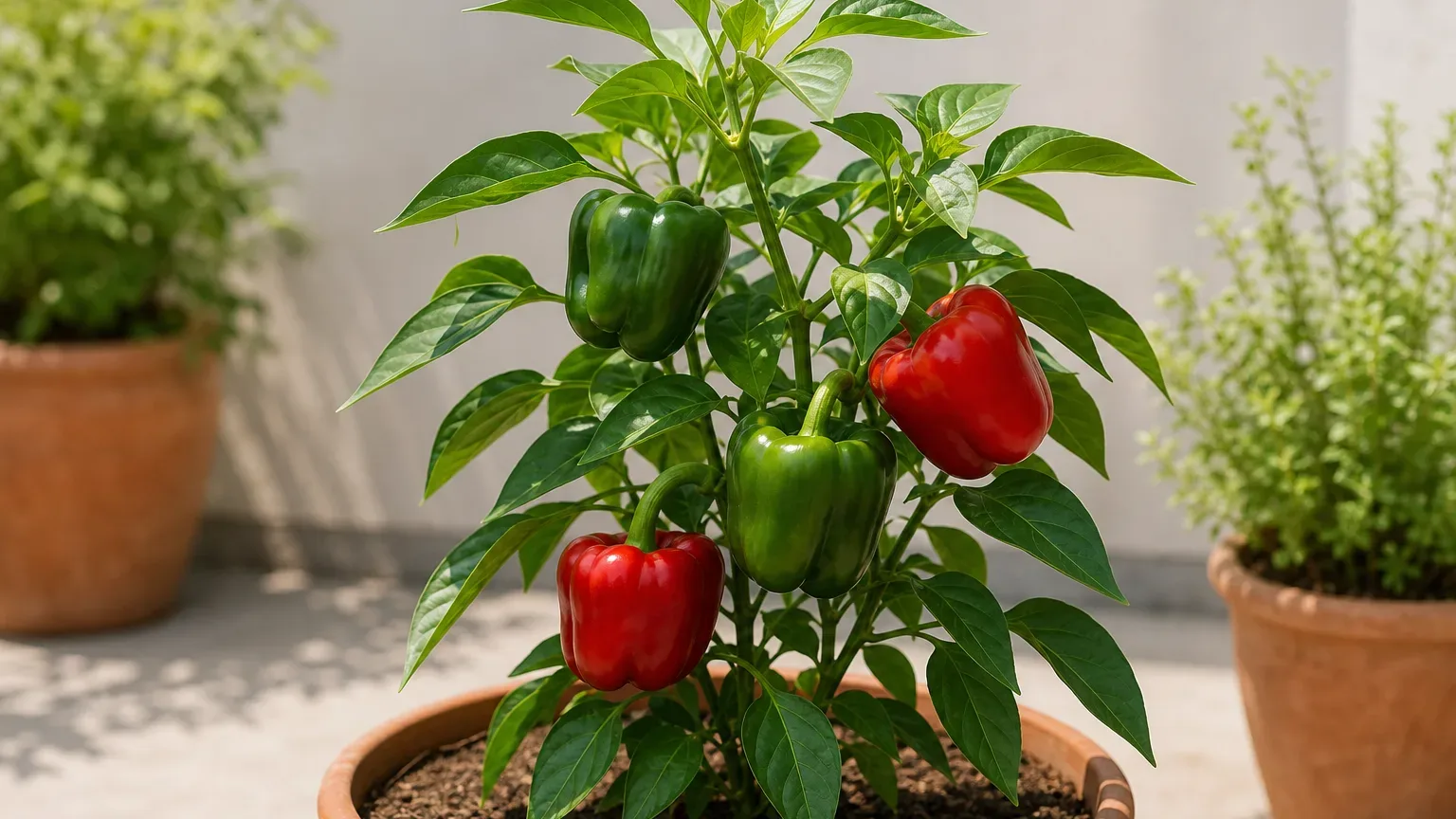
Pepper plants do not need routine pruning to set fruit. Remove dead, diseased, broken, or soil-splashed growth; shape a crowded plant only when there is a clear reason; and treat topping as an optional experiment, not a required step. A pepper leaf is a small food factory, so cutting healthy foliage can slow growth even when the plant looks neater afterward.
The right cut depends on what you want the plant to do. A young transplant, a dense plant hiding its inner branches, a heat-stressed pepper, and a mature plant approaching frost should not all get the same treatment. Start with the goal, make the smallest useful cut, then let the plant respond before removing more.
Do pepper plants need pruning?
No. Peppers can grow and produce well without being pruned. The most dependable reasons to pick up the pruners are to remove damaged tissue, keep a branch from breaking, clear foliage that rests on damp soil, or open a canopy so tightly packed that leaves stay wet and fruit is difficult to reach. There is no need to give every plant a vase shape or strip out every shoot below the first fork.
Pruning is a trade-off between structure and leaf area. More space between stems can improve access and let air move through a dense plant, but removing leaves also reduces the surface that captures light and shades fruit. Utah State University Extension notes that exposed pepper fruit can develop sunscald in hot, dry weather, while leafy cover helps protect it; that is a reason to thin selectively rather than expose the whole interior (Utah State University Extension’s pepper guide).
A bushy plant is not automatically unhealthy, and an untidy silhouette does not mean it will yield poorly. Before cutting, look through the canopy: if stems are not rubbing, the plant is supported, airflow is adequate, and fruit is reachable, a quick inspection may be all the pruning it needs.
Choose a pruning goal before making a cut
The word “pruning” covers several different jobs. Removing one diseased branch is sanitation; pinching the tip is topping; thinning selected shoots is shaping; and cutting back late in the year is an attempt to manage a crop before frost. Each job has a different cost, so choose one rather than combining them in a single heavy session.
If you cannot name the problem a cut will solve, leave that healthy branch in place. You can always remove it later, but you cannot restore its leaves, flowers, or fruit after cutting.
Open a crowded plant without stripping its canopy
Selective thinning makes sense when stems cross or rub, the center stays humid, or a large interior branch is being shaded by a tangle of weak growth. Remove the branch that causes the specific obstruction, especially if it is already damaged or growing inward. This can improve access and make inspection easier without turning the plant into a bare framework.
Do not chase a wide-open center just for appearance. Pepper plants need leaves to build sugars and shade their fruit. If fruit is already exposed to intense afternoon sun, removing the leaves above it can create a new problem while solving a minor crowding issue. Use a stake or cage to support a branch that is bending under fruit before deciding it must be cut off.
Top a young plant only when the trade-off suits it
Topping means pinching or cutting off the terminal growing tip so the plant branches below it. A plant may become shorter and bushier, which can help a naturally upright chile fit a container or support more side branches. But those branches take time to grow, so topping can delay flowering or remove the earliest fruiting point. That delay matters most where warm weather is short.
Advice differs by variety and growing conditions. Epic Gardening describes topping as one option for shaping some pepper types, while its guidance cautions that short-season growers may not have enough time for a pruned plant to recover; Better Homes & Gardens likewise distinguishes small-fruited chiles from large-fruited bells, which often do not benefit from topping (Epic Gardening’s pepper-pruning guide; Better Homes & Gardens’ pepper-pruning guide). That disagreement is a cue to avoid a universal rule, not a reason to top every seedling at a certain height.
If you want to try it, wait until the transplant is established and pushing new growth. Test the technique on one vigorous plant, snipping just above a healthy leaf node, and leave a comparable plant untouched. You will learn whether the extra branching fits your cultivar and season without risking the whole planting. To make that comparison useful, keep the trial plants in similar light and water them the same way. Note the date each first flowers, how many fruit set, and when the first peppers are ready; a bushier shape alone does not prove a better harvest.
Use late-season pruning to manage the remaining crop
A light late-season cut can remove flowers and new shoots that are unlikely to mature before cold weather, or clear a few leaves that directly block ripening fruit. It does not force every green pepper to turn red quickly. Utah State Extension gives a useful scale for that expectation: fruit may need roughly 35 to 45 days from flowering to full color, depending on temperature and variety. If frost is near, harvest mature green fruit rather than relying on a drastic cut to compress that timeline.
If a plant is covered with unripe peppers, preserve the leaves that shade them. A hard haircut exposes fruit and removes working foliage at precisely the time the plant needs it. Choose the fruit you want to ripen, remove only fresh flowers or tiny new shoots that cannot reach maturity, and keep watering consistently while the plant remains active.
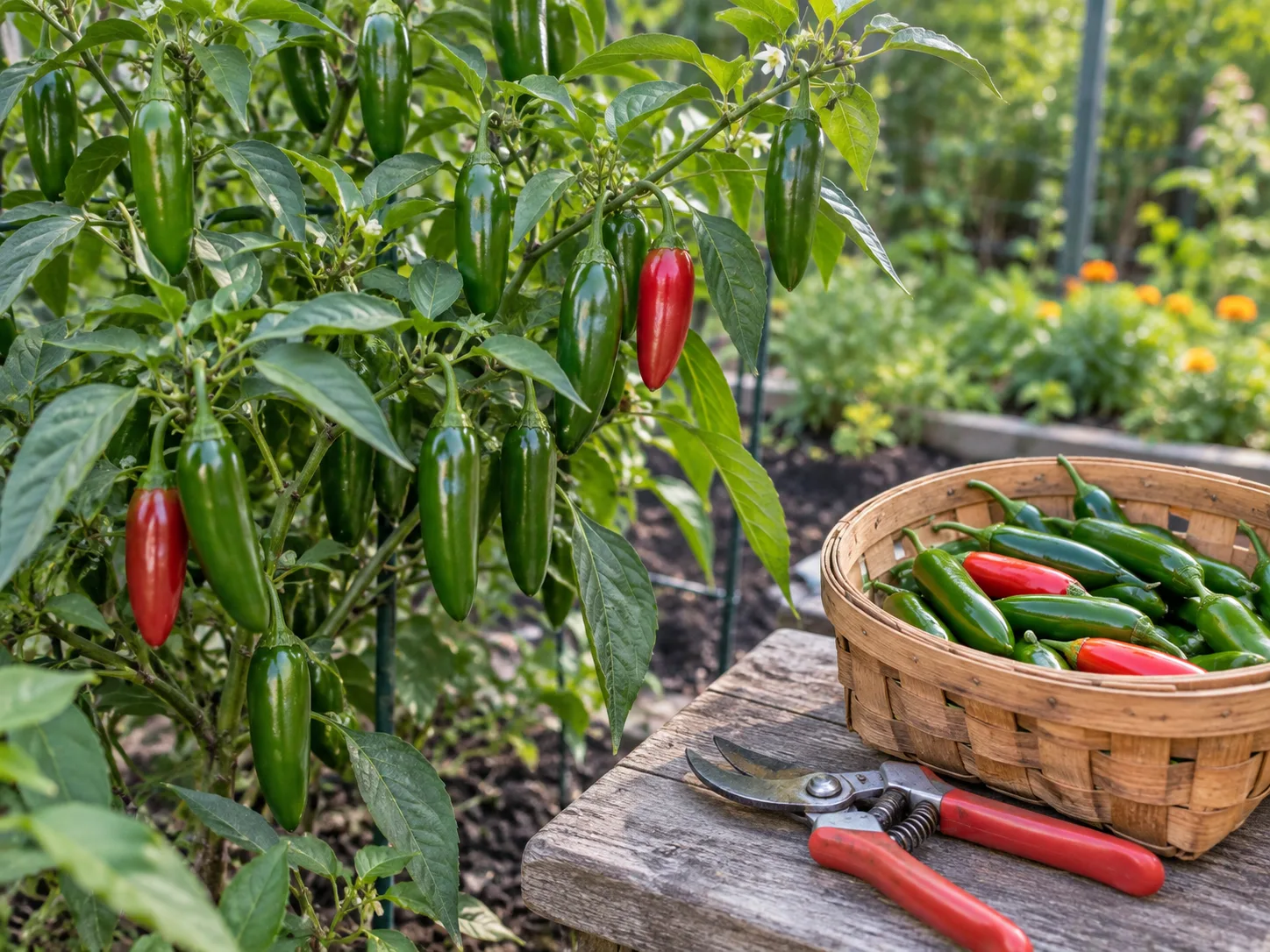
When to prune pepper plants
Use plant condition and the weather rather than a single calendar date. Prune when the plant is healthy enough to respond and the cut addresses a real problem. Delay elective shaping during severe heat, after a stressful transplant, during drought, or just before a cold snap.
Heat also complicates decisions about flowers and fruit. Utah State Extension notes that pepper flowers may drop when nights fall below about 55°F or daytime temperatures rise above about 90°F. If heat is already interrupting fruit set, heavy pruning adds another stress and removes shade; wait for conditions to improve before reshaping.
At transplanting and during early growth
Newly planted peppers need time to establish roots. Avoid topping a small seedling simply because it has reached a particular height, especially if it has only a few true leaves or has just been moved outdoors. First make sure it is acclimated, watered, and producing fresh growth. If the main stem is intact and the plant is not falling over, let it build roots and leaf area.
An exception is a transplant already carrying flowers or tiny fruit when you set it out. Utah State Extension advises removing flowers or fruit from transplants because they can establish slowly and yield poorly. That is a targeted transplant adjustment, not a standing instruction to remove every flower from a settled plant for two weeks.
During the first few weeks after planting, limit cuts to snapped stems, visibly diseased leaves, or foliage lying on the soil. If a transplant is badly root-bound, wilting, or scorched, fix the underlying establishment problem before attempting to shape it. A young pepper should be gaining strength, not recovering from several avoidable cuts.
In summer, make only selective cuts
Summer is usually a time for maintenance rather than major reshaping. Remove a broken stem, clip foliage that is touching wet soil, or selectively thin a few shoots if the center is unusually congested. Work when the plant is not wilted from heat and avoid removing a large share of its healthy leaves at once.
Take care around fruit. Peppers can develop sunscald when direct sun heats exposed fruit, particularly during hot, dry weather. Keep leaves that shade the sunny side of the plant; do not remove them just because the fruit would be easier to see. If a branch is crowded but carries several peppers, consider tying it outward or adding a support cage instead of sacrificing the crop.
Before frost, prioritize harvest over drastic pruning
As the season winds down, count backward from the likely first frost and check how much fruit has already formed. New flowers and tiny fruit may not finish in time, while larger green peppers can still be harvested and used. Prune away only growth with a clear purpose, such as a diseased branch or a few shoots unlikely to mature.
Field peppers and greenhouse peppers are managed differently. Oklahoma State University Extension describes a structured pruning system for sweet peppers in hydroponic greenhouses, where plants are trained on two stems and production continues for months; it explicitly contrasts this with field-grown plants, where flowers are allowed to develop. Do not copy that intensive greenhouse schedule for an ordinary garden bed (Oklahoma State University Extension’s hydroponic pruning guide).
If your region has a long frost-free autumn, you may have time for a restrained cleanup while the plant is actively growing. In a short season, or if cold is only days away, harvest first and avoid a major cutback. A light trim can tidy the plant, but it cannot guarantee fruit will ripen before frost.
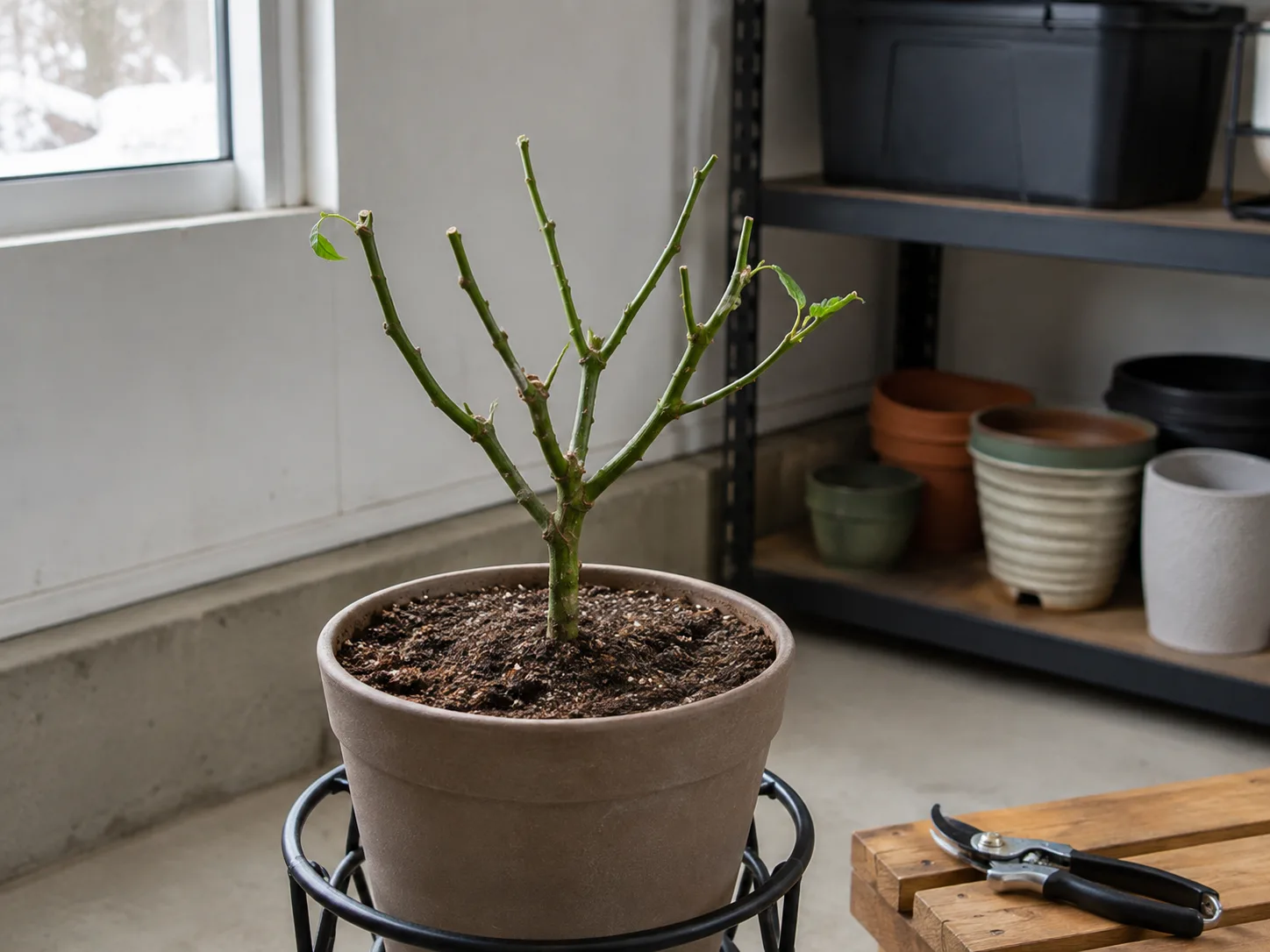
Saving a potted pepper for next year is a different job. Once a mature plant has finished fruiting and entered dormancy, an intentional cutback to a few sturdy forks can make it easier to overwinter; that cut is part of a protected-storage plan, not a way to ripen outdoor fruit faster (Epic Gardening’s pepper overwintering guide).
Match pruning intensity to variety and growing conditions
Consider fruit size, natural shape, season length, and support before topping. Many jalapeño, serrano, and other small-fruited plants branch readily, so pinching one established, tall plant may create a more compact form. Large-fruited bell peppers already carry heavier fruit on a sturdy fork; topping can delay that first set, and extra branching does not guarantee a larger harvest. Compact cultivars may need very little shaping, while sprawling plants may benefit more from a cage than from repeated cutting.
Short-season gardeners should be especially conservative. Every cut asks the plant to redirect energy into recovery and replacement growth. If your peppers have a brief warm window, preserve the main growing tip and early flowers so the plant can set fruit as soon as conditions allow. In a long season, you can experiment with light topping on one plant and compare its flowering and harvest date with an unpruned neighbor.
Climate changes the timing, too. In a mild-winter region where peppers can live as perennials, cleanup after frost damage or a flush of new growth may be useful; gardeners in cold regions typically grow peppers as warm-season annuals and have little reason to prune for next year’s shape. Growing in the Garden, written by an Arizona gardener, recommends using active new growth as a cue for cuts and avoiding severe work during extreme heat or before frost (Growing in the Garden’s mild-winter pruning guidance). Apply that advice to your local conditions rather than copying its desert calendar.
Choose clean, sharp tools and work on dry plants
Use clean bypass pruners for firm stems and small snips for tender shoots. A clean, sharp blade makes a controlled cut without crushing the stem. Before you start, remove soil and plant residue from the blades. If you are moving between plants with suspicious lesions, wipe or disinfect the tool between cuts according to its care directions; do not carry sap and debris from a potentially diseased plant to a healthy one.
Work when foliage is dry. Oklahoma State Extension’s greenhouse guidance recommends removing diseased branches when plants are dry because moisture can spread disease during pruning. The setting differs from a backyard bed, but the caution is practical: avoid pruning wet foliage, and remove cut diseased material from the garden rather than dropping it beneath the plant.
Wear gloves if you are handling hot pepper plants, particularly varieties whose fruit or sap irritates skin. Do not rub your eyes, and wash your hands and tools after work. Use a stable hand position and cut away from your fingers; thick pepper stems can be tougher than they look.
A step-by-step pepper pruning plan
Before cutting, decide whether you are cleaning up, shaping, or topping. Do not do all three just because the pruners are in your hand. A light, deliberate pass is easier for the plant to recover from and lets you see whether the first change solved the problem.
Inspect the whole plant and choose one goal
Look at the base, main fork, interior, and fruit-bearing branches. Identify dead or broken wood, stems touching soil, branches rubbing against each other, and areas so dense that leaves stay damp. Then choose the single issue that matters most today. If you are topping, identify the growing point and a healthy node below it before you snip.
Check the weather forecast and soil moisture as part of that inspection. A wilted plant may simply need water; a sparse, yellowing plant may have a root or nutrient problem that pruning will not fix. If the plant is stressed, postpone elective shaping and remove only growth that is dead or clearly diseased.
Remove dead, diseased, broken, and soil-touching growth
Start with damaged stems that cannot recover. Follow a dead or broken branch back to a healthy junction and remove it cleanly without tearing the main stem. For suspected disease, cut well below visibly affected tissue when practical, sanitize the blade before working on another plant, and dispose of the material. If the entire plant is declining, identify the cause before treating pruning as a cure.
Next, remove leaves or low branches that rest on the soil or are repeatedly splashed by irrigation. Pepper leaves can be an entry point for soil and water-borne problems when they stay wet, but the aim is clearance, not a bare lower trunk. Take the lowest offending growth first and pause to see whether anything else truly needs removal.
Thin only the shoots that block airflow or rub
Choose one weak, inward-growing, or crossing shoot if it is making the center crowded or rubbing against a stronger branch. Cut the weaker branch rather than removing both. Preserve the main fork and healthy fruiting laterals unless they are broken or diseased. Those branches carry flowers and fruit, and they help the plant retain a stable shape.
Do not automatically remove every shoot that appears below the first flower. Pepper branching is not identical to tomato suckering; side shoots can become productive stems. If a low shoot is healthy, not touching soil, and not shading or crowding the rest of the plant, there is no need to cut it just because it is called a sucker.
Make the cut just above a healthy node
A node is the point on a stem where a leaf or side shoot attaches. To shorten a healthy branch, make a clean cut slightly above a node that points toward the direction you want new growth to go. Leave enough stem that the node is not damaged, but avoid a long stub that can die back. Do not nick the node or split the main fork.
For topping, use the same node principle at the terminal tip, but make the cut only if you accept a possible delay in flowering. For a dead branch, follow it to live tissue rather than choosing a node by appearance alone. Cut at a comfortable angle with one deliberate motion; twisting or tearing can split tender stems.
Care for the plant after pruning
After a light cleanup, continue normal care. Keep the root zone evenly moist, but do not compensate for pruning with a sudden heavy dose of fertilizer. Extra nitrogen can push soft leafy growth rather than solve a problem, and stressed roots need stable moisture more than a strong feeding. If you pruned a healthy plant, it should resume growth as conditions permit; the exact pace depends on temperature, light, water, and how much tissue you removed.
Check the cuts and nearby leaves over the next several days. Watch for wilting that persists after the soil is moist, new lesions, stem splitting, or fruit suddenly exposed to strong sun. If you see sunburn starting, use temporary shade or restore a support branch where possible; do not respond by stripping more leaves. If the plant stays healthy and grows normally, stop pruning and let it use its remaining season.
For a topped plant, look for two or more shoots developing below the cut. You do not need to keep pinching every new branch. Let the plant build its structure, then support heavy limbs with a cage or stake. The goal is a manageable, productive plant, not a perfectly symmetrical one. If a branch leans under fruit, a cage or stake is often a better fix than removing it. Set supports before the canopy gets tangled, and use soft ties that do not pinch the stem as it thickens. Recheck after rain or wind, when a loaded branch can shift suddenly.
Common pruning mistakes to avoid
The first mistake is treating every pepper like a tomato. Pepper plants naturally fork and can carry fruit on several branches; removing each side shoot may remove future flowering sites. Learn the plant’s structure before calling every axillary shoot a sucker.
The second is pruning by height alone. A 12-inch plant in a long, warm season may be vigorous and ready to shape, while a plant of the same height that was just transplanted may still be recovering. Look for established roots and fresh growth rather than using one measurement as permission to top.
The third is removing too much foliage at once. Heavy thinning can slow growth, expose peppers to sunscald, or leave a short-season plant with less time to flower and ripen fruit. Make one or two targeted cuts, step back, and stop if the canopy is already open enough.
Other avoidable errors include cutting when the plant is wilted or wet, pruning just before a heat wave or frost, using dirty or dull tools, and cutting out a branch loaded with fruit without first considering a stake or tie. Avoid hard pruning simply to make fruit visible; leaves protect fruit and feed the plant. If a cut is optional and the plant is healthy, waiting is a sound choice.
Conclusion
Prune pepper plants to solve a specific problem, not because every plant needs a haircut. Remove dead, diseased, broken, and soil-touching growth first; thin only branches that genuinely crowd or rub; and treat topping as a variety- and season-dependent experiment. Keep fruit-shading leaves, especially in hot weather, and let short-season plants retain their early growth.
Use clean tools, make a careful cut above a healthy node, and give the plant time to respond before continuing. If the pepper is healthy, supported, and producing, leaving it alone may be the best pruning decision.



