How to Grow and Care for a Purple Leaf Sand Cherry
Learn how to grow purple leaf sand cherry, choose a sunny site, water well, prune after bloom, and spot pest and disease problems early, before they spread.
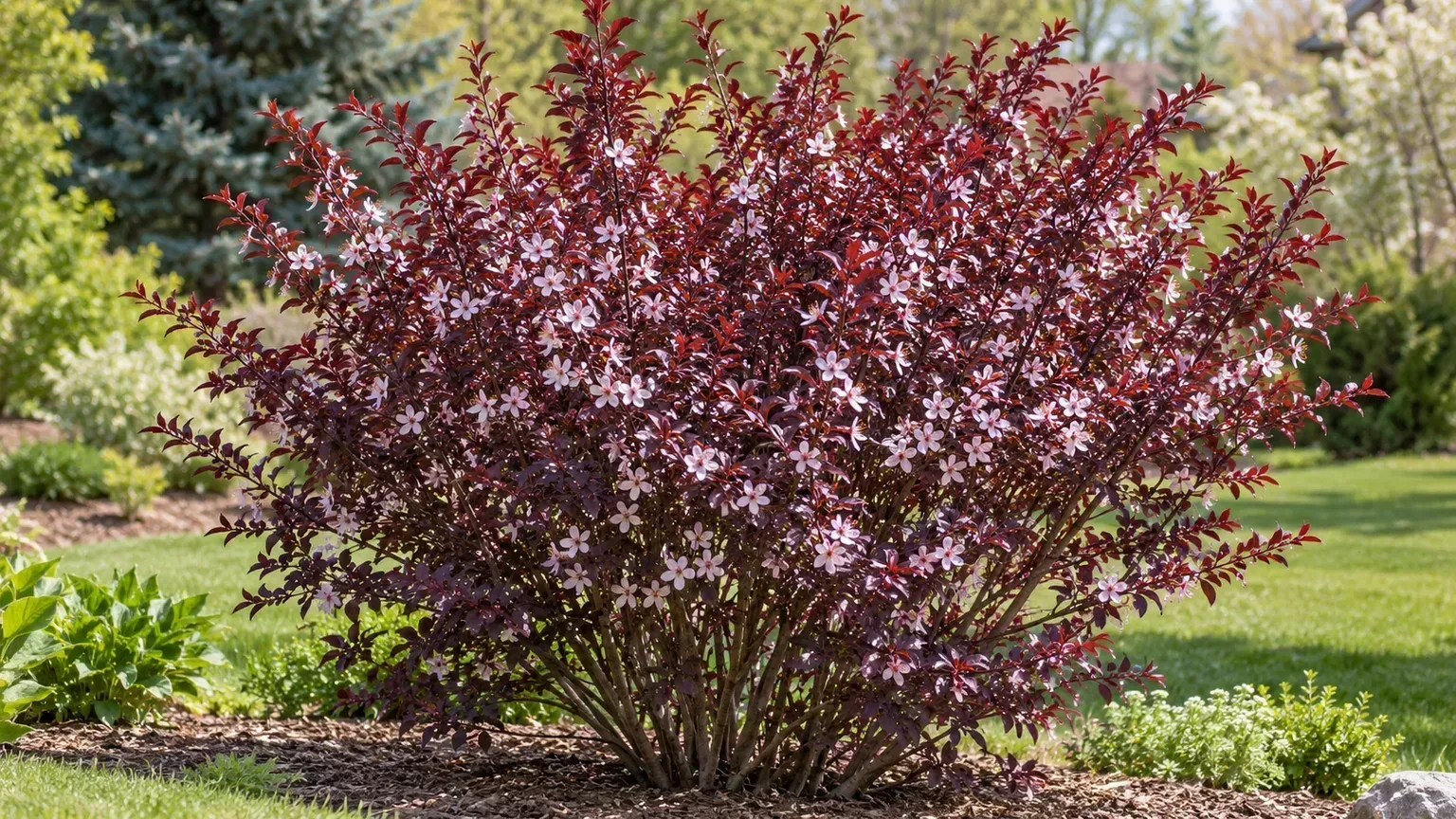
Purple leaf sand cherry is a deciduous shrub for gardeners who want dark foliage to hold a sunny border together after spring flowers fade. Give it at least six hours of direct sun, soil that drains freely, and room for a roughly 6- to 10-foot shrub; water consistently while it establishes, then during extended dry spells. Its biggest limitation is longevity: pests and diseases can cause decline well before a shrub becomes old by landscape standards, so it is best treated as a high-impact plant that may need monitoring and eventual replacement.
Purple leaf sand cherry at a glance
| Feature | What to plan for |
|---|---|
| Botanical name | Prunus × cistena |
| Habit | Deciduous, upright to rounded, often multi-stemmed |
| Typical North American size | About 6–10 feet tall and 5–8 feet wide |
| Light | Full sun for the strongest foliage color and flowering; part shade tolerated |
| Soil | Moist, fertile soil that drains well; drainage matters more than a narrow pH target |
| Flowers and fruit | Small fragrant pinkish-white spring flowers; sometimes sparse purple-black fruit in summer |
| Care priority | Establish evenly, avoid waterlogged roots, inspect stems and leaves, prune with restraint |
Those dimensions are planning estimates, not a guarantee. NC State Extension and the Missouri Botanical Garden list a mature shrub around 6–10 feet tall and 5–8 feet wide, while University of Illinois Extension gives a similar height and a 6–8-foot spread. (NC State Plant Toolbox; Missouri Botanical Garden; University of Illinois Extension) Expect the plant to vary with cultivar, climate, pruning, and growing conditions. It is not a dwarf just because some nursery tags call it compact.
Know what you are planting
The purple leaf sand cherry, also called plum leaf sand cherry, is Prunus × cistena, a hybrid ornamental shrub in the rose family. The Missouri Botanical Garden identifies its parentage as P. pumila crossed with P. cerasifera ‘Atropurpurea’; it was introduced by horticulturist N. E. Hansen in the early 20th century. (Missouri Botanical Garden) It is usually grown as a dense, multi-stem shrub, although a gardener can train a young plant into a small tree form by gradually selecting one leader.
Its feature is the reddish-purple foliage, not a large or dependable fruit crop. Small, fragrant, pale flowers appear in spring, often after the leaves have started to open. Some shrubs then set a modest number of dark purple fruits that birds may eat. (NC State Plant Toolbox) Treat it as an ornamental cherry with wildlife value, rather than as a cherry tree chosen for harvest.
Hardiness references do not give one consistent range. NC State lists zones 2 through 8, while Illinois Extension lists zones 4 through 7; the Royal Horticultural Society rates it under a different, UK-based hardiness system. (NC State Plant Toolbox; University of Illinois Extension; RHS plant profile) If you garden near the cold or heat edge of a rating, ask a local extension office or experienced nursery which selections persist in your area, and prioritize a sheltered, well-drained site over a number printed on a general label.
Choose a site for strong color
For the deepest summer leaf color and the most flowers this shrub can produce, give it full sun—about six or more hours of direct light. Part shade is workable, especially where afternoon heat is intense, but a plant in deep shade tends to lose color earlier, flower less, and develop a looser silhouette as it stretches toward light. (NC State Plant Toolbox; Gardenia.net’s plant profile) A shady position is not a fix for a plant that looks stressed; first check the soil and inspect the stems for damage.
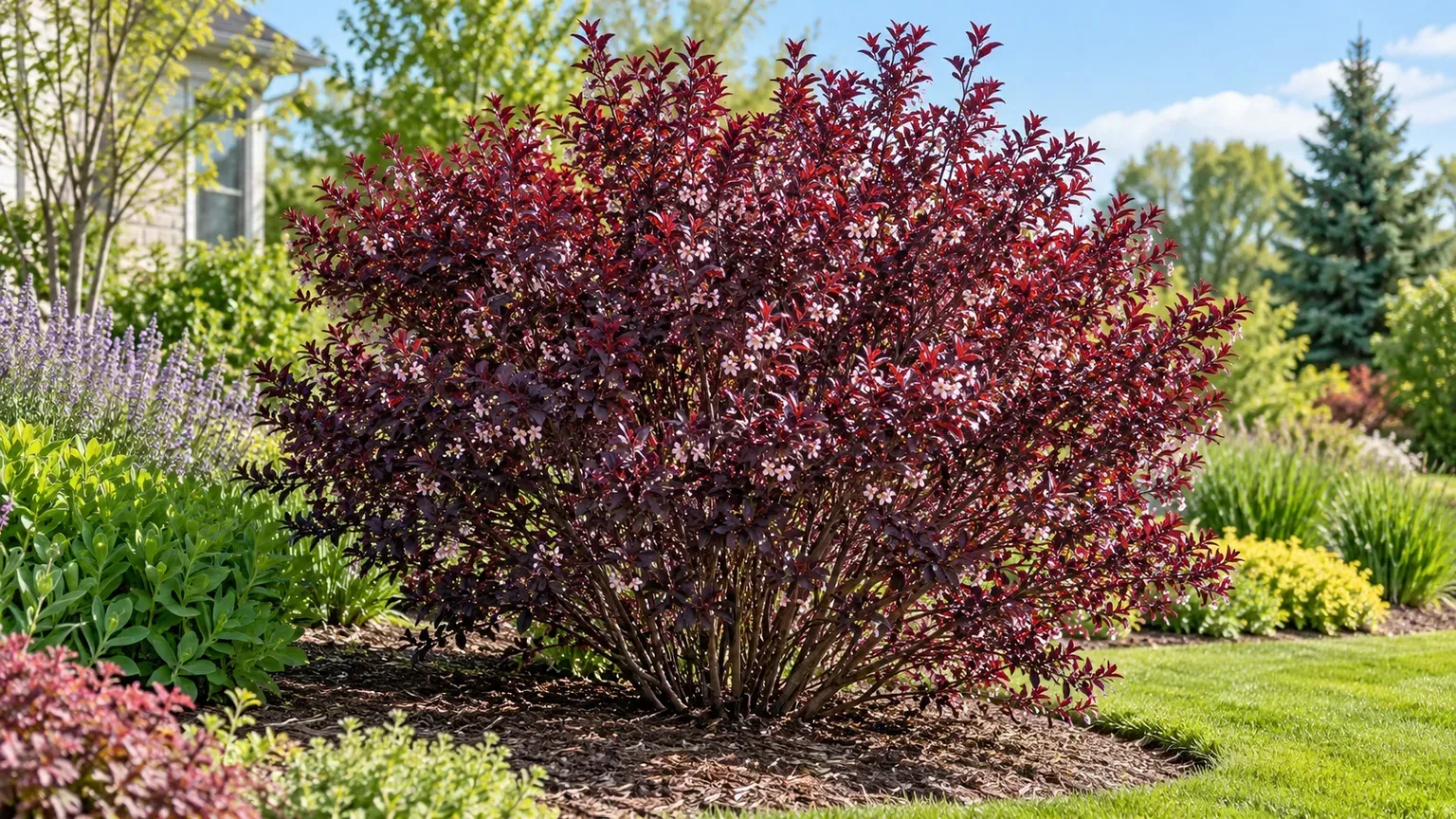
Before planting, mark out the mature footprint, not the size of the nursery pot. Leave roughly 5 to 8 feet of width for a specimen, with more room if access around it matters; for a row, set spacing according to whether you want individual oval shrubs or a continuous screen. Avoid squeezing it under eaves, against a narrow path, or into a foundation bed that cannot accommodate a broad base and future pruning.
Get the soil and drainage right
This shrub accepts more than one soil texture, including clay, loam, and sand, but the root zone must drain. NC State and the Missouri Botanical Garden both describe moist, organically rich, well-drained soil as a good fit. (NC State Plant Toolbox; Missouri Botanical Garden) A bed that stays saturated after ordinary rain is a poor location: persistently wet roots are more concerning than whether the soil is slightly acidic or alkaline.
Check drainage before you dig. After a steady rain, look for standing water and notice how long the planting area stays soggy. If a heavy clay bed drains slowly, select a different spot or build a broad, gently raised planting mound rather than digging a deep hole and filling it with a very different soil mix. The abrupt change can hold water around the roots, while a low pocket can become a basin.
Plant it at the right depth
Plant in spring or fall when the soil is workable and moderate weather gives roots time to establish. Dig a hole at least as wide as the root ball and no deeper than its height. Loosen circling roots at the outer edge, set the top of the root ball level with the surrounding grade, and backfill with the soil you removed unless a soil test identifies a specific amendment need.
Water slowly after planting so the root ball and adjacent soil settle together. Spread a 2- to 3-inch layer of organic mulch over the root zone to reduce evaporation and weeds, but keep it a few inches away from stems. A mulch volcano traps moisture against the bark and hides the base, making it harder to notice suckers or stem problems.
Water for establishment, then react to weather
Newly planted shrubs need regular moisture while their roots expand beyond the original root ball. During the first growing season, check the soil every few days in hot or windy weather and water deeply when the upper couple of inches begin to dry. Gardening Know How gives a similar top-inch-or-two check for this shrub; neither that cue nor a once-a-week rule overrides rainfall, soil texture, temperature, or drainage.
Apply water at the soil line, not as a quick splash over the foliage. A slow soak that reaches the root ball is more useful than frequent, shallow sprinkling, which can leave the outer soil wet while the original container mix stays dry. If water is running off, pause and let it absorb before continuing. Gardening Know How likewise advises checking the upper 1 to 2 inches of soil during establishment rather than relying on a rigid calendar. (Gardening Know How)
Once established, the plant usually needs supplemental water mainly through long, hot dry periods. Check before turning on the hose: if soil several inches below the mulch is still cool and moist, wait. If it is dry at root depth and leaves are wilting in the morning, water the root zone and reassess. Yellowing leaves on saturated soil call for better drainage, not more irrigation.
Fertilize only when it solves a problem
Do not feed automatically every spring. A shrub that is producing normal foliage and annual growth in reasonably fertile soil may not benefit from extra fertilizer; excess nitrogen can push soft leafy growth, encourage pruning, and distract from the real cause of a decline. Keep the area mulched and let the plant use nutrients already present unless growth, a soil test, or a local extension diagnosis points to a deficiency.
If growth is weak, first check light, moisture, root disturbance, and stem health. Fertilizer cannot repair root rot or a borer injury, and adding it to waterlogged soil will not restore oxygen to the roots. If a soil test does recommend a nutrient, follow that test and the product label instead of guessing at a high dose.
Prune lightly after bloom
Purple leaf sand cherry flowers on growth formed before the current season, so a hard cut before spring bloom can remove the display you planted it for. For routine shaping, wait until flowering is finished, then make selective cuts to keep the shrub balanced. The Missouri Botanical Garden recommends pruning as needed after flowering; this timing also makes it easier to see which branches are crossing or dead after winter. (Missouri Botanical Garden)
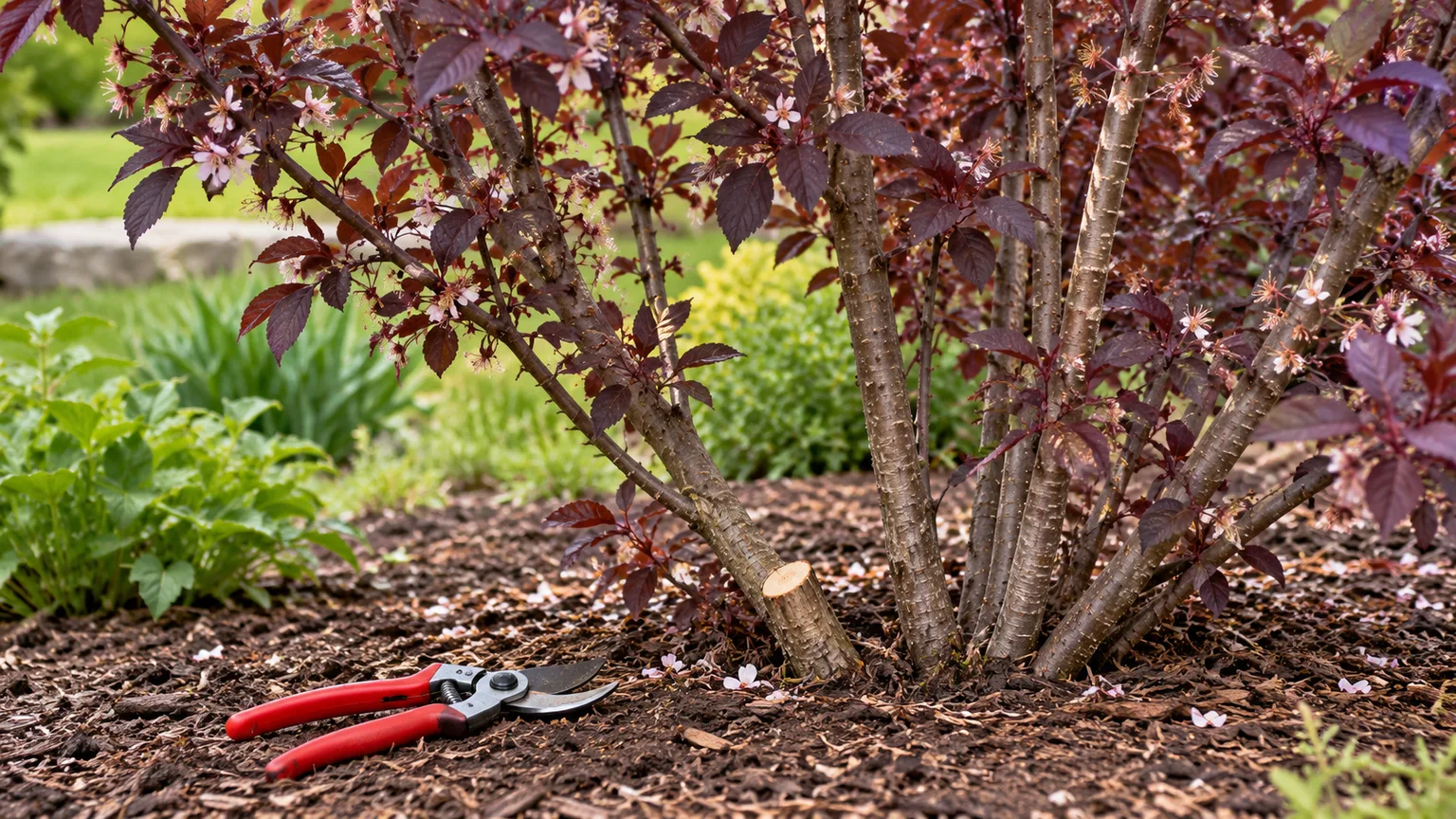
Start by removing dead, broken, rubbing, or clearly diseased stems at their point of origin. If the shrub is too crowded, take out a few of the oldest stems close to the base rather than shearing every branch to the same height. University of Illinois Extension and Gardening Know How describe removing older growth and managing suckers; for an established plant, spread renovation over more than one season if a single severe cut would leave it bare.
Make clean cuts with sharp bypass pruners or loppers, just outside the branch collar where the stem joins a larger branch. Do not leave long stubs, cut flush into the trunk, or top the plant to force a smaller mature size. A shrub that must be clipped repeatedly to fit its site is in the wrong place; pruning cannot permanently shrink its genetics.
When to shift pruning to summer
Prunus species can be vulnerable to silver leaf disease entering through pruning wounds. The RHS advises that in areas where silver leaf is prevalent, pruning may be done in mid-summer. (RHS plant profile) If this disease is common in your region, follow local guidance on the safest window, choose dry weather, and avoid unnecessary cuts. Remove hazardous dead or broken wood promptly, but do not use an aggressive dormant-season cut as routine maintenance.
Keep its natural shape
A purple leaf sand cherry naturally grows as a broad, often multi-stem shrub. You can encourage a small-tree outline while it is young by choosing one sturdy leader and removing competing basal stems in stages; keep enough lower foliage to support growth. This is a shaping choice, not a way to turn a mature shrub into a compact specimen overnight.
If you want a hedge, use light trimming after bloom and allow enough width for sunlight to reach the lower branches. A tight-sided, flat-topped haircut can leave the center shaded and strip away flowering shoots. The best shape is one that fits the plant’s mature spread and lets air move through the branches.
Why flowers or purple color may disappoint
Sparse flowers usually point first to site and pruning: too much shade reduces the show, while cutting back before bloom removes flower-bearing wood. Spring freezes can also affect buds, and a young shrub may not yet produce a dramatic floral display. Check how many hours of direct sun it receives, whether you pruned before flowering, and whether buds were exposed to a late cold snap before adding fertilizer.
Leaves that look less purple in a shady corner often indicate insufficient light. Move the shrub only if it is young enough to transplant safely and the destination has better sun and drainage; do not keep cutting it back in the hope that pruning will deepen the color. A shift toward bronze or green as the season changes can also be normal, particularly in fall. Evaluate the pattern across the whole plant and compare it with the season before treating a color change as disease.
Read pests and disease by their pattern
NC State and Illinois Extension flag this hybrid as vulnerable to several insect and disease problems, including black knot and peachtree borer; NC State also names Japanese beetles, aphids, scale, leafhoppers, caterpillars, and spider mites. (NC State Plant Toolbox; University of Illinois Extension) That long list does not mean every shrub will develop every problem. Look at where symptoms start, how quickly they spread, and whether the stems or only the leaves are affected.
Black knot, cankers, and borer damage
Black knot is a fungal disease of Prunus that produces dark, rough swellings on woody branches; cankers can also leave sunken or cracked areas, dieback, and sometimes oozing. The Illinois Extension species profile names black knot and peachtree borer among this shrub’s more serious problems. A gall or damaged branch is a reason to inspect nearby stems, not to spray the entire plant with an unverified remedy.
If you find a localized damaged branch, take a clear photo and ask your local extension office whether the symptom matches black knot, a canker, or insect injury. For confirmed disease, remove affected growth in dry weather using clean tools and dispose of it according to local advice; do not compost suspect material. If black swellings reach a major trunk, several main stems die back, or a borer has compromised the base, pruning may not save the shrub. Get a local diagnosis before applying any pesticide, especially when the damage pattern is unclear.
Foliage pests and leaf symptoms
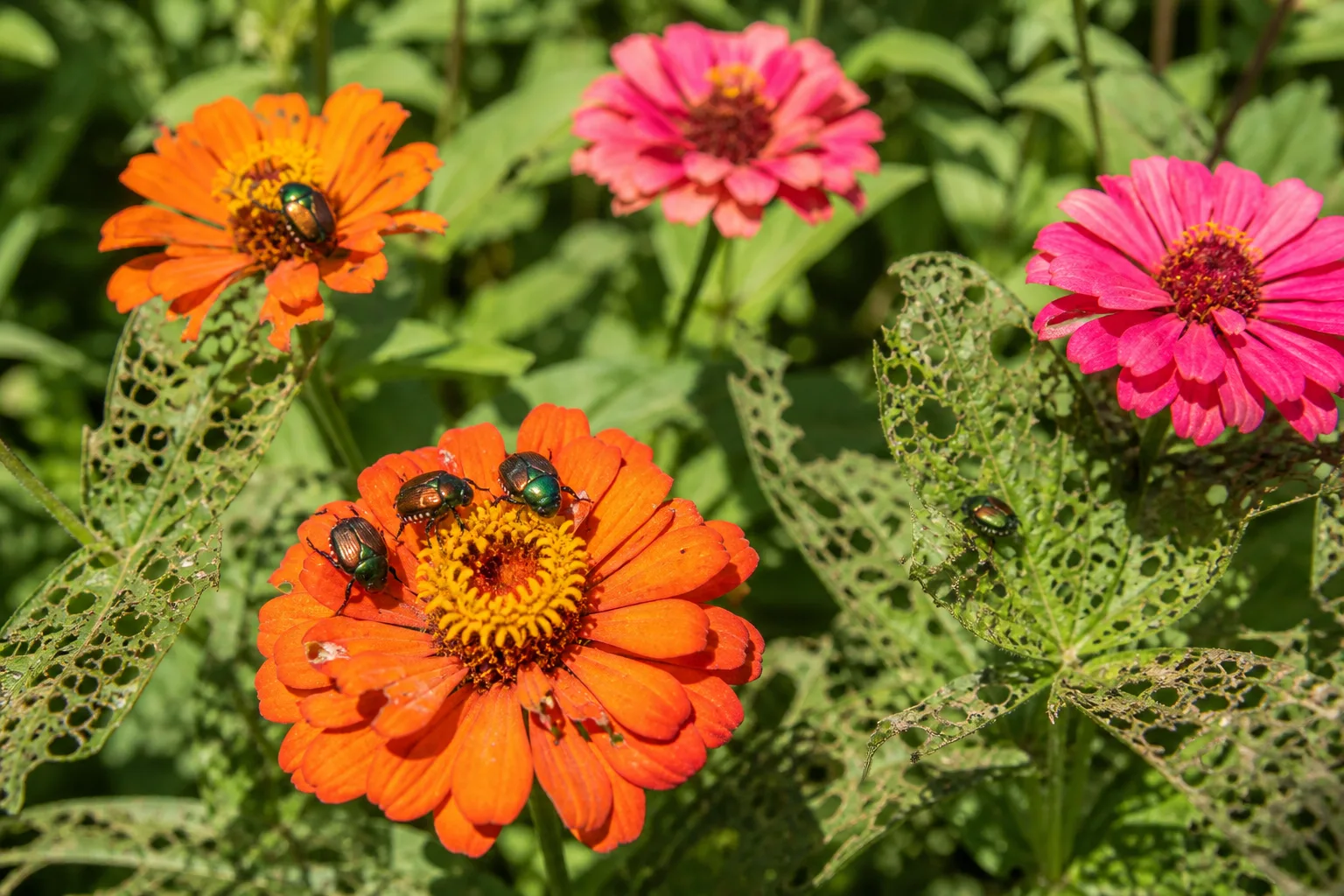
Japanese beetles feed openly and can leave leaves lacy or skeletonized. Aphids and scale insects cluster on young growth and stems, while spider mites are more likely to cause fine stippling and webbing in hot, dry conditions. Look under leaves and along tender shoots before choosing a response; yellow or curled foliage alone does not identify a pest.
For light chewing, hand-pick visible beetles into soapy water or remove heavily affected leaves if the plant can spare them. For sap feeders, try a firm water rinse on a limited area and recheck the plant before escalating. Avoid spraying beneficial insects and never apply a pesticide unless the product is labeled for the pest, the plant, and the intended site. Leaf spot, mildew, or leaf curl can have different causes; improve airflow and avoid wetting foliage at night, but use an extension diagnosis when symptoms continue or spread.
Propagate a plant true to type
Because Prunus × cistena is a hybrid, seed is not the dependable way to reproduce the same ornamental plant. Use a vegetative method. The RHS profile recommends softwood cuttings in early summer with bottom heat, and the Missouri Botanical Garden lists rooted stem cuttings as a propagation route. (RHS plant profile; Missouri Botanical Garden)
Take several healthy, nonflowering shoot tips in early summer, each with a few leaf nodes. Remove the lowest leaves, insert the cut end into a clean, free-draining propagation medium, and keep the medium evenly damp—not saturated—under bright indirect light. Gentle bottom heat can improve rooting; check for resistance and new growth before potting on, and expect some cuttings not to take. If the parent produces a rooted sucker, it can also be separated with as much root as possible, but a sucker may need extra time to establish after transplanting.
Should it grow in a pot or tight space?
For a long-term landscape plant, an in-ground site is the safer choice. A shrub that can reach 6 to 10 feet tall and spread 5 to 8 feet needs a large root zone; a small decorative pot dries quickly, restricts roots, and leaves little margin for watering errors. A large, stable container with unobstructed drainage can hold a young plant temporarily, but expect more frequent moisture checks and plan for eventual planting out or replacement.
It is also a poor pick for a tight foundation bed or a corner where branches must be clipped every few weeks. Choose it where the broad outline, spring flowers, and purple leaves can be seen from a distance and where you can reach the base to inspect stems. If your site is narrow, select a shrub bred to stay small rather than relying on annual severe pruning.
Mistakes that shorten its useful life
The most common avoidable mistake is treating the plant like a drought-proof shrub because it tolerates a wide range of weather. Young roots need consistent moisture, and established plants can still struggle during prolonged heat; at the same time, saturated soil can cause root problems. The answer is not a fixed schedule but a moisture check at root depth plus a planting site that drains after rain.
Other preventable setbacks include planting in deep shade, burying the root ball, piling mulch against stems, pruning away flower buds, shearing the shrub into a dense shell, and fertilizing a declining plant before checking its roots and branches. Keep enough space for its natural spread and inspect it once or twice a month during active growth. Early identification can help with a branch-level problem, although it cannot reverse serious trunk damage.
When to replace the shrub
This is not a shrub to count on for decades. University of Illinois Extension says it tends to decline after about 10 years, and NC State and the Missouri Botanical Garden describe it as short-lived, often with disease and insect pressure contributing to the decline. (University of Illinois Extension; NC State Plant Toolbox; Missouri Botanical Garden) Those are observations, not an expiration date: some plants decline earlier, while a well-sited, relatively trouble-free specimen may last longer.
Consider replacement when several main stems keep dying, cankers or black knot recur on the framework, the plant has lost most of its vigor, or repeated pruning leaves little healthy growth. First confirm that the cause is not simple shade, drought, or waterlogged soil. If you replace it, choose a better-drained, sunnier location or a longer-lived alternative suited to the same mature size; planting another sand cherry in the identical stressed spot may repeat the cycle.
Conclusion
Purple leaf sand cherry earns a place where a gardener wants deep foliage color, spring flowers, and a broad, informal shrub in a sunny bed. Give it room, plant it at grade in soil that drains well, keep new roots evenly moist, and prune selectively after flowering—or in the locally recommended summer window where silver leaf is a concern.
The trade-off is its susceptibility to pests and disease and a shorter-than-average landscape life. A monthly look at leaves and woody stems, paired with realistic expectations, makes it easier to enjoy the plant while it is healthy and to recognize when a different shrub would serve the site better.