How to Grow Red Salvia: Planting, Water, and Care
Grow red salvia from spring to frost with a practical guide to sunlight, spacing, watering, feeding, pruning, propagation, and common problems.
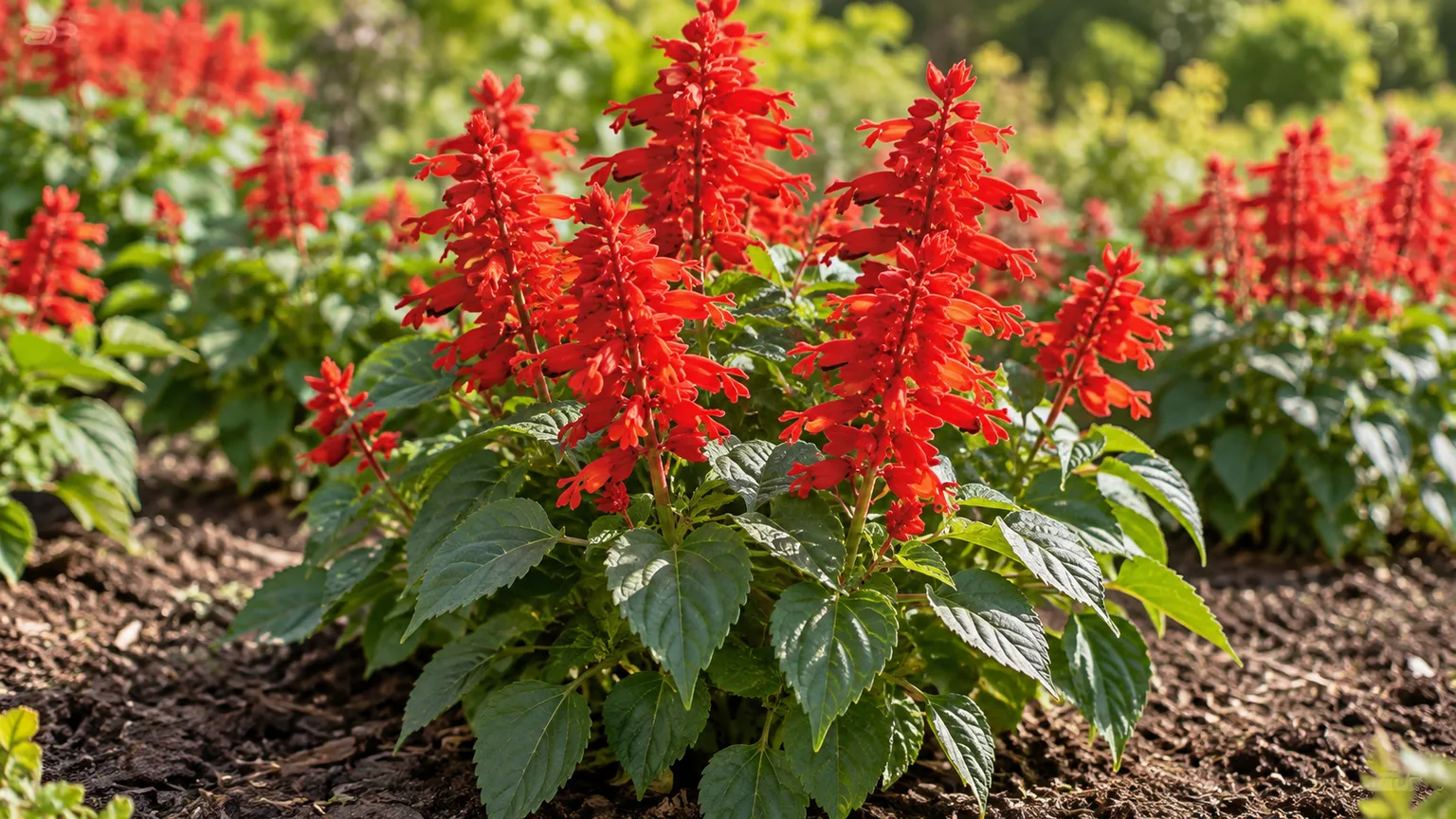
Red salvia is a warm-season plant that can flower from summer until frost when it gets enough light, steady moisture, and soil that drains quickly. In frost-prone regions, treat it as an annual; in genuinely mild climates, it may return as a tender perennial. The most useful care adjustment is to match the variety’s mature size and water needs to its spot, rather than assuming every red salvia grows like the same compact bedding plant.
The plant sold as scarlet sage is usually Salvia splendens, a Brazilian member of the mint family. Its dense, upright spikes and opposite oval leaves make it easy to use as a border accent or in a pot, but “red salvia” also appears on labels for other species. Check the botanical name and cultivar before buying: the name tells you more about mature size, spacing, and pollinator value than flower color does.
How Red Salvia Grows: Annual or Perennial?
Salvia splendens is botanically a tender perennial, but gardeners in places with freezing winters usually grow it as a bedding annual. It grows quickly in warm weather and blooms well during one long season, so there is little need to keep an outdoor plant alive through cold weather. North Carolina State Extension lists it for frost-free hardiness zones and describes it as an annual in North Carolina, where winter freezes prevent reliable outdoor survival. (North Carolina Extension Gardener Plant Toolbox)
In a frost-free or very mild climate, a plant may persist for more than one season, though its form can become less compact with age. In a colder garden, expect the first hard freeze to finish the plant. You can bring a container indoors before cold weather or take cuttings in late summer, but a fresh transplant or new seedling is often simpler than trying to maintain a lanky plant indoors through winter.
Red Salvia at a Glance
| What to plan for | Practical range or target |
|---|---|
| Botanical name | Salvia splendens |
| Plant type | Tender perennial; annual where winters freeze |
| Native range | Brazil |
| Mature size | Commonly about 1–3 feet tall; compact cultivars can be shorter |
| Light | Full sun for the most flowers; part shade is tolerated |
| Soil | Fertile or average soil that drains well |
| Water | Even moisture; do not leave roots in saturated soil |
| Bloom period | Summer into fall, often ending at the first frost |
| Main uses | Bedding, borders, mass planting, and containers |
Those are species-level guideposts, not a promise about every packet or nursery pot. North Carolina State Extension gives a broad 1–3-foot height range and notes that compact Vista selections are about 12 inches tall; the RHS profiles of ‘Vista Red’ and ‘Red Hill’ also show how cultivar size and shade tolerance can differ. Read the plant tag and use its mature height and spread to set the spacing, especially when filling a narrow border or small container. (North Carolina Extension Gardener Plant Toolbox; RHS ‘Vista Red’ profile; RHS ‘Red Hill’ profile)
Choose a Cultivar for Your Space
Choose by mature size and flowering habit first, then pick the flower color. Compact selections such as the Vista series fit edging and smaller pots; taller selections work better in the middle of a bed, where they can stand above low annuals without blocking a path. Cultivars sold under names such as ‘Saucy Red,’ ‘Lighthouse Red,’ and ‘Hotline’ can differ in height, flower color, and whether spent blooms remain conspicuous.
If you are buying for a small balcony, a 10–12-inch cultivar is easier to keep proportional than a full-size form that can reach several feet. For mass planting, repeat the same cultivar so plants grow at a similar pace and fill in evenly. The RHS notes that ‘Vista Red’ is a compact upright selection, while its ‘Red Hill’ profile describes a taller plant; a named cultivar label is more useful than assuming “red salvia” always means a particular size. (RHS ‘Vista Red’ profile; RHS ‘Red Hill’ profile)
Find a Bright Site With Quick-Draining Soil
Give red salvia a location with good light and soil that does not stay soggy after rain. A bed that receives morning sun and drains within a few hours is a safer choice than a low pocket where water collects. The plant can grow in a range of soils, but dense, persistently wet soil makes root trouble more likely; if water pools, improve the bed or choose a raised area before planting rather than trying to compensate with less frequent watering.
You do not need to build a rich, finely amended planting hole. If the soil is poor, incorporate a modest layer of finished compost across the bed rather than filling each hole with a very different mix. A sharp change between amended planting pockets and surrounding clay can hold water around roots. The RHS recommends fertile, moist but well-drained soil for tender salvias, and North Carolina State Extension emphasizes drainage and notes that S. splendens is not drought-tolerant. (RHS ‘Vista Red’ profile; North Carolina Extension Gardener Plant Toolbox)
How Much Sun Does It Need?
Aim for at least six hours of direct sun if you want the heaviest flowering. A little afternoon shade can help a container or newly planted salvia cope with intense heat, but a spot that is shaded for most of the day usually produces fewer flower spikes and longer, weaker stems. North Carolina State Extension lists full sun to partial shade; the RHS profiles are cultivar-specific, with ‘Vista Red’ listed for full sun and ‘Red Hill’ for full sun or partial shade. (North Carolina Extension Gardener Plant Toolbox; RHS ‘Red Hill’ profile)
If the plant is leafy but barely flowering, check how much direct sun reaches it from late morning through afternoon before adding fertilizer. A move into brighter light often addresses the problem more directly than extra feeding. In a hot, reflected-heat location, protect roots with mulch or shift a movable pot to light afternoon shade while keeping morning sun.
Plant Outdoors After Frost
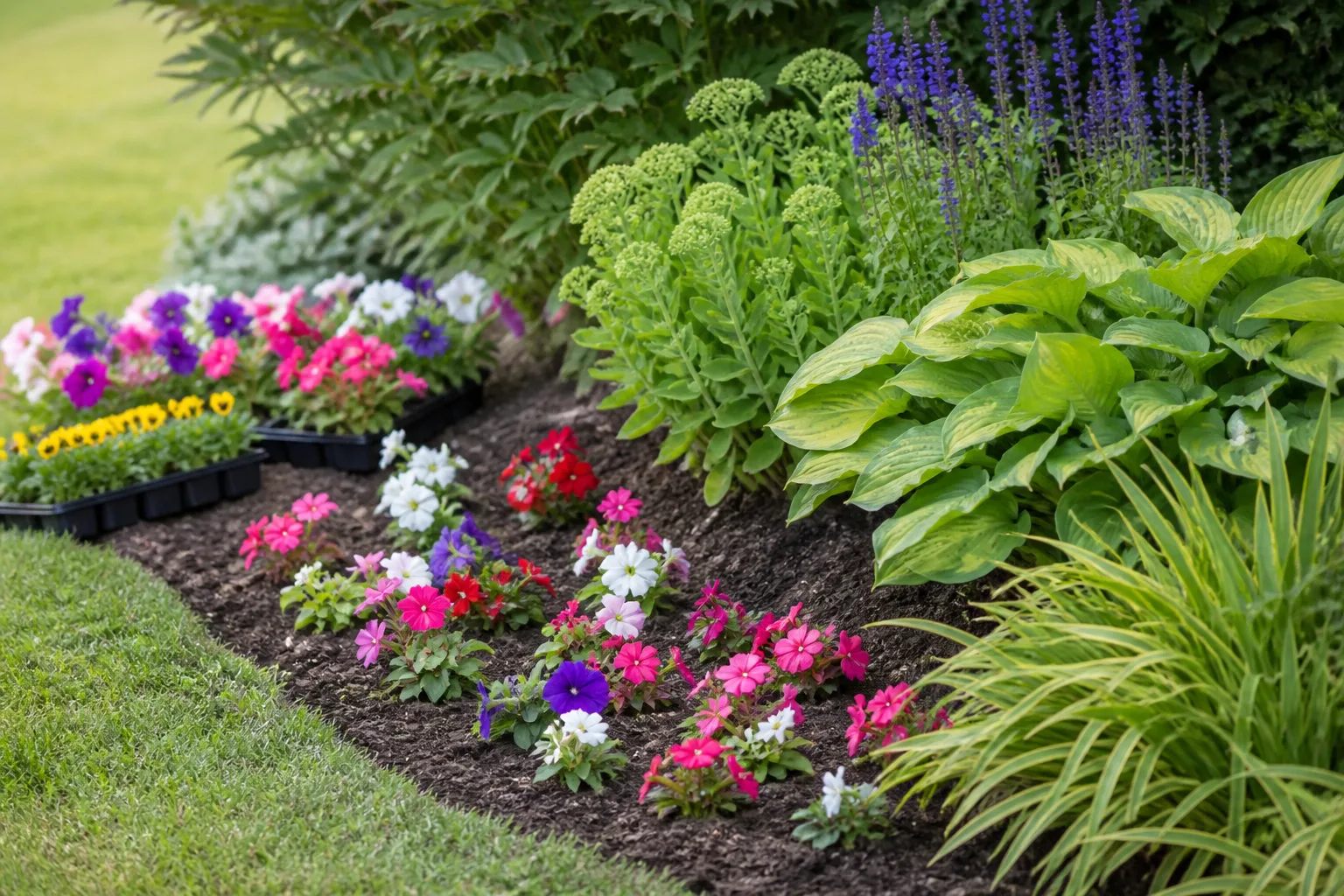
Set nursery plants outside after your local frost risk has passed and the soil has warmed. Cold soil and chilly nights stall this warm-season plant, even when an early spell of sunny weather makes the bed feel ready. If you started seedlings indoors, harden them off over about a week by giving them gradually longer periods outside, then plant them on a mild, cloudy day or in late afternoon.
Water the nursery pot before removing it, loosen any circling roots gently, and plant at the same depth it grew in the pot. Space plants according to their mature spread: compact bedding forms can sit closer together, while full-size selections need more room for airflow and branching. Harvest to Table gives a broad 6–18-inch spacing range depending on variety; use that range as a starting point, then follow the cultivar label if it specifies a different mature width. (Harvest to Table, “How to Grow Annual Red Salvia”)
Water Deeply, Then Let the Surface Dry Slightly
Water new transplants thoroughly so moisture reaches the root ball and surrounding soil, then check the bed before watering again. Once established, red salvia prefers reasonably even moisture, not constant saturation and not repeated wilting. Push a finger an inch into the soil: if it is dry there, water slowly at the base; if it still feels cool and damp, wait and check again the next day.
A weekly schedule is only a rough starting point because rainfall, soil texture, wind, and temperature change how quickly the bed dries. A short daily sprinkle wets the surface without encouraging roots to grow down into the soil. A light mulch layer slows evaporation, but keep it slightly away from the stem bases. In a heat wave, inspect containers daily; garden beds may need water less often, particularly after rain. North Carolina State Extension calls scarlet sage drought-intolerant, while Gardenia’s cultivar profile also recommends consistent moisture rather than prolonged dry spells. (North Carolina Extension Gardener Plant Toolbox; Gardenia, ‘Saucy Red’ profile)
Fertilize for Flowers, Not Just Foliage
Start with the soil you have. In a reasonably fertile garden bed, compost worked into the top layer may be enough for one growing season; do not automatically feed every few weeks simply because the plant is blooming. If you use a fertilizer, choose a balanced product and follow its label rate. A slow-release fertilizer at planting is one option, while a container plant in fresh potting mix may need light feeding later in the season as nutrients wash out with watering.
More fertilizer is not a shortcut to more flowers. If stems are soft and leaves are lush while buds are scarce, first check for shade and excess nitrogen. Heavy feeding can push leafy growth and increase salt buildup in a pot; flush the container with water and pause feeding if white crust appears on the mix or pot rim. Avoid combining several fertilizer products whose total dose is unclear.
Pinch Young Plants and Remove Faded Spikes
Pinching the growing tip while a young plant is still building its shape encourages side branches and can make a compact cultivar look fuller. Use clean fingertips or snips to remove only the soft tip above a leaf pair; leave several healthy sets of leaves below the cut. If the plant is already branching well or carrying flower buds, skip pinching so you do not delay the first flush of color. The RHS recommends pinching young growth on its ‘Vista Red’ profile to promote bushiness. (RHS ‘Vista Red’ profile)
As spikes fade, remove them back to the next set of leaves or a healthy side shoot. That keeps the bed neat and can prompt a fresh flush on cultivars that continue flowering from side branches. Some modern cultivars are described as self-cleaning, so you can let them grow if old spikes are not spoiling the display; ‘Saucy Red’ is one cultivar Gardenia describes as sterile and self-cleaning. For most plants, occasional grooming is enough—daily deadheading is unnecessary. (Gardenia, ‘Saucy Red’ profile; RHS ‘Vista Red’ profile)
Grow Red Salvia in Containers
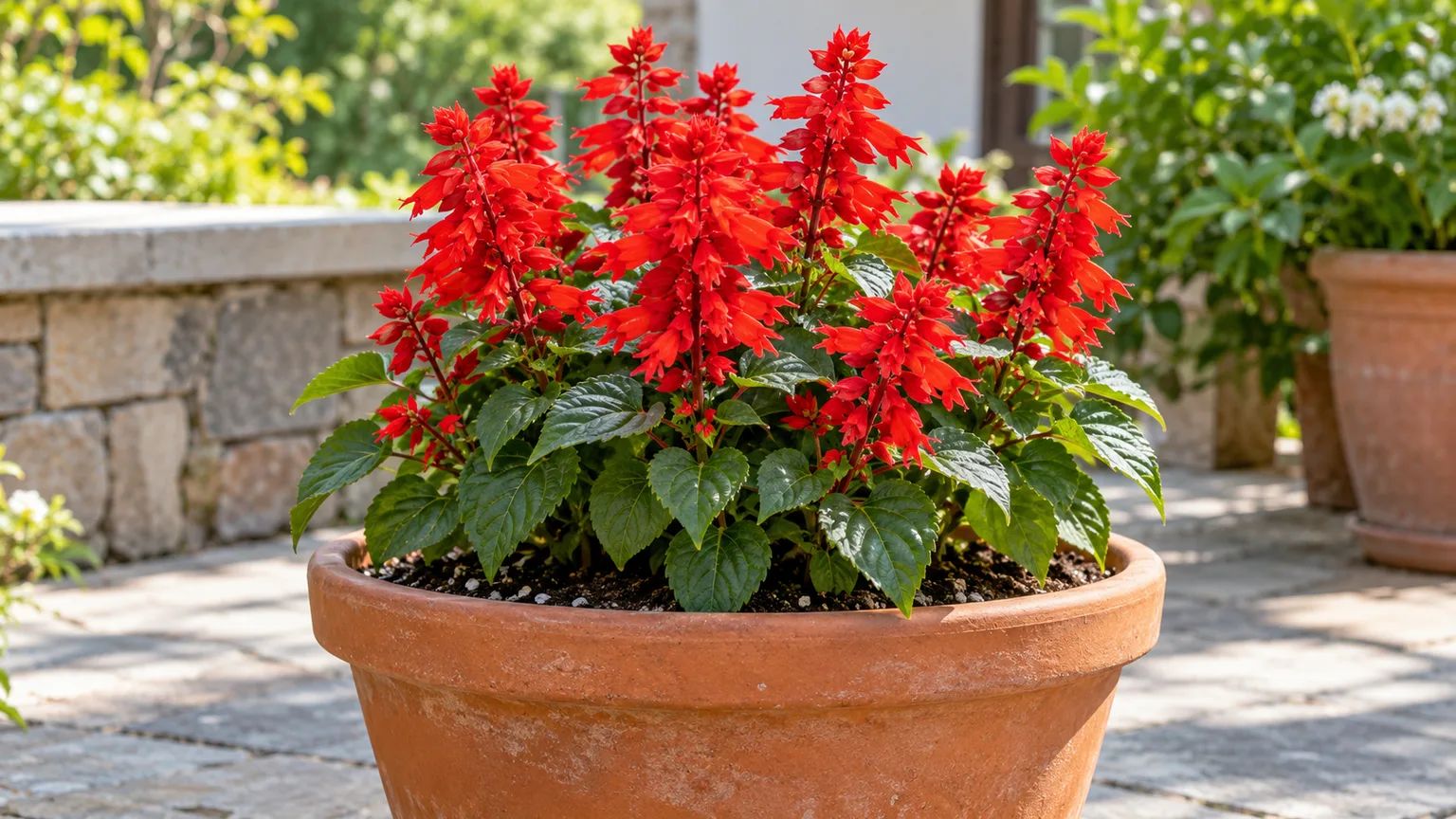
Use a pot with unobstructed drainage holes and fresh, well-draining container mix. Choose a container wide enough to hold the cultivar’s root ball with a little room around it; compact cultivars can grow well in a moderate pot, while a taller plant needs a heavier, wider container so it does not tip. Avoid leaving a saucer full of water under the pot for long periods.
Containers dry faster than beds because sun and wind warm the sides of the root zone. Lift the pot or feel the mix under the surface instead of watering only when leaves droop; repeated wilt-and-drench cycles can shorten bloom and stress roots. If the pot dries out within a day even after thorough watering, move it out of harsh afternoon heat or use a larger container next time. Keep enough space around neighboring pots for air to move between foliage.
Start Red Salvia From Seed
Start seed indoors about eight to ten weeks before your last expected spring frost if you want flowering plants early in summer. Use a clean seed-starting mix and a tray with drainage. Scatter the small seeds on the surface and press them gently into contact with the mix; S. splendens seed needs light to germinate, so do not bury it under a thick layer of soil. North Carolina State Extension gives the key light requirement; Harvest to Table recommends early indoor sowing, warmth, and bright light for seedlings. (North Carolina Extension Gardener Plant Toolbox; Harvest to Table, “How to Grow Annual Red Salvia”)
Keep the mix lightly and evenly moist, not waterlogged, and place the tray in a warm spot with bright light. Bottom-watering can help keep the seed surface from washing away; if you cover the tray to retain humidity, remove the cover as soon as seedlings emerge so still, wet air does not encourage damping-off. Germination can take roughly two weeks, but temperature and seed freshness affect timing. Once seedlings have true leaves, pot them up or thin them so their leaves do not crowd.
Before transplanting, let seedlings adjust gradually to sun and outdoor air. Start in a sheltered, bright spot and increase exposure over several days. Direct sowing is possible after frost in a long, warm season, but it gives the plants less time to establish and bloom; in cooler regions, indoor sowing or nursery starts are more dependable. Some cultivar seed may not come true to its parent, so buy seed for a color mix or choose a named young plant if exact color and habit matter.
Propagate a Favorite Plant From Cuttings
A stem cutting is useful when you want another plant with the same flower color and habit as a named cultivar. Take a 3–4-inch tip from a healthy, nonflowering shoot, remove the leaves from its lower half, and set the bare stem into moist, clean propagation mix. Keep it warm in bright indirect light and lightly humid while roots form; once new growth appears and the cutting resists a gentle tug, pot it up and harden it off before moving it outside.
Seedlings from a hybrid or named cultivar may not resemble the parent, so a cutting is the more reliable way to preserve that selection. Check the tag before propagating a trademarked cultivar, because some selections have propagation restrictions. North Carolina State Extension lists seed and stem cuttings as propagation routes for scarlet sage, and the RHS lists seed for ‘Vista Red’ and both seed and cuttings for ‘Red Hill.’ (North Carolina Extension Gardener Plant Toolbox; RHS ‘Red Hill’ profile)
Keep It Blooming Through Summer Heat
If flowering slows during the hottest weeks, look at the whole pattern before pruning. A container that wilts by late afternoon may need more frequent watering or a little afternoon shade; a bed plant that stays moist but has stretched stems is more likely short on sun or overcrowded. Remove spent spikes, water the root zone in the morning, and avoid feeding a stressed plant until it resumes steady growth.
Red salvia tolerates warm weather, but heat tolerance is not the same as drought tolerance. The plant still needs moisture, and small pots can become hot and dry faster than the surrounding garden. A light mulch layer, adequate spacing, and morning sun with some late-day relief can reduce stress during a heat wave without sacrificing all-day brightness.
Identify Pests and Disease Early
Check new plants and the undersides of leaves before placing them with other flowers. Aphids cluster on soft tips, whiteflies flutter when disturbed, and spider mites are more likely to build up in hot, dry conditions; fine stippling or faint webbing suggests mites. A strong spray of water can dislodge a small aphid or whitefly population outdoors. Recheck in several days rather than assuming one treatment solved the problem. North Carolina State Extension identifies whiteflies, aphids, and spider mites among insect problems associated with S. splendens. (North Carolina Extension Gardener Plant Toolbox)
Give plants breathing room and water at the soil line to reduce conditions that favor mildew and leaf disease. Powdery mildew appears as a white surface coating; leaf spots look like distinct brown or dark lesions rather than an even loss of color. Remove badly affected leaves, clear plant debris, and avoid wetting foliage late in the day. If leaves blacken or stems collapse at the base while soil stays wet, suspect root or stem rot: improve drainage and reduce watering before applying any treatment. The RHS lists powdery mildews and foot or root rots as possible problems for its red salvia selections. (RHS ‘Vista Red’ profile)
When Leaves Yellow, Droop, or Stop Flowering
Yellowing or drooping does not automatically mean the plant needs water. Feel the soil first. If it is dry below the surface and the whole plant wilts, water deeply; if it is wet and the lower leaves yellow, pause watering and check that the pot or bed drains freely. A plant that droops in afternoon heat but recovers by morning may be temporarily stressed, while persistent wilt in damp soil points more toward root trouble.
For weak flowering, check the causes in this order: hours of direct sun, moisture consistency, crowding, then fertilizer. Long gaps between watering can make a plant drop buds, but too much nitrogen or shade can produce vigorous leaves with few spikes. If an older plant is leggy, pinch or cut it back only above healthy leaf nodes and accept that you may lose some flowers while it branches. Change one factor at a time and watch new growth; damaged leaves usually will not turn green again, so judge recovery by the next leaves and buds.
Protect Red Salvia From Winter Cold
In a climate with freezing winters, plan to replace outdoor plants after the season rather than expecting them to return from the roots. Save seed from an open-pollinated variety or take cuttings before the nights turn cold if you want to keep the line going. If you bring a potted plant indoors, inspect it for pests and put it in your brightest available window; growth may become sparse in winter, and it will need less water than it did outside.
In a frost-free garden, leave the plant in place and trim away damaged or spent growth as needed. Avoid a hard cutback before a cold spell, because tender new growth is vulnerable. For many gardeners, starting fresh seed indoors in late winter is the simplest and least space-intensive winter plan.
Know What It Offers Pollinators
The tubular red flowers can attract hummingbirds and butterflies, but the value depends on the cultivar. North Carolina State Extension notes that while the species’ flowers attract hummingbirds and butterflies, many bedding cultivars bred mainly for ornamental display have little or no nectar. If pollinator food is a priority, look for cultivar notes that confirm nectar value and plant it alongside other nectar-producing flowers rather than relying on a block of red salvia alone. (North Carolina Extension Gardener Plant Toolbox)
The plant still has a place in a pollinator garden as a bright accent, especially when you pair it with species whose pollinator value is documented. Do not infer nectar availability from flower color alone. Its blooms may look like a hummingbird magnet, but cultivar selection and the rest of the planting determine how useful the bed will be.
Red Salvia vs. Other “Scarlet Sages”
Common names overlap, so compare the botanical name when buying. Salvia splendens has dense, showy red spikes above dark green foliage and is widely sold as a compact bedding annual. Salvia coccinea is also called scarlet sage, but its red flowers are spaced in looser whorls along upright stems; North Carolina State Extension describes it as drought-tolerant once established, while noting that watering during dry spells improves flowering. (North Carolina Extension Gardener Plant Toolbox: S. splendens; North Carolina Extension Gardener Plant Toolbox: S. coccinea)
Blue salvia labels usually refer to another species, such as S. farinacea, rather than a blue form of the red-flowered bedding plant. Their mature size, moisture needs, and winter behavior may differ. When a tag only says “scarlet sage” or “salvia,” ask for the botanical name and the cultivar’s expected height so the plant fits the space you have.
Conclusion
Red salvia is an easy way to add a long run of upright color, provided you give it warmth, light, and moisture without waterlogging its roots. Choose a cultivar by mature size, plant it after frost, and adjust watering to the bed or container rather than following a rigid calendar. Pinching young growth and removing tired flower spikes can improve shape, but heavy pruning and frequent feeding are rarely the first fixes for a plant that is not blooming.
In cold regions, treat Salvia splendens as a seasonal annual and start again with seed or a nursery plant next year. In mild climates, protect it from freezes and let it continue as a tender perennial. A quick check of the botanical name, cultivar tag, light, and soil moisture will solve most red salvia care questions before they become problems.