Why Is My Orchid Stem Turning Yellow? Read the Clues
An orchid stem turning yellow may be a spent flower spike or a warning sign. Learn how to identify the part, check roots, and choose a safe next step.
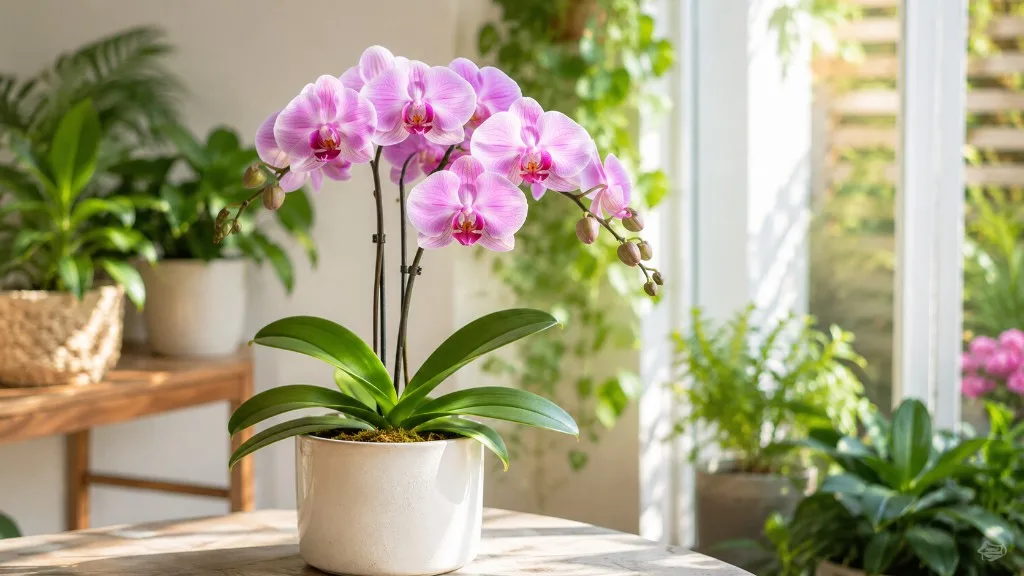
An orchid stem turning yellow is not a diagnosis by itself. If the yellow part is a flower spike that has finished blooming, the color change is usually normal aging; if the plant’s crown or main stem is yellowing, especially with soft tissue, dark spots, or failing leaves, inspect the roots and growing conditions promptly.
The first step is to identify which structure you are looking at. Orchid growers often call the tall stalk carrying flowers a “stem,” but it is a flower spike, and it does not have the same job as the plant’s crown or a storage pseudobulb. That difference tells you whether to wait, investigate, or take action.
First, identify the structure that is yellow
Start at the base of the plant and trace the yellow tissue upward. In a common moth orchid, the leaves grow from a short central axis, while a slender flower spike emerges from between leaves and carries buds or blooms. In other orchids, the thick cane or bulb-like structure that may appear to be a stem is part of the plant’s continuing growth system.
The American Orchid Society describes orchids as having different flowering habits and emphasizes that the correct way to handle an old spike depends on the genus and the plant’s condition. A one-size pruning rule can therefore be wrong even if the plant is a familiar grocery-store orchid (American Orchid Society: Where Do I Cut the Flower Spike?).
The flower spike carries blooms
A flower spike, also called an inflorescence, is the stalk from which buds and flowers emerge. It may arch from the side of a Phalaenopsis plant, branch, and show small nodes along its length. When blooms fade, the spike may stay green for a while, partly yellow, or dry from its tip toward the base; the exact sequence varies by orchid and spike.
If only this stalk is changing color after flowering and the leaves, crown, and roots remain firm, natural senescence is the leading explanation. The plant is retiring a temporary flowering structure, not necessarily losing its permanent stem.
The crown is the orchid’s growing center
In a monopodial orchid such as a Phalaenopsis, the crown is the central point where new leaves emerge. Its short main stem is the plant’s core; healthy roots and leaves attach along it. A yellowing or soft crown is more concerning than a spent spike because cutting into the central growth point can injure or kill the plant.
Look for whether discoloration is confined to a dry flower stalk or is moving into the leaf bases. A crown that feels firm and has a clean center is reassuring; a crown that looks water-soaked, turns dark, or feels soft needs prompt attention, especially if the youngest leaves loosen or fall.
A pseudobulb stores water and energy
Many sympodial orchids, including Cattleyas and some Oncidiums, grow in a chain of shoots connected by a rhizome. Each mature shoot may develop a swollen pseudobulb that stores water and supports leaves and flowers. An older pseudobulb can wrinkle or lose leaves as newer growth takes over, while a young pseudobulb is expected to remain firm as it develops.
Do not treat every yellowing pseudobulb as a flower spike or cut it automatically. If an old back bulb is dry and leafless while the newest growth is healthy, it may simply be aging; if a new bulb is yellowing quickly, soft, or spotted, inspect the medium, roots, and base for stress or rot.
Read the pattern before changing care
Before watering, fertilizing, moving, or pruning, note four things: which structure is yellow, where the color change starts, whether the tissue is firm or soft, and what the rest of the orchid is doing. A spike fading from the tip after flowers drop is a different pattern from yellow tissue at the base of the leaves while roots sit in wet bark.
| What you see | More likely explanation | First move |
|---|---|---|
| Spike yellows after blooms fade; leaves and roots look sound | Normal post-bloom aging | Leave it until dry, or prune according to orchid type |
| Crown or leaf bases are yellow, dark, or soft | Rot or crown injury | Isolate, keep water out of the crown, inspect roots and medium |
| Several leaves yellow along with a weak or wet root system | Root or growing-condition stress | Check root texture, pot drainage, and how long the medium stays wet |
| Leaves bleach or scorch after a move to direct sun | Light or heat stress | Filter the light and stabilize the location |
| One old pseudobulb slowly declines while new growth is firm | Natural aging of an older shoot | Keep the healthy rhizome and newer bulbs intact |
Color alone is a weak diagnostic. A pale spike can be old; a pale plant can have several causes; and roots can look different depending on whether they are wet or dry. Compare what you see with the plant’s recent history: Did it just finish flowering? Was it moved beside hot glass? Has the medium stayed soggy for days? Did discoloration spread quickly?
A flower spike can yellow normally after bloom
Flowering uses stored resources, and the spike is temporary. After the last flower drops, the orchid may let the whole stalk dry; some Phalaenopsis keep a green lower section or produce a side branch from an unused node instead. Other orchids bloom once per spike and then let it die back. Yellowing by itself, at this stage, does not mean the orchid is dying.
The pattern matters more than the word “yellow.” A normal aging spike usually dries gradually and becomes papery rather than wet or mushy. The plant’s crown should remain firm, its leaves should not suddenly collapse, and the roots should not be turning soft in a persistently wet pot.
Leave a partly green spike in place until you decide what you want and know the orchid type. A strong Phalaenopsis may produce a secondary branch from an unused node, but a second round of flowers can be smaller and draws energy from the plant. The American Orchid Society advises that recovery and a stronger later bloom may be better for a plant that is not vigorous; it also notes that some novelty Phalaenopsis and other orchids continue flowering from a green spike. If you do not know the cultivar, waiting until the spike is clearly finished is safer than cutting green tissue.
Roots that stay wet can lose the ability to support growth
When the yellowing occurs with limp leaves, a soft crown, or darkening at the base, check the roots and medium instead of assuming that the flower stalk is the problem. Orchid roots need both moisture and air. A dense, decomposing mix, a blocked drainage hole, or a nursery pot left standing in a cachepot of water can keep the root zone wet for too long, leaving damaged roots unable to support normal growth.
In a clear pot, look at several roots rather than judging one from its color. Phalaenopsis roots may appear green when wet and silvery when dry, but firmness is more useful than color: living roots feel solid, while dead or rotting roots may feel mushy, hollow, or collapse when touched. In an opaque container, check the pot’s weight, drainage, odor, and moisture deeper in the medium; the surface may dry while the center remains wet.
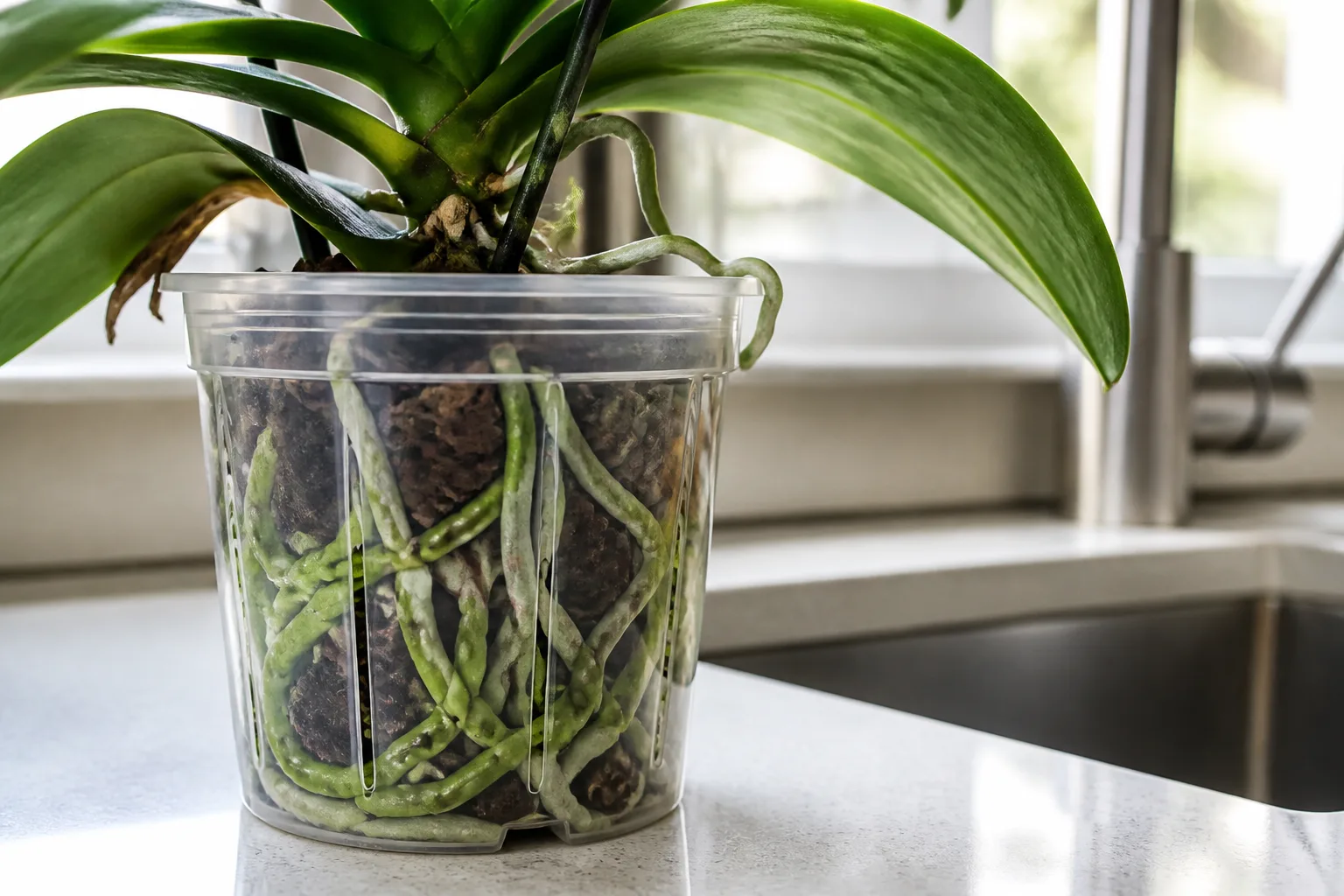
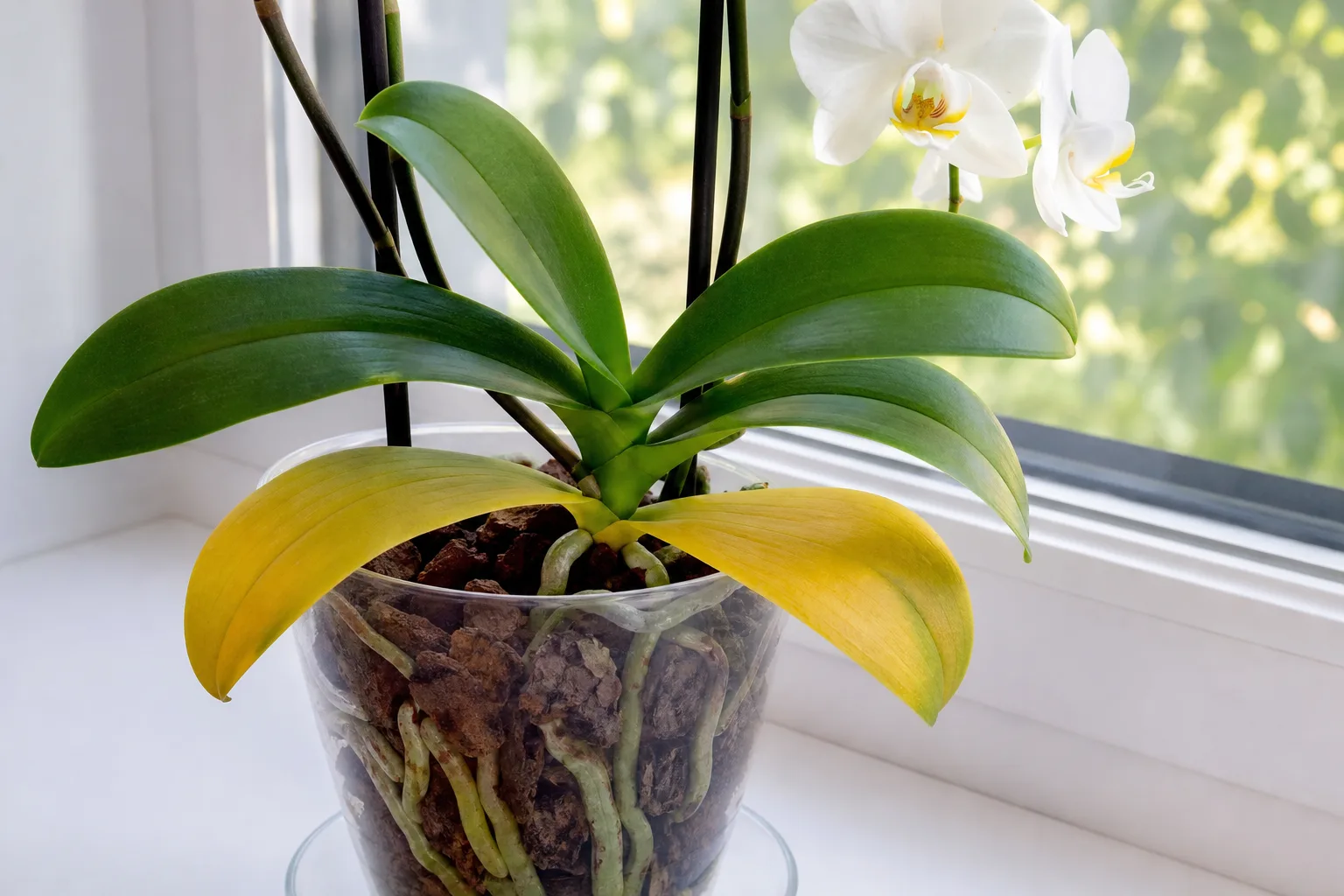
The American Orchid Society points out that “overwatering” often means the medium does not dry fast enough, not merely that a grower poured in too much water on one occasion. Low light, still air, high humidity, and a water-holding mix can all slow dry-down (American Orchid Society: Watering Orchids). UConn’s orchid-care guidance likewise warns that orchid roots can rot in soggy conditions and that root, stem, and leaf rots are common when media drain poorly or watering stays excessive (University of Connecticut Extension: Orchid Care and Repotting).
If several roots are soft and the medium is sour-smelling or broken down, remove the inner pot from its decorative cover and let excess water drain. Repot only when the evidence supports it: deteriorated mix, poor drainage, or confirmed rotten roots. Use clean snips to remove roots that are fully dead, preserve firm roots even if their color is tan, and set the orchid in a fresh, airy medium suited to its type. Do not try to “dry out” a severely compromised plant by withholding all water for an arbitrary number of days; after repotting, use the medium and remaining roots to guide the next watering.
Dry roots and interrupted watering can also stress a spike
A dry root system can stress an orchid too, particularly when a mounted plant or a small pot dries quickly in warm weather. In a Phalaenopsis, roots that are thin, shriveled, or brittle together with very dry bark and limp or pleated leaves point toward inadequate water uptake. This is different from soft, collapsing roots in wet mix, even though both problems can leave the plant looking thirsty.
Water according to the orchid’s medium and environment, not a fixed weekly rule. The American Orchid Society notes that both the amount and frequency matter, and that the conditions affecting water leaving the pot are part of the equation. A plant in coarse bark near moving air can dry sooner than one packed in sphagnum under lower light; a mounted orchid can dry faster still.
When the mix is dry and roots remain firm, water thoroughly and allow the pot to drain completely. If bark has become so dry that it sheds water, a short soak can re-wet the medium, but do not leave the orchid sitting in water afterward. Gardening Know How makes the useful point that wrinkled orchid leaves may follow either underwatering or overwatering and recommends checking the medium rather than guessing from the leaves alone (Gardening Know How: Orchid Leaves Wrinkled). Do not use one yellow flower spike as a reason to increase watering when the roots and leaves look normal.
Sun and heat damage usually leave leaf clues too
Excess direct sun can heat leaves and roots, bleach tissue, or leave yellow patches that later become tan and dry. A window that is mild in the morning may become hot in afternoon sun, especially behind glass; the plant can also be stressed after a quick move from a shaded shop to a bright sill. When sunlight is the issue, look for damage on the leaves exposed to the window, not just a spike that has finished blooming.
Move the orchid a little farther from hot glass or diffuse the light with a sheer curtain, while keeping it in a bright location. Do not put a Phalaenopsis in a dark corner to solve a scorch mark; low light slows growth and can complicate recovery. UConn recommends bright, indirect light for moth orchids, and Gardening Know How notes that light and heat stress can accompany leaf dehydration and burn.
Temperature changes can also affect a plant with open flowers or developing buds. If the orchid was moved near an air-conditioning vent, radiator, or drafty window just before the spike changed color, stabilize the location and watch new growth. An old yellow section will not prove that the new location worked; the useful signal is that new leaves and roots continue to develop without expanding damage.
Nutrient problems are less likely when only the spike is yellow
Fertilizer deficiency is easy to suspect because yellow tissue is associated with chlorosis, but a single old flower spike is poor evidence of a nutrient problem. Nitrogen and magnesium shortages are more likely to show up in foliage patterns over time, not just on a spent spike. The Royal Horticultural Society describes chlorosis as loss of green color in plant tissue and lists several possible causes, so “yellow” does not identify one nutrient by itself (RHS: Chlorosis).
Orchid-specific patterns help narrow the question. The American Orchid Society describes gradual general yellowing of foliage as a possible nitrogen deficiency and yellowing that begins on older leaves as a possible magnesium issue. That pattern is different from a spike turning yellow only after bloom, and from a crown or root zone that becomes soft after staying wet (American Orchid Society: Nutrient Deficiencies).
Do not respond to a yellow spike with an extra dose of fertilizer. Too much fertilizer can contribute to salt buildup and root injury, while fertilizer will not reverse normal spike senescence or repair rot. If the orchid has weak growth and a consistent leaf pattern after root health, light, and medium are checked, use an orchid fertilizer at the label rate during active growth and flush the medium with plain water from time to time. UConn also advises against fertilizing diseased orchids.
Crown or stem rot needs prompt isolation
Yellowing becomes urgent when it is paired with tissue that is soft, water-soaked, blackening, or spreading from the crown into the leaf bases. Those signs do not prove which pathogen is present, but they are unlike a dry flower spike fading after bloom. A sour smell, loose leaves at the center, or sudden collapse strengthens the case for isolating the plant and checking its roots and potting mix.
Move a suspect orchid away from other plants, remove standing water, and keep water from pooling in the crown. If you must remove tissue that is clearly dead or actively rotting, use a clean tool and avoid cutting into healthy central stem tissue. Clean the blade between cuts and discard the removed material; household remedies such as peroxide are not a diagnosis and can damage tissue if used indiscriminately.
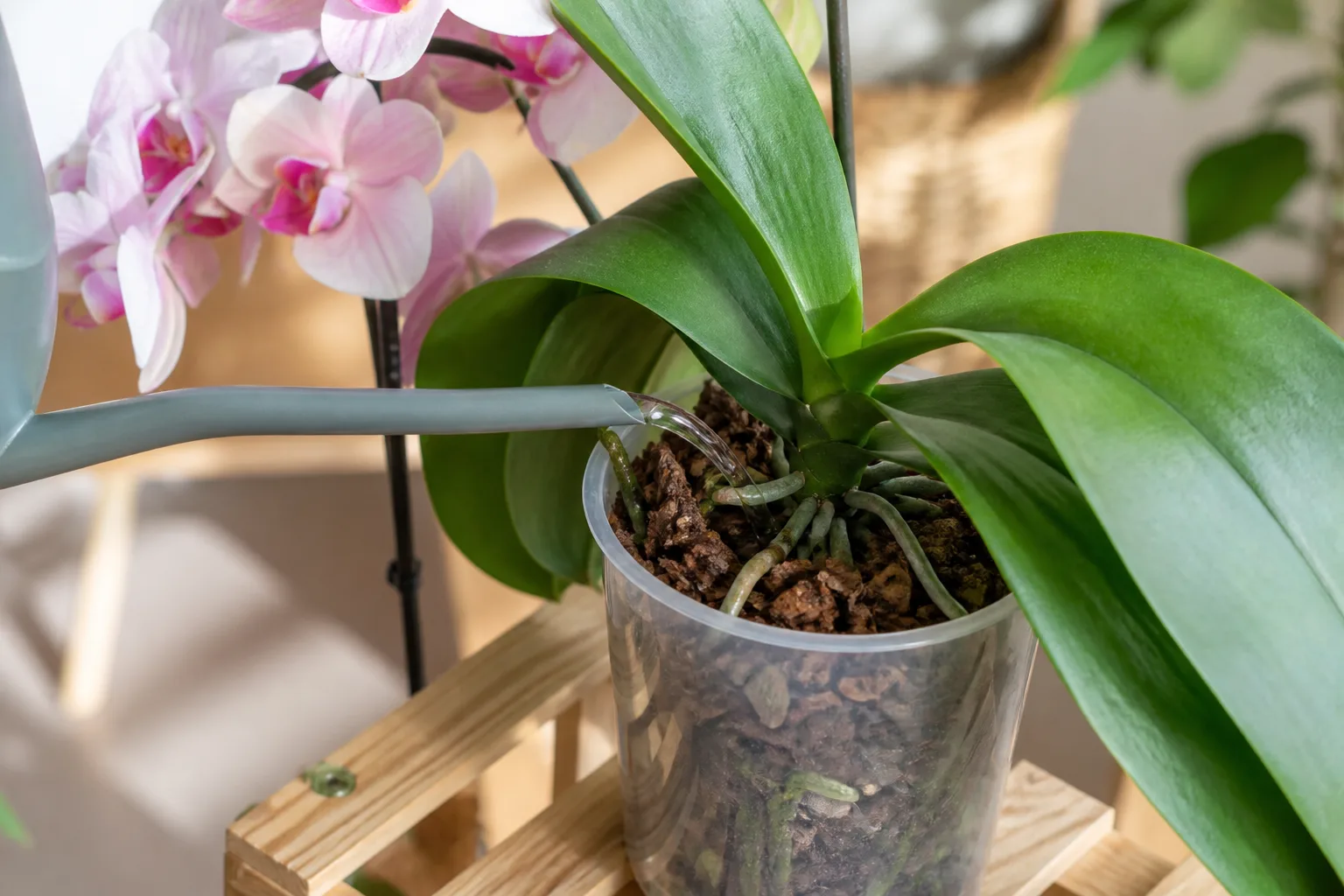
UConn’s orchid guidance connects root, stem, and leaf rot with poor drainage and excess water, which makes correcting the growing conditions as important as trimming. If soft tissue keeps advancing, several leaves detach, or the crown is destroyed, the plant may not recover; a local orchid society or extension service can help assess a serious case. Do not wait for a yellow spike to turn brown if the central plant is actively deteriorating.
What to do today: a safe orchid triage
Use this sequence to avoid treating the wrong part:
- Trace the yellow tissue. Decide whether it is a flower spike, the crown/main stem, a pseudobulb, or a leaf base.
- Check firmness and speed. A dry, gradual fade after flowers drop is different from a soft patch that expands over a day or two.
- Check the root zone. Look through a clear pot if available; otherwise assess pot weight, drainage, odor, and moisture in the middle of the medium.
- Review recent changes. Note flowering, repotting, a move to direct sun, missed watering, standing water, or a sudden temperature change.
- Choose one proportionate action. Wait on a healthy spent spike, correct a proven moisture mismatch, or isolate a plant with active soft rot.
- Record what changes. Photograph the plant and revisit it after several days; do not stack watering, pruning, repotting, and fertilizer changes all at once.
The aim is not to make every yellow area green. The aim is to prevent the plant’s living crown and roots from being harmed. If the cause is unclear and the orchid remains firm, observation is often safer than unpotting a healthy plant in a panic.
Should you cut off a yellow orchid spike or stem?
You can remove a flower spike once it is fully yellow, brown, dry, and no longer supporting flowers or buds. Use clean scissors or snips and cut the spent spike near its base without nicking leaves, roots, or the crown. A dry spike is dead tissue; removing it does not make the central stem safe to cut.
If a Phalaenopsis spike is yellow only at the tip but remains green lower down, you have a choice. Leaving it lets the orchid retain the option of a side branch from an unused node; cutting below the yellow section can tidy it, but a new branch may produce a smaller second flush and use energy the plant could spend on roots and leaves. If the orchid is weak, has lost roots, or is recovering from stress, let it rebuild before encouraging another bloom.
Spike behavior varies. The American Orchid Society notes that some Phalaenopsis can rebloom from an unused node, while some novelty forms and orchids such as Psychopsis may continue blooming on a green spike; many other genera flower only once on a particular spike. If you do not know the orchid, wait until the spike is fully dry or identify the plant before pruning. Never cut the central crown of a monopodial orchid just because a flower spike is yellow.
Prevent another yellowing episode with better cues
Make watering decisions from the plant’s dry-down pattern. After watering, empty the cachepot and let the inner pot drain; before watering again, check the medium below the surface and inspect roots if the pot is transparent. For a Phalaenopsis, green roots are often wet and silvery roots often dry, but use firmness and medium moisture too because root color varies across orchid groups.
Keep the crown dry and give the plant enough gentle air movement for leaves and medium to dry at a reasonable pace. Repot when bark has broken down, drainage is blocked, or roots are failing—not simply because the plant has finished flowering. Choose a mix and pot that suit the orchid and the room: moss holds moisture longer than coarse bark, and the right choice depends partly on how warm, humid, and ventilated the growing area is.
Provide bright, indirect light and change exposure gradually. Feed only a healthy, actively growing plant with an orchid fertilizer at its label dilution; if the medium is damp and roots are damaged, food will not solve the immediate problem. For more detail on watering cues and repotting timing, see our orchid watering guide and orchid repotting guide.
What recovery looks like, and what will not turn green again
A flower spike that has yellowed and dried will not normally become green again. If it was simply reaching the end of its bloom cycle, leave the healthy plant alone and watch for new roots, a new leaf, or a future spike. The old stalk is not a reliable measure of whether the orchid is otherwise recovering.
If root problems were involved, improvement may take weeks because the plant needs functioning roots to support new leaves and flowers. A lost root or a damaged leaf may not regrow in place; instead, look for firm remaining roots, stable leaves, no new soft spots, and fresh root tips. Avoid repeatedly unpotting the plant to check progress, since handling can injure roots that are beginning to recover.
A partly yellow pseudobulb may also remain yellow as it ages. If it is firm and the newer growth is healthy, leave it attached; older storage tissue can still contribute energy even when it no longer looks fresh. A rapidly softening bulb or crown, on the other hand, deserves a closer root and drainage check rather than a wait-and-see approach.
Conclusion
When an orchid stem turns yellow, identify the structure before reaching for pruning shears or the watering can. A post-bloom flower spike often ages naturally, while yellowing at the crown, stem base, or a young pseudobulb matters more when the tissue is soft, the roots are failing, or the plant is declining.
Check the roots and medium, review recent light and temperature changes, and make one evidence-based adjustment. Leave healthy green spike sections alone unless you have a reason to prune them, protect the crown, and judge recovery by new roots and leaves rather than by expecting old yellow tissue to turn green.



